Leading Through Growth | Podcast Ep. 65 | Toolbox for the Trades
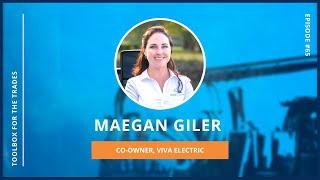
Podcast interview (Toolbox for the Trades Ep. 65) with Megan Guyler, co-owner of Vivo Electric. Megan describes founding Vivo in 2017, early construction-focused operations, formalizing a partnership with Griffin Brothers Shared Services in 2019 to outsource marketing/CSR/HR/accounting, adopting ServiceTitan, pivoting to ~95% service and small commercial, scaling to ~23 vehicles and ~30 in-house employees (plus ~10 shared-services staff), and expanding to three locations (Charlotte HQ, Lake Norman, Greenville). The interview also covers mentorship, leadership philosophy (employees as family), the market-lead expansion model, training practices, and advice for women in the trades.
Questions this video answers
2017
2019
About 30 in-house employees
Approximately 10 shared-services employees
About 23 vehicles
Megan Guyler, welcome to the Toolbox for the Trades podcast.
Hey Jackie, thanks for having me.
I am so excited to chat with you today. I've heard a lot about Vivo Electric from one of my colleagues who is like, you have to interview them. My colleague Mike. Shout out Mike. And I am just psyched to learn a little bit about you and Jimmy and the whole company. But I'm going to start this conversation the way I do every single one, which is ask you, how did you get into the trades?
Well, that actually goes back a couple decades. I was maybe like 13, 14 years old. My dad was an electrician. He had his electrical contracting company. He had this 13 year old that's wanting to make some money to go to the mall. And so I remember being 13 years old and he would dictate to me and I would type up estimates, invoices, help him with filing and basic stuff along those lines. And then fast forward a few more years. After college, I worked for a local general contractor and at that point, that's when I really started learning a lot about the trades and kind of the management behind a trades company.
Got it. So you did work for your dad? Worked for a general contractor. You also worked in insurance a bit too, didn't you?
Yeah, I worked a little bit with restoration and property casualty claims and just kind of helping consult with those and find the, you know, the pricing for that for replacement and repair.
Got it. Now, so this is what's really interesting. You didn't want to work with your dad, right. You did a couple of years there and you were like, I'm good.
I love my dad. Everyone, you know, every little girl loves their daddy. But maybe not so much when you're 14, 15, 16 years old. You don't want to work with them at that time.
Totally. But can you tell me what your dad does for work right now?
Yes. So we actually hired him on about a year and a half, almost two years ago now. We hired him on at the time to be kind of a construction manager and handle large, large projects just because he's been in the industry for so long and he's just, he's just really sharp. So we give him those large jobs.
So your dad essentially works for you now because you co own Viva Electric with your husband, Jimmy?
Yes, I work with my husband and my dad works for me.
I mean, full circle there totally. I don't think your dad probably thought that you were going to own your own electrical business when he was taking you out and having you dictate estimates to him.
Nope. I never thought that I would be a part owner of an electrical contracting company either.
Interesting how that happens, huh?
Yeah, no kidding.
Can you tell me the origin story of Vivo Electric?
Sure. So kind of back in 2017, Jimmy worked for an electrical contractor at the time that's in the Charlotte region. I was taking a break and I was a stay at home mom for a while. And we were just like a bunch of other people out there, kind of living paycheck to paycheck, day to day, just not really progressing. So we decided to just kind of take a leap of faith and not much else left to lose. So let's do it. And we did.
Can you tell me what those first few years look, even just the decision to do it, Because I've heard one of my now colleagues and who also was a customer at Service Titan, Vanessa Gonzalez, who's been on this podcast, she told me about when her and husband, her husband decided to start their business. She was like, we were already broke. We couldn't get any more broke than we were. So I would love to hear about that moment where you and Jimmy just said, yeah, let's do this. What was that like for you guys?
It was approaching Christmas time and there was no money for Christmas presents. And we were just like, this really sucks. Let's just try something, anything. Let's just do it. Um, and it was the best decision ever. I love that.
So what did it look like the first year in business 2017? Was it mainly Jimmy out there running jobs and then you kind of doing the stay at home mom slash CSR job like stuff? What did that look like?
It was a blur. It was waking up at 5am making food for Jimmy, for the kids, getting everyone out the door, going on my computer, getting kind of acclimated for the day, answering emails, picking up phone calls in our living room slash office, finishing up the day at some point, fitting some dinner in there and then wrapping up at around 11, 12 o', clock, middle of the night, sending out estimates and following up on invoices and calling in permits and inspections. So that's kind of what the day to day looked like back then. 2017, 2018. Let's see another. Also, back in the early years of viva, we were most definitely a construction company. The bulk of our, our bread and butter was custom homes, apartments. We had a lot of subcontractors, maybe 10% service work, but it was a lot of construction back then, back in the day.
And you start off with construction because that's what Jimmy was Most familiar with.
Yep. That's just what we were familiar with. We had those connections, those potential clients to reach out to and try to, you know, place bids on that kind of work. But it was mostly just. That's what was available to us at the time. With service work, you have to kind of build up your clientele.
Totally. Thank you for giving me that description of what it was like in the early days, especially the blur. Like, couldn't tell you what happened in 2017. I don't know. I started a business. Tell the listeners a little bit about where Viva is today, which, again, 2021. This is literally just four years into the future. Where are you guys today in terms of, you know, how many employees do you have, the kind of work you do, and what does your, you know, revenue look like?
Okay, so to kind of put it in perspective, we started out our first year, we had maybe two crews. Jimmy. And then our first couple of employees, we had three vehicles. And then fast forward to today. We have about. I'd say, 23 vehicles that we're at right now. We are up to 30 employees that are just in house. Viva employees. We also have with the Griffin brothers, and I guess we'll speak about that here shortly. We have approximately 10 additional employees that help us through the shared services.
That's insane. I just want to. I just want to, like, three to 23 vehicles in four years. When I say that back to you, what does that feel like for you?
It's a little scary, but in a good way. Like jumping out of an airplane with a really good parachute.
A really good parachute. You've checked a bunch of times?
Yes, multiple times, over and over again. But it's a really good feeling. I'm really proud of my husband and myself. I'm proud of every single person on our team. We're just like a little beehive here. Everyone has their part, and everyone plays their part really well.
That's awesome. I want to get into more of, like, the nitty gritty of, you know, the lessons learned through in just those four short years. But you mentioned already, Griffith, Griffin brothers and the shared services model. So talk to me about how they helped facilitate that growth for you guys in such a short amount of time.
Sure. So with the Griffin brothers and the shared services model, they have taken away the headaches from Jimmy and myself. They have kind of four divisions that they really help us with. They have marketing, they have the call center, they have human resources, and they have accounting. So that's pretty much everything that business owners Always have to manage and facilitate, figure out who the heck is going to do this. I don't know how to do this. I'm lost. They take that headache away from us and they allow us to focus on one thing and that's for the most part just growth and growing our company.
Marketing, HR, accounting. What was the fourth one?
The call center or CSR.
So when we talk, when we look at those 30 Vivo Electric employees compared to the 10 Griffin Brothers employees, are those 30 Vivo Electric employees mainly just technicians?
For the most part. Technicians, helpers. We do have our in house staff. We have our leadership team that does help with our own operations, with our financial stuff. Just more higher level, higher up positions. So we definitely have the Griffin brothers shared services that help us with all of these divisions. They do all of the heavy work for us, but we do have our operations people that help us higher level with everything.
That's incredible. So all you and Jimmy have to do and your leadership team is focus on revenue growth.
Revenue growth. And then Jimmy and myself personally just promoting our leadership team and in turn they promote our staff.
That's awesome. That's so cool. So tell me about how the Griffin brothers approached you and Jimmy and how this opportunity was presented to you.
So the opportunity, Jimmy had the connections, he knew Mike Griffin with the Griffin brothers companies and they kind of connected. Mike proposed the idea of becoming a business partner with us. And at first we kind of, we declined. We weren't too sure. We just kind of wanted to take things slow with our new relationship. So fast forward a few months into 2019 is that's when we formalized the business partnership with Griffin Brothers.
Got it. So they approached you at first you were like, I'm not sure. I think we kind of want to, you know, make the business on our own a bit, kind of get settled. And then was there any particular, you know, aha moment you had in between first declining the offer and then accepting it that really made you want to commit to that?
I think it's not one particular, one specific moment. It's just that things got so overwhelming. All of you know, the accounting, the marketing, the hr, et cetera, et cetera, you know, call center. We didn't have one at the time. It was me or Jimmy, you know, whoever could get to the phone first. So the decision was really made just because it was too much. We couldn't handle it at that time. We needed help.
And I thank you for saying that because I think I talked to so many owners and when they're in the early years of their business, they just wear all of these hats, and they take on accounting, they take on marketing, they take on the call center, all of that stuff. And it sounds like with the Griffin brothers, you were just really able to. We're gonna let you guys focus on this stuff that we're not experts at and let us be experts at electrical.
Right? Exactly.
That's awesome. So tell me some of the benefits that have come out of this. I mean, I think we already highlighted that.
Yes.
You're like, I don't have to do a lot of work I don't want to do, but are there any other benefits to the shared service model that you as an owner? Just like, I wouldn't do it any other way.
There's obviously shared costs, you know, between all the different companies. Like, we all share the services, therefore our cost goes down, so we save money doing that. Also, I feel like we do receive mentorship. So my husband Jimmy, he receives a lot of mentorship from Mike Griffin personally and me personally. I feel like I get a lot of mentorship or at least guidance and input. Good. Really good input from Joe Brancus, who also is with Griffin Brothers Shared Services.
Yeah. And Joe's actually has been on the podcast, too. His episode will precede yours. So Joe gave us the breakdown of what the. How the Griffin brothers is laid out. So if anyone listening right now is like, I want to learn more about this, check out Joe's episode. And here I really just wanted to talk to you about, like, what is it like to have that relationship? And it sounds like mentorship, just your free time and being able to have a kind of. It sounds like a regular work schedule and not that crazy 5am to midnight, day in and day out.
Exactly. And I think there's also a lot of. A lot of trust there as well. We've all worked together for so long now, you know, during all this time and kind, you know, some changes. So there's a lot of trust there as well that, you know, they're going to take care of things for us. You know, we're in good hands.
Got it. I want to pivot a little bit, and I want to talk about your change from going to. From construction to service and replacement, because you're about, what, 90% service and replacement now.
Yes. So we completely, you know, turnaround is, you know, we. We don't do any construction anymore. Maybe 5% of our work, and we're just wrapping up some construction work. And Now I'd say 95% of our work is Service and small commercial.
Wow. So tell me about how that change was like for you guys internally.
It helped a lot. It was a little heck. Well, a little confusing, a little disorganized. You know, different online portals here and there that they weren't really a good match for a trades, maybe a gc, but not so much a tradesman. So it was just very disorganized, very helter skelter, very all over the place.
Got it. So you mean the online portals where you would have to manage the projects and that kind of stuff, Right?
Project management, even invoicing. We had invoicing with one program, we had dispatch in another, and it was just all over the place. You can't scale, you can't grow.
You can't grow if you're focusing solely on construction.
Right.
What kind of work internally did you have to do when you guys made the decision to pivot to service? Did you have to invest in different techs? What kind of like, training did you have to do? What did that look like?
So our technicians and kind of the employees that we would look for, that definitely did change. It did shift. Because it's just like any other industry. You have your specialties, you know, you have your own knowledge. There are construction guys out there that they're just as intelligent and skilled and trained as a service guy. It's just kind of apples and oranges. So we did have to find our apples and oranges that fit our fruit basket. And we did. Let's see, what was your other question?
It was more just like I want, because you mentioned too, about how with service you have to build up a customer base. I was just curious, like, what kind of work had to be done on the company and internal strategy when it came to making this pivot from construction to service?
Okay. I guess the biggest thing would definitely be our online portal, our software that we use to kind of manage everything and kind of make it all into one system instead of 50 different programs that we all have to remember to look for things. So that would. So Service Titan is what. What I'm getting at.
So Service Titan is basically what I'm saying. Did Griffin actually. But let's like, let's be on that for a second. Did you have Service Titan before joining Griffith, before joining Griffin Brothers?
Nope. We were all over the place with numerous different software products and programs that we were using. We did eventually try and we did implement another program that was out there, but they ended up being acquired or they went out of business and we no longer were able to Use them anymore. So after implementing that program and kind of hitting brick walls and hurdles with that kind of. Once we got to the point with Service Titan, implementing Service Titan, it was just much easier. It was much. There was much more of a flow to it because we've done it already.
Got it. I totally hear that. Yeah. I mean, once you've implemented one software, you kind of know how to, you know what to expect. I feel like a lot of customers of ours who come on with Service Titan, they always, uh, you really don't know what to expect when you're going to implement a software that's literally going to touch every facet of your business. Um, but then once you do it, you're like, okay, I know what to expect. And I'm assuming that being on Service Titan also helps with that relationship between Viva Electric and Griffin Brothers. Correct?
Yes, definitely. They work on the same program. They work on Service Titan, we work on Service Titan. And for us to work together, well, we all have to work well, equally well on Service Titan.
Got it. And those departments again, the marketing, hr, accounting, CS call center, Are those in your physical location?
Nope, they're not. They're located with the shared services department. Fortunately, our main headquarters is in Charlotte and they are located maybe a 20 minute drive, 30 minute drive north of here. So we still have that relationship where we can go visit them and drop in and send flowers or whatever and present ourselves to them.
That's great. But it again goes to prove that you can do this kind of work remotely. You do not have to be in the same space as someone in order for those departments to be successful.
Right, exactly.
Very cool. So let's backpedal a bit to the mentorship you mentioned with Joe. I would love to learn because obviously you have history in the trades, you know, worked for gc, dad's an electrician, worked in insurance. You kind of like you knew what you were getting at. Right. But what has your relationship with Joe? Talk to me about how it's grown you as a leader and as an owner of a business?
Sure. I feel like Joe is one of those people that knows at least a little bit, if not a lot about everything. You ask him a question, he's going to have a response. And if he doesn't have the response right away, he's going to find it for you. So I feel like every time I speak with him or I bounce ideas off of him, he teaches me something new each time we talk. I'm always learning things from Joe and learning from his example as well, with how he himself is a leader, I see how he. He acts as a leader, and I try to sometimes recreate that through myself. Really?
Can you think of any specific qualities? I know I'm kind of putting you on the spot here. Oh, gosh.
Remaining stoic and not, like, just stop and think, Megan, before opening your mouth. Like, I. I have caught myself before. Like, what would Jo do.
That's like, should be a little poster in your office. What would Jo do?
Exactly.
Well, let's talk a little bit about leadership and about how you show up for your employees. Because when we first spoke, you mentioned, like, I very much consider my employees family. And tell me what that means for you when you say that.
Okay. So when I say that our employees are our family, I mean exactly that. You know, I feel like they are a part of our family. They have successes, they have wins. I want to celebrate them. I want to know about them. I want to know about their kids and their wives and their families and their fishing trips. And same thing goes, you know, with their failures. Or, you know, just like my son or my daughter, like, if they make a failing grade or they mess up in school, I'm not going to kick them out of the house. Same thing with our technicians. You know, we make mistakes or we always have learning to go through if they make a mistake. We need to work with you as a human being, as part of the family, and not just, you know, you know, kick you off the team.
Yeah, 100%. That's really rare to find a culture that tolerates mistakes and failures. I know in my company, we actually try and share whenever something doesn't go right the way we planned it to, because it's a learning experience. And it also shows, hey, if you mess up, it's okay. We're not going to get rid of you just because that happened.
Yeah, exactly. And that's. That's how I feel.
That's awesome. I'm really glad to hear that. So let's talk a little bit back. Let's talk a little bit about. One second. I'm going to pause, so I want to go back to. You know, you talked a lot about how promoting the team within is super important to you guys. Tell me about the market lead system you have at VIVA and how it helps you retain and motivate your team.
Oh, this is great. Okay. So sure. Currently, under our market lead program, what we do is we find young individuals who are humble, they're hungry, and they're just really sharp. So we take these guys or Gals, and we train them. We train them up on our processes and we kind of, you know, share our vision with them, how we want to grow. And then once they've kind of shown that they're ready to take on a market, we either take an existing market where maybe that they may have. They may be from there originally, or we find a new location or whatever the case may be. But we take this young individual that is super talented, and we place them in that role of a market leader. In a market, it could be someone that we happen to stumble across. It could be someone that has submitted their resume. But also, most importantly, I feel, at least, is for our internal technicians. You know, we have a young woman or young man that really wants to be an entrepreneur. This gives them that opportunity.
So essentially, with the market leads program, you are putting them in a market and they're running their own branch of Vivo Electric.
That's exactly it.
Wow. So I've heard this strategy used before because, you know, we all know that hiring technicians in the trades is difficult right now. I've heard before from owners that said, you know, I tried a business and then it was kind of hard to find work anywhere else because people see, oh, you had your own business. Are you going to come work for me and steal my leads out from under me? Like, you know, kind of like that's how I'm interpreting. Interpreting the fear to be. But with this, you kind of give them exactly what Griffin Brothers has given you and Jimmy, which is, hey, here's your market. Here's where you're going to work out of. We'll take care of all the hard stuff. You just focus on growing the company, driving revenue, and doing the best electrical work you can.
Exactly. Yep. We all want to succeed in life. We all want to work, you know, for the most part, we all want to work really hard to do well for ourselves. And I don't necessarily need the whole pie. I want to share my pie with others. So that way they build themselves up for themselves and their family. And then everyone here internally, and then me and Jimmy as well, you know, we all help each other and we all grow, we all build.
Got it. So the market lead. So how many market leads do you have out there right now from the core? Viva Electric core, let's say Vivo Electric hq.
Okay, so right now, our Charlotte location is kind of our. Our corporate headquarters, but we also, in addition to that, we have our Lake Norman branch division. And we also have. This is brand new to us, but our newest division is Greenville North Carolina. So we have three locations currently and growing again.
I just want to say, started the business in 2017. We needed 23 vehicles and now three locations. Um, talk to me about opening the Greenville location. What, what kind of, what kind of stuff do you guys do? Do you do a big announcement? Do you do some big promos, like market the crap out of the area? What does that look like?
Marketing. Marketing. Marketing. Marketing rules the world. Um, but yes. So it's been great so far. It's been open for about approximately a month, but the official grand opening is actually this Thursday. Um, we have the chamber of commerce that's helping us out. We're going to have the mayor out, we're going to have local press coverage, we're going to have a ribbon cutting ceremony and food and drink. You know, just make a big to do about it. Hopefully get the local community involved. But yes, marketing. Marketing. Marketing.
Tell me about the technician who is now the lead in Greenville.
Okay, so Mike Hoggard, he is our market lead in Greenville. He, he runs that boat. He is a very talented individual. He's rocking and rolling. You know, we had him here for a little while. He trained under our director of production, David Morris. And he's just rocking it like it's a lot smoother sailing than I had originally anticipated.
That's awesome. And is Mike going to be running calls in addition to kind of overseeing the branch?
Nope. That's the beauty of shared services. He does not have to worry about Calls accounting the business headaches. He does not have to deal with that. He just run his little, his show, his Greenville show, and just gets the calls done and make sure his guys that work under him are doing what they need to do and they do it well.
Got it. In regards to training for these market leads, what kind of, what does that encompass?
Okay, so we bring our market leads into Charlotte and they work under David again, our director of production. He kind of shows them our processes. They do ride alongs with our technicians. We teach them the ins and outs of service titan, where to go for what report any kind of processes that we have in house. We just need to make sure each market that we open, they replicate those processes. And that's kind of what we have with this training. It's not technical training. It's all just processes and doing replicating our Charlotte market.
So in theory, in theory, your market lead doesn't necessarily need to have electrical experience.
We do want them to have electrical experience. One of the requirements that we have for our market leads is they do need to have their electrical license, which for the most part, it's not a problem because they come to us. And when they come to us, they're typically looking for an elect position within Charlotte as a technician or maybe in management or something along those lines. But for the most part, everyone already has their license or we've helped them to achieve that.
Got it. Do you get a lot of green techs or like brand new, no electrical experience whatsoever coming into vivo right now?
We do. We have a good number of them that come in, actually. And so far we have our lead techs. We put them under them, and they've learned. And once they get their education and their knowledge and experience reaches a certain level, we, you know, we push them out in the world and they become a floater and then eventually a lead technician themselves. Nice.
That's awesome. I want to talk a little bit about what you do now that you don't have to do accounting and. And marketing, all of those things. So what is your role at veeva? What are you primarily focused on?
Okay, well, I mean, it's a little bit of everything that comes my way. It's still lots of different hats because we're still not, you know, we're still a small business, but working towards research, research and development, looking into new markets, determining what is a good market for us to move into, helping assist with maybe finding potential market leads for our director of production to kind of filter through and just finding what works and what doesn't for Viva.
Interesting. And how do you like this job for yourself?
Personally, I love it. There's lots of research. I love researching anything and everything. I get to look at reports, a lot of marketing stuff. I like finding things that work best, and I like implementing things. And then once it's implemented, I hand it off. So if I find myself a new market, I build it up, I help create it, with assistance, of course. And then it's, you know, it's ready to go. Launch that ship.
That's exactly. We talked about this last time we chatted, but that is exactly the kind of worker I am too. I love creating stuff, implementing it, and then handing it off to someone. That is. That is my sweet spot as a worker too. It's so important to know that strength and that you want that kind of. This is the kind of work I want to be doing. I don't want to be doing, like, repetitive tasks that, you know, say, accounting, for example. Very. There's a lot of repetition with that. There's a lot of like, okay, I Need to make sure that I do this X, Y and Z every other week to make sure everyone gets paid and all of that stuff. You're more like, give me some big ideas that I can implement and then hand off to someone. I love that.
Yep, totally.
So in all of these like hodgepodge, this like hodgepodge you're in and like touching all these different, touching all of these different elements of the business, I would love if you could share some big insights that you've learned that you would like to share with our listeners.
Yes, I kind of thought hard about this question and I feel like if I can share one thing based on my experience, based on viva, based on shared services, everything is that whatever you go into, whether it's a new market, a new business venture, whatever the case may be, just always remain mentally flexible and adapt. You know, you always have to adapt no matter what in life. Get what life throws at you and just keep putting one foot in front of the other.
Not to put you on the spot again, but can you tell me about a time that you had to be mentally flexible within viva?
There were a couple workers comp issues that arose in the past. Yeah, just, you know, I've had some workers comp issues that have come up in the past and you kind of, you're a deer in headlights, you're frozen. You're not exactly sure what to do if someone gets injured or whatever. So just, you know, keep rolling with it, help them out, do your, your claim, whatever the case may be, I mean, just roll with it.
Definitely what you have to do going into your role right now, which is a lot of researching and figuring out new areas to expand to. Can you tell me a little bit about how you identify which new market to enter into? And if you want to use Greenville as an example, like this is why we identified Greenville as a good place to open up a our third location.
Okay, sure, we've been fortunate so far. I feel like our markets that we have now, we've met these really talented individuals that lived in these locales. So that was a no brainer moving forward into the future, I think. Of course it's just researching a lot of demographics but finding smaller local markets. You know, I can't go and attack Atlanta or Chicago, you know, that's, that's a waste of my time. So I just find these new markets, these new locations. I guess I just find the talent, find location and just kind of see what matches.
Yeah, that totally makes sense. In regards to demographic, do you have an ideal customer Persona?
No, just someone that's just a good person. I don't know why, but just, I don't know.
Well, that's for the market leader, right?
Oh, for the market lead position.
No, I'm saying for, I was saying for customers that you're looking for, like, are you looking for a specific type of customer or you just, you know, okay, we'll service anyone because. Only because you mentioned demographics and you're like, yeah, I'm not going to attack Chicago, I'm not going to attack Atlanta. Is there any specific stuff you look for?
No, just any kind of service work that we can take. You know, we can help people with, you know, just our clientele. We're looking for just individuals that are looking for repairs and installation for us to be in and out in a day. You know, they're happy, I'm happy, we get paid and we're out in, in a day.
Cod. Yeah. You mentioned earlier that when you know, you're hiring for the market leads and you're identifying a person to fill this role, one thing you. Well, after you've identified them, part of the training is sharing your vision with them. So when you share the vision of Vivo Electric, what do you say?
Me personally, I would say just no matter what you do in work and life, just do the best that you can. You know, just be a good person, do good work, put your head down and work hard. You can only do the best that you can.
I agree. I didn't send you this question ahead of time and which was foolish of me, but obviously you are a woman in the trades and the trades are dominated not by women, but there are a lot of awesome women coming in. What advice would you give to any women listening or any owners out there who are like, I would really love to bring some more women on my team. What advice would you give them?
I would say don't discount yourself. Just because you're a woman in a male dominated field, you know, does not mean that there's not a place for you out there. I love construction, I love the trades. I think I have, you know, I found a great fit for myself and I'm happy. There's been a couple hurdles here and there, but I think that there's definitely room out there in the trades for more females.
Got it. And what about for owners trying to hire more women?
Just let it be known that it's a woman friendly workplace actively. I mean, I don't know, I guess you can't do this from an HR perspective, but really, like, you Know, just if you meet a female that seems to be interested in the trades, like just actively pursue them, let them know that this is a great culture at your workplace, at your work environment. And let them know that they'd be, you know, it's kind of corny, but they would be loved and cared for. Like you have a place for them at your work workspace.
I can tell when you talk about that that you really mean that about Viva Electric. And it's not corny at all.
It's lovely 100%. I mean it.
So I have a couple more questions for you, but I have this new question I'm going to start asking all of my that I recently just started asking all guests. So it's new to our longtime listeners. But what is your most controversial opinion on the trades?
I think that there's a preconceived notion out there that tradesmen are a little rough around the edges and maybe they aren't quite as intelligent as white collar workers. But I know firsthand experience that that's not the case. That, you know, our guys, they go home and they love their wives and their kids and their mothers and their families just as much as any other doctor or banker or anything else out there. And they work equally as hard. Their knowledge level is up there like just, just as any other white collared individual. It's just again, apples and oranges.
Yeah. So basically your most controversial opinion is that blue collar workers are just as great as white collar workers. Makin.
That's my opinion.
I don't know. I don't know how people, I don't know how the listeners are going to react to that. But I'll let you know. I'll shield you from any backlash. Is there anything that we should have talked about that we didn't talk about today in terms of you as an owner growing Viva Electric, advice you'd like to impart on other contractors or anything else?
No, I mean, I think, I think we've gone over a lot here. I don't really have anything else on the top of my head. Feel free to reach out to me anytime.
Guys, thank you so much for sharing about Veeva and about the shared services model. I think it's super interesting and I'm really happy that you met Joe and Jimmy and Mike and how all of that is working together. So thank you for giving me your perspective. I have some rapid fire questions I would like to shoot you right now. Shoot you with right now. Not literally shoot you with right now. Hold on again, I have some Rapid fire questions I would like to ask you. So are you ready?
Shoot.
All right. How do you take your coffee?
Cream and sugar.
If you could have dinner with one person, dead or alive, who would it be?
Ooh, Eleanor Roosevelt.
Oh, good one. Do you know Eleanor Roosevelt used to have an advice column?
Really? Yeah, she did. Oh, that's so cool.
I know. What's the number one thing you're trying to learn more about right now?
Real estate.
If money weren't an object so you had unlimited resources, what's the first thing you would do?
I would go on a really nice vacation with my kids and my husband. He can join, I guess.
Do you have any podcast or book recommendations you'd like to share with the audience?
I'm not. I. I've never really been big onto podcasts just because I'm not an audio. Like, I don't learn audio. I'm visual book wise. I. I don't want to give out a bad recommendation. I don't know, I Love Lamb by Wally or Nevermind. I can't think of anything right now. You put me on the spot.
No problem. What's the number one thing every contractor should do to run a successful business?
Communicate. Communication is number one.
100%. Megan, thank you so much for being a guest on Toolbox for the trades.
Yeah, thank you so much, Jackie. I appreciate you.
More from Bill



ServiceTitan Virtual Agents: Simplify Before You Scale | Podcast Ep. 110 | Mastering ServiceTitan



Life After Live Events: How to Turn Post-Conference Energy into Real Profits | Podcast Ep. 297




