Modern-Day Chimney Sweepers | Podcast Ep. 140 | Toolbox for the Trades
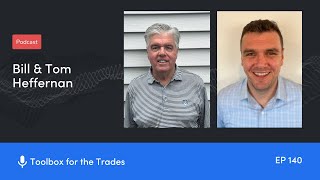
Podcast interview (Toolbox for the Trades Ep. 140) with Bill (founder) and Tom (sales director) Heffernan of Master Chimney Sweepers. Bill recounts starting the company in 1977 (door-to-door work in top hat & tails), scaling via telemarketing up to ~25 crews then settling at ~10, and long-term direct-mail yellow postcard campaigns. Tom (joined ~2 years ago) and daughter Lydia (Customer Relations Manager) now run sales/operations, using ServiceTitan, Google reviews, and telemarketing. Company service area and offerings include chimney sweeping, masonry, dryer vent and hot water heater inspections; pricing cited (base $529, typical discounted $489). Marketing notes: ~30k contact database, mailings 3–4x/year, per-send costs ~$30–40k and ~ $100k+/yr spend. Industry observations include transition to gas, drone inspections, and slow seasonal revenue concentrated in fall.
Questions this video answers
1977
About 30,000 contacts (some dating back to 1977)
About 10 technicians/crews
225 towns (referenced by host as prior fact)
$529 full price (typical discounted price mentioned: $489)
Bill and Tom Heffernan, you own Master Chimney Sweepers in eastern and central Massachusetts. You were a father son duo. Bill, you started the company. Tom, you are now sales director. I am so happy to welcome you back to Toolbox for the Trades, which I will talk about in just a moment. But before we do that, please say hello to our incredible listeners.
Hello, everybody. I'm Bill Heffernan, founder since 1977.
And I'm Tom Heffernan, son of Bill and sales director here.
Amazing. And I just have to let.
Also, Lydia is missing. So she's.
Lydia is missing.
Also a key representative, but she's missing.
And Lydia is the general manager. And she's also your daughter. Right.
What did we decide to give her her title was?
Or customer relations. Was it?
Yeah, yeah.
Customer relations manager. Customer relations manager. Yeah.
We don't have a lot of managers. A lot of titles a lot of times.
I know. That's actually one of the first things you told me when we first got to know each other, and I have to let the audience know. I am just so happy. We did a recording with Bill and Tom a few weeks ago. It was an amazing interview, and the audio just sucked. And they have graciously agreed to come back record a brand new interview for you. So, guys, thank you again for your time. I'm really excited to get back into this interview and rock and roll and learn a little bit more about your. But before we do, I have to ask both of you, an icebreaker. If you could pick up a new skill in an instant, what would it be and why? Tom, maybe you can go first.
Oh, my gosh.
That is a.
You know what's funny about this is I asked you this icebreaker already.
Oh, you did.
You're right.
Oh, my God, I did.
And you're like, what skill?
I'm sure I gave a great answer.
I'm sure you did.
I would say. I would say a skill that I would like to pick up instantly would be, do you have something off the.
Top of your head?
You know, I really like music, and I really regret that I never played an instrument. I love the piano. I love listening to. I love guitar, and I'd love to. I hope I do, at some point, pick one of those instruments up and dabble with that. So, yeah. Very cool.
I guess I don't really know if this qualifies as a skill, but I'm starting to get into cooking, and I think if I could go back and start that a little bit earlier on in my life that I, you know, could go. I'd love to go back and do that because it's. I love tasting good food and cooking good food and it doesn't always come out that good when I do cook it. But I would love to improve on that skill if I, if I could.
I love both of those answers. I too have regretted never picking up an instrument, Bill, for lack of, but not for lack of trying. I just, it just isn't in me. But if I could do both of those skills as well, I would give that. I'll also say a popular thing I've been thinking about is picking up another language like Spanish or drawing too. I think I would really love to be able to be a good drawer. But anyway, so thank you for participating in the Icebreaker. Let's talk about Master Chimney Sweepers. So I would love to know how you got into the trades, Bill, because I think if I recall, the story has something to do with a top hat and maybe a bow tie. So tell us the story. How did Master Chimney Sweepers start?
Yeah, no, it started so it was interesting. So I graduated college in 1977 and I'd been a college painter. So I was good at working with my hands and good at heights. I really liked it. My dad handed me an article from the local newspaper, the Wellesley Townsman, about this guy that had started this chimney sweep business. And it was fascinating. He was actually a Harvard MBA student and he had five guys working for him and they wrote this great article and they said, you know, had to be sure. Foot as a billy goat, agile as a gymnast, mechanical is Mr. Wizard and a confident showman. And he had to supply your own soap. So. And you also had to supply your own car and your own ladder, which I did have both, but it was, and it was also the energy crisis had just was happening. There were gas lines, people were putting wood stoves in. I studied economics and English, so supply and demand and all that stuff. Chimney fires were on the increase, it sounded, and these guys were wearing top hat and tails and it looked like they were having a blast. And so I called them immediately and got hired. And it was what I also found out very early on. It was a seasonal business. Everyone calls in the fall to get their chimneys cleaned. And so what happened was there were five guys. What happened was work died in, in January and nobody knew it would die this quickly and severely. And so the other four guys were, were pretty much the three guys. There was one other guy hanging around who was kind of his right hand man. We're pretty much Laid off and, you know, you know, go get another job or whatever, and who knows what's going to happen and we're going to pick up again. But my dad again came into, into the fold and said, bill, why don't you get on the phone, start calling people? And so I went and picked up a voter's registration, you know, at a particular town, Framingham and Sudbury, actually looked up everybody's phone number and the neighborhoods that I wanted to call. And, And I started, you know, I started calling because the voters registration would give you the streets I wanted to call, and I'd look up their phone numbers and I called them. And then I found out later there was a. A book like that so you didn't have to do all that work. You could get that book. So I, you know, I started calling, hey, I'm going to be in the neighborhood on Saturday and I can do. I'm doing free chimney inspections. Want me to come by and check your chimney? And it was like, bingo. I was a hit right away. I was like, wow. I called my dad. I'm so excited. I got four jobs for Saturday. And so, you know, so that got me going. Really. It was very exciting. I really liked the business. I like the whole thing about it. I like that, you know, the show of being having a top hat and tails and walking into McDonald's with your top hat and tails or showing up at the door with top hat and tails. People loved it. You know, they really did. It was a, you know, and they all. You got your customers smiling. They were really. You put them in a good, good place. And so they got kind of carried away there. But, but so then I turned that into. I just, well, why should I call these neighborhoods? I knew the neighborhoods that, you know, the, the prime neighborhoods that really looked like a little bit more well to do. Why don't I get on my bicycle, put my top hat and tails on in a bow tie and just ride out Saturday morning to their houses and knock on their doors and. And that was, you know, really an amazing experience. And actually ended up doing that for three years. And I would do. I would do it in the evenings in the daylight savings time. But the, you know, the reaction you would get when you drove up their driveway and your top hat and tails, you know, they weren't quite sure who to expect and who this guy was. And the minute you said you were from master chimney sweepers, they cracked up and they laughed. And immediately they, you know, they were, they were relaxed. And I said, doing free inspections Would you like me to check your chimney? You know, and they were very welcoming. And, and so I tell, you know, I knocked on thousands of doors over the years and, and my friends used to see me driving around, you know, or, or associates riding my bike around town and, and they'd be like, wow, what's up with Bill? What happened to him?
Oh, my goodness.
But, but here I am 47 years later, still excited about every opportunity and every little new development service titan being one of them. Yeah. And so, you know, that's been exciting. So, so interesting. It kept going, you know, I ended up building a telemarketing by getting an office and filling it with telemarketers. So I eventually got out of the door to door, which I always still want to do, but you know, you know, we ended up with big telemarketing offices where we'd have actually 25 telemarketers.
Wow.
Yeah, it was pretty big. So we, and we had, you know, 25 cars driving around and we would, back then we would buy 66 Chevys, paint them black at Mako, throw a ladder on top, pull the back seat out and put the vacuum where the back seat was. We built, we built a bed there on the back seat and we had, we have a picture with all these cars lined up, all 25 of them. And it was a nightmare.
And it was a nightmare. It was a waking nightmare for me. I missed. It sounds like you missed your bicycle days.
I would, I would never. We have 10 guys now. It's beautiful and 25 guys. Outrageous, terrible. Not bad idea. Don't recommend it to anyone. It's a miracle I made it and, but it's a miracle I made a lot of things.
Well, I'm so happy you shared that story because, you know, and I was actually thinking while you were talking about that, like how. I wonder how if you were to do your top hat and tails riding on the bike in 2023 now, how you would be received.
Yeah, you know, I've really actually wondered about that. And there was, it wasn't that long ago that I really threatened to do it. I threatened to go and you know, so, yeah, I don't know. You know, I think you, you could get away with it. You might get, I mean, the police might show up and say, what are you doing? But so, oh, oh, sorry, I didn't register. I got to go register a town. But, but they didn't, you know, back then, you didn't register. And I, you know, I, I, it was great. It was awesome. It was Very much like being a politician and around knocking on doors. And it was a great way to build your business. And I was excited about the business. So it was really. I believed in it and believed in what we were doing and where it was going. So it was really, you know, and I continue to believe in what we do, and that's super cool.
But it really just goes to show how your business evolved over time. You had, at one point, 25 guys, this giant telemarketing section of the business, and now you're down to 10. And I have to say, I have folks come on the show all the time who talk about hiring more people, getting bigger, growing, growing, growing. But I also love talking to folks who are like, nope, 10 people. That is great for us. We're super happy with 10. So I want to put a pin on that. And Tom, I want to ask you, you know, you're obviously, you grew up watching your dad do master chimney sweepers. When did you decide to get involved?
So I decided to get involved two years ago. And growing up, my dad, I said this before, and I'll say it again, he was a tremendous father. And I can really say that now that I am a dad. Looking back. And one of the things that I always appreciated was that he was always there. He coached all of our games. He would come home after work every day. And I really valued that and really know how much I appreciated it or how, you know, I may have taken it for granted at the time, I think, but, you know, and then just for a little bit of context, so I graduated from college in 2008 in the middle of the financial crisis, and I had no idea what I wanted to do. So I got a job selling gym memberships, which was pretty much the only job I could find. But it was, in hindsight, a great experience because I. It was a very transactional sale, and I was all in person, and it just kind of helped me develop a lot of confidence, I think, within sales. And then from there, I did that for a couple years, and then I ended up moving out to San Francisco with no real plan and ended up getting involved in technology and tech sales, where I learned a lot just about how to kind of structure a sales program and how to run an efficient sales program and how not to run. Also, probably more importantly, how not to run the sales program and the types of activities that are effective, so on and so forth. And I always got. All my friends always, you know, were like, why don't you. Why don't you get involved in the business, you know, and it's like, well, I mean, I don't really. I kind of want to go out and do my own thing. And. And then I was also in California, so that would have been difficult. But anyway, after a couple years, I moved back locally and still didn't get involved. Continued in kind of the software sales career. And finally some personal things transpired and an opportunity basically presented itself to finally get involved. And, you know, the two paths kind of intertwined a little bit, and I ensued. So my dad and I, and this is over a series of, you know, years, you know, we had been talking about this for a long time. This wasn't just like, you know, two weeks went by and I, you know, he interviewed me and I got the job. I mean, this was something that we'd always kind of talked about. And then it just kind of came to fruition. And actually my sister Lydia, who ran a very successful dog walking business in South Boston that was kind of decimated by Covid. And she also had a little girl and she now has two kids. So she ended up getting involved about a month before I did. And I reached out to her and said, hey, I'm thinking about seriously considering getting involved in the business. And then she responded back and said, so am I. And it was like, oh, and just. It is a small company and so you can't just kind of create a position position. So there just happened to be two positions open that fit our skill sets very well. The one that I'm in now, which is really just a telemarketing position. And the only reason, you know, we called me a sales director, I'm just a telemarketer, but I have all this experience to draw on to help, you know, inform our sales strategies a little bit. So that's, I guess, where the director part comes in. I'm like, not a boss of anyone, you know, but I can help to kind of guide the strategy a little bit. And Lydia is, you know, really the face of the voice of the company when anyone calls in. She handles all those calls, fields of those calls. But that's. I. I also went off on a little bit of a tangent there.
Oh, that's okay. No, it's so. Okay. Yeah, sorry. Finish your thought.
Yeah, no, so. So, yeah, so. But I've been doing it now for. For almost exactly two years and that's kind of where I started. And yeah, I mean, it's an incredible business, you know, and really don't think I appreciated the hard work that was put in initially. Until I went out and kind of started my own career and realized, boy, what, really, what kind of an opportunity this was to get to get involved in. So that's primary reason, you know, I joined, but also, of course, carry on the legacy. There's so many great reasons to do it. But.
But yeah, of course, I didn't realize that Lydia had her own dog walking company beforehand. That is super cool, because one of the things that comes up on this podcast a lot is borrowing from other industries. So Lydia has her dog walking experience running her own company there. Tom, you have your experience in sales, and now you're bringing this to your father's company that's been around for years. And I'm curious if there's any particular sales tactics you've learned in your previous career that have been really applicable here at Master Chimney Sweepers and what other trades people may want to know about?
That's a good question. I mean, you know, time kills all deals, you know, creating urgency for customers to make a decision. And, you know, those are probably the two biggest things. You know, it's like, oh, I have to talk to my significant other. It's like, okay, well, you know, when are you going to talk to them? When can I call you back? You know, or not even saying when, just saying, you know, can I call you back back this week? Or. But the biggest thing, at the end of the day, you can do all those things. But, you know, we have a guy that's been here, Harvey, he's turning 80, and he's still making 100 calls. This guy's unbelievable. I mean, he will make 130 dials in two hours and talk to 15 people, and he'll make, you know, four or five sales.
Oh, my goodness.
Yeah, it's unbelievable. And he learned service titan and yeah, like, it's.
I taught him.
You taught him?
Yeah. Well, it was, it was a joint effort, but, but what makes him so effective is that he just asked for the business, you know, I mean, he says, you know, would you like to set up an appointment? Can I set up a time for you? You know, and just, just that's it. I mean, you can tweak all these little things, but if you're not asking, asking for the business at the end of the job, then, you know, you're not going to get it. So that, that's really it. I mean, that's, you know, I learned that you can throw all these other things you want at, at your sale process to try to make it better, but if you're not asking for the business. And none of that other stuff matters.
Yeah, for sure. I'm sorry. I'm just blown away. Harvey, 80 years old, makes 130, dials in two hours, closes four or five deals. Wow. Is he from your old. Is he one of your older telemarketers? And I mean, older is in from the past when you had that big telemarketer pool.
I think he's 20 years, maybe.
Yeah, yeah, yeah. So. Yeah, so 20. 20. You know, he came born 20. I'm sorry, like 2,000. 20.
22,000.
Like 2,000, you know.
Yeah, he's locked on him. He was a. He was a school teacher before.
Oh, wow.
Yeah. And he never knew that he had this skill. And. But we also have Susan, who's 34 years, who works from home remotely, and she's another telemarketing savant as well. And, you know, they, they. Well, Harvey only works part time, so he does about a quarter of a million in business. But, you know, Susan does probably half a million dollars in business, you know, and we have another guy, Ed, too, so selling chimneys, 4 and 29 a pop. You can. You can do the math.
Yeah, yeah, for sure. That's so cool. So it sounds like. I know we're totally. By the way, again, little side note to the listeners, we're now kind of going in a different direction, but I like the direction that we're going in. So it sounds like outbound is really popular for you guys. Still doing that. Outbound marketing efforts. Are there any other channels that you really rely on right now? Because I know you guys service 225 towns since the last time we spoke. That's a really big service area.
Direct mail is a big thing that we do. That's a very powerful tool. And Google, of course, is a great tool. Google AdWords and that kind of thing. Best picks is pretty good, but really, you can't. It's a seasonal business. So what are you going to do from January to September? You've got. If you don't have an outbound program, you're gonna have to diversify, which most chimney sweeps do. They diversify into the masonry business and they become masons or they become gutter gutter cleaners. I mean, they. They're. Most of them become chimney rebuilders and masons, and so that's what they do, and that's what keeps them busy. And maybe they get involved in some wood stove installation or things like that. But really, most of the chimney sweeps are diversified into the mainstream business. So we're kind of. We're actually starting in the masonry business about 10 years ago and maybe 15. And we just. So. But you know, it's not the core of our business. It's probably, I don't even know if it's 10% of our business right now. So we really do, we educate the consumer that it's an annual event cleaning your chimney. And not just the wood stove, but the one for the heating system. The gas and oil and hot water heater are vented in the chimney and if there's any obstruction or any deterioration that causes an obstruction, it creates a problem in the house. So educating the consumer about the heating system passageway is really, you know, the key. And we also give them discounts in the slow season, which helps us to keep busy. So, you know, interesting.
And that creates urgency, right, because it's like, oh well, you know, I can call you back in a month, but it'll be $50 more, $100 more. So that helps us to make sales as well.
I just want to take a moment to remind everyone listening that this podcast is free. I did hear from your csm, who was the one who recommended you guys for this podcast, that you guys are very well known in town for your bright yellow postcards. Can you tell me about those?
Oh, oh, well, he probably heard of you about that anyway. Just.
Oh, because of the direct mail piece of component to.
Right. They were trying to get the direct mail piece.
Right.
But yeah, we've been direct mailing. You know, we have 100, actually about 30,000 people in our database. So. And some of these people date back to 1977.
Wow.
130.
Yeah.
Yeah. And, and so yeah, we get, we're famous for these yellow postcards and we send them three to four times a year to people. And you know, I'll even meet friends and send a name in my company. I said, oh, you sends that yellow postcard and oh, that's so funny. Yeah, we, and, and so it's been amazingly effective. I mean I, we, we always wonder about its effectiveness ever as we spend 30 or $40,000 at a pop sending them. But then by the end of the one month expiration period or six weeks, whatever it is, you look back and you know, it generated a ton of business. So I don't know whether the cards are ever going to go away. Maybe not in my lifetime. I think I've proven to these guys that they're effective. I think, you know, they were kind of wondering why, why we're spending a hundred thousand plus a year in direct mail and, but it generates a lot of business and you know, so, and we didn't, we tried to change the color at one point, but we immediately went back to the yellow. And some of our competitors tried to match it, but I don't think they could, they didn't keep up with the commitment of, you know, direct mail.
Direct mail is such a commitment. I actually had a great episode a few episodes before yours, which was with Guy Fashano from msi and he talked all about direct mail being just a long term play. And it's, and what I'm guessing is if you've been doing these yellow postcards for a while, you, you've got that brand recognition. Like I bet you people in your neighborhood, they go through their mail, they see that yellow postcard, they're like, oh shit, my, my chimney. No, they probably crap my chimney. They're like, no, no, like, oh crap, my chimney.
Yeah, well, if 1% respond, I'm, I'm happy. You know, sometimes it gets, maybe it's 2 or 3% of it. I used to track it a little bit, but it's not a lot, but you know, still a lot. I mean, you know, if 130 people responded, I guess that's 1%.
Yeah.
But I think a lot more than 130 respond. I think there's, I think we're, you know, maybe the previous customer at certain times of year is almost 10% of a response. I don't know.
Sure.
But we get 5 to 10, 5 to 10.
So you know, we get people from. I just talked to a customer earlier this week that called in and, and said she got a mailer. And we include the date of last, the date of the last carbon monoxide reading and hers was 1994. But we get people that go all the way back to the 80s, you know, and she. Yeah, I've got a, yeah, I've got a, a card I guess for people that are going to watch this on, on the video, but try to get it here. So this is, this is what it looks like, right?
Little yellow postcard is in on the YouTube video right now.
Dates right there. So hypothetical date. But anyway, so she's been at the house for 10 years and she's probably gotten 30 or 40 cards and just decided to call and you know, so you got a lot of those. It just like you said, brand recognition and awareness and brand resonance as we used to call it in the digital marketing world. So. Yeah, yeah, it's really, really funny always getting those, those people that just seeing him come for years and finally decided.
To call because of it, you wore them down. But, you know, this kind of ties in, I think, to what Bill was saying before about the importance of education about like how your chimney actually works. Because, I mean, I'm from. So you guys are in the Northeast. I'm from the Northeast as well. I've never lived in a home that has a chimney, but if I purchased one that had a chimney, I wouldn't know even what to start thinking about it. Like, I would be like, totally lost. And I know education is so big for you guys.
That card, as a matter of fact, today we just worked on the next card that's going out next week. And we all, it was a team effort, Lydia, Tom, Laura and myself. And we realized that lately the, the demand has been hot water heaters. For some reason, hot water heaters cause a lot of problems because they don't draft very well. So they get shut down a lot. So the gas company gets a reading of their fire department gets a reading of high carbon monoxide in the house, and they shut it down. They tell you to get a chimney sweep out there. A lot of people don't realize that the hot water heater is venting into their chimney. And a lot of times they've upgraded to a power vent or a sidewall vent where you don't need the furnace goes out the side. But they left a hot water heater in the chimneys. We call it an orphan hot water heater. And it doesn't draft because it's too small of a diameter to go up this big chimney flue. And so that's why it has all these problems. So they create a lot of problems. So that's the highlight of this. This mailer is the question mark where the raccoon used to be. Is, is your chimney vented? Is your, is your hot water heater vented into your chimney? Yeah, and we all worked on the wording, you know, we worked on. And we changed the word in the back and we, you know, so we're always. There's a little paragraph in the back that's an educational paragraph. It's just a very short two or three sentences. And you know, we used to have, this year we, this time we changed. We used to have an, you know, highest, highest ratings on Angie's List. And this time we said, we got rid of Angie's List and we said five star Google reviews, you know, five, you know, and, and so I, you know, yeah, I'm sorry about that. Angie but it's okay.
So I actually have a really funny story and I know we're, we're rambling on this subject, but no, I love it. Back in the early 90s, my dad sent out a mailer that said, is there a killer in your basement? Because you know, furnaces to this day vent into your chimney and if they get blocked up, carbon monoxide comes back into the house. And you know, unfortunately people have died as a, you know, as a consequence of that. And so he sent out this mailer to 100,000 people saying, is there a killer in your basement? And big block letters and this little yellow card. And my mother got phone calls from our, from her friends saying, you know, Renee, is there a killer in my basement? Like I got this card from Master Chimney sweepers and you know, I was, I was six years old at the time or whatever, so I don't really remember the repercussions, but I'm still here to this day, you know, like, is there a killer in your basement? You know, and really, really funny. But I'm sure it was very effective. I mean, I'm sure it generated a lot of business.
We never, we never forgot it. But if Destiny was a one hit wonder, that was never went out again. I got a lot of, a lot of, a lot of crap for that, you know.
So yeah, I mean sometime, what's the phrase, no press is bad press or something like that or. But I mean it certainly was memorable. Here we are in summer of 2023 talking about it. But I mean it's powerful, it's a powerful message. Like so much of what the trades does is protect the safety of society. Right. All elements of it. And so I think that educational part is so good, maybe a little heavy, heavy handed in that instance. But hey, it was the 90s. You actually alluded to something else I want to get to real quick because Bill, when you were talking about, we were talking about the direct mail piece, you're like, I think I've convinced the kids now that it's worth it, that it's, you should, we should keep doing it. Tell me, what has it been like now that Bill, now that Tom and Lydia have joined the business and I'm assuming they're contributing, they're giving their ideas. Like what, how do you guys collaborate? What's that system like?
It's pretty cool actually. You know, I mean they're so much better at the computer than I am and they were really worried because I've been taking most of the summer off and they Were they started to get worried. They said, you know, you know, when you come back, are you going to remember anything about this new service Titan software? I'm happy to say today I wrote an order, so I almost did it all by myself. And it was just, I think there was just one little trick that I might have. But. But no, they're so unbelievable with the computer and Tom can do so many things with the database. You know, the way he formulates lists for our telemarketing team to call and, you know, we decide when to call certain people. Like, how often do we call someone? You know, they, they're supposed to do it every year, so they get their annual call. But then if they don't do it, then maybe it's the summer they didn't feel like doing in. The summer was hot, it was 90 degrees. Do we call them again in September or October or November? When do we make that call? And so we, there's ways we can formulate those lists of, you know, we have a way with the software to track, you know, and Tom does this better than anybody does so he can make, he makes these lists for people and we devise territories to make it so that they're fair and everyone gets, they rotate through the territories. And so. And Lydia does an incredible job of on the Google Analytics and staying with reviews and understanding how the reviews work and how Google works and understanding how difficult it is. When they first came in and tried to look at my Google program, I was like, well, look, these people are supposed to be doing it for me. I couldn't tell you what's, what's going on. You can check it out and see if you can do any better. And, and they checked it out. They really can't do much better. They did a little bit better, but it's still incredibly frustrating. You know, why aren't we showing up? How come this guy shows up? How come that guy shows up? Why aren't we showing up? Why are this, you know, these, these companies that aren't even certified showing up and we're not showing up? I mean, why are they. What's up with that? So, you know, the fact of the matter is, you know, watching what your people, your reviews are is really. Lydia's the watchdog and she watches all the reviews and gets back to me with feedback on, I don't. That this customer is not happy. You need to do something, so you need to. Whatever it is. And so, you know, I'll be like, just tell her, we'll figure it out. We'll call her back once we figure it, you know, some lady, a person in Rockport, a customer couldn't get it done today on a dryer van, which we are starting to do dryer vans and, but we couldn't book them till October. We weren't gonna, you know, she's like, why, are you kidding me? And so I said, look, I'll have to look at the schedules when I get in and see what it can figure out. So tell her to just hold on for a second, we'll figure it out. So working to understand the customers needs is, you know, really, really, she's, she's tremendous at that. And, and she's, you know, she's also really good at working with other employees in the company. She does a great job with, you know, mitigating, you know, things that are kind of boiling over, you know, I mean, you know, working with people is, you know, it's a fine line to keep everybody happy, right?
Yeah, for sure.
It's going to have a little complain about something or somebody. And so it's, you know, she's, she's a very great diplomat on that. She does a great job. She's, I would say she's not only customer relations, but she's also employee, employee relations. So she does a really good job at that. And so no, I feel really lucky that, that these, that these guys come in and they wait. By the way, we had Randy, who's a 30 year, 35 year veteran who worked for me sweeping chimneys from do the do the Math. I don't even know how long ago that was in the 90s, and Laura's been maybe, I don't know, eight years or 10 years. So I mean, before Tom Liddy came, they would run the company in the spring and summer, which I really tended to play, do a lot of hobbies and, and so, so they, you know, so they're really a good team. So, so Tom Lyd come in and compliment them and they all work great. The four of them all work together and there's, you know, there's, there's unity and, and everyone is trying to work as a team and when I show up, I usually throw a wrench in the works and then they.
Chaos.
They kick me out, they tell me to get out. So.
It'S been good.
I'll be back in the fall though, to really, you know, get the ship really rocking and rolling, you know, so.
For sure.
Yeah.
I mean, I, I have to ask because it sounds like you've stepped away from the business at Various points. Yeah. Right. You know, what should listeners be aware of if they're also thinking about passing their business on to either their, the next generation, the next family generation or to new owners? Like, what were some things that you did, Bill, that enabled you to step away?
Well, I, you know, I actually haven't stepped away any more than I had for the last 20 years, you know.
Okay.
Okay. So it's a seasonal business. So I, I did make it so that I could not, you know, play and play, play golf and sailing in the, you know, in the spring and summer and take, you know, and even in the wintertime I didn't have to work that. I mean, I still, I'm always working. Whether I'm here or not. My, my mind is always going. So, you know, I mean, I'm thinking about a safety thing I talked to Tom about today that, you know, I was thinking about, you know, we have a safety meeting every Friday. I think we should talk about, you know, somebody that's on the ground helping someone that's on the roof should have a hard hat. And, and I was talking about, you know, so I'm always thinking, I'm always really working. But as far as, you know, stepping away, we're still, I don't, you know, I'll be, I'll be stepping away very, very gradually and because I'm still, you know, interested in the business and, and still vibrant about it and you know, when, but in the fall I'm here and, and I'll be, you know, knocking on people's doors in the office and, and we'll be, you know, we'll have another rocking year because that's when almost, I mean it's almost 50% of our sales come in those three months, those six months.
Yeah, yeah.
It's like that generates most of your, your profits in this business are generated in that eight week period. And if you don't so important if you don't have the ship tuned up and running. So I'm kind of sneaking in a little bit more, you know, right now. Probably be sneaking in a lot in August and you know, just to, just to tune things up and make sure that everything's running good so we can go in. So I think the thing that Tom and Lynn are seeing is how I do that and what I do and the way I do things and the way I handle employees. And I think it's, it's going to be, you know, we always said it was a three to five year period probably, you know, to really feel comfortable with what you're going to do, and it may be a little longer than that, but because they know there's a lot to it. I think the main thing, there's a lot too is how to manage people and how to run and have people be loyal to you and, you know, and you loyal to them. And it goes both ways. You know, we're working together in this universe to try to, you know, have some peace and harmony and have a nice life and be able to get home with our kids and, you know, and what, you know, they have to live as well as we do. So, you know, you have to be really aware of that. And I think those are things that Tom, Litter learning as we go along here, you know.
Yeah.
You know, knowing, knowing everyone's. All the, everyone's names, not just the employees, but their kids and their grandchildren, of course, you know.
Yeah. Creating that culture that people want to get to work. Right.
It's a total family. Yeah.
Tom, what would you like to add to your dad's answer? You know, as you're kind of coming up and you're taking on more of a role here, like, what has that process been like? Learning the way he is doing things, suggesting new ways of doing things from your old experience, from your older experience. Like, what's that been like? Anything you want to add?
Yeah, I think so. One, one good thing is that, you know, he's definitely so, I guess, you know, speaking to all the people that are families that are in a similar situation is, you know, he's definitely given us a lot of autonomy both, you know, directly and indirectly in that, you know, letting us make decisions about like for example, opening up a specific cohort of customers to call. You know, it's kind of, I don't have to ask for permission. I can just do it just based on what we're seeing in the market or you know, sending out, you know, email blast to customers. It's like really kind of letting us run with our own initiatives. And Lydia, you know, last year, you know, merged. We got a new phone system in place and she kind of led the charge without really much oversight from my dad. Just kind of trusts us to make the right decision and you know, we're going to screw up obviously and you know, kind of learn from those screw ups. And then there are other things that, you know, he has, you know, we really want to get his opinion and we value it on his opinion about. And so that's been great. And then, you know, so I think there's just been, I mean, you know, we just have worked really well together over the last couple years. But the autonomy has definitely been really great way to kind of learn how the business runs, because you learn through your mistakes and, you know, learn just through things you've done well and just, you just kind of start repeating them. And it really is. You look at the numbers and it's been pretty consistent for the last several years, you know, so you just kind of keep repeating the same activities that you've been doing and just start to improve upon them bit by bit. But you definitely got to have patience because it's not going to happen overnight. And, you know, that's one thing that I've learned recently, is that you got to. You got to have patience with how this whole process plays out. So that's the other thing I would say for sure.
You guys have been so generous with your time. I want to pick your brain about one last thing because I know you're passionate about it. Tell me a bit about the state of the chimney sweep industry today and where do you see it heading in the future? Bill, I would love for you to go first.
Okay, good. Well, you know, it's really interesting because. And again, that's, that's what's fascinates me too, to be able to adapt to the changing environment. And of course, you've got this lobby group that's trying to eliminate fossil fuels. Right. So what's that going to do to the chimney speed industry? All I can hope is that they never do, certainly in my lifetime. If they do in Tom's, we'll have to figure out, you know, a plan for them. But, you know, because right now the, the gas is. Is being vented out the side. A lot more people are converting their fireplaces to gas fireplaces. So, you know, we're going to have to learn a little bit more about these gas fireplaces, and we're going to. That's one of the areas that we need to get into. We need to get into the dryer vent, which some of our people have gotten into. And the Main street business will always be there. And that is going to be, you know, I think that's going to be a growing business and it's going to be a very slow growing business. But it's, you know, it's really great opportunity for a lot of guys to come to work for us. So I think it's just, it's just fascinating to create an environment here that gets the other. That gets the chimney sweeps and their employees excited about their growth and Their opportunities. We have a new thing that we're looking at in September for restoring chimney fire for fireplace chimneys. And, you know, we think it's a great product and we're going to run it by a bunch of the chimney sweeps and they're going to. They're going to come and teach us how to use it. And that could be a game changer, too. So, you know, we're always going to be. Look, we've got to be keeping on our toes. There's. There's another opportunity in my lifetime. Chimney caps was first. Then the chimney relining of the furnace flues came. We don't really reline fireplaces. That's a whole controversial thing that I would need a whole podcast for. But, you know, so we, you know, and now we're just, you know, the masonry business has been the next really thing that we're making it kind of a building block. You know, a lot of the caps are on there, but they are blowing off now. They're not our caps, though, they're other caps. So, you know, they need to be secured now. I mean, drones may come in and be a big factor in our business, drone inspections. So there's a lot of really interesting opportunities. And they needed to be, you know, it's going to be up to these guys to really. That's where they're going to make a difference in their lives, you know, because I've created a great life for myself and them and, you know, but they're going to need to create a future for themselves. So they're going to have to be watching these opportunities where these developments are going to come so they can, you know, have a successful tenure with this, with this company. And maybe it can go to another generation. Maybe it'll be a third generation that comes maybe.
And when you say drones, are you talking about like actual robot drones that are flying above?
Yeah, we have a. We have a couple of them right now, but that our guys have. But they, you know, we've got to go through your insurance company. We haven't done that yet. We tried to, but it was like, so complicated.
We just said, well, I know there's like permits and I know that you can't fly drones near airports. That's a big thing.
It's. It's like, it's unbelievable. So we're not really doing it, but. But we gotta, you know, work through that. That's. We gotta figure that out. And not only that, we're gonna get paid for work. You know, we've been doing it Some of our guys have been just throwing. They have two, we have two guys with drones. I think one of them actually he crashed his. But not, not on the job. But I don't know whether he got another one. But you know, it goes to show you, you know, really how do they. But one of the guys is really good with his drone and every now we see it at the office and he flies it around and. But yeah, there's a huge place for that. There's a huge, you know, when, when homes change ownership, there's a whole that can be handled way better than it's being handled right now. There's a real improvement that we could make in that area too because a lot of ownership change in all the time and those are great customers when the homes change and drone should be a big part of that. But we really should get paid a lot more for a chimney inspection on a real estate transactions. So there's all sorts of, you know, opportunities and you know, and how much can we charge? You know, how price going to go? I started $35. Now our base fee is you know, 529 with a discount. It brings down to 489. There's always a discount. So the full price is 529. But somebody called with an emergency. My Jimmy's blocked. It's 529. You know, but if a previous customer gets a 130 off or new customer be 40, so it brings down to 489. So you know, but we started $35. Think of all those price hikes. But it's going to be a thousand dollars, 20 years to get your chimney clean. I don't know. Yeah, I don't know.
Maybe. I don't know. We'll have to check in, we'll have to check in in the next decade.
I don't know. So they've got a lot of things they're going to, decisions they're gonna have to make. Who's gonna be the price hike decision maker? Because I've been the price like decision maker for this many years. That's a big thing that takes a lot of guts to keep your prices going up. It is the most important part of success in, in any business is you, you probably have people that work for you and you go, they, they give you the bill and go, sure, but you know, you could charge a lot more. Right. Does anyone complain about your prices? Well, I always say if 25% of the people aren't complaining, you're not high enough. So that wasn't for me. I got them for somebody else.
Sure. That's a bit of a tidbit right there. We have been going for almost an hour, guys, and I just want to say thank you. I know. Thank you so much for your time and for sharing your story. I really enjoyed hearing about it, and I can't wait to see where Master Chimney Sweepers is going to be in, you know, the next couple of years, especially with Henry on the phones, just, like, going through that service titan. Like, it's no. Like it's no problem. Are there any final words you would like to say for the end of the. At the end of the podcast, Tom.
Do you have it after my dissertation. Do you. My dissertation on the future. Have you anything else you want to add to that? Did that seem pretty. Like a pretty good dissertation? I don't know if that's the right word, but, you know, I use.
I would use the word dissertation if I was making that joke too. So I think you're fine.
Yeah. Yeah. Thank you. Thank you. I just, you know, always have to check my vocabulary, you know.
You know what? Me too, Bill. Me too. So you and I are alike that way, right?
Right.
Tom, any final words?
Thank you. An hour. Unbelievable.
No, no, I think we've probably given you too much content for. For today, but it's been. It's been great. It's been nice to just talk about the business and hopefully some people can take a few little of these nuggets away and apply it to their own businesses, you know, but, yeah, would love. If we're still running the podcast in 10 years, I'd love to sit back down and, you know, we could.
We could run it back, see where we go. Yeah, I know. That'd be really fun. All right, I'll put it on my to do list. I'll see you guys in third in 2033.
A 2033 calendar invite, perhaps? Yeah.
Oh, my God. Jackie, great job. Nice to meet you again. See you again. Speak to you.
Thank you guys so much.
More from Bill



ServiceTitan Virtual Agents: Simplify Before You Scale | Podcast Ep. 110 | Mastering ServiceTitan



Life After Live Events: How to Turn Post-Conference Energy into Real Profits | Podcast Ep. 297




