Psychological Safety in Leadership: How Trust Transformed an Entire Company | Ep. 92
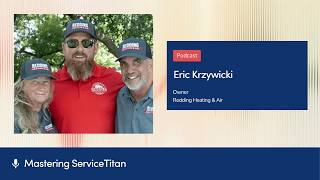
In this episode of Mastering ServiceTitan, host Josh Lew interviews Eric Kurzwicky, owner of Redding Heating & Air and Call Buddies, about his dramatic personal and professional transformation over the past year. After a decade of heavy drinking and a looming divorce, Eric quit alcohol in March 2025, rebuilt his personal life, and used that momentum to overhaul his business. He fast‑tracked the adoption of ServiceTitan in July 2025, moving from handwritten contracts and legacy phone lines to a fully integrated suite (DispatchPro, Contact Center Pro, Marketing Pro, AI‑driven scheduling and after‑hours calls). The new tools enabled 24‑hour booking, higher average ticket values, a 30‑35% revenue lift with the same staff, and a $100 k‑a‑day sales milestone. Eric also expanded services (adding a plumbing license) and launched a second company. Throughout the conversation he emphasizes psychological safety, allowing failure, transparent communication, and “cliff‑jumping” leadership as the cultural glue that made the technology adoption possible. He shares concrete practices—daily huddles, photo documentation, one‑on‑one check‑ins, publicizing wins, and coaching privately—that built trust, boosted morale, and generated 20‑30 five‑star reviews per week. The interview weaves personal redemption, operational metrics, and leadership philosophy into a cohesive story of how trust and technology together transformed a struggling HVAC business into a high‑performing, growth‑ready organization.
Chapters
Making any type of change is very difficult for team members sometimes. Letting them know that you're going to be there for them if they fail, I think is super important. And they have to know that. You have to allow them to fail a little bit, and you have to help them correct their own actions and pick up and help them when things get rough. You have to let them know before you're going to make a change, like, hey, we're going to do this as a team, and we're going to implement this, and it's going to benefit all of us.
Welcome to Mastering ServiceTitan, where you get expert advice from power users. I'm your host, Josh Lew, and I'm here with Eric Kurzwicky, the owner of Redding Heating and Air, as well as Call Buddies in Chico Heating, Plumbing, and Electrical. And, uh, we are talking about how Eric had an amazing business turnaround story, has been on ServiceTitan for less than a year using a bunch of AI prompts, and, uh, pretty much dive into how he did all that.
And so, yeah, thanks for joining the show.
So, um, I know we, we just spoke about this before I hit record, but can you share a little bit about your turnaround story?
You know, about, uh, 6 years ago, uh, I started my company here in Northern California. I'd been working, uh, in the software, uh, previous to this, and I was drinking quite a bit and doing things I shouldn't be doing and kind of just letting my business run on its own and I came home one day and my wife had divorce papers ready for me. And I was like, oh shit. You know, I'd been drinking for, you know, 10 years plus, like pretty heavily. We got a couple kids and, you know, I knew it was a problem but never really took it and ended that part of my life. And I quit drinking and that was in March of 2025. And in April, you know, I kind of got back to work full-time, you know what I mean? Like, I'm like, I need a new project for myself and the business and show up, uh, for the people that represent the company a little bit better than I had been. I'm like, well, it's time to make a switch and we're going to switch to ServiceTitan, you know? And so I came in the office one day and I'm like, hey, how do you guys feel? They're like, you know, we're ready for a new software. We're outdated. And, um, after playing with that idea for a couple of weeks, I set up a couple of meetings with ServiceTitan and talked to a couple of different software platforms. Was like, okay, you know, we're going to move forward on this. And so I'm going to do this as fast as possible. I asked my team what they thought about going live in the middle of summer. And they're like, you're crazy. They're like, if you want to do it, get it done. Uh, we went live in the middle of July, in the middle of summer., I wanted to launch some things, uh, and not necessarily jump into the pro products as much. I knew there was some pro product stuff that was out there. Um, but I just don't think I was ready for it, you know, and I was feeling it out. And so during this time of like implementing ServiceTitan and setting it up, um, of course I'm on their website and Josh, like, you know, coming in, like I was listening to your podcast, like 4 or 5 hours. A day learning about ServiceTitan and the capabilities, uh, because I wanted to know what the features were that were going to be out there for me to get to, like stepping stones. Me kind of understanding ServiceTitan as a whole, uh, was like super important. So I'm like listening to all these people and I'm like, wow, ServiceTitan does this, ServiceTitan does that, like things that I didn't even really know about or like couldn't even be excited about. We got it up and running., and, uh, part of, uh, joining ServicePack at that time, you guys were getting 2 tickets to, uh, Pantheon. I was like super stoked on that. I didn't really know what Pantheon was and that was my first one. And I'm like, whoa, my God, they're all like, these people are legit. Like, you know what I mean? Like, I loved it. We went live like on July 17th. I knew like right away, like last year it seemed like in like 2025, like all like the big names in the industry were like talking about like booking rate and this rate and that, you know what I mean? And I'm like, I never had that data at my fingertips. You know what I mean? Like we're still using like POTS lines, like the old school phone system. You know what I mean? Like, so like the advancement that came behind Service Python and, you know, we had a flip price book and a couple of different things. And so like, that's how we were running and a lot of handwritten contracts, like they're all handwritten, everything was handwritten. So I'm like listening to these podcasts, I'm like listening about, uh, this lady, uh,, I for— I don't have her name, but she's like talking about like payments, pay structure, and like touchless accounting and like, you know, like sending this off to like everybody in my office. Like, you gotta listen to this one and you gotta listen to this one. And like understanding like what DispatchPro is and like sending, you know what I mean? Like, and the efficiencies it could create. And so like, I'm like listening to all this stuff and, uh, when I went to Pantheon, there was a gentleman there and, and, uh, he had, uh, you guys had talked about a couple different things. Like, first of all, like RL was like amazing. He's like, He got up there and was like, talk about how many companies had $100,000 days. He talked about companies, how many companies had million dollar days and like listening to some of the headliners and like sitting in on some of the sales. Like there was a sales presentation that Tom Howard did and like a couple of these other, uh, guest speakers that I sat on and that I could listen to that like would resemble like me, you know? Well, in the meantime, I'm like sitting there in a meeting hall and like it wasn't working out with my wife and stuff still, and she had rented a house and moved out while I was gone. And so like my REIT cameras went out off while I was sitting there, like a U-Haul pulled up to my house and she's like loading up all of our belongings and she'd moved out while I was at the interview on that week. And I was like, whoa. So I'm like sitting in the hall, bawling my eyes out. You know, I care and I love my family. And in the meantime, I love my business and I love the people that I work with. And so. Uh, I just do to like stay true to myself, stay positive in my only, you know, like I can only kind of control what's in my hands, you know? And so, um, there's a gentleman that came up there and he like started talking about some things and he was like, um, write down like the top 3 things that you want from Pantheon. And, uh, one of mine was like learning more about automations. One of the other things I want to do is learn more worry about marketing and understand MarketPro. Another thing that I wanted to do was build a new company, you know, uh, the area that we were in, uh, could, you know, we could do a little bit better where we were at. And then also I always wanted to expand to another, uh, local city that's about 75 minutes from us. So there's like a list of things I wanted to have $100,000 a day in sales, you know, cause I'm like, I want to do that, you know, like we should be able to do these things. And, uh, and I believe like ServiceTitan, by giving us the tools and the resources, we could do that as a team. But I mean, realistically, that's just like selling 5 jobs in a day, you know, not even including the service work. Like, wow, that's kind of pretty achievable. We could like do these things, you know what I mean? Like people are like, oh, how can we sell $100,000 worth of stuff in a day? And it's like, well, just put the sales guy right in front of 5 people that have old systems that have urgency and want to buy a new system from you and that trust and like your brand. And I'm like, so I started breaking some of these things down.. And then I'm like, oh, this is real, you know? So those were a couple things that I wrote down. Uh, and then like one of the things that I wrote, he's like, how are you guys gonna show up? Like when you go back to work? And mine was like, showing up was gonna be with a passion. I wanted to start showing up to work with a passion with myself. I'm like showing the employees of the business that I show up, I care, and I care more, and I'm currently gonna care more and more every single day. Anyways, like I just kept driving on the pro product stuff and with the Max program and like being around other ServiceTitan users, like some of these people I've never met that are on your podcast, but I feel like they've like really helped to change my life and made me, kept me motivated and like, I don't necessarily go to AA or anything like that, but it's like my little AA meeting, you know what I mean? Like listen to each other's stuff and usually like, helps keep you focused and driven. So now we have like DispatchPro running like pretty well for the most part, you know, and like, I, I didn't think DispatchPro was that cool or like that great until like we implemented it and we started changing things and watching it tweak it around to like see the value of it, you know, because like when you're implementing these things, you don't really know what you're doing 100%. You're like, okay, yeah, that's great. We're going to do that. But then when you get it done and figured out, you're like, I could never go back to the way I was, you know? And so it's like working on myself and working on my business and empowering the people around me and getting them involved with service titan and my office staff. And now they love service titan. So like service titan is a huge culture around our company. So I just kept really working on myself and doing those things. And so my wife and I, we stuck together. It was probably really good that she had moved out. And, um, we were able to like co-parent really well together and like learn how to date each other again and like learn how to have fun, you know what I mean? And like how to claim things and do things as parents with our kids. And like even some of the conversations she would have with us, like with me, it was like, hey, how's service Titan going? Like, what are you working on? Like, cause she's kind of interested in the business, but not really. She's a nurse and so she was just like. I'm, uh, she doesn't want to be a part of the business, but she knows how much I love it. And she like, listen, she get in my truck and she's like, turn this podcast down, you know what I mean? And then I'm like, no, I'm like, you have to listen to this stuff. This is like the best users in the nation, like doing the best stuff on it. Like, how can you not listen to this? So she went down and like in the same week, like we had our first $100,000 sales day. I'm still sober. I'm doing these things. I feel like I'm a better parent than I ever was. I connected with my children better. My kids come here, you know, they're in 2nd and 4th grade and they come here every day after school. They'll be here in a couple hours and like, this is where they grow up. And so like, we've got little young ServiceTitan users, like looking at ServiceTitan screens all around the office every day. And so like, just staying proactive on those things. Having the schedule engine help book our appointments and use the AI agent now for after-hour calls, right? Like, so we could take calls 24 hours. We're using Marketing Pro, some of the best practices and stuff like that. We're scheduling really well. We have 24-hour booking at this point, right? And Dispatch Pro has helped us put the technician in the right spot. And like, I was so mind-blown when like Ara and like ServiceTitan people who they put up that video of like the start to finish in the customer journey and the experience of how it works, like, you know, what their future looks like on ServiceTitan, allowing younger technicians to learn the trade better through like training with AI, like the AI goggles and like that cool little booby that they created. I'm like, cool, we could really do this, you know. Numbers are off the top of my head right at the moment, but we have grown, I would say, a solid 30-35% with the same marketing budget, with the same office staff, actually with one less office person, with, you know what I mean? But we were able to manipulate things in our price book, make our prices better and like fine-tune things. And we're operating like better and financially better, profitability better, cash flow better. Like the probably the most important things it is to being a business owner. Like everything in my life has gotten better. Of like dedicating my time to my family and my friends and my business. Like my friends, as you've gotten better, Service Titans, we're like rocking better. And now it's like giving me the freedom to like go start another business. And so like all in this last month, you know, we started a new business and we're like implementing the Procodex and stuff like that into the new company right now. Just to even dream of those things, like You can't really do that when you're not sober, you know, um, and your focus is off and like, you know, like my family, obviously like they weren't as happy as they are today, but like if I didn't get sober and like if I didn't start Service Titan, like I wouldn't have been at my kid's baseball or football game, like watching him play or booking calls. Like we just, that would've never happened. You know what I mean? Now we're like, it's 90 degrees today. In our area, we're taking less calls, you know, and we're booking better calls. And our technicians have a higher average ticket. Our sales guys' average ticket's like a few thousand dollars more. Our install crews are running more efficiently. I actually feel like I got my money's worth and I'm happy with it because it's like working, you know what I mean? Uh, sometimes people, when they buy things, they're like, oh man, was that worth it? Or is that not a good idea? Or they get stuck with a product or sign— set up with a 1-year contract or something. But then now for me, having these things implemented is like, this is awesome and I could never live without it. You know? So that's a little bit about my journey for the last year. Um, we did acquire a plumbing license, uh, as well. And so, um, we're going to launch plumbing in our local area here shortly. Um, when we get through summer for to go live with that sometime in August, but probably by September 1st, I'm very excited about plumbing and seeing the average tickets of that.. And then also having a good plumber that we would put in the right seat in front of the right customer and, uh, ask for a review when we're done, you know?
So, wow, what an epic journey. Can you talk a little bit about how, uh, this has impacted your employees?
There was a little bit of teeth pulling cuz we had to implement people taking pictures because before we'd be like, oh, take a picture, put it in the software. But they would have to like take a picture and download it, get it uploaded or whatever. It was like this huge process of getting these things. Now they're so in routine of taking pictures, they're taking like a lot of pictures, like, I don't know, 30 pictures on every job, you know, they're filling out mobile forms that are pre-built. And so at first there was pushback on it, but now there's such high quality notes and everybody is looking and reviewing things so much better. Uh, when we implemented Contact Center Pro, when we get a phone call or something like for a sales appointment. Like from a customer, our sales guys are like, wow, we can listen to the conversation that's going on from the customer with the dispatcher. So then the sales guys are like down there training the dispatcher, you know what I mean? Like how to book an appointment better, do this. And so the communication has gotten better and the expectations has got better and the, the process of the customers has gotten better and the reviews that we're getting. I would say we're a small company, but we're getting 20 or 30 5-star reviews a week right now, where before we would just get one. And so like letting everybody know that, hey, reviews are coming through and how many are coming through, it makes the morale better and everybody happier. Sharing the numbers and the data with everybody in the dispatch floor, like in the morning huddles, is like, at first they're like, oh, why are we, why do we have to be a sales company? Why do we have to talk about that? Why do I do this? And it's like, Now they're all pumped and their commissions and they're getting bigger paychecks and their, their families are happier. They're better off. People are more thankful and grateful to work here. You know what I mean? Like the older techs, like with Sales Pro and stuff like that, like they can come in and teach and we could listen and record. And before they're like, we don't want to use that. We don't want to record the conversations. And now it's like, yeah, we do. What were we thinking? We don't want this. Wow.
You guys have undergone so much change. Do you have any, like, leadership advice on change management? Now in the AI era, there's, like, new stuff coming out all the time. How did you change the culture from a place where, you know, they didn't want to do this stuff, and now everyone's stoked for change and to implement new stuff?
Change for me is very easy. I look at something. Switching the thing off for me of saying, hey, I'm not even gonna drink anymore. At first I did that for my wife to try to keep her around, you know what I mean? And it wasn't until like I started exercising and like changing my eating habits and things like that where like, oh wow, I'm actually doing this for myself, right? This is better for me, you know? And so I learned that being able to like show that to the employees of the company, like, hey, this is going to be better for you. So they're like, because they're being led off a cliff, basically, you know what I mean? Like, I want to build a team that will jump off a cliff with me. That's like true leadership. That's what you want out of, out of your team. Like, when we're all going to jump off a cliff, let's jump. And so making any type of change is very difficult for team members sometimes, and they don't like it, and they get pushback, and their brain has to work a little bit different. And people get so used to, uh, this habits and the day to day and then stop and do the same thing, right? And letting them know that you're going to be there for them if they fail, I think is super important. And they have to know that. You have to allow them to fail a little bit. You have to help them correct their own actions and help pick them up on the things that they've dropped. And you have to let them know before, uh, you're going to make the change, like, hey, we're going to do this as a team. And we're gonna implement this and it's gonna benefit all of us. And also allow people to speak up where they feel like they can communicate with you at a higher level. Being able to have the trust that they can communicate with you without being reprimanded or feeling that, well, they have to trust that they can do that communication with you. Get their points of views on things. And when they ask for help, you actually have to show up and give them the help or give them the resources that they need to get through throw it, because if you do that a couple of times and you're not hearing from them, it's a bad taste for them. And then they just don't believe that they can bring anything to you or that you're, that, that they matter as much. Right. So training them and getting them the education and then letting them communicate, those employees will jump off the cliff with you as a leader. Have the conversations, the bad ones internally, like with that person. It doesn't have to be public, right? But publicize the wins and then coach some of the problems on the side. And, but set the expectations of like, hey, this has got to be fixed, or we got to agree from this, or we need to push in this direction. It has worked really well with the leadership for us.
Wow. There's, uh, two things I'm reminded of that maybe we can wrap up on. One is, um, you demonstrated something, uh, Google, they did this huge research project on, they're trying to figure out what is the biggest factor in high-performing teams, and they found out the biggest factor is psychological safety. And they've defined psychological safety as team members are willing to like speak up, disagree, and be completely honest and transparent with how they feel and not be reprimanded for making mistakes, failures, disagreements, and things like that. And you've cultivated that, it seems, really, really well on your team. And then the second thing this whole conversation just reminds me of, that parable of like the guy who wanted to change the world and found out he couldn't change the world. And so he tried to change his country and it was too big. It was big task. He couldn't change his country. So then he tried to change his town and it was still too big and he couldn't change his town. So then he tried to change his family and still it was like too many people. And so at the end of the day, he realized, I gotta, I can only just change myself. And when he changed himself, it impacted his family and then his impacted family impacted the community. Like this whole story just reminds me of that parable and you are like, Just a prime, perfect example.
That's crazy that you said that. I didn't know the study about Google. That was a big thing in my personal relationship with my wife. Like, you know, she got to a point where she didn't feel, I guess, psychologically safe in the relationship. She was just like, I don't feel safe to trust you with my emotions. I don't feel safe to trust you with, like, a lot of things. I didn't think I had a problem. She, like, eventually, you know, when she told me, she's like, I feel safe to come home. Interesting. Like, it's funny that you say that, but there is a lot of things with safety, um, that I learned with the team and, and making sure that they're okay in the, in just a little one-on-one check-ins with people. Hey, are you okay? Can I do anything for you? Obviously we can't change the world for 'em. We can't do anything outside of like the realm, but making sure that they're safe and comfortable to communicate with you at work is like super important. Letting employees speak and letting your loved ones speak a little bit and becoming a better listener and let them voice and then ask questions and then validate their concerns and show up for them builds a lot of safety. It's built a lot of safety in my personal life with my wife. She feels like she can communicate with me at a higher level. And she like is right now currently, she's like, I'd never felt this close to you ever. Like, I feel like I can communicate really well with you. And so just validating, like even just when somebody says, says something to you, you just let them know, hey, uh, I heard what you said and, and repeat it to them and then let them know that you're going to respond with something that is going to help improve their concern or their issue. And, and then actually do that, like on baby steps and, and see what happens. And we did that with service Titan. And then, but you guys like empowered me through a lot of that, like getting there, podcasted, because like you can't just come in and change, like we're doing all these probiotics, we're doing all this, but getting somebody going on our product, like a team member in our office, like, hey, you want to give this probiotic to you? Let's get it implemented. And then they can email me, text me, call me, talk to me, you know, our offices, like right here, it's like my office, your office right there, right? Well, workers just say building, you know, you need And so having those little interactions and communications and then also let her, when they, when you can tell that they're doing a good job, you have to tell them, right? Like, I feel like you're doing a good job today. You don't have to buy, give them a treat or anything like that. Just let them know that you appreciate them and they're doing good. And it's warming and welcoming for, for employees and, and your wife, right? Like sometimes people just need a little, like, hey, good job. And then when, when things are bad, let 'em know and then how they can improve on it and, and to listen to the, their concerns and, and acknowledge that. And, uh, so that is one thing that I've done. I probably learned some of this in, in therapy the last year, but like that's improved my office staff like tremendously.
There's so many lessons and I'm sure we could talk for hours and hours from each topic alone, but thank you so much for being so transparent and sharing just like every aspect of the whole change journey and this transformation over the last less than a year, which is insane.
You know, like I, I'd been trying to get my technicians and my employees to make a traditional dinner and put everybody at the dinner table and just ask them what the highlight of their day was to get everybody communicating around a dinner table. Because we're not used to that anymore. When we're with our customers, sometimes sitting down with them and talking with them and getting on their bubble is what we need to do to build that trust and to build that relationship. Getting in the home and talking with them and communicating with them and letting them know and reassuring them that they're safe with you, that shit has changed my life, you know? Uh, and obviously I'm, I'm sh— I'm safe with service type now too. You guys like big brother, you know?
Oh, that's amazing. Well, yeah, thank you again so much. Um, and yeah, I just wish you the best in the journey. I'm excited. I'll have to have you on again, maybe at Pantheon. I, I'd love to meet you at Pantheon, have you back on the podcast. We can record in person and, and catch up again on your journey. But it's, it's epic and super inspiring. So thanks for coming on, and thanks, everyone, for listening.
More from Bill



ServiceTitan Virtual Agents: Simplify Before You Scale | Podcast Ep. 110 | Mastering ServiceTitan



Life After Live Events: How to Turn Post-Conference Energy into Real Profits | Podcast Ep. 297




