Stepping Into Ownership of a Legacy Business | Podcast Ep 219 | Toolbox for the Trades
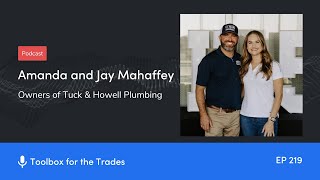
Podcast interview (Toolbox for the Trades Ep. 219) with Jackie Aubel and guests Jay and Amanda Mahaffey about purchasing and scaling Tuck & Howell (Greenville, SC). They bought the 55-year legacy HVAC company from Jay's uncle in January 2023 and rapidly grew revenue (from ~$4.3M to ~$11.2M) and headcount (35→63), added a plumbing division (≈$2M since launch), implemented ServiceTitan and new accounting, used KPIs and performance pay, performed top-grading of staff (retained 6 original employees), and prioritized culture and hiring practices (whoHire personality testing, one-on-ones, incentives). Key themes: brand identity, financial discipline, fast implementation, hiring the right people, and networking.
Questions this video answers
January 2023
From about $4.3M to $11.2M (tripled) in less than two years
Inherited 35 employees; current headcount 63; six original employees remain
About $2 million (since August 2023)
Hello, contractors, and welcome to Toolbox for the Trades. My name is Jackie Aubel, and today I am speaking with the owners of Tuck and Howell in Greenville, South Carolina, Jay and Amanda Mahaffey. Since purchasing the company from Jay's uncle in January 2023, Jay and Amanda have tripled their revenue and doubled their team. I hope you enjoy listening to their story and growth strategies as much as I did. Amanda and Jay Mahaffey, you are the owners of Tuck and Howell in Greenville, South Carolina. Today I'm going to talk with you both about how you work together as a team to grow your business from 4.3 to 11.2 million in less than two years. Very impressive stuff. Welcome to the show.
Yes.
Thank you for having us.
Thanks for having us, Jackie.
Yeah.
I am so excited to chat with you guys. During our pre interview, you guys displayed so much energy and enthusiasm. I know you just got back from an amazing conference where you learned a ton of. So I can't wait to pick your brain. But we're going to start this off with an icebreaker, like I always do. I want to know what's something that you've learned about Jay since you guys have started working together at Tuck and Howell that you didn't know before.
I did not realize that Jay was as quick of an action taker as he is. We go through our financial statements every month and we'll, you know, make a business decision of what we should do next. And as soon as we make that decision, we, within probably. I'm not joking. 30 minutes, he's on the phone. He's like, okay, we'll meet you next week. We'll have scheduling a zoom and getting the ball rolling. So he's super quick at making business decisions and implementing them, which, I mean, I think in the industry, that's what we, with our mentor groups and people that we pick, their brains are like, move, move quick. And then he's also really good at making tough decisions, which I have not necessarily struggled with. I love people. So when you have to let go of someone that you really like. Yeah, he's just built different than me. But I've learned. I've learned both. Both of those about him.
My uncle was tough on me.
Yeah.
But he did that. He was preparing me for the world to go back to taking action. You know, time is money, and we have to act fast. They say implement fast. And that's what we do. We do the best that we can and creating processes and procedures for those actions, but we have to act fast. So, yeah, if I could Just add about Amanda. I have found that she is really, really good at compiling data. She was a financial analyst and she is a beast with the numbers. I know all those many late nights that she was working and I didn't realize that she was preparing for our future and seeing her take all the data and just simplify it for me, because, I mean, of course I'm starting to learn. I've learned the financials, I've learned the numbers. But before I thought it was a really, really hard task. And she's made it. She's made it simplified for me, and it's really made.
I used to tell them, like, it's so cool. I swear, financials are so cool. You should learn them. But I think that. That he now realized is the importance of financials.
But talk about it. That's like two. But that's also. That's so incredible. You're great at firing and you're great at analyzing numbers. Like, it seems like you guys have.
Just really good at firing.
Yeah, she makes me sound mean. Jackie.
I don't think. I don't think. I mean, I'll give you a pass on that. I don't know you personally. I haven't been fired by you yet. I mean, I hope I still have many life and a lot of life ahead of me. We'll never know where life will take us.
But.
But I mean, this is talking to how a wife and a husband running a business together, you guys can really complement each other with your different skill sets and your different talents.
Yeah. You know the cliche, hire slow fire fast. You have to. At the end of the day, it's like someone grabbing your wallet and taking a brick of cash out of it and handing it right back to you. So you have to make sure that you're making really fast firing decisions. It's. That can cost you a lot of money.
We'll say it's a superpower.
We'll roll with that. That's what you want.
There you go. Well, you've already hinted at it a bit, Jay, but you mentioned your uncle. You know, he. He was hard with you. He taught you some stuff. I want to hear about your backgrounds and how you eventually decided to purchase Tuck and Howell from your uncle. So, Jay, why don't you tell me how you got into the business and then became owner. And then, Amanda, I want to hear a little bit about what you did before you joined the business.
Yeah, yeah, absolutely. So, started here at Tuck and Howell when I was seven years old. Little boy sweeping the floor Helping my father and my uncle was. He didn't pay me much, but, you know, lollipops. Yeah, he paid me in lessons. You know, I didn't see it at the time because everyone wants, you know, money fast, fast, fast. But what I got was lessons and lifelong learned lessons and learned how to install, worked my way into service, got into sales. I told Amanda, when we hit $4 million in sales, I was going to. I was actually working for a competitor at the time because I left working for the family business.
Why did you leave working for the family business?
Oh, you want to hear that? My. My uncle. So he fired me a couple times. The first time he fired me, he was sitting on the dock. He said, jay, you, seven minutes lays, and let's. You're fired. Go ahead and go home, and we'll. We'll. We'll talk six months to a year when you get your stuff together. So I said, okay. The second time around, I guess I didn't learn the first lesson, but nonetheless, it's crazy. I. I actually thanked him for firing me two years ago. But anyways, it was always the prove it to me to him. And so after I had hit $4 million in sales, I told Amanda we were going to. We were going to start our own business. But the missing component throughout all of that was brand, and we didn't know a name. So friend of mine, a mentor of mine, Alan Crick, used to actually work for service Titan. I had started doing some research on branding and, like, businesses, and I ran across Bullseye, and I said, dang, I think that's Alan's company. I called him. He said, yeah. He started talking about this brand and. And kick charge. He said, yeah, yeah, yeah, I'll give you Dan's number. I said, wait, you know. You know, Dan. What's Dan's last name? Dan Antonelli. I said, oh, that's cool. So anyways, I'm giving Dan a shout out because I feel that I truly owe it to him for putting us in the. Putting us in business.
And, yeah, that was when you decided, I'm ready.
I read. Dan said, jay, you have to read the book. You can't get the brand until you read the book. I read the book from COVID to cover, and in that, the proverbial light bulb went off. And I told her, when I set the book down, I said, I'm ready. Let's do this. And so I took it back to my uncle, and I said, hey, we're starting a business name. I'm gonna start a company. Amanda and I are gonna. We're gonna go and venture out. And he said, I thought you were gonna buy a tuck and owl. I said, what, Jerry? You don't want to sell tucking owl? He said, yeah, I do. I'm ready to go. So I said, well, let's do it times of the essence, and let's go ahead and let's do it right now. So we went ahead and moved forward with that, but that is how we got into the business. And I always wanted to carry on the family legacy. It was part of who I am. And being that I grew up working here when I was a little boy, it's just a cool story.
That story of I was seven minutes late and I got fired. That sounds like something out of my family.
Lord.
Like, I kind of get the vibe there, but what an incredible story and kind of a full circle moment. So, Amanda, you had a finance background. When did you join? Was it decided that you were going to join? When Jay was like, we're purchasing the business. How did that go?
So I started accounting when I was 18. I worked for Jersey Mike Subs. I did 21 stores. I did book 21 stores for eight years. And then I moved to a company called IGY and worked under a really, really good boss who actually ended up being the CFO for one of our competitors. And he taught me a lot. Taught me a lot of financial Making sense of raw data and compiling it. Financial statements and financial analysis and balance sheets, balance sheet reconciliations. For all you financial gurus out there, I love financial statements. They're my jam. When he decided to buy the company, we left. We liquidated our 401k, sold both of our cars because we were prepared to potentially, you know, not do really well. At first. We jumped in and.
And head down selling.
Went in together.
Yeah.
Yeah. Dang.
That's awesome. What a story. So I want to hear what were some of the biggest challenges you faced when you purchased the brand? How did you go about addressing them?
I would definitely say 100%. Walking in from an employee to an employer.
Yeah.
With 35 people looking up to you to make sure that they can have a secured paycheck each and every single week. And what that is is true leadership. And, you know, I was the leader of our household, but all of a sudden, we're signing checks. Right. And so we're responsible for those 35 families eating. And we had to make sure that we had the calls, we had the bills paid, we had the lights on, we had the money in the bank. Yeah. So I went from a hustler to a leader and still trying to figure out the whole leader role. Right. I think that we all are. Right.
Yeah.
And so we all can speak to that.
I think the biggest challenge walking in was I had my own first set of financial statements. You know, I, I owned them. They weren't somebody else's.
And. Yeah.
So coming in and being able to go in and identify, hey, you know, I don't have anybody else to ask or anybody else to look to. Are these decisions the right decisions? And so we built a business plan off of them and, and we had to implement, we had to implement fast. And so I think that was challenging. We implemented service Titan, we added plumbing, re rebranded, we added a new website, we change pay structures, went into a new accounting software within six months because we had, we had to make change fast because the company needed it.
Mind you studying for plumbing test.
Yeah.
And I'm a heating and air guy.
Came in and made change fast. And I think the challenge with that is, is the people that were there had been there for a long time. This is a 55 year old legacy company. So the challenge behind making so many changes and they think these, these young kids are coming in here, they don't know what the hell they're doing. I've always gotten along with everybody that I work with and so not being liked was new to me and so kind of rolling with that because I knew that we were making the right changes. You know, we network, we pick a lot of brains and so I knew the direction we were going was the right direction. Having them believe that also was challenging.
Yeah. And especially with the added baggage there of you being part of the family. You left for a bit, now you're coming back. I could definitely see how that could add more fuel to the fire.
Yeah. They thought we were crazy of hell.
Well, you didn't just put a new like layer of paint on you basically like gutted the whole thing. And which it sounds like for the better, like you really made some incredible improvements. And we're going to get into that in a second. But I'm curious, you don't have to answer this if you don't want to, but out of the 35 employees that you got that you inherited when you bought the company, how many of those original 35 are still with you?
Six. Six is the original.
Yeah. Six.
Yeah.
And you know that goes back to top grading and making sure that you have the best team. It has to piss you off to be in second place to Work here. And we're a room full of winners. You know, how much money it costs to put your tires in that customer's driveway is a lot of money. We have to make sure that we're maximizing opportunity and also on the flip side, making sure that we are doing a good ethical service for our customers. Because ultimately, that is what the founders of this company built this company on. And we will do that, by all means. I don't want the money. I don't need the money if it's not right. And so making sure that things are done by our protocol and the way that we operate our business, that's the biggest thing.
That was the most challenging part. Getting everybody on board.
Getting everybody on board.
And then they were seeing us let people go. So that was another hard part.
It was hard.
It's a lot of change.
When you guys came in, it sounds like you had a high expectations for yourselves. You had. You were. You were holding yourselves to high standards because you had seen how other companies could do it. Like you said, Amanda, picking everyone's brain, you knew you were going in the right direction. You just needed people on your team who were going to help you rise to those standards.
Right.
But also, I think something that, you know, we're kind of circling around here is if you're at a company for like 40 years, 30 years, and you're not being challenged, you're not being encouraged to think differently or think outside the box or question the way you've always done things that can become really stagnant and that can make people feel maybe a little restless. So it sounds like those six people, they've gotten to experience something incredible, which is the refreshing of a brand that they've contributed to.
Can. Can I tell you something? I learned, actually, I learned this last week and I heard this, and it actually caught me off guard. Retention sometimes is not always good. Because if you settle for this, you're going to get this every single time, right? So we, to have this, we have to keep trying to get that. And so, you know, people walk into businesses and they say, I want everybody to stay, but do you really want everyone to stay? Because you have to really rehire them. We do a personality exam here. It's required before pre employment. We will not hire. And then, oh, yeah, by the way, you got to do this. We require. No, it's pre employment exam.
There's a famous Tommy Mellow statement.
Which. Which one?
Retention sometimes is not always.
Yeah, he's like, people are always like, retention, retention, retention. What's your retention. And he's like, it's okay not to have roof retention. He's like, sometimes you don't want retention.
Yeah.
Saying like, in other words, like, if you don't have your top performers in there, why in the heck are you trying to retain. Retain them? It just hit home with us. We're like, you know what? It is okay to. To be like, you know what? You're not a top performer if you're not going to follow with our leadership and our plan, we're going to provide you the training. We're going to provide you the leads. We're going to provide you the tools, the. The environment. We even got two cats. I mean, we got you.
What are the names? Okay, first off, most important, what are the name of the cats?
Marvin and Margaret. So we raised them as a team since they were babies, too. So it's been really fun, but we're like, we've got you. So, you know what? If you aren't willing to follow our path and know that, you know, trust us, then it's okay that you go somewhere else. Attention. Suck. Not not having you is okay.
Yeah. We came in at 35 employees, and we have 63 now. So about 54 of those help raise those two cats. It's been really cool. They definitely are the center of attention in a lot of the meetings.
Yeah.
What's the personality test that you give them?
We're switching over to who Fire.
Okay, cool.
I don't know. I don't know what the name of their actual personality exam is, but that's direction we're moving. Oh, it's a company called who Hire.
It's the most valuable dollars you can spend that. Do you want to tell her about the $500,000 check?
Yeah. When we were in a demand, it was another thing that hit home. It was the other week. So we used to just feel warm bodies. You know, we just were new company. It just felt like we were just trying to get people in place to help us do what we needed to. And so now I feel like since we've rebranded and built a company that people actually want to work at, we're having. We're able to pick. Right. We're able to pick from a selection of people. So one of their concepts was, it's very expensive to hire. Right. And so he said, write a fake $500,000 check, and on the back, quit writing a job description. Write personality traits that you're looking for in a hire and the metrics that you expect them to have. And then write a kill day. And if it doesn't align, then you got to move on. Just because of, you know, hiring people are. It's expensive. And I think that the cost of. Of new hires, sometimes people forget is very. It's expensive.
That's really good, isn't it?
I was like, you know what?
So when you take an actual check that you Write it for $500,000 and on the back you write down all the personality traits and what you're looking for in this employee and then you put a kill date. You said. So, like, if they don't fill it by that date, maybe they.
Maybe they didn't say kill date. They might have put like an end date.
I like kill date a lot more. It's a lot more powerful actually say.
Kill date, but yes. I mean, and then. But I think it really just PUTS.
Well, that 90 day period and on.
Your management, like, hey, this is how expensive it is. And Laura Kelly, she actually, her team at Clover hosted that. And I listened to it and I was like, I really like this. And so that's the direction they specialize in.
Stuff for the trades, by the way.
Yeah.
Is one of their specialties.
I'm excited.
I think it's not the only. But it's one of the specialties.
Oh, Laura Kelly from what's the name of the company?
With Clover.
With Clover. Okay, cool. Good tip. For those looking at it, I mean, I think the visualization, the writing things out, I mean, they do that in dating programs too. Like write out exactly the traits that you're looking for and be really specific about it. But onboarding is so expensive, like finding the time, hiring the person, you don't have time to just like, wait for them to figure it out.
I always say here, the heating and air and the plumbing is easiest. The people is the people. That is the hard part.
Yeah.
And if you can figure the people out, but make sure you hire right. That's the biggest thing. Tommy Mellow prides himself on hiring the best. I listen to a lot of his stuff and it's really impacted me a lot, so.
Well, you are definitely giving Tommy Mello interview caliber guest right now, so maybe one day you'll be on there. Jay, you say? So speaking of, you know, saying plumbing and H Vac is easy. The plumbing wasn't always easy because one of the things you did when you first took over the company was you opened up the plumbing division. I want to hear a little bit more about how you made that decision and what the impact it's had on your business. And I know it wasn't easy at first.
Yeah, absolutely. So my favorite saying in this whole entire industry is that we crawl by more work in one day than we could do in a month if we just offered those services. I was finding myself to literally be grabbing the water here just to get into a crawl space so I could go look at the furnace.
Yeah.
And so when I'm doing that, I'm like, oh, wow. You know, there's a piece of equipment I could sell for, call it anywhere from 2 to $4,000, maybe an upgrade, maybe from 4 to 7,000. The plumbing really complements the heating and air, and the heating and air complements the plumbing. The trades run together. And you, you take a software like service time, for instance. I mean, it really runs together. So is the KPIs. I mean, you're almost tracking the same thing. Productive labor, average ticket closure ratio, things like that.
Your gross margin for the plumbing division is better than the H vac.
Wow.
Really? We were like, you know, they say we hear a lot, and I'm sure people have different opinions, but of course, 60 to 65% gross margin on plumbing, and it's been, It's. It's the golden child.
I mean, the reason for that is there's such a shortage of plumbers, and typically the first person to the door gets the job. You know, think about it. If you don't have plumbing or, I'm sorry, running toilet, things like that, running water when you get home, it's a showstopper. It renders your house useless. You have to leave there and go somewhere to shower, things like that. So typically, if you could offer a good service and get there, when you say you're going to get there and be reasonably priced, you can get really good money for basic plumbing necessities went from zero to five. Plumbers just hire six. And it's about a 55% gross margin. And we're in growth mode. We're buying tools that I've never heard of, but my plumbers say they need it. So we get it. We get it for them.
We're working on our gross margin. And we've done what since January or since August 2023? About 2 million in plumbing.
Yeah. And we have realized that only 14 of our customers use us for plumbing. So that is a. A whole new market share that we're going to be able to at capture. So, yeah, working on that.
Awesome, awesome stuff. All right, well, that is really exciting. I want to hear more, especially from Amanda, how You've leveraged data and KPIs. I mean, you already had those gross margin numbers right on the top of your head. Which way to go?
You.
I want to hear how you've learned. Used data and KPIs to leverage, how to leverage them to make informed business decisions.
From day one, when we looked at the company, that was the first step, literally step one. We looked at the financial statements and went through, created our business plan on the financial statements, looked at it line by line, and I was like, unapplied labor? What in the world is unapplied labor? And Jay mentioned Alan Crick was one of our first people that we really kind of picked his brain. I was like, alan, what are the industry margins? And so I really just started looking at it departmentalized of what's industry margins and where was the company at? So we went from there, developed our business plan, implemented it, and then we every month go line by line through our financial statements and say, okay, why are we high? What is this? We use our financial statements to make every decision we make. And now we also have that for our team in house. We use Data Cube, where they pull from the back end of ServiceTitan, which is like a dashboard for service titan, to create a competitive, healthy atmosphere within the company. And so they see their KPIs, I see their booking rate, their inbound calls, their closing rate, their average tickets, you name it. We are KPI metrics people. It feeds the financial statements. You've got good metrics, it leads to your financials. So that is how we make every decision. And our team is now making every decision on that as well as management. And we do performance pay based on those metrics. So it's really cool to see people walking up to their dashboard and being like, you know, what's my closing? Right, what's my.
Yeah, well, the first. They wanted to know what it was.
Yeah. So we, of course, we sat down, we're very open with our numbers. We explain, we show our budget, we show our actual revenue, we show all KPIs. And we love metrics. That's our jam.
Can I add something to that real quick?
Yeah, of course.
You know, they track KPIs in sports, they track it in football, they track it. Baseball, they track it. I mean, virtually every sport. So why would you not do that in this industry? And so I think it's. It's the science behind the P L ultimately. Right. It's what makes up the. The grand scheme of all the numbers to start with. So the KPIs are the. Are the daily P. Ls.
And I'm proud of this guy because he used to be like, financial statements. I'd be like, babe, you should look at this piano. Or I'd show him stuff back before we owned tucking ho. I was like, wanted to explain. And I would go in the room and I would tell him financial stuff, and he didn't care. He thought it was rocket science, but it's really not. People think it's so hard. It's as simple as watching you.
I ignored it because I didn't understand it.
Yeah. And one day, obsessed with it. Now he loves it. I'm like, I'm so proud of you.
I could take anyone and teach it to him. Because it's that simple.
Yeah.
Most people ignore it because it's a gazillion numbers, but it's the most gazillion numbers you need to pay attention to.
My kids. Even though now amazing imbalance sheets. I mean, that's how easy it is. My kid, my teenagers can learn it. That's how easy it is.
Well, the fact that you got teenagers to care about it enough to learn it, I mean, kudos to you.
They are. They are. I think. I think we're creating monster entrepreneurs. But I'm like, you will be thankful you know, this one day.
That's awesome. Have you guys ever met Ellen Rohr?
I love Ellen Roar. Yes, she is. I really, really, really look up to her. I'm actually in a girls group with her. Catherine. Megan likes Stephanie Allen. Tons of people.
That's right. That's right.
Sarah Hepworth Love.
Oh, my gosh.
So they. They've been huge inspirations. Ellen, as far as financials, Ellen's like the financial guru.
She is. And she's like, this is easy. This is really simple stuff. You can't. It's black and white. It's numbers. Like, you can't. You can't make up any stories behind these. Yeah.
Numbers don't lie.
Numbers don't lie. So I love that. I love that you were able to do that and you were able to. I love that you're now obsessed with KPIs. Jay. That is. That is inspiration.
Yeah. I'm really proud of him.
I want to add one thing about Ellen. Ellen. She has probably been one of the most impactful females in the trades of all time. And I've never told her that, but I. I'm dead serious. Like, she.
She powerhouse.
When she talks, everyone listens. You know, it's. Yeah, it's really? She's very.
Numbers don't lie. And she's just trying to let everybody know.
I love that she's financial oriented. She knows the financials, but she does.
It in such a way that she's like, let me help you. Like, let me support you. She's just. And she's so accessible. I'm pretty sure she listens pretty regularly. So I'm going to make sure she listens to this episode so we can share how much we're loving on her. We already talked a little bit about company culture, right? And like having that high standard that for yourselves, for your employees. And you kind of alluded to it, actually, when we were talking about KPIs, about how your techs are like, what's my closing rate?
What.
Why is it like this? Like, you're getting them invested in it. So I want to hear some ways that you're fostering a positive and thriving work environment.
First of all, you know, people want to provide for their family, but also people want to have fun and they want to be proud of their workplace.
You don't want to come to work, right? Yeah, we all do.
The heating and air conditioning part, the plumbing part, that's the easy part. But the people part, they say it's the hard part. And it is a little bit of that, but it's not as hard as everyone makes it out to be. And if you're kind and you hire right, you high. Right? But two, you know, a lot of companies talk about their budget. They talk about their. Their numbers. They're this, they're that. Most employees don't care about your company budget. They care about their budget. They care about their family. So take the time to sit down with them and talk to them. Hey, how's home? How are things at home? What's your favorite sport? Don't talk a wicked business. If they bring it up, converse with them about it. But they want to see. Yes, it's our goal to help them provide for their family, but also help them with their dreams, help them with their goals, help them with their aspirations.
We've seen a big that's culture since we've started doing one on ones and setting out their goals and creating and seeing how we can help them with their goals. And we do performance pay and incentive pay. So I think that's also another big part because it not only grows us, but it grows them. But our culture, we're trying to make our. We're working on making our building better. So people want to come and they enjoy Being in a training room when you have training. We did a meeting to convince Jay. We all sat around and wore mustaches and did a petition on why we should get cats. And they have been so good for everybody. I mean, people come up to us all the time, and I'm not joking. They're like, I love that we have cats. They have been so good for us. They go lay around on everybody's desk. And now there's a precursor for the hiring. Hey, are you allergic to cats? Because if so, you can't work here. The cats aren't. The cats aren't going.
The cats aren't going anywhere.
But not only that, we. We really do care about growing our people, and I think that they feel it. And I feel like we're creating a culture of, when you come in here, we want you to want to grow yourself, and we want to help you get to your. Your goals.
Yeah.
And, you know, it feels like a team.
It has to be genuine, though.
Yeah.
And because people. People feel it. They know when you're being real and honest, and, you know, your superpower is speaking from your heart. And so I just say, just speak from your heart, and your culture will fall in line.
Another thing we've done for culture is we have. We've hired a fun fairy. Her name's Cindy. She's great. She creates, like, competitions and. Yeah, all kinds of fun stuff just to keep things, you know, peppy around the office. And decorating contests for Christmas or for the Super Bowl. We did, like, a game board and.
Celebrating our plumber's child's birthday.
That's culture.
That's the culture that you have to chase. And so when people see that you care about their children.
We care about our people. They help us get. They've helped us get here. One of my projects I've really focused on is making sure that people want to work here, and people see that we also want to help them grow.
The first question you had asked us was you had asked about, what did I see in Amanda that I never really saw before? And I want to go back to that first question is, I really did not know Amanda was capable of engaging to the level with people as she is. It's heartfelt, it's real, it's genuine. I can run this business, Jackie. I don't feel I would ever be as successful if I didn't have that piece, because that's. That's the people piece. That's the culture piece. The revenue can come. The people can come and leave and go and you can hire. But the real key players, the A1 players, the best ones, will stay here because of that engagement. And that's, that's the most important part of the culture.
And that's probably why I struggled so much, because I love people and I think that is why I struggled so much when we first came in here.
Not being like, yeah, yeah, like here you fire. Yeah, I got to keep my Persona, I got to keep my reputation.
But now I have been able to get to a point where, yes, culture is important, but if you're not producing, you're not a top. If you don't want to invest in yourself, we don't, we can't invest in you. But if you're willing to invest in yourself and follow our leadership and follow where we're going for we care about you, we want to grow you, we want to grow your income, we want to grow your family, and we want you to stay.
Yeah.
People that have helped us get to where we are are important. They are. Yeah.
Yeah. I could hear it in your guys voice. It comes off as incredibly authentic, incredibly genuine. You guys, by the way, are incred. Incredible. Guest slash co host. You're asking one another what they think about. I'm obsessed. You're making my job very easy.
This is our first podcast, so you know, we're trying.
This is going to be an excellent podcast audition reel for you guys to send around the trades.
It's easy when it's true passion.
You know, we love business, we love entrepreneurship and we love numbers.
So, yeah, well, we're coming to the end. Not that I want this conversation to end because I'm having such a great time with you guys, but I would love to hear, since you're still like, I mean, you purchased second Howell in 2022, right?
2020, January 2023.
So I mean, guys, you like two, two years and a bit of change. Like you're still so fresh into this. You've done so much stuff and I can see how excited you are, how much the company has just grown since you guys have taken the helm. What advice would you give other entrepreneurs who are considering buying an existing business or even starting their own in the trades? Jay, why don't you go first?
The best piece of advice I have, someone coming in to buy a business, start a business, is to identify your identity with your brand, who you are. Start with that. Because when you look at the pictograph of Apple, you look at Target, you look at all these, these brands, it's so important because when you think of that brand, you immediately think of, like their logo, their. You think of who they are. It's like a wheel. Each piece of that all supports the center, which is the brand. So you have to make sure that you don't. You can't mess that one up. You got to make sure it's called Dan. Yeah. Call Dan. Yeah.
Notice.
Yeah, Sorry. Competitors. But do business with the best, partner with the best, hire the best marketing firms. But the most important is your financials. Understand the numbers, because you can really steer your ship in the wrong direction. And here's the numbers girl right here. What say?
Yeah, Well, I think this is a good example. So recently I have a teenager, so I've been busy the last two months a little. Not less involved, just working maybe normal hours, not 80 or 90 hours. And our financials got two months behind or three months behind. And it felt like we were driving blind for the first time in a company. And so we're caught up now. And we got our financials and I told Jay, I said, I will never feel like that again. That was the most unstable. Just. It just was. It just didn't feel right. And so I think when you're going into a company, understand financials, watch a YouTube. It's not difficult. Do YouTube on a piano. Balance sheet, a cash flow statement, it can make you or break you. Because if you don't know your financials and you don't realize, you know, hey, I'm not making any freaking money. I don't think that would be a really good idea.
If I could add one more, it's incentivize your people and pay them really well. And on a performance pay model.
Yeah.
As an employee before I did this, I made really good money because I performed, I worked hard. And so if you can uncap their potential, Rev, you know, with money, it really separates the true performers from the non performers. But some people want performance pay and they don't know they want performance pay. So you can't. You have to just be careful with that.
This is so core. This is like so fundamental to growth. And what I hear from successful entrepreneurs over and over and again, you have to make sure that your financial goals are tied to your employees individual goals. You said it before, Jay. They don't care about your budget. They care about their budget. So you've got to find a way to incentivize them in that way. Guys, truly excellent, excellent, excellent episode. Thank you guys so much for sharing your thoughts. And I could tell how passionate you guys are about this. I have no doubt that you are also raising mega entrepreneurs right now. So I can't wait to interview them in the future.
Thank you.
Thank you, Jackie.
You guys are fantastic. Is there anything we should have touched upon that we didn't get a chance to.
We love what we do. We love the people in the trades. And I think what one key piece is network, Network, network and network some more. I think we've had influential people. The other day I said Tommy Mello, Ken Goodrich, Leland.
Leland Smith. Yeah.
Ishmael, Ellen Rohr, Catherine Howard, Jonathan Beck, Johnson Bancroft, and I mean name dropping. Yes. But they are so helpful. They are such open books. They want to truly help. Don't be afraid to ask. Ask and take note and then ask some more. That has been huge for us and it's been super.
Don't be scared to ask. They want to help you more than you think they do. And it they were where you are.
We're in a really cool industry.
Maybe worse. Yeah, it's really cool. It's really cool. I did not know that all of that existed. And the network has really been our success and superpower. It's really been amazing.
Network.
Excellent. Excellent advice. Well, thank you guys both again.
Yeah, thanks so much. See you.
More from Bill



ServiceTitan Virtual Agents: Simplify Before You Scale | Podcast Ep. 110 | Mastering ServiceTitan



Life After Live Events: How to Turn Post-Conference Energy into Real Profits | Podcast Ep. 297




