Strategic Partnerships: Build Legacy and Generational Wealth in Garage Door Businesses
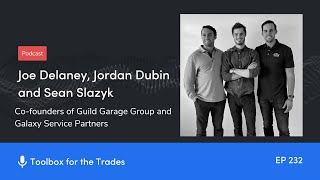
Interview (July 2025) with Guild Garage Group and Galaxy Service Partners co-founders about building platform companies in residential and commercial garage door services. Key points: founders met at ElCatterton and applied roll-up/platform playbook from home-services investing; Guild (started 2023) grew to ~20 partner companies with ~5 under LOI and projects ~250M revenue by year-end; Galaxy launched Feb–Mar 2025 to address commercial/industrial segment; core capabilities include ServiceTitan-led data standardization, centralized sales and tech training (tech training reportedly increased average ticket ~25% within ~one week), payroll/HR/finance integration, and a minority-ownership partnership model designed to preserve operator expertise and create generational wealth.
Questions this video answers
April 2024
About 20 partner companies (with ~5 under LOI).
Approximately $250 million in revenue by the end of the year.
February–March 2025.
Garage Door Medics (San Diego), owner Nick Dubsevic.
Hello contractors and welcome to Toolbox for the Trades. My name is Jackie Aubel and today I am talking with the three co founders of Guild Garage Group and Galaxy Service Partners, Jordan, Joe and Sean. Guys, this is a great conversation. We talk all about how they are doing some incredible work with their platform companies to enhance both the residential and commercial garage door spaces. I think you are going to love this conversation just as much as I did. Jordan Dubin, Joe Delaney, Sean Slatton, you guys are the co founders of Guild Garage Group and Galaxy Service Partners. I'm so excited to have you guys here. Today we're going to be talking about how to help residential and commercial garage door businesses reach their full potential through technological innovation, strategic partnership, and locally driven best in class service. Guys, welcome to the show.
Awesome.
Thank you for having us.
Actually, before we even get into anything, some people are going to be watching this on YouTube, which I recommend they do because we are being shot in 4K right now, baby. In person. But for those of us who are driving and listening, I would love it if maybe we could distinguish everyone's voices through the icebreaker. So I'm gonna ask you my icebreaker and Joe, I'm gonna ask you to answer first. So this is Joe. What song, if any, would be the soundtrack of your life?
That is a great question. I think I'll have to go with Don't Stop Believing by Journey.
Classic.
It's been quite the journey with Guild and Galaxy. There's been a lot of. A lot of hills that we had to climb. And so I think the awe, always the optimism that you need is kind of what I recognize.
Jordan, I will ask you to answer the question. What song, if any, would be the soundtrack of your life?
I know this is a bit of a cop out, but I'll kind of say all Ellie Goulding music. Oh, cool. I think what you'll find is all three of us are big fans of her music. And you come by the office and you'll most likely hear an Ellie Goulding song or two playing from at least one of our three offices.
Really? Wow. Ellie Goulding stands right here in the flesh. Right here. What's that song she has that like.
Like burn?
Yeah, yeah.
Joe brushes his teeth to that song every morning.
Really? Was it a full three minutes? That's why you do it.
Exactly.
Sean, it's your turn to answer the question. What song, if any, would be the soundtrack of your life?
I'm going Ice Cube. Today was a good day.
Nice.
I think you find all the little things in Life, right? How often do you get to be in California filming a podcast?
So we got hair metal, we got techno pop, and we've got gangster app. I love it all represented here. Guys, I am really excited to have you on the show. You've got a fantastic, really, really interesting story. I would like to know because, like, I was looking at your LinkedIn, I was, I was scoping you guys out before we got here. You guys have some really impressive backgrounds. Like, you've got degrees from some of the best colleges in the United States. You've all worked for investment firms with names that we all recognize. Why Garage Doors? How did you guys get here? I would love to hear the story.
Yeah, so we met while we were working at Ella Catterton. We were different ages. Joe and Sean are a year older than me, but we were all first year associates together. And so when we met, it was literally the first day of work at Elkadderton as first year associates. And, you know, all of us loved our time at Elkadderton. I think that we learned a ton and kind of even today, three, four years later, we have so much respect and admiration for the people there who basically taught us how to do what we're doing now. While we were at El Catterton, we learned how to build platforms in various different industries. You know, optometry, collision repair, vet clinics. But one of the final categories we looked at before leaving was H vac, plumbing and electrical. And so Joe was actually on the deal team there. And I think what's interesting about the staffing model at a place like El Catterton is you're not just responsible for the investment, the IC bring down, or creating the materials, doing the diligence. But then post transaction, post deal closing, you basically become a part of that team. And so we kind of jokingly, but also not jokingly say that during those months, during basically the final year of our time at El Catterton, Joe was basically the VP of Finance, VP of M& A for Lend the Plumber and Sean similarly for one of the vet clinic platforms we had. And so I think why Garage Doors is in that second year at El Catterton, what we saw through Joe's experience and the firm's experience in investing in Len the Plumber was the residential services category, broadly, is a really, really attractive category to play in. And you have a bunch of different pockets. You have H Vac, you have plumbing, you have electrical, you have landscaping, and you have garage doors. And so what we saw firsthand through Lend the Plumber was there's real industrial logic that supports consolidation within resi services. And you have these incredible tailwinds in certain pockets, HVAC being one of them. And you know, the role that digitalization, branding, best practices has played to grow these industries is tremendous. And so the question for us was, okay, you know, it's 2023 at the time, what is the next H vac? What is a category that maybe is three to four years behind H vac in terms of one, the consolidation cycle, as they call it, but also best practices? What's a category that is just now starting to wake up to branding digitalization? Perfect example. What is a category where the adoption of Service Titan is relatively nascent but is growing by the day at similar rates that h vac was five, 10 years ago? I think we kind of almost accidentally stumbled upon the garage door industry, but it's such a naturally adjacent category to H Vac. And you hear that and you see that firsthand. And talking to all the partners we have within Guild and so many of them not only have friends in the H Vac industry, but almost like mentors where they have connections with the local largest H Vac company. And they've visited their shop, they've come to their shop, they pulled kind of the training curriculum from this H Vac person. They did the branding from that age. And so it really is kind of like brother and sister category, if you will. I think that's a long winded way of saying our experience and exposure to H Vac kind of naturally led us to garage doors.
Yeah, you know what's so funny about that? I've been at Service Titan for eight years as of August. You're recording this in June. So I'm on my, coming on my eight years. We had just opened a garage door service as a software company when I started. So it's interesting how you kind of saw that similar thing in seeing the success of the H Vac plumbing residential side at Alcataran. And then you're like, oh, I think garage door is really going to be the next industry to have this significant boom.
Totally. Here's a fun fact for everyone listening. We just partnered with the first ever company to use Service Titan in residential garage doors. Garage Door Medics in San Diego, Nick Dubsevic, incredible owner, even better person. He's a true industry legend. First ever residential garage door company to use Service Titan.
Hell yeah. Oh my gosh, that's so cool. Okay, so my question here. So the three of you are working at Alcataran. Joe, you're working as like, VP of finance, VP of everything for Lend the Plummer. Sean, you're in the vet space, which also has a crazy consolidation story. But this is not a veterinary podcast, unfortunately. But I have heard a lot of whisperings about it. When did the three of you decide, like, look at each other and say, hey, let's create a business together? I want to hear how that happened.
It certainly didn't happen overnight. You know, we spent a lot of time of time together over those two and a half years. And I think for months we'd kind of throw around the idea of, hey, now's the time to take a risk. You know, we're younger. By the time we get older, it just gets harder to kind of take the leap of faith and try to do something. Because anytime you try to do something, there's no guaranteed success. I mean, you have to go into it with the mentality of you're going to do everything to succeed, but if something bad happens, then what? And, you know, Sean and Joe at the time had two very serious girlfriends who are now their fiancees. And so it wasn't just a one person decision. It was, hey, there are a lot of people who are quote, unquote, collateral here. And we have to make a decision that's right for everyone involved, not just ourselves. I'll share my perspective on it. I don't want to put words in Joe and Sean's mouth, but, you know, there was risk for sure. And I think you're always going to be a little timid and scared to take the risk, but life is kind of all about taking risks and doing things that don't feel comfortable. But I think it's important to kind of grab onto the things that give you comfort in taking the risk. And so for me, what gave me comfort was the following things. You know, one, this is all we did for two and a half years at El Catterton. It wasn't a new form of investing. It wasn't a new industry. You know, we had learned the ropes from people far older and far wiser than ourselves. And we felt very, very comfortable in the strategy. You know, what we always say is the fires that we are tasked with putting out day in and day out at Guild and at Galaxy are the same ones we were tasked with doing for three years at El Catterton. So I think one, having the domain expertise and knowing exactly what we would be doing day one helped a ton. And then two, and I think this is more important is if I had Joe and Sean I really did not see a world in which we were not gonna be successful. And I think having partners that you trust, but more importantly, that you admire at a level that supersedes any of the expectations you have for yourself, which is candidly how I feel about these two, that's what gave me comfort, is, you know, I sort of looked at myself in the mirror, but it was more looking at Joe and Sean and knowing there's no way we're not gonna be successful. And I think those two things put together gave me the confidence and the comfort to take that leap of faith and kind of go headfirst into the mud.
Wow. What an endorsement. Shawn and Joe, you should, like, cut that part out and just put it on a compliment reel.
Well, Joe paid me before this to say that he wrote it out on the plane.
Joe, I'll let you take it. Anything you want to add to Jordan? Like, what was it that you were like, okay, guys, let's do it?
Yeah. I mean, I would just echo what he said about Katterton. Right? Like, that really was a formative years for us, and I think we learned so much and prepared us so well, you know, particularly, you know, my time with working with the lend the plumber team. It's actually called now master trades group. So shout out. The master trades group company learned so much, and that was such a well organized organization that, you know, jumping into another home services roll up did not feel foreign. Did not feel like a crazy risk. It felt like, hey, I've done this before. I know exactly what this is supposed to look like. And so it really did feel familiar with. With kind of known risks.
Got it. Sean, anything you want to add there?
I think we all felt comfortable that we knew the guardrails, what can go wrong, what can't. And so stay in your lane. Start off slow, get comfortable, and then add fuel to the fire once you get that comfort. And I think that putting the three of our minds together, we're like, we can accomplish whatever it is. Right. No matter what that problem will be. If we sit in a room for an hour, 24 hours, 48 hours, we'll figure it out. We'll be able to get through it. And candidly, like, that was more exciting to us figuring that out together than sticking around and doing it in a silo.
Yeah, that's really cool. I love that you were drawn towards that collaboration component. And thinking of the way I'm hearing your answers is like, we're stronger together, the three of us, than we would be solo.
Yeah. I think that carried forward to our strategy with Guild in the early days of Guild, where the same comfort we all got in partnering with each other and leaning on each other translated to how we thought about the strategy for growing Guild. I mean, Guild day one, our intention was never to buy out businesses and insert our own management teams, let alone us to be the management team. I used to joke with owners, which I still think is very true. If I were to run your business, it would go to zero in three days. And so I think for us, we took that approach in leaning on each other to leaning on our first couple of partners. And I think with hindsight, like, if you were to do an autopsy on what we did well in the early days of Guild, and believe me, we did a lot not well in those early days, but what we did do well was not coming in with preconceived notions about the growth strategy, about the hiring strategy, about the marketing strategy, about the payment strategy, but instead finding unbelievable owner operators in the industry. We call them the Mount Rushmore of the category, and. And tapping into their domain of expertise and really treating Guild like this blank canvas where we felt if we got the smartest minds in the industry around the same table and everyone put their heads together, we'd create something really special. And so I think about some of the earliest partners within Guild, like Jeff Sanford from garage door. Dr. Jake Wald from Rightway. Terry Calshute came later into the fold, but has been so instrumental to our strategy. You look at what we're doing today and what the corporate team is doing an amazing job of in growing the business. You can trace all those growth strategies back to one of the early partner companies and their businesses. There's so much that we do today that you can look at Garage Door doctor And realize it came from that same as Right Way, same as a. Same as Gator, same as Goody, and the list goes on. And so I think what we did well was tapping into the domain expertise of our partner companies and then empowering them. And so what we've always said is, you know, we're stewards. We came in to build Guild, but we're stewards of Guild. It's about bringing the smartest and the best minds together and then allow us to figure out the resources and the manpower to take the vision and your domain expertise and make it a national platform.
Yeah, that's really great.
What we've always said is you've got the answers to the test somewhere. Right now, it's just on us to go Find them. Whether it's Carrie and A or it's Jake or it's Jeff. Right. Everyone's tried some permutation of something and it's either worked or it hasn't. So use those experiences and use what's gone.
Right.
And more importantly, what hasn't and make sure to avoid those land mines. Right. Use everyone's collective knowledge in the industry for the last 20, 30, 40 years in some cases.
Well, I think what I was really grabbing on into your answers here is that you guys entered this space with a lot of humility. Even though you had your expertise of doing this type of work before you went in, knowing that you had to make up, you were subject matter experts when it came to actually creating these platform companies, but you needed other expertise to fill in the actual garage door installation and service component. And so you went out of your way to really partner with the best and the brightest.
I think that's a really nice way to put it that we came into the category with humility. I would say we came into the category having no idea what we were doing. But yes, humility. Humility is one way to look at it.
Well, I think acknowledging that you have no idea what you're doing is definitely humility. And when what I've heard, because you know, we've been doing this podcast now, we're coming in on 250 episodes. I can't believe it. I've had several private equity companies come on the show before. I've had several companies on the show who've had great experience with private equity, several companies who have changed ownership. And one of the themes that always comes through is if the new leadership team, whether that be a private equity partner or a second generation owner, may be coming in. If they come in there, like with the tell me what's working, tell me how I can support you, like coming in in that collaborative, humble sense, then it usually goes a lot better versus like, I'm the new boss and I'm going to tell you exactly what you have to do. Just doing the show and talking to business leaders that have been successful. Knowing what you don't know is as just as important as knowing what you're really good at. So this way you can hire and find support for the areas you're not good at.
Totally. And I think there's an element too when you go and partner with companies and you're on the road sourcing, where there's self selection bias, where the companies that buy into that vision, the owner operators that buy into that Vision. They're the ones who are willing to bet on themselves. They're the ones who know they're doing things the right way, but also they're the ones who want to share that information. You know, they're not sitting there saying, I have the secret sauce. I want to grow my business. Screw everyone else. The people who sign up for the Guilds and the galaxies of the world are buying into a vision of, I believe what I'm doing is great. I also believe I can learn from others and I want to share what I do great and I want to change what I don't do great. And so I think by kind of establishing that as our identity and not compromising on that and having that as the bedrock of how we build these platforms, it draws in naturally some of the best owners in the industry. And so I think that self selection bias is so powerful to both platforms. Really?
Yeah, for sure. So I actually want to get into. So you have two companies, you have two platform companies, Guild and Galaxy. So can you tell me.
We're not very creative. We can only come up with names.
With only with G's. Tell me where Guild stands right now. And you said you started it in 2023, correct?
Yeah.
Okay, so where is Guild now? Just to give our listeners an idea of the size of your platform and what kind of brands you're representing. And then I want to get into how Galaxy was formed.
Guild has grown a ton. You know, it's hard to believe that we closed our first acquisition 14, 15 months ago now.
Yeah, April 24th.
Wow. And yes, we are in the process of launching Galaxy. But you know, what we tell everyone is we're nowhere near done with Guild. You know, we are not taking our foot off the gas. We have no plans to do anything with Guild anytime soon. Every day it seems like Gild takes that next step forward. It's been a story of growth, obviously for the last 15 months, but I think now in the last four to five months, it's a story of maturity and seeing the development of some of the organic growth initiatives that we've laid the foundation for for over a year now. And candidly, I think myself, Joe and Sean, we give all that credit to the executive team we've brought on, led by Tim, Todd and Jake. I mean, they've done such a phenomenal job of creating the foundation for not just next year's growth, but decades of growth to come. And it's just exciting to see, you know, daily the organization seemingly becomes more professionalized. The organic growth continues to increase exponentially, which is what it's all about, you know, making it not just a story about M and A, but creating a platform that, you know, we want to redefine this industry for decades to come. You know, I hope to have a portion of my net worth tied to Guild for as long as I live. And so that's all to say, you know, the Guild story is still chapter zero, not even chapter one. Not taking our foot off the gas at all. And it will continue to grow. And I think one of the reasons we were comfortable with starting Galaxy is it is such a naturally adjacent category, and there's a way to put your thumb on the scale while managing both and leverage the two without having to redirect your time and your priorities. So, Guild today, I realize I didn't even answer your question. Guild today we're at about 20 partner companies. We have another five or so under LOI that should close over the next two to three months, and we expect to be a little over 250 million of revenue by the end of this year. And we continue to grow. And again, the story's far from over.
Congrats. That is awesome. You started in 2023. Wow.
It's kind of like.
But a lot of luck. A lot of luck involved, too, I think. Lots of long hours trying to find the right team, interview after interview after interview. Right. Trying to get the exact team right. We're incredibly blessed to have, to Jordan's point. Tim, Jake, Todd, Daphne, Kelsey, all these people on our team. And candidly, that's the reason why we're even able to start talking about Galaxy at this point. Right. The business is fully taken off. And Canalee. I feel like, to a certain degree, it's almost outgrowing us with every passing day.
Right?
That's incredible. Do you guys ever just, like, take a minute and look at each other and go like, holy crap, like, 250 million in less than two years?
No.
You should.
We don't have time to.
I don't even want to know how.
Many hours a week you guys work.
I actually sometimes go into Joe's office and I'm like, 250 million in two years. Isn't that crazy? And he says, get out.
Don't jinx it. Okay, so to my understanding, Galaxy, you guys were doing this great stuff with Guild. You guys brought all this energy, all this passion into creating this platform company. You're partnering with fantastic folks on the residential side as you're growing Guild, you have commercial garage door. People come to you, say, Hey, I hear you're doing something cool. And you're like, oh yeah, that's great. But we don't do anything with commercial at this moment. Okay, no problem. Another commercial guy comes in, hey, you guys are doing something cool. Great, yeah, we would love to work with you, but we can't really. And so this happened like three or four times. Then you finally looked at each other and you were like, we should probably create a platform company for commercial garage doors.
Well, I think one of the questions even before that was do we create just this ginormous company that does it all, that covers industrial, commercial and residential. Similar to a certain extent like this company called DH Pace, which I think more so over indexes towards commercial industrial, but has some residential. And I think what we felt is, and we're seeing it now as we alluded to earlier, one of the kind of biggest advantages Guild has is the executive team and some of the organic growth initiatives we have. For example, we have a five person sale sales training team. That curriculum that they've created that helps grow each underlying brand and their tickets tremendously is meant for a residential garage door company. And so to start bringing commercial and industrial companies into the fold, you'd either have to have 2x the size of the executive team or really not have true domain expertise. And so we kind of looked at it as if we really want to be targeted and have really next level organic growth for the platforms we create. We need to be focused. We need to have executive teams that are catered and curriculums that are catered to the underlying businesses within that platform. And by spreading yourselves too thin between residential, commercial and industrial, it compromises that. And so how we kind of think about it is yes, there are businesses in Guild that do some light commercial like JDOR is a perfect example. And I would actually argue J Door and John and Mike Safelli, they were part of the reason we got so excited about commercial. You will have businesses that do commercial, but our kind of true north is Guild will always be 90 plus percent residential and Galaxy will always be probably 95% plus commercial. But that's kind of how we thought about it. But yes, it was a question of one. We know this industry, we know the ecosystem, we know the players, both the dealers. But also we have unbelievable relationships with some of the manufacturers like Clopay Amar, Liftmaster. And so staying within that ecosystem and just looking at a different side of it, I think to us felt like a massive advantage.
Cool. So you just started a whole other new company. You're like let's do this. But twice over. That's kind of sounds like what you. What happened.
That's basically how easy it was. Exactly.
That's basically how easy it was. Okay, so I want to know and Galaxy, when did you officially kick off Galaxy, when did Galaxy come into fruition?
February. March. Really?
This year?
Yeah.
2025.
Yeah.
Well, I mean, compared to your growth for Guild, I mean you're probably. It's already like astronomical growth, right. I want to hear what happens in a typical integration process, either in Guild or. Well, let's use Guild because that's the one that's been here longer. So like if someone joins the Guild family, if they agree to come on to your platform company, or what does that integration process look like?
First of all, I would say it's unrecognizable from what it looked like just six or eight months ago. Right. It's changing by the day, which is just phenomenal to see that maturation curve. But kind of our model, right, is integrate early and often. So what we want to mitigate is you close a business and then there's a dark period, right, of like, hey, you know, we don't know what's going on on a day to day basis. So we try to push all of that onboarding from an integration standpoint to before the deal closes. So when that deal closes, boom, we are there on our Service Titan, right from day one. And so we're tracking them just like we do every other company, right? Marketing, we push all that integration to pre close. We get them on our payroll system pre close. We get them introductions to the training team. And so from, from day one, it almost feels like, hey, they've been a part of Guild for a month now because some of our systems and processes are already there. So I would say, you know, the data and getting clean data is just paramount to our process.
Well, I know that one of your qualifications for someone joining your platform is that they already have to be using a CRM like Service Titan, right?
So we've actually, we've actually partnered with businesses that have not had been on a CRM in the past. And that's obviously a bigger lift, but we have seen tremendous success. You know, I would point to there's a business called Aaron Overhead, which we tucked into Right Way. And that business was, you know, generally speaking, pen and paper before. And to watch that business explode once it was put onto Right Way systems. Onto Right Way's instance of Service Titan has just been phenomenal. And you have, you know, that business Owner, his name is Larry Conti. Go from not knowing sort of, you know, he always had a pulse on what was going on in the business, but now all of a sudden, we have data to drive, you know, key decisions. Every single day is just phenomenal.
Okay, that's awesome. So you get. So when someone is signed up, like, yep, I'm joining the Guild family, you get them going basically right away. So this way, when the transition officially happens, it's super seamless.
That's exactly right. And I would say special shout out to Ali Dees. She is. She is spearheading that, and she is just phenomenal at sort of mitigating that. That time between post acquisition close and getting them up and running on service Titan.
Okay, cool. So one thing I noticed when I was looking through all the fun materials that Jordan shared with me is that you kind of look at. I was looking at the model kind of as like, okay, if you join Guild or Galaxy, these are the things that we're going to help you with. This is kind of like it's like a hub model, right? But then there's also things that are locally driven because all you have brands now all across the country, like, they're not even located. I was looking at your map and I was like, wow, your miles must be great, you guys. So many free flights. But anyway, like, I'm curious, how do you differentiate what does Guild take care of and what do you keep locally driven and locally owned in terms of an operations standpoint?
Yeah. So I would say, you know, from when we were kind of designing this strategy, right, we looked to the brand owners, and so Tim O'Reilly, our CEO, the first thing he says whenever he talks to a prospective, you know, brand president is, hey, if I was a genie and you had three wishes for Gil to take things off your plate, what would they be? You know? And that kind of developed our strategy of, hey, what's, you know, what's tedious and annoying to these business owners? How can we help? There's a lot of things that make sense to still operate at the local level. So as a perfect example, it's culture stuff. So we partner with a brand, right, that once a month they would bring in breakfast for all their techs. And we're not going to change that. You know what I mean? Like, that is phenomenal. That drives culture, that drives performance, that drives just good attitudes. Right? And so things like that won't change. What will change, though, is our ability to, from a system standpoint, from a finance standpoint, from an HR standpoint, culture, anything sort of tech related, leading the techs.
Technicians.
Technicians, exactly. And, you know, collecting ar, things like that are much better, sort of handled at the brand level and then sort of more broadly back office systems. Our sales training, that's sort of handled on the, on the central side and the corporate side.
Yeah. Jordan mentioned your sales training because it's. I got, I got a nice little stat here. I love when I can refer to a stat. So your tech training program under Guild has proven to increase average ticket by 25% within what, one week? That is like. That's incredible. What was the. What technique or strategy do you accredit that significant change to?
So it's generally basic sales training. And the team has done a phenomenal job. Kelsey Gassman and her team have done just a phenomenal job. What they've done really, is what Sean and Jordan were talking about earlier, which is, hey, let's go to our brands that are doing things really well. Travis at Goody, you know, the A team. And figure out what they're doing and kind of apply that to everybody else and develop that into a teachable curriculum. And so really what that comes down to is, hey, take your time, slow down, build rapport with the customer. Right. And all of a sudden that's just gonna change the name of the game on what you're able to sell, you know, and it's. It's actually taking the time to listen to say, hey, what does the customer actually want? They called about a roller, but maybe they want more than that. It's as simple as that. It's just take your time and slow down.
Yeah, I've heard that a lot with sales experts that have come on the show before. It's a lot about the professionalism. The instead of looking to sell, someone is looking to educate them on their options and not making assumptions about what they can or cannot afford. That kind of thing.
Exactly.
And I think, I think too. And, and Kelsey is such a good champion of this, and her curriculum does a really good job of emphasizing this is, you know, part of it too, is equipping some of the technicians and installers with a level of professionalism and training that even if they're not a part of that brand in five years, they can take with them and carry on for the rest of their careers and whatever they do. So I think part of it is also empowering the local technicians to really supercharge their own personal careers, whether that be at the local brands or for something they do down the line. And so I think that what we've tried to do, and I'm not going to take credit for it, I think it's Kelsey who's done a really good job of this, is really allowing people to level up across the entire organization.
Yeah. And I'm assuming most of your service technicians across all of the brands are on commission structures. Most likely, right?
That's right. But I guess it goes beyond that. Right. It's not just service tech training. Like, we're rolling out sort of a GM and training program, and so it's sort of all across the gamut, which is fantastic. So I would say sort of any position you want in Guild. The goal is, you know, at some point, you know, there will be training to get there.
Okay.
Which is really cool.
And it's a really cool opportunity for networking, too, across the brands. You know, the networking between the owners, the. That's natural, you know, as we alluded to earlier, it's bringing the best minds around the same table. But what about the GMs, what about the technicians? What about CSRs? And so what our training curriculum has done, again, I feel like I'm taking credit for it. It's Kelsey and her team, Chris, Short, Fox, all them, is they've brought together the benches behind the owners across brands and across states for local trainings, meetups, even, like fun kind of communal events. And I think for me, that's what gets me the most excited, is seeing this national network and even like friendships develop between technicians at two brands, whether it be PDQ in Cincinnati or all four seasons in Atlanta. Seeing those technicians come together, meet each other at these training events, and then maintain not just relationships, but friendships kind of coming out of that. I think that's a really powerful thing. And it goes beyond just a network of owners. It's truly a national network of employees.
Yeah. Of professionals within the industry.
Professionals. That's the best way to put it.
Rising tide lifts all boats kind of thing. I really love that. So kind of going back to the question of, like, okay, if I sign on with Guild and I am now, I'm now a member of the platform, what does my first 90 days look like? Okay, I'm integrating. We got things going day one. Things are going smooth. I'm assuming then that when it comes to brands, do you do some sort of evaluation process where you look at, okay, this is what they're really good at. This is where they need some help with. You ask the. Your CEO asked the genie question, which is a great question, and then do you kind of like tailor the next like 90 days, 60. I'm thinking about onboarding an employee essentially and like mapping it to that. Is it similar? Am I on the right track?
Yeah, you're on the right track. So we have a brand maturity model. Right. And we stack a company to say, hey, at the very top you might have a company like A plus, which is our business in Salt Lake. It's absolutely phenomenal. And then on the other end of the spectrum, you might have less sophisticated business that might currently be on pen and paper. And so the steps that they might have to take, the low hanging fruit that's there from a sales training perspective might be a lot greater than it is at somebody like a, who's been doing well and doing it well for decades. And so that's where it all starts, is figuring out exactly where they are in that maturation curve.
Okay. And then from that you kind of like tailor their experience to like adapt these new things. Like, okay, we're gonna get you started on the sales training side now or we're going to, I don't know, hire Dan Antonelli to redo your brand or something like that.
That's exactly right. Right. I think one of the biggest ones is, hey, if you're a brand and all your techs are currently paid hourly, that's a big switch we have to make and that. But a lot of times you step in and hey, there actually are on, they're on some level of incentive pay. It's not the guild one that we use, but it's pretty close. And so the switch there is, it's not, it's not going to take, it's not going to take a lot of effort. Right. People are going to be pretty receptive to that. But hey, if it's a big change, like, hey, people are paid hourly and we're going to migrate them over to incentive pay. That's going to take some time. It's going to take some buy in. Right. And so items like that is just, we'll meet them where they're at and then get them where we want them to go.
Got it? Very, very cool. Okay, now I want to talk about tracking all this. This is a lot of work. Like the four of us in this room right now talking about. Yeah. And then we implement sales training and then we lift up their brand, then we get them on our payroll system. Like us just talking about this sounds so easy, but when I actually like take my weird brain and I like go into what this entails. Holy crap. This is a lot of work.
Hey, makes two of us. That's why we have Sean.
That's why we have Sean, the guy who actually does all the work. You guys are just.
He's the numbers guy.
He's a numbers guy. Okay, so I want to talk about how you're leveraging technology to now look across all of your brands and be able. Because that's what I'm imagining. Some of the power here is with having all of these different brands and these benchmarks essentially. Talk to me how you use technology to kind of see how your different brands are pacing, seeing where one is doing something really well, one maybe needs a little bit more attention. I would just like to open that kind of can of worms and see where we go in this section of the conversation.
Sean, for sure.
And I'd say that was mission critical for us from the start. Right? So, like, going back to our days at Katterden, we saw what a $500 million revenue business looked like. We saw what a billion dollar revenue business looked like. And what were the questions that you're. You're asking, right? Well, hey, what's going on at this local branch? What's going on there? Why are tickets different? How do we start to lift that up, right? And so we took the approach of, like, we might not have anything today when we first start guild, but we know what this wants, what we want this to become, right? So what does that mean? You need a great tech stack, right? And so first and foremost, it was service titan for us, because that allows you to say, hey, this guy's getting 400 bucks for a service ticket down in Texas, right? Why can we get 1000 bucks up in Minnesota, wherever it might be? And a lot of the times, like, you can go acquire 30 different businesses to have 30 different partners on 30 different systems, and you've got a great business in garage doors. Like, that's a great category, but you've kind of got. You're trying to solve a jigsaw puzzle with half the pieces, right? You don't have the insights, you don't have the knowledge. You don't know what's going on really, to really drive the growth that you want to get out of that. And you don't have the scale. So for us, it's, look, if you can standardize your CRM, everything from, hey, we know how many calls are coming in. We know what those are converting at. We know what these tickets are. We know what our. Our service to replacement ratio is. We know where that's trending and traveling. It Allows you to pivot on a dime, right? Like we get this, we get these stats daily, we know exactly where, where things are trending. So all of a sudden something you start to see volumes come down. Well, it's, well, hey, maybe we, something got lost in the marketing, right? Maybe we didn't have enough follow ups. Maybe it could be anything, anywhere in that funnel, could be any piece. By having the tech, right, it allows the team to actually start to diagnose that, pull it apart, right? That's how you implement your strategy, that's how you drive the ship. And that's for us what was the most critical. And so there's never a doubt in our mind. And the sooner and faster you can get it set up correctly, the more you get to bear the fruits of that labor. And so for us it was set it up right, get the right people on the boat LEDs. Like she's seen it. I think she's done like 200 implementations of servicing at this point. Like crazy.
She's incredible.
You know, she's credited with getting this all up and running for us. So we're at a point now where we can start to pull that data apart and start to help a lot of these owners out, right?
Yeah, well, you mentioned it too Joe, about like the importance of having clean data. Because if you don't have that data that's coming from one true source that you trust, that's standardized across all these different brands, it's going to be impossible for you to make decisions to actually grow the business and grow the platform as a whole.
I think it's also a two way street where it's not just in the management of the brands, but all the underlying brand presidents who are the owners of the businesses. They also have that same level of visibility. And I think one of the most powerful ways we grow the businesses is just through data visibility and sharing of best practices amongst the owners. And so their ability to benchmark themselves, their ability to go and rip through a service titan report and download, you know, a marketing report from ServiceTitan to see, okay, here's what A is doing, here's what Goody's doing, here's what Right Way is doing and benchmark themselves and kind of take the initiative to themselves, you'd be amazed how much growth just comes out of that. I mean, I think the biggest thing, if you talk to any of these owners before joining a guild, let's say, is having uncertainty about how they are running their businesses. You know, the entrepreneurial journey is a really lonely One, they feel like they're on an island. And I don't care how many best practices groups you're in or how many CEO groups you're in, you'll never have true partnership level visibility with a group of other owners until you're truly on the same team. And I think that, you know, we give our brand presidents the ability to have that and benefit from that because of ServiceTitan.
Yeah. Yeah. I was gonna make a joke. I will make a joke. You're like, it's a lonely journey. I'm like, yeah, that's why you brought two friends for your entrepreneurial journey.
Someone asked me earlier today why I chose to have two partners. And I said, well, because I think you need a shoulder to cry on. And I cry a ton, so I need two shoulders to cry on.
Very. Hey, that is some good positive masculinity modeling right there, Jordan. Way to go.
Thank you.
So, tech stack, very important data. Visibility, very important. Making those numbers transparent across all of your brands so they can do some benchmarking themselves. They can. And because they're on the same team. I love that you said that, Jordan. Now they're able to ask each other really straightforward questions and it's like, we're on the same side. Like, what helps you helps me. So, like, let's share our knowledge and that will allow us all to grow and build our brands in the way that we want to. And Sean, you're finding the same thing with service titan on the commercial side too, with Galaxy. I know you guys are still in its in your not in the infancy, but still to be earlier stages of Galaxy. Not that you aren't still kind of in the early stages of Guild. So talk to me a little bit about that. You're still doing that same model for sure.
And I would say it's actually probably more important on the Galaxy front to a certain degree, given the complexity of the businesses. Right. On the commercial front, you can be dealing with, you can be working on a project of, hey, this, you know, Walmart's taking over this new facility. We need to put up 100 brand new doors in. And that project might take a couple of weeks. Right, People, all these vendors have different requirements from progress billing to percentage completion. And then how does that affect your accounting system? And so when you look at large scale commercial businesses, sometimes it can be incredibly lumpy and hard to really forecast. Right. And it's just the nature of the beast when you can implement something like a service Titan, where you have the ability to track, hey, this Job is done, this door is done. This is the labor behind it. Hey, the materials have been purchased, you can track all of it, start to account for it, smooth some of that out and have greater visibility. Which I would say inherently is always what kind of people people discount. On the commercial side of just it's harder. Right. Larger, more complex. And so the better your tech stack, the easier it is to forecast, the easier it is to actually run and turn that ship.
Yeah. Because it's not a cash on delivery model like the residential side. So you can kind of get a more clear picture with service titan on the commercial side with galaxy of like, okay, how are these businesses actually doing exactly? Very, very cool. While we're on tech stack, is there anything else that you're really getting value out of right now that you want to shout out? Probably have so many technology contracts, but I'm just given the sheer amount of brands. But I feel I should ask this question.
I mean, I'd say pro products are huge, right. So like marketing Pro allows us to get better insights into the guild side roas, cacs, all of that, which obviously incredibly powerful when half your leads are coming from Google and online sources. Being able to have that at your fingertips, it's a big line in our P and L. So having technology to track it is super helpful. Things like ADP for payroll. Right. Helps go back and forth between service titan and obviously what technicians are getting paid. But being able to track your labor know, hey, you know, maybe we're have a little bit of a spike this month because things are going to slow up. We're going to hire a bunch of techs, so not getting scared at seeing a couple extra dollars there. Right. Tools like Vena, which is data reporting is helpful, quick on demand stuff ties into service. It's great. And then obviously Sage for accounting, which has been good.
Awesome. Glad to hear it. I do want to talk a little bit about the ownership model. Right. Because you allow, when folks join your platform companies, you allow them to retain minority ownership stakes and you feel like that's one of the ways that you differentiate yourselves from other platform companies. Can you tell me a little bit about that?
So I think, and this ties into one of the first things we talked about, which is for us, this has always been about partnership. It's always been about partnership because it's always needed to be about partnership. And I think that need day one. Now kind of fast forward to a year and a half in two years in we look at it as that's our biggest advantage. You know, that is our secret weapon is being able to tap into the domain expertise of several owners within the industry and having them on the same team and also making sure there's a direct alignment of interests so that we're all running at it together, we're all shoulder to shoulder. And I think for us it's just, it's a no brainer and it's almost critical to what we're trying to do. And so I think, you know, for myself, Joe and Sean, it has been and always will be about partnership and we don't plan to change that anytime soon.
So it sounds like if I were a residential or commercial garage door business, I'm an owner and one of those, and I want to grow my business, maybe I want a little bit more capital than I have at stake, but I still have aspirations to be involved in my business and I still want to kind of feel that entrepreneurial, like embrace my entrepreneurial spirit. Guild or Galaxy may be really good partners for me. Not necessarily. If I'm looking to be like, here's my brand, I love it so much, please take good care of it. Goodbye.
Totally. I mean, what we often talk to prospective owners about is we know you're growing. We wouldn't be having this conversation if you weren't growing. It's not about kind of selling your business when things go south or when things go flat and when you've hit a wall, it's about, okay, how do we take that growth and supercharge it. And I think there are many different ways to look at the benefits of partnerships. I think there's the risk mitigation side, which is, hey, take chips off the table, have liquidity. In a time today when liquidity is at an all time premium, whether that's to pay down a mortgage you have on your home, whether that's to invest in your kids college tuition or even just to diversify investments, you know, go buy some real estate, go invest in the stock market, whatever it may be. But I think the most important part about the partnership model is, and we have this on our website, is, you know, if you want to go fast, go alone, but if you want to go far, go together. And I think the ability to play for something so much larger is very enticing to a lot of owners. And it goes back to what I wholeheartedly believe with every fiber in my being, which is I hope Guild and Galaxy are around for decades to come. You know, Jeff's kids, who I adore, Jake's kids, who I adore, Like Jeff, I hope that they inherit equity stakes in gilt and I hope it continues to compound. Two decades, three decades, four decades to come, way after, you know, Jeff or Jake are maybe no longer involved in the same capacity they are today. I hope their families continue to benefit from their equity ownership and guild. And that doesn't mean they're never going to sell a portion of that rolled stake. You know, the beauty of our model is you can continually kind of take chips off the table as the platform, hopefully over the next several decades, trades and retrades. And I just think that it's a way to get exposure to a generational investment.
Yeah, no, it's 100% unlocking generational wealth for a lot of families that never had it before.
And I think it also helps from an operations standpoint a lot of the times. Right. There's only so much bandwidth that you have as an owner running your own business and there's a lot of investments that you need to make to try to grow it and those pay off over two, three years sometimes.
Right.
And so people are inherently a little wary of that. You can take some chips off. That helps actually put you a little bit more risk on to really grow the business in a lot of ways where it's like, that's what's best. You might be a little afraid to do it and in that case it's like, that's perfect, right? Like, let's go grow the hell out of this business together and let's give you the resources and the gasoline to go do it quickly.
That's really good point.
Yeah. And it does take the risk out of it too. I mean, it's really interesting because a lot of so many companies I've had on the show, owners, operators, you know, you'll often have the story of like, yeah, this was my dad's business and I watched him work like out like you know, 80, 90 hour weeks and money was still like tight. And now I'm bringing it on and I'm trying to take this, this business to the next level. I feel like with entrepreneurship, especially in the trades, what I've found. Curious if you guys have found this too. There is, you have this entrepreneurial spirit, but there's also is a fear because the bigger it gets, like the more of a behemoth it becomes. I remember once, back way, way back in the day, Tommy Mello said to me, it's like, I don't just think, I make business decisions thinking about how I've got hundreds of families that rely on this business to put food on their table. And I can see how partnering with someone like Guild or Galaxy really can put that ease of mind in place and give people kind of this free freedom to take the chances they know they have to take without being like, kind of putting like a net underneath a tightrope kind of thing.
Yeah.
I mean, Jordan hit the nail on the head earlier when he said it's a little bit of self selection bias. Right. Like, we're very open. We can bring this to the table. We can't bring that to the table. Right. And so if you hear that and say, hey, with a little bit of help in these four areas, like, I want to roll, you know, 30, 30%, 20%. Because I know that this business is going to. Is going to quadruple. Like, if you sign up for that, there's a probably pretty good chance that that's what's gonna happen. Whereas if you're like, hey, I want to sell 100% and head to the hills, you know, well, it might not be for us.
I know. You know, it's so funny. I've been. I interview people all the time who, like, you guys are so passionate about, like, building something and creating a brand and creating this legacy. And I'm like, yo, the way that if I had like $5 million, you would never see me again. And that's why I'm a podcast host and not a business owner. But that being said, we've been talking for a really. For a good amount of time. I am loving your guys's story. I'm loving your passion. I love the energy that the three of you have. You've got a great working relationship going here. And genuinely, I cannot wait to see where you guys are going to be in just a year. Because if history is telling me anything, you guys will probably be up to, like, I don't know, 750 million or some crap like that. So congrats. I want to hear a specific success story that you've seen in the Guild or Galaxy world at this point. Point. And I would love to hear that story in a way where we can talk about, like, what can owners expect when they join your family? And what can employees of that company expect? We kind of got to it, but I would love to hear it in your own words.
Yeah, I mean, I think one of the. One of the really great success stories I think we've had is the A brand. Right? That was a phenomenal brand when we partnered with them and we worked with them to set really ambitious targets for this year, kind of after our partnership. And they have met or exceeded those targets, which have been crazy high to the point where I was like, this is crazy. And then they exceeded that. And I think a lot of it, what you'll find with Guild, and I'm amazed by, and this is really kind of a doing of Tim O'Reilly is there is this, I think there is this selection of like, you know the story about the four minute mile, right. Like nobody was ever going to hit it and then somebody broke it. And then all of a sudden everybody's running a four minute mile and that gets quicker and quicker. And I think it's the same thing. Right. So you set a target out there and people think it's crazy, but then you actually hit it. And same thing. We send daily KPI reports around. Everybody sees everybody else's close rate and they're like, oh my gosh, I didn't know that. You get a close rate that high and all of a sudden it becomes possible those daily KPIs actually unlock what is possible. And you see brands start to chase that and then meet and exceed that and then we have to raise the target.
Dang, that's awesome. So it's like that's part of what the transparency in the data does is it shows you what's actually possible.
Exactly. I think that's really powerful is getting granular sort of KPI data across the entire Guild system to see, hey, where do I stack up? Where can I get better? Where you know, where am I doing quite well.
Awesome. So like from the owner's perspective, you're getting an access to this incredible network, you're getting access to all of this data. These best practices that are going to help you grow in ways you weren't able to grow by yourself. From the employee side, we already kind of alluded to it. On the sales tech side, like you have this technician training. What else are you hearing from employees that were part of companies that are now part of the Guild platform?
Well, I think something that Tim does really well is he really prioritizes getting that deep bench of leadership. Right. So there's, you know, bi weekly leadership meetings where, hey, beforehand. Right. Maybe a lot of the business decisions just went with the brand president. And it kind of, it kind of just started and ended there. And now all of a sudden you're kind of bringing in their top five, six people in that brand into those discussions so they understand sort of, hey, you know, this is why we're making this strategic decision. This is why we're doing that. Getting them exposure to the P and L, getting them exposure to the KPIs, which they might not have really had a lot of exposure to in the past. And so where that leads to from an employee standpoint is there's a lot of growth potential. So, you know, we had the team down last week to New York City to go through sort of our GM and training program, which is going to be a phenomenal initiative for us. And so what we can say there is, hey, you're a garage door doctor. And you say, hey, I really want to expand our footprint to. Well, they're already in Caramel, but to another town. All of a sudden you have a deep bench of leadership and say, hey, why don't you go through that GM and training program and you can launch that new location for us and be the GM of that new location. So sort of with Guild, there's growth and there's opportunity for a lot of those employees.
I think some. Some of the stories too. It's like our guy out in California, Larry, he is. It's hilarious. He is actually a hypnotist. And it shows in his sales, like.
I don't know, legit.
Like, he knows how to hypnotize people.
Legit.
And I think it works.
I'll connect the two of you. Go Spend a day with Larry in SoCal.
Monterey. Yeah, Monterey.
Okay.
He would be in Monterey, the hypnotist. All right, keep going.
I mean, half jokingly, but he leads the. The company in sales. And so, like, we. We always joke each other. Oh, well, it's because he's hypnotizing everyone to buy his products. But it's funny to see all the technicians have access to who's doing what and how well are people doing. And so people literally will reach out to Larry, be like, what are you doing? What are your tactics? Like, how is this happening? And he will hop on a flight, he'll hop on a call, he'll do whatever he can to help some of these guys out. So it kind of comes back to that teamwork, that camaraderie, which is really cool to see and start, you know, the rising tide lifts all boats, right? Which I think is the coolest part to really see come to fruition.
Right.
I think Jordan said it earlier, like, the GMs, like, that's a must. Like, those guys have to be talking. But to even see some of the guys down the chain, some of the newbies coming in that are still in training, wanting to exceed and drive that Bar is awesome.
You know, I just thought of too. I've been now working tangentially to this into these industries for eight years. The way that owner like people in the trades are willing to help each other continues to blow my mind. I think it's really impressive and it makes for a good working environment. Honestly, a really interesting one for my role. Right. And I'm sure for you guys too. Did I just lose my thought? I think I did. I think I did.
Well, no worries. Because there's one thing I wanted to add to what Joe said.
Please.
And we'll see if it comes back.
I'll save you. Don't worry. I think Joe's point about GMs being future almost brand presidents and opening new locations either within the umbrella of the existing brand they work for or others. That's one thing that gets us so excited about chapter two and chapter three of Guild's growth story. Guild's growth story will always be a marriage between organic growth and inorganic growth. On the inorganic growth side, historically it was about partnering with uniquely scaled, uniquely sophisticated businesses. The reality of the garage door industry is that there aren't 500 more of those, but what there are is 14,000 plus independent operators that are between 2 million to 5 million of revenue all over the U.S. and you may have owners who are aging out, who want to fully retire. You may have companies that are fully on pen and paper or you may have companies that just haven't broken out of that 2 to $3 million revenue range. I think we view that as an opportunity to take some of our proven deep bench leaders, whether it's a GM at a or a GM at all four seasons and allow them to have a path to ownership, to become a brand president and an owner for a quote unquote subscale business in Omaha, Nebraska or New Mexico or Montana. And finding them businesses that are blank canvases to a certain degree and having them mold them over time to fit the image and the criteria of a Guild brand taking what they've learned from spending years if not decades at their partner company, whether it be A plus goody or all four seasons. And so we haven't even really tapped into that yet. But I think you said inevitably you'll be at 750 million of revenue. I mean, if you can start doing that, there's no telling where this thing stops. Yes. You know, the crazy thing about the garage door industry is on the residential side, it's a $14 billion total addressable market. Where is that $14 billion? It's across 14,000 independent operators. The beauty and the struggle of this industry is just how highly fragmented it is. But if you establish training protocols, if you establish systems that are transferable to other brands and you build leadership, you build buy in, you build culture, I mean, there's no telling what the Guild network of companies can become.
I remember what I was going to say.
Perfect.
Thank you so much. That was a wonderful. Well, what I'm saying is I really think it's going to be incredible to see where the garage door industry is going to be 10, 15, 20 years from now based on the work that you guys are doing today. The reason I'm thinking about that is because I spoke with a technician recently in one of my many travels and interviews who was like, when I worked for a Nexstar company, this was, you know, 20 years ago that like opened my eyes and coming into a organization that had really sophisticated processes and really like dialed in processes for growth and opportunities for people to grow within the company, like that opened my eyes and I'd never seen that before. And it sounds like that's exactly what you guys are doing with Guild right now is you are creating this like best in class standard and you're spreading it, you're finding partners to like do it. So in nature you are really going to be elevating this industry, which is so exciting for sure.
Well, that, that's the hope. And I think, you know, all of us have to give credit to A1 and Tommy, because they were kind of a first mover.
Oh yeah, Tommy, for sure.
And they did that, you know, they elevated the standards you want to talk about. A rising tide lifts all boats. Tommy, in many respects was the pioneer of that movement, creating garage door freedom, inviting people to the A1 facility, speaking volumes about service Titan being beneficial for them. I think for us, we want to continue with that and do it in our own way to a degree. But I think that anytime you have an industry where kind of the leading players in that industry, whether it be A1 or Guild, have the intention of raising the entire industry and not just the companies that fall under their purview, I think you're going to have something pretty special over the next decade or two. And so, you know, we look forward to playing our part in doing that. But we're certainly not alone. I mean, A one's done a great job of that and I'm sure down the line there will be a third smaller platform that also helps with it. But I think for us it's not just about growing the underlying partner companies within Guild. It's about growing this industry. And a rising tide lifts all boats.
Guys, this has been such a fun, fantastic conversation. I am so psyched to see where you guys literally are going to be in a year, because I think it's going to be incredible. Thanks, guys. And I really appreciate you coming on to watch for the trades.
Thank you so much for having us. It's been a pleasure.
More from Bill



ServiceTitan Virtual Agents: Simplify Before You Scale | Podcast Ep. 110 | Mastering ServiceTitan



Life After Live Events: How to Turn Post-Conference Energy into Real Profits | Podcast Ep. 297




