Successful Succession Planning w/ Trevor Lively | Podcast Ep. 49 | Toolbox for the Trades
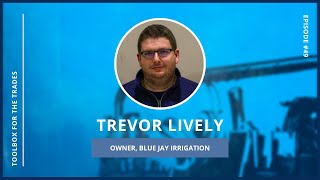
Podcast interview (Toolbox for the Trades Ep.49) with Trevor Lively, owner of Blue Jay Irrigation (London, Ontario). Trevor describes growing up in the family irrigation business, working full-time from an early age, and living through a forced succession process after his father’s 2017 cancer diagnosis and death within a year. Blue Jay operates two locations (London and Niagara Falls), runs 11 service vans and two installation crews, and generates just over CAD 4 million annually. Key themes: the urgency and emotional/operational weight of succession planning, the value of open communication with family, use of the EOS/Traction system and a leadership team (sales, office/finance, operations), employee engagement tools (weekly scorecards, Blue Jay Rewards via Beyond Borders), a content-driven customer education approach (YouTube, emails, social), and a strategic focus on service over noisy diversification. Final segment includes rapid-fire personal/business recommendations (e.g., ‘know your numbers’, recommended books/podcasts).
Questions this video answers
Two (London, Ontario and Niagara Falls, Ontario).
11 service vans and two installation crews.
Just over CAD 4 million.
2017 (diagnosed in 2017; he passed within a year).
Trevor Lively, welcome to the Toolbox for the trades.
Thank you for having me.
You are the owner of Blue Jay Irrigation in London, Ontario, and I don't mean to put too much pressure on you, but you are actually our very first irrigation guest. So I'm super excited to chat with you. I know you have a fascinating story, a lot of learnings in your fairly short career in the trade so far. Although, you know, I know you've been around it for a while and we'll get to that. But we're going to start the podcast the way I do, every single one. And how did you get into the trades?
So I was that kid who was glued to his dad's hip since I could walk. I wanted to be like my dad. I loved all the cool equipment he had and any chance I could go onto a job site with him, I was there. So that's really how I was interested in the trades and in irrigation specifically was I was just that kid who wanted to be just like his dad every chance. My grand, you know, my grandfather worked in the business with my dad and every time he would go work on a Saturday, he had a little shovel in his van and he would take me along and I was just in my glory. I loved just being a part of it and helping however I could.
That's awesome. So was your first job obviously in the family business?
It was, yeah. So I did my first full summer with my dad when I was 8 years old. We had a golf course install and as much as he tried not to bring me along, I was there up at 6am with him hopping in the truck, ready to go and do my part. Didn't have a big task, but, you know, I felt like I was working and I was with him. So I was really excited to participate. And then at 12 years old, he signed another golf course for that summer and it was just him and I all summer long installing that system. And you know, the threat was if I can't keep up, he was gonna have to bring someone else. But I was determined to make sure that I wouldn't be replaced. And it was him and I all summer. And I've been full time since 12 years old, working every summer until I graduated from school and then became full time year round.
Dang. So I am, first off, I'm just fascinated. What exactly does an 8 year old do on their first irrigation job?
So back then, irrigation contractors would understand this. You have to, when you're pulling in your irrigation pipe, you're also laying the wire in at the same time. So we had rolls upon rolls of multi strand wire that I was feeding into the machine as he put the pipe in the ground. So that was my job, was feeding wire into the machine. I'd walk a couple kilometers every day and yeah, that's. And then I'd watch him and ask questions. I knew how to operate equipment and I knew how to do the job mostly just because I watched him. I watched every little thing he was doing. I was curious. I wanted to understand why he would do it a certain way so that when the time came that I had the responsibility, I just knew from watching him how to do things.
That's awesome. Did you ever at any point in your life, think about doing a career in another industry or trying something on your own?
No, I've always. This is always what I wanted to do. You know, my dad was adamant that I'd go work for someone else for a period of time. So when I was in high school, I got a job as a dishwasher and just, you know, have that experience of working for someone else, someone that wasn't family, you know, And I really respect my dad for making sure that I did get some outside experience and just having kind of a real world understanding of what it's like to work for someone else. But at the same time, everything I did right through high school, the courses I took, you know, what I chose to take in college, it was all for a career at Blue Jay.
That's awesome. That's so cool. And that is so rare. And I'm sure there are a bunch of folks in family businesses right now listening like, dang, I wish my kid was like that. Or dang, that's exactly who my father wanted me to be. We'll get into kind of your father in a little bit, but I would love to know what that was like. And were you the only member of the family in Blue Jay? Do you have other family members working in the business?
So for family in the business, when my dad started it, he started when he was 16 years old. And originally he was doing lawn care and grass cutting. And at the age of 18, he started doing some landscaping as well. But by the age of 20, he was fully just an irrigation company. But from day one, my grandmother's always done his books. And my grandfather at that time was a Baptist minister and on his days off would help my dad wherever he could. And then in 1995, he retired from being a minister and became a full time service technician for my dad. And they still work for me. To this day. So My grandmother is 75 and my grandfather's 83. And they're still the two hardest working individuals I know.
Oh, my goodness.
My mother, after my brother and I moved out of the house, she came and worked as an administrative assistant in our office. And my wife works for me as well, kind of. She doesn't work in our office, she works from home assisting myself in some different areas. But she is connected to the business as well. My brother worked in the business for five years after high school, but now he's gone off and started his own business doing marketing videos. So if you visit our website and see all our videos we have on there, those are videos he's done for us. So he's doing quite well for himself and I'm excited for him. But yeah, that's our family dynamic.
Quite the entrepreneurial family. And oh my goodness, I can't imagine the trajectory from Baptist minister to service technician. I don't think that's a career path many people have gone on. I didn't ask you this question upright when we were prepping for today's interview, but there's so many family businesses in the trades. And I would love to know from your perspective or what are some things that you do as an owner, as a member of the family to set proper boundaries between business and family. What does a work life balance look like to you, being that you work with so many immediate members of your family?
I think the biggest thing first of all is communication. I think as we went through the succession planning, the thing I recognize the most is communication is crucial as a family member. You care. You care probably more than anyone else. Even though you may not have ownership, you care and they want to be informed. My family wants to know what's going on. Everything's okay if we're, you know, when Covid hit, you know, just what are the things I'm doing to support the business and support our team through Covid, and they're more than willing to support, support me through it, but just keeping them informed of what we're working through, what are the challenges we're facing so they feel like they can step up and support as well for that work life balance. I think the biggest thing I learned from watching my family over the years is I wanted a separation from work with my wife. So she works from home. She doesn't coming to the office and work just so that I'm not having what's going on in the background, having that noise when I get home. She only really sees what's going on with me because she helps me on more of an executive assistant role. So she understands what my day to day is like. She's supporting me there. And she doesn't have any of that background noise. So that when I come home, you know, we're not. We're not discussing work, we're not discussing things that have been going on. It really gives me that break when I get home. So I really do appreciate that.
Nice. And thank you for answering that question. I know it's a fairly vulnerable one, but I think that topic is so relevant to so many people in the trades. And I want to get into the secession planning because that was really, I think, something a lot of folks need to listen and hear about. But before we even get to that, can you just tell me a little bit about Blue Jay Irrigation, like your annual revenue? How many techs do you have? How many locations do you have just so folks get a sense of the operation?
Absolutely. So Blue Jay has two locations. We have our head office in London, Ontario, and then we have a location in Niagara Falls, Ontario as well. We run 11 service vans and two installation crews. Our annual revenue is approximately just over 4 million.
Nice. Congratulations. It's awesome. All right, so let's get into the secession planning. So your father passed away quite suddenly, and again, my sincere condolences for that. I know that was probably a giant shock to you and this forced you to secede him much earlier than expected. So tell me about that. What was that like for you, for the family, for the business?
Yeah, I mean, it definitely was a challenge. So in 2017, my dad was diagnosed with cancer and then within a year he had unfortunately passed away from it. You know, we've been working on succession planning, and for anyone that's a second generation owner or third generation, the one thing I can communicate very clearly that if you're succeeding the original owner who built and grew this business from scratch, this is a very difficult conversation for them to have. It's not easy because this is their baby. They've invested their life into it. They've poured blood, sweat and tears into this business. And at times they find their identity in this business. So for them to think of them not being a part of is very difficult for many individuals. So there's a lot of conversations happening, but maybe not getting the traction we wanted on the succession planning, because like I said, it was a very difficult conversation to have. But with the cancer diagnosis, all of a sudden, we really have no option. We're forced into. Okay, we got to Deal with this and we got to plan for it. Now. The problem being with that is now we're rushing and there were some challenges where some things were missed. And at times it put me in an awkward position to have some difficult conversations or lead the family through some difficult situations that we just didn't think out or planned for. Through the succession planning process, though, my biggest message to people is just, it's never too early to start thinking about a succession plan, start thinking about a catastrophe plan. You know, what happens you, if, if you get in a car accident and you're in a coma for three months or you know, what if you go in for a routine surgery and there's complications and now all of a sudden you're out for six months, or what happens if you get in a car accident and die? What does your family do? How does your business continue to operate? Who's going to step up into that leadership role and keep things moving forward? You have the need for a professional executor for your affairs, not only personally, but professionally. You know, there's a lot of questions that happen through this and, you know, even even though I'm a young guy, knock on wood, I hope I have many years ahead of me just through this experience where things, you know, just quickly changed on us. I'm already starting to have these conversations and starting to put these plans in place so that my team at Blue Jay know if something were to happen to me, you know, here's, here's the steps, here's what's going to happen, here's the process for my wife, if something happens to me, here's the steps, here's who you contact, here's the process so that, you know, we're taking the stress and the unknowns out of the equation. It's a very simple, straightforward plan so that, you know, Blue Jay and my team and all our staff are secure and can continue to operate. But at the same time, my family is also secure and taken care of.
Yeah. And that's, I can't even imagine what that process must be like. And I, you know, you mentioned that the cancer diagnosis basically put. Put you in a position and your father in a position where you had to deal with it. What did you find most surprising about building up that secession plan? What, like, what was the most shocking, not shocking, but, you know, shocking, surprising thing that you didn't even think to consider?
You know, it's because him and I have been working side by side and almost in a partner type relationship for so many years. You Know, you think the transition won't be that difficult. Right. But I think the thing I was most shocked about once it all was said and done was kind of the weight of responsibility. You know, there's, we have an amazing leadership team, don't get me wrong. But you know, you're taking on all the responsibility of the business. You're taking on, if you have debt, you're taking on all that debt, all that liability. You have not only just, you know, a team of 40 employees, you have 40 families you're, you're taking care of and providing paychecks for. And you know, as much as you in the back of your mind, you know that I don't think the weight of it really set in until all of a sudden it was on. All of a sudden that weight's on you and you're like, okay, you know, I got, I gotta be on my game all the time now. And so that was a huge weight. Kind of a realization of kind of the weight my dad has been carrying for 37 years. Right. And I would say that was the biggest surprise.
Yeah. Because that's such a different role. Even as an 8 year old being there at the golf course, 12 year old, and then just growing up in the business really feeling like, you know, the ins and outs of it. It's a totally different ball game when all of that weight and responsibility is on your shoulders. So thank you for sharing. What advice would you give folks who you just clicked a light bulb on in their head and they're like, oh crap, I need to do this for me. What would you recommend were some of first few steps that they should take?
I think the first step I would take is just, you know, write out your own plan first of how you'd like to see things go. If you know, have that succession plan or like task replan in your mind, how do you think things should move forward or be passed on? You know, is it. If you're, if you're having a succession plan for another generation to take over, you know, how's that transition going to happen? Are they buying you out? What's a fair price? You know, just really think it through. But then from there, you know, look into professional advice. You know, we have a great team of lawyers and accountants, but the biggest thing we recognized was having a team of financial advisors who go through this process of succession planning, who have a real good understanding and have been through it. And then that could provide being that executor of the account. If that's, if that's where you want to go. But just the more professional advice you can have to help you through working through that plan and developing a strong plan, the better, you know, the more you can do up front. Great. Because now you're not spending as much time in meetings developing it. But at the same time, you really need to have that understanding of the legal process of it, the accounting process of it, and then just how do funds and everything get distributed as well? So, unfortunately, it's going to cost some money. You're going to have to have some professionals involved. But at the end of the day, it's going to be a solid plan to make sure that everything moves forward the way you want it to move forward.
Yeah. And I also want to highlight something. A couple months ago, I did a webinar with Kathy Nielsen, who's a consultant in the industry, and she has something called the hit by a truck theory. So not just for owners, but for every level of the business. Right. So what happens if your accountant, let's not say hit by a truck, just decides to up and quit and doesn't give you two weeks notice and you don't have the process for how their job is run? Well, now we're risking payroll not being able to be run on Friday. So I think it's all really scary, not fun stuff that people don't like to think about, but they certainly need to if they want their business to continue running in the event of unexpected. The unexpected absence of a key team member on the. In the company.
Absolutely. And the other thing, like I said, too, is that communication with your family. So the best thing you can do is have transparent, honest communication through this process of what's going on. Because they talk about how in a family business, there's different hats. You have, you know, the owner hat, you have the family hat, and you have the business hat. Some people may only be in the family hat. Some people may wear the business and the family hat. For myself, I wear all three. Right. And the biggest thing is just to have open communication so that everyone feels like they're in the know, they understand how things are going to happen. You know, the worst thing you can do is have everything laid out and you keep it in secret. And there's a big surprise. And now you have a big fight amongst family members or amongst team members. Right. Like I said, that communication, I think, is the. The biggest thing I learned of. How crucial is that everyone's in the know so that there's no questions or concerns. Everything just moves forward.
Got it. And I think actually, communication is a great segue into your leadership team because you've mentioned them a couple times since we've talked that you have a very strong leadership team. Tell me a bit about their roles and how they work together to move the company forward.
Absolutely. So back in 2015, due to our growth, my dad recognized that, you know, we really need to have a leadership team and change the way we operated. You know, back then, it was just. It was really him and I making a lot of the decisions. And, you know, we needed some. We felt like we needed some outside perspective. So he implemented the EOS system, entrepreneurial operating system, or also known as Traction. And through that, we developed our leadership team that represents sales, our office, and finance and operations. And we meet weekly, we discuss our issues and find solutions for them. This has really allowed us to deal with big problems over time. And then now, since we're in a routine of it, you know, we don't find we're having those big problems now to solve. We're solving smaller issues because we're dealing with them quickly and efficiently and not allowing them to fester into big problems. So, you know, having that foresight, you know, obviously my dad at that time didn't know he'd get sick and this was all gonna happen. But, you know, having that leadership team in place and having it established and a strong team really helped with that transition as well. Because our team really didn't feel much of the transition, we were able to continue to move forward. You know, when I needed time to be with my dad, kind of through that time, at the end, you know, I didn't have to worry about what was going on at work. And, you know, I knew they had it. They were taking care of things in the background, and I could concentrate on being with my family. So that was really crucial. Just in that succession, in that transition, was just having a team that was in the background that could keep the company moving forward while, you know, I was dealing with all the personal side of everything. So, yeah, I can't say enough about how awesome my team is, how strong they are, the talent we have, because without them, we wouldn't be in this position we are today.
Got it. And I just want to make sure I got all those down. Do you have a head of sales? Head of the office, finance and operations?
That's correct, yeah.
All right, cool. Tell me. So your dad had this foresight, which a lot of folks don't have. From what the conversations I've had, it sounds like owners kind of get Dragged pushing and screaming. Dragged kicking and screaming. There you go. Into kind of forcing themselves to have this. It sounds like he really recognized like, oh no, we need this. Do you remember what that light bulb moment was or what that switch was between you and your dad?
Yeah, I think part of it was we were coming, we had. When, when I really transitioned full time, my dad thought, you know, we need to add more. We need to diversify and add more services to our company to accommodate, you know, more people coming on full time and drawing year round salaries. So we were doing, you know, landscaping, lawn care, snow plowing. And through that, you know, we were also. We had a lot of growth at Blue Jay and my concentration was always the irrigation. I let kind of the lawn care and snow plowing always be second. And finally came to a head where we had to just. We recognized we had to drop that it was a distraction because irrigation is where our opportunity lied. But through that transition, we recognized that just there's too many hats being worn. There wasn't enough focus on individual divisions of the company. And, you know, so I think through those challenges, that's where we recognize that, you know, we needed a team that was concentrating on our core business, but in on the divisions within the core business. So allowed us to be more focused, more intentional and allowed us to really grow the irrigation because we were intentional and not distracted by shiny things. I guess it's a good way to put it.
No, no, no, I love that. And I actually love that you just admitted that, you know, we, we expanded into these other services, lawn care and snowplow, and we just got rid of them because we wanted to laser focus in on irrigation. Tell me about what prompted you to make that decision, because I feel like there's a lot of contractors out there who are like, all right, I've been doing h vac for 10 years. I think it's time to open plumbing. I know of contractors who have tried several times to open up a new trade and it hasn't quite clicked. So tell me about your experience of opening those new trades and then deciding to close them out again.
Yeah, I think the biggest thing, as I've always says, we do one thing really well and that's irrigation. We're experts in it. We really have the know how. When we dove into these, you know, in the lawn care and snow plowing, to be honest, I really did not know what I was doing. You know, taking all the advice I could get, you know, trying to bring on some, you know, some team members who had experience in it. But you know, especially in the snow plowing world, you have no idea what you're getting into until you're in it. And the biggest thing I found was snow plowing complements, you know, the grass cutting and the lawn care really well on the seasonality of things. But in irrigation it really, it really didn't because we'd work as long as we could until it snowed and we couldn't work anymore. Then once snow was done, we were back into working so we didn't have that break. And you know, so we're working hard eight, nine months of the year on the irrigation right into snow plowing, working nights and you know, long, long hours. And what we really found is just that the irrigation suffered because our concentration on developing and growing and improving our business wasn't there because we're distracted plowing in the wintertime and the winter for us is, especially now is almost as busy as it is in the summertime. But what we're doing is we're preparing for next season. We're taking all the challenges and issues from last season and really hammering out new processes and plans and really trying to develop the company every single off season to make it better the following year. And we weren't having that when we were plowing. We were just almost in motion, I guess is a good way to put it. You're just, you're just getting up every day and doing the same thing and there's no thought process and all of a sudden it's, it's time to start setting up systems again and nothing's improved and nothing's changed. And really that's when especially with the natural organic growth we were having, something had to change.
We just, it just wasn't tenable level.
Of customer service that you know, we expect from ourselves.
I love that it's almost like you gave yourself a year long busy season by adopting those additional services and as a result your core service suffered because you weren't really taking that doing the time to focus on how do we improve next year? What are some things we can do with maintenance? How can we expand our current service? Really interesting and I think, and correct me if you don't feel, tell me if you don't feel the same way. But I think as business owners folks are so can get very consumed with production. Production, production, like more and more and more, the more revenue coming in the better. But I think then as to your point, quality then can suffer.
Yeah. And profitability, you know, it doesn't matter how much revenue you do if you don't have the profit there to support that growth? You know, why, you know, why are you working so hard to make no money? You know, so that's what it finally came down to is we're killing ourselves and we made no money. So what's the point as where we've. We concentrate solely on irrigation now. We take the winter to prepare and be better and improve our processes, and we've made more money than when we were working all hours, every hour, trying to, trying to put as much work through the funnel as we could. Right. So just that shift in mindset is really drastically improved our business and has grown it. And that's partially why we've opened up that second branch in Niagara Falls was, you know, we do irrigation really well and we're growing and we're growing in the irrigation market. So now it's. We're expanding to do irrigation in other territories, but we're still focused on the one thing, and that's irrigation.
I knew the right answer to that was profitability, but I was just testing to see how good of an owner you were, Trevor, and you passed the test. So I want to stay on the EOS system a little bit longer because it's actually been recommended on this podcast before. Rhonda Doughty in season two spoke very highly of it. Talk to me about how that framework allowed you to attract and maintain good talent at Blue Jay, because I'm sure that just like all the other trades, you guys, there's a, there's a labor shortage and you're constantly trying to hire great people. Am I correct in that assumption?
Absolutely. And I think, I think part of it is now that we have, you know, our leadership team, you know, they, they've stepped up into those management roles and they're leaders on the team, but they came from being team members. So they have that perspective of what it was like to be on the team, what it was like, you know, what it was like to be under that type of pay structure or that type of benefit or those types of working hours and having that outside perspective. You know, the hard part I have is I still have my dad's old school mentality ingrained in me. You know, you get up at sunrise and you work till sunset and you know that that's fine and dandy, but at the end of the day, our team wants that work life balance. Right? So having those, that leadership team where they've been in the shoes of our team members who can vouch for them, and we've made A lot of changes over the last couple of years to really work on making sure that our team feels like we're supporting them. They have that work life balance. We're offering them above average pay. We're going to keep them accountable and make sure that they're achieving their targets. But if they do that, you know, here's all the things that they'll receive. And I think because we've made those changes, we've had a much better retention rate with our team. You know, we're still struggling like everyone to find good talent and hire them, but we're hiring for growth. We're not hiring to fill gaps. And I'm very thankful we've gotten to that place and we have a great team who loves to be here and wants to be here at Blue Jay and sees our vision and wants to participate and be a part of it. But like I said, I think a lot if it wasn't for the leadership team and that outside perspective, I don't know if I would have made some of the changes we've made, to be honest.
That's really interesting. Yeah. That sunrise to sunset mentality. Little toxic if you. A little toxic when you kind of think about it. Right. But that's what I'm hearing across the board from folks in the trades is that that work life balance, that flexibility and also I can imagine the fact that your leadership team came from the ranks, they worked the ranks up in Blue Jay. That also gives a bit of a career pathing idea to new recruits who come in the company too, as well, right?
Absolutely. Yeah. The biggest thing we've been working on is not only the vision buy in, but showing the career ladder of the things that, you know, if you want to get to this next level, we have a development plan and we'll go through that development plan with you to help you get to that next level. And you know, if you really want to get there, we're here to support and help you get there. So we really put a lot of tools in place to allow our team members to feel like if they want to grow and they want a career in our industry, you know, we're the destination company to be and we'll help you get there.
Nice. All right, next thing on the leadership team eos, I want to hear about communication. So you mentioned earlier before that communication is super important. It's top down. You make sure that everyone kind of knows what's going on. What does that look like? Is that open book management? How do you make sure that every member of the team is on the same page. Just talk to me about that process.
Yes. I mean, part of the leadership team is we have a weekly scorecard, and, you know, it is open book management, but it's not necessarily individual as where we put all our numbers on a scorecard and it's a weekly discussion. If there's a number there that's not looking good, we flag it for an issue and we discuss it and come up with a solution to improve it. You know, everyone has a number, so we want to make sure that, you know, our team has targets and there's rewards for hitting those targets, but we. We hold them accountable to them as well. So not only does the leadership team have a scorecard, every individual in our. In our company has a. As a number that they're chasing and. And achieving so that they're hitting their goals. And every month we have, we've developed a program called Blue Jay rewards, and they get reward points for achieving those targets. So that's been a really good thing for us. It allows our team to also know that they're being profitable. And on the flip side, they want to make sure that they're informed in knowing how they're performing because they want to make sure they're offering great customer service to our customers. So by producing numbers, being very open about what our team's producing, and having targets for them to achieve, not only is our customer service and satisfaction gone up, our team engagement has really gone up as well.
Very cool. Talk to me about the blue j rewards system. I want to hear about this. Incentivize this incentive model.
Yeah. So everyone, we use revenue per hour as our targets for our technicians and our install crews. But if they hit those different levels of their monthly goal, then we have kind of like your credit card points, like your miles. You know, we put miles into the account, and then they can save them up. And we have team members buying, like, gopros or iPads or gift cards with them. And the joke is, especially the ones who have spouses or kids, that those are mine and I get to buy something for me for once and I don't have to share it with the family. Right. So it's been a really good tool. But on top of that, the team can share points with each other. So if someone takes a call for someone because they're behind schedule, if they want to, they can share some points with them as a thank you. It's also kind of a team engagement type system.
Oh, that's so cool. What tool do you use to run that.
It's a Canadian tool because I'm from Canada. It's called Beyond Borderings and it's a platform they've set up for this type of engagement.
Very cool. I mean, I think people were already tipped off to the Canadian fact when you said kilometers at the beginning of the podcast, which by the way, couldn't tell you what that is in miles. Thank you. Metric system or not metric, whatever we use down here, I don't know, let's move on. So last time we spoke, you mentioned that you were prioritizing memberships at Blue Jay and I want to know how your office and field teams are accomplishing that goal.
Yeah, so we, with prioritizing membership, it kind of ties into leveraging how we want to communicate and educate our customers. So you know, a lot of our customers, they, they purchase, you know, a certain service package because, or a membership because that's what they've always purchased. They don't really look at the other options. They don't really understand why they'd want to go to those options. And I think it's just because we've done a lackluster job of educating our customers on the benefits of having a bigger service membership. So we've really tried to get creative, you know, looking at ways to get in front of our customers. When I really started thinking about it, how many blast emails do I get in a day, how many do I actually read? You know, is there really anyone getting in front of me? So what's, what is a way someone's getting in front of me for myself? I watch YouTube or other people might be social media, you know, so we, we've really tried to become more creative in the ways we get in front of our customers, how we educate them and just try to keep them informed. So this year we had to focus on talking about the benefits of having mid season visits and the benefits of not only is it improving the maintenance and the quality of their irrigation system, it's also helping them reduce their water consumption. Because we can help manage and control how much water they're using by adjusting the zone run times based on the current weather cycles we're having. We're also, you know, talking about the advantage of wi fi controllers. That's something that's been introduced in the industry over the last couple years and using weather based data to adjust those zone runtimes, again, trying to save water and how much consumption they're going through. So without proper education and helping your customers understand it, they're not going to see the benefit. And they're not going to sign up for these different offerings we've had. So that's something we've really been working on. I wouldn't say we have a perfect. I think we have a long way to go. But we're just trying to get inside my mind and other people's minds. And, you know, if a business wants to get in front of me and get my attention, what are they doing? And then we're trying to duplicate it. So right now, you know, we've shifted. We're doing YouTube videos. We're still sending out blast emails because some people still read them and. But also social media posts and trying to be more digital and less paper and just everything we can do to try to get in front of our customers, we're trying to do.
Nice. Well, actually, you first came to my attention because one of my colleagues internally, Liz, was like, you got to check out Trevor Lively. He's got this really interesting YouTube thing going on. And we've talked about YouTube on this podcast before. Not a lot of contractors do it. There's a couple that do it really well. One of them is Roger Wakefield, who's more of a plumbing influencer than a contractor, to be quite honest. So I would love to hear your. How do you approach, like, okay, we're gonna make a YouTube video on this. Do you have a content release schedule? Do you. How granular are you getting with it? Or are you just kind of throwing spaghetti against the wall and seeing what sticks?
I would say originally that was my plan. Throw spaghetti at the end, see what sticks. Honestly, we really found a benefit. From day one. I was super uncomfortable doing it. I wasn't. Yeah. In front of that camera, speaking to a lens. It was, it was uncomfortable. But over time, I feel like I've gotten more comfortable with it. And my goal is eventually not just have myself doing it, but the rest of my team getting involved. But we've now got to the point where, okay, here are the things we want to educate our customers on. Here are the things we want to communicate with them. We want to keep it short, want to keep it simple. We're trying to. We recognize we got to try to stay that 2 minute mark or less because we're going to lose attention span. So just highlighting key things, briefly talking about it, giving the benefits of it and leaving it at that. So, you know, we have a schedule. We don't want to bombard our customers. You can get information overload. So we're trying to keep it to, you know, every Two months or during key points in our season where we need to have some education sent out but not overwhelming, where it's every month or every week and I think at that point you're going to lose engagement because it's too much.
Got it. And so what kind of are you just mainly focusing on like how to keep your irrigation system like healthy and working well, like the benefits of mid season tune ups.
We talked about that. Yeah, we've talked about wi fi controllers and advantage of, you know, just that weather based scheduling and how much water they can actually save by doing that upgrade. A big thing for us in at least in Ontario is irrigation contractors can be certified to test backflow devices. So talking about backflow devices, how we're protecting our city water and the need for having that annual test and, and why it is important that our customers have that test done annually. So you know, that's another example. We talk about some land, we do some landscape lighting as well. We really find it complements irrigation, you know, during that especially that installation. So we educate on landscape lighting, talking about the benefits not only of making your landscape look beautiful at night, but also the security features of it, how we can design it so it's giving you a nice effect but at the same time you can feel like you have some security and your place is lit up in key spots so that you don't have someone wanting to wander through your property at night. So different things.
Got it. Very cool. And do you just cross post your YouTube videos to Facebook? Send them out in emails, do the text show them while they're in homes by any chance?
Yeah, so we have, yeah, like you said, social media blast emails we post to our website. But then yeah, our technicians as well have the ability to reference any of these so that we can show our customers again, Covid a little bit more challenging right now. But you know, we can reference those videos. You know, we even have videos of how to shut your water off or how to turn your water on. You know, different things to help support our customers through. There might be different reasons why they need to shut the water off. Maybe they have some construction going on, pool installation. So even just things that we can. Customer asks, how do I do this? Well, here's a reference point, here's a video you can watch to show you a step by step process and just to even continue to improve that customer experience.
Got it. Very cool. What kind of feedback, if any have you gotten from the YouTube videos?
I don't know, to be honest. It's. I haven't heard anything negative. So that's a good thing. But in true honesty, I know our customers really do appreciate it. We get a lot of good feedback, especially on the education. Like, I didn't know that. Thank you for informing me. Or if they have a need or. And looking for a solution. And we can not only support them over the phone, but provide a video of like a step by step process. You know, I know they do appreciate that as well because it just some people are visual, so having that visual reference has really, really helped them. But so far I haven't heard anything too negative. So we're going to continue with it until, you know, it's glaring to me that we need to stop.
Well, don't let a couple Internet trolls get to you. If they do, please don't. I would love to ask you, you said straight up. You know, I hated the idea of staring in a lens, talking to a lens. I'm sure there are folks listening right now who are like, yep, you can't. Couldn't pay me any money to do that. How did you get over it?
Just repetition, honestly. What do one, watch yourself, recognize, you know, the areas you need to improve. You know, like I thought it was being expressive. My first video and I was very like straight and monotone. I'm like, okay, I gotta improve that. So, you know, it was hard to watch yourself, but for me was taking notes of how I can just improve when I'm, when on video and on camera. So yeah, that would be my biggest advice. Or even don't do the first video and post it. Do the first video as a practice run so you can see how you need to watch and improve yourself and then do your first video. It just gets easier every time you do it.
Got it. All right, cool. I got a couple more questions for you I would love to know because I mean now you've been in the business basically your whole life. Looking back at all the things that happened, obviously this is session planning. That was a giant learning for you. What would you have done differently in the business given what you know now? So with the power of hindsight, what is one thing you did in the past that you would do differently?
I would say the biggest thing, if I could go back and redo things, I would say I, I really pushed for growth of myself. I may have pushed some people aside through that process and I can look back and look at that and have some regrets. You know, I've heard some relationships along the way because I was so driven to grow and develop myself. And then grow and drive the business as well. That at times, you know, I let that get in the way of personal relationships. So I think the biggest thing I would, I would take away is just being more mindful of other people as I try to further myself in my career, especially when I was young and maybe stupid, you know, especially, you know, in a high school, early college age, right, where you're trying to make your impact and make a difference, improve yourself. But at the same time it's, it's, it has caused some hurt and some pain over the time. So yeah, I think that's my biggest regret and things I wish I could change.
Got it. Thanks. Very self aware answer. And thank you for your honesty. So you mentioned Blue Jay was experiencing a ton of organic growth. What are your goals now? You guys are over 4 million. So where do you want to take the business next? Is it opening up a new location? Is it hitting a certain revenue mark? What are you shooting for now?
For myself, I mean, we're definitely looking at opening another location, maybe more locations after that. But I really want to continue to grow our business in the service aspect of things. I don't, I don't want to ever be a business that's super reliant on install. You know, as for our business, we are very weather dependent, so installs tend to be up and down with the weather as our service is a lot more predictable, consistent, recurring income. So I want to continue to grow our service department, you know, if that means we open more locations to continue to provide better service for our customers, you know, that's the route we're gonna take. But I definitely want to eliminate a dependency on install and do installations because pricing is good, we have the team that can do it and they're good jobs, but also at the same time don't want to be at the point where we're just doing it for the sake of, you know, creating more growth or providing work for our team or, you know, just doing it for the sake of doing it. I really want to make sure that, you know, we do installation because we choose to do it.
Got it. Very cool. All right, I got a couple rapid fire questions for you. Are you ready?
Okay.
How do you take your coffee?
Black.
If you could have dinner with one person, dead or alive, who would it be?
Jocko Willnick.
What are some of the best podcasts or books you'd like to recommend on business to our audience?
Podcast. Is Service Titan Podcast the right answer?
Yes. Service Titan Podcast is certainly the right answer toolbox for the trades. Many books, obviously. Traction, right?
Traction is great. Anything Patrick Lencioni really get a lot of value from his books. And then a book that really had a huge impact on myself and my leadership was Confident Leader by Dan Reeland.
Very cool. And good note on Jocko Wilnick. He's been on my radar for a while to check out, so I definitely will. If money weren't an object, so you had unlimited resources, what's the first thing you would do?
Buy a place in Hawaii.
Which island?
Hawaii.
Yeah. What's the number one thing every contractor must do to run a successful business?
Know their numbers.
Nice. Trevor Lively. Thank you so much for being the first and excellent irrigation guest on the toolbox for the trades.
Great. Thank you for having me. I really appreciate it.
More from Bill



ServiceTitan Virtual Agents: Simplify Before You Scale | Podcast Ep. 110 | Mastering ServiceTitan



Life After Live Events: How to Turn Post-Conference Energy into Real Profits | Podcast Ep. 297




