Teach Leadership Skills to Your Techs w/ Keith Mercurio | Podcast Ep. 44 | Toolbox for the Trades
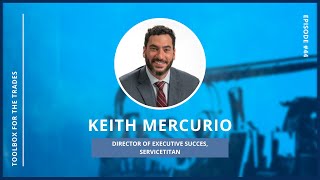
Podcast episode (Toolbox for the Trades) interview with Keith Mercurio (founder & CEO, Ethical Influence Institute; licensed plumber; former Nexstar director; senior director of Executive Success at ServiceTitan). Discussion covers Keith’s career path from plumbing to training/consulting, leadership development for trades businesses, mindset and identity work, mental health, Ethical Influence methodology (owner growth, influencing self then others), and examples of client impact (Radiant Plumbing growth). Emphasis on investing in owner development and in people to scale businesses.
Yes, there is a lack of available talent, and part of that is because people who are truly talented in their leadership are creating an absolute siphon of that talent where they're running downhill into their businesses. You're listening to Toolbox for the Trades.
Brought to you by ServiceTitan, a podcast.
For top service professionals where we inter leaders for their best tips and tricks of the trades. Learn how industry trailblazers stay ahead of the competition and how you too can be at the forefront of an industry. Let's jump in.
Hello contractors, and welcome to the Toolbox for the Trades. Today I'm joined by Keith Mercurio, the founder and CEO of Ethical Influence Institute, professional trainer and consultant and senior director of executive success at ServiceTitan. Keith is a master of coaching business owners and leaders on how to unlock exceptional growth through personal development. Like Sarah and Brad Caspier, owners of Radiant plumbing in Austin, Texas, who grew from 20 million to 38 million in 2020. While working with Keith, we talked about identity, mindset, powerful thinking, and so much more. I totally geeked out on this conversation and I hope that you enjoy it as much as I did. Keith Mercurio, welcome to the Toolbox for the Trades.
Pleasure to be here, Jackie, thank you for inviting me.
I am so excited to talk to you. You have such a unique career and experience in this industry. Just to give a little bit of a bio so folks know who you are. If they haven't heard of you already, you are the founder and CEO of Ethical Influence Institute, you are a licensed plumber, a professional trainer and consultant, and most recently, you are the senior director of Executive Success at Servicetitan. Now, those a lot of words, a lot of ways to describe what you do. So before we even get into that, I want to start today's conversation the way we start every conversation with how did you get into the trades?
Yeah, I was going to say that's a carefully curated list of things that I can write proudly because I think college, college, dropout, recovering party animal would all be like parts of that same journey that ended up there. I was in school, going to this Division 2 school, St. Michael's College, shout out to my purple knights. For a few years before both college and I decided we were not for each other and I dropped out of school and went to work for Tim Flynn and Gene Cataldo. Tim was my next door neighbor and he was running at the time a small plumbing and heating company out of Belmont, Massachusetts, and then eventually Cambridge. And he and Gino were like trade school buddies and they like Perfect Boston duo, you know that they used to call them the Irish in the town. They used to call them Gaelic. And garlic was like the joke about their teammate ship. And so I ended up going to work for him. Tim was always somebody that I really admired as a young man. And so he brought me in and I was an apprentice for him and eventually became a plumber for him. Kind of a whole bunch of series of jobs there and really got attached to the business side of what we were up to. And along the way, we joined nexstar. And that's where my journey eventually would go with nexstar. But that's not the question you asked. You asked, how did I get into the trades? So that's how I got into the trades. I was really drawn to what Tim. The life Tim and Gino were creating for themselves. And they were like these young professionals, but they were blue collar and they could fix things. And so they kind of just melded this really interesting path. To me that looked different than what I'd seen or known. And with that part of my love for it was I loved actually fixing stuff. There was an incredible sense of satisfaction that was not there when I was in college when I handed in a paper and had somebody, if I did ever hand in the paper and had somebody subjectively tell me what my worth was. It was like when I fixed something, it worked. It was objective, whether it worked. It was subjective about how beautiful it was. But there was an art and a certainty to it. So that's part of what I really loved about being a plumber.
That's awesome. I love that you were able to hit the nail on the head with that in terms of traditional academia versus trade work. And I think a lot of people can relate to. I love fixing things. Certainly most of the technicians I speak to say, man, it just feels so good when you go in there and you fix a problem. So that is awesome.
There are a few highlights that stand up, but like any technician I think can agree solving a problem that other people couldn't, you know, that that's complex, is an immense, immensely satisfying experience. Stepping back and looking at your work, like testing it, when you pull the plug and you see everything drain and nothing leaks and just that whole experience, especially the more, you know, back then we do, we used to get to solder joints and pour lead and oakum and I mean real, real plumber stuff. I still have a problem with, you know, using these crimping devices and everything else, although I appreciate them, but they're not quite as artful as what we were up to. But, you know, stepping back and looking at your work at the end of the day. And then there was another part of it that I loved, which was going home and like taking that hot shower after like a long day, often very cold days when we're working in the heating industry and you know, just like knowing your day was over and you'd really done something. So there were some stuff that I really still am pretty nostalgic about.
Yeah, I will say that when I used to work in the restaurant, the service industry before I graduated college, I also really enjoyed the end of the day hot shower. There's something when you do a lot of physical manual labor, that end of the day hot shower that is just so satisfying. You mentioned that you really kind of between Gaelic and garlic, you saw them both as mentors and you learned a lot about the business side of plumbing. You really fell into it. I want to talk about how we got to nexstar, but before we do, I would love to hear a little bit more about what your preconceived notion of the trades was and how you got that aha moment of oh, wow, there's more to this than I thought.
Fair. And it's funny because I was, I'm like the reverse American story, you know, like I came from a highly educated family and was the first kid to not make it through college and go to the trade. So it's like you always hear that American dream story and I was the opposite. But I really respect how supportive my dad was of me figuring out my own path because I mean, this is a man that was an educator for a living and we held academics in high esteem, but I just was not wired for it. And so in my early years, because I had that thought that I was supposed to be a high achieving academic, that I was supposed to go into some sort of grad program or become a lawyer or something that my mom could brag about. Like, I really had this sense that the trades were for kids that weren't smart enough to do what I was going to get to do. And you know, and look, there's in some regards, there's, I think some, some modicum of truth in that sentiment, meaning that as far as how we traditionally measured smart in an academic sense, very often the mindset, the intelligence that's necessary for the trades doesn't fit well within that traditional classroom environment. So there was some sort of disconnect there. But I kept trying longer than probably and was given more chances. I think than a lot of other kids probably were to stay in school and try to drag out that academic career as long as I could. Baseball helped a lot. Like I had sports that I was kind of falling back on and gaining scholarship for. So lot of different things that probably kept me in the system longer than I should have been. But I had. When Tim moved in next door and I saw like, this, you know, this young guy who's successful in a nice family, and he didn't look like a plumber, and Gino didn't look like a plumber. I mean, these guys were, you know, they were handsome, they had it together. And I was like, this is interesting. This is a very different look than what I expected. And honestly, Jackie, that's why, you know, I. A big part of what I get frustrated about with when we're recruiting people into the trades is that we don't spend enough time talking about all of the. Like, there is the period of time where you're actually going to swing wrenches and you're going to be a plumber and you're going to be an H Vac tech or an electrician. But we don't spend enough time talking about how that's just part of the journey and that I feel like when we're trying to recruit people into the trades, we're always. It's like you're going to be a plumber the rest of your life, and it doesn't have to look like that. And the business opportunity is what's so immense and gets so overlooked and so rarely discussed. And that's what they showed me was like a very different side of what being in the trades could mean.
I'm so happy you got that education right away. I mean, I talk about this myself. My dad's a carpenter. He. He was in the trades. I'm a woman, obviously, so there's some of that gender stuff that's going in that I don't have the smarts to go into in this moment. But, yeah, it was always expected. Go to college, Go to college. And since starting at Servicetitan and really getting exposure to folks in the trades, I'm like, holy crap. These plumbers and H Vac technicians make more money than people I know who went to Ivy League schools and are still paying down $200,000 debt. I had no idea that the entrepreneurial path was available within this industry. And then on the second hand, you know, lawyer, maybe not so much lawyers, but say doctors really get glorified for helping plumbers literally keep people alive. H vac companies literally keep people warm and cold climates and cool in hot climates like you are providing an essential service. And I agree with you. There has to be some rebranding done in how we recruit folks.
And that's fair. Although I will, I'll push back a little. As somebody who spent years glorifying the life saving effects of the trades and so on, there's a little part of me, now that I look at it, and I say I want to be cautious that we don't overly glorify it either. Because what you'll notice is that a lot of tradesmen aren't actively recruiting their own children into the trades. And this has a lot to do with the lack of great businesses in the trades. And so for so many people, a career in the trades does mean signing up to swing wrenches for the rest of your life. And because they don't have businesses that are growing, providing opportunity, providing leadership and personal development and growth. And so it's like I want to be careful to invite people into the trades. It's like if we're going to do it, we have to be providing extraordinary businesses that the trades, whatever the trade is, happens to be the commodity in which we're working. But we have got to start looking at this from the standpoint of really developing extraordinary small businesses and the entrepreneurial side of what is here and what's so compelling and appealing. And then the beauty of it is that we have this industry that is so bulletproof, recession proof and even as we learned, pandemic proof that you can take business mastery into this field and not be as vulnerable as you would be in many others.
Yep. And I'm very happy that you made that point. I sometimes have to remind myself that being at Service Titan gives me access to folks that are doing it really, really well. And there are still, there's different levels when you think about the trades. And I think this is actually a great transition into your role at nexstar. So you went from being a professional plumber to director of training at nexstar. And it sounds like that plumbing company that you had joined, that you had worked with, they became NextStar members and that's how you got exposed to the NextStar world and all of that. So just tell me about how did that journey take place? How did you go from working with those two guys to becoming director of training at nexstar?
So I was, you know, I'm working for winters and nice career going. You know, I started to get my feet under me a little bit. And then we joined nexstar and that was my first exposure to the world of. I had seen some great trainers. I mean, there's some people to mention, like Matt Smith, who is, you know, out there in the world. He was an original mentor to me and kind even opened up the fact that there was this world of training, these skills, soft skills as they're kind of known inside the trades and sales and stuff like that. And I was like, that's intriguing. But when I saw nexstar and new, I said within five minutes I'm like, that's what I want to do. That right there is what I want to do with my life. And I mean, it was truly my dream job. And when I left Winters, it was just time for me to go. I was just at a place in my career, my life. I wanted to move, I wanted to try something new. And I honestly wasn't even sure I was going to stay in the trades. And it was at that point that Sherry Benefeld and Jack Tester at nexstar reached out to me and said, hey, we'd be interested in bringing you in to be our first full time trainer. And that was something that hadn't existed inside the nexstar world. One thing that's unique about them is that they hire member trainers. People who are owners and GMs of their businesses actually get trained to be trainers. So they're actually out there doing the work in the business every day and then they're also training you. So these weren't just professional trainers who were being taught a discipline and they were actually professionals in the discipline being taught to train. And so I jumped at that opportunity, moved from Boston to Minnesota and spent eight years in Minnesota working for nexstar. And along the way we really, I mean we had an amazing team and we really grew nexstar training quite exponentially. So by the time I was done with my time and we had a staff, I think we had five full time trainers on board or six, and almost a dozen member trainers and we're running, you know, 20 plus programs, training 6,000, 7,000 people per year as an organization. I mean it was awesome and a beautiful experience and I mean I can go on quite a bit about all the wonderful things over there. I still have tremendous affinity for that organization.
That's awesome. And we've had quite a few nexstar members who say just wonderful things about the, about the organization on this podcast too, from the member side. So it's, it's fine. You can, you can vamp A bit.
It's. They deserve it. I mean, they deserve it. And it's, you know, it was part of the founding mission of Frank Blau and the fact that, you know, unlike, and I can't say it's every organization, but any other that I know of, they made a decision that they were never going to be, that they were going to remain member owned. And so the. You talk about creating a North Star, the success of the members, it is not just a tagline. I mean, it is literally their mode of existence. If members aren't succeeding, those member companies aren't succeeding, then they don't get to, you know, they don't get the opportunity to continue to exist. And so it's a pretty special organization. I mean, it'd be really hard for a CEO who had, you know, a board who was getting rich off of the organization's success to be able to have that much of a alignment from all of the team members. You know, that what we're really doing makes a difference. I mean, so, you know, I remember Jack used to speak about that consistently, how hard it would be to do this if we didn't have the structure that we had. So it was just set up for success. It was, it was set up so that no one person would ever become wealthy off of it and that instead it would be about making, you know, our members truly successful. And that was kind of a beautiful thing.
That's awesome. I actually didn't know that about their structure. I'm happy you shared that. So being the director of training for seven years, eight years, you said, in Minnesota is quite a big stretch of time. This is a very broad question I'm about to ask. Okay, I'm just letting you know it's going to be broad. But what are some of the most common hurdles you found owners had to overcome in order to grow their business or create the business they wanted to.
Yeah. So I'll start with a very generic answer to your broad question, but, but one worth really exploring. And it's, I mean, the number one hurdle an owner needs to overcome is themselves. And that is, as you know, I mean, that can have as little or as much meaning as you want. But the reality is that, that what I've witnessed inside of, of most leadership anywhere, regardless of the industry, is that people are consistently wanting to. They say, like, my team doesn't get it and I can't find good people. And they're constantly looking externally at the factors that are limiting their growth in our industry. It's very clear that People will say the number one constraint to growth is talent. Everybody kind of just generally agrees on this. And yet I just finished my year in my role consulting with the leadership team at Radiant Plumbing and Brad and Sarah Casebier down in Austin, Texas. Well, Brad and Sarah Case Beer just went from 20 million in revenue in 2019 to 38 million in 2020, during a pandemic, hired 100 people. So, yes, there is a lack of available talent. And part of that is because people who are truly talented in their leadership are creating an absolute siphon of that talent where they're running downhill into their businesses, and that's why they're expanding the way that they are. So Brad and Sarah Kspier are two people who, their journey had an exponential trajectory when they decided they were going to invest in themselves, in their own personal growth and development. And these are people that absolutely made a commitment to their own growth and then in turn invested in the growth of their leadership team. And that's in large part, I mean, they got a lot of great things going for them. They're in a good market. They're in, you know, they've got a great brand that they've built. I mean, a lot of great stuff. But there's no question, you look at their history and their trajectory does. It's like a hockey stick type of a, you know, a curve. When they got serious about investing in themselves as human beings, owners are the number one constraint of their own success. And people who are consistently. If somebody thinks it's somebody else but them, then that's the sure sign it is them.
I mean, I'm very happy I asked that question because this really goes into your methodology as a trainer and as a consultant and under the umbrella of the Ethical Influence Institute. From what I understand of you in my time knowing you, you are very hyper focused on developing owners, getting them into the right mindset, changing, not changing identity, but getting clear on identity. And so I would love to just kind of start digging into that. And I pulled this quote off your website. Achieve sustainable growth by changing people's identity. Can you explain it? And if I'm going, if I'm kind of jumping around and you want to start with mindset, feel free.
No, it's perfect. But the only adjustment there I would make, and that would be hypocritical to not say this, is that my first obsession is in my own growth and development. I'm not obsessed with changing other people's. I'm obsessed with working on mine, first and foremost. And the reason Is that what I've discovered? And this goes right back to why owners are the lid on their organization, is that people really enjoy learning alongside a fellow student. I continue to find that they enjoy less and less learning from a teacher. So my discovery in this is that the more that I am actively in my own ongoing development, the more material curriculum and real life active struggle I have to share with these owners and leaders that I'm working with, and the more that we can go on that journey together. And I don't know if it's just because it's, you know, it softens it or it's more relatable or whatever it is, but, you know, I had heard John Maxwell talk about the law of the lid a few years ago and that, you know, your team will only grow to the height that you grow to. But I don't believe that. I believe that your team will only grow at the trajectory at which you grow. And you know, we've all heard that saying that I shouldn't say we've all heard it, but you know, we've heard many have heard that saying that your life is the average of the five people you spend the most time with. And when you think about that, if you want a team that's actively growing and achieving more and looking outside themselves to build other leaders and, you know, really taking on responsibility and commitment, you have to be creating that. And then that becomes the average of the organization. And so now personal development becomes expected and willingness to look at your own identity and make transformations becomes expected. Constant coaching and feedback becomes what's expected. Never settling for yesterday's performance being enough is what becomes expected. But what I watch people do, I watch owners get into a position where, yeah, they've taken the risk and yeah, they've worked all these years and now they're trying to tell other people how to get to where they've gotten to. And that's a very. That works at like a really subservient level. But if you really want to inspire people, it's your own work, ongoing work that will inspire them, not your damn story that you can sit back and rest on that frankly, most people are pretty tired of and don't really even care that much about, like, until you reach legendary status like John Maxwell or like a Pat Lencioni who's written however many bestsellers, just because you built this business and worked really hard to do it, you're not going to inspire a whole bunch of people who are going to follow you just on your old story. It's going to be on what they see you do every day. And so that's the part that, I mean, I think, in a way, really does answer your question. But I know that I need to focus on my growth, my coaching, my counseling, my ongoing personal development. And every day that I invest in that, I've got new material, new curriculum that I'm developing that I now get to share and bring people on a journey along with me. And that's what seems to be so compelling about these, you know, why these leadership teams want to do the work, but they have to be willing to do the work.
That's really interesting. Everything that you just said makes perfect sense to me. And I can see a fake owner, imaginative owner, who. Who is resting on their story like they said, or is hemming and hawing not to disparage it, because that has been said on this podcast before. So hard to find people. I can't find the right people to work for my business. When you're put in front of someone like that, what's one of the first things that you say to them?
So, you know, that's an interesting question because there was something that was able to. Something that really changed in my career, and I would. I don't know if I have that answer right away, so I'm going to share this thought and maybe that answer will kind of come to me because, I mean, the first kind of rule of this work is you don't tell someone they're wrong and expect them to be very interested in exploring that. So I would ask them a whole bunch of questions about what that means and where they're at. And, you know, I would kind of go through a emotional interviewing process about what they're up to and so on. So I don't really have, like, a direct response because that's not how I work.
Oh, wait, I'm sorry, Keith. Are you telling me that you don't antagonize people?
Well, you know, it's just like. I mean, if I could say, like, the first thought that comes to mind if I hear somebody say, I can't find the right people. My. The question I guess I would really ask is, are you sure you're the right person to lead this business? You know, I mean, that's. That would be that sort of antagonistic version of the question. But, like, once the relationship is real enough, that's the type of conversations that we have, you know, like, well, what's. What makes you believe that you're the right person to run this business? If you can't find the right people, you know, And I mean, I think that's a really worthwhile pursuit. But what I would really want to look at is why that's their complaint. And this is. Gets into the heart of the work that I do. Like, the reason we have complaints in life as human beings, the reason we complain, if you've got a consistent and ongoing complaint, it's because it's giving you something. It's giving you some sort of payoff, some sort of juice. And so I can't find good people is the all time. It's a bigger problem than me, which just offloaded any responsibility that you could have ever had. And so that thing makes you look right and you get to sit there and you get to complain and you go and you check with other people, say, hey, do you have trouble finding good people too? Oh, okay. So now I know I'm right. And I mean, this is the nature of mankind as far as our tendency to want to create this big complaint and this big story so that we can just continue doing what we've been doing and say, well, there's just nothing else that could have been done anyway. So, yeah, I mean, there's a lot behind that answer, but that's where I really want to explore with people, because what are you going to do to change that? Right. And so the easiest way to answer that question, so now I've got like five different answers to the question that you asked me, Jackie, would be like, so what? So I guess there's nothing you can do then, you know, and that's like a technique in emotional interviewing when you just tell somebody, yeah, it sounds like you're right. You know, everything you're saying that's in your way is true. And guess this is it for the rest of your life. This is the business you're going to run. And then let them fight their way out of that position that they've just, you know, argued their way into.
Interesting. That's a very defeatist way of looking at it kind of being that. Not you being defeatist, their attitude of being defeatist and you being that mirror, that reflection that's hitting it back to them. And then.
Yeah, so sorry, I'm interrupting because, like, my thought is a little bit clearer now. But the reason that the first thing is an antagonistic is that people are going to argue with you. So if I say you're wrong, they're going to argue why they're right. So if I agree with them, they're going to now argue why I'm wrong. So if you really want to help somebody coach their own way out of their position. Right. What I'll often do is agree. If I see that they're really stuck in their position, I'm just going to agree with them and go, I guess you're right. I guess there's nothing you can do. I guess you're never going to grow. I guess you're never going to find good people. And now they're either going to agree with that, in which case good for you. I mean, I guess that's your lot in life, or they're going to do what they always do, which is they're going to argue their way out of that position. So I'd rather have them arguing with me about why they could in fact find good people and grow their business than arguing with me about why they can't.
Are you sure you didn't graduate college with a degree in psychology?
I'm positive I graduated. I'm positive. The last thing that I graduated was high school. And barely, by a lot of nefarious efforts I was able to get through high school. But I did get my plumbing license and I did not cheat on that exam. So I am proud to say that that's the last thing I actually graduated.
Very, very good. I won't share this interview with your high school. So I think you're cool there.
But they know, they know there's nobody that was a part of this program that didn't know I was up to something to get by. I think it's part of why I have insight on people's intentions, you know.
Yeah, I would definitely say that. I have so many places I want to ask you where I want to go. But I'm also really fascinated in your personal growth and I love that you said I am constantly working on myself because I want to model that for the folks I work with for my clients. What kind of work are you doing for yourself right now? I mean, you're obviously very self aware. You've been on this journey for a while. What are you trying to learn more about right now?
So I used to really love answering this question because I would say I would talk about all the self development programs I would attend and every year I would put myself through some week long or two week long boot camp style mindset, reset, cult, like, you know, deal. Whether it was I did Landmark Forum was my first foray into it and I did a whole bunch of landmark programs and they're amazing and super culty. And then I went to Tony Robbins and that's super culty and world legacy and all of these. But they, they were like, really, I don't know, there was something really powerful and I loved it. It was exactly what I needed at that stage in my life. Now I'm straight. Like, I'm working on the, the counseling side of life. Ives shout out to Ives Whitman, my, My counselor, my therapist out of Minnesota who like, is really, really doing a deeper level of work just about like, who I'm showing up as a man, as a husband and as a leader in the world at just a very like, emotional level different than the work that I had done before. This is ongoing and deep, week in and week out, every Friday morning at 7:30. Like, that's how we do it. And that has been a whole new layer and new level for me. And you know, I mean, comes off a year when, I mean, I had, I had some, some really serious depression over the last year. Anxiety. And not just. Not just because of 2020, a lot of just internal and personal things. And I mean, you know, I feel compelled to even share it. But I mean, dark spaces all the way to suicidal ideation and stuff like that. And it's a heavy place to be and having people like this who have walked that journey before you and leaning into them and reaching out, really powerful stuff. So obviously just emotional about the role that people like that have played. But that's the work that I'm up to right now in my own life. And again, it's, you know, it's like some days it's like, who am I to be counseling or coaching anybody on these developments when I know I'm in those own battles myself? But at the same time, who better, right, than somebody who's walking that. Walking that march with you? So. And you know, I just say that also in the ongoing quest to give space for people to be able to talk about this stuff because it's getting worse than ever. With everything that has happened and the result of, you know, social distancing, which has really led to isolation and everything else, it's pretty rampant. So I certainly hope there's a couple people out there that hear this and say, hey, it's time for me to go get healthier too.
Thank you so much for sharing. I will do you one better and say your journey in 2020 sounds a lot like my personal journey in 2019. So I fully support everything you just said. Mental health is a priority, and I hope that anyone who listens, who's thinking about it, hears what you just had to say and starts considering it. And thank you for being so open and honest about it.
Yeah. And I think you'll probably agree with this. Like, we don't need to hear any, like, hey, hang in there. Like, any, like, adulation about this is not what this is for. Please, like, respectfully keep that to yourself. Just. But if you do want to share about your own journey in this, that, like, thank you. You know, like, it's. Does that make sense? Do you agree with that? Like, I think I hundred percent agree. Want to then sympathize, like, oh, my God, please don't. That is the last thing I want to hear right now. Like, I'm good. This is for you. You take this and do what you need to with it. Don't. It wasn't for me.
So it's very much, hello, I'm a person, you know, in real life, and I want you to know that I'm going through this journey so you can normalize it and potentially see it for your journey or someone close to you. I think for. It's really interesting how the stigma of mental health is slowly getting. Is shedding away, I think, layer by layer as we go year into year into year. I mean, most podcasts I listen to right now are. Have ads for virtual therapy, which we don't have ads here.
Yeah, it's awesome. And I'll say, I mean, the reason I started this question by, like, you asked me, you know, what am I working on now? I didn't come into this podcast expecting to talk about this, but you asked a question and it triggered with me how I am, like, I'm still embarrassed to be like, oh, therapy is my big. That's how I'm working on myself thing right now. And then I have to take a moment, like, take a deep breath and go, keith, would you toughen up and just tell people what you're actually up to and not feel any sort of way about it? So that was all. That's, like, part of the mindset of having to process through that before answering that question kind of honestly.
Very honest and continuing to be honest, which I very much appreciate. And this is why I knew. This is why we get along. Keith, you and I've known, for anyone who hasn't caught on yet, this is not mine and Keith's first conversation. And again, just another reason why I like you as a person and not just as a colleague, which we'll get to shortly. But before we even. Oh, no prob. Whenever. Before we even get to that. I really want to talk on mindset, because I feel like the last 30 minutes we've really been chatting about some pretty big concepts, and I think they all boil down into mindset. So talk to me about what is mindset? And how can people start identifying what their current mindset is and whether or not they need to change it?
Nice. What is mindset? Nobody's ever asked me that before. I suppose it would just be whatever. Whatever. Yeah, I mean, it's like, I guess I took it for granted that mindset is just what our current framework, our current emotional, mental, physiological state becomes, our mindset. So it's our perspective on the world. So, you know, I mean, I think the most basic way that I kind of look at this, and this is where I get, I don't know, I guess a little philosophical or whatever else, but, you know, I'm looking out the window here, and what's out the window just is. It just is what happens in my life. It just does. My mindset is my interpretation of those experiences and through all. Like, some people like to think that they've got more of a handle on the truth than others or on the way things are, on the facts than others. And I. I do like to remind people that at least my current opinion of it, and that's all any of this ever is, or my belief around it, is that everybody's experiencing the world through their own lens and perspective, but nobody's any closer to the truth about it. One of my favorite quotes in this regard is it was Voltaire, cherish those who seek the truth, beware of those who claim they found it. And this idea of just being on kind of that eternal quest for knowing oneself more, knowing the world more, knowing others more, is a big part of what I look at from a mindset perspective. So places to beware. Anybody who's overly certain that they know more than everybody else, I think that's a great spot to stop and check yourself and take a few steps back. There are a lot of listeners who, in my mind, need to hear that right now. If I'm following some of your Facebook posts and everything else I'm telling you, be seeking truth is, I think, really good advice from what I've heard in the mindset. I remember hearing Weldon Long speak last year at the service Titan sales kickoff, and Weldon Long's a great speaker and has a great story inside of our industry. Have you had him as a guest?
Oh, I have. Yeah.
Yeah, yeah, yeah. Good, good. Yeah. He's a great, great man. And you know, he. He just says, think about what you think about. And that, to me, is a beautiful way to consider checking your mindset. Because every day, I mean, I think the. If I remember the. The numbers correctly, there was New York Times study that, by the way, just like I just said, New York Times study. And some of those very people just. They stopped listening just now. They're like, well, that can't be just fake news. There was a study in the New York Times a couple of years back that said that the average person has 60 to 80,000 thoughts per day. Of those, 98% are identical to yesterday. And of those, 80% are negative. And if you really start paying attention, what tends to happen, at least in my experience, and what seems to resonate with others is that we have these thought patterns that are looping and looping and looping, but we don't ever stop to think about what we're thinking about. We just think about it, and then we start to relate to that as though that's real. And we don't stop to think about what's the context that created that belief for me, what's the background that created this identity for me? What piece of my upbringing just got triggered right now when somebody, you know, just challenged an idea at work, and I just took it personally and I felt it in my body, like, what part of my background just caused that? And so this is what, like mindfulness, you know, as I understand, mindfulness really brings into the world of looking at mindset, which is to just be willing to take that step back and say, what thought was that? Have the thought about the thought where you start to ask questions about, you know, is that really true? Is that absolutely true? And there's a great book. Ooh, it's eluding me at the moment, but it's going to come to me loving what is? And the author asked the question, like, is that true? And then asked the question, who would I be without that thought? And it's just a way to explore from a mindset perspective, we don't have to just describe to what's going on in our minds. We can actually start to dialogue differently with our thoughts. And, you know, ultimately, like, my final kind of critical message with the ethical. Ethical influence concept is, does that thought honor and serve me and others? And if it doesn't, you know, maybe I should reconsider continuing to live into that thought.
I love that explanation. I've been personally toying with mindset and really bringing my attention to mindfulness myself through my own personal journey. And it's incredible how mean we are to ourselves. Oh, incredible. If you think about it, we start and end life with just one person and it's us. Why are we so mean to. To. To ourselves? And if I had, I. I was actually. I had this really profound experience recently. I went through some old journals I had when I was a teenager and actually as preteen, and I'm just reading these journals and I'm like, why was I so mean to myself? And what your description just brought up to me is a Tim Ferriss quote. I don't know if you're familiar with Tim's work, but he has a quote that says, don't believe everything you think.
Yeah.
So if you're saying to yourself, I can't do this, bringing it back to the trades, I can't run this business. I don't know what the hell I'm doing, How am I going to get all these people? Those are all limiting beliefs. And I think there's a fine line between being mindful of those beliefs, but then also kind of being toxically positive, which. This isn't a mental health podcast. We won't go into that too much.
No. But I would love to add something because you just triggered one of the things that really stands out to me. I get borderline offended, but at the very least defensive when people hear my work or listen to a keynote of mine and they're like, oh, man, I'm a big believer in positive thinking. I'm like, whoa, whoa, timeout, timeout. This is not positive thinking. And I'm not even necessarily a fan of positive thinking. I am a fan of powerful thinking. What I'm talking about is how we look at creating neural pathways in the brain. Like understanding the science, understanding the emotion, and then understanding the subsequent effect of the thoughts that we think. And so that doesn't mean positivity, that doesn't mean false reality, that doesn't mean Pollyanna. This is about, like, if I am relating to something, like, we'll go back to our original thought of, well, I just can't find good people. What we need to understand is that the moment that you speak that out loud and think that thought to yourself, you are creating a neural pathway in your brain. And the more often you create that neural pathway, the more myelin, the more protein starts to cover that neural pathway and the more accessible that thought and belief becomes. And as a result, this is where we're tapping into the reality of how the brain works. So your non conscious mind is registering, processing somewhere around between 11 and 40 billion bits of data per second. The conscious mind, where we think like what we actually relate with, where the words come into the form of thoughts, the conscious mind is handling somewhat, at best, at best, 50 bits of data per second. So 50 bits versus 40 billion bits, right? So what happens is when I allow myself to think, I just can't find good people. That's my way of charging my non conscious, the reticular activating system to go find evidence to support that belief. And so now I'm charging my 40 billion bits per second of data processing power with finding evidence to support that I can't find good people. And so what I'm telling you is it's not about positive thinking, it's about powerful thinking. And so just being able to transform that thought with one simple word, which is I can't find good people yet completely rewires what's going on inside your neural pathways to say, oh, wait a minute, did we just suggest there could be a possibility of this changing? And now it's my job to start looking for weight. What would that look like? And so even the simplicity of just adding a singular word to a previous statement. Because again, I'm not trying to just like, it's not a matter of just believing that suddenly I'm going to find, you know, oh, no, I can find good people. I find good people all the time. Like, it's not that simple. It's not just turning a negative into a positive. It's understanding the effect of the language that we're using in our thinking and what that's doing to our problem solving, to our opportunistic capabilities, to what we're seeing, hearing and experiencing in the world around us. And this is where I watch people living in very small bubbles of rightness and all they're doing is confirming their rightness. But Jackie, if you and I wake up today and find out that we were right about everything, the reality is that we just had the best day that we can possibly have inside our current context. But if we wake up today and find out we were wrong about three major things, then the opportunity for tomorrow just became a lot bigger.
I'm really happy you plugged on that and really got into that toxic positivity area because I think we see it a lot. I think we see it a lot in our industry. I think we see it not in this industry. I think it's actually a broader symptom of, in a North American culture, specifically American. I like that instead of using terms like Manifestation. You used find evidence to support. If I say, if I keep saying this over and over again, I'm going to find evidence to support the truth of this fact versus I am bringing. I am. Some positive thinkers may say, well, the more you say that thought, the more that you're manifesting that thought to be true. It's like, no, I'm finding evidence, right? So I like that distinction you made there. And I really wanted to call it out.
Thank you. I'm right there with you on that. That's a major, like, I'm really sensitive to who I get aligned with when it comes to this type of work because I think, Jackie, a big part of it is it's so many people in our industry, so many high performers and high achievers, they may be, they're resistant to like some of these thoughts of positivity and manifestation because they lack realism and application. And so one of my philosophies is always like, they're gonna, those people that are coming in and they're, you know, they're. I mean, they just got done, you know, reading the Secret for the ninth time and they've got their, you know, dog eared copy of it in their back pocket. Like they're gonna have a great time anyway because that's what they showed up for. Because they showed up to find a great time. So they're gonna manifest a great time. I don't have to worry about them. They're coming on this journey with me. It's the people that absolutely either only work and are rooted in science or rooted in a kind of realism or an ongoing pessimism. These are the people I love to really dig in with because I want to show them that at a level what these nut jobs, these toxically positive people, I've never heard that term, what they're saying, there is a modicum of truth in it. If you actually look at the science and start to understand it. And let's really peel back what's going on for you that has you kind of stuck where you're stuck in your mindset. And one of my favorite participants and coaching team members that I've ever gotten to work with, Michael Wood. Wood, he's a British guy, so you start there, right? And so he's a salesman for Radiant. He, I think at his peak years was high threes and I hope I'm not. He might have even been 4 million a year in individual residential sales. And I mean, this guy is smart, he's charming, he's handsome, he's the Whole package. But he is a cynic. I mean, he is as British as British can get. And like what I invited him into in his early, early questioning and resistance, he wanted no part of this coaching in the early days of it, he would tell you that, no problem. But I just invited him to be an open minded cynic. And I don't even know who I borrowed that term from. But like, if you're listening to this and there's this resistance and you're thinking this is BS and this isn't one of, you know, like, just, just be an open minded cynic. That's all. We don't discourage cynicism here. I'm a fan of it. Just with an open mind.
Exactly. And one more note on toxic positivity. And then I really want to get into the work that you're doing with clients and that you've recently done. It's really what I've heard it described as is it's completely neglecting the part of ourselves as humans that will always have negative thought. It's complete, it's trying to completely erase it. And therefore, if you buy into toxic positivity, you're always trying to be positive, you're always trying to get through it. It's fine, we'll do it. You are damaging yourself and others because you're thinking of yourself as superhuman opposed to a human.
Yeah, I love that. And I think it is good for people to hear, especially some of the business leaders who do really kind of rally their troops around that constant positivity. You lose credibility at a certain point and there needs to be a willingness to acknowledge the real struggles, the real frustrations, and still persevere in light of them. And that's different. And that's different than just saying everything's going to work out. So I love your distinction. I'm glad we had that chat.
No worries. So you already talked about radiant. I mean, 20 mil to 38 mil hired 100 people in 2020, the year of our pandemic. You've worked with. You're also working with Service Titan founders Ara Medician and Vahe Kazoyan. So I would just love to hear you talk about the most recent work you've done with Radiant. I know you're working also with a company called Blanton's. You're working with Ara and Vahe. Talk to me about how you've approached these clients, the kind of work you're doing and what your goal is as a director of leadership training, as a director of executive success. What does that look like.
So I guess the simplest way to look at this would be where it began. I trained at Nexstar for eight years and was 45 weeks a year on the road and was concentrating technicians and frontline people and salespeople. And what I was seeing was again and again, I believe like 80 plus percent of our Nexstar members at the time were sending their frontline and technicians and everything off into training. And they were using our training. And only like 30 something percent were engaged in leadership training. And you know, I mean, part of that was I just don't think we had, you know, the product to offer them that was that compelling. But what I was watching was over and over, these technicians, for example, in a service system program were going off and having a truly transformational experience. And then I'd see them again a year later and we'd have to undo a lot of, or we'd have to redo a lot of what had originally been done. And you know, I always look at that and I say, well, what is it about my training? How can I get better? Right? Those are, you know, parts of the positive, the powerful thinking to say, how can we improve on this? But what I started to realize was these managers and these business owners, they weren't doing the work to support the shift in these human beings. And so now you got this transformed human being going back into their old environment. Well, that environment is going to win nine times out of 10. And so I started taking a look at this and I'm going, we need to be working at the highest level of these organizations. And I say that only in reference to the org chart and nothing else when I say the highest level. But that's where this mission was born. And that's what I, when I left nexstar, it was to go make an absolute commitment to this. And it was to really help leaders grow. I mean, John Maxwell says leadership is influence, nothing more, nothing less. And my question is, okay, so we get it. The role of a leader is to influence people to do something in alignment with the mission of a business. But how do we do that in a way that honors and serves the people that we lead? And every technique and tactic that we've typically developed as human beings stops short of really honoring and serving others. Almost all of them are designed to get us what we want. And even our most seemingly altruistic efforts are still designed to get us something, even if it's just a feeling. And this idea of leadership and ethical influence is about really exploring with leaders what Their true intent is elevating their self awareness, elevating their ability to then influence themselves, elevating their ability to become aware of others, and then finally their ability to influence others. This work is about bringing some of these really intensive personal development concepts, transformational mindset concepts, looking at what is it in my background, my way of seeing the world that causes me to interact with the world the way that I do and causes the world to see me the way that they do. Understanding it, uncovering it, doing the deep work, to work through it, and then showing up on the other side as a transformed leader who by being more, is capable of doing more. And that's the work that I'm doing with these leadership teams. But I gotta tell you, it's the rare leadership team that has the humility and the guts to do this work. Because it's not for the faint of heart.
Yeah, no it's not. Does take humility, it does take guts. It takes, I think it also takes a baseline level of awareness to recognize that this is something that you need help with too.
And like an intrinsic drive. I mean, you look at guys like you look at R and Bahe, they are at the helm of the number. Well, number 10. Now I'm quick to point that out. It's not number 11 because one of those companies went public, but the number 10 on the Forbes list, right? The cloud list of pre IPO tech companies out there, right? Who are these people to say, hey, we want to get better as leaders. But that's the type of drive mixed with just enough humility. I don't think I'll overstate the humility necessarily across the board, but just enough to say, hey, we know that we're capable of more because no matter where you are in your success and in your life, no matter where any of us is, the way that we're currently constituted, we are maxed out in what we're capable of producing right here, right now, today. In order for me to have and do more, I must become more for tomorrow. And so these guys that are taking a look at this type of stuff, these men and women are, these are the highest performers who are still interested in finding what that next level looks like. And that's why I love working with them. Because these are people who are freaks. But then the beauty of it is they're affecting. You look at an organization like Service Titan. We got 1,000 employees now and 6,000 companies. And of those 6,000 companies, there's probably what, 15, 20, 30 employees on average to those companies, you start to run that math and you're now talking about tens of thousands of people, hundreds of thousands of people who are ultimately being affected downstream by the decisions of choosing to seek, growing personally as people and as leaders that Ara Bahe and the executive team at ServiceTitan is making by investing in this type of work.
I'd like that you said the downstream effects and it's. When you think about the R and Bahi origin story, which y' all can find on our website, if it's, Trust me, it's. It's very. It's there and it's prevalent about two kids who decide started a summer project of just let's make software for our dads. And now fast forward to what, 10, 12 years and they're impacting literally hundreds of thousands of people across, across United States and Canada. We're coming up on an hour and I'm trying to think of a nice way to button up this really big and powerful conversation. And I would like to ask you what would you like to say to any leaders, owners, service managers, GMs, who may be listening, even someone who's a service tech, and they're hearing what you have to say and they're like, this is all making sense to me. But this is all big and this sounds scary. What is the one message you would like to convey to them if they're showing any inkling of interest in this type of work?
That is a beautiful question and it's going to cause me a moment's contemplation. I think it can be as simple as I just want to encourage them to be curious, genuinely curious. It's been said that the quality of our relationships in our lives is in direct proportion to the quality of the questions that we're asking. And that goes for the questions we ask ourselves and the questions that we ask others. And fundamentally, if you want more in your life, start asking bigger questions. And the second part of that is, then just be courageous. Because everybody's always waiting for the confidence to take their next steps. But confidence comes from having done something and therefore knowing that you can do it. I always hear people give advice in sales and training. They go, oh, you just need to be more confident. And I laugh at that. That's like telling someone to just be taller. Like, that's a. That's not how this works. You can't just be more confident, but what you can be is you can be more courageous. And courage precedes confidence. And everybody's always vying for and waiting for the Confidence to take their next step or to, you know, to really ask a big question and maybe be willing to listen, to discover that there's a different answer than the one they've believed their whole lives. But courage is immediately available to you and courage is where it's at. So yeah, that's my answer. That's my best effort. I wish I had stopped talking instead of this little. Could you just cut this little last part? I mean, it felt profound until I like fumbled through the very end of it. You never know when to stop.
I can cut it out, but honestly, I think it makes you even more genuine than you already showed yourself to be. And trust, if anything, just know that you just said you just did all that to the queen of giving profound statements and then backtracking them immediately. I mean, that's if, if you want to do it. I don't know.
Yeah, right. You know, but who am I to say? I mean, what do I, you know, what do I know? It's ridiculous.
You do know. You do know. And I'm so, so grateful for this conversation. Keith, I have a couple rapid fire questions I would like love to ask you to wrap up this episode. Are you good with that?
Yeah, let's do it. I'm already nervous I'm not going to get my answers out quick enough, but go ahead.
Oh no, I say rapid fire just to make everyone nervous. No, it's just more instant questions. But any podcast or book recommendations you would like to make?
Oh sure. So book recommendations. The Four Agreements would be very high on my list. I would say The Allegory of the Cave. If you don't want to read all of Plato's Republic, the Allegory of the Cave is a great place to start questioning what we know. Making Sense for a podcast. Making Sense with Sam Harris is a really. He's a fascinating philosopher and does a lot of really beautiful work on Mindset and I'm a big fan of his. I would include Tim Ferriss podcast in there for just general learning. TED Radio Hour is another podcast that I really enjoy listening to. And yeah, that's Seven Habits of Highly Effective People is always worth revisiting with Stephen Covey. Back to a book. So yeah, there's a few.
Great. We have some podcasts in common. Big fan of the TED Radio Hour myself. Love that, love that show. How do you take your coffee?
Black.
If you could have dinner with one person, dead or alive, who would it be?
My dad.
Oh, what's the number? Oh, we actually kind of already asked this. I Said, what's the one thing you're trying to learn more about right now? You had given therapy before, but is there anything else that comes to mind?
Yeah, inshore fishing. So we just moved to North Carolina, and so this is a whole different species down here, redfish. And I'm working tides and man work, like learning how to fish. Tides and how fish move down here is different than bass fishing. So I am really enjoying learning about that.
That's awesome. If money weren't an object so you had unlimited resources, what would you do?
I would bartend and ski bum, I think.
Nice. I love it. I love it. I love it. I love the honest. I love it when I get an honest answer. I got one this episode that was like, I'd probably just stop working. And I'm like, yeah, thank you.
Yeah, no kidding. Well, I couldn't. It doesn't matter because I couldn't stop doing this if I wanted to. So I'm going to end up. I'm still going to be this guy. I just. I'd like to just be doing it on a chairlift every day.
Yeah, you'll be the guru on the ski mountain. Have you gone on the black diamond? There's, like, dude with a long beard. He's just giving some great advice, man.
Like, go check it out. It's really easy to impress people when they're drunk, too. So that's the bartending part.
All right, what's final question? What's the number one thing every contractor should do to run a successful business?
Oh, man. Every contractor should. You know what? Invest. Like, invest in their people. And I mean that. Like, genuinely invest in career and personal growth paths for their people. Because you've already got the all the great people that you could want. You just haven't chosen to look at them like that yet.
Thank you. And I normally don't do this, but I just remembered something you said earlier that I also just want to highlight, which is you were. While you were at next door, you were taking these people. You were. They were transformed, and they were being put in the same stagnant environment. And I just want to underline that I think that is so important. And also goes back to what you just said.
Well, and that's perfect. Invest in your people. But you have to be investing in yourself alongside them. So all y', all, like, invest in yourself, invest in your people, and go on that journey together.
Love it. Keith Mercurio, thanks so much for being a guest on Toolbox for the Trades.
It was truly a pleasure. A privilege. I appreciate you.
Service Titans Growth Series, the only masterclass featuring turnkey advice from industry experts, is now available on demand. Unlock critical lessons to accelerate growth, like mastering systems and processes with Al Levy, leveraging open book management to motivate your team with Ellen Rohr and getting into the growth mindset with Keith Mercurio. Just go to servicetitan.com growth to access the original series for free. Again, that's servicetitan.com growth.
More from Bill



ServiceTitan Virtual Agents: Simplify Before You Scale | Podcast Ep. 110 | Mastering ServiceTitan



Life After Live Events: How to Turn Post-Conference Energy into Real Profits | Podcast Ep. 297




