The Boss’s Daughter: Overcoming Stereotypes in the Trades | Podcast Ep. 114 | Toolbox for the Trades
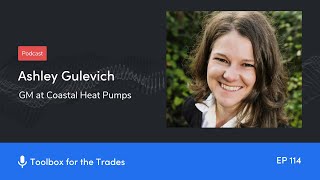
This is a YouTube video titled "The Boss’s Daughter: Overcoming Stereotypes in the Trades | Podcast Ep. 114 | Toolbox for the Trades" published in August 2023. It features a podcast conversation between Jackie, the host, and Ashley Gulovic, the General Manager of Coastal Heat Pumps in British Columbia, Canada. The discussion covers Ashley's unconventional entry into the trades, her leadership approach, the importance of listening, implementing systems in a growing family business, and managing self-care while balancing work demands. The conversation also touches on gender and family dynamics within the trades industry.
Ashley Gulovic, you are the GM of Coastal Heat Pumps in British Columbia, Canada. I am so excited to talk to you today. Welcome to Toolbox for the trades.
Thank you. It's so nice to be here.
I am so excited to chat with you. We just found out before this podcast aired that Ashley is four days older than me. Exactly. So we're already on the same vibes. So I think we are going to explore a lot of different areas today. You did not get into the trades in a very organic way. So I'm going to kick off this podcast the way I always do, which is how did you get into the trades?
That's a funny question. Well, I, I took a free trip with my mom and my dad and I saw, I kind of bought into their vision. So that's a short story. The long version, I guess, would be. I was at a cool point in my life. I was in the travel industry for about 10 years and I was getting kind of done with it. I was working for an airline and I came up with five plans and I didn't know what I was going to do, but I decided I was either going to work for the government, I was going to move to England. I was going to. I forget the other three. I think I was going to go to school and be a full time student. And I created five just so wildly different plans. And everyone thought I was crazy and thought I was in this like crisis in my life, but everything seemed so clear. And then my parents said, hey, Ashley, we have joined a, like a consulting company and they're going to help us grow our business. And we're wondering if you and your sister will come to Texas with us. And it was the same visit with my parents that I was telling them I was moving to England. And I was like, well, I'll move to England in three months and I'll come on this trip with you first and then I'm going to move to England. So my sister and I packed up our suitcases and we went with my parents. And the, the ask was can you please be our eyes and our ears in this boot camp? It's with Service Nation alliance, so lots of people know about that and I knew nothing about it at the time. So I went to this boot camp and yeah, we, we learned with Vicki all about numbers and we learned about marketing. And it was the first time that I'd ever been introduced into my parents company. My parents have owned a business since I was 4 years old and it's been different companies, but it's never been open to the family. It's been their thing. There was no pressure. So yeah, my sister and I were kind of sitting, writing notes and making jokes and being like the disturbance in the class. But we totally fell in love and just got a vision and got excited about where my parents were. It was a paper based company with my mom, my dad and their friend answering the phones. They had five technicians and everything was a possibility. Nothing was off the table. I came from like corporate structured regulatory bodies controlling what we do, making sure we had passes and clearances and all these stuff. And my parents came in and were like, we have a white canvas that we want to paint all sorts of colors. So I came out of that. Part of it was bringing on Service Titan. So yeah, we, I just, I got really excited, which is easy for me to do but like I got really excited and I quit my job like three, I think three weeks later I gave my notice and I was like, let's do it. And we, I went from airplanes to air handlers.
I love that story. And does your sister still work for the company as well?
Yeah, yeah, she does. She's in the. She's here now. So we're both full time and it didn't start off full time. I, I pretty much started full time right away and got like right in the office and started just learning and making changes and listening. And listening. Actually I listened to a lot of your podcasts to be honest with you.
Yeah, thank you.
Yeah, I'm fangirling and I learned. Yeah, just learning from. We are in an advisory group and AB80 so with Angie Snow at the time was leading the AB80 group. And so she's been a huge mentor and just support for me. I don't know how much she knows that or not, but I've always kind of looked to her and different resources and stuff that she's put out for learning. But yeah, my sister and I are here full time now and we're doing it.
Oh my goodness. I could take this interview. So many different directions. I absolutely love it. I love your enthusiasm. It honestly is infectious. Just talking to you, you can hear your smile. If folks aren't listen, watching the audio, watching the video, I'm sure they can hear your smile over the audio. Angie Snow, also one of my favorite women in the trades. She's been a guest on this podcast. I've also partnered with her on countless other content initiatives on Service Titan, which we'll link in the show notes. I love what you just said though about like the first thing I did when I came to Coastal Heat Pumps was I did a lot of listening because I'm talking more and more to people our age, honestly, who are getting in the trades. It wasn't their first career, they're coming into it later. And the ones that I think are the most successful are the ones who listen the most. Do you agree?
I 100% agree. And there's so much more to that. And I'm gonna get emotional throughout this podcast just because where we are in the journey of like the growth and change and development of the company, we're like in it right now. So I will get emotional and we can keep it, we can move it, whatever. But the, the skill of listening, I think really is a make it or break it for any sort of change or projected change that you want to go through. And going through complex change, I, I am really thankful in the careers that I've had, for example, with the airline I was with, they had a lot of values that I really stuck with me and formed who I am. And one of them was, you don't need to know the answer, but you need to know where to find the answer. And that will always change and that will always move. So there's no know it alls here. And you can't teach people, or you can teach people skills, but you can't teach people trust. And coming into this industry, my real goal was like one, I know nothing. So you guys have to teach me and I have to listen to what that is. And my dad really built this company on like, values and trust and integrity and values that you have in a family. The exact values that he raised me and my siblings with and my mom raised me and my siblings with are the same values he's brought in the company. But I couldn't see that until I just listened. I had to go on job shadows and I went with every technician we had at the time to see what it was that they were doing and what did they like about their job, what didn't they like about their job, what was a pain point, what was working, what wasn't, what did they want more of, what did they want less of? You can only do that by listening. And in the process of that, my journey, I think at some point I. There was so much value in those ride alongs and so many takeaways and so much excitement that came from it that at some point I couldn't remember everything. And I started writing everything down. And through some of the complex change of going through Covid and all of the things and the muck and what life is throwing at you, the nitty gritty. I became really insecure in my listening because so much was happening so fast. I wasn't able to listen anymore. I was writing everything down because I couldn't remember it. And in writing everything down, I stopped listening. And I don't know exactly when that happened, but it's something that I've been able to recognize about myself. And so I'm actually in my leadership and in my learning, going through a process of learning how to listen again. So, yes, I think that it is the best skill to have and it sets you apart, but I don't think it's a skill that always lasts. Like, it's a. It's something that you, you know, it's a practice thing. And if you, if you don't, you. What is it? If you don't use it, you lose it.
Yeah. You have to nurture it.
You have to nurture it. And I think especially for leaders in companies or just if you're working with any sort of staff member or colleague, you know, when you're not listening and just sets. It sets the platform for trust. It sets the platform for action and change and growth. If people hear that you're listening, then you can take action. But, yeah, there's a fine balance because I started writing everything down and now I feel like I can't remember anything.
That's so interesting. I love that you just. You talk about the dichotomy between listening and actually writing things down. And I wonder if the listening component is because you're busy recording. You're not sitting and being present with the technician who's telling you, this is what I love about my job. This is what I absolutely hate about my job. And if you want me to be here for another year, you have to rectify this.
Yeah. And one thing that I like, because there's always action plans, like, there's. If something happens, there's five whys you want to ask yourself and get to the root of the problem and then address that and solve that and textbook stuff. But at the same time, sometimes the root of the problem is that people don't feel heard.
Yeah.
And so just by actually sitting and listening, which is. I mean, I'm reminding myself of this in this moment, too. But just by sitting and listening and hearing what people are saying, you can, you know, solve so many. Like, proactively solve so many things. And that is the action. And I know that we get so busy doing, doing, doing and like tangibly actioning things, but it can work away from us.
Yeah, totally. So just being still is going to definitely be a theme, I think through this entire interview. And I'm so happy that you talked about that value that you learned from one of your previous employers, which is it's okay to not know the answer, but you have to know where to get it. So I'd love to learn about what are some of the practices you've taken from your previous travel gigs and how are you implementing them at coastal heat Pumps?
That's a loaded question, but a really good one. I feel like I won't even do. I won't even do it justice. Well, I came from. In the traveling, I was working for a cruise line and it was really centered around customer service. So I think that I learned a lot of customer service focused and facing things as it was really trained into us. So I think I've really been able to bring that into what we're doing with our customer service side of our business and giving people an amazing experience for Coastal Heat Pumps. Small things. I don't love the word no or. Yeah, I don't, I don't like the word no. And in the service industry, you don't say no, but you all. You find the alternative. I actually am not sure what. I can't do this for you. What I can do is this. So speaking with positives and not negatives, just Angie Snow.
Very Angie Snow. I'm sorry.
No, it's good, it's good, it's good. So just small customer service facing side of things as well. I, I came from. The travel industry is busy. There's a lot of people all the time. I was on ships with 7,000 people who needed to, you know, all do the same thing at the same time. And there was organized chaos and we would do it over and over and over and over again. And we would travel the world in different countries with different people, with different passports, with different visas. And. And these people were also able to have the same experience. And I went to the airline industry where people with mobility, mobility issues or non mobility issues, with language barriers, with visa implications, they were all able to take the same flights. And we would do it over and over and over and over again. And we were able to provide the same experience. And we would have, you know, we'd have medical issues happen on airplanes that we had to deal with at an airport level. We would have security threats on airplanes or we'd have security threats on airports. So we'd have these Big, big, big concepts that were happening in the travel industry. And things still ran. And we could put human beings in tiny, like metal tubes and fly them across the earth. And so coming into this company, it was like, okay, if we can get people all around the world, whether it be planes, trains or automobiles, with whatever life is throwing at them in happy situations, bad situations, why is this phone call posing a problem? Why is this like, why can't I just answer this question really simply? Why can't I do this? If I can do this, why can't I do this? And I really realized it's because where we were, I learned systems. And when you have a system, you could be proactive. So you can kind of predict what outcomes are going to come from different situations that you have. And there's procedures and there's policies and there's just structure. And that was, you know, that was normal for me in that industry. So coming here, I didn't realize how unique that was and that this company actually didn't have it. And so the beauty of having a mom and pop shop is that it is fluid and we can make, you know, empower decisions and everything. We didn't have the ability when I came in to be proactive. So a lot of the decisions were really reactive. And it was really important for me to simply start bringing an awareness to being proactive as an option instead of reactive. And I can't tell you how many times I would use the phrase, mom, can we be proactive and not reactive? Daft. Can we be proactive and not reactive? Anytime we had a question, I brought the mindset of the proactive thing to do. And the reactive thing to do. Reactive is that I could just fight this fire. Proactive is that we can accept that we are where we are at and I can find a solution that is going to not answer the question now, might cause frustration, but we can solve this for the next five years. It's going to take me time. I need space and grace. I'm going to make mistakes. I got frustrated so many times I might lose it. But we need, we need to be proactive, not reactive. To be proactive, I need to solve this for five years. And. And I just kept telling them, like, if we can get astronauts in space, we can figure out how to not get whatever. And I think that's the biggest theme that was important for me. That was a big, A big value that I took from my experience in a different industry, but just how it translates so seamlessly. And yeah, I think at the End of the day it's, it's. You have to be proactive. And the word just now I've been here for five years, maybe four, I lost track of the time. But we're now just actually getting our procedures written down because we're growing them and everything is a living document and we're going to be proactive and not reactive and we're going to. Everything's kind of like a game. You're going to try it and we're going to change it. We're going to try it, we're going to change it and when something is good, we're going to keep it and if it's not good, we're going to kick it. But yeah, it's all kind of just that you have to be light hearted and let it go sometimes. I think long answer from my previous experience. Those are some two of the small things that kind of brought into the company.
I'm so happy you said that. As you were talking I immediately thought systems. As you know, I talk about systems on this podcast all the dang time because everyone comes on and says I had this aha moment that I needed to systemize, operationalize every area of my business in order for it to run like a well oiled machine. Like sending astronauts into space or flying 7,000 people or. No, I don't fly 7,000 people. Can you fly 7,000 people on one plane? I don't think so.
Well, maybe like 7,000 people from one airport in a day.
Sure. Yeah, exactly. There you go. And systems is something I personally struggle with too. Service Titan is a gigantic company that's growing all the time and I constantly struggle with systems because it's so hard to be not only the developer of the systems but the, the executor of systems, the implementer of systems. And I'm glad that you kind of put it in a way that gives grace to people who are struggling and trying to formulate those right now. Because I guarantee you there's some people listening right now who are like, oh my goodness, thank God. It's so much harder for others. It's, it's just as hard for Ashley and Jackie as it is for me.
It is so hard and I think too even to that, like I had a really cool thought and I just lost it. But systems, systems can be tricky and I wish that some. I'm really difficult on myself and I'm having a realization in this moment. So thank you for that. I think in having a system systems kind of promote that we all have an answer. But then that kind of negates and goes against exactly what we just talked about of being able to listen. And so I feel like there's like a weird, like, for lack of a better word, like a janky relationship between having a system and having an answer and having something that works and being able to listen, to hear, that sometimes it doesn't work. And I know for speaking for myself, I think it's important to. To kind of just give yourself. Yeah. The space, that no system is ever perfect. And to keep the human in the system, because we are all humans. And actually, I. We have. We have one of our employees that she. I was talking to her, and she's. She's fairly new with us, maybe like, six months. And she said, I knew that I was coming into a company that's going through rapid change, complex change, rapid growth. Like, it's crazy. And not all day. Like, days are stressful, days are manic. Like, we're just. We're in it right now. And she said, but what I love is that, like, I'm making a difference. And I'm not a cog in a wheel, because I've come from corporate and I am a cog in a wheel. And I could be there or it could be anybody else. And systems, like, for our company, because we have a lot of values in our team, and we pride ourselves. Family, like family first. I'm working with my mom, I'm working with my dad. I'm working with my sister. There's space, there's grace. Where we, like, embrace the. Embrace the mistakes. Learn from the mistakes, but allow them. And in your systems as you're creating them. Like, I. It's really important that we know it's not perfect. I. The word systems and policies and procedures, it still is kind of like a block in my brain. It doesn't sound fun. That sounds lame. It doesn't sound like a job that I want to work at, but there's value in it. And so, you know, just for me, sometimes changing the word like, oh, it's. It's a game. To create organization, simplicity and the ability to be proactive. Yeah.
Proactivity, speed, scalability, everything that you need to lay the base foundation of a business. I love what you use. Oh, please, go ahead.
Well, I was just gonna say. And we have never been. Like I mentioned before, I've been with the company for four years, but we haven't been at a place that we've been able to document any of our systems or procedures because they change so Fast. And I was getting myself into like, just paralysis of like just may prowess is the wrong word. But I was just getting myself frozen and stuck in the place of. I made a change, I have to document the change, then we have to do another change and then I have to document that change. But this change is old and I have to find this document to write this document. And my brain just went. So I stopped and it was like, hey, I'm making a change. We're trying it for three months. It's going to suck and it's going to be awesome. And tell me what the suck is. Let's change it. Tell me what the wins are. Let's celebrate it. Let's write the wins down and we'll have a list. And then I just have this huge mess. I honestly have a mess of documents that are unorganized. And that's okay. Of like, this worked, this didn't work, this worked, this didn't work. And it's so unorganized and it's. It's overwhelming how much work there is to siphon through. And so I was like, huh, this is above me now. I did what I know how to do and now I don't know how to do anymore. I'm hiring an HR in house HR specialist. And she's going to help because now I think we're at a place that we have things that work and things that we're keeping. Let's bring her on. And she's so jazzed at how prepared in my word, like, in my world, I'm unorganized.
She's using air quotes. She's using air quotes to stay prepared.
In my world, I'm like chaotic and spastic. And in her world, she's like, wow, you guys, like, you're. You're at a cool beginning place that you have a strong foundation here. And I'm like, yeah, you take it and you run with it because now this is your. I'm passing the baton onto you.
Yeah, I, when you were talking about the paralysis, I completely aligned with that. I felt that in my core. Because when you move so fast and you went from nine employees when you first joined the business to now you have 27, which is incredible at 31.
Now we're including the owners.
31 now. Oh, my goodness. So, like, that just goes to show how much the company has grown just in a few short years. So. And I could see how that could be so paralyzing because on one hand you want to document these systems, you know how helpful they are. You know, they allow you to be proactive, to be human, but still you're learning how this business is going to run the best and you're going to make mistakes and you're going to have to document that. So I can see how you can just like get in the mess and have your brain just pop like you were saying. And I would love to pivot a bit because I want to know how you've had to change and manage your own self care routine to accommodate for this new role. And by the way, I'm loving talking about all things self care on this podcast because I think it's still pretty new to the trades and people are talking about it more and more and it makes me really happy.
Yeah, that's a big one. Self care, it's hitting home. Hitting home. Jackie I think it's really easy to let our jobs get away from us. We strive for work, life balance and we strive for 8am to 4pm or 9 to 5. And for me, the reality that just wasn't happening. So I was really clear in having a self care checklist and I actually worked with a coach around it and we just kind of visualized and I visualized what is self care. And as a leader, if you think about a leader, I don't know, for the sake of the conversation, Oprah, like, what does Oprah do to be Oprah every day? How does she make sure that on top of everything she's doing, she can also feed herself for or whatever it is? And so what are these people doing? And at the time it was like, I need to drink water. Great. What is the support that I need to drink water? Well, I just need a water bottle. Cool. Got to the point that I'm now working so much that my water bottle is on my desk. It actually is, but it's still full from this morning and I haven't looked at it once. And I am realizing I've had, I've had a hot chocolate today, but I haven't had any water. And something as simple as that. It's really hard to find that balance like eating. I'm finding it's really hard to eat because I am working so much that I'm on the phone, I'm in a meeting, people are coming in and wanting to ask me a question and I'm so passionate my people, but I'm not eating. And now it's 2pm and I'm having my breakfast. And it was just such a slow progression of that happening starting I was like, I have this List I have my support system, it's going to be great. Monday to Friday, 9 to 5, no more shift work. And it, you know, much like listening, it's evolving. My self care is never complete and it's something that needs to change and adapt and grow and I'm finding it's growing as the business is growing and I'm in the process of actually redeveloping it now as well. I'm really keen aesthetic and I have a lot of energy and I'm more and more aware of it the longer I'm in an office setting sitting especially what was happening was I was coming in earlier and staying later. So 12 hour days are very, very normal because I need to work in the business and on the business and there's no balance in that. And I have, I. Some people are going to laugh but I had the luxury. I don't, I don't have kids to go home to, I don't have a husband that I need to make food for. If you make food for them, I don't know. But I had the luxury that I was living like bachelorette life. So working 12 hours a day, work hard, play hard was really easy for me. But as things, you know, I'm changing and growing and it's not happening anymore. So as self care is now getting more and more important I think it used to be simple of well you need to drink water and eat three times a day and leaders, they read books and they do all these fun cool things and they like go for drinks on Friday night with their friends and they laugh about work over martinis and it's wonderful. And in reality it's like well I'm still at work and It's Saturday at 2pm now so really figuring out I had to get really serious with myself on who I am and what do I need and where am I going and having a vision of who do I want to be being proactive and again like I work with a coach and if people have the opportunity like it has been life changing for me. It setting a vision, setting an intention and working backwards from it to attain it to be able to get over some of the hurdles and barriers that are naturally going to happen. And I've tried everything. So like I kind of was starting to say before I'm very kinesthetic and I need to move my body a lot and that is in total opposite of me sitting at my desk coming in for 7am and leaving at 6pm there's not a lot of time in a day to move my body and, and I was starting to get really frustrated and there's other symptoms that are starting to come up. But the root of the issue when you actually ask yourself, okay, why, why, why, why I'm not moving my body and I have started. I kind of made it a game because I think everything can be a game because we can have fun. Even though we're adults and we work lots, we can have fun. So I made it a game of. I said, all right, I am going to, I'm going to take all of the classes that I never took as a child. I never took dance classes and I've always wanted to take dance classes. So I would just do drop in classes and try something new and make it spontaneous and. And I was just like, yes, drop in here, drop in there. We're gonna do this, this, this, this. It was very spitfire and it was wonderful. And, and as again, things are changing and progressing, I wasn't. I lost the ability to be spontaneous where dropping classes were really hard because my schedule was in conflict. So I needed to now proactively say I need to get out of the office at 5pm and I used my need to physically move my body as a support to get out of the office at a reasonable time. So I signed up for boot camp. So I had her to hold me accountable to being at boot camp at 5:30 once a week. I was out of the office and that was wonderful and great until now. All of a sudden boot camp wasn't enough to move my body. So great, we're going to switch it up again and recognizing we all have patterns and being able to kind of recognize, hey, every three months I just need to switch up and that's okay. If I don't switch up my workout routine in a year from now, I'm going to be frustrated. I want to switch up my job, but that's not what I want. So again, being proactive in knowing we all have patterns and symptoms and am I allowed to, am I allowed to swear?
You can swear. Yes.
Okay. I really believe we all have like oh shit moments and so everything is good. Everything is good, everything is fine. Things are kind of difficult. I'm having a tough day. I don't like this oh shit. And your oh shit moment is your break it where you're going to lose it and you're going to need to make drastic changes. People change their careers, people get out of their relationships and they do all these things because they've hit it. So my self care is really about and again, it's changing. My self care is about learning where my oh shit moment is and working backwards. So when I recognize a pattern of myself of everything's okay, everything's fine, when I'm in that everything is okay, everything is fine. It's like that's a red flag for me that I need to switch something up. And it's generally in my self care. I love my job, I love working with my family. I love the challenges that every day brings. I love celebrating the successes where, you know, I never thought we'd see this success and we have it and we can celebrate it. And I love these things. And some days it's just like cloudy and foggy and we don't like things and we want to change things. So self care for me is just really being proactive to know what are the things that work to move my body to make sure I'm like literally as simple as it is. Like I need a support to eat food and to drink water because it's really easy for me to just work 12 hours a day and then go home and, and like just pick up food on the way home and then continue to work or not work. So self care has been crossfit. Self care has been dance lessons, it's been kickboxing, it has been going out for drinks with friends. Self care has been going on runs, having a dog. Self care can look like absolutely anything as long as it's intentional. That that's what it is. You know, self care can sometimes be drinking the whole bottle of wine. As long as you know that that's, that's just what I need to get through where I am. But setting the attention because drinking the whole bottle of wine can also be self destructive as well. Sure. I think, I think self care is always evolving and I was having a conversation with one of my girlfriends yesterday and you know, the job is just the task of what we're doing and anyone can do the task. But I think the actual balancing of self care is the work. How do you work, how do you play, how do you take care of yourself? And that genuinely is the work. Especially if you have kids and a family, like all the power to you. If you could balance a full time job, especially if you're a business owner, my goodness, how do you self care? Call me?
So I just want to say that as you're talking I'm envisioning you, you're kind of on these like two, these parallel paths. One of them is watching the business and creating systems for the Business and being proactive. Trying to be as proactive as you can with the business while also being proactive with yourself. I also had this aha moment, by the way, to everyone listening. I sent Ashley questions, and she's just been such a wealth of information. I'm totally going off script. But that's okay.
That's.
That's what makes the podcast fun and spontaneous. I actually want to say to you, I think you may be. And I've been doing this job for a long time. I think I'm not married either. I also don't have kids. I think you may be the one of the only GM female women in the trades I've spoken to who doesn't have that family component. And I don't mean that in an alienating way. I mean that in a. Oh, my goodness. It's. I'm finally seeing myself in the trades position. So I'm very curious as a woman in the trades who's living that bachelorette life, as you said so yourself. What do you want other contractors to know about working with incredibly talented and strategic female thinkers like yourself?
We're fierce.
I mean, I would agree. I'm a little biased, but, like, I agree.
You must be, like, born on December 26th or something.
Oh, my goodness. Please no one try and steal my. My information. No, it's on my Facebook.
They can find it.
It's okay.
It's good. Keep that in there because then everyone will wish you happy birthday.
Yeah, there you go.
Yeah. No, it is a good question. I can only speak for myself because everyone comes from such a different background. I. My situation is also unique because I work with my family.
Sure.
So I am with my mom, I am with my dad, I am with my sister, and I do have a brother. He is not in the industry, but we are all very close. And family dinners are often talking about work. I think working with strong women. For myself, communication is a big piece. For myself, I see it as a luxury that I get to put a lot of my energy and excitement into the business. And I have a lot of vision, and I love what I do. And so it can be so energizing some days, and it can also be very taxing some days, as anything can be. And it's important to know what your limits are, because it's so easy to reframe because I have fun. What I do, I could literally do it all the time. And there's always something to do. And I think I've had to really learn patience, that lots of things come naturally. Like, we were talking about systems. If it was up to me and my deadline, I'm like, three years late that we don't have systems and policies and procedures. I'm like, so, so far behind, and I'm failing based on my standard because I have the time where I look at my sister, who does have two children and a husband, and she works in another town and has more of a commute than me, and things just take longer, and there's so much more value in, like, the relationships are really important and to give yourself the time and the space and to set those boundaries. That because I have the capacity doesn't mean that everyone else does. The does have the capacity. And there's lots of places where, you know, my sister is so amazing at juggling 15,000 things because she's working and her kid is sick and her husband is out of town and her other kid is, I don't know, has a swimming lesson or something, and she's still at work. And I'm like, yeah, but when do you feed them? How do you. Are you drinking water? So, you know, it's. Her ability to multitask is so. I'm just so inspired by her ability to, like, keep going and move and adapt and mold. And she's like, things are everywhere. How are you doing this? Where for me, in my life, I've really honed in on, like, I like structure. I like predictability when things aren't predictable. I like. I like chaos that I can predict, and I will just work on predicting it because everything is a pattern. So I don't know. I think. I guess because I'm in it, I. I guess I don't really see the difference of having a family or not having a family and how it really affects what my capacity or capability is. But I think it's because I don't really know different. I see there's so many strengths in being able to focus a lot of my energy, and a lot of it comes as a passion. My passion comes from I'm in this company to support my family. And I see this as, like, the best gift I could ever give my parents because I'm actually working for their retirement and for their quality of life in the next chapter of their life when they're ready to retire. So, like, my why is really, really, really family rooted and strong, and there's not a lot that will shake me from that. So I see a lot of strengths. I also see that, yeah, everyone. Everyone has their own why. And there can be a balance between family and not. And it doesn't matter what industry you're in or what occupation. Yeah, what industry. What occupation you have. It's. It's what. What is your why? And you're gonna make it happen, I guess.
Thank you so much for entertaining me on that incredibly complex question. I just have to be honest with you. And I apologize to my producer for asking this very loaded question. It's just. For me, it was just so exciting. I had that aha moment while we were talking because I'm like, for the. For me, as someone who works in the trades and works with so many customers, for example, and this is not a knock on anyone by any means. I'm not sure if you've experienced this. And by the way, Ashley, I have no idea if this is going to stay in, but I just want to talk to you about.
Yes.
How many times. Like, how many times people have just assumed with me and said, oh, how many kids do I have? Or, oh, so what does your husband do? And it's like, I don't have a husband and I don't have kids. And I just think it's really. When we talk about diversity in the trades, you know, we talk about women in the trades, and a lot of the women I see in the trades are women who have families. In fact, we've highlighted that in a lot of these past episodes. And for me, I don't want to disparage that, like, that way of life at all. I think it's incredible. And to your point, like, with your sister, like, how the hell do you do it? I have no idea. And I just got really excited because I'm like, oh, my gosh, I'm finally talking to someone in the trades who kind of has the similar situation that I have. So I just wanted to pick your brain about it. And I don't know if we're going to keep that in, but, yeah, that just got me really excited.
Well, and I think, like, even to that point, it's. I. My sister, like, grew up. I remember as kids, she knew she wanted to be a mom. That's, like, what she wanted all of her life.
My sister too. My sister, too.
And I was like. I remember being at my grandparents. There's a picture of my grandparents right, like, right around the corner because I'm in my dad's office, and I remember being at their. What was it? They're like, 40th wedding anniversary, maybe? And I was five. And I remember being. We're Ukrainian, and so we call them Baba and Dito. And I remember going to my aunt and being like, I don't want kids. I want to be like Baba. And, and she doesn't have kids. And look, she has so much fun and I don't want kids. And I was the child. And I don't know why, I don't know where that came from, but I really remember that. And I remember my aunt being like, ashley, there's five of us. She had five children. And I was like, yeah, but I want to be like Baba, she doesn't have kids. And I just like, I don't know, I've just never had the maternal instinct. I love children. I have like 12 or 15 children that call me auntie and they fill my heart with so much joy. And it's, for me personally, it's not something that I have felt that I need in my life to be able to nurture because I feel like where my excitement and where my nurture is right now is in this company and like, just in business in general. I, I, I don't know. So I think where I get more, maybe in Canada, it might be different. I don't know. I don't, I do get a lot of questions like, do you have kids? Do you have kids? It's more so when I take my nieces to the swimming pool and people are like, oh, your mom. Oh, that's your mom. Nope, not your mom. Where I see a lot of just difference in being a woman in the trade, it's more so with the relationship between being my father's daughter, because my dad is really, really, really well known in the industry. And when I first came into the business, I really, really had to push up against the boss's daughter. And I was just the boss's daughter who was given a job, who we have to answer to. We're a team. We all work on the same level. Like, I, I have a title of a general manager, which I'm trying to change to a director, which is new because I was an operations manager. And it's operations because I didn't want to be a manager of any people because I'm a leader and I want other people to, I want to lead by example. And so really having to come against the boss's daughter, that was a challenge because there's a lot that I did behind the scenes to make changes. I used to write emails from my dad's email and have it sent with his signature because it wasn't going to be received well. And I, I now still to this day have leaders in place in different departments that I will relay messages and speak to so that they can speak to the text. Because for me and technicians, I'm not a technician. I do not speak technician. I need. It's important for me to still relate to them without offending them or speaking like I know it all and I recognize we speak a different language. So I think women in the trade, just being a woman in the trade, coming from a background that's not technician, that's been a lot more of the, like, up against, so to speak, where I can. We have one. I'm gonna name drop them. I was. We have one. He's a technician now. We brought him in the office. His name is Grant. Grant is incredible. If you ever talk to Grant from Coastal Heat Pumps, tell him he's awesome. But I speak to Grant a lot and we share ideas back and forth. And I will bring some of my visions and partner with him. And I've just partnered with key people and. And it's his job to relay the information to the tech because he can speak the tech language that I can't. And where we might have the same message, it's received so different. That's been a lot of the learning, and it's not been easy. There's been many conflicts. Conflicts are real. Emotions get high. Emotions are very natural. But it doesn't mean that we can give up. If we see it like it's a game, we just get to play another game. 2.0. Let's switch it up. But yeah, the boss's daughter was really. Was really. That was a real one. That was challenging. And I never came in feeling like I needed anyone to prove themselves to me, which is partly why I came in just from listening. And I think being humble, being really humble, it just shows, hey, you're here to teach me. And yeah, just staying curious. Being curious is like the coolest thing in the world. And I love being so curious, and it allows you to ask so many questions. And in leadership, I'm learning that sometimes questions can actually be intimidating or difficult or be like, trigger for defensiveness when a leader is asking a question and a leader isn't giving an answer or direction. And that, like, that's something I'm working against now. And so, yeah, being a woman in the trade, I think a lot of people. I think. I think just being a woman in a professional environment and choosing a professional career and not. I have not focused on my family and family development. I think a trend when we want to relate to people is that it's Easy to relate to people with where they're at. Hey, 30s, husband, kids, whatever. And so sometimes it's learning how to relate in a different way. And so when people are asking me, like, oh, do you have kids? No, don't let the conversation end there. Either make a joke of it or, you know, why don't. Oh, I love this one. Why don't you have a husband? Why don't you have kids? Why? It's like, why?
Yeah. Every day of my life.
Yeah. Like, it doesn't matter.
I'm like, it's not for lack of trying, Bob. I don't know why I chose Bob. I chose Bob. He's the director. He's the director of my department, and he might listen to this. Hey, Bob. He never asked me. I just know why you came into my mind. But yeah, no, yeah, I like it. Staying curious, listening, going back to all of that. Don't let the conversation end there.
Yeah. Re. Reframe it from curiosity. Are you asking me because you're trying to relate to me? Because if you are, then I really want to, like, keep the conversation. Actually, I don't. Or, like, maybe one day. Not today. I don't think it's happening tomorrow either. And it's not. Okay. It's. It's like not a judgment or anything. And also, I should preface. I. I started in the company as Bachelorette, living bachelorette life. I do have a partner now, so if he does listen to this podcast, we could just give him. Give him the credit. I am. I am not. I am not single. But, yeah, it. We both own. We are not own. We. We both. He owns a business. I'm working high up with my. With my family's business. We're very invested in our work, and choosing professional is. There's nothing wrong with that. It's everyone's choice. And there's different ways to still relate to people. And I actually like to ask people, like, kay, seriously, you have kids. How do you feed yourself? I'm working on feeding myself, and I don't have kids. So how do you do it? And like, having kids is your superpower, and not having kids is my superpower. Like, let's talk about it and what I secretly love. I don't know, maybe this shouldn't be kept in. What I love is I like to get curious and I ask people this. I'll be like, oh, you have kids. Would you do it again? And I know, but listen, we love kids. There's nothing wrong. Kids are amazing, and they're so heart feeling I have had people, like, honestly, be like, you know what? Love my kids. I'm. I would never give them up. If I knew what I know now, I maybe not have. Would not have had kids. And again, not a judgment. That's really cool. What do you love about it? What are the challenges? And they're like, I actually, like, miss gaming. And you're like, oh, yeah, that's fair. And you could just. Why don't you have kids? Well, why do you have kids? It's everyone's choice. And I think it's just how you approach it. Just be curious and laugh.
Oh, my goodness. I love this conversation so much. We're gonna make it into something amazing. Ashley. We are gonna wrap this up because my producer is going to kill me for how long this is going.
I'm sorry.
No, my goodness, don't worry. His name is Rob. He's lovely. He's like, oh, Jackie, we'll wrap it up with this. If you had to choose a song to be the soundtrack of your life, what would it be, Ashley?
Oh.
I.
There is. Hey, hey, we're the Monkeys. Or I think the one that I actually would. That lands more is Don't Worry, Be Happy by Bob Marley.
I mean, obviously, like, based on this entire conversation, that kind of lands for the whole. Your whole vibe, which I can't say again, how much I loved Ashley. This was a lovely conversation. I'd loved getting to know you. Thank you so much for being a guest on Toolbox for the trades.
You're welcome. Thank you for having me. I'm, like, fangirling over here in the corner.
More from Bill



ServiceTitan Virtual Agents: Simplify Before You Scale | Podcast Ep. 110 | Mastering ServiceTitan



Life After Live Events: How to Turn Post-Conference Energy into Real Profits | Podcast Ep. 297




