The Critical Role of An Emergency On-Call Dispatcher | Podcast Ep. 191 | Toolbox for the Trades
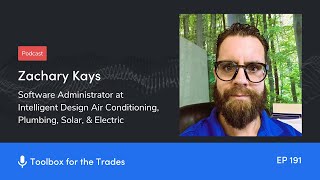
Podcast interview (Toolbox for the Trades Ep. 191) in which host Jackie Aubel speaks with Zach Kays, software admin at Intelligent Design (Tucson, AZ). They discuss the practice and challenges of emergency on‑call dispatching in the trades, Zach’s background (call-center manager → septic tech → dispatcher/software admin), company culture at Intelligent Design (service-oriented, charitable work, Breakdown Uganda nonprofit), operational practices for after‑hours emergencies (after‑hours call qualification, tagging/prioritization in ServiceTitan), technician support and safety, staffing/rotation and compensation for on‑call work, and examples of charitable unit donations and media exposure.
Hello contractors and welcome to Toolbox for the Trades. My name is Jackie Aubel and today I am chatting with Zach Kays, the software admin at Intelligent Design in Tucson, Arizona. Zach and I talked about the art of emergency dispatching, giving back to the community and treating your technicians like clients. I hope you enjoy our conversation as much as I did. Zach Kays, you are the software admin at Intelligent Design in Tucson, Arizona. Today we're going to be talking about the art of being an emergency on call dispatcher and hopefully share some tips that other business owners can take into their own operations. I'm so excited to have you here on the podcast. Welcome to Toolbox for the Trades.
Well, thank you, Jackie. I'm excited to be here and happy to talk about the experiences that I've come across doing after hours dispatching. I've been on both sides. I did it as a septic technician where I was actually on call and then I both so admit in the office, which is what we're going to talk mostly about today.
Amazing. So you're going to be able to give that full kind of 360 view of like what this actually does and how it affects the person who's actually doing the work, which I'm so excited about. We're going to kick this off though with an icebreaker, which I love to do. I want to know, Zach, what's one thing on your bucket list that you really want to do?
You know, let's start with the win. So something that was on my bucket list and recently crossed off in my bucket list was going to the San Diego Zoo. So I actually had the pleasure of doing that probably about two weeks ago, spent the day there and I'd say saw a good 90% of the zoo. If you've never been, I recommend doing the bus tour first because that kind of gives you an idea of everything that you want to see and then go out and walk it. Because if you don't do the bus tour, you're going to end up missing something. It's a huge, huge place.
Amazing. I love the San Diego Zoo. I love that that was on your bucket list. Item. Were you just visiting San Diego for the zoo or was that a, was it just a bonus project for you being out there?
For me personally, it was mostly the zoo. I'm originally from Pittsburgh, Pennsylvania, so they have the Pittsburgh Zoo there, which is a couple rungs below San Diego, but still pretty high up there when we moved to Tucson. Tucson has a very sad zoo and by that I mean they're doing the best they can with the land that they have. But it's built into a park. It's really small. The animals looked at rest. So it was definitely on my bucket list to see a large zoo again where the animals are happy. And I don't want to say better taken care of, but they have more room to stretch their wings.
Sure, sure. Yeah. San Diego Zoo is one of the first things I did when I first visited the west coast. I'm an east coaster born and raised, and it's absolutely awesome, and I totally have to visit it again. So thank you for the inspiration. So, Zach, you. You didn't start off in the trades, so I would love to know, can you tell us your story? How did you get into the industry?
Oh, yeah. So I have a strong customer service background. I was actually a call center manager for a while where it was everything was numbers driven. They didn't care anything about your personality. If you weren't hitting your numbers, you weren't getting any success. So I wanted to kind of get out of that and go to something where I had more control. And at that time, my brother was working for a septic company here in Tucson, and he said, hey, why don't we bring you on board over here? And I was like, sure. So I gave my notice at my company and I got a lot of backlash for joining the trades. Like, why would you want to leave this office job to go play in the poop, so to speak? And I was like, you know, it's a different opportunity and I'm just going to take my chances. But they almost looked down on me from leaving a corporate job to doing a trade job.
Wow, that's really interesting. So going from, like, that corporate setting to actually being able to physically be doing the job. Before we get into today's topic, can you tell me a little bit about Intelligent Design? What do you guys do? Commercial residential work. What kind of service and services do you guys provide?
Yeah, so Intelligent Design is owned by Andrew Dobbins. He actually started off, I believe, in 2009 working out of his garage primarily with H Vac and just has kept a serving mentality for the community. And his company has grown. Um, he also has deep roots in giving back to the community. So they take a portion of their profits every year and donate that to charity. They also have a side nonprofit called Breakdown Uganda over there, building a school in Uganda for people teaching different trades, like doing cell phones, hairdressing, making dresses and stuff like that. So it's really cool. He's trying to do something similar here in Tucson for H VAC and plumbing trades. But with that being said, he started off just doing H Vac added on plumbing. The natural transition from there is electrical and then solar. And then we just started doing everything about a year ago.
Awesome. All right, so a lot of trades represented. So a big part of your trade career, or at least a good chunk of it so far, has been working as an emergency on call dispatcher. So I would love to learn about what that experience was like for you.
Yeah, so I started with intelligent design about two years ago, and at that time, when I first started in the scheduling office on call, dispatching was a portion of the job, but they usually didn't throw you into it until you've had more experience with the company. On my second day here, the scheduling manager put in her two weeks and they needed somebody to be on call and I said, I can do it. So like my third day here, I was taking the phone home with me. And the only reason I volunteered to do that is at the previous job, I wasn't the person that got all the phone calls after hours when I worked in the office, but I was the one that dealt with the tech's problems and their issues and looking up in the CRM. So I was pretty used to it. And then also being a tech for a while, I knew the second you put your key in the door you were going to get a phone call. So I kind of already had an idea of what I was signing up to and it gave me the option to learn service titan, in this case, a little bit better at home because I had never used it before. So while I was on call, I would also use that when I was putting my tickets in and I'm like, oh, I think I did something wrong. Let me look back and look at that ticket without having the stress of the phone constantly ringing. But you also have, with that being said, as an emergency dispatcher, the way we do it is the technicians don't get the call first. So we have an after hours service that qualifies the call and then once they qualify it, saying it's an emergency, they route that message to you and you have to reach out to that person. And I've had everything from really nice people to really angry people on the other side of that phone when you call them.
Got it. So you have an after hours service that qualifies the call and if they're like, yeah, this is an emergency, you got to get to it right away. Then you take this step and you talk to them directly and route a technician.
That's correct.
All right, cool. I don't want to forget about this, but you said something that I think is so important. This idea of like, you know, as a technician, the minute you put your key in the door, you're going to get that emergency phone call to. Do you have anything you would like to share to any technicians out there listening that says, I understand you and I'm so sorry that that has to happen. Any words of encouragement to them or anything you'd like to say?
Yes. So I definitely understand. Shoot. I appreciate everybody out in the field that has to do that hard work. Stay in your car for an extra 10 minutes before you start to walk up. And you don't, don't just walk in and put your key in the door. And if you work for a company that lets you take your vehicle home with you, that is such a blessing as well. When I was working in the septic industry, not that I'd want to park the pump truck at my house, but when we did get that call, we had to go all the way to the office. We'd have to get our truck. We'd then call the customer and be like, hey, we're on our way. And the number of people that canceled on me by the time I got to the shop and I check my truck out was too much. You know, it was frustrating.
Yeah. Because if I'm in a, if it's an emergency, if I've got like septic, if I've got sewage water leaking everywhere, I'm going to whoever can get to me the quickest. And so that, that having that truck home with you, I can see why that would be a really good benefit to have if you're committing to that type of work.
Oh yeah, absolutely. And going back to understanding the technicians, I hope they understand us as well as being after hours dispatchers because there's been times, especially in the summer, where I'm on the side of the road for two hours just debriefing and dispatching the emergency calls coming in between 3:30 and 4:30, because you get that rush of people coming home and their system's not working. Shouldn't say this, but I'm going to say it. There's been times I've been going down the highway, driving with my knee with the iPad in one hand and phone in the other, trying to figure out the call, don't do that, don't do that. Drive safely. Wear your seat belt, hands free. Buy a Tesla Maybe, I don't know. But those are some of the struggles we go through as on call dispatchers, making sure. Because you have two people to answer to, you have your clients to answer to, and then you also have your technicians who are also your clients. So you're trying to find a fine line between keeping them happy and keeping your clients happy as well.
Yeah, I love that you're thinking about your technicians as your clients as well, because that's something that I don't think I've explored enough on this show, which is the relationship between the dispatchers, the CSRs, and the technician and making sure that that relationship is moving smoothly. So it's really great that you have that insight into that. Do you think you got that just from your experience being a tech and also working in call center management and knowing what that's like on both sides?
I would say that helps a lot. But, you know, you learn it pretty quickly, as when you're becoming a dispatcher and dealing with your guys or your gals, they all have different personalities. And there's going to be a time where you need to ask them a favor. There's going to be a time where you're going to have that crappy call that nobody wants to do that's on the other side of town. And if you're not filling out their love cup, you're never going to be able to take out of it, you know, so you have to build them up before you're like, oh, here's that crappy job if you owe me one. So that's very important. It's playing to all their personalities. And it also comes down to when you call them, you're going to know your technicians that you call and say, hey, I just. I have a call for you, an emergency. Let me know when you're ready. And they're going to be like, okay, cool. And then they're going to go. But then you're going to have those prima donnas that you're going to have to call and be like, hey, I got this call for you. But don't worry, it's an old system. It's over 10 years old. They're probably looking at replacement. It's going to be a good call. It's going to be worth your time. So knowing what the technician's wins are makes the job so much easier. If you try to keep treat all your technicians the same, you're going to run into a lot of things.
Yeah. Oh, wow. Okay. That's so interesting. So what was your most Surprising. What was the most surprising thing for you when you first found yourself in this role in the emergency on call situation? What was the most surprising thing for you?
Just the level of, you know, everybody's nice to the tech when they show up to the house. But a lot of the times people aren't brave on the phone. Like the people calling you for help are brave. I remember with little story, I had a guy call me and he told me he was ghosted by three other companies and he wanted to us to come out and I was like, oh, I'm so sorry you got ghosted by those three other companies. But as the call went on, I realized why he got ghosted. And long story short, we never even went out to that job because he basically told me if I can't guarantee that I'd have a technician on his house in 10 minutes, he wasn't going to pay us. And I was like, sir, the, even if the tech lived next door, he probably couldn't be there in 10 minutes because he's on another call. I even brought up, you know, I, I respect police officers. I'll start out by saying that. But I use that as an example. I was like, if you call the cops, chances are they're not going to be at your house in 10 minutes. There is nobody that's going to be at your house in 10 minutes. That is unreasonable request. Yes, we're here to help you. We know you got ghosted by those three other companies, but that's not going to happen. And he ended up saying some very nice words to me and hanging up the phone. But that's also important when you're doing dispatching and running a trade business. Sometimes you have to know when to fire the customer. And I think even if we got somebody out there in 10 minutes, it would have just been all bad.
Oh, it sounds like it. I pity the person that ended up helping that, that, that one random customer. And what do you think folks misunderstand the most about this role?
Just the volume, the sheer volume of calls that can potentially come in. Especially in the summer. We did, I got one week just doing after hours calls. I ended up booking 76 calls.
76 after hours calls in one week?
76 after hours calls in one week, which is almost for smaller shots. That's almost like their entire week, you know, if you're only doing a small two man business. So, you know, it's crazy, it really is. And then once you book this 70 calls, you have to figure out how to prioritize them. Making sure that you're getting to them fast enough. Making sure that, you know, you kind of read that person's urgency and there's an art to taking the call as well. If you're taking the call and say, hey, we're going to get some, somebody to you as quickly as possible, guess what? That person's going to call you seven more times. Just wondering why you're not there yet. So you have to set those standards. We always use the word standby and hey, we're going to put you on a standby appointment. We, to be honest, don't know when we're going to get there, but it is going to be today, I guarantee you that. We'll see it today, but we have no idea what time. And as it gets closer we will send you a notification when the person gets dispatched. And that stops some of those repeat calls of like, hey, where's my tech? Where's my tech? You're at home. The last thing you want to do is spend half your day keeping up with the clients, keeping them appraised to where everybody's at.
Yeah, I like that, I like the standby model. But wow, that's 76. And I mean this is also in Tucson, Arizona which is very, very hot. So like I'm thinking about this for places where the climate can get really extreme and how that can just get like the hotter it is or the colder it is, the more that that problem can just multiply and grow and grow and grow.
And it's almost on those busy weeks you have your full time job as working in the office which we usually require all hands on deck in the summer. So you're already working the nine, ten hour day in the office and then going home and you're working, you're working pretty much the whole time. I realized when I was doing it that I wasn't really finding anything fun to do, to be honest. Because if you find something fun to do, you find a distraction, you find a hobby and you keep getting interrupted, you're going to get mad. But if you set in your mindset to hey, this is just, I'm basically doing 40 on, you know, working all week long. I would sit in front of my computer and just wait for the calls to come in. And by the end of the week, especially on that 76 hour week, my co workers would know our 76 book week. My coworkers would know at the end of it, when it came time to trading the phone back with somebody else, that I was going to be a little Loopy. I was going to be goofy and I was going to be silly because I was sleep deprived. But we also do the trade offs on Monday, and I know a lot of people have get a case of the Mondays. But I tell you what, when you're on call, there is no case of the Mondays. There's no I don't want to go to work because it's Monday. It's let me get to work so I can hand this phone to the next person.
Oh, my goodness. So you basically the. So the breakdown at Intelligent Design, it sounds like it is you guys just take turns like in a round robin for who's the person who's in charge of the on call this week, very.
Much like stocks will have tech rotations. We have on call dispatch rotations, but we have a small this is under finger checks. Didn't really understand because they're also on call. But we have quite a few more texts than we have schedulers. Uh, so there was a time that we were doing three week rotations where we were audit every three weeks, where the techs had five to six weeks in between their on call rotation. Um, there was a time in December when we were having some staffing issues and I did two and a half weeks in a row of just being on call. Now December, it's a little bit easier. Uh, we do do plumbing, so plumbing ends up being a little bit busier in the winter. Unfortunately, we're in Tucson, so, you know, nobody really needs a heater, so it's a little bit slower. But the two and a half weeks did weigh on me a little bit, and I almost tried to do more, but HR told me, HR said no, Zach, you're going to get burned out. We're going to have somebody else take over with you.
Got it? Got it. So in your opinion, what's the best way to prep CSRs and dispatchers for emergency calls? And actually, let me clarify this again. Almost 200 episodes here, guys. Just as a reminder to our listeners, your girl Jackie here never worked in a shop. I just talk with people who work in shops and I have a bunch of knowledge on it. So when it comes to emergency dispatching, are the CSRs like usually out of the picture and it's just direct to dispatchers?
No. Great question. So when you're on call, you are a dispatcher. So you go from we start everybody off in our shop as a scheduler. Even if you're hired on as the dispatcher, you start as a scheduler because we think it's Easier to layer that on you master scheduling. Then we'll give you whatever trade that you're going to be dispatching. So same thing, CSR startup schedulers. And we usually wait until they have some experience before they're on call. And it varies. I've the only person I've known to be here and be on call after three days. Usually we wait a few weeks, sometimes a month. It's based off the person. We don't want to scare them away. But back to your question, how do you prepare? We start in the interview when we're interviewing the person to even take on the job. We say, hey, we have on call rotation. Hey, this is not fun. It sucks. It's going to be overwhelming. You know, you almost scared them away to where the people that are saying yes to the job understand that it's going to be crazy. And you know, if you do the right, if you deliver it in the right manner, when it chimes comes time to be on call, it's not as bad as you make it sound. Like you almost want to make it sound worse than it is. And the people that accept the job are the one. They're pleasantly surprised. Yeah. And we do compensation for our emergency after hours dispatchers, so. And I speak on that as well. So they get a certain dollar amount for even carrying the phone. So you get paid just to have the phone even if you don't get a call. And then you get paid for every call you book. So that week that I booked 76 calls, I got paid pretty well. So, you know, and that's it. And that's where some of the fun comes too is you'll actually be booking your calls and you're like, all right, I made this amount of money and you got a little sheet and you're like, all right, three more calls and I'll be here. Four more calls and I'll be here. So if you're a competitive person that likes to push the bar, it almost turns into a game.
Totally. All right, well, I'm glad to hear that. That's awesome. And so for folks listening, Zach, I first intro was first introduced to you because you are very, very knowledgeable on all things service titan. And I love that you dropped in that little nugget earlier that when you were doing your on call dispatching. That's really how you were able to learn service titan because you were like the phone wasn't constantly ringing. So you're able to go in and figure out like, hey, is this working? What's going on? Here. So how do you manage or flag these types of calls in your this case? Service titan, what are your thoughts on that?
And I think this will work across all CRMs. So we actually, we have a special job type for these emergency calls. So for H Vac we have a no call and a no heat. And then for our plumbing division, we have a whole slew of emergency calls because it's a little bit different. And then H Vac water leak is another important one for us. So all those job types are prioritized as urgent. And then Servicekite, unfortunately, does allow you to tag the jobs as well. So we put tags on it based off of how old the system is. So if it's over 10, we'll put that tag on there, letting us know that we need to do that job a little bit faster because that's a money job. If you're a member of ours, we offer priority scheduling for our members. So if we're having a day when there's 10 calls on the board, if you're a member, you may not need to wait till your actual spot in line, Just your spot in line. And we also use elderly tags as well to get out to some of the elderly people in Tucson when it's up to 10 degrees, they could die. So it is very important to get to them as quickly as possible.
Got it. So basically, tagging systems and job types that allow you to see, like, okay, this is super important, and we have to be able to get to this as quickly as we can. So I would love to hear what tips you have for supporting techs during dangerous weather conditions, especially given that you were a tech at some point and you did have to, I'm sure, work in dangerous weather conditions. So what kind of stuff do you guys do to support them in that way?
Yeah, absolutely. So there's a couple different things. If it's H Vac and there's lightning, we always tell them safety first and we're not out in the field with them. So if they got to a home and they're telling me that there's lightning and stuff, we're going to reschedule that job. We're going to not put them at risk. Our H Vac manager is we've been lucky enough to be struck by lightning twice in his life, so.
Oh, my gosh.
Yeah, he's fine. He's fine. But when they say lightning doesn't strike twice in the same area, technically true. But it did hit him twice. So. But with that being said, their manager understands lightning so we're not going to force them to climb on a roof. What we do ask though, because I don't know if you've ever been to Tucson. We're one of those really weird places where it can be raining on one side of the street and sunny on the other side of the street. Something. It's just the way our weather is. So we do ask them to at least go to the home install face. So in case we do need to reschedule, we can have that interaction with the client. Like we're here to help. But this is why we need to reschedule. Same thing being in attics. When it's 110 degrees outside, that attic can be up to 200 degrees. So we, we don't push them. If they say they need a break to get water, that's fine. We usually in the summer we have three H Vacs on rotation. So if one of them needs a break, we'll let them have a break. We'll call the other one out. Because they are like we were talking about earlier, they are your clients. They're just as important as the clients that pay you money. Because if your texts aren't going to the jobs, then you don't have clients to begin with. So you have to treat them both equally.
Interesting. So, Zach, I actually, I love that you've kept saying that you treat your techs as clients. I just want to dive into that a little bit more. Can you elaborate a bit more onto that?
Yeah. So it goes into our core values here at Intelligent Design and also being a tech, I've been there, I've done that. But one of our core values is unity and another one is excellence. So we know that if you don't work as a unit, you're not going to get excellence out of people. So it goes back to even. Another one is our. Our serve. And we're generous. There's one more core value I'm forgetting right now. Shame on me. Don't Andrew. Don't watch this. But it goes back to. Andrew has a philosophy as a business owner, is that you make money by serving the community and then the profits will come. So we try to. Even when we answer the phone, it's not, thank you for calling Intelligent Design. How can I help you? It's thank you for calling Intelligent Design. How may I serve you? And we take that serving mindset and that servitude into everything that we do, and that goes into serving the technicians and our clients as well. So that, that's where it comes From. So it's very important to us to make sure that everybody feels loved. We are actually working on company as well, which is outside of corporate. We believe on just loving on people and making sure that they're doing well in their personal life as well as their professional life, because both are important. And we try to do, like, personality tests to make sure that people are in the right role. Like myself. I'm not. I'm kind of a logical, robotic, unemotional person. So they moved me out of the scheduling office and put me into the software administration role because sometimes I. I don't know if you've ever heard of the disc personalities, but believe it or not. Yeah. Believe it or not, I'm a D personality on.
I am too, actually.
Are you?
I am, Yeah. I was gonna say I was like. I don't think you're, like, unfeeling. I haven't gotten that from this interview at all, but continue. Yeah, yeah.
So I'm a deep personality. So when stress is high and tasks are aplenty, my pleasures and thank yous go out the window. And I'm just like, do, do, do, do. And then the thank yous come after. But in our scheduling office, our manager daily, she's really great at. Even when tasks are high, she still loves on everybody. So we make sure that the right personality types are in the right place.
Okay. Very, very cool. Also. Yeah, very. I wouldn't have say that you were unfeeling in any way, but I do relate. For anyone who's not familiar with disc, the high D profiles are like, the people that are, like, super focused and, like, get stuff done at. At like. And they don't care about anything else while it's happening, which, you know, can be kind of. It can be kind of jarring to your fellow coworkers occasionally. I'm sure I've ruffled feathers in my day as well, but people just haven't been brave enough to tell me. So I know that part of this too. Right. Like, you have to set up internal operations to one, support emergency services. And there's also this other level that you and I were talking about, which is donating units to clients in need, especially in these emergency situations. So can you tell me a bit about how you set those up?
Yeah. So we'll start with setting up the operations team and be able to handle emergency calls. I think it's important to have. If you're a smaller shop that's not getting a lot of business one day you'll get there. You'll get overwhelming business. But if you're just setting up, you don't need an after hours call center. You just need somebody to answer that phone and then send those calls to the proper person. But as you grow, I think it's important to have an after hours call center to qualify those calls. Because sometimes you'll get a call that comes in that it's not really an emergency, it's just an office message or it's something that can be. That can wait till tomorrow and then make sure that you're working closely with the manufacturers that goes with the unit that you were talking about. We had a call come in at 2 o' clock in the morning. I was actually on call that day. A lady, she had just gotten out of the hospital, she had double knee replacement surgery and she got home about 2am to a house that was hot and her AC wasn't working well. I had her calling me and I had her daughter, I believe, don't quote me on that, who was in a different state, was also calling me, concerned for her loved one. We ended up getting a technician out there at 2:00 in the morning, found out that the system was beyond fixable, which unfortunately does happen sometimes. Our owner, Andrew, went out there that same morning around 8am, gave her a quote for a new unit and she couldn't afford a new unit. So going back to serving the community and then the profits will come later. Andrew reached out to our manufacturer where we get our units from and said, hey, is there any way you guys can donate us a unit? He's been doing this a very long time. He has a very good rapport with our suppliers. So they said, sure. We ended up donating our labor and we got that unit installed. Now we also were on the news for doing that. It's a great, it's a nice thing. But there's, there's some other side to it which is fun. Working in the scheduling office, the text never saw this side. But once you're on the news giving away a free unit, that opens up the floodgates and then you get the phone calls of, hey, I saw you gave away a free unit. Can we get one too? This is our sob story. So you have to field those phone calls because at the end of the day, we are a business and we can't just constantly give away units. So we had to tell a lot of people no. But you'd be surprised with the number of calls we got a week later after the news went live saying we did that, they're like, oh, we need a new year there. We need this. We need. So you have to be careful. You have to be careful.
Yeah. All right. That's interesting to know. I would imagine, like, when. When that kind of stuff happens, when you get that. That coverage for doing something philanthropic, you have folks that are like, oh, this business is great. I would love to work with them. So I'm going to call them when it's time for me to replace my unit. But I didn't ever think about the people that would be calling and saying, like, hey, I heard you're giving away free units. We need one. It has to be really difficult for you to navigate on the office side. Like, who are we to. Yeah, that has to be so difficult to manage. I really empathize for you and your team having to field those calls.
Yeah. And it's rough. I mean, you're going to. You're going to get it. And we also got this. Thank you so much for doing that. Well, we're not even looking to replace the unit, but we'll think of you when the time comes. We get that sometimes with our TV commercials, too. They're like, we love your TV commercials. We're not ready to do anything, but we'll. We'll call you when we're ready. But even the other calls, sometimes people just need somebody to talk to. And those same people that called us trying to get a free unit are still convertible clients. You can still talk to them. Maybe you lower the dispatch fee a little bit, because we. We offer financing as well, so, you know, it wasn't all a loss. But then we also. We have one radio commercial where we talk about, like, the speed of light. And because we're intelligent design, we like to make it sciency. We have somebody that calls at least once a year to tell us that the speed of light that we used or the speed of lightning is wrong. And he's a professor at the university. Shout out to you if you watch this. We're not changing our radio commercial because that would cost money, but thank you for pointing at us, pointing us out on our mistakes like, you're gonna have critics everywhere you go.
Of course, of course. Okay. So, Zach, you were also a guest on Mastering Service Titan, our newest podcast, and I believe that episode is going to launch before this one. Can you tell us a bit about what you chatted about with Josh, who hosts that podcast?
Oh, yeah. So we mostly talked about memberships and how to set up memberships inside of Service Titan. I recommend that every shop, regardless of what CRM they're using. Have some kind of loyalty, have some kind of membership program. Even if it's a punch card, a little bit of a discount, it helps retain your current customer base. And you also save money on marketing. We all know marketing is expensive. So if you have a member, that person's going to continue to use you and if they're happy, they're going to tell your friends, other friends about you. So think of it as a cheaper way to market customers. And you won't have to pay for clicks in Google anymore because Google's getting more expensive every year.
Yeah, 100%. That being said, if you want to learn how to set up memberships in Service Titan, as everyone can see, Zach, you're very knowledgeable, a very knowledgeable Service Titan user. Check out Mastering Service Titan. We'll have the link to that in our show notes. Zach, is there anything we should have covered that we didn't get a chance to when it comes to emergency dispatching.
No, I think we covered pretty much everything. But I will say patience is the key. Kind of going back to personality types a little bit. I am a D personality, so when the tasks are there, I just want to get them done. I think honestly that helped me with being on call as an emergency dispatcher. If you're somebody that's more emotional and gets overwhelmed easily, find yourself a quiet place inside of your home. Don't try to do it in the chaos. Find yourself a place that you can escape to and say, okay, this is my asthma office. That is going to make you a lot more successful rather than trying to do it around your kids, around your family, and then also have that conversation with your family. Don't try to just jump on them and surprise them and say, I'm the after hours dispatcher this week. I won't be able to talk to you or make dinner. Like let them know what that entails. Kind of like we do with the interview. Have that same conversation with your family so when you're coming home, they don't think that you're ignoring them and it'll make it a lot easier. It is hard on families. I know we hear a lot on the tech side because the tech start to leave home, it's hard on their families. But it's also hard on our families as emergency.
Yeah, totally great advice. Final question for you. I'm sorry I didn't prep you for this, but I would love to know what are you, what media are you consuming right now? What are you watching? What are you listening to movies, tv, music, podcasts. Is there anything that you're really into right now?
Yeah. So. And I go over this with my marketing director quite a bit. He's like, how do I reach you, Zach? And I'm like, you don't reach me because everything I do doesn't have ads on it. But I'm primarily. I primarily watch. Listen to YouTube music. I'm also a horror movie boss, but I watch them before bedtime, right before I go to bed. I like watching a good horror movie. And I know people are like, oh, I'm going to watch a horror movie, but then I need to watch comedy to offset it, and that's not me. I like to watch it right before bed for a very strange reason. I don't dream. So I'm actually, to be quite honest, I'm trying to give myself a nightmare. I'm very strange, and horror movies don't scare me. So I'm like, maybe that's what I need. That nightmare will just pull that fear out of me. I'm. It's weird, but it's true.
You know what? It's not. I won't say weird. I. I will say it's different. Can you name a recent horror movie that you really liked?
I think it was called, like, Haunted. It's on Amazon Prime. I might be getting the title wrong, but it's about a haunted house that you go to, and they try to scare you, but they're also trying to kidnap you so they could use you you in their future exhibits of scaring people. Like, very early in the movie, they're walking through and they're basically killing somebody in front of them, but they think it's just part of the haunted house. The smoke comes up and it's like. And they disappear. It's like a scene. But, yeah, they were actually killing that person. So it was a very, very interesting movie.
Nightmare?
No, unfortunately, still no nightmare. Still no sweats, you know, I don't know.
Oh, man. Zach, you gotta keep trying. And you gotta let me know when you have one. And I'll make sure to update the toolbox for the trades listeners. Definitely. Probably one of the more interesting answers to that question I've gotten. So thank you so much for that, Zach. You were a great guest. Thanks so much for being on Toolbox of the Trades with me today.
Oh, it was my pleasure. And, you know, if you guys ever need to hear more quirkiness or weirdness or need an update on my nightmares, but you know where to find me. And it was a lot of fun.
More from Bill



ServiceTitan Virtual Agents: Simplify Before You Scale | Podcast Ep. 110 | Mastering ServiceTitan



Life After Live Events: How to Turn Post-Conference Energy into Real Profits | Podcast Ep. 297




