The Digital Dirt: How to Cultivate Smarter Operations in Landscaping | Podcast Ep 236 |
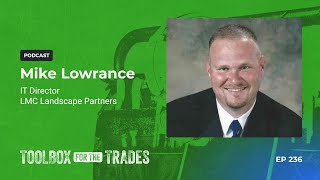
Podcast interview (Toolbox for the Trades) with Mike Laurentz, IT Director at LMC Landscape Partners, describing his career path from horticulture/golf-course work into IT and systems leadership in landscaping. Major focus is on implementing and optimizing Aspire software to improve estimating accuracy, inventory decisions, reporting, training/super-user development, and achieving operational efficiency and profitable growth. Practical advice covers buy‑in, crawl/walk/run rollouts, data accuracy, replicating legacy workflows, and leadership support.
Hello and welcome to Toolbox for the Trades. My name is Amanda Savator and today I spoke with Mike Laurentz, IT Director of LMC Landscape Partners, with a remarkable journey that started on a golf course. Working alongside his dad, Mike has seen the trades from just about every angle. That unique perspective has given him an unparalleled understanding of how technology can empower, not complicate the lives of those in the the field. For anyone looking to implement new software like Aspire or simply get more out of the tools they already have, this episode is for you. I hope you enjoy this conversation as much as I did. Mike Lowrant, you are the IT Director at LMC Landscape Partners and today we are discussing how to integrate new technology and empower your team. Thank you so much for coming on Toolbox for the Trades.
My pleasure.
We're excited to get into it today, but we always like to start with a little bit of an icebreaker so we can get to know you even more. So what's a practical hands on skill you wish you had learned earlier in life?
Comically. I wish I'd have taken a typing class when I was younger working on computers every day, all day. I have developed my own typing style from a hut and pecker to being able to get away with not making it take so long. But yeah, I really wish. I took computer math a long time ago and that was my computer class. I wish I'd have taken typing because I had no idea where I was going to end up where I am today.
Sure. I don't think any of us really knew back then there was going to be so much typing. I have to tell you, I took a typing class like I. I really tried and I still have my very own personal style. So I get it. I'm with you 100%.
But.
But let's get into the nitty gritty. How did you find yourself in the landscaping industry?
In college I had a Introduction to Horticulture class and found it interesting. Talked to my parents like I think I want to major in this. At that time I found out my dad was a horticulture major. Back in college he was a golf course superintendent and that's where I first started working in the industry as a 15 year old working manual labor out on the golf course and he was a horticulture major. I was in horticulture and ended up pursuing that with a steady emphasis in landscape design. Once I graduated, got into the real world of an account manager with a national company and about every two, three years I got promoted or Changed lateral positions. Eventually, after I'd say almost 28 years in the industry, one way or another, I finally found an area that I really enjoyed the rest of my career was doing jobs that I had to do that may not have met my expertise and my passion. And once I was fortunate enough to end up in a role that I'm in now, I really enjoyed it a lot more.
I can imagine. It's nice when you find your special place within an industry and there are so many opportunities to discover what really makes you tick. I have to ask, how did you stumble upon it? I know that there's not that much technology associated with landscaping, so how did you find yourself with it and in technology?
Well, throughout my career as an account manager, even early on, I was introduced to the difference between a gross margin and a markup and realized that mathematically the people that people had been teaching me how to do estimates, we were leaving a lot of money on the table. So the estimating form that we had was just a Microsoft Excel spreadsheet that I realized was mathematically not doing things correctly. So I started editing that spreadsheet. Did not learn Excel in college, so it was self taught. Started learning, teaching myself how to do things. Eventually I developed a estimating spreadsheet that became basically the standard for the company in Texas. It was a national company. And then one of my bosses took that spreadsheet to a national meeting. Some people in California started using it. So my passion was always in kind of making that better and becoming more efficient and accurate. Like I said, I was doing jobs that I had to do while this was always still in the background. And I was always trying to make it better through changes of jobs and stuff like that. And then when I went to work for that company, we were using a software and then we had some change in personnel and credits to my boss back at that time when he got to know me, realized that I was in the wrong role. And I went from being a branch manager to basically when we started onboarding Aspire, he asked me if I wanted to do it. And I was like, heck yeah. And I made that transition and started learning aspire back in 2018 and we went live on it in 2019. And there's a joke that a couple of us still talk about of, well, once we go live in Aspire, what's Mike going to do? And that's very laughable at this point because it never stops. And when you go live, you still are doing a very small fraction of what you can do. And as Continued to develop my knowledge and abilities from Aspire, realized that there's a lot of areas, technology related within the company that nobody was really overseeing. So I kind of put that all under my umbrella and eventually it just became everything that technology touched, I was a part of, became part of a leadership team within that company. We had no HR system, so I was modifying things within Aspire to use for our HR platform and just again, just modifying existing systems to try and benefit us in several different areas. And within Aspire, from the point of a cold call to not only the collections, but making sure the payments are applied, you got to know everything about the business. And it was a blessing for myself that I had done every position in the industry. And then I got to go start building out a system that is basically going to do a lot of that for us.
And now it's my understanding that you're teaching Aspire to others and creating super users within the company, Is that correct?
Yes. So our structure is we've got, with several companies that we've got, we've got six different versions of Aspire and there are different super users we're trying to get at the different local offices. Having somebody in person is tremendously beneficial to the team trying to learn Aspire. Having remote access doesn't always work the best, even like this, having virtual meetings, somebody that's boots on the ground in the office through be able to have access to. So that's what we're still developing is as we grow and get more companies to come on board, we want to try and get super users at each location. They all learn at different rates, different backgrounds and it's a process and very, very fortunate to have some really good people on the team that we've developed over the years. And it's a very good process that we're putting in place. It just takes time to get there.
So when you're training these new super users, I think this is so smart too, having boots on the ground like you said, I think that's great advice. I know you're taking the opportunity to remind them to take a step back and ask what is the end goal? Rather than what do you want this to do? Why is understanding the desired outcome more.
Important A lot with aspiring again learned this over time and teaching other super users, you may have someone, a leader that's wanting to get certain information. For instance, they might want to say what job, what opportunities or what properties am I making money on? What am I losing money on? Well, you can build lists that give that but having the background and the business acumen to really kind of understand what they're wanting to look at and what they're wanting to analyze, you kind of need to ask them what are they wanting to see? Because making money is. You could look at your gross margin, you have a high gross margin, and that is a percentage. Well, you want to look at your gross profit, you can look at that. That's dollars. Well, you could have a very low gross margin on a very big job. So your percentage is low, but your gross profit is high. So you kind of want to know from the business standpoint what, what it is that you're being asked to build. What do they want to see? Do they want to see a combination of the two? You want to see your low revenue and your low margin jobs. You want to see your high revenue, your high margin jobs. So that's just one example of really needing to ask what it is they're wanting to look at. So you can build the list or the report correctly to give them the information they need to make the good business decisions. You can make good business decisions based off of the correct information, but the information could be bad because you build it correctly, but the information going in is either inputted incorrectly, or maybe you've got one filter or one column that is not 100% accurate to the data that they're wanting to look at. Well, they're going to make a decision based off of that, and it may be the wrong decision because based upon the data that you provided. So you really got to understand what it is they're wanting to look at. Allow the leadership to make the good business decisions that are going to benefit the company in the end.
So for someone who is training their team on Aspire or really any new technology, what should they consider other than asking that, that really important question, but what else can they consider or keep in mind while they're doing this process?
Big thing of what we're trying to teach is when bringing on a new company or new person, if there's people that have different experiences, you are who you are because your past, there may not be systems in place. So understanding what Aspire can do and what it can provide of educating your leaders that, hey, this is information that we can get when bringing on the technology, you want to know what it can do. So whether or not there's a lack of systems that you can build out, or is there an existing system that they use, whether it's a spreadsheet or something else that is very beneficial to them, and that's how they've run their business. You want to try and you understand Aspire and understand what can be done to replicate what they've done outside of the system. And that's a very good buy in with new owners and people that are migrating over to Aspire is, look, we're not wanting to replace what you're doing, we want to replicate it. We want to get it all in one place so you're not going to different file folders and different folders in your computer all over the place to get the information. We want it in one place. So we really want to make sure that we are trying to replicate the systems that they're doing or know the systems they want to create so we can build those. And the end goal is to provide the information, to provide efficiency. Technology is not something that's been around in this industry for very long. It's come a long way in this industry that before could not really afford technology. You can't afford not to adapt to technology these days. The efficiency that it provides, the data it provides, you've really got to adapt to it. And you got to know what you're getting into. And again, you got to know the information that you're providing, be able to make good decisions, to be able to build a good, profitable business. Anyone can build a business, anyone can grow, but you want to grow profitably. And that's where a lot of the technology and Aspire helps in a lot of those aspects.
Let's talk buy in, because you mentioned it a little bit in your previous answer. Technology is newer to this industry and it could feel really intimidating. So how do you get someone to buy in for the betterment of their business?
Great question, and it's not always the easiest one to answer. What's easier to answer than is to implement. Depending again, if they have systems, if you're going to replicate something they have, can you get it to do what they have done before? Does it look the same, does the results look the same as what they're used to? So you want to try and find out is, is it something that can be replicated? And if it is, you spend the time to build it out and you almost have to get the buy in from people that use it to run it parallel to what they're used to. Hopefully not too long, because with efficiency, I don't like doing things twice. So if you're doing it in one system, you're doing it within Aspire, you're doing things twice, but over time you get that buy in, if it's built the right way, you're getting the results and they start to realize, okay, well, it is much faster to do it one time than to do it two times. And with Aspire and a lot of the automation that is built into it, I'm not having to do a lot of manual entry to get the same results. So that's what really gets into replicating the data. The other aspect of things is where they don't have systems is showing what can be done, what can be built out. And not every system is right for every company. Not the right fit. And it can also become information overload and simplify it. The whole keep it simple, start out small. I A big thing that I teach everybody in Aspire is you have to crawl before you can walk, and you got to walk before you can jog and run and sprint. And it takes time. There's a lot of companies that just. They want to jump in the deep end and they want to be running a marathon immediately. Some companies can do that. Depends on the size, depends on your staff and your personnel. Some people don't adapt to technology very well. So you've also got to overcome that in the aspect of, like Aspire Mobile, in adapting to that, not all the people on the crew can operate the phones. Find somebody that can utilize them to help teach the others, use them as an example, eventually, hopefully get everyone to adapt to it. It's going to be very difficult to get to be 100%, but if we strive for perfection, you get halfway there, you're doing pretty darn good.
You just need one person who's on board and you have that one person that everyone else in the company can look to and feel that reassurance and that confidence. And I think that's really key. I'm sure, in a lot of instances, for sure. I know that you're all about efficiency, you're all about accuracy. When someone is looking into software with that main objective of efficiency, what should they be looking for?
Going back to at the beginning, keep it simple. I was taught that. I was told that I didn't do it at the beginning. Six, seven years later, we're going back and simplifying some of the things that I did years ago, a big thing with me with the software and one of. One of the things I really like about Aspire is you need to know how it works and again, what your end goal is, what do you want out of it. A topic of inventory within Aspire is something that can be. I can Debate either side of the fence. Do you do things on inventory or do you not? But what do you want to get out of the system? Do you want to have job accuracy? Well, then you need to use inventory because you may not use the same products or the same materials that are in the estimate every single time. And it can impact your gross margin. And then your gross margin helps you make your decisions on what customers may need an increase, what you're doing good, what you're doing bad on. But you want to know what do you want to get out of the system. Once you've got it built, kind of determine what you want out of the system. You've got to decide how deep you want to go into it. Going back to the crawl, walk, run aspect of things that how fast do you want it? What are your strengths? My mentor and one of my previous bosses told me, when we go to any kind of a conference, don't take back too much. Just take back a handful of items. Because if you take back too much, you're not going to get anything accomplished. You've got to have goals. Start off small. A mantra that he and I had said over years is incremental improvements to just start off small, chip away at it and you'll get there. Another aspect is you also want to train it out. When going to a new system, especially like Aspire is, you want to make sure that people are trained accurately. You don't want to go live too soon because if people start entering bad information and making the water really muddy, it takes a long time for that water to clear up to give you the data that you need to really start making some of the good decisions. So there's a lot of people that have edited the input to make it look like they're being profitable. In jobs that is muddying the water. You have to put in accurate information because you got to know what you're doing good at and want to know what you're doing poorly at. If people are editing and modifying that information, they're muddying the water and you're just gonna definition and Sandy, you're not going to grow, you're not going to get better. You're just going to keep doing the same thing. You got to know where you're doing good, where you're doing poorly. So you've really got to know what you get out of the system, enter the data accurately from the beginning and make sure everyone's on board. And some people are not going to be on board. But it needs leadership support from the Top down. Because if the top people are not going to be, yeah, we can start using the other system. It's going to be a harder transition. You've got to get the buy in from the top down.
I have to ask for Aspire. What do you think sets it apart from other systems?
One of the biggest things for me is the direct cost estimating aspect of things. A lot of people think they're making money well, not going to get in the accounting side of things, whether or not you're profitable or not. But you need to know if, if you're estimating correctly. A lot of companies and a lot of industries, even outside of the landscape industry, they have a rate that they know well, if we bill X dollars per hour, we're going to make money. Well, maybe not. So that's one of the things that I've again getting into gross margins and running profit analysis, stuff like that of you've got to know your direct cost, especially with the markets the way they are today. The labor is changing, material costs are changing. You have to know what your costs are to know whether or not you're charging the customer accurately. If your costs are going up and you're not increasing your revenue, you're going to fall behind. And then a year or two down the road, you're going to have to send the customer a rather substantial increase that they may like, may not like that and they may go a different direction. Whereas if you're tracking your expenses and you're estimating off of the most accurate data that you have that Aspire can help with, you know, your direct costs are accurate, your estimates are accurate, and then you're giving the customer an actual price that is going to allow you to make money that you need. So to me, that's the biggest thing of just the direct cost estimating portion of things. But beyond that, where Aspire I think is really, really good, is just all the listening that they do. It's a big company, there's a lot of people that utilize it. I've got monthly meetings with my CRM. So the feedback, the voting portal, the enhancement requests, the Aspire care, you get support and you also have an opportunity to give ideas of what would make the system better. That to me is another probably number two is the enhancement portal of hey, we really need this. And then it's something that goes into the voting portal and people vote on it and hopefully eventually they're going to implement it, depending on how many votes it gets. Small companies have different needs than bigger companies, but it's a sounding board to just hey, here's my issue. And not only from the enhancements. If it can't do something, let's build it out so it can do something. But the support from the CRM or even the Aspire care of giving workarounds, like we can't do that yet. But hey, here's another way to do something. So the support side of things is tremendous. The virtual meetings Aspire ignite the annual conferences. I mean they're just tremendous learning opportunities that are out there for everyone to take advantage of. And if you're not taking advantage of them, they should.
Oh, incredible. It's such a wonderful event and there is so much valuable information that I hope anyone who's listening gets the opportunity to come because it's a great place to network as well as learn. Before we go, Mike, this has been a really enlightening and just a great conversation, just chock full of great advice, especially about implementation and getting everyone on board. I wanted to take us back to the beginning of our conversation. I know you started your academic journey in chemical engineering and you walked into this intro to horticulture and everything changed. So I have to ask, what was it about that class that really just changed the trajectory of your life?
I don't want to downplay it, that engineering is hard. I was very fortunate. I didn't have to study a lot in high school. When I got to college, you have to study especially in engineering. There was engineering at Texas A and M University, great program. I did not know how to study. It was very difficult. But once I got into horticulture and I don't want to call it easy, but it just had another interest level to me. It's like this is a different kind of science that I'm really interested in. The landscape design portion of it was I'm never going to be a millionaire. So I want to be able to design landscapes that are million dollar landscapes with somebody else's money. So that's why I want the landscape design software, but the science behind it, how to grow things and you can see the results of your efforts. I've had some other friends of mine that have been in sales, they make a sale, they move on to the next sale. They never get to see the rewards of all their efforts. So that's another thing. Within horticulture, especially whether it's maintenance or construction, you get to see the rewards within the industry. You have to have customer service and face to face contact. I didn't enjoy that as much and that's where getting into the IT area I can. It's easier for me to hide behind the scenes. But don't get me wrong, we have internal customers instead of external. So everybody in the company is internal customer, but you get to know them. But going back to the original question of just what got me into it was. It was still science and some sometimes math, science aspect of things, and just being able to still work with your hands. Back then, it was being able to be outside, enjoy nature, which is still a big part of what I enjoy. I'm not outside as much anymore, but those are some of the things that really allowed me to kind of pursue that area and get into it and then graduate within horticulture and move on from there.
There's something about it that spoke to you. It was creative and you got to be outside and be of nature. I think it's a wonderful industry, and I think everyone who's listening can completely agree with why you got so excited and got into this industry. Mike, I want to thank you again so much for coming on Toolbox for the Trades. What a wonderful conversation.
My pleasure.
More from Bill



ServiceTitan Virtual Agents: Simplify Before You Scale | Podcast Ep. 110 | Mastering ServiceTitan



Life After Live Events: How to Turn Post-Conference Energy into Real Profits | Podcast Ep. 297




