The Neuroscience of Branding | Podcast Ep. 135 | Toolbox for the Trades
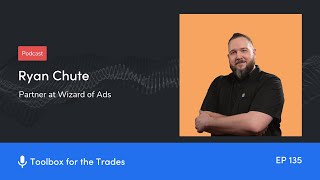
Interview with Ryan Shute (partner at Wizard of Ads) about applying neuroscience to branding for residential home-service businesses. Key concepts: Broca-as-bouncer (left-brain filter), "Club Imagination" (how brands get noticed), and involuntary/automatic recall (emotion-driven long-term memory). Shute emphasizes making customers feel (emotional salience), simple/show-not-tell creative, and sufficient frequency via cost-efficient media buying (leveraging national buying power locally; references to Nielsen personal people meter). Concrete case: Drain Magic (renamed/positioned from "East Coast Trenchless" to a memorable persona-driven campaign using the character "Billy Ray"; campaign drove rapid growth). Resources cited: Wizard Academy (Magical Worlds class) and WizardOfAds Contractors website.
Ryan Shute, you are a partner at the wizard of Ads. You split your time between Halifax, Nova Scotia and Austin, Texas. I am so excited to have you on today. Welcome to Toolbox for the Trades.
Hey, thanks for having me.
I am super stoked to talk to you. I first heard about wizard of Ads from Ken Goodrich, so I can't wait to get into that. But before we do, I want to ask an icebreaker to you, so if you could tell me, please, what book did you read that changed your life the most?
Well, you know, this is going to sound a little canned, but it actually is the wizard of Ads. I read that book about 20 years ago and it was written by Roy H. Williams, my partner. And from the moment I read it, it was a real game changer for me. And that's why I have to put that top of the list.
I mean, I kind of set you up for this icebreaker question because it does give a nice intro. I had a feeling you were going to say that. But for the folks who don't know, can you tell us a little bit about Roy Williams and about the wizard of Ad?
Yeah. Yeah. Roy H. Williams is, is famously known for running some of the most successful campaigns of any campaigns in the, in the world for home services, for the jewelry business. Right now he's doing a lot of work in the legal and, and medical world and he's, he's written books that are best selling books for the last 20 years or so. And he's basically the guy who's telling us how to tell stories better and leverage that in our branding. And he has a tremendous track record. He's never had a client that's failed. And he started off with a lot of companies where they're just one and two trucks or a little jewelry shelf in the middle of nowhere.
That's awesome. What was it like for you to meet him for the first time?
I had read one of his Monday morning memos and he had said, I'm thinking about stepping back and if you're interested in doing this class, maybe you catch it. It might be my last one. He had a few more after that, but quickly came to the point where it was his was his last few. And so in 2015 I went to meet him and the man has a gravitas, he has a presence, he has a charisma that really is astounding. He is without a doubt a genius and really does understand things at such a different level than what you learn in university.
That's awesome. Very cool. And a really awesome opportunity for you that he wrote a book that was so integral and. Not integral. That's a wrong word. He was. He wrote a book that was so impactful to you, and then you eventually got to know him, take his class, and now be a partner within the wizard of Ads universe.
Somehow I knew 20 years ago that I would somehow be tied to this in some way. I didn't know how back then, but as my life evolved and, and I learned and understood the things that I really wanted to do in life, this became such an astoundingly good fit.
That's awesome. So actually, can you explain to the folks listening, what is a Wizard of Ads partner? What does that mean?
Yeah. Wizard of Ads partner. We're legal partners with Roy h. Williams. There's 75 of us now, and we all specialize in different things. Some people are strategists, some are copywriters, some people are media buyers. We have some subspecialties in there as well, like digital marketing and graphics and those types of things. And basically what it means is that we get to learn the secrets behind the books and really understand his way of doing things through all of the trials and tribulations that he's run over the last 40 years with his clients and developed and used and evolved. And this allows me to share in the astounding successes that he has with his clients. And of course, I've been able to pass along with my clients following our strategies. I choose to specialize in residential home service companies because I think it's the hardest marketing to do, mainly because it's an externally triggered grudge purchase and it's not selling Lululemon pants.
Externally triggered grudge purpose.
Wow.
If there's a way to integrate that phrase into the episode description or episode title at all, I'm signaling to my producers that I would like that to happen. So you're. You chose residential home services for the challenge of it. That's so interesting. That's cool.
So I knew that's where I could get the biggest impact for. For what I knew and how I. How I built my career with strategy and sales and marketing.
That's super cool. So I always ask this question on the show. Obviously you got into the trades through wizard of Ads, but did you have any trade experience before coming on into this universe and becoming a partner and choosing to specialize in residential.
Yeah, yeah. My wife and I own a custom home building company here in Halifax, Nova Scotia. We build a number of multi million dollar homes a year and we started off as Home renovators back in 2006, and that just continued to evolve over the years to the business that we have now.
That's very cool. So custom home builder by day, wizard of ads by night. Is that kind of how you roll right now?
It's more of me running the business side of the operation and my wife doing all of the other bits and pieces. When it comes to managing the trades, she's an absolute brilliant operator, and I'm just here to be her second set of eyes and a good support.
That's awesome. Very, very cool. All right, so we got into what wizard of ads is. What you as a partner is your experience in the trades and how you chose residential home service. We're really going to get into the neuroscience of branding, which I have to tell our audience. When you said that phrase to me in our pre interview, I was like, yes, because I am a giant neuroscience nerd. So for folks who don't know what is the neuroscience of branding, you know, in case no one knows that answer right off the top of the. Right off the top of their head, like the brilliant host of Toolbox for the Trades, right?
Hey, look, neuroscience of branding is really just the biology of retention and recall. When. When marketing students are out there learning how to run Fortune 500 companies that have infinite budgets, we're learning how to kick down the door of the imagination. Not just to get noticed, but remembered for what actually counts. So there's three big things that neuroscience in neuroscience that matter when it comes to how you understand it with marketing. The first thing to know is that there's this bouncer. This bouncer's name is Broca. He lives in the left side of the brain, and Broca is in here trying to toss out all of the predictable. He's not interest interested in the stuff that everyone else is saying. So if you're not new, interesting, and different, you're gonna get tossed out. Right? Because predictability requires zero investigation. Once you get in the club called imagination, you got to get noticed. And that's the world of pickup artists. This is where you peacock, right? Where you put on the flashy clothes, you get the nice truck wraps, you. You really create an environment and where you're saying the right things and have that positive vibe and that competent energy that exudes good positivity. And. And then once you get noticed, you really have to lay the groundwork, and you have to lay that groundwork for showing up in the mind even when you're not there. And this is called involuntary automatic recall. That Means you've got to become a beloved regular in the. In the. In the club called Imagination. And that means that your ads have to evolve over time. The good brands will find lots of customers. The great brands get their way into the VIP room, and that's where things grow exponentially. The key behind all of it is to really just make them feel something.
Yeah. Okay. I have so many things I want to say, but first I want to flex my neuroscience knowledge Muscle bouncer is called Broca from Broca's area, Right? That's the one that interprets language. Yes. And the Wernicke's area is how you express language. And there's many famous neuroscience studies about people who have been damaged in either the Broca's area or the Wernicke's area. And they can either speak, but they don't understand anything, or. Or they understand, but they can't speak. And it's really fascinating. Our brain is a miracle.
Truly really is.
Oh, my goodness. Okay, so this is very cool. So we've got three areas. We've got the bouncer. That's Broca. We have the club. That's the Imagination, where you're peacocking, where you're trying to show all your cool stuff. And then you have the involuntary automatic recall, which is why I imagine I still have the Nestle theme song from the Wonder Ball still stuck in my head from 1994. Like, that is what we're trying to. That's what we're trying to achieve. Right. So going back to what you said about. Oh, gosh, what did you call the. The external clicking? What was the phrase that you said at the beginning that I absolutely loved?
Externally triggered grudge purchase.
Externally triggered grudge purchase. So how the heck does an externally triggered grudge purchase keep. Keep at it at Club Imagination and just like stays in there. How does that happen?
Well, the reality of it is, is that the externally triggered grudge purchases aren't the most handsome businesses that are in the club. So they're not going to win the game off of being the pretty ones. Right now you've got the pretty ones like Lululemon out there and Apple and all kinds of other fabulous members in the club. And they're getting the attention a lot easier because they're the pretty ones. So as ugly duckling businesses, we have to. How do we stand out? Well, that's going to be with the outlandish truck wraps that our friends over at Kickcharge, creative and Prolific create. It's with the words that we use. And the way that we can romance. I mean, who doesn't love a guy who knows how to play a guitar, right? So you know, that's a jingle. All of these things are the things that make us appealing to customers in all the different ways. If we can demonstrate empathy, if we can demonstrate competence, if we can deliver on convenience, then we're able to shine as bright as the rest. Even though we might be a 6 out of 10.
Wow. This is a really phenomenal metaphor. Like I just have to say, I think if I had an award show for this podcast, you would win first place for metaphors. Thank you very much.
Golly, making me blind.
Six out of. Because like I'm thinking this is, it's a really great metaphor. Lululemon, Apple compared to the externally triggered purchase. But like that purchase, right? We can put a brand on that. We can add a story to that purchase that shows you that someone's reliable, you can depend on them, they care about you and your family. And these are all, I think, themes that variety of contractors are trying to evoke in their choice of ads, especially the folks that have been on the show who typically are pretty good with marketing. So tell me a bit about how contractors can tell a story like that that will stay with customers who maybe are calling them at first when they're frantic, when they're really not in a good mood. How can they tell that story?
Well, it starts before they make the phone call and it starts with those ads that you're creating in your brand story. Your ads are really just the mechanism. Think of it as like a mini sitcom that you're having prior to them needing your thing. That's the thing about externally triggered grudge purch is they don't need your thing when you're advertising to them in branding, they don't need your thing at all. A trigger has to happen first. An external trigger. That trigger is oop. Something broke. Right? So the key here is in those ads, show the customers, show the audience, show the target market. Don't tell them. Don't tell them that you've been in business for 40 years. Don't tell them you have smart, reliable, convenient hours and lovely trucks and fully stocked and you know, drug tested staff and everything else that's boring, no one cares. Show them that you empathize with their situation and that you're equipped to solve their problems. Just like I did with the story about club imagination and broke of the bouncer. I was able to get you to hallucinate about a trip through the mind While still connecting the dots to the end goal. You do this with the right repetition and sticky message, and you become a household name, not just a name that you recognize.
You know what this is making me think of? And we're going to talk about, you know, some clients that you've worked with in a moment and some memorable ads. But one of the very first episodes I did was with this gentleman called Eric Falconer, and he was talking about his company slogan, which was the plumber you would send to your mom's house. And that has always stuck with me because it's so. It evokes that in such a directive way. And I mean. I mean, you can make. You can argue, you know, you're telling them something, because that's the phrase, right? And technically, like, language is telling someone something, but there's so much more being said in that statement than what the actual words are, if you know what I mean. You do know what I mean. You're a marketer.
Indeed. Indeed. You're hitting it spot on. Right. You're making somebody feel they're connecting a dot. Now, not everyone has a great relationship with their mom, but. But that doesn't matter, right? What matters is that it causes a feeling, because feeling is the adhesive that creates stickiness within an ad. They ran a research science research study in Stanford University at one time around ptsd, and it was around some fairly violent things. But it was because of the extremity of that that they were able to determine that the chemicals that were attaching and bonding that ongoing memory of ptsd, that that extreme recall was because of the emotions that were evoked. Emotion is the key to create retention and recall. That's more of the neuroscience behind why people need to make people feel in an ad, not just spout out a bunch of truths.
Can I throw some more neuroscience at you and you can tell me if I'm wrong?
You betcha.
So how I understand the brain to work is we have our brain stem, and there's actually a researcher. This is for anyone who's interested in how children behave. There's a really excellent children's behaviorist called Dan Siegel, and he has a really great model of the brain. You're nodding. Are you familiar with this?
Yes.
Yes. All right, cool. So for anyone watching the video, I have my forearm up on screen, and my wrist represents my brain stem, which is the animal instinct. Like, it's the total. Like, I must eat. I must find shelter. I must drink water on top of the brain stem. Well, not exactly on top, but Next we have the amygdala, which is the emotional brain. This is the brain that is in charge of fight or flight. This is the brain that is behind all of your irrational decisions. And then on top of the amygdala is our prefrontal cortex which has only been around for, I don't know, like 200,000 years. And that's our decision making brain. And so it's sounds like what you're trying to do with ads here is you're trying to get people to go beyond their decision making brain and access that emotional brain. And that's where that memory is created, am I right?
That's where the memory is created for long term storage. So the short term storage, the electrical part of the brain is about seven days worth of storage, like a RAM in a, in a computer. It's going to hold on to it for short periods of time and then get erased. And the less important it is what we call salience, the less important it is in your brain, the quicker it gets erased. And sleep is the great eraser. So it's going to continue to get rid of it. But as we get into those, that, that little chemical cocktail and get back into the chemical part of the brain, now what we're doing is starting to take up real estate in the rom, in the long term memory of the brain, just like a computer. I hate using the computer reference, but it's the easiest thing to kind of connect the dots with. And as we take up more and more real estate, we're going to take up more real estate doing two things. One, having a hyper salient message that is entertaining and easy to recall because it's larger than life. And two, that we have enough frequency that it has us reminded of going back to that same piece of real estate over and over again. As we do that, larger and larger chunks of retail space or real estate get taken up in the brain for your brand, not the brand of everybody or a category. Right. That's when they start thinking of you before they need you. Which makes Google completely irrelevant.
Exactly. All right, so you've kind of laid out a really nice blueprint here. You said, okay, your ad needs to be salient, it needs to evoke emotion, it needs to be simple, doing a lot of showing, a lot of telling. And on top of that, we need to repeat it and we need to make sure it's being repeated in front of the ideal customer. So we know how it works. Now the challenge is, okay, how do we actually make that magic ad? How do we get it in front of the people that we want to buy.
Well, the one thing that I would nudge a little bit differently is that you don't necessarily need to get your ad in front of the ideal candidate. You just need to get it in front of a whole bunch of people for a shockingly low amount of money. The reason why is because with the 40 years of research that we've done and the 40 years that we've been on air, and the fact that we're the one of the largest buyers of mass media and home services today, we're the only nationally based company that allows us to buy for small individual businesses. Now, most national firms that get to leverage their buying power, they do it for Coke and Pepsi and Apple, right? We're the only ones in Canada or so Canada, United States and Australia that allow us to go in and buy for the local guy in Los Angeles or the local guy in Greenville, South Carolina, and absolutely, completely dominate their, their channel for a very, very low cost. Because we're, we're leveraging our national buying power at the local level. Makes for a really interesting spot for us to get the frequency that we need. Right. And the only thing that we have to change is based on how much budget you can afford to reach. So if you can only afford to reach 15% of the market, you only have 3 to $10,000 a month to spend on mass media, then we start there. As you grow, as revenues allow, we get more reach, we go from 15 to 20%, 20 to 30, 30 to 50. And once we hit 50, we're at a diminishing returns. And we know this because of the very, very specific little device that Nielsen puts out called the personal people meter. I always mistakenly call it the purple people meter, but it's not purple at all. Right. And this thing's a little bit smaller than a credit card. And what it's measuring is the subsonic pulse of every radio station that you're in proximity to that you can hear. And it's measured over and over and over again in every major market in America. So we know without a shadow of a doubt that we can absolutely, in every way with radio, reach 50% of the marketplace in any single market in America today. And when the ad is good, when the marketing is good, when the message is right, the first 50% will tell the second 50%.
Yeah, yeah, word of mouth. There you go. That's really interesting. Well, now I'm going to call it the Purple Peter Monitor. Purple people monitor. What's it called?
It's not the purple Peter monitor. It's the. It's the personal people meter.
Personal people peeper. Gosh. Oh my goodness. I can't. I'm not going to say it again. Ppm. There we go.
Yeah.
So you know what I'm thinking about as you're talking, Ryan? Like I just. You are just like tickling all of my neurons here. I am just so. I love this conversation. What I'm thinking about with stuff like the personal people meter. I'm thinking about streaming too, like radio. Are you finding with your clients that radio is still a really great source to do these ads on? Are you also exploring streaming services? Like what are you seeing with your personal clients?
Absolutely. We're media agnostic where we have absolutely no allegiance to tv, radio, digital streaming, OTT postcards, long form sales letters, all of all marketing works when deployed strategically. Correct. Right? Doesn't matter what marketing you do, you just have to do the marketing. Right. You have to ask yourself what you want your marketing to do. There's both short term goals and long term goals. And ultimately both, both, both monsters really have to be fed in the short term, in the long term. But it's how you set those things up for the long play. There hasn't been a monstrous success of a company that hasn't done it with brand, with, without branding. So at some point in time, you do have to invest in your brand and that means you have to invest in more than your truck wrap and logo. You have to invest in your story. And that comes down to the sheer fact of scalability. You're only going to scale so far before you hit those natural demand ceilings in both candidates and, and clients.
Yeah. So let me ask you this. Where do most contractors go wrong when it comes to story branding?
Replacing strat strategic storytelling with cute and clever is probably the biggest thing that I see wrong most of the time. So many times you see that cute and clever names, you see the one off funny ads, you see the single ads that just don't stick. It's an astounding waste of money when you have a clever ad but the customer doesn't remember your name. That, that really hurts. Right? And there's been plenty of campaigns, including famous ones that have managed to do that over the years. Now we have to make a brand work with existing assets sometimes and that includes terrible names, logos and truck wraps. So to us that just gives us a creative constraint that helps us come with the best strategy. When you have three random letters or you have a superhero character or any of the other really just overdone and, and, and very fairly generic kind of concepts that are out there. Ubiquitous. What a wonderfully wonderful word. That is a great. We're not going to be able to use any other big words today because you've spent all the. All the word bank.
Sorry. I'm sorry.
It's all right. Right. I just wish it was me. If you can afford to invest in your brand story early on, the better off you are. As the Chinese proverb goes, the best time to plant a tree is 20 years ago, and the second best time is today. But if possible, invest in your brand story first because it's way easier to tell your story and make pictures about it than it is to have pictures and make a story about it. Right. And that's ultimately the shift between the two. We love pretty logos. We love truck wraps. They're essential. We're not dispelling that fact just as much as lead generation and sales activation and offers are all important. It's just choosing what to say rather than. It's not what you say, it's how you say it, if that makes sense.
Sure.
We can say the same thing in two different ways, and one's going to resonate more with the client, and we want to say it the best way possible possible.
Okay, that's really interesting. You shared with me some ads that you've recently been working on, because I asked you about a colleague, a client of yours who's doing branding really well, and could you maybe set up this ad for us and we could talk a little bit about it?
Yeah. So we have tons of successful brands. You know, I think, you know, we have a 98% success on, on just this year of people that are over. Over their previous year. There's always going to be some that are going to, that are going to fall short. There's. There's capacity issues, there's challenges. This particular one is called Drain Magic. Now, a couple of years ago, they didn't exist. It was. This is a greenfield company out of. Out of the Northeast. And these guys are going to show up on the, on the national stage sooner than later. Now the owners are absolutely 100% courageous, courageous people. They let us do exactly what we wanted to do. We named the company, we created the, the website. As far as concept goes, we had some, some digital folks go and take care of that for us. We directed the creative at Kick Charged for them to come up with the concept. They did a beautiful job with it. We handled all creative development. So this was a Fairly robust brand for us in the sense of all the things that we touched. And when we did that, we came up with three, these first three ads. And if we play the first one, I'm Billy Ray, that'll set up, you know, what we did and how we created this, this concept and some of the strategies that we were using to get sticky in the brain.
Okay, I'm gonna play it right now.
Hi, I'm Billy Ray from Billy Ray's Hole Digging. Do you need a hole? Cause if you do, boy, I am the man to dig. Your hole is your sewer line claw. Did you need somebody to dig that sucker up all the way from the house to the street? Because, oh, that's the kind of hole I like digging. Great big hole with a great big pile of dirt. I like the ones where you have to crack up a bit of concrete and asphalt while we're at it. Driveway, your front porch, bit of the sidewalk. Oh, that's a hole a man can be proud of. Well, more of a trench if you want to get all picky about it. Great big, deep, muddy trench you gotta put a fence around to keep from getting sued.
Replacing your household drain line can be the worst job you ever have to do. But it doesn't have to be with drain magic. Our specially trained drain magicians use remote robotics and modern materials to diagnose and repair drain lines without having to dig a hole. And we guarantee our work for life underground drains. No trench. That's drain magic. For a Second opinion, visit drainmagic.com I.
Mean, memorable ad for any. Just a little, you know, behind the scenes podcasting. I have headphones in. Ryan sent me these ads, so I just played it and I am thinking about it. It Drain magicians. I bet you that that was not a term that those owners thought to refer to their technicians as prior to you guys coming on board. So tell me about this. Tell me about the evolution of this ad and how you guys, you know, thought about their story. Brand.
Yeah, absolutely. They. I mean, they had a fairly boring and an unrecognizable name. At first it was called East Coast Trenchless. And ultimately nobody understands what trenchless is. Customers don't see the problem hidden underneath their lawn. People see their problems at their drains. So when we created the name, we wanted to evoke the feeling at the drain that is the external trigger, right? That's the point where the opoop happens. And in this case, quite literally. So what we wanted to correlate that with was the absolute tragedy that happens when you Go into a customer space and start doing, digging up their lawn and their prize winning azaleas and the concrete that is on your driveway and the sidewalk and stopping your neighborhood traffic for three days and having everyone hate you and all of the horrible things that happen. Right? And we need to express that negative thing in a very positive way. So we created what Billy Ray from Billy Ray the Holding and right, and, and Billy Ray is there and the theater of the mind. You hear his big diesel truck humming in the background and he's yelling over it because he's probably a bit deaf and he's screaming about how proud he is of his friggin holes. Now if you want a hole, you call him. So this continues on and on and on. What you recognize is that we bring calm to the second half of the ad. Everything switches gears. The tonality in the music at the undertone of the ads switches to calm, peaceful, almost refined, innovative and modernized. And we solve the problem each and every time. And we're taking a person through an emotional, physical change between the stress of this to the lack of stress or the recovery of this, the peace of mind of this. And we have so many stories that we can tell and talk about the horrible versus this. Now in the next ad, the third ad actually, we can play it next. It's called Yelp Reviews. Billy Ray gets really, really proud of all of the horrible negative reviews he's getting, thinking that they're great reviews. So at the end of the day, we recognize this as Billy Ray is in his sweet spot where customer would be in their hell.
Okay, I'm gonna play it now.
Hi, I'm Billy Ray from Billy Ray's Hole Digging. My customers know when you need one great big mother of a whole dig, ain't nobody better than you can call than Billy Ray. Let's just take a look at some of my online reviews. Here's one. Good lord, that's the biggest hole I ever seen. I had no idea the hole was going to be that big. Well, you are quite welcome if horrified in Hershey 69. I hope you enjoyed your hole as much as I enjoyed digging it. All right, let's see if Mystified Margaret says, did you really have to dig across the driveway, through my azaleas and all the way across my front lawn? Yes, ma'. Am. And you are quite welcome. Thank you for that lovely review.
In the old days, if you needed to repair or replace your drain line, it meant digging a trench from your house to the street. With drain magic. We use advanced robotics and modern materials to remotely diagnose and repair drain lines without digging a hole. And we guarantee our work for life underground. Drains, no trench. That's drain magic. For a second opinion, visit drainmagic.com I.
Mean, that this character, Billy Ray. Oh, my gosh. I think Billy Ray's on all of the dating apps in Los Angeles, actually.
Every single one of them.
Yeah, every single one. He's just looking for Ms. Ms. Dirt Holes to complete his life. Anyway, I'm sorry, that was a stupid joke by me. Continue.
Well, it's. It's not unlike, you know, what a. A single friend of mine said about all the guys here in Nova Scotia. Every single one of them is either sitting in the back of a pickup truck or holding a lobster. It not a lot of the good pickings here. Unless you're into dirt biking and lobsters. It's the same everywhere. It doesn't matter where you go.
It's fish. Here in Southern California, it's fish. They hold the fish. But continue.
They got a Maryland. Yeah. So Billy Ray continues to evolve as a character. And every single month, people are tuning in to see what Billy Ray is going to say next. Now, we're talking about advertising for a trenchless plumbing company, right? People shouldn't be tuning into Billy Ray. But people have lost their minds about Billy Ray. Right? This is a company that was doing $0 less than 18 months ago and does a million dollars a month today. So this is absolutely a campaign that does astounding business because they have something. They're absolutely operationally excellent operators. They are some of the best operators I've ever had the. The joy to work with. But they're also people who are deeply brave and allow us to do what we do best at wizard of Ads. And when we have that creative freedom, we can make some companies what Les Binet would say is famous. Aim for fame, right? And when you have a fame play in place with astoundingly good branding, those are the ones getting into that VIP room at Club Imagination. Those are the ones that are growing by leaps and bound. They're getting in with the good deals. They're getting in with the big growth. Why? Because they stand out so much more. These are the superstars. These are the most famous people that you've ever met in a home service business that is otherwise innocuous and unassuming. Knockos. I got to use innocuous.
Yeah, there you go. Hey, I mean, I just have to tell you, like, I have this vision of, like, being in Club Imagination and We, I got Billy Ray just like drilling holes and people are falling in and then you've just got the drain magicians. They're like, hey, come back up, up. I got you. What an amazing, like, thank you so much by the way, for sharing that with us. I really appreciate it. And I mean Ryan, like my entire notebook is just covered with notes. I absolutely loved this interview as a, you know, as a neuroscience nerd and as a marketing nerd. So I so appreciate it. I did want to ask you one thing. For folks who want to learn more about neuroscience and how it applies to marketing, are there any resources that you would recommend besides the Roy H. Williams book books? You can obviously.
Absolutely. Yeah. One of the things that Roy H. Williams himself did over the last 25 years was to create a not for profit school in Buda, Texas. Austin, Texas is kind of right on the edge of the, of the, of the property line. We're actually the last address in, in Austin proper. It's called the Wizard Academy. You can, you can find it@wizardacademy.org and the first and most cornerstone class is called Magical Worlds, which is the name of his second book book. And Magical Worlds is a three day class that goes deep into the neuroscience, the psychology, the physics of, of how this stuff works. The, the laws of the universe. Understand that we're, we're coming from a perspective of how the brain works, not how we want to sell stuff. Right. Because it's super easy for us to do all this, you know, nonsense marketing stuff that actually holds no weight when it comes to reality. And for the small business, that's not a fortune standard company, doesn't have an endless budget. Things like Omni Channel strategies are complete nonsense. You're going to bleed out all of your money and never, never be able to actually connect with customers the way that you want. You're not going to be able to have enough budget to grow the way that you want to. And it's those two big things, operationally excellent companies with astounding branding that really do beat the curve when it comes to growth and success and scale and profitability. So those are the things that we teach in the, in the starting stages of that class and we have many classes as well that follow up from that, that delve into specific topics. That's all not for profit. You can, you can buy it all there. I don't, I'm not physically or financially associated to them. I am a major donor there and believe in it very much. I go visit a lot of the time that's where our home offices are as well.
Nice. Very cool. All right, Ryan, you've already gone longer than I try to because I've just been nerding out. How can people find you? Where should they go look if they want to ask you questions or pick your brain? Any of that stuff?
Yeah. The easiest place to find me is at the website WizardOfAds Contractors, which is a sub site that specializes in the home services, residential home service space. Me and my teams are tuned up and built specifically to buy media specific for this space and to write creative and copy and run the strategy specific to residential home service. So that's where you can find me. There's hundreds of articles there. There's lots of resources and an FAQ section that explains how we do everything.
Awesome. Ryan Shute, thank you so much for joining me for Toolbox for the Trades. And I just have to ask, what's the deal with the octopus behind you? I just realized, I just noticed it. I'm like, I have to ask.
That's a five foot octopus made with a chainsaw on a single piece of wood. And I'm a bit of a Captain Nemo fan and that's a fine representation of the demons that we have to fight every day. Beside me here is Nemo's ship from the Walt Disney film 20,000 Leagues under the Sea. And a bit of inspiration for me when it comes to how I look at life and treat things with a bit of a contrary to the average kind of outlook.
Awesome. Ryan, thank you so much for being a guest on Toolbox for the Trades.
Thank you so much for having me. Appreciate it.
More from Bill



ServiceTitan Virtual Agents: Simplify Before You Scale | Podcast Ep. 110 | Mastering ServiceTitan



Life After Live Events: How to Turn Post-Conference Energy into Real Profits | Podcast Ep. 297




