The Private Equity Safety Net | Podcast Ep. 107 | Toolbox for the Trades
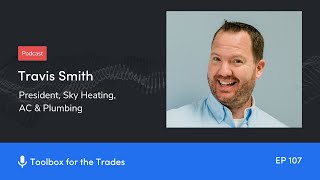
Podcast interview (Dec 2022) with Travis Smith, president/owner of Sky Heating, AC Plumbing and Electrical. Travis recounts his lifelong entry into the trades, the company’s evolution from new-construction HVAC to 100% residential service, operational changes (advertising, software, branding, training), internal challenges (employee theft, messy partner buyouts), his path to sole ownership (bought out partners 2009–2015), and his recent partnership with P1 Service Group—highlighting employee ownership, training programs, economies of scale, and practical advice for contractors considering private-equity partnerships.
Questions this video answers
October 1, 1979.
1983.
January 1, 2015.
About 100 employees and roughly $25 million annual revenue.
Travis Smith, you are the president of Sky Heating, AC Plumbing and Electrical. I am so excited to have you on Toolbox for the trades today. Welcome to the podcast.
Thank you for having me on. It's always exciting to be on a podcast that I actually listen to and love hearing the other guests on here. So it's an honor to be on here and thank you for inviting me.
I'm so excited to talk to you. We are going to cover a lot of topics and also thank you for being a listener. Oh my goodness, I'm blushing right now. For anyone who's not watching the video, that's so great to hear. I'm so excited to talk to you because we're going to talk a little bit about how you got into the trades and then we're really going to talk about what life is like after acquisition. So before we even get into that, because that is going to be such a rich topic, I'm going to start this interview the way I do most of them. I actually haven't been starting some of them recently with this question, but it's still one of my old favorites. How did you get into the trades?
Well, if you look at my baby book, it was six months and five days to the date after I was born that I started my life in the trades. And it says, Travis came to help daddy do trims today. So Sky Heating at the time was a new construction company. Started out as W.G. smith, general contracting and handyman, October 1, 1979, and quickly switched to sky heating and air conditioning. My dad wanted to heat homes from the sky, so he really liked the name Sky Heating. Plus with the last name like Smith, another guy in town actually took Smith Heating just months prior to my dad changing the name to heating and air conditioning company. So therefore it was sky heating and air conditioning. I was born in 1983, so it wasn't until guess it'd be March or April of 84 that I officially started in the trade. So I'm going On, you know, 38 years now of trades experience and I didn't work very hard for most of it. Of course. I kind of swept floors and picked up screws and I bent a lot of L Metals since we were a new construction company. And I'd sit there on the bar fold bending end caps, bending L Metals because we did new construction. And when I came into the company, I ran ductwork. I did deliveries. I kind of got, well, I got talked into it. I was a computer technician for a little while in high school and I Got laid off from that job due to budget cuts and said, you know what? I'm take a week off. It's summer. It's like my junior year. Have some fun this summer. My dad goes, you know, we've got this brand new delivery truck. It's amazing. It's got air conditioning, a CD player. You just deliver some stuff around. I just need somebody for the summer. And I was like, yeah, I'm gonna take a week off and I'll think about it. So a week later I said, you know what, I'll come in, I'll come work for you. And he goes, okay, great. You report to this manager over here. And at the time they were a little bit larger since new construction was booming. And I get in there and he goes, where's your lunchbox? And I go, I don't know, I've got a delivery truck. I'll stop somewhere, get lunch. And he's like, where's your sunscreen? I was like, once again, I don't know. I'm in a delivery truck. Why would I need any of these things? He's like, you're not in delivery truck. You're doing post and beam installs today. Like it's, it's 103 degrees, it's middle of summer. It's like a record high in Portland for the day. What do you mean? I'm doing. I don't know what a post and beam is. And he's like, wait, that pink insulation with black flex duct. You're gonna stand in a little black box installing all of that out in the middle of nowhere? And I'm like, oh, what about the delivery truck? He's like, oh, we already needed somebody for that. They got hired last week. You're doing this. So that was, was truly my first day in the trades outside of my working in the shop after hours and sweeping and filing things when I was, you know, a kid. But yeah, I was, I was expecting a delivery truck and air conditioning. And the type of air conditioning the truck I was in had was what's called 255ac. Two windows down at 55 miles an hour. And they were of course, the manual roll down windows. That was the only air conditioning we had. And I remember at the end of the day, middle of the day, I was pretty pissed off. But by the end of the day, getting to stand up on that, that wall of this new construction home is here in Oregon. We run everything underneath the crawl space. We don't have slabs and looking out, going, wow, I built something I'm not the most mechanically inclined, I'm not the best in my hands. I was a computer technician prior to coming on from my dad's company. And it was really nice looking out being, you know, as that old meme says, I built that house or I worked on that house. So it was a really great accomplishment. And ever since then I loved it. I've been here ever since. So I've actually been working at the company full time since I think it was June of 2001. So it's still putting me at 21 plus years of experience, truly in the field and another 17 or so kind of half assed working in the office as a little kid that would come in on weekends or after hours or when my parents forced me because I couldn't walk in in the stroller. So that is, that's my official start in the trades.
Talk about being born in the trades. Built for the trades. I wanted. I'm going to get into how you eventually took ownership, but I need to know what did you say to your dad at the end of that first workday?
I'm not sure I said much of anything. I mean after being in an air conditioned office pressing a button, loading a cd, pressing a button, playing a little doom because we had a little LAN set up at the place where we had the IT stuff and we'd work on computers but it took them 45 minutes sometimes to run the disk. So we'd have a little LAN going. It was a little different after being in 103 degrees. It was a clear cut subdivision. It was the model home in that subdivision and it was 103 degrees and I didn't like the heat so I probably didn't say much of anything because I was, you know, 17, so I was still living at home. I think I probably just came home, took a shower, went to sleep. But if I didn't, I don't know if I can swear, but I probably said, what the fuck. I was not sure what I got into at that point, but I was like, you know what it pays like 8 bucks an hour, 9 bucks an hour I think it was. And the school paid eight, so. Well, I guess I'll make a dollar an hour more. Won't be too bad. I'll just stick with this for a little while. And here I am still loving it much more.
There you are. Still so. Well, you eventually took over ownership, so tell me about how you did that. Because your business was your father's, but also he had several business partners. Tell us A little bit about how you came to the ownership role.
So that was also about as messy as my first day. Things didn't really go smoothly here at the company until about 2015, 2016, when we actually took on some coaches starting in processes and procedures. But I worked in the field until the new construction downturn, which started to hit us about 2008. We were a little later than some parts of the country and didn't fully hit us until about 2009. But I remember we went from doing our biggest start week ever. Once again, we're talking new construction, not replacement work. We did 33 new home starts in one week. I can't remember if it was one or two years later. We did 38 new home starts the entire year. So I came out of the field and came in to run our service department. Now, for anybody that's done retrofit work, service departments, like an actual functioning service department, ours was a warranty department for new construction. That's all the service techs did. They'd go out and fix new construction's mistakes. So when they service things, it was new installs that we did because we were putting in so many new systems. But at this point, we were down to about 12 people. And three of them were owners. One was myself, and there weren't that many people. So I kind of came in and ran the office and took over the service department. We had little books and you had four time slots and you draw a little box over it. A little box, Little box. And you'd write down the customer's name, their address, their phone number, and a little note of what it was. And that's how I dispatch people, all by hand. But our service department grew from one new construction warranty tech to two full fledged service techs with the help of some awesome people here at the company that did outbound calling and got us on call list. And we set up our clients on maintenance agreement. And at the time, we did a lot of duct cleaning because we didn't know what else to do to keep them busy. Because we never had a replacement department that was beyond. We even said our tagline at the time was the add on air conditioner specialist. Because we added on air conditioning to all the new construction homes we did. And for those of you not familiar with Oregon, air conditioning is not standard. The number of people that move here and then call us and say, my air conditioner is broken. We show up to their house and go, you don't have an air conditioner. They go, what do you Mean, I don't have an air conditioner. It says AC on my thermostat. We're like, yeah, in Oregon they don't come standard. That's an add on. Well, it's a 10 year old house. Why would it not have an air conditioner? Yeah, because it doesn't have an air conditioner. It's not standard. I think we have about 60% of homes that have AC to this day of actual homes, not, not county rentals and such. So we're getting a little bit hotter. But as we got through that, I was service manager, started selling and as the new construction downturn happened, one of the business partners took off and went on, I don't know, a drug binge or something to Las Vegas. Ran off with our office manager, found out she was stealing from the company, so had to call her up and fire her while her boyfriend who was the other business partner was on the phone all pissed off. And I was like, sorry, she stole from us. Had to bring his truck back because found out that he knew a lot of this stuff but didn't report it to the other two owners. At the time I owned like a whopping 2% of the companies I was moving in. He was actually supposed to be a 5050 business partner with me and my dad and his other business partner said well that's your future business partner, so it's not our problem anymore. We're going on vacation next week and left me to run the business by myself. And they're like, well he's supposed to be back, so either need to fire him or figure it out, but we're gone. We're not canceling this. It's not really that important to run the business. And I was like, okay. So I ended up having to change the locks, lock him out, take his vehicle back after finding out that there are some other things going on there. And he showed up at the door a couple weeks later and was like, what's going on? I was like, you're fired, like you don't work here. And had a forcefully buy him out. Thankfully the other two, my father and the other business partner went a lot smoother. But that was around January 1st of 2010. I ended up buying him out the end of the year of 2009 and along with that, starting with our first service software. And I'll never forget that I had to go to our other office manager. We then hired and I had a $2,000 credit card limit and I bought a $1,995 dispatching program and was like, alright, I need you to clear my credit card. Bought the dispatching program, was like, all right, I need you to clear the credit card again. Because I wasn't authorized to spend that and I secretly kept my little books on my desk and use the computer to dispatch. I wish I'd known that there were things like service time, because I think Service Titan came about around 2010 or 2011. I don't know the exact dates, but I was using this, this older software program, Desco esc. But it was the best that I could find at the time and it fit my $2,000 budget. So at that point I then bought out my father in 2013, his other business partner in 2014, so became sales manager, president, and then full owner of the company. And kind of how I got here today. So I've been the sole owner of sky Heating since January 1st of 2015. We've done a few acquisitions and grown quite a bit at this point. So we've now got just about 100 people doing 25 million or so a year and hopes and aspirations for a lot more next year with new training programs and additional pieces that we're putting into play.
I just want to say I really appreciate how detailed you got in that story and I could make a bunch of pop culture references to summarize that. The real contractors of Portland, Oregon, I don't know. But holy cow. At what? At what? I need to ask, at any point in your, in this journey, did you ever think of, you know what, screw it, I'm going to go, I did get in computers. Let me figure out computer science. Or did you ever think, I'm not going to do this, Like, I'm done. This is too common.
You know, looking back, it's certainly like, when I look back at everything that occurred, there was a lot of like, what in the world? But I think that's the stuff that a lot of people don't talk about. And that's what these podcasts are for. If everybody just talked about all the great stuff and we'll get to some of the good stuff. But I used to be so afraid to tell the bad. And the bad is what we can learn from. Because it's like, oh, yep, I. I had a controller or bookkeeper or whatever it was that stole from me. And you're like, yep, me too. And they're like, oh, you did. It seems like your business is so well run now. Yes, now maybe, but we, we actually that was only the first of the first of three bookkeepers that stole from us. So it happens. It happens. Thankfully, we caught them fairly early on. One left in handcuffs. And the people that were here at that time will never forget the sound of those handcuffs going on them as they got pulled out the door. That was, I don't know, around 2013 or so. Then the one after that one stole. After I told her in the interview, the one before you stole, I caught it. I found her. The next one ended up stealing. I caught her was like under $2,000. So the police didn't even do anything. But it was that quick on. She was buying lottery tickets for herself and dog food for her dog. Just small little things. The occasional blender on. I don't think it was an Amazon account back then, but an Office Depot account. A blender would show up and she'd just push it away. I finally found a laptop that came in and she's like, oh, that's for so and so. And I'm like, no, it's not. I found out it was actually the PO she had was for her daughter and found all the other stuff that she stole. And I'll never forget, she had all these people get onto the. The unemployment call. And the unemployment guy goes, well, what concrete evidence do you have that she actually stole from you? And I said, sky Heating and Air Conditioning does not own a dog. And I bought over $100 in dog food this year. And I said, okay, case closed. And that was what. What we were able to get her on the lottery ticket. She's like, oh, well, those were actually for. For events. And I was like, we've never done an event with lottery tickets and giving away a blender. But she couldn't dispute the fact that, nope, Sky Heating did not own a dog and there was no reason for us to have dog food. So, yeah, those are all the things that. That have come up. And there's been a bunch of other ones over the years. So whatever your experience is in the trades or I'm sure any business, it happens everywhere. The rosy stuff that you see doesn't always. Doesn't always come out until you get deeper into the conversation like we're getting today.
Holy cow. I don't know if it's just because I'm such a rube and I like. Honesty and trustworthiness were values that were really instilled in me as a child. But when I think of people doing that, I'm like, I would never. And whenever I hear these stories and I've heard a bit, quite, quite a few of them, at this point, doing this podcast, being in this industry, it blows my mind that some people do that.
I think it happens everywhere. And as you get things like service titan and other pieces in, you get a lot more controls that help stop that so that you can propel your business to the next level. Because the last five to seven years have been nothing like the first 15. And it takes a lot of cutting your teeth to get to that point of being stable, being consistent and building all that. But you got to put in the time, you got to put in the work, and it doesn't happen overnight. There's definitely a few success stories that have done an amazing job in this industry early on, but it does take a lot of hard work. So if you're working to that point, if you're working on getting there, don't stop. There's great stuff at the end. This is an amazing industry. You can have amazing lifestyles from it at all levels in the company. But yeah, it definitely can be hard work. A little crazy some days too, as we're, you know, the trades haven't been where medical is per se. We or my wife's always like, this would never have happened at the medical office I worked at. And I was like, yeah, but this is just how construction has been for so many years. And I think we're going through a little bit of a renaissance in that that way.
I agree. So you already kind of teased at the answer to this question by saying that when you came in, you really started growing. That residential department went from warranty new construction service techs to having two full time service techs shortly after you took over. But what were some of the big changes that you made to the company once you became the primary stakeholder?
Advertising. We didn't advertise. The joke of the company was that if a competitor paid us enough, we would have put their name on the back of our shirt. Because at the time, my father and his business partner, they wanted their advertising budget to be zero. It was like a badge of honor that we spent $0 on advertising because we're such a strong company. It's like, but we're not growing, but we don't spend money on advertising. We're only referral based. That's what we are. We're a solution, small referral based company. I was like, wouldn't it be better just to be big and help more people? Things that seemed simplistic to me were not so simplistic. Well, we don't want new customers. Those are the picky ones. They might even buy one of those fancy high efficiency systems. That's just going to give us trouble. Well, what if we just trained people to put them in right. So that they didn't have trouble? We can't. That costs money. Why don't we just charge more to do it? That's a lot of work. We'll just stick with selling the basic systems again. And it's like, okay, so we really switched to more high efficiency systems, high efficiency sales. For a while we added on geothermal, even though that was a big portion of new construction. But our name just wasn't out there. So we got TV commercials, radio commercials. We in 2018, changed our brand, which was one of the biggest things ever. And I'm sure that you guys have all seen from many of the companies out there is having a good brand makes such a difference. It makes your marketing dollars go so much further, so much better. And it's really helped us drop our marketing spend because we've grown at higher percentages with lower advertising rates, which means more profitability. So that brand is absolutely key for anybody that's, I think, moving forward or even starting a company.
Yeah, 100%. I just want to say that the way you answered this question, that answered that last question mimicking what your father and his gold business partners said, it's. It came off to me like you maybe had to hold your tongue quite a bit before you became majority stakeholder.
Yeah. Now I've got to obviously give credit where credit's due because this company, starting from zero, I can't imagine that is, that is tough. I think I'd do a better job at it today. But going through what they went through to get to that first million dollars, that's the hardest. The first million, of course, is the hardest. It's just that they were stuck in old mindsets. And there's certain areas where even today I'm having a discussion, some of my business partners going, okay, am I in the wrong mindset when it comes to how we're doing this? Because I've always done it this way, been taught this way. And they were always taught that new construction was how you make money. And you price at this margin of 40% with 10% for the salesperson, 10% for profit and 20% for overhead. But as we switched to a replacement model, 20% overhead was just too low. We couldn't do it with a fancy wrapped vehicle, with proper training, with benefits, with paying for tools. But it was all those same things that they were struggling with. Well, we can't pay people more. Well, we could if we charge more. Well, we can't charge more because it's new construction. Well, then we should sell more replacement. And I think it was like the little kid that just kept asking why, why, why? And they're just like, please just stop asking why, please. Oh, we can't use dispatching software. They'll think we're too expensive if we're using a computer. So I also secretly bought sales software, a little printer, and I'm printed out all my proposals when everybody else in our market was just writing them out on a standard form. Even our other sales guy wrote it on a standard form. I ran the service department, sold and had ownership responsibilities and still outsold the sales guy. And frankly, it wasn't because I was better. I think it was just that I had advanced processes, I was including warranties, I was showing them financing. And he's just like, here's your cash price. And people weren't able to say yes. They didn't have the money. So there was a lot of transition that it took us to get there.
And it's so easy to talk about this now. Obviously hindsight is 20 20, but making those really fundamental shifts to the business had to be really intimidating to folks who had built it from scratch. And as we look back now, it's.
Like, oh, ha ha.
Of course though, they didn't want advertising. That was, you know, maybe not the best move. But yeah, when you put yourself in the, in, in those shoes, like, this is what I know, this is what, what's brought me success. Why would I change it? Interesting perspective to think about.
There's a great book out there called what got you here won't get you there. And it really goes through that. Just like what got us to the point today isn't going to get us to the $50 million mark or the hundred million dollar mark. So I think when businesses look at where they want to go, they certainly need to look at what is the business that they're talking to doing that they're not. That's at a higher level, but also understanding that that's going to be different and they're going to need to make that change. Just as at our point we still need to make changes, we're still improving and we've got a long ways to go there and a lot lot to still learn.
That's awesome. So before we get into selling and acquisition or partnerships and your private equity partnership, we'll talk about why partnerships, we'll talk about why I just Would be. I would love to know how you. Because you're fully residential now, right?
100% residential, no commercial, no new construction. No rarely ever do we work for landlords. We try to stay away from realtors. We just want to work direct with the end user. We're a nexstar company and follow along those nextar models, in fact, they're somewhere but I can figure out where they are. There's our eight laws of double digit net profit that we live by. And that made the business much easier to operate, run and personally I think much more valuable too.
Awesome. So did you encounter any blowback or anything unexpected? Did anything unexpected happen when you officially transitioned and you killed all new construction, commercial business that was coming in?
Oh, it was tough. It wasn't easy because, you know, I'd always told myself the excuse of, well, that's where we train our retrofit installers and our service techs. We bring them in through new construction. How are we going to train people now? We had to completely refactor how we were doing our training, how we were bringing people in. Not to mention we had to cut off a significant amount of our revenue and go backwards. But we quickly realized that we weren't going backwards. Our profitability went up and our revenue stayed almost the same as we got rid of. In fact, I think it went up that year too. And then getting rid of commercial, we had a lot of people that were a little frustrated because they're like, well, you're not taking care of our commercials. And like once our contract's done. No, we are done. We are not coming back out. You need to find somebody new. We have builders calling us up begging us to come back out. Well, we can't find another company. Sorry, it's not my problem. I'm just done dealing with you. You guys are awful. You're now suffering the consequences. I don't want to do this anymore. You're not paying us on time. It's just awful chasing that money for a lower dollar amount. We could sell it for a better dollar amount of replacement. And so yeah, it was definitely tough. There were people that didn't make it through the transition. There are people that were holding on to old mindsets of sticking with new construction. And there were others that excelled and came out of the new construction department. In fact, our top sales guy to this day came from our new construction department. And not a transition you'd expect, but a new construction helper to a over 4 million dollar a year salesperson that also came out of that so there was good with the bad, but obviously a lot more good because we're not looking back.
Yeah, I love that. When you said we had to take a step back, I thought more of like, like putting pressure on a spring to go forward. So it's like, yeah, we're taking small incremental. We're going backwards a little bit right now, but for the benefit of propelling us forward. And that's exactly what it sounds like happened for Sky.
Yes. Absolutely.
Awesome. All right, so we've got you having full ownership in 2015. As you're doing that, you're growing the service, the service, the residential service and repair department. You're getting rid of new construction commercial, you're integrating software. You're learning from best practices like nexstar. The business is growing at quite a clip. Fast forward to just very recently, you recently sold sky to P1 Service Group. And I would love to know what it was like to go from being an owner and really being an, like becoming an owner through some. A really interesting path to having a boss for. To having a boss for the first time in almost a decade.
Oh, all right. There's a lot to. Lot to digest there because, yeah, a lot came about and I mean, it kind of brings the story back to probably 2017 or 2018 when we were on one of the Facebook groups and I talked to people like Louis Bruno and others, and I kept hearing this, like, people selling, people selling. I'm going, why would you ever sell your business? Like this is this is where your income comes from. It's such a great thing to have. Why would you ever want to get rid of it? Because, you know, people think of selling something. You sell a car, you don't see it again. In fact, drop one of my cars off today, I'm never going to see it again. That's selling something. And that's why it's so different when it comes to your business. And I bring a partnership versus acquiring, because there are a lot of people out there that are buying businesses, acquiring businesses, selling businesses, and there's a few that are partnering with businesses. And I think that's a vast difference in and what people want. I mean, if you're getting ready to retire or you want to move to Costa Rica, yeah, you might want somebody to acquire that business. If you love what you do but want to have a better safety net, you want to bring your stress levels down and still have opportunity moving forward, a partnership might be a better way to go there. So there's different pieces for Everybody. And I know my path, talking to all of them. It just blew my mind that people were building a business to sell, and I couldn't. I couldn't fathom it. I argued with people over it. I remember Landon Brewer and myself arguing back and forth over what the benefits were. And then I started seeing it going, okay. I see how Ken Goodrich did that. That makes sense. I mean, he's got a jet, and I've always wanted a jet, so that. That seems pretty cool. Maybe there's a better way to do this. I think he's got this figured out before I do. And, you know, I talked to some other people, like the Ringy brothers, who, after their company was. Was sold and they partnered with an equity group. I never forget the day that I called him, and I was like, hey, what's up? And I accidentally FaceTimed him, and he declines the call. And I'm sorry, Travis. I hope that I can say this, but Travis ringing the other other Travis, and he texts me, go, sorry, I'm still in bed. And I was like, dude, it's 11:30, and I'm pretty sure you're an hour ahead. What do you mean you're still in bed? Don't you have a company to run? And he's like, oh, the partnership's so great. Managers are taking care of it. I handle these things. And I'm like, you mean you got paid and you kind of work whatever hours? Like, I thought you had a boss. Yeah, I mean, it's not like that at all. It's almost easier now. I'm like, okay, I need to start talking. So we called up the. The broker that he used SFMP and said, all right, let's learn a little bit more. Like, where do we. Where do we really think we're. We're out on some of these things and might be getting the timeline off a little bit there, because we ended up going to a dinner and. And end up talking to SFMP and being like, okay, what is this actually worth? Where are we at? And when we heard the numbers, we went. That's kind of a lot. Like, I wasn't expecting that much. I can start to see why somebody might go down this path. But it was like, I still want to be the owner. I still want to be me. So we ran through the financials, went to market, went down a path of an loi, pulled back and said, this isn't the right partner. Readjusted for about nine months, went back on market, found the right partner, and proceeded forward with the the acquisition where, as I said, it's. It's a partnership because they, the larger organization, which is the P1 service group, wholly owns Sky Heating. But as that, I then own in part of P1 Service Group, which owns multiple other companies, and then those other companies also own in. So it's so much different than when you're coaching. As you get on a coaching call and you talk to your business coach and they say, oh, you should do this. Well, if it doesn't work, if it does work, when it's your own partner at another company somewhere across the country and they say, hey, how are you doing this? You go, this is how we've done it. And these have been the results. Because if they get those results, you made a dollar and they made a dollar. That's a super mutually beneficial call. And then because they made a dollar, probably another person in the group makes a dollar, which means you make another dollar, and the next thing you know, it starts to multiply. So you end up becoming so much stronger as the equity group that you forget how many little things that as the owner, how many different hats you're wearing. Never forget that meeting where I sat down. I'm like, oh, I'm the president. I don't work that much. Oh, who's the sales manager? Well, I'm the sales manager and I take the calls from the sales team. Okay, who's your marketing manager? Well, I'm also the marketing manager and I run the marketing. Okay, whoever sees the implementations, well, that'd be mean. They're like, you have a lot of slashes. I thought you said you didn't do a whole lot. I was like, I guess when you look at it from your perspective, yeah, there are a lot of hats that all of us wear as an owner, they have people for that. They have somebody that does recruiting, they have somebody that does marketing, they have somebody that implements, depending on whether it's a new software or a new accounting system or payroll or whatever that may be. And it's like, oh, there's a person for that. It's kind of like the old Apple iPhone. There's an app for that. There's a person for that now with the group. And you think that taking on a boss would be this awful thing. After working for myself for 10 plus years, even though I've only 100% owned the company for seven, I ran pretty autonomously. Even though I had to hide some of the purchases like the original service software there, I still run very autonomously. Nobody's like checking in on what my days like or what are you doing? Why, where are you at at 2 o' clock on this day on Fridays they're like, why are you still at your office? I'm like, What's Friday at 11:30? What do you mean why am I still at the office? Oh, aren't you gone for the weekend at your other home? No, still Friday, still working. You can see the same, same poster behind me. They're very liberal in how the business gets ran. We still get to run the business as we see fit. We still make sure to maintain that culture so that our employees are happy, goal oriented and motivated to move both themselves and the company forward. Which is our culture statement and our statements. I couldn't tell you theirs word for word right now, but they align so well with ours. And I remember when we first read their information, who they were and it said little things like we have cold brew coffee in the office, we have financial education, we do health and wellness, we have a nutritionist on staff, we have video games in our offices. I was like, we've actually been working on buying a coffee machine for our team. We have video games in our offices where we run little video game tournaments and stuff. Thank you. Ben Davis at Express Plumbing for that one. Got to give him a shout out there, which I think he was. Your first shops tour. We're open for that by the way. I'll just, you know, throw that out.
And you're in or and you're in Oregon. So that's the west Coast. Nice.
So I'll just at least throw that out there. We started putting video games in, having those things. We actually ran our own financial education piece where we put together a multi part series and taught our teams about how to pay off debt, how to save alternative investments, what to look for, you know, if you invest this much, what it could be worth down the road at these historical rates of return. And kind of showed them why this stuff's important, why you might buy versus rent or rent versus buy even. And not just say you have to buy a house, you have to do these things. We just wanted to say here's all the options. You choose what's best for your lifestyle. If you say, no, I want the big lifted truck and want this, go for it, but know what it's going to cost you or know that it's going to cost you having that fun vehicle today or that vacation today so that you can do this down the road. And they did the same types of financial education. This is great. This is somebody who we want to partner with and went to the table and made it work.
I mean, that's incredible. So great. You're actually the second interview I'm doing today where the owner. The other person I spoke with was Leslie Harpool from Chandra.
Hey, Leslie.
And she was talking about giving financial education to her team as well. I just want to thank you for doing that because I think that's so important. It's such an integral life skill that I believe is missing from basic education. And I love it when I hear that owners do that. I want to compliment you so much, but I think everyone listening already knows kind of what I'm going to say. It sounds like you were so intentional about making this move. It was really important to partner with the right person. And you actually mentioned that you had an offer out.
You called. It's an loi, so letter of intent. So it's kind of somebody stating, we're dating, we're exclusive, but we're not married yet. And then the actual purchase and sale agreement is when you're married, you're. You're official. You know, you exchange vows, you exchange rings. It just happens to be typically money and equity and all these other pieces going back and forth. But the LOI is like, we're dating, we're exclusive, and you essentially get pulled off the market. And nobody else is giving you offers. Nobody else is looking at your financials. You're just kind of going down that path of that person or that equity group or company. So we went down that path and went a little ways down. It finally said, you know, this isn't the right group for us. They're a great group. Fully respect them. They've done amazing things. But it wasn't the right fit for us and our team. And one of the big things with P1 is that our team gets to be owners of the company. Now CSR can buy into the company. A warehouse person can buy into the company. The executive team and management team has ownership of the company so that they also benefit from all these pieces we're doing. Whereas before, it was just myself that owned the company, and I exclusively gained and I exclusively lost, they get to now share in those gains, which really brings a whole new piece to being a team. Because as I told them when I announced this, and the only people that knew were the team people on the executive team, I had the manager stand up and said, look around you. So anybody that's standing in this room, this is now your partner. This is not like another manager, another department. This is Your partner, everything that you focus on that helps you now benefits them. And everything they do that benefits them helps you. And that service manager that you talk to on the phone, that's also your partner. So anything you can learn from them or teach them, feel free to point that out. You know, don't be like, I got to get back to this or I got to get back to that. Because every little thing you learn will benefit both of you. And it becomes so much more symbiotic and so much different than a coaching role that you can't explain until you're in that thought process. I mean, I get people reaching out to me on my phone, text messages, Facebook messenger. Hey, can you help me with this? Hey, can you help me with that? There's only so much I'm going to do. I mean, I can give them a couple quick blurbs, I'll get on the phone with somebody for a little while. But when it's your business partner, that's suddenly the priority. And when I call them needing help, I'm the priority. So it just, it's a fully different dynamic that you. I can't fully explain, but it's amazing.
It's taking ownership, it's reframing the way that we historically look at business. And I really like the way that you, the way that you spoke about that because it's transforming someone into a co worker, a colleague, and into a partner. So the same way, hopefully that you. Well, I know the same way that you took care into consideration into finding P1 service group. Because your employees can now own stake in the group, they will also be on the lookout to flag any behavior that shouldn't, that isn't aligned with the company. But they're also going to work more collaboratively together to get the best result. Because when they win, everyone wins, essentially.
Yeah.
That's really interesting. Would you mind explaining how that ownership buy in works? Because I'm familiar with kind of the tech way that we look at equity and ownership in the business. It's usually on a scale where you get granted X amount of options year over year. So what does it look like for sky heating?
So there are different pieces there and I know that it's state by state specific and that that greatly varies just because your own states have their own specific laws. And that was one of the stumbling blocks we ran into as we went down the path of that. And I said, that's one of the big things we want. And there was a moment where they said, we're not sure we can make this work in Oregon because of the way the laws are set up and we had to go to a full stop for about two or three days until we got that. Yep, we found the way to make it work. Yep, this will be possible and go forward. So, you know, it may be that your company's in a different state and any equity group you go with can't make it happen for whatever reasons. Or the equity group needs to be set up under X, Y and Z. So kind of first things first, you know, know that results may vary just state by state even with the exact same equity group. You may have different, different results in that. But for us that was an integral piece of making that work here in Oregon. In short, I don't remember the exact dollar amount. We're actually having the announcement next week for the whole team. They know that they can buy in, but the actual buy in starts next week as everything's getting fine tuned there. When we do our on site and kind of our group meet up with everybody from the equity group, with our team, with the managers, but they have a minimum buy in which I think is around fifteen hundred dollars. And then they own equity in the company, can buy shares, so they buy into shares and then the managers can also either buy into shares or they're also getting C class shares which is a profits interest. So as the company goes up in value, those shares go up in value and they share in all the wins too. So there's a lot of ways and pieces for everybody to grow with the company. But on top of that, just the additional leadership training that we're working and putting into play, P1 is huge on making sure that we have 13 weeks of recurrent training. So we have these 13 week cycles so that throughout the year we're constantly training every single person on our six steps. How to provide options, how to run through reviews, how to talk with clients, how to do these technical trainings with air quality trainings, water heating trainings so that everybody continuously gets trained. And the goal is that everybody in the company gets trained one time per year outside of the company. So they actually go somewhere off site. And then every single week we train people for at least an hour a week. So those are some big initiatives and goals that we want to accomplish and I'm sure we're going to exceed those because we're already working on that. We have a full time training manager that came from nexstar, which is amazing. So we've already got training meetings every week where we run through how we're training. We're all learning to get those training pieces together to put the right academies in place and make sure that cadence touches everybody so that nobody's left behind on that training, allowing them to move forward. We would have things like leadership lounges, where we've got bookshelves with leadership books. So, like right now, got a couple copies of, like, David Goggins Can't Hurt Me. And we leave them on the shelf, and if somebody wants to take it, they take it, and that's that. They don't have to bring it back. I don't think I have any other books. They're all sitting on the shelf. Those are just the ones that came today. But the goal is to have hundreds of books on the shelf, and you walk in, grab a book, you can read it. At any given time, other managers have read it, and you can figure out who's read that and talk to those people and have those discussions so that you know more people. Like that sales guy that went from a new construction installer into sales into being a true leader at the company. How did that journey transpire? What could I do if I'm working in the warehouse today and I'm going, what do I have beyond a warehouse job? Well, there is a lot more from there. You could move into a maintenance tech, which moves into a service tech, which could move into sales. You could go into install, which then goes over to service. You could move into a CSR that could be a dispatcher, that goes to a manager. And plenty of people at our company have moved up through those roles. This training will help them all get there. And then on top of that, as the managers and executive team gets trained, that also means that we should be able to better communicate with all the staff and with everybody else at the company, making it so that we can better take care of their needs and better serve them too. And it becomes very symbiotic in that direction as well by providing those additional trainings and resources and support.
I'm impressed. I'm impressed, Travis. I don't know if you could tell I'm impressed. Also, you mentioned SFMP advisors. They've been on the show. They're fantastic. Brian and Fred. So I wanted to give a shout out to them. I just. Congratulations, Travis. I mean, I was gonna. I was gonna market this episode as life after acquisition, but I think it's more like how life begins post partnership or life post partnership, business life. I don't know. I'm not gonna. I'm not gonna riff titles with you right now, but I really love the reframing it from, you know, we were acquired to now we have a partner that's enabling us to take our business to the next level. Similarly to how you took a few steps back with new construction by eliminating new construction to go forward with service and replacement. I wouldn't say you took a few steps back, but you made a change. You pivoted to now get into that next. To now get to that next level of business that, you know you and.
Your team are capable of. And it adds a huge safety net to our team as well, because not only do they have that ownership, but financially we're so much stronger and we've got a much larger backing behind us. Instead of leasing or financing vehicles, everything is owned and paid for in cash. So there's no notes coming due on anything. There's no worrying about interest rates, like, none of that stuff matters anymore. But our growth also isn't slowed because we're going, oh, we want to pay cash for these things to be stable. Well, it's hard to be both stable and high growth at the same time. I'm sure somebody's done it. If so, I'd love to learn how. But this is about the fastest, easiest way that I can find out to do all of those things, too. And then on top of that, you get economies of scale when it comes to your health insurance. I mean, you have 400 people on the team. Your health insurance is just going to be better for the same price as somebody you know than somebody who has 10. Your vehicle buying, you're going to get to a higher tier. There are different tiers of vehicles. There are different tiers of buying equipment. There are different, you know, setups and pieces when it comes to those vendors and the rebates. So all of those things come into play as the company gets to a larger size and. And you get those economies of scale by. By partnering up with other great people.
That's awesome. So what advice would you give contractors listening now, who are thinking about partnering with private equity? What would you tell them if they were to ask you, what should I do?
First and foremost, find your. Why. Why are you wanting to do this? It's very easy to find reasons why not. So don't let that get in your head going, I shouldn't, because I like my income. You can replace your income. You can still have a good income. You still get paid, and you have potential for not only yourself, but the rest of your team to make more money. One of the other big things is as the leader. A friend of mine, Louis Bruno, taught me this, and he taught me that you're always the one slowing down your company. Like, you're the weakest link at your company. If I'm running a $10 million company, I'm a $10 million leader. Otherwise the company would be bigger. Like, that's just as simple as it is. And it took me so long to understand that. And John Maxwell talks about that in the Law of the Lid. But I realized that I'm the biggest holdback at the company. So as I have people above me helping, it allows me to be a better leader to then bring the company to the next level. Because I've never led a company this size. But now we have people that have led companies of this size and larger and bigger organizations that can help kind of pull you up. So find out that. Why, like, are you struggling with something? Are you at a spot where you're banging your head against the wall? Are you working 80 hours a week going, okay, this isn't right, but I've got good ebitda, but I'm not sure which direction to go. That's could be a great fit. There could be somebody can come in, help you fix some of the business while you maintain as the leader. That's a different group, possibly than the one that says, all right, I'm 60, I'm ready to retire, I'm done, I'm walking away. That's a different group. There's groups out there that will put new owners or new presidents or managers in place and try and fill that leadership void. You know, for me, I'm 38. I've still got a long ways to go. I've got another 20 plus years. I don't, don't expect to retire by 55. I could retire today, but I think I'd be bored. I love being here. I love the team. I love watching them progress and grow. I love seeing all the people just blossom and flourish of the company. If you want to do that while maintaining some ownership, but spreading out your ownership, kind of like insurance, your risk is now amongst multiple companies. If you, your company and your market has bad weather or bad economy and somebody else's doesn't, it's a lot easier to spread that risk around too. But I just, I've definitely noticed the stress kind of drop to a lower level. And as hard as it is for so many of us that have been owners for so many years to say, yep, I'm taking on a boss. It's nice to have a Possum. It's nice to just be told what to do and not have to think and not have to worry about how I'm paying the paychecks of a hundred people and bringing in work. It's nice to be able to say, I don't know how to do this. I'm lost. You guys need to help me figure this shit out. And having a ton of money in your bank account personally, while being able to do that, there is. There's something to be said about that. I'm sorry, like, you can say that. It's. It's great to be an owner. It's great to have that income. It is. It's great to have the other side too. So I'm just going to throw that out there. But you've got to find out your reason why. But don't think it's, you know, coming in, changing your culture, changing everything. We have a term here at P1, it's BAU, and it stands for business as usual. Hey, what are we doing this scenario? We wanted to ask you guys first. Bau, okay. Same way we've always done it. It's not like people come in and start changing everything when they buy something that's working well, most people knew that. Imagine a car. You buy a car that. That runs well, that's never been an accident. You don't, first thing come in and go, well, let's tear it apart and see what we need to fix, right? But so many people have that misconception that they buy a business and they come and tear it apart and say, see what we can fix. Now they want to find some synergies. They want to find room for improvement, but typically with your help as the president, so that you can also identify those and say, here's where I need the help. What resources and support do you have? I hate recruiting. We have a recruiter now. Our sales already, we had a little bit of a down month. It's like 15 degrees above average right now in Oregon. Normally it's 68 degrees for a high. We saw like 84 over the weekend. It's nice to say, hey, how would you guys handle these sales? And we ramp up the sales based on what other people are doing in these same situations versus having to figure it out a lot on our own. That's nice. So hopefully that kind of answers the question. But if you're thinking about it, you know, have those conversations, talk to people that have been there, find out what not to do. Maybe what somebody else didn't, didn't like is the right thing for you, but it's so individual. As they say sometimes, you know, buying a house is the largest financial thing you'll ever make in your life. If you have a business, it's more than that. I mean it's, it's a completely different animal than a house, which is that thing that you just walk away from. You don't walk away from business. You can, there are people that will do that and that's perfectly fine as well if that's what you're looking for. But you don't have to. You can stay with the people that you love to see. You can stay with them and help them grow and grow yourself at a faster, better rate.
I don't know what else to say to that. That was just such a perfect answer. So I'm will say, is there anything that we should have talked about today that we didn't that you would like to share with the listeners?
Gosh, I mean, after all the, the ground we covered, I'm not, not sure where else I'd go without going on some sort of crazy tangent right now, which I'm really good at. But that might be a conversation for another day. I think we definitely covered the, at least the basics of the private equity side and that's where, you know, people like SFMP can help. You know, groups like P1 we are acquiring obviously got at least give a plug for my group. But we're not acquiring everybody. We're not out there buying just pure ebitda. We're not looking for every company. We're looking for the right fit. And it's the same with your business. Find the equity group, that's the right fit for you. I found the right one for me. I've had friends that have found the right one and they're different. There's one last thing, you're right. That brought me to that last point. When you look at the numbers, don't just look at what you get up front. You need to look at that long term, down the road potential too because in most cases you're reinvesting back into the equity group. If you go with an equity group that's been out there for five years, they're billions of dollars strong. How hard is it for that company to double? I don't know the answer. I've never been at a billion dollar, two billion dollar private equity company. On the other side, if you go with a smaller company with only a few acquisitions under their belt, they may not have all the same resources. You may not have a recruiting manager, a marketing manager, a president of the company. You may not have these things in place, but if they're worth 100 to 200 million, how much easier is it for them to go to a billion and your back end return on capital come back to you threefold, five fold, whatever that number may be, versus maybe doubling over the next five years. So you can't just look at the upfront offer. You've got to look at what that company is looking to do long term and the likelihood of them achieving that success juxtaposed with what systems they have in place and what you need versus how much you want to help them build out. P1 is a little bit newer of an organization. I think they were formed November of last year, so we're not even at the one year mark. But that also means that I get to leave my thumbprint on that business and I get to help develop that versus joining another company that is further along in the development cycle. You may want to just be like, nope, hands off, somebody else. Already got it done. Once again, great answer. At least you know what you're looking for. So don't just look at the upfront number. Look at that back end potential. Go with somebody you believe in and somebody that's truly a partner versus just an acquisition machine buying up your ebitda.
I love that. All right, favorite question. If you've listened, you know it. If you had to choose a song to be the soundtrack of your life, what would it be? Travis?
You know, I really love Roland by Limp Bizkit. It's the Urban Assault Vehicle. I'm pretty sure it has like a drug use connotation, which I just want to at least preface with, besides smoking weed, I've never done any drugs. And I think Roland also has another piece to it. But I just love the energy of the song. It's just like hyped up, ready to go. Anytime I think of that song, I'm just like, I just want to, like, run into the office. I want to just clobber any weights that I'm lifting. I want to run the next mile uphill, you know, in the snow. I just want to challenge any task, so it's definitely rolling. Urban Assault Vehicle by Limp Bizkit. I even have my, you know, my Fred Durst glasses here. Just need a red hat and I'm ready to go.
Oh, my goodness, Travis, this was such a great interview. I loved talking to you. Thank you so much for being a guest on.
Thank you.
More from Bill



ServiceTitan Virtual Agents: Simplify Before You Scale | Podcast Ep. 110 | Mastering ServiceTitan



Life After Live Events: How to Turn Post-Conference Energy into Real Profits | Podcast Ep. 297




