The ROI of a Good Name: Empathy in Business Management
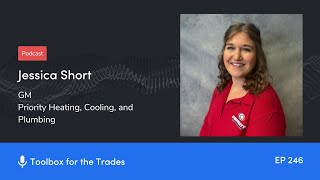
A recorded interview between host Jackie Aubel and Jessica Short (General Manager of Priority Heating, Cooling and Plumbing, Kitchener–Waterloo, Ontario). Jessica describes the company’s origin (founded 1996 in a sheep barn), growth to ~84 employees, and strategic shift from primarily HVAC new-construction toward more service and retrofit work. She explains how her social-work training informs an empathetic, individualized management style, outlines cultural practices (performance reviews, goal-setting, 'Priority Plus' maintenance plan, a recurring 'play day' called "Peter loves all of you day"), and emphasizes an ethical, low-pressure sales approach summed by the company motto “a good name is desired above all riches.” She also notes operational tooling (implemented ServiceTitan in 2023) and reflects on working with family in leadership roles.
Questions this video answers
1996.
About 84 employees.
2023.
About two years (at time of interview).
Kitchener and Waterloo, Ontario (serves ~one-hour radius).
Hello, contractors, and welcome to Toolbox for the Trades. My name is Jackie Aubel, and today I'm chatting with the GM of Priority Heating, Cooling and Plumbing in Kitchener and Waterloo, Ontario, Jessica Short. We talked about Jessica's background in social work and how the lessons she learned in that industry influence her leadership style. Today we also talked about the benefits of working with family and what makes a great company culture. I hope you enjoy our conversation as much as I did. Foreign Jessica Short, you are the GM of Priority Heating, Cooling and Plumbing in Kitchener and Waterloo, Ontario. Today, you and I are going to be talking about how you went from social work to becoming a GM and finding career passion in the trades. I'm so excited to have you on the show today. Welcome to Toolbox for the Trades.
Hi, Jackie. Thank you for having me. I'm excited to talk with you today.
We are going to have a great time and I'm going to kick this show off the way I always do, with an icebreaker. Jessica, I would love to know what's the best piece of advice you've ever received.
So it's kind of a silly one, but I've been carrying it with me probably since when I first started here, or about at least five years. In one of my friends, I was rambling on to her mom about stresses at work, and she just looked at me and she goes, jessica, how do you eat an elephant? And I was like, what are you talking about? She goes, well, one bite at a time. And honestly, it's been one of those things that has just stuck with me ever since then. And I find myself saying it almost every single day, whether it's to myself or my team or whatever. It's kind of the saying when I feel overwhelmed and everything's becoming like, okay, I see the end goal, I know what I want to do, and why aren't we there yet? And I remind myself that, well, you got to eat the elephant one bite at a time. So just start. Start eating at it, start going, start moving, stop talking about how overwhelming it is, and next thing you know, you've eaten the whole elephant. So. So it's one of those things I've just carried with me. And I've always told my team that we just gotta start, and you can't keep talking about it.
Just go. So I know sometimes it's really those really classic sayings or those classic pieces of advice that really can help ground you in those moments of stress and high anxiety. At least for me, I resonate with that as well.
Yeah, a hundred percent I often find myself in my office going, okay, how do you eat an elephant? Okay, go. Yeah.
All right, let's get into it. Let's talk about Priority Heating, cooling and Plumbing, which was founded in a sheep barn, as you told me in our first interview. So I want to hear a little bit about the company's early beginnings and how it eventually grew to the 84 employee operation it is today.
So we were founded in 1996, so we'll be celebrating our 30 years next year. So we're extremely excited for that. About 1996, my dad was working at another company alongside another gentleman who owned it. That company ended up going under. So at that point he was like, they both kind of went their parted ways. They sat at home for a day or two and my dad went, what are we doing? We're not doing this. So he knocked on his door, he said, you got a sheep barn? We're going. We need to build our own thing. So his partner at the time then, Dave, he was very much, I'm going to run the office. I know the people I have the relationships, I have the networks, I have the financial backing. But my dad had the skill set. So my dad had the ability to run the guys, he had the trade tickets. He was a plumber and a sheet metal technician by trade. So fully licensed in both. So at that point he ran it with him for 10 years. Primarily new construction, very, very minimal service, almost no retro fit whatsoever. So everything h vac only, new construction. Then in 2006, my parents actually bought the company from Dave and fully took it over running all the operations. We changed it from being subcontracted employees into being full time employees that actually worked under without their own trucks. They had branded trucks, all of that stuff. He quickly grew that business and in 2011 needed to move to a bigger building in Air Ontario, just outside of Kitchener Waterloo. So we moved there. Much bigger, huge acreage. We have a ginormous warehouse and shop where we keep a lot of our stock. At that time it was still only h vac new construction. Then during I think it was 2013, I had just finished college and decided, okay, I what the heck am I going to do with my life? So I'd gone to school for social work, said, nope, not doing that, and decided I needed time to figure out what I wanted to do. So a girl went on mat leave here. I decided to come on at that point when she on matt leave just as a trial for a year and then fell in love with it. So then stayed on in 2015, we brought in our plumbing division for new construction only and started building that up. Then in 2019ish, we were noticing that we were dabbling a little bit more and more into service because obviously if you install this stuff and something happens, they expect you to fix the stuff. Right.
Go say you're servicing.
Exactly. So. So we started to do a lot more of the service. With service comes retrofit because, well, we were already in your house. We told you you need a new thing. Why would we not then all the also give you the replacement, right. So then 2019 we went, nope, we're growing. We want. We have a new goal now of instead of it being. Cause currently at that time it was sitting there around, it was very much 90%, 95% of our business was new construction with almost 5% only being service and retro. So we have been tasking ourselves with the goal of trying to make them equal counterparts in the business. So we're sitting currently more at about an 80% new construction and the other 20% starting to trend in service in our retrofit. We really started pushing for marketing in 2022. We brought service titans on in 2023. And over that time from when I started in 2013 to now, all those new additions of divisions and just growing and getting new builders and new retrofits, we are now sitting at about 84 employees.
So that's awesome. That's great and wonderful way to explain the breakdown of the type of service you do, which is always a question I want to ask on the show. And I succeed in doing it maybe about 40% of the time. So you made my job easier. Thank you so much. And that's a great breakdown too about how your dad started this business with partner Dave and then you, him and your mother purchased it out. Now, if I recall from our earlier conversation, you worked as at Priority as teenager during the summer, but you didn't have any intention of going to work in the business as an adult. So tell me about what changed your mind in that year that you took over for the person who was on mat leave. What was it that changed your mind?
I think it was a combination of just like life and the trajectory and growing up and maturing and going, okay, I really have to actually think about what I want to do now. I think the change also was when you're in high school and you're just taking it on as a summer job, you're not necessarily given anything with any real responsibility. It's very much a lot of that Data entry. It's a lot of sitting at the computer and staring all day. And. And I very much found that was not. I was not someone that wanted to match numbers back and forth. So I always said, I'm never going to work in an office. I hate office work. I won't do that. How do you guys sit here all day? But then when I got in, I'll be honest, the first couple weeks maybe felt like that. But then once I started to actually learn it and I started to do night school for payroll, it was. I actually like this. This responsibility. What do you mean? These people have to. If I don't do it, they don't get paid. There's now this added, like, responsibility, but then also getting to help them out. And just over that year, I realized how much I had missed not doing math because of no longer doing it for the. In college, for the career I had chosen. So I was no longer doing that. So I realized, well, I missed doing math. I missed having all those numbers and elements in my life and being able to interact with people every day. And I just fell in love with the environment, fell in love with the people, and I honestly just never looked back and just kept staying and going, Nah, maybe one more year. And then once thing. Next thing you know, it's now been 12 years and I ain't going anywhere.
So that's awesome. I will say, missing math, that is not something you and I have in common. But I always have aspirations to get a little better at it as I. As I get older. So you mentioned that you had a social work background, right? That was your goal when you were going to college. You were going to become a social worker. I recently got my master's degree in marriage and family therapy. But spoiler alert, I'm hosting the Toolbox for the trades podcast guests, and I'm working for Surface Titan. So I think you and I have probably have a lot in common here. I want to know what drew you to social work initially.
Initially, it was very much. I was always very big with people person. My friends always were coming to me, always with their problems. I very much felt like the therapist type friend. I was always described as someone that was easy to talk to, and I feel like I can just tell you anything and things like that. So I'll be honest. When I applied for school, I applied for business, and I applied for social work, and I went, whichever I get into will tell me what to do in life. I got into both and I kind of went, oh, what do I do? Now. And I went, well, I can do business later. I'll figure it out. Social work sounds maybe a little bit more fun. I want to work with people. I had a goal of working in children's aid. That was what I was going to do. And then I just really got into it. And I think people that can do social work as their full time career, they have a bigger heart than I do. I'll be honest, it is a special kind of person to wear people's burdens like that every single day. And I think I just realized while I like guiding people and directing people, I don't overly enjoy the responsibility of where their life trajects. And maybe not necessarily listening to what I'm saying or the advice that's being given and hearing the same things over and over. I started to find very frustrating. I was like, I don't think I'm the best person to serve this kind of population.
Yeah, I relate to that so, so much. When I got my degree in therapy, I had to work as a internship, as an intern, as a therapist essentially. And I got to work with clients, which on one hand was so rewarding. But man, it really gave me a test, a taste of what that career actually is and if somehow there's any current former therapist or social workers listening on this pod. I don't think there are, but if there are, you guys deserve all the medals in the world because it is such an intense job. But that being said, I don't regret my degree because it taught me so much about myself and I apply so much of what I learned in that program to the work I do today, especially with interviewing folks like I'm doing with you right now. And I'm curious, what lessons did you take from your social work background that you apply at Priority today?
Oh, I think I use them almost every single day. Honestly, like, I won't. I couldn't tell you exact terminologies of the things that I use and apply. Right. But definitely I've always watched, like my dad has always been someone that has a big heart but can be very black and white of if you don't do it this way or you do it that way. Right. There's a right and a wrong to everything. And I think social work really told me that and taught me that people can change. People aren't necessarily right or wrong. There's under, there's a reason why they did the things that they did or the choice that they made. And like, it really helped me understand that people come from different backgrounds so. So not everybody is going to come from the same background. So you can't expect a new guy that's just starting out to know how to swing a hammer. And you just can't put that expectation on them because they maybe came from a background where they didn't have a dad or a mom or whoever was going to be teaching them those skill sets, because maybe they don't have those skill sets to pass down. I realized that we kind of had to start more from a ground zero with people and not have expectations right out of the gate because you don't know what their history is. And like, another thing that I really find is people can also go through phases in life. So if you have an employee for 10 years, 15 years, they can go through a period in their life, whether it's a divorce or a sickness in their family or a death. And those things can impact the way that they work. So a lot of the times in the past, people may have been quick to be like, okay, you know what? Get out of here. You're not performing to the standard anymore. We're done. And I've always been very much, well, I still have that belief and that you still need to hit the expectation, even if other things are going on in your life. It doesn't mean the work should suffer. It does allow now that I'm more. We need to have conversations. We need to talk. You need to understand what's happening in someone's life. Because sometimes by asking, hey, why are you not paying attention? You're making these mistakes on site. You end up getting a perspective from them where they say, I'm sorry, me and my wife are going through it right now, and she's blowing up my phone all day and. And it's just really, really challenging right now. She's complaining that I'm not getting home to get to the kids in time while we're going through a separation. So you start to understand and you go, you know what? Hey, what can we do for you? Could you maybe start a little bit earlier? And then we can let you leave every day by 3 so you're 100% home, right? Or you can say, hey, if you get the job done, we're not going to put anything else on you for that day. And just knowing that you can still hold them to that expectation and that standard of what you want. But sometimes you're going to have to give them that leeway. You're going to have to give them that support. You're going to have to listen to Them vent sometimes bitching and complaining about the company, but you don't mean that. You know, they don't mean it that way. You're not to take it personally. So I think that's been the biggest thing that I take is just understanding everybody's got something else happening on at home that they're not telling you about and that's going to impact their work as much as you don't want it to.
So, yeah, I 1,000% agree with it. Also, in terms of the longevity of an employee, if someone's working for you for two, three years and they're a high performer, like, great, that probably means that, you know, obviously it shows that they are a good fit at the company, they're doing the work. But life happens to all of us. And if you retain them, there's a chance that you are going to be with them during some really hard moments in their life. And how you respond to that, how you explore that with them, how you make adjustments to enable them to still show up in the best way they can, that's going to turn someone who may have stayed with you for three, four, five years into someone who may stay with you for a lot longer. Talking about the ROI of empathy here, I can't believe I'm doing it. But like that, that is genuinely the case. And I find as a manager myself, I'm not a GM like you, but I don't oversee as much. But every single member of my team requires a different type of management style. And having that therapy, training, having that background really allowed me to adapt to that. And it sounds like that's really also applied to you as well.
Oh, absolutely. And you get to know who they are as a person, you know which person you can joke around with and that's how they're going to receive stuff. And then other people prefer more beat around the bush approach, right. To how you're having that. So they want a softer approach. Other people want it. You didn't tell me that directly. I didn't understand what you were saying there. So you have to speak directly. So you really have to learn to get to know the people in order to know that. And I think that's something because I sit there and can say, okay, if they're going through a hardship, a thousand dollars could make them now sleep better at night. Right. A thousand dollar advance means that they could pay that bill that they were behind on. It was keeping them up at night and they weren't able to get to work on time. Right. So sometimes it's those little things to just get people over those humps that then, like you talked about, the ROI on empathy is very much. They're gonna stay with you. So at the end of the day, yes, money talks, compensation talks. But I would honestly say I could go around to all of my staff, especially internally in our office, and ask them, do you stay because of money or because of the people? Or just ask them why they stay and they're going to say the people every single time and how they're treated.
So, yeah. Okay, I have another therapist question for you. So when I was working in that field, I found it really hard. I had to learn how to decompress. And I'm curious at the GM role, given that you are working with so many people, you're managing, you're juggling a lot of things, wearing a lot of different hats, playing this role for a lot of people. Like, how do you separate? How do you kind of do what you have to do to make sure you don't take on that. Their stuff as your own?
Honestly, I call my mom every single day when I'm driving home. Every single day. I know that seems silly. We joke that we're going to have a Driving With Jess podcast, and she just listens to me. So she is my own little therapist. I do have a handful of people at work that if in the moment I am having, I can go to them and go, okay, these are just my thoughts right now. My feelings right now, like, please don't judge me for this or take anything from this, but I need to vent or whatever, because I'm that for a lot of people that sometimes that can become a little bit too much, where it's like, I don't care about what you're talking about right now. So you get a little bit like that. And I don't want to ever be like that with anybody. I want them to feel like I care about, which I do. But sometimes it becomes too much. So just having those sounding boards for myself, right? Whether it's my husband or my mom and just people that you can just. And I find I do it with my mom a lot on the drive home because it's a moment for me to just before I walk in. And I now have to be mom and wife and not take on my frustrations for the day and not be short with my family, because I couldn't be short while I was at home or while I was at work. So it allows me to really do that transition. So I strongly recommend that call someone on your way home, if you're overly stressed or whether that's playing some like, Slayer music and rocking out on the way home. Just something that kind of lets you get out those feelings of like, angst, because otherwise you're going to take it out on the rest of your staff the next day because you're going to be annoyed by them. So you have to just get away, get a way to understand, way to vent about it, a way to get it off of your shoulders. And then I find I feel way better after.
I will also underline highlight listening to hard music. And I'm always a fan of a good regulation walk. Just pushing myself dramatically away from my desk and just going on a neighborhood walk for about 20, 30 minutes really helps me get out of my own headspace. I love that. So you joined originally in supporting this mat, this person who was on mat leave doing payroll. Your cravings for math were met in this new role. You were having a great time and you initially resisted taking on the GM role. But you told me your father saw your potential and the role kind of naturally revealed itself over time. So I want to hear what it was like to come to terms with that transition and accepting that leadership position.
It was definitely scary at first and it was definitely a slow trickle because it was very much. I started as payroll admin and then I became. We developed an HR department and I decided, okay, now I'm going to be the HR manager. Because we never had that. That kind of gave me that, okay, I'm a manager now. I'll sit in managers meetings and things like that. But then over time, I was just sitting there and I was in meetings that an HR manager wouldn't be in. I was in conversations that you wouldn't have an HR manager's opinion in. People are coming to me and asking question that. It's like, well, why are you asking me? Right? And it was very much, okay, well, my dad was out on site or wasn't around as much, so they just naturally were defaulting to me. And then it kind of, I was very much, okay, let me go off, let me have my kids. I don't want to wear this title yet. Like, I don't feel like I have the trade expertise. I don't feel like I know it well enough. I came back and everybody just started introducing me kind of as the GM when we'd be in meetings. And I went, okay, I guess I'm. And then I just one day changed my email signature and went, we're doing it. And I Kind of slow rolled it to be honest, because I wasn't ready to just be like, yup, I didn't feel like I had the merit if I'm going to be totally honest. But then everybody, since it's just like you've already been doing this for years, you don't even understand how much you've been doing it. Like, why is HR sitting in a supplier meeting, Jessica? I'm like, yeah, you're right, why am I sitting in a supplier meeting if that's all I am so very much. That.
That's awesome. That's really cool. So how long have you had the title now?
It'll be two years. Yeah. Now that I've been wearing the GM.
Title and I think actually you are in a very. Even though in the five years that I've been doing this show we have seen more and more female representation in the trades, being a female GM is still a novel thing you don't run into all the time. So I think it's really awesome that you're doing that and showing up for, for other women, little girls now, women in the trades who are seeing what this is, how this is possible. So that's incredible. You shared a powerful story with me about the difference between dreams and goals, which was a lesson instilled to you by your dad. And I want to hear how you use this distinction to mentor and guide your team members. A priority.
What my dad's always instilled was that dreams are essentially your hopes, your visions, your desires is basically what you want, right? So you don't really have a plan when it's a dream. You don't really know how you're going to get there. You just, it's something you kind of talk about, right. Goals are very much, they're concrete, they're targets, they're something that you're actively working towards. You know, they're specific, they're measurable, you know what you're going to get, right? To me, a dream only really becomes a goal if you're going to like commit to it and actually work on it and start doing the steps of it. Right. So he's very much instilled that there's no point in sitting there and focusing only on the dream if you're not going to put the steps in to get there, which is the goals and the milestones to get there. Right. And with that you also need to be realistic. A dream is not really grounded, it's not really reality. Right. That's why it's something we have. When we sleep at night, right? So it's more of a. You need to have goals in life. So that's something that, like at every single one of our shop meetings, we talk about having goals, setting goals, setting personal and professional goals, their employee performance reviews. The only question that we require that they have to fill out and give back to us is what is their personal goal and what is their professional goal? Because we want to know, what are you working towards? If buying a house is your number one goal right now, then we know monetarily that is what you're looking for this year. You want money, you want RSP contributions, that's what you want, right? If you are focused more on getting physically healthy, right. You might be looking more for benefits and things like that. So what we can do is we can take that information we gather from their performance reviews and what their goals are to be able to go, okay, what compensation things are we going to package in for the next year? Because most of them are saying they want to have these big monetarily goals this year, right? So very much talking about having those goals, working towards them. Don't just go out there every day because it can become really demotivating. When you go out there every day and you don't know why you're doing what you're doing, you. You don't have something for yourself that you're going, this is why I'm doing what I'm doing. And we just say, like, every time, knock off those goals because you feel good when you accomplish something. You feel good when you get a goal done. So, like, for myself, I've always had a dream of owning a business, of being part of a business. But in back in the day, it was, I was going to be a fashion designer. I was going to design clothes, I was going to this, I was going to have a restaurant. I've always thought like that. But then you find out, okay, my reality is what opportunities I have available to me. So now it can become a goal because of the. What opportunities I've been given, and that's the path I need to take. So while it might not be clothing design or any of that, it is in another way. I've still accomplished that dream, but more in a goal kind of setting, if that makes sense.
Oh, no, it 100% makes sense. And as you're talking, I. My ADHD brain is having this conversation in my head like, oh, crap, you got to really start doing that, girl. You got to start doing that yourself. And what I'm doing, I've heard this before. This is reminding me of an episode we did years and years ago with Chris Hunter, who's one of our service titan gurus and just an all around good guy, talking about getting really specific about the why of each employee. Because everyone's going to have their own desire, like their own reason for why they show up every day. And I'm curious, how do you find time to make sure that you're asking your employees and yourself about these questions, these really important questions, or when it could be so easy to get lost in the emergencies of every day?
I mean, be honest. That's probably one of the biggest challenges that I do face on a daily basis, especially the more I moved into the GM role. So I used to sit into every single employee's review when I was HR manager, right? I was there every single time. So we made sure we asked the questions. I made sure the information was being gathered. Now it's harder, I'll be honest, especially for myself, but. But it is something that's very much instilled into the team. So we do have, like, standardized performance reviews. So it's something that doesn't get missed. It's automatically on every single thing. So it's there. It's also about. I very much trust the relationships that my other managers build and the site supervisors build. And we very much have internal conversations, internal meetings, which sometimes feel excessive, but it's very much talking about the guys out in the field and not in a negative way. Sometimes it might be because if they're messing up, but most of the time it's talking about, like, okay, what's going on in their life? What are they being really driven by? Okay, this guy has been having some attitude right now. What can we do to kind of bridge the gap between everybody? What are you working on? His goal for this site is this. Are you wanting that same goal or what are you working towards? Like, just giving that understanding to them all. Yeah.
Dang. General manager slash mediator.
Very much so. So, yeah, very much. When my brother's in meetings with me, he sits there and goes, how do you do that? And I'm like, oh, no, it just starts, right? You just start talking and it just somehow comes out.
I swear, like, every conversation I have for this podcast, I always take away something where I'm like, dang, I really need to start being better about that or I want to start thinking about that. So thank you for just piquing my interest alone. You did it with the host. I'm sure you're already Doing it with the listeners, so. Oh, and actually you mentioned something, a term I didn't know. Rsps, is that something? What is that?
Yeah, that's Canadian. So it'd be, I don't know what you would call it. Basically, it's your retirement savings.
Got it, got it, got it. Okay, cool, cool, cool. There we go. Canadian representation here. So you mentioned that in one of the ways, what you guys are seeing as you're transitioning from a new construction, predominantly business to now you're going into the service and retrofit area, you're encountering customers who have a negative perception of the trades. And I want to hear a little bit about how you're working to build trust and demonstrate your company's commitment to excellence to these wary customers.
Yeah, it is one of those things that's just becoming more and more challenging as the years go on. But we have an internal model of a good name is desired above all riches. So that is something we preach all the time. It is essentially what I say to people when, if you need to know how to make a decision and you're in a moment, like let's say it's with a customer and you have to make a decision on the spot, whether that's a technician or a manager, they need, we remind them, say that to yourself, a good name is desired above all riches. So think to yourself, we don't care about the profit margin anymore. We're not thinking about that. We're thinking about how do we make this customer happy, how do we keep them happy with us so that they can trust us. So unfortunately, it does get harder when you have other people working so that you're automatically walking in the door and they have their guard up, you're automatically going in and they're intimidated. They think you're trying to take advantage of them. They think you're jacking up the price. They want to Google the item, they want to Amazon the item. Right? You have all of that stuff and they have those things readily available to them. So we do believe in being extremely accountable. So if we mess up, if we make a mistake, we are there, we will fix it on our own dime, whatever that takes. If we have a plumbing leak, and that means that your drywall has now gotten ruined or your brand new tv, we are replacing that, we are buying that for you. So we very much, like I know we had, we're very much low pressure sales. So we preach, we have gone through a lot of salesmen because we do not value unethical installations. So if you have an old farmhouse and it doesn't make sense to try to put all new duct work in it because it never had duct in it, we're not going to do that. We are going to find you a ductless system that'll work. We're not going to sell the elderly lady the upgraded thermostat. We have one lady right now who joined our Priority plus plan. She, which is our maintenance plan. An older lady, her daughter has called in and basically said she didn't understand what she was signing up for. Yada, yada, yada. We're like, okay, we totally understand that. So what we're going to do is this is how much the service would have been. We will refund you everything she's paid for that. All we're looking for is what that service would have been had she not signed up and enrolled in it. All the payments she's made, we're putting right straight towards that and everything. So just being extremely transparent not to plug service titans, but like, they've. It's very much helped in the sense of now we tell our guys, pictures, pictures, pictures, pictures, pictures. Because if you don't write that you did something also in their job summary and in their invoice summary, they're not going to think that you actually did it. So you have to write that you did do it. You have to write that you did test, you have to write that and what those results were. So we've used a lot of the forms and to mandate that they get that we email the forms to them right after the job has happened. If they want pictures, we have all of those things. So it goes both ways to protect ourselves because you always will have people that'll want a service for free at the end of the day and claim your guy did something. And it's also to protect the homeowner too, at the end of the day because there are other companies out there that are rewarding and providing spiffs for, okay, you were able to condemn that unit and now get a new replacement in there. So they're. And they get a 200, $500 spiff for it. So they're motivated to make that system now not work, not repair it. Right. We unfortunately don't do that for our guys. We feel bad because it makes it hard to sometimes retain service techs when there's that other competition doing that. But we believe it keeps them honorable, that keeps them from not being malicious. So we find other ways to compensate, whether that's for reviews or referrals. Or things like that and provide other compensation packages. But it has been a challenge because in other places they're motivated to do a picture of a cracked heat exchanger that isn't legit and it's from a completely different house. And then we've had that call where we then get there and go, your heat exchanger isn't cracked at all. You don't need a replacement. We actually could replace what's broken for $700 instead of you buying a whole new system if you would prefer to do that, obviously. But we try to establish trust right off of the bat. Like we say we're ethical in everything we do and we live by that. We believe in flat rate pricing so that the people know what they're getting. They're not getting some time and material. And then you have those conversations of, well, he was out smoking for this long and he went for lunch for this long and right. So it's just this is the price, whether he takes two hours or five hours, it's the same price across the board just for that part. So you win on some, you lose on others. I'll be honest, sometimes it irks me with a Google review because I know people will go there very quickly and it's like we weren't in the wrong, but we're quick to. I have a fantastic sales manager and he will get on there real fast. And his, he's a pro at lip service, as we call it, and just is able to kind of de escalate very much validate their feelings of being angry and try to understand where they're coming from and then find a resolution. So we are very much that if someone comes in from another company and finds that we didn't do it right, we will pay the bill back to the customer or pay it directly to that other company. And usually that does mean it's another company that's bashing us and bashing our work and just to kind of make the person still have a good name or believe we have a good name, we will just compensate them back for it.
So yeah, a good name is greater than any, than any riches.
A good name is desired above all riches.
I think that's really interesting and I can hear in just your conviction of describing this that that is at the core of your business. It's a core business value. I have to imagine that having that so ingrained in the way you're talking about it now, even if it has been a struggle with having service tech stay with you because you're not spiffing on certain things. By having that value, you're attracting people that also have that value. Right. Because it's not just about money, it's about. And I've heard that from texts before too. Like, they will say, like, I could have fixed this. I didn't have to install something new. That's interesting. I'm not actually very familiar with Kitchener and Waterloo. Is it like a rural. Rural suburban cities? Like, what's the. What's the kind of.
Yeah, it's very suburbia. Like it's not a big metropolitan type, but it's very suburbia. And we do anything within an hour radius. So it can be anything from very rural or very suburban. We don't do a lot of really, like big, big city type stuff. Yeah.
Okay, cool. So interesting. I feel like your social work background, like, was really just a detour that you had to take in order to take on the role that you have at this company. Like, I can see the social work stuff just working in every answer that you're giving me, which I absolutely love. So we've been talking a lot already. You've been so generous with your time. I know that you work with your brother as well. He's the director of operations. Right. So I, I want to hear what it's like working within, with family, how you've navigated that. Super easy, super straight to the point question. I'm sure, no problems whatsoever. But I'd love to hear your perspective and what advice, if any, you have for the many other people listening who also work with family.
Well, you could start by saying, don't hang out outside of work. No, I'm just kidding. It does help, honestly, because we work so much together all the time that we find we don't spend a lot of time outside a lot more now since we both have little ones. So we spend a lot more time getting them together. And that makes it easier to not talk shop. But to be honest, I love working with family because I can be transparent, I can be myself, I can be candid. I don't have to hold back, write any thoughts, opinions, whatever. They know who I am right at the end of the day, and the same goes with them. They'll tell me what's up. So we can very much hold each other accountable. We've always been the kind of family that if we get into it 20 minutes later, we're just like, hey, what do you want to eat? And we just move on like it didn't even happen. But it very much helps because we have the same work ethic. We're all work driven. So it's very much like a top priority in our lives. And then it helps because he has his lane and I have mine. So I focus on all things admin, internal in the office, all of those high level financials, anything like that. He focuses on keeping our good name, keeping that quality, running those project managers out there. So we both help each other in a way that. And this is how my parents ran it too. They were the exact same. My mom being the admin and my dad being the workers in the field. Right. So we just very much. I bounce off of him. Okay, well should we be able to put more testing protocols in there? What does that look like? Right. I can not feel intimidated by the fact that I don't necessarily have that trade knowledge. I don't have that trade ticket. But we can partner together to go. Okay, let's pretend right now we're working on building a new training solution and a training program for our guys. And we sit there and hash that out because I'll say, well, I want this to happen at this milestone. And he goes, yeah, but they won't know how to do that yet. They're going to know how to do all of this stuff, but they're not going to know that part yet. And you're. They need more time. So I have to be realistic with my timeline. So it's just very much. We hold each other accountable. We both stay in our same lanes. We share an office, which I strongly recommend. At first I was like, but sharing an office means that when people come and talk to him about stuff on site, I hear it. When people talk to me about stuff on the office, he hears it. So we are able to then kind of give our 2 cents. It also allows that we don't have to do a rundown with each other about everything that's happening with everybody because we're kind of got a little bit on the pulse of what's happening because we're in the same workspace. But I recommend working with your family. I like that our spouses very much try to keep it when we are together for Christmas and birthdays and those kinds of things. They very much enforce a no work talk because probably will always come back to work. And the people at work, but they're very much. But growing up, work has been part of dinner talk conversations. I spent my childhood scraping stickers off of vans. So we, it's just always been part of our family.
I hear you, I hear you. And it Sounds like you guys have some good boundaries going in there, too. So, to wrap up our conversation, you've been at the company now for 12 years and you've witnessed its growth from 25 to 84 employees. I want to hear what you think are the most crucial elements for maintaining a strong company culture and keeping the team cohesive as the business scales.
Definitely a challenge as you scale. It starts with our interviewing process. Every single time we do an interview, we talk about that. We talk about how our culture is so important. We talk about how we are a big sports team, how we like everybody making, having fun and making jokes because we have such high expectations. And we say this in the interviews and we go, you could be a great plumber and in the future, and you could be a plumber in this world, but not a plumber at priority because we want the best of the best. So I always will say, just because you don't work out here doesn't mean this trade isn't for you. It just means this company isn't for you. So we very much are a go to the best, be the best. We want to be the best sports team out there, which means we're going to train, we're going to work hard, we're going to grind, we're going to expect the best. Well, why can't we have some fun while we do it? I'm very upfront about that. In the interviews that we do, all the staff is. It is probably our top three priorities when it comes to here. Like, it's right up there with revenue and profit margins is not losing this culture because I don't want people to come to work and hate coming to work. I don't want to become this corporate mogul that doesn't care about anybody. But everything's through a process. Which processes are great, but like, the end of the day, they are people. So not everybody is going to follow everything exactly. And if we can joke and laugh and say, hey, you mess that up and make a joke about it, it feels a lot less pressure than, hey, what the heck were you thinking? And blah, blah, blah, and you didn't follow the process. And a lot of the people hang out outside of work and we have our meetings, we preach it, we have breakfasts for the guys so very much just getting them together, reminding them that this is also a fun place to work. We host a playday, which we call our Peter, which is my dad's name. Peter loves all of you day. Silly, stupid, but we came up with it. I think this year will be our fifth year. Yeah.
I'm sorry, I'm sorry, I'm sorry. Okay, hold on. I just need to know. That really just brought me a ton of joy. We call it our play day, and my dad's name is Peter, and play stands for Peter loves all of you.
Yes.
That's so funny.
Oh, yeah. So it's the running joke that we came up with. It's a day where we literally will. It's a work day. We shut down for the day. We tell our builders, we tell our teams we will not be hooked there. We usually beg one service guy to be available just for emergency things. Otherwise, we don't book anything. We give everybody the day off, and we usually go and do something fun. So last year we did the priority Olympics, and we did our own Olympics here, and everybody was a country, and we had a whole bunch of inflatables and did that. This year, we're going golfing and we have a food truck coming, and we're going to play some cornhole and all of that kind of stuff. So just a time to remind them that, like, hey, revenue isn't the most important. We're willing to give that up for the day. You guys are more than just cogs in the wheel. And let's remember that, like, the office staff does love you. The field staff does love the office staff. Just because sometimes we're arguing and we both have key roles to play, it doesn't mean that we don't get along. And just reminding each other that, like, we're all people at the end of the day and let's just like, hang out, crack a beer and have a chat about what's happening in your life outside of work. Right.
Love that. I love that. Peter loves all of you. That's so funny to me. Thank you so much for being so transparent and so generous with your time. Is there anything that you wish we talked about that we didn't get a chance to?
I think the only thing I would have talked about and to plug a little bit for Service Titans, too, would be if anybody out there is thinking about building your own software instead of signing on with Service Titans, don't do it. I don't recommend.
Did you guys do that?
Yes. We tried twice. We would have been on Service Titans probably three years earlier if we hadn't wasted all of that time. But we didn't have the new construction side on Service Titans, and we were waiting for that. And then it came in that three years to time, and then when I was at my wit's end with building software. We looked at it and we went, okay, you're there. Why didn't we just wait three years? So don't recommend. You'll waste a lot of time and money. It's way harder than you think.
That is. I, I, as someone who's worked in software for all of her professional career, I endorse that. I'm not even someone who builds it. I just, I just market it. So I agree. Jessica, thank you so much for your time today. It has been awesome to learn about priority, about your journey, and I can't wait to see where you guys are in a couple years. I'm sure it's going to be somewhere fantastic. Awesome.
Thanks, Jackie. It was so great to talk to you.
More from Bill



ServiceTitan Virtual Agents: Simplify Before You Scale | Podcast Ep. 110 | Mastering ServiceTitan



Life After Live Events: How to Turn Post-Conference Energy into Real Profits | Podcast Ep. 297




