The Three Pillars of Roofing Growth: Organic, Greenfield, and Acquisition | Podcast Ep. 289
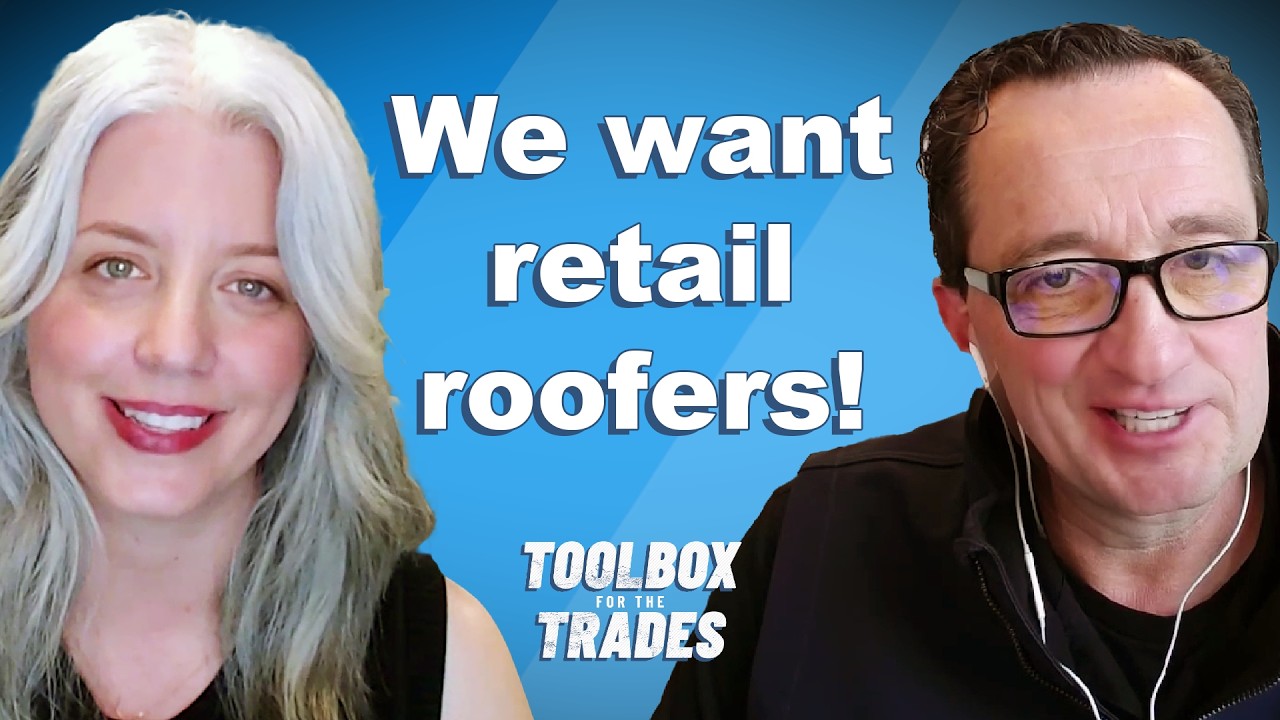
In this episode of Toolbox for the Trades, host Amanda Salvatore interviews Chad Colony, CEO of Trustpoint, about how roofing companies can achieve sustainable growth and navigate acquisition. Chad explains Trustpoint’s three growth levers—organic expansion, greenfield market entry, and strategic acquisitions—and details the firm’s highly selective acquisition thesis, which prioritizes retail‑focused businesses, strong culture, and owner‑operator alignment. He emphasizes the central role of company culture, describing it as a blend of passion and alignment, and offers practical steps for leaders to diagnose and improve cultural health. The conversation shifts to the importance of training at all levels, not just sales, and how a robust technology stack—driven by clear KPIs and dashboards—enables operational visibility and accelerates growth. Chad shares excitement about AI’s potential to enhance back‑office functions and customer engagement while noting that roof work itself remains insulated from automation. He discusses managing multiple brands and locations through shared best practices, technology‑enabled communication, and preserving each brand’s “special sauce.” The interview also covers Trustpoint’s day‑one acquisition integration playbook, which focuses on over‑communication, answering employee concerns, and delivering on promises to build trust. Finally, Chad offers a market outlook for roofing private‑equity consolidation, predicts continued platform growth similar to HVAC, and gives owners two high‑impact operational moves for the next three months: clarifying the org chart and delegating responsibilities, and thoughtfully evaluating the type of PE partner they want to work with.
Chapters
Hello, contractors, and welcome to Toolbox for the Trades. I'm Amanda Salvatore, and today I had the opportunity to speak to Chad Colony, CEO of Trustpoint in Nashville, Tennessee. We covered lessons learned, the importance of company culture when looking to sell or scale, and how clean data and a strong tech stack can make all the difference. I hope you enjoy this conversation. As much as I did. Chad Hollany, you are the CEO of Trustpoint, located in Nashville, Tennessee, and today we are discussing how operational health, strong culture, and clean tech and data are the ultimate leverage points. Welcome to Toolbox for the Trades.
Thank you very much. I'm so excited to be here, Amanda. Appreciate the invite.
Of course, we're excited to have you. I know that you have lived in 13 states, so our icebreaker is based off of that. Why is Nashville, Tennessee your favorite, and is there a runner-up to the city of Nashville?
Oh, great question. I love Nashville just because it has so much to offer. Uh, it's a growing city, it's thriving. You have the whole Broadway scene where there's live music, which I think's fantastic. In addition to that, it's a great sports town. But what I also love about it is beyond the food, the restaurants, and that kind of scene is you can travel literally 30 minutes in any direction. You're in God's country. And a runner-up, you know, everywhere I've lived has great qualities. I would have to say I'm going to go with Lexington, Kentucky. I raised my kids the majority of their lives there. And it's a fun town too. It's more of a town, less of a city. With everything from horse racing to bourbon to UK sports. So it's a nice place to visit as well.
It sounds like both of those locations are fun for a ton of reasons. So I can see why you like both of them. Yeah, they certainly are. So before we get into the nitty-gritty, I would love to find out how you found yourself in roofing.
Through a previous process, I'd met a company called Soundcore, and they are, in my eyes, a world-class private equity group and we became good friends and stayed in contact. And out of the blue one day, they called me up and my friend Jeff there, and he asked me, he said, Chad, what do you think of tree care? And I was like, I don't. And so we kind of did, we talked about the thesis and I decided to pass. And it's still, I think, a great thesis. It just wasn't something I was passionate about or interested in. And a few weeks later he called me back. He's like, what do you think about roofing? And I was like, I don't, but I think you do. So let's talk more about it. And he talked about the addressable TAM and the factor. And the more I learned, the more excited I was about it. And I've worked in a lot of different eclectic trades, and I thought it was very interesting. And here I am.
I know when we previously spoke that you mentioned that there are 3 ways that you achieve growth: organic, greenfield, and acquisition. I'd love to hear a little bit about all 3 of those.
Anyone can buy companies, but at the same time, what do you do with them? And to create value, you really have to find a way to grow them. So you grow them organically. And then greenfield is simply expanding into new markets. So taking, you know, what you're doing right in your existing markets, identifying new markets, and then greenfielding them and growing the business that way. Then lastly is through acquisition, acquiring different companies and additionally bolting them onto your current business. So those are really our 3 primary growth factors.
Well, let's talk about acquisition.
Sure.
I know that Trustpoint has an acquisition thesis. How does it differ from a standard roll-up or other platform companies?
I would say we're very selective, and I think that's important because there are a lot of companies that are out there that are just eager to buy. They're trying to get to a certain number and scale the business. But, you know, we believe a large part of the business needs to align with your investment thesis. And so we are very selective. And part of that selection is we're We're very focused on retail. We wanna do retail roofing. We will do some commercial light, let's say multifamily. But then also, I think as important or even more important is culture. We really look at culture. We look at the ownership. Are they willing to roll over? How active are they in the business? Are they leading the business and do they wanna lead the business going forward?
I know with acquisition, you're saying that you're really selective and that you might be hearing around 100 sims before What is the moment in the process where you usually think to yourself, this is a pass for us?
I would say if we have a leadership that— a toxic culture. If you could just see that someone who doesn't really care about their employees or really just in it for the money, or they're just trying to exit it and leave the business and not maintain it going forward. As I said, our thesis is more retail-focused and so less so insurance. While insurance, I think, plays a very important role viable role in the industry. We're more focused on retail. So if someone's 100% focused on insurance and that's a non-insurance market, probably a non-starter for us, but we sought the conversation.
When you're looking for owners, are you looking for people who are just looking to turn over their business to you or owners who are interested in staying with the company and participating?
Typically staying with the company and participating. We're looking for people that simply want to take some money off the table, but they want to continue on with what they're doing, roll over equity and be a part of something bigger. So a lot of owners will get to a point in their lives where they've reached a threshold of growth where in order to take it to the next level, they really need systems and processes or some capital or something's prohibiting them from reaching their full potential. And so we're looking for that type of owner who wants to partner with us and roll up our sleeves to find a strategy and work together to bring that to fruition.
Why do you think it's so important for you to have the owner join you in this process?
A lot of it's about alignment, but it's also, it's about the people as well. It's really the people that have built the success so far. And the relationship with that owner and the people is very important. And if that owner removes himself, you have less likely degree for success than if the owner sticks around. And so for us, it's really about, I want to, I'd love to partner with an owner who truly believes that the business can get to the next level, but wants to stick around and see that success together.
A lot of people hear healthy culture, company culture, and it's almost this buzzword.
Yeah.
So, what does a good company culture look like with boots on the ground?
I think it's 2 things. I think it's, one is passion. Uh, you can feel energy and passion, people that are passionate about the business, that care about the business, care about the customers. That's really important to us. But in addition to passion, it's alignment. Everyone's gotta be, you know, striving for a similar goal. Everyone, Uh, needs to understand what success looks like, and everyone needs to be communicating and driving towards that goal.
If an owner is listening right now and they're saying, I feel like my company culture is not where it needs to be, what would you suggest to those who maybe feel like their company culture is out of alignment?
One, um, a little introspection. Are you leading by example? Are you portraying the core values that you want the company to exhibit? Uh, and lead by, and are you adhering to those? I'd start there. And then secondarily, I'd listen to your employees. Are you, are you ruling like a dictator and just telling people what to do, or are you listening to them and talking collectively about a, a collective vision and purpose? And then I think the last thing is so many people either offer up change or tell people to do things, but they don't tell them the why. And the why is so important. If you can simply explain to someone why you do things, um, it, it really creates a lot more, um, enjoyment in the job.
Speaking of leadership, I know that you have a leadership summit, L40.
Oh yeah.
I would love to hear a little bit about the summit and then also about some surprising information you might have learned. I know that you are all in a room together reading through the P&Ls of these companies. What's the most surprising thing that you've learned coming out of that room this year?
It's interesting. So, you know, we bring these leaders in and they've all owned their business for 20, 30 years, and they've been in the roofing business for a long time. I was, I don't know, both amazed and humbled by the amount of knowledge, roofing knowledge in that room. And, you know, the humbling thing was no one really wanted to hear from me. They wanted to hear from each other. But that was the purpose of the meeting, was best practice sharing, just letting them talk and to learn from what's going right, but also Even more important, probably, is they learn from their mistakes, years of mistakes, and so they don't repeat those. And I think everyone left with a notebook full of ideas, fresh ideas of how to improve and, you know, reach their full potential. It's also building those relationships because now they have a, you know, we spend a lot of good quality time both in the hotel boardroom, but also playing some golf, watching some baseball and socializing. And so they built that bond. Where we're now on the same team. And the other thing, a lot of people do join different consortiums or idea-sharing networking events, but you always have your cards close to your vest. You're not necessarily part of the same team where these guys, they are part of the same team. They have bought equity in this company and want it to succeed. So they're all rooting for each other. So I know they have, a lot of them have standing phone calls now with each other talking about what problems they face and how they can address those. So It was, it was an outstanding event. I look forward to doing it again in the future.
That's incredible. Having an opportunity to talk with your peers who are in the grind every day, you're going to learn so much. But in your own notebook, what were some new ways of thinking and solving problems that maybe you discovered through the summit?
I would say collectively, the one thing that resonated is the need for training. Is that most of these companies, a lot of people, right, wrong, or indifferent, have no college education. Um, some of them have no high school education and they just, they've been grinding it out and they've never received any formal training on, you know, things like just management style or how to, uh, performance improvement or how to coach in the moment. And so, you know, it wasn't just about, usually training in, in the roofing industry is very focused on the salespeople, but We have no, you know, you have mid-level managers that have zero training. And so if we want to build a really good culture and want to continue to improve our engagement, then it starts at the top. And we all need training. We all need ways to improve. And so it was great to see people raise their hands and say, you know what? I don't know how to do that. I've just been kind of winging it for the last 30 years. And if there's a better way, or if we can collectively work together to train each other or bring in professional help, so be it. And so that was a big takeaway is that we did all use training throughout the organization, not just the salespeople. It also sends a strong signal that you care. If you're willing to invest in people, I'm gonna invest in you and spend time and money and take you out of the workplace to develop you. That builds a strong culture.
Now, I wanna move on to technology. I know with acquisition, technology is huge right now. Understanding the data, knowing where you are in your business when you're evaluating a potential acquisition. What does the technology stack tell you about that business?
It really gives us an indication on their sophistication. We've bought the full spectrum. So we've invested in companies that have, are very good at speed to lead and they can follow how quickly that customer was contacted, what the set rate was, what the close rate was, even using AI tools to listen to the sales conversation and find opportunities. And that's great. We've also found companies that have been successful with little to no technology. And that's great too, because in any situation, it just means there's opportunity for growth. They have no technology today, they've been successful, then introducing them to technology and bringing them into a different way or a process and systems is only going to accelerate their business. And if they have been pretty, uh, worked well with technology, we can learn from them in many cases what's working, what's not. Let's look at your tech stock. Let's look at your systems and processes and see how to make them more efficient.
If someone is looking for a tech stack, what are— and they're shopping around for one, what do you think they should be looking for? What's important?
So in consideration of a tech stack, I think the main thing is to identify what do you want to know and need to run your business and what kind of KPIs do you want reported on a daily basis so that you have a dashboard So at any given time, you could instantly see the health of your business. So I would start there and then work backwards and ensure that technological capabilities are available.
When it comes to technology, there's so much coming down the pipeline. What is getting you excited about all of this new tech entering into the industry?
There's so much going on with AI, and we're seeing it in all areas of life. A fear is, is it's going to displace jobs. And quite frankly, that's the reason I think there's still a lot of accelerated interest in the trades is because it would be difficult to use AI to get on a roof and actually perform the job. So if anything, we're a little bit insulated there. But at the same time, AI enables us to find things and work more efficiently. It is impacting us in all facets, whether it relates to accounting, whether it relates to how we engage our customers. There are voice bots now that we're all becoming used to. So all of that creates a, hopefully a better, if used correctly, a better consumer experience to where we can engage with them how and where they want to in the purchase cycle. And so that really excites me that we can better serve our customers with utilizing technology.
Now you have multiple brands that you're working with and locations. How does technology technology play into managing multiple locations?
I think, um, well, one thing is we can share best practices. We utilize a different, a lot of different softwares and practices, so we can share what we're doing in one location to hopefully make it easier for them to solve problems. But also, like, you know, the world's changed. Like, I used to travel all the time, and, and I still do, but Zoom meetings and equipping people, connecting all of my teams on a call and being able just to look at each other and talk, On a weekly basis or whatever the cadence may be. That certainly has helped because it is difficult to manage remotely, but to be able to jump on a call and look someone in the face and have a conversation with them is so much more personal than just a phone call or while you're driving. So that's been great. And, you know, I think the other thing is having the right technology stack to where we can teach them to look at their businesses, but also know that we're looking at the same numbers. And if we identify an opportunity, that we can immediately reach out and say, hey, we see an anomaly here. Is there something we can do to help? Or how can we jump in and fix this problem before it gets bigger?
Speaking of multiple locations and brand management, how do you manage across 4 brands without losing what makes each one special?
You know, I think— and this goes back to the diligence process— is when we're working with the owners to truly identify what is that secret sauce, what is it that makes them special, what is their competitive edge in the marketplace? And what is it that built that powerful brand? And to be cognizant of that and to ensure that whatever systems or processes we put in place, that we're still protecting and encouraging that competitive advantage in the given marketplace. So it really is unique by each of my different retail locations. They each kind of have their own special sauce, but they're also listening to the others in creating their own little mix of special sauce, if you will. And they're using the best of both worlds. in order to become even more competitive. But we're, we're very conscious and cognizant that there's a brand in the marketplace and we want to— our true ambition is to make that brand realize their full potential and to, you know, do no harm but help them accelerate their business.
You talk about this special sauce between these, these 4 brands. I would love to know what you think is the commonality between all 4 of these brands that makes them work, that makes them so successful.
100%. It's, they care about the customer. At the end of the day, they take care of their customers. And if you take care of your customers with a passion and stand behind that brand and do the right thing, you will have a sustainable business. And all of them, and going back to, you know, where we would run from acquisition, if they didn't care about the customer and care about what they're doing, we would not wanna invest in that brand.
You said when we previously spoke that 99% of employees typically stay after an acquisition with you. What's that playbook for those first few days and weeks that makes that possible?
Our number one goal, so we call it day one. Day one is when we announce the acquisition. Our number one goal is we overcommunicate and we have a presence and talk to employees and, and to, again, to help them understand the why. Why is this happening? And, and the why is, is that we have established a partnership to, we want to grow this business, accelerate this business, and help it Realize its full potential in the given marketplace, which ultimately transcends opportunities for the employees. But we intentionally spend a lot of time with you know just simple question Q and A's about making sure that employee feels safe and protected and understand what the future looks like because you know it's scary that you've been with a company maybe twenty years and a single owner and all of a sudden they hear this private equity and there's good PE firms out there and there's bad ones. Let's be honest that there's good roofing companies, there's bad companies.
So.
We want them to know that they're aligned with the right ones. And the most important thing we do is we follow through with whatever we say we're going to do on day one. We treat the employees with respect and we're honest with them. And honestly, we want what's best for them and we want to create an environment where they can grow. And, you know, being part of a larger organization creates growth for them. A lot of times when they're with a smaller company, the owner is the president and he's the CEO, and there's not a lot of room for upper mobility. When you're part of a large organization, it does provide stability, but it also provides upward mobility. And then it also enables us to provide things, better benefits perhaps, better healthcare benefits, 401s, all great things that all of us should have.
You mentioned that you do this Q&A. What are the questions that come up every single time?
I, you know, the number one is like, it's usually like, what about me? What's gonna happen? And it's true, like, if you think about it, it's like you wanna know what's gonna happen to you and your family. And it's like, does my pay change? Is my compensation going to change? Do my hours change? Is my vacation, my tenure, do I still get to drive the truck home? Things like that. It's just getting them comfortable. And, you know, even when they hear it once, they're going to go home, they'll talk to their spouse, they'll come back with more questions. So we're very intentional about staying around for several days, staying in touch with the management, having them continually talk to their employees and vetting questions to ensure that no one leaves for the wrong reason. I mean, people will leave companies and that's okay. But it, as long as they're fully informed and understand what the future is and what the current situation is, we've been blessed by overcommunicating, ensuring that no one's leaving for the wrong reasons. And we have a pretty good track record thus far.
For anyone who's listening who may be going through this type of transition and they're in a leadership position, what would be your advice?
I would say, tell the truth, lay out the expectations of what the future looks like. And whatever you promise, make sure you follow through 100%, because in those early days you're building trust. And trust is so important for culture and trust is so important for engagement. You have one shot.
I would love to know what you think the roofing PE market is going to look like across the industry in the next few years in terms of acquisition.
I do think it'll follow the similar trajectory that we saw in the HVAC industry. I think you will see additional platform teams emerge. And I think you'll see continued acquisitions, which is great. And I think everyone goes, oh, that's going to be crazy. It's going to consolidate. Like, I think we have to remember this is a $50 billion TAM and you have 100,000 roofers in the United States, which is a staggering number. It's rare that I, you know, I know a lot of different CEOs from a lot of different roofing companies and we're all friends. It's rare that we're really competing against each other because no one has a significant market share in any given market. Yet that day will come. So I do see continued consolidations. But even I think HVAC, they've been actively consolidating for over 10, 15 years, and I still think it's well less than 50% consolidated. I think it's around 30 or 40. So we have a long ways to go, but I do see continued acquisitions and consolidation.
Before we go, I would love to know if A roofing owner is listening to this and thinking about selling or scaling. What's 1 or 2 high-impact operational moves that they should consider doing in the next 3 months?
You know, one thing I think is really critical— well, 2 things I would say. One, from an operational standpoint, is org chart. So many times people wear many hats, and that's okay. But really identifying who does what. And if you're gonna scale an organization, how do you elevate and delegate? Or what does that look like going forward? Who's really doing what? And too many times the CEO has just, does everything. And that's part of the scaling process. And so for them to truly scale, they need to elevate themselves and delegate some of their responsibilities. I think if they're really thinking about selling is, you know, I ask this question during the diligence process and a lot of people haven't thought it through. It's like, What do you want next? Like, are you, do you want to maintain a role in the business going forward? Are you looking for a quick exit? Do you want to stick around for 3 years, 4 years until the next turn? Do you want to, if it's not a full leadership role, is there an area within the business you're super passionate about? Most CEOs will tell me, I love to sell or I love operations. Most of them don't say, I love HR and I love payroll and I love accounting. Like, sign me up. Like, they want to wipe their hands. They want to run away from that. And that's great. It's like, we will take that, we'll take that over, and let me empower you and put you where you're most passionate about the business in that role. They should think about what that looks like. And they should also think about if they are thinking about selling, what kind of P firm do they wanna work with? Is it someone that's gonna come in and change the brand name and change the sales process and change everything overnight? Or, you know, find out or ask the questions, what's the next 6, 12 months, 18 months look like? You know, and then most importantly, if they're looking to, sell their company and then partner with someone, ask if they can talk to the owners that recently sold because they're the ones that are going to tell you what their experience has been, how everything is going, right, wrong, or indifferent. And that's the first thing. I actually make them talk to my CEOs-elect and previous owners so that they have, you know, their eyes wide open. This is what was told and this is what happened. Here's my experience. Some of it was great. This was a surprise to me. I love to facilitate those conversations because they can see exactly what the future holds.
This is all great advice, especially asking yourself, is this a PE firm that I want to work with?
Yes.
I think very often it's like, ooh, I hope I get chosen. And in reality, you have to ask yourself, this is a two-way street. Is this who I want to work with? So I think that's incredible advice. Chad, I want to thank you once again for taking the time to coming on Toolbox for the Trades. It was a great conversation.
Absolute pleasure. Thank you so much for inviting me. It's been wonderful.
Thank you.
More from Bill



ServiceTitan Virtual Agents: Simplify Before You Scale | Podcast Ep. 110 | Mastering ServiceTitan



Life After Live Events: How to Turn Post-Conference Energy into Real Profits | Podcast Ep. 297




