When a Family Business Succession Becomes a Battlefield | Podcast Ep. 166 | Toolbox for the Trades
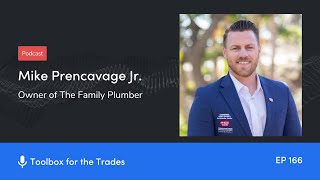
Interview-style podcast episode (Toolbox for the Trades) with Mike Prankavage Jr., owner of The Family Plumber (Orange County). Covers his path from second-generation successor through conflict and mediation to ownership, the importance of reputation and networking, practical succession-plan elements (black‑and‑white contracts, mediators, process documentation), and balancing new-technology adoption with traditional trade values and training. Also discusses leadership style, team culture, and growth ambitions.
Hello, contractors, and welcome to Toolbox for the Trades. My name is Jackie Aubel and today I'm chatting with Mike Prankavage Jr. The owner of the family plumber in Orange County. We talked about the unique struggles of coming into your own as a second generation owner, the power of networking and reputation, and we gave some best practices on how to consider succession planning. I hope you guys enjoyed this conversation as much as I did. Mike Prankavage Jr. You are the owner of the family plumber in Orange County. I am so excited to talk to you. Today we're going to get into the unique struggles of coming into your own as a second generation owner and we're going to talk about the importance of new school mentality with old school values. Welcome to the show.
Thank you. It's great to be here. This is awesome. Really cool.
It is really cool. We're in studio today. We're at Burbank Podcast Studios, a place that we've been coming back to time and time again with some of our local contractors. Local to me at least. So I so appreciate you making the drive up from OC and I just like, can't wait to get into it, honestly.
Me too. I mean, yeah, you talk about the drive. I mean, I sat in an hour and a half of traffic, but I'm certainly not complaining and it's great company, so I'm happy to be here.
Well, I'm very happy that you braved an hour and a half traffic. I've been on that 5 traffic myself and so I know the sacrifices you made. So I'm going to make sure you have a ton of fun in this next, you know, 45 minutes to an hour. Let's kick off the show with an icebreaker. So you're passionate about networking in the trades. I would like to know what's the best piece of advice you've gotten from another service entrepreneur?
So, yeah, I mean, there's plenty of advice, advice being tossed around, you know, especially in the plumbing community. What I love about the plumbing community is that everybody's more helpful than any other industry I've ever encountered. I actually previously was in the auto industry and I felt like people are just very closed off. Didn't want to give you advice or anything like that. But plumbing business owners are very open about their businesses. They're open about their employees, their processes and everything in between. And I feel like one of the biggest, you know, advisory suggestions that was ever given to me was regarding reputation. Reputation is everything. I mean, whether it comes to your personal reputation. But Primarily your company's reputation. Us being the family plumber, we have a lot to uphold with that name, the family plumber. We really have to stick to a value system as well as a. A great reputation that can't be tarnished in any way. So reputation's crucial. And there's different steps that we take, you know, to really try to emphasize that we. That our reputation is 100%. But you can lose your reputation overnight, and that's the scariest thing. You could spend, like our company history, 38 years developing a customer base, your employees, your networking and everything, and it can all go away within 24 hours, even, you know, blink of an eye, especially with social media and, and everything that's going on, you know, as far as exposure. So it's very scary. But at the same time, that was something that, that really stuck with me is reputations crucial.
I want to stick on this real quick because you mentioned that you have some, some steps in place to make sure that that is always top of mind. Can you go into those a little bit?
Yeah, I can go into a few. For me personally, I certainly. I get out there. You know, I'm. I'm at trade shows. I'm. I'm very visible. I serve the community. A couple different organizations, both nonprofit, profitable organizations in the plumbing industry. Outside of the plumbing industry, social media has always been big for me. So I try to stay very active on social. And some of the rules that I have in place for myself is things such as never talk bad on other people or other organizations. That's one of the biggest rules. Those companies, every company has its own culture, so you can't expect another company's culture to match your own, and you just have to be real to that. Also, when talking about generations, especially we're talking about it right now, you know, upcoming generations, nobody likes to look. Be looked down upon. So, you know, we have to be encouraging. So I try to be as encouraging as possible on any kind of social media outlets or anything that I'm doing. When it comes to my employees. A lot of owners that I talk to are very scared about their employees getting so out there, you know, on social media, about their, their plumbing techniques and, you know, things like that. I actually encourage our employees to go out and actually post their work. It does two things. It actually shows me that they're out there. They're very proud about what they're doing, as well as it showcases to my clients, too, especially if I'm reposting on our, our page, you know, the family Plumber page. It shows them that I'm engaged and that our employees are engaged and that they actually, they, they wholeheartedly love the trades and, and it's great. I think it's nothing but a benefit. Now the rules in place with that with my employees are we're not posting, you know, pictures of, you know, customers, you know, when they're, when they're not ready, or, you know, customers in general, but, you know, any kind of approval on property. There's, there's some guidelines to that, you know, not to get into specifics on this, but there's guidelines to it at all times. But I encourage it as much as possible to get out there and showcase your work. I think that's great.
No, I 100% agree with it. And I have to say, I wish I could think of a positive example, but my brain goes negative.
It always does. It always does.
There was an example I recently saw on my TikTok algorithm and it was a maternity hospital or some sort of like, not, not a ward, but like a maternity clinic, I believe. And there was a insurance salesman who was parking in the spots that are designated for recent mothers who are, you know, recovering from giving birth and need support with their very, very new infant. And for several days in a row, this insurance salesman parked in this spot and the nurses created a TikTok that went completely viral. I saw the follow up where like he wrote a handwritten note, he like made a donation, like all of this stuff. But it's true. And you know, you think about the family plumber, you're wearing your, your polo right now. Your employees are always out in your truck and you have to think about, you know, when they're associated with your brand. You know, every move they make is somewhat being watched and criticized. So I love that you put that at the forefront of what your business is trying to do.
Yeah, 100%. And I mean, even, even getting out there, you know, doing things like podcasts are always, you know, not only nerve wracking in the moment, but know you, you have an expectation after the fact that your employees are, are going to be watching this. So you have to showcase what you truly, genuinely are or else they're going to call you out. So I mean, it's, it's great, it's good and it's bad in between.
A hundred percent. Yeah. Okay, well, let's get into one of my main questions. We've already gone, we already like got right into some stuff, but I want to go into how you got into the trades you mentioned that you were in the auto industry for a bit, your second generation, you were born into it. Tell me your story. How did you get into the trades?
Yeah, so I've always been around the industry. My father actually started our company 38 years ago. So as I was growing up, middle school, high school, from what I recall, you know, it was understanding the aspects of the plumbing industry from a very overview type mentality. I wasn't getting into code knowledge or anything at that age, you know, high school, I was working the summer jobs with my dad, you know, digging, doing a lot of the labor type work, crawl space, attics. But what it did teach me is to be resilient. Resilient. It, you know, and also that in plumbing I always say this all the time, but plumbing is 50% mental, 50 physical. So I learned the physical aspect of it, but I also learned the mental aspect of it. To use the right tool and the appropriate time so that the physicality, you take the physicality out of it. So, so going through high school, I was working, you know, summers, weekends, things like that, just with my father at the time he only had a single truck, it was just himself. After a little stint in college as well, I decided that I wanted to pursue possibly taking over the company. This will be the first time I'm actually talking about this. So I usually don't talk about the short period of time in which I tried to work with my father to actually acquire the company. So, and the reason being is because it was so turmoil ish like it was literally. I, I hate to say it, but we got into pretty much almost a fist fight out in the parking lot. So very short period of time, thought, you know what, I'm going to come to the company, I'm going to try to take over the company or you know, go through a secession plan at that time. Didn't quite work out very well. So I kind of pivoted. I went to the auto industry for a little bit. I was a few years in the auto industry. That was a totally different experience, which was great in and of itself. Taught me a lot about customer service, taught me a lot about negotiating deals and invoicing and KPIs, which I never even knew what KPI stood for. So I learned a lot in the auto industry just based off that, spent three years in Boston, which was great in the auto industry. And then eventually moved back and said, you know what, I want to get back to the family company and I want to start growing it. And, and me and my father were a little bit better terms, but we'll probably get into that.
But yeah, a couple of years on different coasts, definitely.
We needed the separation.
Let you cool off. I have to ask, I mean, do you remember what it was that almost led to you and him coming fist to fist? I guess.
You are gonna love this.
I can't wait to do this.
The story goes. Because this is a Service Titan podcast. The story goes, I was trying to get us to move from paper invoices to electronic invoices. Now, at the time, it wasn't Service Titan. We were looking at another company, which I'm not gonna name on this, but. But anyway, Service Titan. The principle behind Service Titan and the organizational abilities of having a software program was something that was so intrigued about. I said, you know, d have to have this. He's like, well, we're just a one truck exercise. We don't need this huge dispatch board. I said, no, we're. We're setting ourselves up for the future. And it was just this constant butting of heads and, you know, other things played into it as well. Oh, we're going to lose data. We're not going to, you know, paper is the only way to go. And so I, I gave him an example one time. I said, you know what, look, we have file cabinets filled with customer information. All it takes is one fire and we lose our entire company. Right?
Yes.
So at the time, I mean, we had backup cloud service through Google with this company and a few other things, which is pretty standard now. But back then it was like nobody understood what cloud based software programs could do. Like the cloud was just this fictitious thing. Right. But now we understand, you know, it stores all of our data securely, safely. It allows us to not only do that, but also stay in compliance in certain states as well. California being probably one of the worst for privacy laws. So, yeah, so it's great. And it's just all automatic. So I think that that's great.
That's so funny. You know, I joined Service Titan in 2017, where I feel like we were still making that argument of you have to get off of pen and paper and you have to invest in software. And now in 2024, I don't have to make that argument anymore. Our sales team doesn't have to make that argument anymore. Now it's more like, well, what do you want? What are you trying to accomplish? But man, I can't.
So I was that younger guy, that second generational guy telling his dad, hey, look, here's this company that's coming out of, out of the, out of the woodworks and developing this program to make our lives easier. Like easy as that.
Oh my gosh. So, okay, so you had a bit after college. So what are you maybe like 19, 22 somewhere around there?
I was. Yeah. So I was 22 when I decided I wanted to move out and do auto. Do auto.
Okay, so you try to do this first. Dad, let me take this over. When you were still pretty young, went out to the auto industry for a couple years, learned some things you didn't learn from your dad. And then you come back and you're like, okay, let's try this again.
Yeah.
So today you are the owner of the family plumber. So tell me what was your experience like taking that ownership from your dad and getting to you where you are here today?
Yeah, so it started out turmoil. Ish. You know, you don't say. Yeah, you know, I definitely strongly recommend, you know, knee jerk reactions when you're working with family are just, they're so unproductive. So I think the biggest thing we, this whole experience of secession was like a roller coaster ride. I couldn't explain it any better. You have a climactic chain, you know, hill that you're being drum up and everything's going well and then you go over the hill and it's just like, okay, we're talking about marketing, we're talking about, you know, adding new employees and you know, what type of employees are we looking for specifically? So there was a lot of turmoil. But I would say, you know, some of the biggest things that we kind of fought about were, was the growth. You know, we, we've always thought differently. I certainly haven't thought, you know what I'm going to, I'm going to build this overnight into a 200, 300 million dollar company. I've been a little bit more reserved and you know, realistic to that, those facts. However, my father was kind of, he said, you know what, I have all the ambition to grow, I have all the ambition to grow this to $100 million. I just don't have the ability to. He's, he's a plumber through and sure. Yeah. Which you'll, you'll hear that story from most first generation owners. I'm a plumber. That's how I got started. You know, I, I was an apprentice. I got my journeyman's card, I got my C36 here in California. So you got your license, you started your company, but you were never a business owner. You couldn't put on the business Hat it was always the plumbing hat. So we struggled a lot with the business mindset, which I tried to bring at the beginning stages, but then we eventually, on the second go round, after I came back from Boston, we kind of met in the middle and he could see the light at the end of the tunnel. He could understand why we were, why we were taking more of a business approach to growing the company. One, it improves our lives as owners, you know, which is always amazing. But it improves. When you see employees that are going out, they're buying homes, they're buying their first car, even some of them, you know, if they're early 20s, you're seeing that all transpire and you're saying, look, we built an enterprise or a company or a ship, if you will, that will sail, you know, multiple people on safely. And it's, it's very rewarding. So when I pitched it to him in that regard on the business side of things, he kind of, kind of could understand why these changes were necessary, why we needed a software program to handle over dispatching our finance, made everything come together. So. But obviously everything did come together and it's been amazing since, so. And we, we've grown as a family. I mean, my, my brother is actually now, you know, working with me and I, I consider him a partner, you know, in this journey. And honestly, I couldn't do this sort of thing, you know, meeting with you as well as, you know, traveling to trade shows, being so involved with plumbing, heating cooling contractors of America, as much as I have been without his support back at the office. So that's been great as well.
That's so awesome. I mean, you've mentioned now this idea of succession. Tell me about a succession plan. Right, because you're now on the other side of it. You crossed over, you went, you rode the roller coaster, you got over that hill, whatever metaphor people want to use. But I would love to know, like, what are some tangible steps you put in place? I'm actually going to be speaking to a woman in a couple episodes from now who's kind of in the thick of it, and it would be great to kind of share like, your insights with her and maybe see some aha moments. So I would like to ask you, like, looking back on the actual succession plan, how did you make it and like, what were the rules of it? What were the parameters of that plan?
Yeah, so, I mean, that's, that's going to be an interesting podcast. Can't wait to hear that actually, because I, I've been through the thick of it. I can tell you, you know, with 100 certainty that everything should be in black and white. Everything should be written down. If you're, if you're making it, you should treat it as a transaction. It's a business transaction, whether it's with family or with a shop foreman that you're now transferring into a partial ownership type transaction. You would treat every secession plan the same, at least in my opinion. It should be in black and white. You should write out what your goals and objectives are. Start with that. If you guys, if, if a goal or an objective doesn't line up, it doesn't have to line up perfectly. But if you have two different viewpoints on which direction a company should go, start with that. Because if it's not working from the very beginning, just on a goal or mindset, I don't feel that a partnership's ever going to work. Right. So then you get into the thick of the specifics. Okay, if we're doing a purchase out, is it an asset purchase? Is this a sweat equity style deal which most family ran companies are secessionary with a sweat equity plan. So the, the kid comes up, grows up, doesn't quite have, you know, the financial backing to say, hey, I'm going to pay $2 million, $3 million, whatever that number is for the company. So father, mother, whoever owns the company at that point says, you know what, let's, let's go back to the drawing board. Let's try to figure out a way that you can work for the company. And the company pays me back. And I think that's probably 90% of the time, especially in a family secession plan, that you'll see that structure happen more recently. There's a lot of PE groups out there that are obviously coming in and they're purchasing companies. I don't really have an opinion, neither here nor there. I still believe in the old school values way of, of, you know, transferring ownership up through family. I think that that's great. One, it helps to show loyalty to employees as well as the community, especially communities like our community where our faces are pretty much on every piece of advertisement, whether it's with the high school, with the community center, everything like that. So they, they get to know our company, they get to know the owners on a personal level. And to see a PE group come in depends on the type of company that they're acquiring. But sometimes that doesn't always work out as planned. But, but for the most part it's, it's, it's been great to see you Know, the, the good come out of it, out of the secession plan, but definitely black and white. You know, just make sure you write everything down, make sure that the goals and objectives are there and then just fight like hell. I mean, just, I can't say it enough. Fight like hell, you know, in a good way. In a good way.
So fight like hell. I mean, that is quite a statement, right? I like what you had to say about coming together on the common goal and the common direction. It sounds like you really had to sell the vision to your dad. Like he was ambitious. He loved the idea of maybe making 100, $200 million company one day, but he just didn't have the skills. So it sounds like you really had to do some psychological work there to break it down. It's like this is how we can make that attainable. And also as we do this, we'll be able to support our employees better, support the community. And so you kind of, you really had to pitch the idea to him almost because I would imagine there's probably as someone who was in the trade. So how. So 34 years, the family plumber's been around 38. 38. How many years now have you been in the owner role?
So coming up on 10 years now. So it's, it's been a little while.
So your dad ran this business for 28 years the way he ran it, and here you are saying we're going to do everything differently. And I imagine you had to probably do a little bit of.
Yeah, a little bit of work. And to your point, I mean, it was the transition period. There was a lot of convincing. So I 100 agree with you. It's convincing. But to me, kind of like we tell our, our technicians, you're, you're not a salesman, you're informing. So you're being very informative. I kind of had to be that way towards my dad. Right. I had to be very informative. Hey, look, if you want this type of lifestyle for your employees, if you want this type of company, you want this type of reputation, this is what inevitably has to happen. So it wasn't really sales pitchy, it was just more informative, like, hey, this, this, this is the pathway. I mean, has to, has to go this way or else you're gonna deviate and you're never gonna see that growth that you wanna see 100%.
Now, your brother Mitchell is now in the business as well. You mentioned you have two sisters. I would love to know what was the family dynamic like as you were doing this? Convincing like, what was, I mean, obviously this was mainly between you and your dad, but you have a whole other family around. What, what was everyone saying? What was the vibe? Like?
Everybody said, and I, you know, my brother watched this, you know, a little bit later, but, but everybody said, no, there's no chance. And you know what, that we're ever joining the plumbing business. Right. Because we saw our father struggle and, and those are always the beginning stages of any plumbing company is that you're grinding.
Sure.
You're working 24 hours, seven days a week, it feels like. And so we saw our father up early at 3:00am, 4:00am and we're like, like we don't want any part of that. Right. You know, and that you grow up in that, that type of household and, and it does kind of detract from the, the, the benefits of actually being in the trades, you know, when you're seeing it live, you know, in that growth stage. However, you know, my brother's dynamic, my dynamic changed. I went into the automotive industry. My brother was a bio major, you know, did some work up in San Francisco, ended up coming back down. And inevitably the trades always brought us like back together. And we realized a little bit later, say later on in life, but mid-20s to late 20s, we realized, you know, what the trades in general helped to build what our childhood was. Right. So us growing up and seeing the, the hard start of the beginning process of a company really didn't give a good picture of, of what it's actually like to be in the trades. So we did all come full circle. Obviously now as an owner, we've grown the company and we've grown in our community as well. So my, my sisters are all, you know, you know, they check in from time to time. They're not involved with the company at all right now, but I'd love for them to, I mean, I think that that would be amazing to have. You know, my youngest sister, you know, she's a, in veterinarian school and, and so she's more dealing with animals, but she's also in the service industry. So she, she understands, you know, the struggles here and there of, of taking care of clients and patients, you know, animal patients, if you will. The family's extremely proud to say that we're in the plumbing community and that we own the company. That we do. The family plumber.
Very, very cool. You know, when we first spoke, you said something to me that really stuck with me. As a second generation owner. You wanted to make sure that owners out there today who maybe have a vision of passing their asset down to their children. You want them to show their kids the value of the business. So you just mentioned your vision of the trades. When you were growing up, was dad waking up at 3am, 4am and working his butt off and you're like, that doesn't seem great. So what do you think folks should be doing now if they envision this for. If they envision creating an asset now that's going to be passed down to their own kids.
Yeah. So I think process is number one. If you're thinking of starting a session, you know, or starting a plan to bring somebody into place to possibly take over your company if you don't have any processes in place, such as Service Titan or a software program to begin with, but also your employee relations processes, even down to how the coffee maker works at the office. Right?
Yeah.
If you don't have those processes in line prior to even considering a transaction like that, where you're about to pass it on, you make it so much harder on yourself as well as the person that's acquiring the company to, to make that transition as seamless as possible. So it's very important to make sure that process is in place. Reputation. I go back to reputation. Company has to have a great reputation. So the last thing you want to do is ruin your reputation before you then transfer ownership to your, your family, relative or employee. Employees or pe.
I mean, this is, this is. I think that, I mean, you know, we can get into EBITDA and all of that stuff, but you know, I think this is also relevant for even now, like thinking about who's going to take over the business when you are no longer there.
Yeah, yeah. And it's, it's true. And in any entity that's going to come into the company. Yeah. You have to have a good reputation. So that's, that's definitely a critical, critical pivot point.
Yeah. Yeah. So interesting. I had someone, I have to look back, I'm so bummed. I can't think of their name, but I will make sure it's linked in the show notes. We had someone come on, I think maybe around episode 50 or 60, whose unfortunately their father passed away very suddenly and had truly no systems, no processes, nothing written down. And it was just a total scramble for, you know, 10 months just figuring out how to run the business. I actually had someone on a couple episodes prior to this one who came on board and her family, her brothers were working in the business and they would, they would write down invoices on like Plywood. Pieces of plywood. And like they would have to process scrolls.
Like they're putting out scrolls.
No, like it was like, oh, I didn't have paper, so I just wrote it on this piece of ply.
Here you go.
And so it's like, you know, by having those systems and processes, you're putting those things in place so that people, the people that, you know, you want to take this legacy and run with it and do well with it. You know, you don't want them struggling right at the end, the beginning. You don't want them burning out without having all of those things in place.
I agree. Yeah. 100. It sounds easy, but it never is.
I know. So, okay, let's talk. So preserving the reputation, getting all of your checks and balances in place, right. Did you ever have like a mediator or anyone to help you and your dad work together?
Yeah. So when I, when I talk black and white, you know, paper, obviously there, there's a contract involved. With any secession plan, I feel like there should never be just a handshake. And that's just a personal opinion. I mean, we're just not in that day and age where a handshake suffices anymore. So there was a mediator between the transaction between me and my father. And I think it was necessary, but it was actually a good experience because you have that third party coming in with a different mindset and a different approach and that person may have already seen a transaction happen that's similar to yours. So I would strongly suggest, to your point, a mediator during this, this transition, succession period, fine tune everything that everybody's looking for in that contract, what they see as the final outcome for the company, short term and long term, and depending on how long the contract stems out, you know what the payouts are going to be. What if it's sweat equity? How does that look? And do I, do I earn ownership as I'm working or do I get a lump sum at the end? All those questions. Mediators are great to work with with. There's, there's few companies that you'll find that are willing to work with smaller businesses on acquisitions, but there are companies out there, so you can find them online. You can find them typically through like a local organization. I'm just a part of the Plumbing Heating Cooling Contractors association and I found our mediator actually through that, that organization. So you can find it through the plumbing trade, industry, networking. I mean, ask anybody. You can ask me who my mediator is if you're in Orange County. I'LL be more than happy to share it, but. But it's definitely important for sure to have that third party.
So is your father still in the business?
He is not. He's completely retired.
Love that. So tell me, you know, so when we agree, when you guys agreed, we're doing this, you're transferring ownership over to Mike Junior. What. How long did it take? Like from yes to Bye, Dad.
So the anticipated time of the secession plan from start to finish. Finish was supposed to be 60 days. It took close to a year.
Sure.
So. And in that year, not to go into too much detail, but I'll. I'll just give a highlight overview is I think price of the company. It came down to price, which was always the biggest, the biggest question on everybody's mind. How much is my company valued? There's. When you're evaluating for a PE firm or just interpersonal evaluation amongst family or friends, if you're selling a company to me, I want to know what's your value. And in the plumbing industry, there's so many variables to that. So there's, there's ebitda, obviously, there's what I've always heard to and referred to as blue sky value, which is a customer's value or a customer's perception of your company. So your, your actual integrity in the community and, and all that value that builds the company. So the negotiation process for us was a lot on that. The argument was I spent 28 years in the industry. You know, I built this value. This is that understanding of value that isn't on a PNL statement, but rather it's just there, that blue sky value. So we really had to have a lot of discussion behind price. And then the, the vision, the vision transitioned, which was great that I had that first stint with my father, because if I didn't have that, we would have started that on, on the go around when I came back to the company and we would have been less far. But I think with the realization that, hey, there are newer ways to do things, there's more organized ways to do things, there's process involved. The setting the goals part of the secession plan went really quickly. So we were both on the same page when it came to that. The last thing was taking care of our employees. It was understanding that we have some employees that have been with my father for at that point in time, about 10 years or more. And so here, here comes Mike Jr.
You know, they met when he was a teenager.
Exactly.
Yeah.
I mean, it was. And it truly honestly was that. I mean we have a gentleman that still works for us, and, and his daughter is, you know, just. Just slightly younger than. Than my brother, you know, so we're, We're. We're trying to do this transition, and there's kind of that respect level of like, wait, wait, wait. Mike Senior started all this. You know, Mike Jr. Is just coming in and, you know, taking over and all this stuff. So we actually methodically laid out a transition program, in which case I kind of fell into line with the company. We did, you know, a lot of events where I was hosting them myself, so that it kind of showed face that, you know, look, I. I'm an integral part of this company, and it's not just this old, you know, relic tale of the sun coming in and he's just taking over and, you know, it's going to. Everything's going to hit the fan type thing. So. So we. We had to negotiate all that out as well. Like, how that looked. You. So all those little annuances, those little small things were very important in the beginning stages, but that. That whole process took a whole year to get that down path.
I want to know, like, you're. You've done a really fantastic job in these last couple of minutes, really, just talking about the actual logistics of. Of implementing a succession plan coming in, while also being really honest and open about the challenges. I want to pivot really quickly into you as a person, you as Mike Junior. Like, what. How did it feel like for you taking on this ownership roll, this helm, because you were still in your late 20s when this was happening? Yeah, mid-20s.
Mid-20s. Mid-20th, yeah.
So you're still kind of. The brain isn't fully developed until you're 25. So I want to know what this whole process was like for you. Were you feeling a ton of imposter syndrome? Were you feeling a ton of, like, I don't know what the heck I'm doing, but I'm going to show up anyway.
Yeah. So I, I think from. From my experience prior, which was a very aggressive approach. It was like, I know. I know what I'm doing. This is what we need to do. I took more of a subtle, informative approach, and I genuinely, I admitted to my employees I'm not perfect. I think that's very crucial as a business owner or just as a human being in general. Like, we're not. We're not all perfect. Right. And the minute you can recognize your faults, the quicker you can learn from them. So that was one of the biggest things for me, and that's who I am is that I try to express myself as I genuinely. This is my goal. I want to see this happen. Call it manifestation, whatever you want to call it, but I want to work as hard as I can to reach this goal. And along the way, I'm willing to say, hey, I messed up, you know, or, hey, I should have done this better, because that's the only way you're going to reach that goal quickly. The type of mindset that I've steered away from is that I know everything, get out of my way. You know, I run this business and almost like a dictator type mentality and feel that that's very. If you're walking into a company, especially a trade company, and you're. You're running it like a dictatorship, it's. It's never going to be successful.
Not at this. Not at this stage.
No.
Not in 2024 for sure.
No, absolutely not. Yeah. And it. The industry is developed to actually shun those types of people. I mean, almost overnight.
I mean, we're dealing with the consequences of the industry being like that a few decades ago. The fact that everyone's like, the skills, the skilled trades gap, like that is because, you know, my dad's a carpenter. I talk about it on the show all the time. But, you know, I'm a woman. And that's many reasons why that was never encouraged for me. But I guarantee you, if I was not, I don't think my dad would necessarily encourage the trades.
Yeah.
Because it, it broke his body. It was really intense. And I know there were a bunch of people I've interviewed on this show who didn't see their children coming into us. Like, no, I don't do this.
I think I share a lot in common with a good friend of mine, John Akoyan. Yeah. Rooter hero. So. So we talked about this not too long ago, but we talked about how, you know, we share too much. That's. It sometimes gets us into trouble. And I'm a very transparent person, so I wear my heart on my sleeve. So whether, you know, you're a friend or you're a family member or you're an employee. I do. I. If I have a thought, I'm sharing it, you know. Now, granted, not all thoughts get expressed, but, you know, in. In terms of the way that I approach my employees and I approach our team and I always ref. It as a team is I want everybody included on decisions, so it takes the weight off my shoulders, as weird as that sounds. But business owners that are running a dictatorship that feel like, oh, you know, my end all, be all decision is what drives us forward. You'd be surprised to understand that when you run a group meeting or you bring other people, you know, who are great people in your organization, whether they're managers or down to technicians or apprentices, you bring them in on the conversation. So much more productivity comes out of it. And you actually get mindsets from the top of the company down to the bottom. And to get that wider perspective, you really need that to, to build a company up. So I think that's truly important.
Okay. You just told me that you wear your heart on your sleeve and you're very transparent. So I'm going to push you just a little bit further with this question.
Let's do it.
I love the humility component. I, I, that's a personal value of mine too. I'm also very forward, maybe too much, but what was it, Was it therapy? Was it a leadership book? Was it like, you know, did you, it's all that medication and like. No. Yeah.
No, no, no, no. Honestly, I just, growing up in the trades, once again, I go back to my dad, you know, his need to build a company and work those long hours. I just wholeheartedly respect my father. And I think that what he ingrained in me at a younger age was you have to persevere. I, I played, I played sports, and I encourage anybody that has, you know, kids that they get them into something. It doesn't have to be, I played football, but it doesn't have to be football per se. It has to be something where they're regimented, that they wake up at a certain time, they have to get to a practice and, or a meet or something like that. I think that that's, that's something that played into that mindset. And the team building mindset really was developed at that, at that time as well, playing sports and being so involved as I did. Um, but it's, it's just been a mindset that's kind of grown with me over, over time. And I'm a very, I like to, some people call me extroverted because I'm networking.
If you tell me you're not an extrovert, I'm gonna, like, I'm gonna fall out of this.
I will say, I don't know, I want to put a percentage behind it, but I'm extroverted, but also introverted as well. So people that truly, truly are in my inner circle understand that I'm, I'm kind of quiet on my own own Accord, but.
So you could be an ambivert that's also an option.
Ambivert.
Yeah, exactly. I actually identify with that as well. I can be very extroverted. But I do need, need inter, I do need solo time to recharge.
Solo time? Yeah, just to, just to digress everything, you know, and, and process things. I'm a great listener. So it's not that I'm not engaged sometimes as well. A lot of people, if I'm, if I'm in a group and I'm networking, I'm actually, I love and I enjoy listening. Like, I don't want to be the loudest guy in the room.
Oh, same.
I, I feel like if I'm the loudest guy, I feel like everybody at the end of that conversation just got done judging me, like you wouldn't believe. So I like to sit there, I like to listen. That's one of my, my biggest things. I think it's a good quality.
I think it's a good quality as well. We've been going, I mean, dude, I absolutely loved chatting with you and I want to make sure we cover a couple more things. Of course. Actually, I want to know this. Given that what you went through as a second generation owner, do you envision handing the business off to a generation after you? What do you have in store for the business as you look forward into, you know, so decades from now?
So I'm 34 years old and, and you know. Yeah, and at this age, I mean age is just a number first and foremost. So. But I, I'm also, you know, I, I, I do not have a wife. I do not have kids, you know, so it's kind of just me running solo right now with the, with the company. And I think at this point I have no secession plans in place for existing employees. However, I've, I have in the back of my head, and this might be premature to say, but there's, there's a couple individuals that I see within our organization. As long as they stick with it, I completely see them possibly being partners and, or complete owners at some point. I think that that shift is more than likely five, you know, five to eight years down the line. I don't think that's anytime soon. I certainly, I've been approached by many companies. I'm sure you've had company owners on this podcast before. I'm approached by PE groups a lot. You know, they like what we're doing, they like the size of our company, which is, you know, small to mid size, 22 trucks.
Right.
Yeah. So it's, it's still smaller. I mean we're not, we're not the next gens. We're not, you know, yet. We're not yet. But, but I, I like the, the growth phase. So I think for me even getting a, an offer, you know, outside of a secession plan or setting one up, I, it would have to be a huge number because I, I'm passionate about our company and I'm passionate about the growth. So. So I guess there's really no specific answer for me just yet on that.
Sure. No.
Yeah. But I'm excited to see the future of our company and the growth of our company and our employees.
I do love that you already have folks like kind of in your mind like, oh yeah, that person would actually be a really great leader. I think that's really nice and good proactive thinking because as we said, you could get hit by a bus tomorrow and what are people going to do? I do not wish that upon you. It was just my attempt at a very, at a kind of a bad joke.
Oh, I agree. I agree.
Let's go back to the new school mentality with old school values. So you know, example of you being, you know, college age, telling your dad to bring on software, he's like, no, you guys almost getting into a fistfight. How are you trying? I know that's something really important to you now as you continue to grow the family plumber, keeping that new school mentality with old school values. Tell me a little bit more about that.
Yeah, so that, that saying is great. At least in my mind. It's been told to me that maybe it's a little offensive to, to older generational people because I'm saying old school. I guess I should.
Old school can be very good in a lot of things. I think old school can be a very good compliment.
I, I think so too.
I think so.
However I've gotten the hate, I, I understand. So maybe I, I could rephrase it in two different ways. I could say it's more traditional, so traditional school values. But going back to the new school mentality in that saying that, that I, I emphasize new school mentality is really an open mindset. So the more closed off you are, anybody, whether you're a technician, whether you're an apprentice, whether you're a business owner, that closed mindset will never progress you further in life, in your company, in your employees lives. So I think the new school mentality is to have an open mindset. In doing so, you're going to embrace Technology, which I think is very crucial. And I think that we could talk about a whole subject topic on AI technology, dispatching programs and things like that, especially that service titan's on the forefront of, and we appreciate service titan for all that they do on that. But going back to technology is one of those mindsets and new school mindsets that you need to have, you need to embrace it. I go back to that 50, 50 rule. I have 50% of plumbing's mental, 50% physical. The more mental side of it it that you understand, the better tools you're equipped with, the less physicality there is. So new school mentality is very important. And I'll describe it as old school values or old traditions or traditions just in general, just traditions, traditions. So the traditions aspect of it. We as an industry see business owners or companies grow very quickly and I think that that's amazing. And I hope that the family plumber grows just as quickly or, you know, sustainably. I think in my personal opinion, there are situations, I'm not going to give examples, but there's situations of companies that have grown maybe too fast to understand the professionalism. Going back to the actual work that we're doing, plumbing is, it's a, it's a profession, it's a career path. It's workmanship. If you can imagine, the work that you do today in plumbing is going to be there for 20, 30 years, maybe even to the point where you're retired. And then you're going to drive past that house and you're going to be like, oh, I installed that ball valve or I installed whatever, you know, and, and so going back to the professionalism aspect of it, traditionally, I think that it's very important that you go to school, you go to an approved trade school or you get a proper training program. You serve your tenor, you know, and you really build yourself up to understand the do's and don'ts of plumbing. There's the rule book and then there's. Obviously there's real world knowledge and you need to learn them both. But the rule book you could study in a matter of a couple months. That's a lot easier. It's the doing the process and understanding how the real world aspects of plumbing work. Because not every job site's the same. So I think it's very important that that takes time to nurture. And companies that think that it just happens in 30 days and we're going to send this guy out into a truck, that he must be an amazing guy, because I've never seen that before. So. So that traditional value is one of those things that I stand by. I think that all of our employees are properly trained. We have them in trade school program through phcc, which I'm very proud to say that I've ran that trade school amazing for a few years now and I still serve as vice president of the education board. So training is very, very important to me and my organization. I think it should be that way for Everybody in general.
100 no, I think training is so important. We're a lot of talk right now is about how, you know, the trades had this giant boom with COVID and now we're kind of feeling the blowback of that. A lot of work that was. Yeah, you know what it's about. And a lot of our internal experts at Service Titan are saying, you know, this is really a time to focus in on training. This is a time to really like tighten any loose ends. And so I love that you have that type of focus on it.
Yeah, yeah. New school, going back to new school mentality to technology, embracing technology on the training side of things as well. There's companies out there that are doing amazing things, you know, when it comes to utilizing technology to do that, that onboarding training and I'll name a few Interplay Technologies as well as, you know, Nexar, which we're a part of, NextStar Network and their NexTech Academy. All online virtual based style learning. That virtual based style learning can work for some companies and I think, I genuinely think that that does suffice in some instances. You still need that real world experience. But to help solidify your knowledge base on the, on the book aspect of things, understanding codes and actually seeing it in maybe a VR world is just the endless opportunities, the endless possibilities are astounding for the plumbing industry.
Interplay. Do you know Ken Midget?
I have not met Ken, no. But I follow him on social media.
He's gonna be on this podcast in a couple of weeks. Yeah, he actually is the mentor of Paige the plumber who's a 20 year old. I do know Paige Plumber in Pennsylvania. I had her on the podcast in December. So yep, yeah, all coming together.
Yeah.
Such a small world.
Yeah. Paige is amazing. Actually. I worked not exclusively, but I worked very in depth with American Plumber Stories on their first season, second season, a lot of the. The plumbers were either suggested or referred to from. From me. So Quinn Williams plumbing in Montana is a really good friend of mine. I said, you know what, he has a great story. So I expressed it to Them and they, they brought him on board and Amazing George the plumber out in New Jersey, which was great. So yeah, it's, it's really neat. It's, it's been a great, great little. I'm telling you, networking just goes so far.
Yeah, I mean I think you and I basically have the same phone book at this point.
Yeah, pretty much. Yeah.
I was going to say Rolodex, which honestly a, a term that out that is older than both you and I. And I was like, why am I. I was like phone book, our contacts app in our iPhones. There you go.
There you go.
You were Contractor of the Year. Voted contractor of the Year from contractor mag in 2023. Congratulations.
Thank you.
That article is fantastic. I want to give you a chance to love on yourself a little bit. How did that feel?
This, this doesn't feel natural. Like everybody see this is where the introvert comes out is like I, yeah, I get a compliment like that and I just defer it back to honestly it felt great to not only be nominated but then actually win the award. And I, I circle back to our team. I had a huge meeting with our team members immediately after we were voted contractor of the Year and I found out before the article was even published that it's because of you, you guys and gals. It's because of you guys that we're, we're here today. And I genuinely mean that with my whole heart. Our guys and gals in the office and out in the field, they, they understand the vision of the company which is we, our, our slogan is just like having a plumber in the family and we genuinely express that when we walk through the front door of our clients homes. So we've expressed that time and time again. We have a history of doing that for 38 years. All of that built up now to also just a cherry on top would be my involvement, you know, with the non profit organizations within the trade community as well as supporting local non profits as well as organizations, youth center, things like that kind of all came together in 2023 and, and genuinely got recognized at a national level, which was amazing. And I guess the long and short of it is I'm just super, super happy and proud of, proud of our team and proud of the family plumber in general for doing it. It's awesome.
That's awesome. All right, I have a final question for you then. I want to give you some chance to say anything you want to say. Actually before I even get to. It's kind of a funny question did you, Is there anything we should have talked about that we didn't get a.
Chance to, you know, we covered a lot, actually. I'll say, actually. So as it relates to networking, networking is one of those most important things that you should never put on the back burner. If you are introverted, figure out how to become extroverted, even just in those slight moments. Because when you go out and you experience trade shows, I'll give that as probably the, the most common thing you can network at is a trade show. You're going out, you're meeting not only with vendors, which you're negotiating deals on, whether it's for equipment or material or anything like that, but you're also networking with other business owners, guys that have spent years and years in the trades. They, they've been there, they've done that. I go back to the tradition, the old school values. They know all that. So if you can spend, even, I can spend 10 minutes with another business owner and get, I call them little nuggets. I'll get like a little nugget out of the conversation that I'll take back and I'll be like, you know what? I think I can implement that, you know, or, or I can maybe tweak it, make it my own type thing. Learning those do's and don'ts is so important. And networking is the only, only way that you'll be able to do that, you know, So I love that.
Okay, this is my final question for you. If you called your brother Mitchell and told him you were in jail, what would he assume you were in jail for?
My brother Mitchell? Oh, man, I would have to be in some real hurt to give him a call for him to be my, my lifeline. But, oh man, I mean, in a good way to compliment him because I, I would be so scared. I would be, I would be more scared to be in jail or, excuse me, I would be more scared if I had to make that phone call to him than to be in jail, to be honest, because I feel like I've, I've let him down, I let the family down. So not to turn it dark, I guess, specifically, I don't know. You know, I, I've been told I'm kind of a straight edge, so I, I don't know. I, I, I would hope. I don't thieve anything, I don't steal anything, but I, I don't know the particular situation, but I, I do know I would be more afraid to make the phone call to my brother than I would to actually stay in jail, I would actually say, you know what, Mr. Police Officer, I'm good. I don't need a phone call right now. I'll pass.
You know what? It's fine. Just I can be here as long as you need me. Yeah, don't worry about it. You know, I just get the WI Fi password. That would be great.
Already made the bed. We're good. You know, you got enough TP in the bathroom. We're all set.
We're fine. The bathroom? You mean the toilet that's just in the cell, right? Mike Jr. This was such a fun episode for me. Thank you so much for coming down from Orange county to talk with me in person. This was so great. You were an awesome guest. Thank you so much for being a guest.
Thank you for inviting me. This is. This is amazing. This is a great experience. I appreciate it. Thank you so much.
Yeah, of course.
More from Bill



ServiceTitan Virtual Agents: Simplify Before You Scale | Podcast Ep. 110 | Mastering ServiceTitan



Life After Live Events: How to Turn Post-Conference Energy into Real Profits | Podcast Ep. 297




