Bogomil Balkansky - What does Sequoia look for in startups? || Inovo Podcast #1
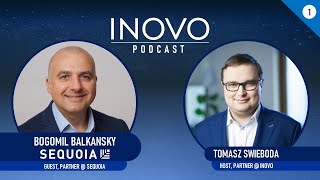
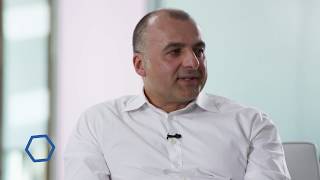
Bogomil Balkansky, a partner at Sequoia Capital, looks for two things in startups: a massive ten-year market opportunity and an exceptional, tenacious founding team. Sequoia moves fast, deciding within a week to ten days, and will engage with founders at the idea stage. The firm recently expanded to Europe and sees strong technical talent in Central and Eastern Europe.
Chapters
Hi, this is Tamar Shyboda. I'm a partner at Inovo, a VC fund focused on Poland and Central Europe. This is the very first episode of Inova podcast in which we are aiming the founders from the region to build global tech companies. Today we are hosting Bogomil Balkanski, a partner at Sequoia, one of the best VC funds globally. If you are interested in what Sequoia needs to invest or how Bogomil will support your company after the investment, it's definitely a podcast for you. Let's start. Hi Bogomil.
Hi Tomasz.
Pleasure to have you here. Bogumil, if we could start with your story and you could share a couple of words about yourself.
Of course. As you mentioned, I'm a partner at Sequoia Capital. We're one of the leading venture firms in Silicon valley in the U.S. i think it's fair to say that we are the firm that invented venture capital. As such, we have been in existence for 49 years. We'll be celebrating our 50 year anniversary like next year. And over the years we have partnered with many companies that all of your listeners would have heard of. Apple, Cisco, and more recently companies like Airbnb, DoorDash, and many others. My personal story is I actually grew up in Bulgaria and came to the US 29 years ago in 1991. I belong to that lucky generation of Eastern Europeans in the sense that I finished high school a year after the Berlin Wall fell and I jumped on the very first chance to come to the US and get an education. So I came here for college and ended up sticking around and making life for myself in the us. I have lived in the Bay Area for the last 22 years. What brought me to the Bay Area originally was going to stanford for my MBA and that was in 1998 through 2000, which if you remember was the very peak of the dot com wave. And so I found myself smack in the middle of all these exciting things happening around the Internet. And I ended up taking a job in a technology startup when I finished my MBA and I have been working in technology ever since. So 20 year career as an operational executive in software companies, always in B2B enterprise. And my entire career I led product management and product marketing teams for various enterprise solutions kind of up and down the technology stack, from deep data center infrastructure to SaaS, apps and anything in between. I spent quite a few years at VMware focusing on data center infrastructure. Before VMware I worked at Siebel Systems, which was the leader in CRM software at the time after VMware, I went to a startup but got acquired at Google. So I spent a couple of years at Google and I ended up joining Sequoia earlier this year.
Okay, so it's your first time as an investor or did you invest before as well?
I'm a recent professional investor, but before that I had been an angel investor for probably a decade and I also have been a board member at various technology companies for almost a decade.
That's an amazing story. Thank you for sharing this. So what kind of companies do you focus on right now when you invest?
I personally focus on enterprise technology, very broadly defined. And by the way, if you just look at our portfolio by the numbers, majority of the companies that we partner with are enterprise companies. I don't specialize any more narrowly than that. And Sequoia's approach is for all of us to be generalists. The reason for that is that markets come and go, certain markets heat up and there's a lot of innovation in them. And then a decade later the pockets of innovation move to something else. And from that perspective would be somewhat dangerous approach as a VC to narrowly focus on particular markets. So again, I'm like all of my colleagues at Sequoia, I'm a generalist within enterprise.
Okay, and do you focus on stage?
Yes, I am part of the early stage team Sequoia has. The Sequoia investing team is divided into two teams, early stage and growth. The early stage team in the classic definition focuses on seed and series A, and the growth team focuses on serious B and beyond. However, these days there has been like such an inflation in the lettering. If you want what you call seed versus series A. And now we're even talking about pre seed. And I'm really joking with colleagues and founders that a few years from now I'm sure we'll be talking about the pre, pre pre seed round. And so the lettering convention has become pretty meaningless these days. And so the easiest way to define kind of where the boundary is between early stage investing and growth investing is the check size. One thing that I want to emphasize is that Sequoia partners with companies very early on. It's never too early to engage with us, and no check is too small for us. We have a great track record of having partnered with companies very early on before they have written a single line of code or in some instances we have incubated companies. That means that we work with the founder very early on to help them explore their market, define their product, et cetera. A company like Palo Alto Networks, which is a large publicly traded security software company, was a Sequoia incubation many years ago. And so I would really encourage founders to think of Sequoia early on in their founder journey.
So even the Polish or outside of the US Founder, that includes them as.
Well, that includes founders in Europe for sure. Early in the year, a few months ago, we actually made an announcement that we hired our first partner who is going to based in London in order to extend our coverage in Europe. This partner is not going to be a lonely person sitting in an office by herself. This is just the beginning of our European coverage and our European operation. Now, we're not new to investing in Europe. We have partners with European founders before. But this year is really the beginning of us having a local presence in Europe. So, yes, absolutely. Partnering with European and specifically Eastern European founders is something that we're very serious about.
Okay, can you comment? You mentioned you're a generalist, but there are definitely things which you love or things which interest you more. Can you comment on a deal which would be interesting from you immediately? If I see a deal, I should know that I should definitely send this to you.
Because I'm a generalist. I would say that the way we think about investments really comes down to two things. First and foremost, we obsess about the market size. In other words, whatever a product idea is that the founders has, can we imagine then this product can be sold to enough people for enough money so that maybe 10 years down the road you generate 300 million, 400 million, 500 million revenue. This is absolutely the first thing that we think about. And market size is the deciding argument for us to invest or not invest. Now, the keyword that I want to emphasize here is that we need to be able to imagine that the company could be generating hundreds of millions in revenue 10 years down the road. And I say imagine because very often we partner with companies that break new ground. We partner with companies that create new markets, and we love these companies. So it's not a matter of finding an established market and coming to us with a Gartner report that says that the market for X, Y and Z is $10 billion. Because by the way, the fact that some other companies are making $10 billion in some market doesn't entitle you to a single cent of as a startup. And on the flip side, there are companies that are doing something new and innovative, so there's not an established market. But again, the key thing that we try to wrap our minds around is can we imagine that There'll be a really big market for this particular product. And the second thing that we're looking for is an exceptional team. And exceptional team is not as simple as, oh, a founder who has worked at a blue chip company. Right. Exceptional team doesn't mean somebody who has worked at a Google or something like that. Exceptional team means founders who have a set of exceptional qualities in some dimension. They need to be exceptional. Not in all dimension, but at least in one dimension. They can be an exceptional technologist, they can be an exceptional salesman, they can be an exceptional marketer. We always look for founders who are exceptional in some dimension. And we're looking for founders who are daring, we're looking for founders who are bold, who dream big, who, who have big ambition, and founders who have tenacity. In other words, founders who obsess about their ideas, who are willing to fight for their ideas, like through good times and bad times. Tenacity is very, very important because the startup journey is a long one. Right. The overnight Successes usually take 10 years to become overnight successes. Of course, over the 10 year period there'll be good moments, but there'll be a lot of tough moments. We are always looking for founders who are willing to persevere. Thomas, back to your question. What kind of companies you should send to us immediately? Well, if you come across something that you can imagine will be a huge market 10 years from now, and it's founded by a team that has some of these team dynamics and team ingredients, for sure, our way.
Okay.
And I really, the reason I answered the question that way is that we're not looking for a specific technology or specific domain. So I'm not going to tell you. Oh, if you find a security company or observability company or a marketing automation company, send it my way. That's not how we think about investments.
Okay. So if I find something I believe will have $400 million revenue and the team is there, like also ambitious and willing to deliver, this is the kind of company I should send you.
Precisely.
Okay, done. So we have a deal. That's very, very interesting. Out of the two, my understanding is that market is also something that more drives you even than the teams. This is. Would you say so?
Yeah. I mean, listen, I feel market always wins. And one of the valuable things that I learned back in business school, I had this business school professor who used to tell us it's better to be a mediocre company in a great market rather than to be an excellent company in a mediocre market. So I think at the end of the day, market always wins. So, yes, that's why we always think about our investments first with market in mind.
Okay, I would assume that's not an investment for you, but I will take two cases which I recently analyzed and we can discuss them. I don't want to do it on the name basis, but for example, we have a company which is. It's a marketplace, I would say quite innovative, but they are operating on the Polish market, and the Polish market is quite big. So the idea is to win the Polish market first. And let's assume the Polish market has the potential. When we analyze that, it will have 40, 50 million of revenue, meaning net commission. And, you know, if they go outside of Poland, of Poland, and are successful in Western Europe or the US then I can easily imagine that they get to 500 million. But they plan for the next two, three years is actually winning Poland. They want to go abroad, but they are clear. And in my opinion, it makes sense that they have to win, you know, one market, show the unique economics, show that it works, and then they can go abroad. I would assume this is not enough for having this 500 million vision, or that's something that would work for you.
The way you're describing it, it actually sounds very interesting. Here is why. We as a firm have a lot of experience with marketplaces. Take companies like Airbnb or DoorDash are great examples of marketplaces where we are also partners with a company called Thumbtack, which is a marketplace. So over the years, we have seen what works and what doesn't work in marketplaces. And if you look at how marketplaces develop, they always establish themselves in some limited market.
Yeah, some.
Let's say when Uber first came out, and Uber is another marketplace, like drivers and riders, for the first couple of years, Uber only operated in San Francisco, and they proved out the model in San Francisco. And then they started their expansion in other metropolitan areas, like in the US they went to New York and like everywhere else, but they approached each metropolitan market as a very local market. They hired the general manager in every metropolitan area because you need to create the marketplace dynamics in every market from scratch. The fact that you have a bunch of users in San Francisco and you have a bunch of drivers in San Francisco doesn't help you at all in New York. In New York, you're starting from scratch. You need to acquire both the local drivers and the local riders to get the marketplace dynamics going. So the nature of a lot of marketplaces is that they're very local. And because of that, there is no way around it. You need to first prove the model in some locality, and then you can stamp it out and start expanding in other localities. And so what you're describing is, okay, so this company will start with the Polish market. The Polish market on its own, if you think that the Polish market can support 40, 50 million in revenue, but it's very, very attractive, because just judging by the size of the economy, if they can make 40, 50 million in Poland, they can probably make 3, 4, 5 times that in Germany, etc. So this may have the beginnings of a large company. The thing that, if I was looking at that investment, the thing that I really tried to analyze very carefully, is if the market dynamics in every country are repeatable. In other words, if you build a model in Poland, is that same model going to work outside of Poland, or are there reason to believe that, you know what, the model is not easily repeatable outside of Poland. So the example that I gave you with Uber in the U.S. or Airbnb in the U.S. if you start the model in San Francisco and then you want to transplant it to New York, it's still the same market in terms of regulation, in terms of language, in terms of currency, in terms of buyer preferences, et cetera. It's easy to believe that if it works in San Francisco, it's going to work in New York, and it's going to work in Dallas, and it's going to work in Chicago, et cetera. Again, I don't know enough about the company to know if it's going to work in Poland, is it going to work in Germany? But this is the kind of analysis that I'll go through.
Okay, And so maybe going on your analysis, how much time do you need to take a decision on a deal?
We can move very quickly. Typically, we go through our entire process in a week to 10 days max. You know, we never prolong that process, like more than 10 days.
Okay, that's. That's very quickly. So, yeah, another discussion we had recently with our company, we invested in the company with some notable investors. They have, like, very good international, international investors. And there is this discussion whether they should grow at all costs or whether they should grow profitably, which is, you know, a probably big discussion in general in the VC space. Do you have. Do you have. How do you perceive it?
I mean, listen, I think that the market moods are very cyclical. I would say that before COVID hit us all, we're living in an environment of grow at all cost. Why? Because it was possible because the public markets were very buoyant. And by the way, the venture capital markets always take cue from the public markets. As long as the public markets are doing well, the venture markets are doing well. And in an environment like that, it was easier and easier for startups to raise capital, to raise money. Valuation were increasing, which means that capital was becoming cheaper and cheaper. And so if you have cheap capital, why not grow at all costs? Now, reality changed end of February, beginning of March, where, Well, I mean, the stock market went down, but more importantly, the real economy across the globe is suffering. And it's pretty clear that we are in a deep global recession. We don't know how long that recession is going to last. And so I think it's prudent for every company, like be it a startup or larger company, to conserve cash. In situations like that. Cash is king. And so I actually think that in the short term, the biggest priority for every startup is survival. Survival means conserve cash and be very judicious and very prudent how you spend your money. I believe that survival trumps growth in times of crisis. And so every company should be really, really laser focused on how do you extend your Runway for so you have enough money to last you for a couple of years. And in my mind, that trumps any other consideration, including growth right now.
Okay, I like to say that first of all, you have to survive, and second of all, you have to win.
Yep, exactly.
Okay, can you maybe. Moving to the next topic, can you elaborate or tell us a bit more? How do you cooperate with founders after you invest? Like, what can you bring to the company, et cetera?
Yeah, yeah. So over the years, we have developed a model for how we support the companies that we partner with. And we pride ourselves in being very active participants in the company building process rather than just being passive investors. Our help starts even before we partner with companies. Very often we start working with them and helping them even before we have partnered with them. How we help companies changes and evolves with the different stages of company maturity. When we partner with a company very early on, let's say it's one or two or three founders and there is nobody else, the very first thing that we do with them is help them build their initial team, we help them build their technical team, hire the first 3, 4, 5, 10, 20 engineers, and we have built very robust talent capabilities. Like within Sequoia, our talent team is actually fairly sizable. We have developed a lot of technology in order to create leverage for our talent team. And we have talent specialists on our Talent team that focus on technical recruiting or go to market recruiting, etc. So it is like the very first thing that we do with companies that we partner with, help them build their technical team. Then we help companies start building their go to market motions and helping them find product market fit that usually goes through, first of all, launching the company. And we help all of our portfolio companies make their initial public announcement, go out of stealth mode, et cetera. And so we have built marketing and PR capabilities like within Sequoia. And then after that we spend a lot of time with our founders on helping them build marketing and sales capability. Basically create the capability to put that product that they built in the hands of customers. That is an area that usually is very challenging for a lot of our founders because a lot of our founders are very technical. Typical profile is very engineers, very rarely salespeople or marketing people. They are technical visionaries, but often enough fairly inexperienced when it comes to sales and marketing. And we spend a ton of time with them to help them hire the right people, to help them think through different possible options for how they go to market. In other words, do they try to create bottoms up like adoption? Do they have kind of the classical enterprise like top down sale? Do they open source, like some of their technology and build a company based on open source? Do they try a freemium model, et cetera? And so we spent a ton of time working with our companies on go to market. And all the way through, when a company is preparing for an IPO or an M and A, we'll be working very closely with founders to help them through these processes. So in other words, we work every step of the way with our portfolio companies, depending on where, like in what stage of development they are and what their needs are.
I think especially for founders from outside of the U.S. like Poland, Europe, having this capability or the fact that you are helping with recruiting, potentially sales and marketing, that can be a very big value added because many of those companies early on, they don't have presence in the US the founders are willing to move and we help them as well. But having you on board and potential help in recruiting and starting the US operations, that I think a very big value add.
Yeah, of course.
Okay, so I assume you know the Bulgarian ecosystem quite well.
I do.
What are the advantages of Central European founders and what they should emphasize when they meet, you know, top US funds and what are the things you believe they should improve and where they should improve?
Yeah, I believe that in Central and Eastern Europe there is amazing technical talent and so I would say that the quality of the technical talent is exceptional. And this is a very well understood fact. In the US it's not a coincidence or random fact that many larger American technology companies are establishing research and development teams and units all over central and Eastern Europe. You know that Google has a fairly sizable office in Poland, VMware has a fairly sizable office in Bulgaria, etc. And this comes from exactly recognizing that there is an amazing bench of technical talent across central and Eastern Europe. I think the missing links in the entire ecosystem have to do precisely with go to market capabilities. It actually starts one step before that. As I watch startups from across central and Eastern Europe, I think very often they don't have good product management capability. And I think there is really a severe lack of good product managers like for technology companies like in the region. And then I think the bench for sales and marketing expertise is very thin. And again, if I have to generalize, what are the advantages of startup founders from the region? It's usually they're great technologists, but on the flip side they have very little experience with sales and marketing. And that is a challenge because as a founder, before you even sell to customers, you need to be able to sell yourself. You need to be able to sell the concept for the company that you want to build to investors so that you even earn a chance to build a product and start selling it to customers. So I think that is probably the biggest challenge for the ecosystem that I see.
Okay, and do you have any advice to people here how to deal with it?
Yeah, my best advice is you should act with confidence. I think a big part of selling yourself and selling your idea and selling your company is having the self confidence and the belief in yourself. Because I think at the end of the day people will think of you, what you think of yourself. And if you don't have the confidence in your own idea, why should anybody else start believing in your idea? And so my best advice to a lot of founders for the region is to grow confidence and to grow belief in themselves. This is something that America is great at. It's really part of the American psyche and the American spirit that Americans are very confident and believe in themselves. And I think that culturally this is more difficult for Central and Eastern Europeans. But I think it's something that we all need to learn.
Okay, so I will pass on this message and I will also try myself. Okay. I think we are going to towards the end, is there anything we would like to add or you would like especially, I mean, some actionable tips or whatever you would like to share with the founders here.
This is the moment I'm very bullish on the technology ecosystem from Central and Eastern Europe. We already have seen the first unicorns come out of the region. We are partners with uipa, for example, which grew out of Romania but is a global company today. And so I think that in the next decade or so we're going to see a lot more unicorns coming from the region. And as we are thinking about our European expansion, so to speak, our eyes are very much centered and focused on Central and Eastern Europe because as I mentioned, we see a lot of technical talents like in the region. And so if you have an idea, doesn't matter how early it is, feel free to get in touch with us.
Thank you very much for listening. To the end. I hope you learned something valuable. Our next guest next week will be Jens Lapinski, a business angel from Germany who was also responsible for the Techstars accelerator in Berlin. You can find us on YouTube. Innovo Venture Partners hope to see you next week. Bye.
More from Bogomil
The First Principles of Building Great Startups with Bogomil Balkansky from Sequoia Capital
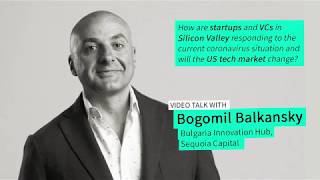
Live Talk #6: Silicon Valley in the coronacrisis - Talk with Bogomil Balkansky