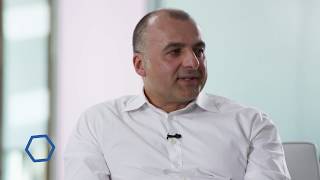
The First Principles of Building Great Startups with Bogomil Balkansky from Sequoia Capital
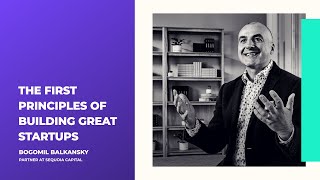
In this interview, Sequoia partner Bogomil Balkansky discusses the significance of Bulgaria’s first unicorn, Payhawk, and what the growing number of unicorns means for Southeast Europe. He explains the structural expansion of technology opportunities over the past two decades, the role of recent valuation bubbles, and why investors care more about global market ambition than geographic origin. Balkansky advises European founders to target US customers early, arguing that the US offers more capital and a less conservative corporate culture than Western Europe. He describes the type of “iconoclastic” founders Sequoia seeks—people driven by dissatisfaction, contrarian thinking, and a willingness to challenge the status quo—citing Airbnb as a classic example. He shares a “crazy” investment story about Temporal, a long‑running enterprise tooling company that finally found market fit. Finally, he outlines Sequoia’s new long‑term fund vehicle that extends support beyond the traditional ten‑year cycle, predicts its industry influence, and offers his top advice to Bulgarian entrepreneurs: obsess over building sustainable, long‑term value for customers rather than chasing high valuations.
Chapters
Great entrepreneurs become entrepreneurs because they're not satisfied with the status quo. They're not satisfied with an average outcome. They have a chip on their shoulder. They're chased by demons, you know, however want to phrase this, but because of that, they are the kind of people who don't accept conventional thinking. They're the kind of people who are not satisfied with the status quo. They're the kind of people who always ask the question why? And they're the kind of people who think everything through first. Principle.
Hi everyone. It's official. Bulgaria has its first unicorn in the face of Pay Hawk. This is also unicorn number six for Southeast Europe. To follow up on this big news today, we have prepared a very interesting discussion with a very special guest joining all the way from San Francisco. His name is Bogomil Bolkanski and he's a partner at Sequoia Capital, the legendary VC forum behind Apple, Airbnb, Instagram and many other iconic tech companies. Over the years, Bogomil has helped many Bulgarian startups and scale ups set foot in the US and in 2019 he co founded Bulgaria Innovation Hub, an organization with the mission to create a two way bridge between Bulgaria and Silicon Valley. Today we're going to discuss with him what truly means to be a unicorn nowadays. Whether Southeast Europe is becoming more popular with Silicon Valley VCs, when startups from the region should enter the US market, and what it really takes for founders to build globally successful companies. So obviously Pay Hawk's unicorn status is a huge milestone for the startup ecosystem in Bulgaria. But I'm curious, is being a unicorn still considered a big achievement in the us now that there are over a thousand worldwide and valuations are getting crazier and crazier.
You're absolutely right that these days being a unicorn is no longer what it used to be. But that by no means diminishes the huge accomplishments of Pay Hawk and the entire tech ecosystem in Bulgaria to reach that milestone as any milestones, that's what it is. It's a milestone. It's one point in time onto a journey that hopefully goes onwards and upwards. It's very interesting that just a few months ago, one of your colleagues, another journalist in Bulgaria, asked me when I anticipated to see the first unicorn from Bulgaria and I said five years. So I'm very, very happy to be proven majorly wrong and to see the first unicorn only a few months after that interview. It is great news, obviously for the Bulgarian tech ecosystem. I would say that Bulgaria and other countries from Southeast Europe had already been on the map for American VCs, for American investors, for American entrepreneurs. And I would say the awareness of our region started changing in a major way after the emergence and the huge success of UiPath. Before UiPath became a hugely successful public company, we had all of explaining to do. When you said Bulgaria, Romania, very often the reaction was like, where is that? And the truth of the matter is that Americans haven't learned geography any better than they used to know it a few years ago. But now at least there is awareness that something interesting is happening in those countries, Bulgaria and Romania, even if people don't know exactly where they are. And so I think it is an amazing accomplishment for the Paycock team and again for the entire venture ecosystem. You are also, you correctly noted that there are more than a thousand unicorns and there are a couple of different trends that are driving the ever increasing number of unicorns. The first one is underlying structural trend which is very positive, that there is an ever expanding waterfront of opportunity for technology companies that is totally independent from the short term market gyrations from the short term valuation increases or decreases. If you look back 20 years ago, the number of billion dollar public tech companies was relatively small. And over the past 20 years we have seen a huge expansion in opportunities for technology companies, not just measured by valuations, but also the number of different subdomains and segments where there is opportunity. Let's say 10 years ago there is no such thing as machine learning and AI. Today that's a huge field. And again, there are a lot of other newly emerged fields. And since we're talking about UiPath a moment ago, the whole field of robotic process automation is one example of a field that didn't exist even 10 years ago. So there is this fundamental underlying trend that there is ever increasing waterfront of opportunity and technology. And I would say that is like the fundamental driver why we see more and more unicorns. And more recently, in the last two years or maybe last few years, it's very obvious that we're living in a tech bubble. There has been dramatic expansion in valuations, which quite honestly is driven by the inflation in the stock market. Now finally we're seeing consumer price inflation in a lot of western countries, both in the US and in Europe. But the asset price inflation has been going on ever since the pandemic. Especially actually it started all the way back after the last recession of 2008, where central banks have been pumping tremendous amount of newly printed money into the system, which drove interest rates very, very low interest rates stated historic low levels for more than a decade. And so for almost 15 years now, we have seen this bull market all over the world. And the bull market very surprisingly, actually dramatically accelerated during the pandemic. Again very much driven by the tremendous amount of liquidity that was pumped in the system. This is the short term reason for seeing so many unicorns. There's an argument to be made that at some point the music is going to stop and this party is going to end and the valuation multiples will revert to the mean or come back to sustainable levels. But even if and when that happens, the underlying trend that there is ever expanding opportunity in technology still remains.
Is the growing number of unicorns in Southeast Europe helping the brand of the region in the eyes of Silicon Valley investors?
Honestly, all VC companies are just looking for compelling investment opportunities. And compelling investment opportunities means fast growing companies, companies that first of all have compelling teams going after what could be a big market. And honestly, majority of investors are pretty indiscriminate when it comes to where these opportunities come from. And so it's not when investors evaluate opportunities, they don't start with, oh, where is the region? They always start with, oh, can this be a big company? And because all the countries in Eastern Europe in particular, and actually kind of all across Europe are relatively small, let's say, compared to the US economy or the Chinese economy, et cetera, what investors need to see from entrepreneurs in these smaller countries is a global ambition. It's very unlikely that the Silicon Valley investor would be interested in a Bulgarian or Romanian or a Serbian startup that's only focused on the local market. But as long as entrepreneurs are high quality founders and they're going after big markets, honestly, investors don't particularly care if your name sounds Bulgarian or Romanian or whatever. And so from that perspective, again, the only thing that investors are chasing is opportunity. Now, when it comes to our region specifically, I would say that investors also need to be time efficient in terms of how they cover different markets. And the truth of the matter is that for the time being, Southeast Europe probably ranks, I would say fifth, sixth or seventh just on the rank list of number of successful companies that have come out in Europe. Obviously Western Europe is still the biggest market. And within Western Europe, historically, the UK has been the most important, most entrepreneurial market, probably followed by France, Germany, the Scandinavian countries, then followed by the Baltic countries, where you have an Estonia, which is a tiny country even compared to Bulgaria, but so punches above its weight when it comes to technology entrepreneurship because it is the birthplace of companies like Skype, like Transferwise, like Bolt that Sequoia invested in recently. And I would say Southwest Europe, our region comes after that. You know, after all of these other regions that I mentioned. Oh, also forgot Central Europe, where you have Czech Republic and Poland. We haven't yet seen tremendous successes from those countries. Not of the magnitude of UiPath from Romania, but just by the sheer numbers of significant outcomes, Central Europe is still probably ahead of Southeast Europe. But all in all, I think investors are starting to pay attention to our region. And when it comes to Sequoia specifically, it so happens that two of us, myself and lieutenant Alexandru, come from Southwest Europe. So we have taken it upon ourselves to cover the Bulgarian and the Romanian tech ecosystems respectively.
Let's talk a bit about European startups expanding to the us. In your opinion, is there a right timing for such a move?
Yes, there is, as soon as possible. Sorry to interrupt and to be somewhat glib in my answer, but again, Bulgarian startups would be interesting only if they have global ambitions. And if you have global ambitions, you should go after your global customers. Like from the very beginning, it's not that useful to be designing solutions that are only appropriate for the Bulgarian or for the Southeast Europe market. From the very beginning you should focus on your global customers and probably like the most efficient thing to do is immediately to go to the American market. I've been telling this to all the participants in our Bulgarian Innovation Hub program. If you are planning to conquer international markets, going to Western Europe first is tough because for cultural reasons, language reasons, Western Europe is still not a single market. From that perspective, it's way more efficient to try to focus on the American market than on the European market. Also, my impression is that large companies in Western Europe tend to be more conservative than American companies. And what I mean by that is American companies are very comfortable taking a chance on a startup vendor or a startup provider, whereas European companies tend to be more conservative. And from that perspective, as a small company, you have better chances of closing large and impressive customers in the US rather than in Western Europe. So from that perspective, the one piece of advice that I would give to Bulgarian entrepreneurs is to start focusing on US customers from the very beginning.
But isn't the US market much more competitive if you want to get funding from a top tier vc?
I don't think so, quite honestly. And I think you can see that in the valuations in the US versus Europe, there is still a gap between the valuations that American startups get from American VCs versus European startups from European VCs. That gap is closing quickly, by the way, but it still exists. And if you believe that the market is supply and demand, the fact that it's easier to get a higher valuation in the US basically tells you that the US is the entrepreneur's market. In other words, yes, there are a lot more startups, but there's way more capital chasing the startups. And because of that, founders are better positioned to get a better deal for their company from American VCs rather than European VCs.
Sequoia website you say that you're looking for iconoclastic thinkers in many ways. For the startup ecosystem in Southeast Europe to grow, I certainly believe we need many more of those. Can you tell us more about what true iconoclasts do?
Just like art doesn't come from a place of being a happy, go lucky, well adjusted person, great art comes from being chased by demons of some sort. And if you look at the biographies of many famous artists, they struggled with various demons in their lives. But those are the creative forces, the creative juices that compel you to produce great artwork. And I would say that entrepreneurship is very similar to art. Great founders and great entrepreneurs are not this well adjusted, happy, go lucky people. If you're that kind of person, what you usually do is you just take a job with a big company or a small company or whatever, and you're just happy going through your life. Great entrepreneurs become entrepreneurs because they're not satisfied with the status quo. They're not satisfied with an average outcome. They have a chip on their shoulder. They're chased by demons. You know, however, want to phrase this, but because of that, they are the kind of people who don't accept conventional thinking. They're the kind of people who are not satisfied with the status quo. They're the kind of people who always ask the question why? And they're the kind of people who think everything through first principle. Oftentimes they're socially awkward. Oftentimes the kinds of entrepreneurs that we partner with at Sequoia were not the popular kids in high school. They're the kind of people who might have been outcasts, might have been on the margin. They're the ones who always question society. But that is the nature of entrepreneurship. Like, you know, you, you need to be a contrarian thinker to come up with ideas that the rest of the world hasn't thought of yet. And that is the kernel of a great company in the making. You need to start with some spark, some stroke of inspiration, some unconventional idea that quite honestly, at the very beginning might seem ridiculous. I'm almost tempted to quote Gandhi here, where he famously said, at first they ignore you, then they laugh at you, and then you finally win. And I think that is oftentimes the trajectory or the life arc of a lot of great entrepreneurs. They're first ignored, they're on the margin, they're not popular. Then when they start a company with some seemingly crazy idea and they're ridiculed, and then they finally win. I mean, one great example from our portfolio will be Airbnb. The story of how difficult it was for them to raise their first round of funding is very famous now. I Forget how many VCs they talk to, but basically they are laughed out of so many VC boardrooms because what a crazy idea. Who is going to admit a stranger in their house and let them sleep, like, in their spare bedroom? That's crazy, right? What if that person is a criminal? What if they're. Et cetera. And lo and behold, 12 years later, it's an immensely powerful business and it's a service that hundreds of millions of people around the world use. And over and over again, we have seen in our portfolio that those iconoclasts make the best entrepreneurs. And that's why it should be hardly a surprise that these are the kinds of people that we're looking to partner with.
What was your craziest investment?
Ooh, I don't know if I personally can take a lot of credit for crazy ideas. I focus mostly on geeky stuff, developer tools, DevOps, data infrastructure. I would say in enterprise investing, you don't see the craziest of ideas. You tend to see the crazier ideas in. In consumer investing. But one example that I would give you is a company called Temporal, where the founders have been working on the problem that they're solving for 20 years. They literally started in 2004, and they created one product, then they were at Microsoft and then created a different product when they went to aws. Then they created a third iteration of that idea when they went to uber. And for 15 years of their careers, what they were working on, quite honestly, wasn't accepted or adopted by the market. It took that long for the right time to come for their idea. And lo and behold, today this is a company that is flourishing. So that's another UiPath like example where if you know the history of UiPath, the company was founded like in the early 2000s in a Bucharest apartment. And for the first 15 years of the company history, nothing interesting was happening before all of a sudden it's exploding it's exploded and temporal where I'm on the board seems to be on a similar trajectory.
Last year Sequoia announced that we'll abandon the traditional VC model driven by 10 year fund cycles and practically give itself more freedom to support founders over a longer period. From your perspective, how this changed the VC industry, do you expect it to become more widely adopted? What feedback did you get from your limited partners?
Well, most inventions tend to be copied and emulated and I expect that the Sequoia Capital Fund to be emulated over the years. I think it will have an impact on the venture industry. The spirit of it is that we have always wanted to be the most important and the most supportive partner for our entrepreneurs. And Sequoia Capital Vehicle is a way for us to stay close to the company, not just for 10 years, but for a lot longer. And in retrospect, it allows us to execute on a major part of what has always been our charter and our belief for successful public companies, majority of the value accrues after the ipo, after they go public. And so from that perspective, it makes a lot of sense that we should stay long term shareholders in the successful companies that we invested in at the earliest of stages. And so from that perspective, the reaction of our LPs has been very, very positive because they do recognize that at the end of the day, this new structure means stronger returns for them.
What would be your number one advice to young entrepreneurs in Bulgaria?
Obsess about building long term sustainable value for customers and building a sustainable business. In a very frothy environment like today, it's very easy to get distracted and to focus on the wrong things. The trappings of being of high valuation, of hiring a lot of people, of who you raise money for, these are the substance. What is going to accrue value over time is creating value for customers and focusing on the customer. So going back to basics is the best advice that I can give to anybody.
Amazing. Thanks so much for being with us today and for sharing all of your knowledge and insights. We make sure to have them reach as many people as possible in Southeast Europe.
Thanks a lot. Bye.
More from Bogomil

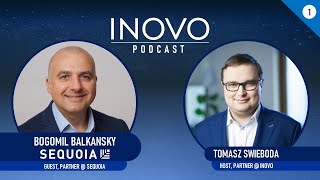
Bogomil Balkansky - What does Sequoia look for in startups? || Inovo Podcast #1
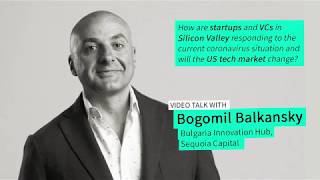
Live Talk #6: Silicon Valley in the coronacrisis - Talk with Bogomil Balkansky