Live Talk #6: Silicon Valley in the coronacrisis - Talk with Bogomil Balkansky
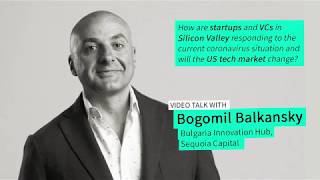
Bogomil Balkansky, a former Google VP and venture capitalist, discusses how Silicon Valley is navigating the COVID-19 pandemic. VCs are acting as shock absorbers for portfolio companies, with demand surging for Zoom and Instacart while travel platforms like Airbnb suffer. Balkansky sees opportunities in telemedicine and remote work, and notes that crises historically spark new businesses like Stripe and Uber.
Chapters
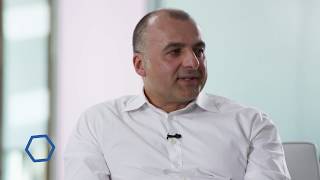
Hello everyone and welcome to trending Topics Live, our new video interview series. I'm Alex Kozmunva, your host today, and I have a very interesting guest on the other side of the line, actually overseas. He does not really need an introduction, but in any case, his name is Bogumil Bolkanski and he has spent the past 20 years or maybe more in the US and he's quite well known both in Bulgaria and in the Silicon Valley. Honorary Consul of Bulgaria in the Silicon Valley, part of the Bulgarian innovation hub. There he has taken roles like Senior VP in Google, many interesting other stuff. And since January he's also partner at one of the oldest and most reputable venture capital firms in the us Equal Capital. So we are going to talk about Silicon Valley in times of crisis. Also his investment plans and strategy right now, is something going to change? Is everything going to change? And how we are going out of this current situation and more so. Hi Boggy, thanks for taking time today.
Hi Alex. Pleasure. And your introduction made me blush.
Oh really? I did it. So how are you doing? How Silicon Valley, in times of quarantine, has everything changed there?
I think it's fair to say that everything has changed. And I would say on the grand scheme of things, Silicon Valley actually has it easier than many other regions of the country or many other businesses because Silicon Valley is so technology centric. Actually the transition from going to the office to working from home was probably as seamless as it could have been like for any other industry. And also like it always happens in the United States, California took the lead on issuing an order for people to shelter in place and stay home. And California was actually the first state that implemented these measures. And as a result, luckily we have been less hit than other large states in the U.S. so I guess on the grand scheme of things, I think Silicon Valley is faring, relatively speaking, like, you know, better than the rest of the country. Having said that, all of us are stuck at home. Who knew that we would appreciate going to the office? For me personally conducting the entire business day on Zoom from 9 in the morning until 6pm Got old in about two weeks. And I really yearn to see some people's faces face to face and to start going back to the office.
Yeah. And still how are companies reacting? How are VCs reacting?
I think the first order of business has really been to understand the situation and what the implications are. Like we wrote in our memo that Sequoia put out at the very beginning of the crisis in the US we said that nobody has ever regretted taking quick and decisive actions in time of cris. And so the first sort of priority for us was really to engage with our portfolio companies and first and foremost to be shock absorbers for a lot of the CEOs and entrepreneurs that we're working with. Bear in mind that in our current portfolio, we have a lot of CEOs who are relatively young or young enough to actually have no firsthand personal experience with navigating crises before. And so we have a lot of executives throughout our portfolio for whom this is a first. And so the very first thing that we focused was really like to be shock absorbers for them and to give them emotional and yet a support that we could. And then the next task was really to assess their business position. And the main thing that we focused on is really to analyze their cash position, their cash burn, their cash flow, how much Runway do they have? And of course, different companies are in vastly different positions. Some of our portfolio companies were pretty directly impacted by the crisis. Imagine a company like Airbnb that is in the travel business. Of course our business was impacted. A company like Eventbrite, which is a public company, which is in the business of helping people organize large events. Large events aren't happening. The Eventbrite business was fairly negatively impacted. We also have a few portfolio companies that are actually helping other businesses in the world navigate through the crisis. And they have actually seen the level of their activity, the level of their business increase. Zoom is a great example. We're one of the main investors in Zoom, and it's fair to say that Zoom really has become the new operating system for not only for business, but basically the new operating system for the world in this time of crisis. Because students are learning on Zoom. All of us are talking on Zoom. We're conducting business on Zoom. We're having happy hours on Zoom. Another company in our portfolio in that category is Instacart. Again, as people don't have the opportunity to go grocery shopping. Shopping in person. Like, more and more people are ordering groceries for Instacart. And so throughout our portfolio, the impact of COVID on companies has been dramatically different. But what is common is that everybody had to really systematically go through their business and their cash flow and understand what they need to do either to extend their Runway for at least 24 months, or in the case of companies like Zoom and Instacart Card, how do you plan for this, like, manifold increase in demand, this immense surge in demand that they're observing?
Yeah, I actually meant the question a bit more General, what's the feeling over there? Because that's the most vibrant heart of startup and VC industry. Has it slowed down in a way, people preparing for something like readjusting? And what do you think is going to happen with, for example, fundraising and valuations that were going up in the past years and now that's going to change? Probably, yeah.
I mean, I think there are quite a few studies that already came out attesting to the fact that I think the collective expectations both on the sides of VCs and entrepreneurs is that valuations are going to come down. Our experience from previous crises is that that usually doesn't happen very quickly. It takes the market like a few quarters to adjust. So we don't anticipate that valuations are going to come out come down immediately, but I think it's fair to expect that that will happen over the next few quarters. I think in every situation like that there is a flight to quality, so to speak. In other words, the bar of course is being raised for the kinds of metrics or the kind of strength that a company needs to show in order to comfortably like raise money. And in the past few weeks you actually have seen quite a few announcements from very strong companies with very solid businesses being able to raise significant amounts of money. An example from our portfolio that got announced over the past few days was Stripe managed to raise $600 million at more than 30 billion valuation. So again, in tough times, I think there's a flight to quality. Stronger businesses continue to be able to raise money and again, companies with less strong customer traction, cash flow, et cetera, will find it more challenging, like to raise money. I would say the climate overall is sober would be my best characterization. I think there were some elements of panic, like in the first couple of weeks after the order to stay home in California at Sequoia, we saw quite a bit of increase of inbound deal flow. I think all of entrepreneurs basically had a moment of awakening and slight moment of panic and said, hey, I need to try to raise money now. And so we saw a whole bunch of inbound deal flow, but actually settled down a little bit. And I think now the question is, and by the way, a lot of companies have already implemented various measures to bridge themselves through the crisis. Now the big question on everybody's mind is how long will the stay at home order last? Once the health situation stabilizes, then what's coming after that? Are we going to experience a recession? How long would a recession be, how deep, etc. Or will the economy be able to snap immediately or rather quickly back up. And quite honestly, at this point, there are only speculations. I don't know if anybody has a crystal ball to know exactly how the economy is going to fare. But it's one of these things that I think the reasonable thing is to prepare for a recession. And if the economy happens to snap back pretty quickly, then all the better. But I think reasonable planning assumption for most companies would be to prepare for a recession for the next couple of quarters.
Can you compare the current situation to any other crisis you've ever seen in your career? Because you said every situation like that in your previous answer. And I'm wondering, is there any situation like that?
Well, history repeats itself, but not exactly like in the same way. And so I have personally experienced at least two previous crises in the U.S. i experienced a tech recession in 2000, 2001, and I personally was actually sort of very personally impacted by that first recession. I was working at a technology startup. It was my very first job in technology. And guess what? That tech startup basically closed doors 18 months after I had taken the job and I was unemployed. I was on the street for a few months. Then the 2008 global crisis that started from the US and now we have the COVID pandemic. This time it's different, at least from the previous two crisis that I've personally experienced, in the sense that in 2001 and 2008, yes, it was very tough economic times, but no people's lives were at right. And you know, this is for the first time a worldwide health crisis. You know, people are dying. So this is very different from all the, from all the previous crises. I think, like the health crisis obviously will have like deep impact on the world economy. Again, it's still too early to tell what exactly and how deep that impact is going to be. But again, I think the responsible and reasonable thing is to be conservative in planning assumptions and to expect that the next couple of quarters are going to be tough.
Do you think right now is a good moment to start a business? Because there are a couple of good examples for a company that started in such similar to that situation, like Airbnb, for example.
You're absolutely right. And this is something that we at Sequoia are very mindful of. That creativity loves constraints. And I think a lot of business ideas are generated out of necessity, so to speak. And a lot of great companies are started either during a recession or kind of on the tail end of a recession. There are many great examples of that. So for Cisco, the networking Company partnered with Sequoia a few days after the Black Tuesday event in 1987. Then, in more recent history, you have companies like Google and PayPal that weren't started during the 2001 recession, but actually soldiered on pretty successfully despite the recession. And in 2008, we saw the birth of giant companies like Airbnb, like Stripe, Uber, et cetera. So I think it is reasonable to expect that as we speak, probably very interesting businesses are being started that 10 years from now will be household names the way Stripe and Arb have become household names at least some parts of the world. So we're definitely on the lookout for interesting new deals and interesting new opportunities in this regard.
I was about to ask you this question a bit later on, but now we are on the topic. Has your investment strategy changed in a way? What are you looking for right now? One and two, what's your selection process actually? How do you pick two founders out of hundred to meet?
Our fundamental strategy hasn't really changed in the sense that we're always looking for a great team. We're always looking to back entrepreneurs who are bold, who are daring, who are exceptional in some aspect. We're always looking for great markets. One of my business school professors at Stanford said something 20 years ago when I was there that kind of stuck with me, which is it's way better to be mediocre company in a great market rather than be an excellent company in a mediocre market. And so market always wins. So we're always looking for great markets and we're always looking for why now? Right? Like, what is the impetus like to start a successful company in this precise moment in history? Like, is there some new technological trends, is there some new demographic trends that actually would make it possible for this particular company to become a big company in this particular moment in time? So this is roughly the algorithm for our investment selection. It's like the team, the market, and why now? So that hasn't changed. What is going to change, however, is that once we come out on the other end of this health crisis and a possible recession, it's unlikely that the world is going to come back to exactly what it was before the crisis. I think this crisis will either give birth to new trends or it is going to accelerate certain trends that were already going on. One example of that is telemedicine. Right? So it's something that didn't originate during the crisis, but this crisis has really necessitated its application to a lot greater extent and has made all of us way more comfortable interacting with a doctor over zoom. So it's definitely an area that I think it's worth looking at. All of us are conducting business on video conference. So begs the question again, once things start opening up and we started going to the offices, would it really be so necessary for all of us, like, to be getting on airplanes and traveling long distances, like we have business meetings or why not have an interview between the US and Bulgaria, like over zoom. And so what we're trying to do is really kind of systematically think through what are changes that have been catalyzed by the crisis and what are changes that actually originate with the crisis. And from that perspective, I do believe that there will be new fields and new domains that either didn't exist before or existed, but because of the crisis have become a lot more interesting investment opportunities.
What about the markets, geographically speaking, is there going to be a change because the US Is the most interesting market, probably for most of the European founders. Will there be a change in that?
I don't know yet, to be honest. Hard to anticipate. I think that the US Will continue to be the most significant technology market, at least for the foreseeable future. Obviously, China is rising very strongly, has been rising for the past 40 years, and that will continue being the case. However, from the standpoint of European entrepreneurs, China is a tougher market to crack than the US for many culturals and other reasons. And the rise of the Chinese market is giving birth to local Chinese champions. So in other words, big companies born in China become big, focusing on the Chinese market. And they haven't yet been that successful, kind of branching out outside of their home market and becoming global players. There is very, very few examples of Chinese companies becoming global players. On the other hand, you have the European and the US economies very tightly intertwined. And I would almost say that economically the US and Europe represent a single market, although politically they may not be a single market. And so I do believe that for European founders, the US Will continue to be the most important and most significant market to penetrate. And you know, I've said this many times before, but for Bulgarian or in general European founders to have a chance of building a significant company, the road goes through or to the US Simply because the European market, despite the European Union, still culturally is 27 or 29 like different markets, and it's a lot more efficient to get established on the US Market, which is a single large market. Again, it's no surprise that we see a lot of European companies being born in Europe, having their R and D centers in Europe. But at some point they need to establish strong commercial operations in the US to give themselves that chance to become significant companies. I don't anticipate that this is going to change now. What may change is that again, one of the trends that didn't start during the recession but may be catalyzed by this crisis is for a period of time we've seen that a lot of the R and D development for technology companies, even companies that are funded in Silicon Valley, is no longer happening in Silicon Valley. This place has become so expensive from cost of living perspective at its virtually impossible to hire talent, especially when you have the likes of Facebook and Google and LinkedIn. Basically, large tech is sucking the oxygen out of the entrepreneurial ecosystem here in Silicon Valley. And young companies almost have no choice but to go and look for talent elsewhere. And going and looking for tech talent elsewhere may mean going to New York, LA, Seattle, CO, et cetera. But very often, quite honestly, it means finding the talent like anywhere in the world. And this whole trend about fully remote companies or fully distributed companies I think is just gathering steam. And I do anticipate that this is going to be one of the trends that will continue gathering steam after we come out on the other end of this crisis.
In a way it sounds like an opportunity and a chance for smaller ecosystems, like for example, the ones in Eastern Europe. In the same time. However, I think we had this discussion earlier in a previous conversation that does the added value stay in those economy and is it really an opportunity for those countries to be like the R and D center for companies whose business development is somewhere else and were generating value somewhere else?
I mean, listen, I think before you run you need to crawl and walk. And so yes, I mean, I hope that at some point companies that are born in Bulgaria or in Europe would be able to bring as much of the value chain as possible, like to the home country and hopefully that will start happening. But having the R and D centers, or at least the R and D part of the value chain in a place like Bulgaria is a great first step. And I haven't looked at recent statistics, but if I remember correctly, a couple of years ago, software development was already something like 5% of GDP in Bulgaria. It is already a significant contributor to the national economy. And if it grows, I think it's an amazingly positive thing for the country. And I don't get to come back to Bulgaria very often, but whenever I come back, it seems to me that the tech industry is really one of the few kind of very bright spots in the economy and in society in Bulgaria. And so I do believe that the impact of having these R and D centers of small or large technology companies be based in Bulgaria is a tremendously positive thing.
I have one question from the audience in this regard and it's how can we better position Bulgaria and the region in the U.S. yeah, I mean, it's.
Interesting that I think Bulgaria already kind of has made a name for itself as an offshore destination. There are many companies that have very successful experiences like in Bulgaria, VMware being the trailblazer for more than a decade at this point. But you know this better than me. There are a lot of headlines of major companies opening new offices when it comes to promoting Bulgaria as a tech destination. That is 50% of the charter of the Bulgarian innovation hub that you mentioned in your intro that myself and Vasil Terziev and Pavlina and Akiva Ivan Dimow have been driving for a while. The other 50% being helping Bulgarian startups get their feet on the ground here in the US but then the other thing that we're focused on is really spreading the word in Silicon Valley in particular about Bulgaria as a tech destination. But it's always like an opportunity, like to do something more. But I do believe that, you know, for the size of the country, we already punch above our weight, so to speak, in terms of brand name recognition as a tech destination.
Because I know you have around one minute till your next meeting. One last quick question and I'll let you go. It's also from the audience. What is the key mindset and what are the key mindsets actually that may help founders go through this storm?
Very important question. I think. The first thing that founders need to focus on is really to take care of themselves health wise, psychologically, like emotionally. Because if they don't help themselves, they're in no position to be helping their own companies or helping anybody else. So think it is very important to find whatever outlets work for you personally like to take care of yourself psychologically and emotionally. If exercise is a big part of your routine, if meditation is, if spending enough time with your loved ones, which is a bit difficult in this situation. But I would say the first imperative in time of crisis is self care, quite honestly, which may be a bit counterintuitive like to the instinct and inclination of your typical entrepreneur because an entrepreneur is typically very action oriented, like, you know, very externally focused. You know, very often their first instinct in time of crisis is like to dive in and start helping other people, you know, etc. I think this is an opportunity for entrepreneurs to really take a step back and make sure that they are themselves, like, doing okay. Because if they aren't, like, they're in no position, like, not to be helping others. So I would say the very important mindset is self care. Take care of yourself first and foremost, because that's the only way to be valuable to other people in this situation.
Thank you for that. We're actually hearing quite different hypothesis on that. Yeah. Some of the entrepreneurs we're talking to say, no, you have to act. Others say like, no, sit back and relax for a bit, like, evaluate the situation, take care of yourself.
I didn't mean that. As an entrepreneur, you don't have the luxury to kick back and do nothing. But I think you really need to find, like, the right balance of taking care of yourself while, you know, you dive in and, you know, try to navigate your company through the crisis.
Great. Thank you. Bogi, I don't want you to be late for the next meeting, so thanks a lot for taking time and talk to you soon.
Thanks, Alex. Always a pleasure.
More from Bogomil
The First Principles of Building Great Startups with Bogomil Balkansky from Sequoia Capital
Bogomil Balkansky - What does Sequoia look for in startups? || Inovo Podcast #1