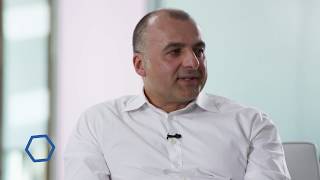
Fireside Chat with Bogomil Balkansky - Digitalk 2015
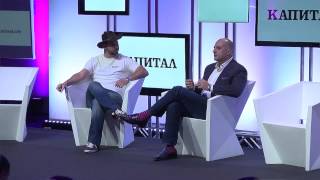
Bogomil Balkansky moved from Bulgaria to the US after the Berlin Wall fell, worked at Siebel and VMware, and now invests in startups. He learned that focus and sequencing matter more than customer demands when scaling, and that timing often beats team or technology. He sees mobile computing as the next transformative wave.
Chapters
Hey, I think Dave is. He's right, you know, I'm Spaniard, so I would try and get you guys talking. We. We in Spain are very loud, so please, I wanna. Good morning, everyone.
Good morning.
Kind of weak. Okay. Good morning, guys. Good morning. Not getting any better. Third time is a charm. Good morning, guys.
Good morning. There you go.
Okay, thank you very much. So it's my pleasure being here, to be honest. It's a pleasure having you. Bogmail Bogie for the France.
Bogie. Yes.
He's one of a kind, I would say. First of all, how is.
Can it be a good thing or a bad thing? One of a kind.
We'll see. We'll see. My first question is, how is your Justin Bieber? As a Bulgarian, how do you feel about Justin Bieber?
You know what? I hardly know even who he is.
He has hair, though.
I'm an abyss of ignorance when it comes to American pop culture.
Okay, so.
But I was trying to picture myself on a bunch of these visualizations, you know, on the San Francisco graph or the angel eats graph. And I think on San Francisco, I'm somewhere between the geeks and the foodies.
Oh, so it's your fault that people cannot get rent?
Partially. I'm squarely.
Okay, Dave, you need to whack him afterwards. So. No, but I think your story is a very interesting, very powerful story. So I would like you to share a little bit of your trip. You know, where did you studied? What was your evolution? A little bit like, briefly, what was your evolution, what were you doing in the US and how did you end up there?
Yeah, so I've spent more than half of my life in the US at this point. Ended up leaving Bulgaria in 1991 immediately after I finished high school, went to get an education in the us did my undergrad at Cornell, ended up studying math, of all things. After that, got a job in management consulting, lived in Germany for a few years and then since 1998, been in Silicon Valley. Did an MBA at Stanford for a couple of years and have been working in technology companies ever since. I finished Stanford. During the first dot com boom, I worked at a startup, which of course came to nothing as startups did in 2001. Then worked at Siebel Systems, which is the leader in CRM, and then spent good eight years at VMware, which I'm sure a lot of you know from the huge VMware R&D office here in Sofia, left VMware a couple of years ago and threw myself in startup land again, which must Be one of the sure signs that we're living in a new technology bubble if I'm doing it again.
So do we want to get into the bubble thing? No. So we were having a chat this week and I found it extremely interesting.
Because.
I guess most people, when they see someone going to the U.S. they go like, oh, you were lucky. You got big money, deep pockets, so you managed to go to Stanford, things like that. So I would love you to explain a little bit. How do you end up in the U.S. i mean, how did that happen? Did you had a huge financial backing behind you? Do you come from a rich family or how hard was it?
Well, I did get lucky. Let me just say that I got terribly lucky. Not because I come from money in Bulgaria. I mean, my father is a car mechanic and my mom was a seamstress. So the reason I got lucky was I happened to finish high school a year after the Berlin Wall fell. And I was one of the first people in Bulgaria who happened to be applying to schools in the US and by the way, there is a lot of people here in the audience and there's a lot of stories similar to mine of young Bulgarians who jumped on the first opportunity to apply to schools abroad and go and get an education. And that particular year in 1990, when I was applying to universities in America, we Eastern Europeans were the hit. And so I got lucky and got full scholarship at the university. So packed my backs and left. So luck was a big part of it for sure.
Yeah, I guess we had the discussion about how much is it luck and how much were you already trying to achieve that, you know?
Well, sure. I mean, like many things in life, you know, you study hard, you work hard, you do what you need to do. And then of course, as you know, we say in Bulgarian. Let me say it in Bulgarian. Rodima Michael Smetimek for Lina Smed so a pinch of.
Totally agree.
Like a pinch of luck, like, never hurts. It's kind of very interesting that actually what helped me apply to the US to universities in the US back in the days was that I happened to be studying Chinese. I was like this geek in high school. And I had this Chinese friend here in the late 80s who kind of opened my eyes for the first time about the possibility of even getting a scholarship in the U.S. he told me about kind of all the exams that you need to take.
Were you here by any chance?
It was a guy. I mean, it wasn't a.
Okay, that can work too.
And he basically opened my eyes to this Whole thing. And. And in a kind of ironic way, I found myself studying in the US because I had studied Chinese when I was in high school.
Wow. Do you remember any Chinese?
I still can maintain a conversation.
Wow, impressive. So you have a very interesting background because you actually dabbled in startups first.
Yes.
And then you got rebuffed by that and said, fuck the startups, we can all make money there. And you went back to corporate. So I'm wondering what was your experience, you know, out of university? By the way, it's fascinating talk when you talk with someone that has a math background, you know, the conversation end up talking about Brownian motion and stuff like that. That's your metaphors, which is fabulous. So, yeah. So what was your experience when you started doing your first experience, first encounter with startup world?
I mean, honestly, this was my very first foray into technology. I was young and naive and when I was finishing Stanford, I was really badly positioned to evaluate the startup that I ended up joining. I had never worked in technology before and it was two guys and an idea. They had just literally gotten funded. I was the sixth employee there, the first non engineer. I was on the product management and product marketing site and I had no idea what I was getting myself into. And the company dissolved 18 months later, which honestly was one of the kind of blessings in my career because at least it was a fast fail, so I didn't end up investing more time in it than 18 months. And I wish I could blame it on the fact that the technology bubble burst in 2001, that the company fell apart, but the truth of the matter is that even if it was best of times, the company would not have survived. There were some fundamental flaws with the idea and then the technology execution wasn't great. And so it ended up being one of these learning experiences, which basically means that you went for some trouble, you have some scar tissue under your belt, you learn some lessons in an interesting way. I'm actually glad that all of it happened to me early on in my career. You know, very little responsibilities at the time, you know, still young, kind of out of. You're still young, out of college, of course, and you know, learned a lot of lessons. And so second time around, 15 years later, when I decided to throw myself into startups again, you know, I was very kind of eyes wide open what I was getting myself into.
Actually, you told me an interesting story because I think it would be great to share it, which is that you had no money when the first startup you got involved with crashed. So how do you survive there? I mean, Debayer is a cash intensive area, as Dave said.
Well, thank God there are credit cards in the US So I basically survived on credit cards for the six months that I was unemployed. And even what was tougher than even like the financial situation was the fact that I was cutting it very close from visas and immigration standpoint. I was still on H1B visa and I was really like, you know, cutting it very close. And if I hadn't like found that job at Siebel Systems that I found after that, I should have been required to leave the country literally, like, you know, with within a matter of days. So that was like the bigger war even, like, you know, how do you sustain yourself then?
I think afterwards Your career in VMware was stellar. I think I've met few managers that have scaled the ranks and the ranks of a big company and basically achieved so much as you've done in that company. But one thing stood out, which was your extreme passion for execution and focus. So, and you're very passionate about that, you know, both in the corporate world and the startup world. So can you tell us a little bit more about how that helped you, you know, build, build the path that you created at VMware and how is that serving you and the startups you work with?
Yeah, maybe just to give people a bit of background, the eight years that I spent at VMware, I was leading the product marketing and product management groups for, for the core data center infrastructure product line and for. I mean, I don't know how much people know about VMware's business, but VMware invented a new class of software called virtualization that eventually became dominant in the data center. And nowadays, pretty much any company that has servers, there's like 80% probability that they're running VMware software in the data center. And again, I chose wisely when I joined VMware, but it was an amazing ride for the eight years that I was there. But a couple of things that VMware taught me is that I would say focus is everything in a startup. And the second thing is you always have to dream very big and always have a clear vision how you want to conquer the world. But it's very, very important. How do you actually sequence your execution and how you, while dreaming big, take small steps towards your enormous goal. It's very important not to bite off more than you can chew because you can always kind of trip over very, very quickly. And the interesting story about VMware was that from the very Beginning the company was founded in 1998. VMware had absolutely this vision that every single server in every data center will be running VMware software. However, the founders took a very kind of roundabout way into conquering the data center because the technology was so new and unproven. And to many people it just sounded like magic, you know, too good to be true. And they're very clear that if they tried to fight the battle for the data center immediately, they would have lost. I mean, who trust their corporate IT like you know, to this dinky little company of like five people, all of them academics, by the way.
No one fires someone for hiring IBM.
Business experience, experience whatsoever. And so they knew that they'll be toast if they just went straight on and tried to conquer the data center. So they did something very interesting. They actually first created a product for the desktop targeted at developers, which basically allows a software developer to create multiple simultaneous development environment running on the same PC. And they built that product and they had half a million users right from the first beta. It was an amazing product. But the outcome of that is that a year later, after they launched that first PC product, they had gained so much credibility with the technical community and there was so much buzz about the technology that eventually, two years later, when they created the first data center product, the road was already paved for them to walk into the data center. Not exactly on a red carpet, but make it so much easier. And so it's a great example in my mind about this idea that yeah, dream big, but be very, very careful to sequence your execution in very small digestible chunks. And then the second thing is about focus. As a small company, it's clear that you don't have a lot of resources of any kind, you know, talent, money, et cetera, and distractions will be all around you. And quite honestly, the most difficult to resist distractions always come from customers. Because after you get sort of like initial success going, customers get excited about what you're doing and they'll give you all sorts of good and better advice and demands and you know, et cetera. And at VMware, customers are always asking us, why don't you develop virtualization for UNIX machines or for mainframe? And it would be very easy for us to go and do that and get distracted and spend like two years developing virtualization for other systems. But it's very important to have a clear vision of where the market is going and pursue that vision with kind of single handed focus. And don't let it know things distract you.
It's actually, I'm one of those geeks that use VMware at the beginning and for me it was fascinating, you know, being able to run something different than fucking Windows and, you know, the same machine. That was incredible. But it's true that now this is a lot of noise coming in the startup community about, you know, this technology platform, this API that or that. So it's really hard to focus on what you want to do. One thing that's very interesting is that even though you had your first stunts with startups, then you went to the corporate world, now you're back into the startup world. But it's true that even though you live away from Bulgaria for all these years, you still come back, and you still come back through the big door as an angel investor, as a mentor, as someone that's helping out the startup community here in Bulgaria. So what's your relationship with that? I mean, how did that happen?
Well, so obviously being Bulgarian doesn't hurt. I have a lot of good friends. Pavel here sitting in first row, and I went to high school together. So I have a lot of people in the community that I go back with for a long, long time. And then a second connection came through the fact that VMware established a big research and development office here in Bulgaria back in 2006. VMware acquired a company called Scient, and that was the beginning of VMware's presence. And so that provided me kind of a natural reason like to be coming back to Bulgaria while I was at VMware. And also I have been involved with some of the companies from launch, hop and nevec and 11, again through the fact that I met Pavel and Liuben many, many years ago.
I'm tempted to ask you how he.
Was in high school, gregarious as he is today.
So, you know, as someone that's already working right now, you know, I believe you have investments in the us you have investments here. What's the difference? What's the kind of major differences you see between both ecosystems?
Well, I would say heads down to entrepreneurs here in Bulgaria because their job is obviously so much harder. And it's so much harder for some very well understood reasons and also for some less understood reason reasons. When I talk to startups here, you often hear the story how. And one of the speakers this morning mentioned that venture capital is a lot harder to come by and you don't have the entire support network and support ecosystem. It's easier to find talent in terms of technical professionals and engineers. But once you have built A product, and then you need people to market it and to sell it. There doesn't seem to be yet a pool of capable and experienced marketers and salespeople. And so I think that part is fairly well understood. But one of the biggest challenges, I believe, for any startup from Bulgaria, but also from pretty much any European country, is that at the end of the day, as a young company, you need customers. And it's way easier to find your early adopter customers in the US than it is here in Bulgaria, or for that matter, in any country in Europe. And honestly, this is for two reasons. The first one is that America happens to be a huge single market. And in this huge single market, speaking the same language, playing by the same rules, statistically the probability of finding an early adopter is way higher. The European Union, on the face of it, is a bigger market than the US but the truth of the matter is that it's 27 different markets and you need to approach them as 27 different, a lot smaller markets. And right there, statistically, the probability of stumbling upon somebody who take a chance on your new and improved company, on your new and improved technology is way lower. And the second thing is that, I mean, the American economy still has like this very much kind of cowboy pioneer mentality that even large corporations in America take chances and would buy stuff from very small and improvement companies. And you don't find that here like to the same extent. And when I say here, I mean Bulgaria, but also I happen to live in Germany for quite a while. We had like the same problem in Germany where fewer people would take a chance on a new and improved technology. And I think this is pretty much like the hardest thing about being a startup in any European country, and especially in a small European country. And because of all of that, whenever I work with startups in Bulgaria, for most of them, it's pretty clear that sooner or later the path to growth actually means stepping on the American market, not only for raising money. And of course, a lot of startups are trying to raise money with the venture capital firms in Silicon Valley. But equally importantly, it means stepping on the American market in order to generate that initial or kind of subsequent customer momentum.
I'm going to do an experiment. Dave, we don't have your tools, but we're going to do it manually. So who here is in a startup or is working in a startup related stuff? Please raise your hands. Most of you. Okay. Stick your hand up if you work beyond the Bulgarian market. Wow. Keep your hand up. If you work like pan European operations and the U.S. there we go. Not that many. Interesting. Okay, so what would be, you know, because you're talking a little bit of what you're seeing now, what would be your advice? I mean, would you advise people to stick to Europe and fight the junkers plan thing? Would you advise people to actually go to the US and fight the Silicon Valley fight? Because that's another big deal.
Well, obviously I'm partial. Right. You know, I have built a life for myself in the US I've worked in Silicon Valley for quite a while. This is the market that I know. So if people ask me for advice, I'll give them probably a very biased and very partial advice, which is, I think it is easier to pursue your dream by stepping on the American market. But actually, the best advice I can offer to any entrepreneur is, yes, by all means, study other examples, listen to other people. But at the end of the day, feel free to disregard all advice that people like me would give you. Because the truth of the matter is that truly successful companies actually break all the rules. And truly successful companies oftentimes totally go swim, kind of up the current and go against the common wisdom. And as an entrepreneur, you should always have confidence in your conviction and you should be pursuing your passion, pursuing your dream, and just forget about what advice people are giving you. Listen to it, but feel free to ignore it.
Cheeky question. Are you going against the current and the common knowledge with your new venture?
You bet.
Okay, so we have six minutes and I would love to get some questions from the audience. I mean, you have a very interesting profile here. I would love to get some questions that you might have for him. So I don't know if we do have a mic somewhere and if we have someone that wants to ask questions, someone, this is what a lot of our audiences in Southern Europe and Eastern Europe, then he's going to go down and there's going to be a massive queue of people wanting to talk to him. Okay, so we have one question here. Do we have several questions here. Do we have a mic?
I can repeat the question.
Do we have a microphone somewhere? Three microphones? Where are the microphones? Okay, go and get the microphone. He'll scream and we'll.
Why don't you speak up and repeat the question? How do you define to which customers you should focus when you do a startup? Not to get distracted.
I love the question because I was recently reading everyone tells you about focus, but no one about what to focus in.
Well, unfortunately, there is no recipe of what to focus on. Right. And so to the question of what customers to focus on, I think over the life stage of any company, which customers or what kind of customer you focus on actually would change and evolve. I would say that for your first initial set of customers, by definition, you. You're looking for early adopters. You're looking for people who have an established track record of having deployed new technologies. So, for example, at the current startup where I work, thinking about, ok, we need to go and find out our first beta customers, because we haven't even launched a product very, very early on. And I'm basically trying to find people who have invested in very new and improved technologies before, because honestly, if I don't meet that particular psychographic profile, I may be banging my head against the wall for a very, very long time. So I would say finding people who have track record of having done that before is very, very important. But after that, after the initial set of customers, then the next challenge is, as Geoffrey Moore has defined, find it crossing the chasm. Because it's not too difficult to find your initial, let's say five or 10 or 20 customers, and they in most cases will not be like the next set of customers. In other words, your first 20 customers are very unusual. They're special. They are very enthusiastic about your product. They kind of fall in love with you because they feel almost equally vested in your success in your product as you are. And then the question is, where do you go from there? And honestly, very often this becomes very tricky and requires a lot of intuition, a lot of experience. But you may actually have to stop listening to that initial set of customers in order to capture the imagination of the next set of customers. And if you listen too intently to your initial customers, you may go down routes that are not very productive to capture the next set of customers. And I lived that in my experience at VMware, where the initial customers were very gung ho about the product, et cetera. But then to capture the next set of customers, we had to do a whole bunch of really unexciting, very boring things about operability of the product and security and all of that stuff. But this is what it took in order to capture that next set of customers. I don't have a very direct answer to your question, but it's the kind of thing that you always evaluate. You know, here's my current customers. What does it take, like to get the next 10, like the next hundred, you know, whatever it is.
Highly recommendable book Crossing the chasm, definitely. We had another question over there. You stole the Microphone. Okay, Pavel. And then we go back there. Make it fast. Okay, that works. I'm going to address the question of how was Bogomil in high school? That's a joke. Can you talk a little bit about the team? Because we heard a lot about the technology. You said you are seeking the next big technology and you're trying to time.
It, I guess, in some way.
But if we're now in Digitalk 2018.
And you turn back, what would be.
The reason if you were successful in.
What you started now.
Is it the right technology focus? Is it the team or is it the marketplace that you chose to address initially?
Well, you definitely need a great team. It's, I would say, necessary but not sufficient condition for success. And people, you know, investors always tell you that, like you invest in a team and yes, of course you invest in a team. And for me, as an angel investor, it's actually very, very personal because you have to kind of work with these people for good times and bad times. So, yes, you need a great team, but that's not enough. You also need to find a great market, great team. You need to build a great product, but also the market needs to be there and the market needs to be ready. And there's countless examples of great teams who built great products that didn't go anywhere. And lo and behold, five years later or 10 years later, a lesser team with even kind of lesser product, you know, takes the market by a storm. And talking about Microsoft.
No, sorry, many, many.
I mean, honestly, like, you know, why did Facebook succeed and Friendster didn't, you know, like a few years before that? You know, in the, like, there is Mint.com, like the financial software company that came seven, eight years after Yodlee. Why didn't Yodlee succeed and Mint.com did? And I think it's a matter of timing, right? You need the market to be ready for you. And the success of VMware was a great example of that. It was great team building a great product. But also they happened to hit the market when x86 servers had become the predominant technology in the data center. And the need for what VMware was building had really become very burning. So I would say between team technology and timing, I would say timing is probably the most important. It's not great news for all of us, but it is what it is.
Can we get the last one? Okay, last one. Very quick. I'm going to have a very short question. What do you think is the next.
Best thing, the next big thing?
I think he's going to say he's startup. But.
Yeah, I mean, if I had kind of a short answer to that question, I'll probably be retired somewhere, not working. Although, actually, I'm sure I'll be working again. But I think we're living in a tremendously exciting time, and there's, like, tremendous. I think we are through kind of one of these big technology waves, you know, that comes once every 10 years or so. 99 through 2000 was the first advent of the Internet that transformed so much of our lives. And I believe that we're experiencing the same magnitude of technological disruption right now. And quite honestly, I mean, this is not an original thought, but it's very much driven by the fact that computing is now mobile. And for the first time in the history of humanity, like, billions of people have access to a computer and to digital technology for the first time. And I think the transformational power of the fact that billions of people have computers for the first time is tremendous. And it's hard to imagine immediately in all the ways that people's lives will be transformed, and especially people in poorer and developing countries, like in Africa and Asia. But I would say the big bad that all of us are making is on mobile computing being everywhere and kind of the derivative technologies falling out of that, like Internet of things, wearables, God knows what else, mobile apps, all of these things are byproducts of the fact that all of us carry a computer in our back pocket.
Okay, so we are out of time. I'm sorry for the guy waving at the back. It's been a real pleasure, Boggy, having you here. Thank you very much for sharing your story with us. Thank you guys for the questions.
Glad to be here. Awesome.
More from Bogomil
The First Principles of Building Great Startups with Bogomil Balkansky from Sequoia Capital
Bogomil Balkansky - What does Sequoia look for in startups? || Inovo Podcast #1
Live Talk #6: Silicon Valley in the coronacrisis - Talk with Bogomil Balkansky