Fireside: Building a Scalable SaaS Business
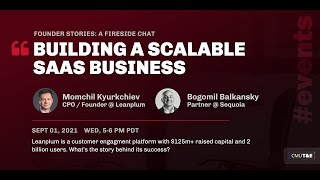
Mamchu Mihaylov, Leanplum's co-founder, traces building the mobile A/B testing platform from an entrepreneurship class at CMU to scaling past $10M ARR. He shares his "law of equilibrium" about the hardship of being first customer, employee, or investor, and describes the 90-day sprint that launched the company and the shift from self-service to enterprise sales.
Chapters
This is Mamcho. Really excited to be part of this and especially excited to be hosting this with Bogomil. You know, I've known Bogomil pretty much since the very beginning of Lean Plum. Yeah, we're both Bulgarian, but we didn't actually meet in Bulgaria, we met in San Francisco and it was just a completely random chance. I was fundraising and I met one of our investors and he ended up introducing me to Bogomel and through Bulgaria. So that was a roundabout way, but he was one of our very first angel investors. And not only that, but he's actually stayed and been a friend of leanflong for many, many years. He was on the board, he's been advising us, even stepped in for a few months to help us with some product marketing and help with positioning and such, which is his really strong area of expertise. So really thankful for him over the years and excited to have him.
Awesome. Likewise. So maybe a good place to start is for you to tell us a little bit about leanplom, the company that you co founded and still have a leadership role. And so kind of on the face of it, the company focuses on providing a solution for multi channel customer engagement. And maybe can you help us decipher it? Like, what does this mouthful of terms actually mean?
Yeah, so, yeah, so I mean essentially we work with primarily with companies where what I like to call is app businesses or where the app is really their business, their main business. So if you think of like a meditation app, pretty much the app is their business. But if you look at say Macy's, the retail store is their business and the app is probably, you know, just buried somewhere in the backyard and it's really not that important. So really we focus on those apps where the app is the business of the company and we provide customer engagement. So what does that mean? It means communication tools, especially to allow more personalized, more relevant communication for a variety of different channels. Push notifications, email, there could be in app messages, it could be, you know, sms, it could be other things. And we're also the only provider on the market that is also able to bridge that with the ability to optimize and personalize the in app experience. And a lot of times when you're personalizing a journey, a customer journey, you want to be able to personalize every touch point, the email that goes out, the push notification with a coupon, but also you land in the app, you want to personalize that as well. So bringing it all together comes in as a customer engagement platform. So long story short, that's what we do.
Awesome. Now, if somebody looks at your bio before leanplum, quite honestly, nothing in your journey before leanplum points to, oh, I'm going to found a multichannel customer engagement company. Like, you grew up in Bulgaria, you studied CS in the us you're a grad student at cmu, then you took an engineering job at Google and then founder of multi channel customer engagement company. How did that happen and how did this idea come from? Just tell us about the origin story of the company.
Yeah, it's a fair question. How does an engineer start a marketing company? So I can definitely speak to that. But it's very interesting because to be honest, it's equal part of starting the company in marketing, but it's also equal part of being a founder of a company. Because I remember pretty much since the very beginning, as far as I can remember, I wanted to be an entrepreneur. And it's an interesting kind of setup because Bulgaria, for those of you who don't know, in the 80s it was still a communist country. Right. So there's basically zero entrepreneurship. You're not allowed to, the law says you're not allowed to start a company. And in the 90s, the opposite happened. Where democracy came about, it was kind of like the Wild west. Everybody's trying different things. And I remember my uncle, he was very active and he always called it, he had a private enterprise and he was always, you know, telling me at dinners that, you know, being a private owner is the best thing in the world. Right. So just make sure whatever you do in life, just become a private owner. Right? Yes. And, and then it just stuck with me. And, and as you said. Right. So I ended up coming to the us I did a math and computer science degree, then worked at Google as a software engineer. But I, I very distinctly remember when I first came in the US for my undergrad and I went to school at State University of New York for my undergrad, did a double major in math, computer science. I really wanted to find a path to be able to start a company. And I basically built this kind of long term plan where first I need to get a job on campus because I was literally just fresh off the boat. So I need to figure out how to stay on campus, in the university, pay for myself. Then I was able to get that job. It was in the IT department that I was able to get an internship at a tech company in the local city of Rochester. Then I got a tech internship at Google. Then I got a job at Google and I said, okay, well, once I get there, I'll learn all the things I need to learn and I'll eventually start my own company. And I got into Google and just this thing happened where you get really comfortable, they have all this free food and you get really excited about the products you're building. Just huge company, all you need to met and anything you want to do, you can do. Quite honestly, I kind of forgot about my end goal of starting a company and that's probably why I ended up staying for so long at five years.
So that five point plan of like how to start a company got shoved somewhere in the bottom of some drawer, like at your desk at Google.
Yeah, yeah. And yeah, so that was that. But I did get a CMU degree and I actually signed up for cmu. I was doing it part time. I did the Silicon Valley campus and one of the classes I took there, I remember very distinctly. It was kind of, you know, it was a wake up call for me because it was an entrepreneurship class. The professor was this guy called Scott Russell and I don't think he teaches anymore, but he's retired and I think he was even retired back then. But he was an early investor at Yahoo. He was kind of like a dot com guy and he had done really well for himself and he was teaching entrepreneurship and he said, look, this class is going to be, you join at the beginning of the class, you're going to build something, a product and then I'm going to teach you how to pitch it. And we're going to end the class with a bunch of VCs. They're going to come in real VCs. I had never met a VC in my life prior to that, by the way. It's kind of like one of those things where if you're working for a big company, you don't even interact at all with a startup environment. Like, you know, Silicon Valley is about startups. But if you're in the middle of a big company, none of this world exists, at least for me, it didn't exist. And so I remember this guy came in, he looked at all the pitches at the end of the class and he liked mine the most. He actually gave me his card and like I literally couldn't sleep that night.
Because just for entertainment value, what was the product that you built and you were pitching to this panel of VCs?
So it was a mobile app and I called it Hot and Cold where the idea was that there's going to be kind of like geocaching, there's going to Be different things buried around the world and you're going to have to find them by. But the system just tells you if you're close or not. Right. So hot or cold, right? So as you get closer, it starts to beep. So you're finding the thing. I later on when I want to make myself feel good, I say that this was the early version of Pokemon Go, but fair enough. I didn't have the IP idea at all. But anyway, that was kind of the idea.
Some came your tech workshop. I think somebody's not on mute.
Yeah, yeah. So anyway, I got this class, it was really fun and I got home with this business card that was my trophy and I was really proud of myself and I realized that I'm actually having a lot of fun when I'm doing this kind of stuff. And I was just happy and I just wanted to try it and see how it would work. And so I think that was kind of my kick to go out and actually try and see if I can get to my last piece of my plan of starting a company.
Awesome. Can you maybe just share with us? Okay, so what was the journey? What are the series of steps from that aha moment of like, hey, you know, I had a mission here and I sort of deviated from the mission and I need to get back on track between that and actually incorporating like, you know, what happened?
Like, yeah, well I will give credit to Google for one thing because I remember we, you know, we basically started just doing like weekends with my co founder and you know, we would just get together, I'd do a full time job and then on the weekend I would do another full time job of just getting together, brainstorming ideas. And we had this master sheet of 20 ideas that we all were able to generate and they were just crazy, crazy ideas. Like, you know, one of them was this. We wanted both of us played the piano. So we wanted to build an iPad app which shows you sheet music and it turns the page for you as you're playing. So that was one of the ideas.
Good idea. Not a very big market, but exactly.
I don't think we realized the market concept at the time. And then a bunch of other like we wanted to build a community for people who train models in machine learning and on and on. Like just all varied like ideas. And one of the very first ideas actually that we came up with was this ability to do AB testing in mobile apps. And to my knowledge it wasn't possible at all. Like mobile was still kind of in the early days and I had built some of the AB testing infrastructure at YouTube, so I knew how to build AB testing tools really well. And as far as I could tell, I mean, it looked like it's not something that was out there and. But that was literally one of our first ideas. And we said, well, that's not a good idea because it took me three months to build AB testing tools at Google, so I need a real company, like, what am I going to do after the third month at Lean Plum, right? And we kind of put that on the back burner and eventually we kind of exhausted the list. And I read this quote from Paul Graham that said that you can have a lot of ideas, but you also need to be the right person for the idea. Meaning that you need to have done something that can give you an edge and, you know, because otherwise whoever has the edge is going to spin circles around you. Right. And I ended up with my co founder. We basically went back to the original idea of this AB testing thing and said, look, you know, that's literally what we just did and we've been doing at Google. So let's just. In a different realm, right? It was more web, but let's just do that. And here we go. You know, it's several. Almost like a decade later, it's evolved. And clearly what you started with, which was this small little thing, turned into a much bigger thing. It turned into a much bigger market opportunity and so on and so forth. But that was kind of the inception idea. And then after that, we wanted to find validation that we're not just fooling ourselves because we obviously have good jobs, we have good equity in those jobs. So we wanted some external validation. So we ended up applying to a couple of different incubators, and we ended up getting into techstars. So techstars was kind of the. The spark for us to say, okay, well, if somebody is willing to bet $800,000, which was the. Oh, sorry, it was 25,000, I believe, the ticket for entrance, like the original check that you get to get in, then clearly something's, you know, there's something there. And I remember there were a thousand companies that applied to the incubator, and they only got 10. And we were the only company that ended up getting a spot offer to get into the accelerator. So I was pretty excited about that. And that's how it all started, right? So then, you know, you get into the accelerator and it just starts, you know, into a lot of work, you know, trying to get the original product out, initial market, you know, Product market fit and getting some funding later on and on and on and on. Right.
And the rest is. And the rest is history, so to speak. Tell us about the unusual name of the company. Like, what does LeanPlan mean? Like, how did you come up with it?
Yeah, Lean. And Lean Plum comes from the Lean Startup, because that was a book that I had just read and I really liked the notion of a B testing and being lean and being iterative, data driven and the Plum. You know, when I speak to the press nowadays, I always say, look, you know, Silicon Valley was an orchard back in the day, so there are a lot of fruit companies that came out of it, like Apple and Lean Plum. Hopefully one of those days is going to be a really big company and on and on. Right. But may or may not have to do with the domain name that was available at the time. So I don't really talk about that.
Awesome. And so going back to these early days of the company, you and your co founder, Andrew, you get together, you go, you graduate from techstar, get some funding, build a product, and then what? I think one of the most challenging parts of the early journey for every founder is how do you put that early product in the hands of customers? Or in your case, what are the hardest challenges in these very early days of the company?
I don't know if there is a thing like this, but I kind of came up with my own law of the equilibrium of the business world, which states that basically no startup is allowed to enter or disrupt the equilibrium of the business world. And the way it happens is basically everything you do when you start a company is just super hard, like to get your first customer, it's impossible because nobody wants to be their first customer. Right. They all want to be coming in and getting references of all these other great customers you've got. And if you want to get funding, nobody wants to put in the first check because they don't know if you're going to end up actually raising the round. And just all these examples of things where it just. First employee is another great one. Who wants to be the first employee? When the founders get like 50% of the company each and then the first employee gets like an order of magnitude less. Right. It's just not a good deal. And so it was just so hard to get the first employee in. But anyway, I think the way you get past all these kind of challenges, I would say, is you just have to really hustle and you have to. I mean, you just have to work really hard. I mean, I Remember when we did techstars, it was, it was just a marathon. It wasn't a marathon, it was like a sprint for 90 days. We, I think my co founder and I, we worked literally 16 hours a day, 90 days straight. It was 90 day program. And on the 91st day I took a day off and it was the weirdest thing I'd done. It was just so weird. Like even seeing the day, the daylight out and just not having to actually be at work, it was just so weird for me. But you know, I basically we did that and part of that was finding our first customer. And obviously nobody wants to be a first customer, but what we did is we, it's just a numbers game. You know, we went in and, and went to this conference. We were focusing on mobile gaming at the time for all of our early customers, for all of our early customers for a b testing tools, right? And we went to this conference, gaming conference in Seattle, which is where we're based and that's where the incubator was based. And we just started asking, we literally said we had a list of every attendee at the conference. It was a three day conference and it was like 300 people and we divided the list and then Andrew and I literally, we said, we're going to talk to everybody at this conference and we're going to ask them what their pain points are and we're going to go in and actually pitch them and see if they can be a customer. And you know, literally it's like I'm not probably the most talkative person at a conference. Like I don't get to meet everybody.
Judging from today, it doesn't seem that you're not talkative.
I am talkative, but I'm not usually the person that goes and introduces themselves to everybody. Right. And, and at that conference, literally on day three, I was just walking down the hall and everybody's like, hey, hi Mamchu, how's it going? Oh, I haven't seen you since a couple of days. Hey, how's it going? Right. It was just, I had met everybody and you know, sure enough I was at a lunch line and the guy in front of me was a product manager. And literally I asked him, okay, what do you do? He's a San Francisco, Seattle based. And I just told him, look, are you interested in trying this out? And he's like, sure, but you know what, I don't have any resources. So if you guys come to our office and integrate it for us, we'll just, why not? Right? And that's literally what it took for us to get our first customer. So I think it's just again a numbers game. And so the other thing that was really cool, it's a numbers game.
But also I think one of the moral of the story here is you need to put yourself out there. The customer is not going to come to you, you need to go to them. And you need to get over the discomfort of chatting up a lot of strangers because for a lot of engineers especially there is a super awkward moment. But that's what it takes. Like, you know, as a founder, you become the salesperson in chief of not only of your product, but of the entire company. And you just need to always be closing. Right? Like abc, wherever you go, whatever lunch line you happen to be standing in, you're always selling the company.
Yeah, yeah. And the other thing I would say, which was again really cool is our original hypothesis was that we as engineers are building tools for ourselves. So our customer is the engineers. Right. And we went and talked to all these engineers that work at gaming companies and none of them wanted our tools. They're all like, we're going to build it ourselves. Right. I don't want to be speaking with you. Except when we spoke with the product managers, all of them were like all these tools that our companies are all built by engineers for engineers. We really need to be empowered. We want to have our own tools, self service tools. And it just, we immediately found the product market fit through trial and error because our original hypothesis was just wrong. And sure enough, we started reaching out to product managers. We got a lot of good feedback and we got a lot more potential customers as a result.
Right.
But yeah, I agree it's about just hustling and just getting your name out and speaking with all prospects.
And then after the first customer, how did you go about the second and the third know, et cetera? Was it like going to more conferences and like, you know, dividing up the list or like what happened after that?
We ended up, I mean, I remember we got our first paying customer, which is the only customer I've ever closed. I'm very proud of that. I still have a copy of the check, by the way. And yeah, I mean it was basically just working our network because when we found what our customer base, it looks like, okay, it's all the gaming companies out there and all the product managers of those gaming companies. Then we basically went through a list of every gaming company out there that we know of and we scoured our network because we had tech stars behind Us and so there were literally dozens and dozens of advisors. And one of those advisors turned out to be essentially the early angel investor in a gaming company. That was our first customer and they're still a customer of ours. So I'm really proud of that. But that's kind of the, that was our first page customer, but we got a lot of potential customers. You know, once we got the first one, then we got a case study out of it and it just turned the wheel. Right. And that's essentially kind of breaking that first is really hard. Got it.
Speaking of things being hard, like the mythology of Silicon Valley is, you know, very often talks about the successes and it kind of makes you almost feel like a startup journey is like always up into the right. Like, and the truth is very, very different in over ups and downs. And it's kind of more of a random walk, like going directionally up, but like day to day doesn't feel like up and to the right. And in the life of every startup, there are many crucible moments that are literally like life and death moments that either the company is going to die or is going to make it. And I'm just curious if you can share with us some of the, some of these crucible moments in the journey of Lean Plum. Like, you know, these moments where you're faced with like a really make or break situation for the company where you need to make a very tough choice, a choice that it's hard to reverse. Could share with us. A couple of examples would be great.
Yeah, I completely agree. It's, it feels like a roller coaster more than anything. And I, I actually often say when I speak with people who want to work for us that, you know, startups are not for everybody because if you want to have a cushy kind of stable, predictable future, it's, it's where the big companies are. And however, that was a little bit boring for me to be honest. And I needed to be able to first be in control and secondly be part of that up and down journey because it just makes me feel alive and sometimes it's too much. I will say. But one example, I remember it was just literally right after techstars and our goal was to raise a seed round of funding and goal, I think we had like just under a million dollars of funding that we wanted to raise and off we go, right? And we raised half of it and then we got stuck. I mean we did a very successful angel list campaign where we were the top trending startup for a week on the list on the mailing list. So we got like a lot of investors from random places around the world who wanted to invest, but that filled up half of it, 500k. And then our program, by the way, demo day was on November 1st. About a month in, I basically have half of it. And then I'm starting to email people. It's already Thanksgiving and then December come about and literally for like 40 days all I'm doing is just emailing people and everybody's like, you know, you know, we'll take a look and nobody's responding. So I mean, at that point I thought I'm just, I'm going to fail, right? Because my job is to raise the funding. And I just couldn't do it. And I was just trying and trying and trying and trying and nothing was working. And one of those breakthrough moments was I got again to this, to this particular party was actually the president of Bulgaria at the time was a very kind of tech savvy president and he came in and did a tour of Silicon Valley as part of his campaign and he went and visited Google, a bunch of other places and then he invited entrepreneurs and other people from the Valley over to for Christmas Eve, right. And it's just a party at his residence. So that was a very special thing. And, and I just went there and again, you know, Mamchill, in the spirit of chatting up everybody, so I went and met everybody and sure enough I met this guy Luben who turned out to be kind of like he started the equivalent of the Yahoo.com for Bulgaria in the dot com. It was basically a big property and Bogomil is a longtime friend with him and he, he invited me over to his office on Christmas Day and I pitched him and he basically committed to put in a small amount. Then the later that day he said, I'll put in more. Then after that he invited his other friends to put in more. Then he introduced me to Bogomail. Then he introduced me to a bunch of other people. And then January came about and all these email I had been sending started to come back. And essentially by January 5th I had filled up my entire route. But it was just so weird because I later realized that basically November kind of Thanksgiving through end of December is pretty much a dead month in VC world and nobody really wants to invest. I mean, probably people do, but it's just really, really hard to do. But again, it was a numbers game. I had a sheet of 160 investors that I had to talk to and I went and talked to every single one of them and 20 of them invested and that's how I filled up my round. But a little bit of luck and a lot of hustle and a lot of train hard not giving up because I could have given up many, many times, but it just, I wanted to just keep going.
Awesome. Now, as the company grows, people's roles change and evolve and you actually have had a number of roles at the company. You were a CEO until a couple of years ago and you decided to give it up and become the Chief Product officer. And very recently Mitchell Hashimoto, the founder of Hashicorp, did a very extreme thing where he decided not to be a CEO years ago, but now he decided not to be on the executive staff at all and go back to being a rank and file engineer. And like, what prompted you like, you know, to change your role at the company and how do you think about as a founder, putting yourself in the right role for every given stage of the company journey?
Yeah, it's a really good question and frankly, I think part of it is just learning about your strengths, areas of improvement, and just being able to apply yourself where the company is going to need you the most. And part of it is where the company is at in terms of stage. I remember one of my favorite entrepreneurs, actually, his name is Vasil Tirziyev, he's a Bulgarian, also an angel investor in leanplum. And him and I were discussing kind of the life cycle of companies and he said how companies tend to have four distinct phases of growth. The first phase is the founding phase, where it's basically the moment of inception where two founders come around and they come up with an idea and then they put it to turn it into a company. And that phase is by far the hardest because it's the most impossible one. It's not a predictable phase. It's either one or zero, there's no in between. And that's, you know, I'm really great, you know, I enjoyed that part. It's obviously it was a ton of work, it was a tremendous sprint. But that's where really founders, you know, come in and their skill set of being adaptable, being, you know, hustlers, being able to not give up in the hard moments, you know, just having that kind of inspiration comes into play. Then the next phase is where essentially going through the growth, the first few, maybe a couple of years of growth and you get to, especially in SaaS, I would say about a million dollars of ARR, 1 to 2 million of ARR. And that's important because once you get to 1 to 2 million of recurring revenue in SaaS. It just means that you're no longer just asking your friends and family to buy your products, you actually have a product. And there's early signs of product market fit. Right? And that's exciting and that's a tremendous amount of work. I mean, all the things I mentioned, right? Nobody wants to be a first customer, nobody wants to come in and do marketing with you and co marketing and whatnot. And the first employees are really hard to get. So that's that part. Then the next part I would say is where. And again, you have to be super adaptable as a founder. You have to find ways to pivot the business, find essentially where the product market fit lives. Right? Then the next phase I would say is where between 1 and 10, you're starting to get initial traction. And so the initial traction is where now whatever worked at one needs to work at 10. And the problem is you don't have resources to operate at 10, you just have resources to operate maybe at 2. And so it's just extremely grinding to go through that phase. You literally have to carry the company through that phase. And it's just really long hours. It's again, not for everybody. And then where things start to get interesting is once you get past 10 million and you're on your journey to 100, that's where I think initial scale starts to hit in. And scaling things from 10 to 100 is it's more about creating repeatability, right? Being able to create a playbook for people so that you can scale with an organization of salespeople and CS organization and on and on. And you have to put in all the processes in place together and you have to manage people. And at that phase, what I noticed is that a lot of times I was actually interacting and doing more of the kind of project management and managing execution and setting OKRs, setting goals, hiring, basically driving accountability. That was the primary job, the operational job and the job which I was really enjoying in the earlier days, which was being with the product team, sitting with the product team, being in front of customers all the time. That kind of was put behind a little bit for me, to be honest. That's really where my strength is as well, and not necessarily of the more operational scaling phase. And there's also people who are on the opposite side where they're really exceptional, operationally skilled, which is the case with our new CEO, who's more of a professional CEO, I would say. And you know, long story short, I would say what I found is a way for me to focus on what I'm really good at and what I enjoy most, which is the product and being in front of customers. And I get to leave the other stuff, which is the stuff that's really the hard stuff of scaling the company to somebody else. And if you're curious, the last phase of that growth journey, according to our my mentor, is 100 plus million. And that's where it's all about being risk averse. Because you've now built a really big sustainable business and you just want to make sure that you don't mess it up. So you have to make small steps. You have to be very careful. And that's a whole different beast. I mean, we haven't gone there, so it's a different part of the story, but we're kind of in that phase of growth between 10 to 100. And that's kind of where I thought will be a good place for me to focus on, on that role and bring in somebody else to be able to compliment me.
Awesome. Switching gears a little bit, I want to ask you some more personal questions about life as a startup CEO. Being a founder, you're always expected to be at peak performance. Like you can't really let your hair down, so to speak. And that's tough. So I'm curious, what are some personal routines or habits that you have established or adhere to that have allowed you to operate in that, to operate effectively in that long marathon?
Yeah. I actually remember one of the first few days when we entered the program in techstars. Our mentor, our managing director of the program, he basically said, the most important thing is you guys are going to be working pretty much the whole time, 16 hours, but make sure you sleep eight hours. And then there's one more thing for you to do, which is go to the gym every morning. Right. And he was just saying, look, it's going to be tremendously taxing for you. Exhaustion, burnout, constant fear of failing. And you need to essentially make sure that you have a healthy body, otherwise you're not going to be able to keep up with it. And I kind of stuck with it. And, and up until I would say before COVID I was pretty much like, every single day I work out 30 minutes in the morning, I do a cardio exercise. And it's one of those things where if I don't do it, like, I almost feel like I don't really, I can't really. I mean, it kind of affects my mentality. I know there's endorphins released when you, when you run and when you do cardio. But the way it works for me is it just makes me feel a little bit more calm. And there's always going to be that roller coaster. Right. And fear of failure continues. Right. And there's constantly things that. Huge challenges going on. But at least I feel like, okay, things are on the control, figure it out. Versus if I don't exercise, I'm just, okay, panicking and what do I do? And just not really top peak performance, you know. So that's my little trick. I actually noticed. The other thing I noticed is that when I'm doing public speaking, if I don't exercise, I tend to, again, be very fearful of how I'm going to do in front of people. And so you must have gone for.
A long run this morning.
I did go for a long run, but yeah, I mean, I think it just really affects kind of how I feel. So that's probably my little trick is I exercise and it makes me, you know, keep, you know, keep up.
Starting a company is possibly the hardest thing that anybody can put themselves through professionally. And so despite all the stress and challenges that come with it, what makes it worth the while for you being an entrepreneur?
Yeah, you know, actually, I very distinctly remember when I was starting the company, I wasn't sure if I should start the company because as I mentioned, I had a cushy job, I had a lot of equity at Google, and it didn't make sense financially. Like, the expected value of starting a company just wasn't there. But. And I actually have a spreadsheet, of course, I'm an engineer, so I had a spreadsheet with pros and cons of starting a company.
And did the spreadsheet have announced expected value of staying at Google? Expected value of like starting a company?
Something like that. And I, it just, it balanced out more or less. I mean, I had a lot of pros and cons. And then what swayed me was I read this thing about how essentially life is pretty much a collection of all the hard choices you make in your life. And if you go through with your life and imagine your. I wanted to just imagine myself like, you know, maybe I'm in my 60s or 70s and I have grandkids. You know, one of the, one of those days, hopefully, if I'm telling my life story, I could tell my life story where all the hard choices I made are the interesting pieces of that story that I'll be able to tell versus a alternative story where I tell the story about How I got into Google when I was 23 and I stayed through and I just worked my job right. And it just felt like the most boring story possible that I could have said. And that made me feel, okay, well, I just want to give that a try because all those great jobs that are out there, they're always going to be there. There's always going to be demand for engineers and for product people, I guarantee you that. But I felt like now's the time to just give this a try and actually make a hard choice. And that's what happened.
Awesome. And I assume that most people joining us today are either founders themselves or aspiring founders. And what words of wisdom might you have for somebody who is thinking about starting a company today?
Yeah, I mean I, I think it's, you have to be mentally prepared when you start a company. It's a long journey. Like a lot of people come in and think, okay, this is going to be a quick one, we'll just go and like do a couple of years and maybe get acquired and, or do something else. And that's just not how it works. I think the average lifespan of a startup is seven years, if I remember, for having an outcome. And you have to go into it knowing that you're really going in for like seven plus years. Right. That's one thing. The other thing is it's going to be a lot of work and it's, I mean, very taxing. I remember, okay, well in the early days we did 90 days straight of 16 hour days. And then after that we said, we're going to pull back, we're going to take Sunday off, we're going to do 12 hours a day, six days a week for, you know, over a year. And then after that we kind of slowed down a little bit more. But it was just a lot of work, tremendous amount of work. And yeah, and I, I would say, you know, have that mental kind of mindset. But at the same time, I do think at the end of the day there's really no downside of quitting your job and actually starting a company if you have the ability to do it. It's not like all the jobs are going to disappear. In some cases, some people would actually offer you to come back and keep your equity package at a big company because they really want you back. So it's not like you're going to lose everything and then you're jumping into the unknown. I mean, the out there is still going to be available for you. So my recommendation is if you have that mindset and if you're ready to put in the hard work and you really enjoy it, really there's no downside of doing it. So I think that's kind of my parting or kind of wisdom words or however you want to say it. I think it's definitely worth it to give it a try.
Awesome. Let's take a look at some of the questions in Slido. I think we answered a couple of them, but let's just go from the top. So the most upvoted question is how important do you think location is today for a startup? Do we need to be in Silicon Valley or New York City to get attention of VCs eg, Sequoia? And I'll. You give your answer and then I'll. I'm happy to give my perspective as well.
Yeah, I will say you're probably the best person to answer this because when I started we actually made the specific move from Seattle to San Francisco because of location, because we were from the Bay Area, all of our contacts were in the Bay Area and we, we wanted to essentially go back. We wanted to hire some of our ex coworkers from Google which we ended up doing. We wanted to build our network here in, in San Francisco and, and that's what we did. And I think all this has kind of gone upside down with COVID So now everything is digital and people are moving everywhere. So I'm really curious to hear from you actually, Bogomel. What do you see? How has this changed in terms of the importance of being in the Valley?
So I'm part of the early stage team and I mostly work with seed and serious A companies and of the eight companies that I'm on the board, not a single one is working in an office right now. And I think literally all of them have given up offices. Only one intends to rent an office again and be in an office. And there are a couple of companies that have hired wework spaces where if people want to meet in person like ad hoc to go and have an in person meeting, they can do that. So I think kind of almost a default for a new company is fully distributed. I think it used to be the case, I'm told years ago when VCs would say that they'd only invest in companies that are a bike ride away from Sandhill Road and then it was like a 30 minute drive and nowadays honestly it really doesn't matter where you are. It's interesting. One of the companies where I'm on the board, we invested in them after Covid. I had actually never met the founders in person until last Friday. So this is like a year and a half of working with these people completely on zoom. Put a gun to my head. I couldn't tell you where they live and like, literally, like I couldn't tell you where the founders are located. And only last Friday I learned that two of them are in the LA area and the third one is in North Carolina. I honestly didn't know that. And I think that's. That's pretty much your answer because again, I don't know what the world would look like next year or a couple of years from now. But for now, even if you're in the barrier, you're not going to have in person interactions with most VCs. Like your meetings are going to be on Zoom anyway. So you might be in Hawaii, you might be in Iceland. Like, you might be whatever you want to be and like, nobody knows. And it's a way we have proactively started tracking the geography of the companies that we meet because again, we have a sense that we see a lot more geographical diversity than ever before. And that's a good thing. We don't think it's a bad thing.
Eli Michael.
The next most popular question is would you mind sharing a bit about the problem validation phase for leanplum? How did you solve. How do you discover your early adopters? So problem validation and how do you discover early adopters? I think we partially addressed the early adopters part, but maybe talk about the. How do you do problem validation? How do you convince yourself that there is a market for the thing that, that you are building?
Yeah, it's, you know, so basically that story that I mentioned. So I highly recommend conferences. Unfortunately, nowadays with COVID conferences are less effective. But conferences are a great way to basically get all of your potential customers on one in one swipe and just in three days set up so many meetings that would literally take you a year to be able to set up. Right. So that's. That was basically our.
And it allows you to talk to strangers who would probably give you a less filtered perspective. The challenge with talking only to people in your network is that people are going to be nice to you and you're going to get a lot of false positives for your idea.
Oh yeah. I mean, when I was walking up to people, they're on their phones and they would look at me and they're like, why are you even bothering to talk to me? I'm on my phone, right? I don't care. I go and talk to Them anyway. So I think one thing we learned at techstars which was really helpful for me was we got this book called Four Steps to the Epiphany. And it's one of my favorite books. It's from Steve Blank. He was kind of, in a way the godfather of the lean startup movement and customer development as a process. And there they talk quite a bit about this notion of essentially customer discovery and customer development. Obviously engineers like myself, we're really good at product development, but customer development is equally important. And that's really the question here is about that. And one tool that we got into techstars in addition to that book was the Lean Canvas, which I use actually to this day with our product managers. And the idea of it is really product market fit is kind of a two sided thing where on one side you have a Persona and you have a customer. Potential customer. In their job, they're doing their job and in their job they have pains and have gains and they have essentially the must have pains. Really your goal is going to be to ask specific questions that discover what those must have pains and gains look like versus the ones that are nice to haves. Right? What are the vitamins versus the antibiotics and. And then on the other side of that canvas is the pain relievers and the gain creators. So the pain relievers, those are really the ways you address the biggest pains that are unmet right now in that market or for that Persona. And ultimately your product is there, that's the last piece to it is how you actually implement it. What are the features and functions and essentially all the things you need to build to address that really. And so I think really my job, when we started the company, two co founders, right? My co founder, Andrew's brilliant engineer, he was able to write code at like 10x speed that I could possibly imagine. And I basically immediately took over the job of the customer development side. Right. So he's product development, I'm customer development. And I was the one that initiated a lot of the calls and the customer discovery and that ability to ask the right questions to be able to really assess what are the top pains and gains for those customers. I think that's really the framework that I used and yeah, and it's been really helpful for me, right. I've been able to, especially when you do it at a conference where you end up on the third day with literally we had like a clipboard with, I don't know, like a hundred printed pages of all the 10 questions that I wanted to ask from the book and I asked every single person all the questions and I went back and I looked them side by side and then you can immediately see the pattern. Right? You can immediately see, okay, engineers don't care about this. Product managers do. Okay, why do they care about it? What is their North Star metric? They care about what are the biggest pain points. Okay, pain point is they don't want to be constantly bugging the engineers to do all the AB testing they need to be doing. Okay, great. So there's this conflict there. Right. And so, okay, what is the, you know, how do we address this pain point? And it's on and on and on. Right. What are the, you know, various features that we can build to address it? Right. So that was really the process in a little bit more detail, I think. Somebody's asking again the name of the book. It's called Four Steps to the Epiphany. I'll write it up. It's a great book. It's one of my favorite books.
And while you're doing that, one of the most popular questions is about your pricing model. How do you define your pricing model? And has it changed over time?
It has changed. Actually. One of the things that we did early on when we started was we just put up stripe integration and we wanted to get the basically just start our product for whatever, $79, $399 a month. Everybody was doing that in the SaaS world. So we just said, why not? And then we hired a VP of sales who was more of an enterprise background and he was a very different kind of motion, so more of a top down sale, larger deals, working with larger clients, and completely changed how we were essentially doing things. Right. And so our ACV today would be in the five figures. Right now we have deals that are a million dollars. Some of them are hundreds of thousands of dollars. A lot of them are in the five figures. But we ended up essentially changing our model. We ended up shutting down the self service model and switched to more of an enterprise motion. And so that involves a completely different way of building the business. And I actually spoke with one of the founders of Heroku and one of my favorite things he said was essentially a company, there's two types of companies, obviously the bottom up companies, the top down companies in terms of SaaS. And a lot of companies basically end up launching a product in the market. They end up doing a self service model and Maybe they spend 18 months building that product and then the next 18 months they want to do an enterprise because that's how they get the big bucks. They get really large companies to use them. They spend the next 18 months building an enterprise product and then they spend the next 18 months trying to figure out how to combine the two products. Because they end up being completely different. Not completely, but I would say very different. The composition of your company changes from very marketing and growth heavy to more enterprise sales heavy. The product features obviously change. So anyway, it was just the way things worked for us. We ended up going that enterprise path. I'm sure a completely different path could have been for us to continue on that self service model and bottom up selling, but that's just not how it happened for us.
And yeah, but sounds like one of the most important things about figuring out the pricing model is first getting clarity on what your sales model is like and what your cost of sale is. And like is it bottom up, tops down. And so that's one of the key inputs in figuring out your pricing model. Another popular question, what are some of the good milestones in an early stage SaaS startup?
Yeah, I would say I remember we celebrated a million dollars a lot. It was a really huge milestone for us.
Yeah, A million dollars ARR.
Right. Recurring revenue. Essentially $1 million of recurring revenue. Yeah, I think we probably celebrated every time we tripled. We celebrated quite a bit. And yeah, we got encouraged by the, by the board to celebrate because those are really important milestones like hitting, you know, the. Also I think the employee sizes, like getting to 100 employees is really memorable for me. Yeah, it felt like every time you doubled the number of employees it felt like a different company frankly. They almost very different, you know, things you do in the company. Even little things like our little rituals that we did on Friday, you know, every Friday we had a, actually every Thursday we had a whiskey Thursday and we just got around with a shot of whiskey. One of those things you can't do on the zoom or maybe you can actually. Why not? You can do it in front of the camera as well. And everybody shared their high and low of the week. Again in the spirit of startups are a roller coaster. So let's just all share and be able to know what's on your mind, what's keeping up at night and what are you happy about this ritual. Once we got to 20 or 30 people it just broke down because it takes an hour for everybody to go and share. So we kind of lost a really important piece of our culture. So you have to completely change the culture in a way. But anyway, I think that's why I remember for Example when we were 10 people and then we were 20 people and then we hired a bunch of people and all of a sudden with 40, and when I go in and speak on our morning stand up, it felt like I'm doing a public speech and in front of 40 people. So yeah, I mean all those kind of milestones are really important, I think and feel very differently. Got it. I know you have a hard stop at 6pm and I actually wanted to ask you one question. I'm sure a lot of people would be interested. What are you looking for in a founder when you're investing? You've said that you've now invested in eight companies. How do you find good companies to invest?
Well, so I think the formula for good companies is fairly straightforward to articulate and very difficult to execute. The formula is as simple as we'll look for big markets and great founders. Right? But now what makes a good market and a great founder is far more complicated. To your question about what we look for in founders, first and foremost, we're looking for a spike. That means a unique ability, like a special power. And that could be like one of many things. Maybe you are a 10x engineer. Maybe you're like Andrew, who can Write code like 10x faster than somebody. Maybe you have an amazing charisma and you can be a great salesperson and a great advocate for the company. And you'll attract talent by your sheer charisma. And maybe you'll convince customers because of your sheer salesmanship and charisma. It could be that you have very deep insight about human nature or a particular market. Or maybe you are a very deep domain expert in something. It could be completely arcane or it could be like a big market. But we always look for that uniqueness that we can hang our hat on, so to speak, and we call it a spike. But it really is the defining characteristic of that founder. Why are they the right person to start that particular company? And so apart from the spike, we look for some common characteristics across all founders which are along the lines of. Are they structured and clear thinkers? Are they articulate? Because again, as a founder of a company, you need to be selling the company all day, every day, to prospective employees, to customers, to the press, like to everybody. We look for grit and perseverance because yes, the highs are high, but the lows are low. And you need to be able to, when you stumble, you need to be able to pick yourself up, dust yourself off and keep on going. I would say those are the primary characteristics that we look for. In a founder. Awesome.
Thank you Bogumil. And back to you, Tiffany. I think we're just about ready to wrap.
Yeah, cool. Thank you for your time, Bogomiyo and Mom Chill. I believe the audience, including me, really enjoyed the Fireside Chat. So again, it's a pleasure to have you both. And that said, I posted the post event survey in the Zoom chat and feel free, please do fill it out so we'd love to hear your feedback. And so then we'll wrap up the event and all of you have a great night. And again, thank you Bogomi and Wam Chill.
Great to be here.
Bye bye bye.
More from Bogomil
The First Principles of Building Great Startups with Bogomil Balkansky from Sequoia Capital
Bogomil Balkansky - What does Sequoia look for in startups? || Inovo Podcast #1
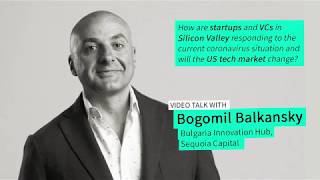
Live Talk #6: Silicon Valley in the coronacrisis - Talk with Bogomil Balkansky