vCatchup with... Bogomil Balkansky
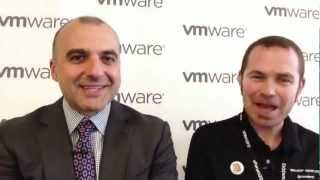
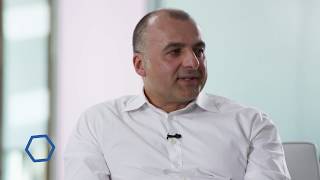
VMware product leader Bogomil Balkansky discusses the evolution of the company's software-defined data center portfolio. He notes that 79% of Australian and New Zealand workloads are already virtualized, highlights Horizon Suite as the most anticipated product, and argues that virtualization creates new hardware opportunities rather than displacing partners.
Chapters
Hi and welcome to this catch up. I've got a very special guest with me today. We're live at vforum and if you could introduce yourself please.
Hi, my name is Bogomil Bolkanski and I lead the products team at VMware that's responsible for the software defined data center product lines that includes our flagship virtualization platform vSphere, as well as the newer for US product lines and endeavors in the areas of structure, storage, virtualization and network virtualization. I've been at VMware for seven years, which makes me almost a dinosaur or an old timer because we're a very young company and it's always a pleasure to come down here to Australia.
Pleasure to have you here. So look, I've got about five or six questions that I wanted to ask Bogmail, so I'll jump straight into it. I'm keen to know about people's vforum experiences, past and present and I guess especially what brings you to vforum this year sort of thing.
So the first time I had a chance to visit Australia as part of VMware was all the way back in 2006, which must have been either the very first or maybe the second Vforum that we had down here in Australia. And back in 2006 we were launching what was VMware Infrastructure 3, the predecessor of VSphere. And ever since, it's no secret that Australia has always been at the forefront of virtualization adoption. And I always try to figure out what is it about Australians and New Zealanders that make you such ardent adopters of new technologies. But whenever I come here to Australia, it's really, really a pleasure to learn from the most advanced customers. And whatever it is, the questions that people ask me here, the stories that I learned about the build outs of virtualized environments, is basically the best source for me to anticipate the future of virtualization for the rest of the world. And whatever happens here at the Vforum in Australia, I'll then anticipate to see a year later, two years later in the rest of the world.
So we have a future.
For me personally, I feel that this is really the time and the place to discover what the future holds.
Wow, that's amazing. Thanks for that, Boge. I appreciate it. Yeah. So look, I had my first time at VMworld this year. I had the chance to go this year as part of the vmug and you know, it was an amazing time. I had a great time. I was just wondering what for you was the most exciting announcement in VMware, it's hard to do one specific. I know, but of all the latest innovation, what's the most passionate are you excited about?
I mean, obviously I'm not a. I should admit I'm a biased observer here. I mean, I'm the guy who, at the end of the day, our team is responsible for defined data center product lines. And I'm very excited about the prospects of scaling up the benefits of virtualization out of the compute realm and basically doing the same for storage and networking and the associated availability and security services. So I do believe that we have an amazing chance, probably the best chance that I see in the infrastructure software industry. But having said that, actually, if I have to single out a single announcement of VMworld, I can't tell you how excited I am about our Horizon Suite. I believe we're absolutely onto something very differentiated. Honestly, in my seven year history at VMware, I've never seen a product that has been so anticipated by customers. And everybody's telling me, when can I have this? And finally, I think I'll be able to actually explain to my father what it is that I do for a living once we launch it.
Excellent. That's really good. I think as well, with the Horizon Suite, there's really been a big change with the consumerization of it and we're all using tablets now, people are using iPhones and iPads, those sort of things. It's been a big difference, it's been a big change in how people use computers like this consumerization that.
It's interesting that on one hand we collectively are beneficiaries of the consumerization of it and the fact that we have all these fabulous new devices with such seamless, wonderful, gratifying user experience. But at the same time, this obviously is creating a lot of problems for it and in many instances, reintroducing problems that had been solved for a long time. Something as trivial and mundane, quite honestly, a single sign on. I mean, it was a problem that was solved. Like we hadn't been talking about single sign on in the enterprise context for quite a while and now, lo and behold, it's again a problem. And so I find that aspect of the post PC era quite ironic.
Right.
It's such a mixture of goodness, but also it forces us again to solve problems that had been solved before.
That's good.
Yeah.
Okay. I wanted to ask you, I'm a vmug leader down in Melbourne, Australia, and I wanted to ask you about what your thoughts were on the importance of the vmug. And what do you think the opportunity presents having an IT community?
I mean, I do believe that the VMugs are the lifeblood of VMware as a company. Nothing short of it. Over the years, I personally have been a big proponent and supporter of the Vmugs, and I say that they are the lifeblood of VMware because as a company, we have two things really going for us. The first thing is the fact that we have great technologists. We have people who are capable and excited about disruptive innovation. But the second thing that we have as a company is really an amazingly loyal and exciting, exciting customer base. And for me, every time I find myself at VMworld or an event like Vforum, it really helps bring everything in perspective. And I feel so re energized when I feel the love, so to speak, of the entire community that surrounds us. And I believe that the vmux really represent the best manifestation of this customer commitment. And so I do believe that the vmux have been and will always be so central and vitally important to everything that VMware does.
You know, being a VMUG leader, it's great to see that you listen to that feedback and that you have, you know, VMware have actioned that feedback in the past and I think that's a great thing. You know, there's a lot of, we've been involved in a lot of technologies in the past where you don't get that, I suppose as well, social media's played a bit part in that as well. But having that feedback mechanism and actually going, yep, we hear you, we're going to do something about it and then see you follow through. I think that's been fantastic.
Yeah. I mean, again, as a product team, we take any feedback from the vmux very, very seriously. And by the way, I should say thank you for all the commitment that yourself as a leader and everybody who participates in the VMUX has, because all of us at VMware are deeply appreciative. You know, this is not your day job. You know, this is something that, you know, you choose to carry on as a passion. And all of us have nothing but respect and gratitude for all your partners.
Thank you. Thank you very much. Thanks. Yeah, look, I've been asking this question to everybody. What's your opinion on a software defined data center and how does it compare to cloud and, you know, VMware have been a bit, bit of a disruptor in the, in the, in the ecosystem. Yeah. What do you see how do you see it impacting the partner relationship?
Yeah. So a couple of comments there. First, the first part of your question, how does software defined data center relate to cloud? Software defined data center is the architecture for cloud. It is our viewpoint of what is the best way to provide the technological foundation for building and operating cloud. Vedwa Software defined data center is. Since we officially launched that vision at VMworld, I've been really amazed at how well it has been received by the entire community around VMware because I do believe there is a lot of hunger in our customer base and our partner base to go beyond like the cloud washing. And you know, obviously in this day and age, just to say cloud is almost like saying Internet, you know, back in 2000. It doesn't really mean much. And I do believe that there is. People are actually anxious to get down to business and okay, what are the real technologies? What is it? How do I build? How do I operate one of these? And I do believe that with the software defined data center, we have articulated a very compelling vision and roadmap for what it takes to build and operate a cloud. The second aspect to your question was, okay, so with this vision of virtualizing not just servers, but also storage and networking, how does that impact the ecosystem? And I think the press sometimes loves speculating about how are we competing now with Cisco? What does that mean for our relationship with our major shareholder, emc?
I've been careful with my words.
I know, but let me kind of address your real question head on. All of this quite honestly brings me back to my early years at VMware when people are asking me, okay, with server consolidation, aren't you putting your server partners out of business? And why on earth are they actually reselling your software? Like, why are they shooting themselves in the foot? Like, what's going on here? And you know, after a decade of server virtualization success and server consolidation, the hardware server businesses of our partners are not only well, but actually they're thriving. And virtualization has actually provided the impetus for a lot of innovation in server systems and has allowed partners to actually rejuvenate their products, product lines and come up with. Net new product lines, which has resulted in growth for their business. I fully anticipate that we'll see the same phenomena when it comes to storage and when it comes to networking. So this is not about undermining the businesses of our partners. This will really storage virtualization, network virtualization will create new opportunities for our partners to create new generations of hardware that's specifically optimized for the world of software defined data center.
I think that's a good description there. Thank you. I've been saying to a few people that software defined data centers like cloud for IT pros, the definition. I think there's a lot more substance to it that's always been working in the IT field myself, I've always been a bit.
And if you save it, mission accomplished. Technical viewers. I don't really get it.
I've just found it too vague, you know. But like, yeah, you've already put some definition behind it and I thank you for that.
Yeah.
Look, tell us about your home lab, bougamill.
Yeah.
Do you get your hands on the tools?
Well, honestly I, I'm lucky and I have the luxury that I work in corporate in Palo Alto, so I do have access to very professional lab. So I don't have to have my own home lab, I imagine. Yeah, yeah, yeah.
But taking the hands on the tools a bit further. Do you use Horizon yourself? Do you actually use those end user computers?
Yeah, so I do use Horizon. I do use the alpha version of Octopus. I do use all of these technologies and whenever I travel the world actually I love showing them to customers. I do believe that they're a very compelling way to actually illustrate what, what BMW does.
There's a term, well, there's a few terms. There's eating your own dog food, although also drinking your own champagne. So it's good to hear.
I had never heard drinking your own champagne.
It's good to hear.
It's a slightly more appetizing metaphor for eating your dog food. So start using that.
Yeah, yeah, so that's great. Yeah. Okay, thanks for that. Yeah. So look, last question really. I was wanting to know about your opinion. I mean you kind of touched on it at the beginning with V Forum, but your opinion about how well you know, Australia, New Zealand be doing cloud and like, you know, like you know, and the software defined data center. I mean compute's been well established and you know, throughout the world now for a few years. But you know, do you see Australia as being like an innovator? Do you see as. Do you see like you kind of touched on it a bit at the beginning, you know, do you see that journey progressing more here than other places? And do you see, you know, you talked about the futures point in here, but you know that more.
I don't think that you guys have lost your touch, so to speak. Your magic touch. You absolutely are in the forefront of anything new and exciting that's happening. I do believe that now that I think statistically speaking, Australia and New Zealand are about 79% virtualized, which basically means that at this point resistance is futile. The x86 data center is going to be fully virtual. And at this point actually it is reflected in our business that more and more of our business is actually the rest of the software defined data center components over and above vsphere. So I think that's actually chugging along pretty well. And I think you all on your way again like to lead the adoption of software defined data center in cloud.
Starting on that next phase about looking up the stack and looking at automation and orchestration and how we can use policy and process to use these tools.
You're touching on something that's very interesting that this whole transformation is yes, about technology. And you know, VMware obviously is a technology company, we're very excited about technology. But I happened to be at a dinner last night with a bunch of customers and it seemed that really the hurdles are less about the technology. We'll figure it out. But there is a lot of thinking and evolution that still needs to happen when it comes to changing processes and when it comes to evolving the organization of the data center. I think it's fair to say that the way data center teams are organized is a reflection of a 30 year legacy of having these silo technology. I have compute, I have storage, I have networking. And you know, these teams, you know, sometimes work well together, sometimes they don't. I do believe that that's one of the areas that is ripe for change. And just like, you know, we're talking about software defined data center and we're talking about a single platform that actually now can coordinate all of these virtualized resources. I feel that we'll start seeing that also reflected in how the skill sets of people are evolving and how the organization of teams are evolving. And a lot of customers are thinking, for example, about having an admin that's cross trained across all of these disciplines and knows enough about server and storage and network and availability and security to be able to holistically provision an entire service. And then of course you still need the deep architecture experts in each one of these domains. But I do believe it from operations standpoint, things are going to change fairly significantly over the next few years.
I mean the data center has changed, hasn't it? We're much less not in the bonnet, under the bonnet, pressing buttons and twiddling knobs anymore. It's much more around a converged solutions put in and it's like 90% design and configuration and getting that correct, and then it's that 10% of the operational overhead at a later stage.
I do believe you're right that customers actually no longer want to be the system integrators. I think there is a lot of attractiveness in these converged infrastructure. Value proposition basically means that, hey, vendors have actually done some of the heavy lifting of pre integrating these technologies. Having said that, I don't know if there is actually a perfect substitute for getting under the bonnet. At the end of the day, you do need people who understand. I think that trend of converged infrastructure is yet another manifestation of the need to standardize as much as possible in the data center.
Okay, Bogwell, thank you very much for your time today. I appreciate you coming on there. Catch up. Yeah, thank you very much, Jan. Good luck. Thanks, Jan.
Thanks.
More from Bogomil
The First Principles of Building Great Startups with Bogomil Balkansky from Sequoia Capital
Bogomil Balkansky - What does Sequoia look for in startups? || Inovo Podcast #1
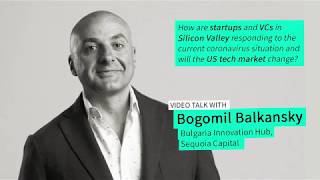
Live Talk #6: Silicon Valley in the coronacrisis - Talk with Bogomil Balkansky