
Curt Maly Part 2 Private Interview: Facebook Ads Behind The scenes
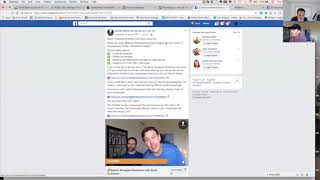
Curt and Brad walk through the Golden Ad Report, a Facebook ads strategy that tracks cost-per-video-view instead of just cost-per-click. They show how $1/day evergreen tests build retargeting pools over 7 and 90 days, then convert warm audiences into leads and sales.
Chapters
Now, for everybody else who is still with us, we're just gonna continue to roll.
Let's.
Let's get dirty with some stuff. Let's actually share some really actionable stuff that people can go, wow, I totally get it. I understand the theory, which is, let's build an engaged audience utilizing content thinking top, middle, and bottom of the funnel, actually thinking bottom, middle, and top of the funnel. And see how the hell does it look like if you set something like this up. So I'm going to let Kurt go ahead and share his screen.
This is going to be. This is literally a bonus video. It's called a golden ad report. We're going to go through a little presentation, then I'm going to show you how this works in real life. How's that sound?
Yeah, it sounds perfect, by the way. I probably should have done this, but we just are continuing to roll. If I cut this, and I'm just starting off here, this is part of a much longer series I did with Kurt, so that you can see that it's on my podcast other pages. But if you're just continuing on, I think everybody who's going to see this is probably seeing the other parts. So we are now. Yes, we are seeing the golden ad report screen. Take us through this.
All right, Like I said, I got some training videos on this. If you go to my social media enius fan page, you're going to see a lot of the videos directly on the fan page. And remember, if you watch any of the videos, you're going to be put right into my Hot 7 audience, which is perfect. So let's wait a minute. That went up a little faster than I wanted. Let's do this right here.
We're not gonna go through the whole thing?
How many slides? No, no, not the whole thing at all, sir. This is gonna give you the overall concept of everything we have drawn out. Then I will give people access to this. Perfect. So they can look it over. Let me show you this. See what basically happens is this. This will narrow down the whole thing that you and I talked about. What most people do is they're always concerned about getting a lead. Right. So we're gonna do is we're gonna focus on, well, how much does it really cost for someone to click on an ad? How much is it to click on a website? How much is it for to become a lead? And then even though they're a lead, let's say for a dollar, how much does it really cost for someone to open up that fourth email and go to the sales page. So this is the question we are constantly asking. These are the exact questions that we are constantly asking. So take a screenshot. Like write these down. Like, these are the exact questions that we are always asking to wonder, is it better to run with a video view or is it better to run with an ad? Because we're just changing the belief system overall. Now I'm going to show you this and I'll go through this really quick. But as a perfect example, what we're going to do is we're going to constantly see how much does it cost for us to have someone watch 25% of a video or 50 or 75 or 95%. What is that? If it's a 10 minute video, I mean, maybe it only cost us a dollar to have someone watch the whole thing. Right.
This is where most people are focusing on cost per click and we're looking at cost per video view.
Exactly. Let's look at consumption and what's better? Is it better to send someone to our landing page for a dollar or is it better to have someone watch a 95% video? What we're doing is we're always filling in these costs we're trying to figure out, okay, so maybe they, maybe it's, Maybe it's a dollar to watch our entire video and it costs 50 cents to go to our landing page. Okay, that's great. So it's cheaper to go to our landing page, but it costs $7 to get a lead. Do I want seven people watching my video or one lead? I think I'd rather have seven people watch my video. So what we do is we can really start figuring out the math and we can start to see. Oh, okay. It's actually better if someone watches Brad and I for 10 minutes for a dollar and then, well, then I'll just retarget those people and send them to a sales page. I can actually skip all these other points. So to figure that out, it's really quite simple. This, this is the math right here. So again, you can take a screenshot, I can send this over, I can send this over as a PDF, Whatever works best, right?
I want to see, I want people to see what the inside of the ad manager looks like.
Pretty soon, 100%. I'll get there in three slides, maybe four. But when you break down the math, it starts to look like this. This is a five minute video. Wait a minute. I get to see people for 3 minutes and 45 seconds for 50 cents. Let's spend money there. Now, last Thing I'm going to show you here, this gets kind of a complicated slide, but it's the last thing I'm going to show you is what I'm going to do is I'm going to run some video views to my video and I'm going to talk about running actually here. This will make it really easy. It's right here what I'm going to do. Starting top of funnel, last two slides I'm going to run to cold market. So I'm going to test four different audiences and I'm going to take Brad's video and I'm going to show you this example and I'm going to find people who have a high probability to watch my video. I'm also going to test that during testing the traffic and conversion optimization, you can see my videos to learn more about that. But Brad, I want you to think about these as learning modalities. Some people watch videos, some people want to watch a video and click to your site. Some people want to become a conversion and become a lead. We're going to test those out with two and three minute one and two minute videos and some other and even like the interview that we're running with you. But I'm going to run three different objectives because I'm wondering what's my math look like right here? Right. I'm going to test these. What's better? Do I want consumption or do I want to lead? What looks better? And the last part, what ends up happening is this. That's what I call funnel versus influence is what most people do is they're only targeting on the outer shell. All the goodness is all right here in the center. So what ends up happening is this. I'm going to move people to my Hot 7 audience that I'm going to show you here in just a moment. But now, anytime that I have an offer that's coming up, I know that, okay, I can go to this brown box right down over here. I can run video views, reach engagement and brand awareness. And I can target these people in the Hot 7 and I can run any of these different types of ads to get a whole bunch of exposure. Really quick to say, hey, I just did an interview with Brad. I can tell people really quick about it. And then the blue box, I'm going to go ahead and run clicks or landing page clicks or messages. I'm going to see what's the cheapest way to get people into those next green boxes. That's it. So I'm going to run people top of Funnel. And I'm going to look how can I influence people to bring people into the red spot, which is bottom of funnel. That's it. And a lot of this is run on a dollar a day. So let's take a look at Brad stuff. Bacon. I like being able to search for my ad creatives with some bacon. There we go. There's bacon.
So I just want to take a moment to remind anybody else who doesn't know exactly what this is. I was at your house about a month ago and you interviewed me. And it was about a 12 minute interview. And then it led to a deeper interview inside your Facebook group. And what you're doing now is you took our interview, which is content that, you know, you and I created, and you're running, you know, you're running ads to that because it's just. It's just more content that people can know, like trust you and me, et cetera. So I'm just giving people context in case they aren't sure exactly what this is.
Yeah, 100%. All right, so here's the thing. This is the first thing I showed Brad when we started. I wouldn't even let him talk to me first. I'm like, hey, I got to show you this. This is great. I gotta show you this. So what happens is this is what most people do. Okay. What we do is you're gonna see the way that I have this labeled is basically, this is a cold top of funnel. Okay. And I'm targeting Russell Brunson. I targeted for $2 a day. Well, I only spent $10. I didn't get any new messages. I didn't get any clicks to my website. Kind of sucked. So after $10, I turned it down. Well, then I targeted my lookalike email address with this 12 minute interview. And by the way, just to show you any, might as well just show examples since that's what we're looking at. Right? And what this example is is a picture, I'm pretty sure. Oh, yeah, I found a picture of bacon on the interwebs that I borrowed and then found your picture and my picture and put the pictures together right here. And this is what it looks like. That's it. Come on.
Now, is that a. Is that a thumbnail of the video or is that actually a link that they click to watch? Yeah, it's a thumbnail of the video, right?
Yeah. I don't know why the suggested video is not pulling up. So basically what it has is this. So this is just a thumbnail right here, right? They can watch the entire video. You'll see, we'll pull it up in a second. Just everybody can see it's a 15 minute long interview. So 15:45 is the length. We have 29 likes, 6 comments, don't really care about that. But this is basically just talk about Brad and hey, we're talking about some online business and if people click down on the link they can click learn more and essentially what's going to happen is, let's see, will this pull up? Oh, yeah. Well, if they want to find out more, they can click three different links. I set this up pretty quickly when you, when Brad was here. Takes just a moment. Takes just a moment when we're sharing our screens.
True.
So see what happens. It says, hey, we're talking about online business, offline business, working with billionaires and sports legends. Insights from over 160 interviews. By the way, you can click this link right here if you want to connect with Brad directly. That goes into Messenger. Click this link if you want to find out more about how we're using Facebook lives to really grow our business and our clients. Or click here if you want to be notified the next time that we go live. Well, what happens is in this 15 minute interview, as Brad said, what I did first is I ran that to my middle of funnel. People who already know like and trust me, I did that for $5 a day. And then after four days, I turned it to just a dollar a day and just let it perpetually run. So most Internet marketers will say, okay, okay, you got this video. But how many people clicked on the messages? I don't care if they click on any of the messages. I just want people to watch. If people watch and click on the message, it's what I call a golden app. It's a bonus. But if people just consume the video, I'm good. I'm going to show you that mid funnel in a second. Well, what happens is I start testing out and this is where most Internet marketers go wrong. Because what they're going to do is, is they're gonna look at this video and they're gonna say, okay, okay, how many sales did I make? Well, we didn't make any sales here and we didn't even get anybody. Actually, if we look at this, we didn't get anybody to click on our landing page. We didn't get anybody back. Go back to our site. I'm gonna show you for our Facebook Live offer. Yeah, we didn't get anybody to go back to our site. We sorry, we got 24 links out of how? 121 bucks. Very few people. When I spend 121 bucks and they're on 24 clicks, turn it off. This is dumb. But what they missed is this right here. Look at this. When we target digital marketing for a 15 minute long interview, look, I'm going to take $64 divided by 123. So 64 divided by 123. It cost 52 cents to have someone spend 15 minutes with Brad and I. They've never seen us before ever. And it's 52 cents to have them hang out with us for 15 minutes. Well, now what's gonna happen is now that they watch me for 15 minutes, okay, they're now gonna spill over. Even if they actually watch me for two or three minutes, the way we have this setup, it spills over and you can see, for example, this is. I need to remove bacon. And we're gonna look at a hot campaign. Just takes a minute, hot seven. So again, they watch, they watch that interview, right? Really for pennies when we really think about our marketing cost. So, Brad, it's always amazing to me when people are like, Yeah, I spent $15,000 on a billboard and I'm like, how many eyeballs did you get? Well, there's a hundred thousand people that drive by it.
I have no idea if they looked at it.
No, like here we can tell. Yeah, they looked at it. They opened it, clicked it, watched it. Like we know everything, right? So what happens then is. Look, you can see these two strategies here. I have video views for a dollar and engagements for a dollar. Okay, I'm gonna go ahead and click on my ad set. So what ends up happening is very magical. See, what happens is, and this is kind of buggy, so I'm not quite sure if I can pull the names out or not. Let's see. So personally, for July, from July till August. So July 1st to August 16th, 45 days, 46 days. I spent $1,100 on my Hot 7. It's not a ton of money compared to the other money that I've spent for ads. Could be a little bit of money. But if you notice, I put in $1,100 and my return is. Well, actually, I don't really have much of return. The interesting thing is this content doesn't give me the exact return. So what ends up happening is this content right here. Well, this content is kind of like getting regular emails and seeing regular content, seeing regular blog posts. Look, I end up spending $1100. I got 44 button clicks, 68 clicks average click back to my website, 16 bucks. It's expensive. Well, I'm only running this for a dollar a day, but look at this. Wait a minute. For a dollar a day we run some of these strategies that literally we're spending. I'll take a second. So this one right Here is funnel versus influence. This is an eight second video, very short. It cost us $28 to have 1400 people watch that eight second video. So let's just do the math real quick. This is at a dollar a day for the entire month. So 28 divided by 14, 15. So for 1.9 cents, I had people watch. See that one post? That's one post for the dollar a day. My next dollar one is. What's this one right here? Funnel versus influence. The algorithm is changing. This is a one minute video spent $35. One hundred and forty two views. So 35, 35 divided by one hundred and forty two. 24 cents. So now you can see I've spent 25 cents to influence someone twice. They don't have to buy anything, right? I can keep on going. But here's the big thing. Look at this. So this means when someone gets in my audience, I have 22,000 people in my Hot 7. So I have 22,000 people that I can mathematically know how many people I'm going to influence. Many people can never tell you, hey, how many people are in your retargeting audience? I don't know how many people on your email list? 46,392. I can tell you, hey, in the last 45 days in my step seven, I've influenced 22,000 people. And of those 22,000 people, they've seen my content on average 5.21 times. So now they've seen my interview with Brad, they've seen a bunch of other content, they've seen a bunch of other replay stuff. So now when I come time to make an offer, they're like, oh my goodness. Yeah, I've seen Kurt everywhere. I know he did this training, he did this, that, this other thing. Whenever I'm ready to make an offer, those are the hottest people there. Doesn't cost much to run this strategy. And Brad, you've been doing this a lot longer than I am. The online marketing stuff. Have you ever seen anybody run a strategy like this at this little low of ad spend?
No, not at all. Especially low ad spend, high effectiveness. And every time you do add a new piece of content, you do these hot Seven, you're adding to it. I mean, it's just, you're building like a snowball. You're just packing on the ability for you to build rapport with somebody in one way or another. It's like showing somebody a whole bunch of different episodes of your TV show. If you would let me ask this question. So you talk about Hot 7, and this is where I'm going to play a little dumb. You also talk about step two audience. So Hot 7 is pretty understandable where it's people who've been, who've engaged, interacted, et cetera, past seven days, a whole bunch of different potential audiences, which you list out in your courses. Step two audience. Will you please just review the basics of what?
Exact same thing, except for 90 days. Right. So here's the interesting thing. Literally what I'm about ready to tell you is worth thousands and thousands and thousands of dollars. So if I charge $47 a month. Month, like I'm telling you, like this, hands down. See? What, what, what? Now I'm gonna sneeze. Hang on a second.
While he is sneezing, hopefully you guys are. This is making sense. Shifting some paradigms.
Sorry, now I just lost my train of thought. It was gonna be brilliant.
So we were talking about step two audience. How step two is more. It's. You said it's pretty much the same thing, except it's 90 days.
It's 90 days. So what happens is, let's go back to your beer business. For example. Let's say you're working on your funnel and maybe you have three or four videos that you're running. Maybe you're not putting out a video every other day. Well, what starts to happen is you start running your ad spend. And now this pond of seven days is about this big. And if they don't engage in seven days, they fall off. So the pond gets a little bit bigger. But at 90 days, that pond gets really big. So what ends up happening? Like, I have a client who spends $30 a day on a Facebook Live video that I mentioned they did two years ago. The problem is they have four and a half million views on that video. Great. Their $30 a day budget cannot support millions of views. So what we do is I say this. I'm like, look, set up a hot 7 first because those are gonna be the hottest people that you can retarget. And then you're gonna start to see that, man, this is some great content. Well, then you can build out your 90 day audience as well, because essentially it comes down to this, if you have a large email list, which you would. What you should be doing if I should all over you, is you remove people who have not opened an email in the last 90 days. Because why send an email to people haven't been engaged? Well, what we do on Facebook, we target people based off their interest. Like they like Tony Robbins. That's also based off 90 days. So if Internet searches, Facebook and our email best practices are 90 days, let's definitely do 90 days. But this is where I say it saves you thousands of dollars. What we learned is that pool actually gets a little bit too big for just 90 days. So focus on your hot seven.
First.
Get those people that's your hottest tribe, that they know, love and trust you. Then what happens is, let's say you do an offer to that hot seven and they're like, like, we have that bot camp for $1,000 for six weeks. They're like, oh, my goodness, this is great. Well, now what I'm going to do is retarget my step two, because these are people who aren't also in my Hot 7, but these may be people a little bit longer. So I'm going to really run my hot seven all the time. And then when I have an offer, I'm going to go to that little bit warmer market or a bigger event that I want to promote. And then my top of funnel, I'm not starting and stopping. My top of funnel is I'm just constantly letting videos run whenever I want to test an offer. It's either the Hot 7 or the Step 2.
Right, exactly. So it's really. It's like a ballet. It's this interplay between audiences and understanding, like, what content goes to what audiences in which way to, you know, obviously build awareness, build rapport, and then move them to an actual action that you want to take. What's the most complex aspect of this that you think most people kind of screw up and need the most help with?
Oh, easy. They overcomplicate things. Because what we do is like, I just took over an ad account from someone and they heard about my strategy and their ad person tried to implement my strategy. And what it basically came down to is they had one video that led to a second video. If they watch 50% of the second video, they went to a third video. The third video, if they watched 75% went to a fourth video. And then all of a sudden these retargeting pools just got so small, by the time they were trying to retarget someone to the sales Page, There was nothing there to really target. They're like, I don't really get this strategy. So they over complicate it. So remember, I don't need people. And you and I even talked about this. I don't need people to watch video 1, 2, 3, 4, and then send people to an offer. Let Facebook run all of those at a dollar a day. Don't over complicate it.
They may see video 4 first, they might see video 2 last. And you're not worried about that, right? Because there are some ways to really think about this, like, over complicating. Okay, I'm gonna show them video one to a cold audience. And then let's say I run into a cold audience and I spend $1,000. And then it becomes, let's say now I've got an audience of a million people, and I run video 2 to that million people. But then the only ones who watch 50% or more like 100,000. And then like this whole thing, that sounds good in theory, but it's complicated as hell, and that's not what you're doing. And that's one of the things I like. I think the one thing that people just have to be comfortable in doing is say, listen, I'm gonna put out content on a regular basis, and I'm gonna run a dollar a day to it. And If I have 20 videos out there, that's what, $620 a day times 30 days a month? That $600 is not a big spend. That's for 20 pieces of content.
And here's something you just mentioned, though. You said publishing regular pieces of content that, you know, most people don't do, right? So it's like, okay, let's think about this for a second. Do we write a blog a week? That's a lot of work. Do we record three videos a week? That can be a lot of work. How about just a video a week? That can be a lot of work. How about shit? How about we just didn't do anything for six weeks, but we have these 10 different posts that are running for a dollar a day. So top of funnel, people are always seeing our content. Now we're out of that content thing, where it's like, God, I got to write a blog post and do three videos and do a podcast, and, you know, by the end of six months, you maybe have three articles done, maybe two podcasts, right? It just doesn't get done. So what I'm saying, what I'm telling people is, yeah, you gotta get on the hamster wheel of doing regular content, but not four times a week. Literally, you just do some content, put it up for a dollar a day, let that run. Don't ever turn off your hot $7 a day. Just keep stacking it and adding to it. Turn stuff off. If it doesn't seem to make sense, but keep stacking it.
Well, then the other nice part about that is let's say you've got 10 or 20 videos, maybe five, it doesn't really matter in the middle of the funnel. Then you really only need one or two videos out there to the cold audience to get them to engage with anything like a 5, 10 minute video click to a landing page or whatever. Because now you can start sending them 20 pieces of content automatically. That's already done and really useful. The other stuff doesn't have to be. You don't have to create brand new content for brand new people all the time. Just put out that one or two pieces of bait that are super valuable for your target market to build awareness and let the rest of the magic do its work. So that's why the setup of this is, I think, critical. And it's where a lot of people kind of mess up is, look, let's get your audiences built, right? Let's get your, let's, let's identify what you're, you know, what's your funnel, what are your audiences and build the middle of the funnel. Let's set up all your hot seven, let's set up your step two, and you got a big old list. And now let's create, let's take an inventory of what content you already have and put out there. And this is one of the things I do, I do with some of my clients as I create this kind of like content catalog that is very efficient for them to not only create new content, but to take what they've got. And then we say, okay, let's put these in. We've got these audiences, this middle of the funnel. Let's just load them up and set them and to a degree, forget them, right? So that's fantastic because what we have.
What we end up basically doing is so many people will start and stop ads. They're like, let's get the funnel up, start and stop, start and stop, start and stop. And they're like, it's just not working. Well, there's something called machine learning that Facebook's running. So what you do is get some of this content up first.
More from Brad

Seriously. If you pay mortgage or your rent this is like an IQ test Bilt https:/bradslinks.com/bilt

AI Native email marketing: Send emails from Claude/ChatGPT with NitroSendAI (Review, Not Sponsored)

How to Migrate ChatGPT Memories and Chats to Claude (Including Claude Cowork Triage)




My Investing Message To My Younger Self (And The Lessons I Learned the Hard Way)



