
Frank Shamrock "The Legend" How To Thrive In The Face Of Danger
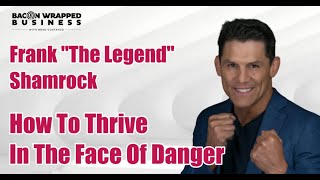
Live YouTube interview (Brad Costanzo hosting) with former MMA champion Frank Shamrock discussing his life story and reinvention. Topics include an abusive childhood, leaving home at 11, becoming a ward of the state (~age 12), repeated juvenile placements, adult conviction at 17, six-year sentence reduced to roughly three-and-a-half years served (paroled April 4, 1994). Frank describes using program/schedule (lifting, studying, education) to survive confinement, transitioning to mixed martial arts and earning multiple 'firsts'—first UFC middleweight champion, first Strikeforce middleweight champion—and holding a Guinness World Record for a very fast UFC submission (officially 16s; actual 14s). He connects these experiences to routines he keeps during the COVID-19 pandemic (prayer, meditation, workouts, work-from-home) and offers reinvention advice.
Questions this video answers
April 4, 1994.
A little over three and a half years.
First ever UFC middleweight champion and first ever Strikeforce middleweight champion.
Fastest UFC title fight won by submission officially recorded as 16 seconds (actual 14 seconds).
Chapters
Sup, everybody? This is Brad, and it is lunchtime here on Monday, and I've got a very special guest with me today. Good friend of mine and partner in multiple things, Frank the Legend. Shamrock in the house. Say hi, Frank.
Hi, Frank.
Oh, man, this should be fun. We've known each other for a couple years, and this is the first, as I said, this is the first time we've actually sat down to actually do an interview. I think we are live on Facebook. I'm going to go look here. Let's mess around and just see. I want to double check that we're not screwing this up sometimes. Yep, we are. We are live. Sweet.
So.
You and I BS about a whole bunch of things, but there's a lot of people out there who follow you and know your story, and a lot of people who don't. And I really want to take this as an opportunity to talk about a couple things. I want to go back and, like, a lot of folks know about your championship career in mixed martial arts and UFC and all of that Strikeforce, but a lot of people don't really know the backstory about, you know, kind of how you came up. And we're in a time of this pandemic and crisis and uncertainty and dangers to our health and life and threats at every level, and a lot of people are dealing with anxiety and uncertainty. And you've dealt with this throughout your entire life. And I would love to talk for you to tell more about your story as it relates to this kind of stuff and what people can really learn, because you've done an amazing job of channeling your mental toughness into a really resilient life and reinventing yourself around the block. So I'm just really happy to be able to finally get this recorded.
Yeah, man. Yeah. It's been a minute since we've known each other. Yeah.
So let's start on the. On the top. So some of the achievements that people most know you for would include what? I'll let you kind of talk about that, because then I want to dive into the backstory that people don't know.
Okay. Well, I think I'm widely considered the man who convinced America that cage fighting was a good idea, which I think we're still thinking about that one. But I was also the first ever UFC middleweight champion and first ever Strike Force middleweight champion, and I'm the only athlete to win championships in every major sporting league of mixed martial arts. And, yeah, I was, like, the first talent spokesman. I was the first broadcaster. So I had a lot of firsts in my, in my career. I have one Guinness World Record hanging on my wall. The other one's been broken, but that is the fastest UFC title fight won by submission in 16 seconds. So that's. Can't see it, but it's sitting right there. And, and yeah, and apparently I haven't done the research because it seems very lengthy, but apparently I'm the only athlete in the history of recorded sports to win back to back championships in less than a minute.
Yeah, you've told me about that. Explain how that, explain how that.
Why one, it's actually less than like 40 seconds or something. On one. Actually, this Guinness World Record was set in 14 seconds, but the timer in Japan stopped the clock at 16 seconds. And so that they wouldn't accept it. They would only accept what was officially on the video and on the time clocker. So I had to resubmit the 14 second for 16 seconds. But the following championship on this, I won over igor Zinoviev in 20 seconds. And that one's getting a lot of play on social media because it's in the greatest slams of UFC history. But I basically stovepiped him, knocked him out in 20 seconds. So in a matter of 34 seconds, I won two world championships.
That's amazing.
Athlete by second. But that quickly fell away.
Yeah. So, you know, one of the things that I've, I've talked to people privately about is, you know, some of the, it's the untold stories, the things we don't know about a lot of the people we admire. And it's really easy to just look at what somebody's accomplished and what they've done in their life and like, look, they're at the top of the mountain. Look at this. Lucky them, or I'd love to be them, etc. And they don't necessarily know, realize, or, or even have the ability to comprehend what somebody's had to go through in order to get that and to go through in order to have the mindset necessary to deal with some of, you know, from the training to the mindset necessary to put yourself in harm's way every single day. Like you did. And this is a part of your story that is public and it's been told, but I don't think a lot of people know that much. Like, let's we're rewind back to your journey from childhood onto the things that drove you to be able to not only compete at those levels, but to be able to face uncertainty, danger, even death around every corner, because it Wasn't a happy childhood by any means, was it?
No, unfortunately, my childhood was not the best. And I ended up leaving home when I was 11, which is ironic because my little girl's 11 now. So she hears all these stories. In fact, when we. When we lay in bed at night, before we go to bed, she's like, dad, dad, tell me the prison stories. Because to her, it's so fascinating that Ann, I'm the only person that she knows that was ever in prison. So she's just like, tell me about the culture and tell me about this. And so it's really interesting for me to be reliving those times, sort of this different moment. And, you know, I would say the scariest career right now is probably being a healthcare worker, you know, going into the fire. But for me, like, I grew up in this abusive home, and I never knew it was abusive. I just knew I had all these emotional issues, and I was always acting out, getting in trouble. And even though I tested really well in school and I was. Had great grades, I just couldn't keep my emotional stability together. And so any type of co. Conflict or confrontation, I would just kind of freak out. And so When I was 11, I went to juvenile hall for the very first time. And I got sent from. Because I was throwing rocks at a train, so that's a felony in the state of California. I got arrested about three months later. I ended up in juvenile hall. And it was the first time I'd ever talked to kids my age because we lived in a very closed community. You know, my mom didn't let me leave the house much, and I talked to the bad kids and was telling them about my getting locked in the closet and living in the backyard and all these different, you know, punishments that were happening to me, which I thought were very normal. And the bad kids started telling me how bad they were and how messed up it was. And it was like the first realization that I had that there was something wrong with my family life, there was something wrong with what was going on in my home. And. And so I went and saw my counselors, and they kept telling me, listen, keep doing these things. And I think this is what they tell kids, you know, to keep them in line. But they basically were telling me, if you keep doing crimes, we're gonna take you out of your home. And I sort of took that as a directive. I was like, this is great information advice. So I just started committing crimes. I was, you know, stealing everything I could to get taken away. And I mean, within months I was taken away from my home and I became ward the state of California. So that would have been when I was 12. And then from 12 on, I was awarded the state. And so I went from foster home, group home. And then I continued to use crime as kind of a tool. Anytime I didn't like a social situation or what was going on, I would commit a crime and they would send me back to juvenile hall where all my friends were, my community was. And that went on until I was 17. And basically when I was 17, I got married, and it made me an emancipated minor. And so then I became an adult, like overnight when I was 17. But I still continued to, you know, be a criminal and be a knucklehead. And even though I had a son and I was trying to care for him, I still continued to get in trouble. And when I got in trouble again, I was sent to prison. And so I went to prison when I was 17 years old. And then I got out when I was 21, almost 22, actually, April 4th of 1994, I got out of prison.
You know, just to jump in there. I remember the first time I heard you tell this story, too, and how you. And it really hit me how, you know, you turn to crime. It was an escape because you realize that, hey, this I can get. I can get free from the abuse or I can get free from all the other stuff. If I go do this, I'm taken to a place where I'm safe, and I'm. You considered that safe compared to where else you were, and you used it as an escape. And it. It also shows that you were thinking opportunistically back then. You were solving problems. It wasn't just, I'm committing crime because I don't know better. You were doing it because you understood that this is a. This is a way out from where you were. And I just remember I'd never thought about activity like that. It just really resonated.
Yeah, well, I think a lot of people turn to sports. A lot of people find, you know, these other, you know, extracurricular activities. But I also think those people have stable, comfortable home lives where they, you know, have a place to go that's sanctuary. And mine wasn't like, mine was on the streets. And the first group that really accepted me where I felt safe was in juvenile hall. And so for me, it was always like, wow, I'll just go back to juvenile hall. And I think, you know, the rest of the world was terrified of that. And I was like, yeah, I want to see my friends and counselors and you know, they give me great advice and I catch up on my schoolwork. So it became very comfortable for me to do that. Almost too comfortable. Because, you know, unbeknownst to me, once I got married, I was an adult. So that anything committed after that point was considered adult crime. And that's how I ended up in prison is, you know, I masked a bunch of felonies when I was 17, but when I went to court, they were like, well, listen, you're married, you're an emancipated mind. Now you're an adult. So now you deal with the adult consequences. And that was the first time where I really woke up and I realized I'd screwed my life up. Plus I was got a 60 year sentence.
Wait, 6, 060.
Yeah, I got convicted.
I don't know if I knew that.
20 felonies and 20 times three is 60 years. But I took a plea bargain deal which came under the consecutive criminal act, and I ended up with six years. And so I ended up, I went to prison for six years. And first I went to youth prison, which was not very fun at all because there was not very many stable youth there. A lot of those kids had come from gangs or inner city or, you know, they had a worse, perhaps a worse social upbringing than I did, but they certainly had a worse social, you know, connected and group activities. And I wasn't like in a gang. I came from a small rural town.
Yeah.
So I tried to get out of youth prison as quickly as I could and I also figured out I couldn't send money home or work and send money home to my son when I was in youth prison. So I transferred myself to adult prison shortly after turning 18.
Damn. So, you know, right now I just want to use this opportunity to kind of intersperse some of the stuff that's happening, you know, live in everybody else's life. So you were locked up at that age and this was, you know, we're all dealing with the quote unquote lockup of self quarantining and sheltering in place and staying at home to protect ourselves from the pandemic, but we at least have the freedom to still walk outside and go get fresh air and do everything else. How do you deal at that age? How do you deal with real lockup? How do you deal with the mental toll that it takes on you from A, you're being confined in a cage in essence, and then B, the dangers that surround you from other Inmates and everything else. And this is before your fighting career. This is before all of that and all of your training came into. A lot of people are dealing with, like, a tiny percentage of this feeling confined. Take us back there. Like, how do you survive that, like, mentally?
Well, it's all about your program. It's all about your schedule. In prison, they call it the program, what you're doing on your program, but it's really about scheduling your life and, you know, setting up a structure where each day kind of rolls into the next and you get the things done that you want to get done. So for me, it was lifting weights, it was studying. I went to college. I read a lot, lot of reading, you know, social time. But it was very scheduled. You're kind of stuck in this. This kind of schedule anyways, you know, according to how the prison set up. But for me, it's actually. It's actually great because I kind of grew up there since I was, you know, 11. So I was very used to the program of having a schedule. Wake up, you know, eat breakfast, you know, read, study, go lift weights. And I just. And that's what I, you know, counsel people now is, you know, in this time of going stir crazy at home, you know, get yourself a really solid schedule and then make sure you're plugging in the things that you want to get accomplished. For me, it was about getting education because I didn't have any education. I had these dreams, but I had no way to, you know, sort of accomplish them. I'd have, you know, 27 felonies. So it's not like I can get a real job or apply for anything because they're going to be like, well, what's up with this? So I felt this added burden in order to provide for my family. I had to sort of get over this hump that I created for myself.
Yeah. So what's been your routine and schedule these days, as you're in a less confined but still heavily restricted lifestyle right now? What are some of the things you're doing to keep yourself productive and sane? Everything else?
Well, little has changed for me, I hate to say it. I work from home. You know, I've been working from home for about 10 years. I'm not getting on stages, so that's the difference. I'm not doing, you know, broadcasting. I'm not getting out to do that professional side. But to be honest with you, that's the more stressful stuff in my life. So I've been enjoying, like, I'm playing the guitar. I Just bought a motorcycle. So I'm tinkering on my motorcycle. I still do the same schedule that I would normally do. I wake up, I pray, I meditate, I eat some food, I break a sweat, I do a little workout, I plan my day out, and then I work for six, seven, eight hours. And then the evening is here, and then I socialize and I eat and I relax, watch tv, and then kind of start over again.
Yeah, mine's been the same because I work from home as well, and it actually hasn't disrupted my. My flow, my rhythm too much. The one thing that I know that I've become much more cognizant of how much you take advantage of the little things in life, the little things you enjoy, such as going on a date with your girlfriend or your wife, or just getting together on a double date. Hey, let's go get dinner with a couple of friends. And I mean, now I live on the beach here, and they've just shut down the beach and the boardwalk, and I've become much more cognizant of how much I've taken that for granted. The fact that I can't go on them now without getting kicked off or a ticket, you know, it's. This has just made me really realize how much the tiny. The tiny pleasantries of life really matter and how little attention we pay to it until it's gone. And if. Yeah, if nothing else that's been at a spotlight shown on that. Take us to the story of when you got out of prison. So, first of all, I want to go back. You said you had 60 years on your sentence, and I can't remember if you told us how you got that down to how much total time did you serve?
A little over three and a half years.
Okay, so then how did you get that go from 60 to 3 and a half?
Well, I took this deal called the Consecutive Criminal Act. And basically, if you commit the same crime over and over again and it's exactly the same, then they can't line them all up. And I'm sure there was a way to stop, you know, unlawful mean prosecution, but so I ended up taking this deal, which, you know, essentially wiped all these crimes off someone's book somewhere and then amassed me this big number. But because of the Consecutive Criminal act, you serve the full term on the first one, and then it's like a half and a third and then an eighth, and it just sort of breaks down. And so it goes from three all the way down to. And then they all add up and so the total was like six years. And then in prison, for every good day you do, so that's. For every day you don't get in trouble or you do something bad, you get a day off. So you really serve 50% of the sentence. And I ended up serving a little over three years because when I went to youth prison, it wasn't the same there. It's subjective. You're according to your counselor and according to their perception of your rehabilitation, you get the days on or you get the days off.
Yeah.
And so that's one of the other reasons I had to get out of youth prison is it wasn't measurable. You know, I knew in this other world that it was a day for a day, and I knew I could provide. I knew that I could, you know, set a number and get out. And in youth, I wasn't able to control that. You know, as little control as I had, I had at least enough control on when I could get out, and I wasn't able to control that in any way. And so that was really, you know, besides my desires was the overwhelming factor that I wanted to leave.
Yeah.
I was like, I'm gonna kill one of these kids. It's totally not gonna work out. And then I'm never gonna get out because they can just keep me forever.
Yeah, so. So you get out. Do you have your share of prison fights and things like that in those days, or were you. Were you able to avoid that?
Yeah, I had a couple. I was. You. I was able to avoid most of it because everything is perception and posturing and, you know, it's very similar to business these days. And so, you know, you act a certain way, if you respond a certain way, if you react a certain way. There's pretty much, you know, barriers to all these things happening. And the only thing that kept me at risk, and it was a little stressful for me was I wasn't in a gang. I wasn't involved in any of these gangs. And. And people join gangs out of protection. It's like joining a group. So you join your group, they'll protect you, and they become your, you know, support group. Just like now you need a support group in prison, it's your gang. But I also saw the risk of being in a gang because if something happens to the gang, as part of the gang, I have to join in on the response. And so I took a. You know, I made an educated decision. I was like, well, I'm not going to join certain groups that cause me to do certain things. That I wouldn't want to do. That's gonna risk my time. And so that was the big stressful part, is when things went down, I knew it was just me, and that was the tough part.
Yeah, you had no protection, but you had no obligation to join in when it got crazy. Yeah, that had to be a big decision that you made, Knowing that you're putting yourself in danger by making the decision, but you're also putting yourself in danger if you join. So, yeah, you've dealt with uncertainty.
Yeah. And it's very like, everybody. And when I was talking to Nicolette just the other night, she's like, why? Well, dad, why didn't you just join a gang? And I'm like, well, you know, the gangs are race oriented. Gangs are, you know, location oriented. And I was like, I was from a different location. I was from a mixed race. I didn't really fit into these groups. So I would have been, you know, both dishonest and then stuck in this group. Might have to act a certain way. I was like, I wanted to act my way. And once I understood the rules, then that's how I avoided most of these, you know, problems. But I can say if you walk alone, that's what it's called. You walk alone. You know, you just have to stand up for yourself. So when someone comes and they think you're weak or they want your stuff or they, you know, they try to apply some leverage, you know, you have to stand up and use your. Use your words. Use your words and stand up for yourself. Because otherwise that entire group then goes, ah, we've got a weak one. And then they'll come take all your stuff from you. So it taught me. It was really the first time. Besides, you know, when I got up in court when I was a kid and said, I don't want to go home anymore, it was really, you know, the first time where I got, you know, a lot of power in my voice, because I realized if I don't say something, you know, that whole group's gonna come, and then I gotta deal with the group. But if I stand up to this man and tell him, no, this is what I, you know, this is how it's gonna be. Then it all changes. And I got in a couple of fights. They were all fights where I was in the wrong place at the wrong time or, you know, I stood up and I said something, and there was a group, and they were like, yeah, we don't agree with that. I was like, oh, no.
Did you have any. Did you have any of the fight training or mixed mart. Had you been doing any martial arts with your family prior to that or.
Yeah, no, I'd never done martial arts. I think I took karate when I was like seven or taekwondo or something. But I lifted weights every day and I studied bodybuilding. Bob Shamrock got me into bodybuilding. Studying bodybuilding. And then I played hacky sack. Every day I'm on hacky sack so.
You could kick balls.
And I played volleyball. Any sport, any activity where there was an opportunity and I wasn't stepping on any racial toes or group toes I would participate in because I was super athletic and I wanted to, you know, stay in a good system of athleticism and just kind of be active. So I was always playing baseball or so I looked very athletic. And that stopped a lot of people. A lot of people looked at me and they were like, he looks the part, he sounds the part. You know, we should just keep moving.
I've seen the photos of you coming out of. Was it Folsom? Is that where you were? You were in Folsom or No?
Yeah, I ended up in Folsom and I paroled out of Folsom was the last prison I was in.
Oh, wow. Yeah, no, I saw. I saw some photos. I'm looking for them online here. I got a handful. I was looking to see if I have your just coming out of a prison photo. It's be too hard to find while.
Sitting here doing this.
But okay, now talk. You know, talk about a reinvention. You get out and how old were you when you get out? Early 20s, like maybe 22 or something.
I was 21. And so I got out April 4th of 1994. I'd have been 21 and a half.
Oh, wow. We're approaching. Today's the 30th of March. We're approaching your anniversary, man. So that had to be a really interesting day. And I know a little bit of the backstory, but, you know, talk about reinvention. You were at a fork in the road, right? You could go left or you could go right. And there's a lot of people out there right now who are in somewhat similar forks. They've been laid off, they're in different positions. Their jobs, their industries, some of them have disappeared, at least for now. And they're going to be facing reinvention as well. But you've got a funny story here about what your dad told you when you got out. And let's go back to that moment of that. That crossroads where you were at, like man, you got a couple choices here.
Yeah, I got. Yeah. So when I was just turned 12, I just almost turned 13. I ended up in the Shamrock Boys ranch. And Bob was the first ever, like, real father figure, mentor to me in this journey. And then even when I went to prison, I screwed everything up. He kept mentoring me and bringing me books and, you know, teaching and guiding and. And so, you know, he kept telling me about this new sport that's developing and this new thing. And he made it sound very much like wrestling. You know, like we were going to do professional wrestling. And then when I got out, you know, he basically said, hey, in fact, this was in Folsom. He came, you know, months, about a month before I got out, and he kind of gave me the last dad talk. And the dad talk was, you built your body up, you know, you got this great machine. You know, you can make a ton of money as a performer. And, you know, these are the two avenues I think you should pursue. And it was like, fighting. And he told me about this kind of wrestling story, submission thing. And then he's like, or stripping or a great stripper. And I'll never forget it because I was just sitting there going, is this guy crazy? Like, what's he talking about? But. But my brother Ken Shamrock had actually been very successful at both of those. And so he had experience. Bob was there, you know, coaching him and being a supporter. So, you know, he had this firm belief that this was a probability. And I literally went back to my cell and was like, you know, think about it. But, you know, I always look ahead, you know, five years. And for me, it was okay, I got this time. I'm gonna do the time. I'm gonna get out. What am I gonna do? You know, I got really no skills. I took some sheet metal classes. You know, I had, like, vocational skills. And so, you know, I saw myself being a worker for the rest of my life. But with Bob's guidance and with these two options, I was like, okay, I'm gonna pick one. But I didn't feel like I was a stripper, and I didn't feel like that was my. You know, that was my cloth. So I did the fighting thing, and it was really challenging for me just because I was terrified of fighting. You know, I mean, I look good, I sounded good. I put on a good presentation, but I really didn't like fighting, and I didn't like the violence of it or the physical confrontation side. So it was a big pill to swallow.
I do find it, like, ironic that Then your career ended up fighting in your underwear. So you kind of ended up stripping and fighting.
Yeah, I genuinely saw it as a chance. And, you know, to Bob's credit, you know, all throughout my time, he kept mentoring me on build up your body, learn about nutrition. He kept sprinkling these thoughts on me, and I had nothing else to do but study the stuff he sent me and do the things he taught me. What I realized I was doing, in hindsight was making this huge investment into my body and into my mind, because I really had made my mind up. I really had built my body up to a point where if I wanted to do this, I could. A lot of people don't take those little steps, so when it's time to take, make the big decision, they're not ready, physically or mentally. And I was ready. I was still scared to fight. I didn't know how to fight. But, you know, spiritually, physically, and mentally, I was prepared to go do it. Once I said yes, you know, that was it. Yeah.
And you've also got a great story about the first fight when you walked into. Because it was your brother Ken Shamrock's dojo, right?
Like, he had.
He had a training center, etc. So, you know, whenever people are going through reinvention, whenever somebody's trying to learn something new and figure it out, I know that, you know, whether it's in business, whether it's right now and people are trying to pivot and figure something else out, there is that moment where you're gonna suck at this and you're gonna suck really bad, and you're probably gonna get your ass handed to you because you're trying something new and you're.
Figuring it out as you go.
What happened when you walked in, when you were trying something new?
Well, I. I mean, straight out of a movie, first my Bob took me to the dojo, and I didn't know what a dojo was. He's like, yeah, going to the gym. You know, they call it a dojo thing. And then, you know, like, we literally pull up. It's an industrial building behind a stereo shop in the middle of nowhere. And so it looks just drab and nondescript. Then he literally turns to me and it's like, okay, son, just don't give up and don't show him you're scared. Opens the door.
More from Brad

Seriously. If you pay mortgage or your rent this is like an IQ test Bilt https:/bradslinks.com/bilt

AI Native email marketing: Send emails from Claude/ChatGPT with NitroSendAI (Review, Not Sponsored)

How to Migrate ChatGPT Memories and Chats to Claude (Including Claude Cowork Triage)




My Investing Message To My Younger Self (And The Lessons I Learned the Hard Way)



