
Inside Brad Costanzo: My Most Revealing Episode Ever
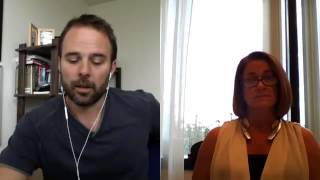
This is a transcript of a YouTube coaching-style interview where Brad Costanzo is interviewed by Dr. Laurie Emery. Brad explores his brand identity (calls himself a "dot-connecting entrepreneur"), personal history (including two major financial losses), passions (learning, connecting people, marketing), relationship status (long-term partner and upcoming marriage), and recurring struggles (lack of clarity, paralysis-by-analysis, tendency to chase shiny objects). He also describes aspirations—keynote speaking and changing education—and mentions mentors and intensive growth practices (Vipassana, psychedelics).
Chapters
Welcome to Bacon Wrapped Business with Brad Costanzo. Sizzling hot business advice guaranteed to make you fat profits. Every week, our chefs will serve you proven recipes for ramping up your revenue. Now here's your host, Brad Costanzo. Hey, there. Welcome back to Bacon Wrap Business. I'm Brad, and here on the screen with me, you may recognize, is a previous guest of mine, Dr. Laurie Emery. Hi, Dr. Emory. How are you doing?
Hi, Brad. I'm doing great.
Cool. So got something interesting to share with you all, my viewers and listeners today. So after the original episode where I interviewed Dr. Emery about what she does to help provide life and business transformation coaching for other entrepreneurs and professionals, et cetera, I liked everything she had so much. We reconnected, we just started talking, and I hired her to say, look, I'm always trying to work on myself. I'm always trying to make myself better. And I know I've got some blockages in my life that are limiting me from achieving what I want, my true potential. So we decided to work together. And I think it's been about a month or two, I want to say, give or take, that we've been working together. And she had an awesome idea. She said, brad, let's flip the tables on your podcast today. Let me interview you and maybe do this in lieu of a coaching session, and let me see if we can pull out some of your story and some of the more, you know, poignant points, both the ups and the downs. And she said, the one thing is, you got to be really genuine and authentic and vulnerable here. And if you've listened to some of my past episodes, I've, you know, from working with her, that's one of the things I'm trying to do, is just be more vulnerable to you, the audience, but also to myself. And I know that sometimes in the past, I've glazed over some of the challenges that I've had, looked at them at mountains as speed bumps, and I've also looked at some of my big wins as not so big. So that's one of the things that I'm trying to do, is tap in more to myself so that I can connect with you as a listener much better, but also myself. So without any further ado, let's flip the table, let's wrap Brad up in bacon, and then see where this goes. Dr. Emery, thanks for joining me again.
Absolutely. I feel so humbled that you're handing it over to me right now that I get to be you.
Should I be scared?
No. Well, it's up to you.
Exactly.
You Know, when I made this suggestion, I was thinking about coming onto this call today, and I thought, and this is true for me as I've gotten to know you and I've been blessed to be around you in some of your business situations and got to watch you in the boardroom. And I've heard a lot from others who know you on your reputation, and I thought, wow, I wonder if Brad realizes that people really want to know him. People like you and respect you. And when I watch a lot of your podcasts with other people, you're such a commitment to giving to all of us entrepreneurs. I listen to how you ask questions because you want to make sure that there's a lot of value for us and you want. And I remember asking you when it came up that day for me to say, well, let me interview you is I thought, I don't know if Brad really knows, like, who he is for everyone else, and that everyone else would really love to know you on a deeper level, like, who's the man behind the business? And I know you're known as the connector out there in your social circle, which I do have some questions for you about that. So I just decided, let's put it on. Let's put it on camera for people and let's just get started and we'll see where it goes and let people get to know who you are and what really makes you tick and, you know, what makes your heart go pitter patter and fill up and what are some of the pains that you have experienced and fears, just like all the rest of us. So I guess let's get started there. And let me ask you talk a lot about marketing and branding, and I thought, well, that would be a great place to start, is like, who's Brad Gastanta and what's your brand? I can't hear you. Your audio is gone.
Okay, I'm back. Sorry about that.
Okay, baby.
Jeff. So this has been a hard one for me because this is one of the things that I've actually been challenged with, which is one of the very first things, like, who is your brand? Who's your people? Who's your tribe? And, you know, I'll start off with, you know, who am I? I'm a really grateful guy who's having an amazing life. You know, writing his own rules is kind of how I try to look at it from a global life perspective. I think outside the box. And I believe that life is short, but it can be truly amazing. My brand is, though, something I'm working On, like, I've been told that I have a golden Rolodex and amazing connections, that I seem to know everybody. And you know what's kind of funny about that is I look at all the people I don't know and I'm like, well, I don't know them. I can't be that amazing. But. And I find that that's a habit. It's just discounting my successes. And I do. I know a lot of people. I am a very proactive relationship builder. It's something that I do. I like to think that I'm not just this consummate networker who's going for a quantity of relationships, but I'm really trying to know people. And the other aspect is that without sounding arrogant about this, I kind of like to think of myself as a bit of a Renaissance man only because I have ever since I was a kid, I love, I collect skills, knowledge and ideas constantly. So if there's something I want to learn, I don't hesitate to go out and take lessons for it or learn this or hire a coach or just learn things. Whether it's like learning how to play guitar, learning how to dance, learning how to play another musical instrument, learning how to do marketing. I just love the experience of collecting skills and being very versatile. So I've also been told that I'm kind of a Wikipedia with instant recall of especially marketing knowledge. And, you know, one of my business partners, Kent, tells me, he's like, I can ask you something and, you know, you'll say, oh, well, two years ago I read a book with this information in it and here's how it would apply to you. But I think I've boiled it down and I've used this in introductions from myself before, which is that I'm a dot connecting entrepreneur and I connect the dots both with people, with ideas and information. And I think that is maybe the brand that works for me the most, that feels the most authentic.
And why do you think I'm going to word this in a little bit of a different way than what you said? So if it doesn't land for you, you can change it?
Yeah, please do.
But, but as you know me from our month or two months together, I usually do it for a reason. Right. So why do you think create, Making. Creating connection is important to you in your life?
Well, you know, I was an only child, so raised it as only child. If I didn't create connections with my friends, I was just hanging out with mom and dad. And that was one of the Ways that I just, you know, thrown into the world is create connection. So in many ways, and I do believe this, my closest friends, I do feel as though they're my family. So some people are like, oh, you know, my brother and my sister, that's my closest bond with another peer. And mine is not at all because I don't have that, it's with my friends. So I had to get really good at making friends and understanding socially how to do that. But then also I believe that I know that people are born with certain predilections. We, you know, some people are more social than others. Some people are more analytical. Some, some people are more outgoing or introverted. I do happen to be just naturally more outgoing than people. And because I'm good at connecting, I've created a lot of opportunities that I probably shouldn't have had under normal circumstances. Like I've just, I've made little good authentic connections and they've led to flying on a private jet or, you know, having, you know, meetings with amazing people that at times I felt like, man, I don't deserve this, like, what did I do? But. And it's taken me a while to kind of own that value, but I think that's, I've seen the, I've seen the benefits of making authentic connections and making people like and respect you.
That's great. And so what would you say has been some of the hardest lessons that you had?
So, you know, some of the hardest lessons. As a child I had a. I had a pretty darn good life, you know, loving parents. I can't think back to many childhood super hard lessons that, you know, really, really resonate with me as an adult. However, I've had a couple big lessons, which was there were a couple times where I didn't really, I didn't know what I still wanted. I didn't believe in myself. And I had built up some really good savings in the six figure range. And I took a gamble. One of them was in the stock market. And I just put every single thing I had. This was back in the go go late 1999 and 2000. And I bet on margin. And I just built up this pretty big net worth, starting with not much and then lost it all from some stupid, I knew better mistakes. And I was a financial advisor, a professional financial advisor at the time. And here I thought, well, I don't have to. I don't like doing this stuff, this work things for the birds. I'm just gonna basically gamble in the stock market. And when I did I lost everything and I went down to scratch. Actually, I was in debt after that. And then another hard lesson that I had to learn was that after I immediately, within a few years, made it back and then some, I did the same shit and I lost it all again, once more with a stupid investment and I was back down to scratch. So twice in my life I have had six figures in cash in the bank account. And because I decided I don't want to work so hard, I've heard that rich people invest their money and other people, their money works for them. I'm going to do that. And I got slapped down. Curiously though, every time that I took the money that I had and I invested it in either my education, my own business, things that I could control seems to work out. So that's been one big lesson as an entrepreneur, as an adult, as somebody who has to kind of manage their money is that bet on yourself things that you can control and don't expect other things that you can't control to do all the work for you.
Got it. What are you most passionate about?
Most passionate about. You know, once more. So once more, this has been, this has been one of those things in my life that I've actually struggled with. And I. I am. What do I want to say? I am envious of people who have this, who have this passion to them, like, oh my God, this is what I like the most. But I think that the things that I like the most that I'm most passionate about is experiencing new things with new people, connecting these experiences, deep conversations, brainstorming with others, and sharing the human experience with others. So I can't say that I'm most passionate about a topic. I could say I'm passionate about marketing because I just, I love it. And that just seems like the cop out. I'm passionate about marketing and business, but the things that really bring me the most joy, the things that I like the most are new ideas and new people and consistently feeding myself a diet of both ideas that inspire me and people that inspire me.
Got it. So I've been blessed to learn quite a few things about you in the last few months. And I know you're getting married soon.
Yes.
Most of your inner circle knows. Is there anything that you are afraid of as you enter into marriage?
You know, there's not much that I'm afraid of. It's been. So the folks who know me know that I've been with my fiance now, although she has only been my fiance for about eight months. For eight and a Half years, going on nine years. So I didn't just jump into a relationship and jump into marriage. And it's been, it's been an amazing relationship. We've had ups and downs like everybody, but I feel as though, you know, we've lived together for the past five years, and I feel as though we work really, really well together. We have a great partnership. Not just love and romantic love, but friendship and respect for each other. So I'll say because I've waited and because I'm sure I wouldn't say that I have any fear around that to be, you know, to be real honest.
Do you have a philosophy about what you think makes relationship work?
You know, I think the thing that makes a relationship work is obviously you have to have a mutual respect for each other, but it's really developing an empathy for who they are, how they think, and what has created those, those thought patterns. I've done a lot of work around this, you know, you know, this. I've studied, studied neuro linguistic programming, which a lot of people who don't really understand it just think it's a form of persuading other people to do things. That's like the tip of the iceberg that people see. But really it's caused me to have to go back into the way I operate and understand what caused me to operate the way I do. But then also to be able to look at others in the same way and go, okay, we're all just slightly different computers with different problems programmers in there. And for me, that's created an empathy to where if Kenya is reacting a certain way, I don't necessarily take it personal. I try to put myself in her shoes and really think, okay, am I being a dick? Is this really me? And if it is, I'll full on raise my hand and say it. But when you do that and when you're able to step into their shoes for even just a moment, I think it's. It diffuses arguments before they occur and it makes things just a lot easier. Plus, I think it creates that respect if it's not there in the beginning.
Got it. And, you know, that just reminded me of a conversation you and I had in the beginning of our work together where I was getting to know you and we were talking about creating, you know, what, where do you want to go from here? And what's your vision for your life? And if you could, you know what we call future pacing, right? Dream into 5 years, 10 years. What has to happen for you to have a life of no Regret.
So what has to happen from here? And this is where you and I. Your work has been amazing for me in getting this clarity block. But I have to. In order for me to go from where I am now to where I want to be, which is living a life of no regrets, I have to get really clear on what is most important to me and what I really need to be fulfilled. Because there's a lot of things out there I look at, you know, will this fulfill me? Will that fulfill me? I kind of think so. I don't know. And it's just not really a tangible thing. It's never. I've never dug deep enough to know what that is. You know, like, I bought a $160,000 Audi R8 sports car a year and a half ago, and yeah, I like it, but does it bring me fulfillment? Not in any way, shape or form. Does it make me happy? It's fun to drive, but do I live in my dream city, you know, with a beautiful, wonderful fiance? Yeah. But I always realize that there is. The things that bring me the most fulfillment are a little bit intangible. So I'm trying to get a little bit more dialed in on that. Once I do that, I have to take action on those. And this was a big thing for me. It has been for years, and it's still stuck in there is. I have to stop playing entrepreneur and really put my knowledge to use by organizing all the resources I have, inspiring others, leading a team, stepping into a leadership position and going after life really like there's nothing to lose. Those are the things that I have to do. It's a little bit intangible. I could tell you all the things I have to do from a business tactical standpoint, etc. But, you know, continue to build my brand, continue to get out there, understand my offer. But really what it comes down to doing is stopping that feeling that I'm just playing entrepreneur and not being one as much as I need to.
So when we had talked about that, can I bring up some of the things that we spoke of that you shared with me that day? Because I think they're really some of the juicy stuff about you that I thought was fun to learn about you. You had said that you're confident in who you are and you love creating value for others and being in service to others. And you explained to me that.
As.
We'Re starting to develop this, and I know that you want to keep playing with some of this, but one of the things that you have in your dream Is that you wanted to be a keynote speaker. And I asked you why and you said. One of the things you said that I thought was certainly in alignment with your values of serving others is you said that it's a way for you to impact others. Can you still hear me?
Can you hear me?
Yeah, your volume just went off for a second.
Yeah, that's true.
Inspiring people has come up several times in your discussions with me and your love of learning.
Yeah.
If I were to guess what one of your answers was gonna be about. What you're passionate about is you just seem to. You never stop learning.
It's funny. That's where. When I'm stressed or anxious, I'll pick up a book or a. Or info product or an audio or something and I'll just. Or a video and I'll dive through it and I'll just learn. That brings me peace. Is learning new things. So. Yeah, that's part of it.
Is it also sometimes an escape for you? It is, yeah.
Yep.
I guess it's better than smoking or doing drugs or drinking. Yeah, right, Exactly. It's healthier. Okay. And so what. What would you say? Or maybe let me say do it this way. Who would you say have been your biggest teachers?
So. My biggest teachers, so obviously, without sounding cliche, my family. They are amazing people and they've taught me a lot. They gave me an amazing foundation where I wouldn't be where I'm at without them. My closest friends, as I mentioned, they all have great qualities that I've drawn on in different situations. I kind of think of myself as a chameleon. Sometimes I think, okay, what would Nate do in the city situation? What would so and so. And I try to try to draw out the best qualities of my closest friends in business. It's been kind of a mix. Some of the people didn't know they were teaching me. Some of them are dead because they wrote great books and they're no longer with us like Napoleon Hill and other folks in the world of marketing. My first teacher was. Well, I'll give a little bit of credit here. This will be fun because I'll share this with them. But so with Neuro Linguistic programming, I studied with Susan Stageman in Dallas for a year and a half. She was amazing. Wouldn't be where I'm at without her. Kevin Wilkie gave me my first information product on how to do Internet marketing. Tim Ferriss inspired the heck out of me with his book Four hour Workweek. I give him credit all the time because he's the One who set this kind of wheel where I'm at now. Now the past, I don't know, seven years in motion. Some of the other people that I read every single thing they put out and I try to learn from as much as possible. You know, folks like Jay Abraham, Steven Pressfield, great author. A current business partner of mine was a mentor. Bob Serling, Frank Kern, Mitch Axelrod has been an amazing mentor of mine. My close friend Sean Stevenson is one of the most inspiring people I know. Close friend, I look up to him. He's taught me quite a bit about what it really means to be an amazing person. And a current client, friend, business partner of mine, Kent Clothier. So I've worked with Kent for the past two years. Maybe we've known each other for maybe two and a half years. And he's really taught me quite a lot about everything about, you know, being a good man, family man, friend, business leader. And I've been fortunate to make money with him, from him and also learn an amazing amount with Kent. So those are some of my biggest teachers to list them all. We'd be here forever.
And what do you think people learn from you?
You know, that's another, that's another one I've struggled with because who you are. So I like to think of myself as a big time optimist who thinks outside the box. And I've had some of my friends who are not in the world of entrepreneurship, they're in traditional jobs, which is fine, but they've told me that they really admire the fact that I don't do anything like that. I just create opportunities or I create money. Like you're always doing something different, weird, something I would never even imagined is capable. And I like to think that I'm cracking open people's minds of what's possible. I mean my very first business, I created a online course of me doing bar magic tricks in my living room and made a six figure business out of that and sold that business. I mean my. And I was in my mid-30s when I did this and I was marketing to people typically in their 20s. And I think I blew all my friends away going, wait a minute, weren't you this like professional financial services guy? And all this other stuff, I can't even believe that's possible. So I like to think that one of the things I do is I show people what's possible, not what's probable. And I have to, you know, I always try to continue to, you remind, remind myself to look in the mirror and teach myself that the other things have to do with like, a lot of my clients come to me because I always have a, an insightful, an insightful response to the business problem and a solution that isn't necessarily in the box. As I said, I can, I can recall strategies that have not necessarily worked for me, but have worked for somebody that I was sitting in a mastermind with three years ago and he said this, and I just kind of filed it away in the hey, maybe this will workspace and I'll, you know, I can pull those out and help people dial that in. But it's also been a, it's been a sticking point for me in trying to pigeonhole myself Right. In a good way, is trying to find that specialty. Like, why do you come to Brad? Do you come to Brad for learning how to do Facebook advertising? To learn how to write copy, to learn how to sell a business, to do whatever. And I don't feel as though I have that one specialty, except for I feel like I have the ability to kind of see around corners, to solve problems by connecting the dots, whether those are, you know, people dots or information dots. And that may have been a really long winded answer to that, but.
Okay, okay, you know where my brain just went? You said there's not much on. And I was just, I was just. I'm not sure why this popped up, but I was remembering on one of our first calls where you and I have a lot of the same skills. We just use them in different arenas. Right. And so because probably important people know that you'll turn the tables and coach me to my stuff as much so I can be successful. So. But I remember cutting through this stuff and seeing around the corner, so to speak, and saying to you, okay, Brad, here's your next that I want you to consider. And I told you what it was. And immediately all your fears and all, you were like, no, not that. We haven't spoken about it again.
Wait, was that the Vipassana meditation? Well, so what's funny? It's not that I'm totally scared.
Let's tell people what it is. Let's tell people what it is.
Well, you tell them what it is because you've done it.
Yeah. So when we were talking, I. I spoke to you about really wanting to have you break through what stops you. And we call that finding stretches in life that kind of bring up the fears of anxiety quickly. On that call, I did just that. And I said, brad, I think the next thing you should do is the ten day silent retreat. It's the Vistasana retreat. And you have to know just for your audience to know. For those of you who don't know, you're not just in silence. You are not to look at, interact with anyone else for 10 days. You're with you and you. And you're out of your life. There's no writing, reading, phones, electronics, nothing for 10 days. And so now you tell them. Tell them you're.
Yeah, so. So, first of all, yeah, I mean, that. That is. It is scary. I will say that. And it's even funnier because my buddy Rob has told me many stories when we've been out. I live in Southern California, so talks about meditation retreats. That is. That's tip of the tongue for everybody out here. And so Rob. Rob did this. And Rob is like, I couldn't. I had nightmares for a year. I didn't sleep right. He goes, it messed me up. I was. You know, he just went into some of the hallucinations, the deep, dark hallucinations he had, and he's like, yeah, that was crazy. Holy crap. So it was funny. And I think we had been talking about it, like, a week prior to you bringing that up, so it was really fresh in my mind. Somebody else going, oh, hell no. But, well.
And what I love about what, you know, when we talked about and what you brought up when you said, you know, I'm not really afraid of much, is that we say that. And I think a lot of us say that. I've said it my whole life. There are very few things I'm afraid of. But I do think there's a natural fear of knowing ourselves.
Yeah.
Of what we're gonna find out. Right. Like, you go to Vicosna, what if your mind does what Rob's mind does, and it's as crazy as his mind. Right, Right.
Well. And, you know, I've done. I've done a decent amount of work. I've sat with several entheogenic and psychedelic medicines that really. In a very sacred, you know, place where it's not, you know, partying, but things that have opened me up to my psyche. Some of them beautiful, some of them dark and scary and whatnot. So I'm. I'm pretty comfortable in exploring some of those areas. But at the same time, yeah, it still kind of freaks me out all the time. And the one thing, though, like. Yeah, ten days. Whoa. That. That. It is scary. It's. It is one of those things that a million things come up, like, oh, my damn. But not saying I won't do it. But, yeah, that came up as a yeah.
And I don't know how many of your listeners watched your interview with Sean Stevenson. I thought. And I loved how vulnerable that interview was. And Sean's so great about. And your connection together was just. It was beautiful to watch. But he was so great about turning the tables on you on that interview. And I thought, oh, gosh, he's doing with Sean what he does with me when we get vulnerable, start dancing around it, right? Oh, yeah. And our work together, it's about getting those muscles strong, of literally finding within your blind spot and learning to go, wow, if I'm afraid or I'm nervous, that's exactly where I should go. So that leads me to the next question. Again, I'm very aware that I ask you these questions and you're going to answer me from what you can eat today. And I'm sure in five years, we could ask you these same questions, have different answers, but. So for people who don't know you as intimately as people like Sean and Los and some of your inner circle, what do you struggle with the most? And, I mean, that place that we all have, we don't necessarily sometimes even talk about it. We're so used to walking around with it. But, like, when you lay your head on the pillow at night, you're like, man, I'm really tired of dealing with this inside myself.
So I'd say that lack of clarity, of feeling like this is the easiest thing in the world. When people say, what do you want? And I go, I don't know. I really don't know. And it's like I feel almost like copying out, or I'm being lazy and thinking about it, but at the same time, it doesn't come to me because I know that it's not. I don't. Yes, I want material things, but that's not what I want down, you know, deep. That clarity oftentimes creates problems. But then I also. The thing I struggle with is I get paralysis by analysis. I overthink things like. Like crazy. And it oftentimes prevent me from doing it. And then I get really mad at myself because I look back and I go, I know this. I have everything I need to put this into place. Why did I not do it? And maybe a year, two years down the road, and I see other people who are not nearly as skilled and whatever that was as myself, and they just got out there and took action. And I say this as a guy who also does take action. I don't do this constantly, but I Also don't take the action enough and I get completely paralyzed. And I think that also what happens, that I do, and this really bugs me and annoys me, is that oftentimes I quit when things get rough. But as opposed to just quitting, I change horses. And I know this demonstrates a lack of commitment on my part from the get go. Like, I think, hey, this is a shiny new object. I'm gonna go start to pursue that. And I get the ball rolling and then I realize, oh crap, this is not as easy as it as I thought it would be as it sounds. So I like, oh, here's another shiny. I'm just gonna get on this horse because now this horse is nice to me and I get to ride it up to a gallop. And it's not all crazy, but I've done that. And what happens is I start, you know, I'll climb one ladder and I'll get only so high and then I'll go climb the other ladder and I'll go, go climb the other ladder and I just realize I keep on hitting that glass ceiling of myself without just committing and breaking through when the times are rough. And I also, what keeps me up at night is wondering why I feel like I have every opportunity to make an enormous splash in this world. And I don't feel as though I've done it. And I don't necessarily know that I'm on the path to doing that. And it frustrates and scares the hell out of me because that is one of the things that is important to me is, is I've been given and, and I've co created an amazing life to a point. Amazing by many people's standards and I'm grateful for it. But it's not amazing by my standard. I mean, you said this to me in the past where Brad, your 30% looks like somebody else's hundred percent. I'm like, yeah, but to me it doesn't look like 100%. And I'm fortunate enough to have been successful enough to where I don't have day to day money issues. I don't have those other worries. So, you know, this is, you know, I don't expect sympathy from anybody for, oh, look how hard he's got it. He's struggling with this stuff. But I think a lot of people do struggle with that. And I put my head down on the pillow at night and go, going, you're not, you're not living a life that you would be really proud of. You're living a life that you'd be comfortable in. And that's not a life that I want because that's not the life that inspires me when I see other people have it. And that. That doesn't inspire me thinking about just, you know, living in the comfort zone.
You know, I love that you brought that up because, as you know, you're guiding me to create my first webinar and take my career on a whole new path. And one of the things that I'm really passionate about is how much we in our culture accept our own either bare minimum or just good enough or what I call mediocrity. Right. I call it the biggest disease on the planet. And I think the difficult thing, and you brought it up so beautifully, and I hope all of your fan base requires, really takes a look at what you just shared because it gives them permission to go. Here is. I think it's more challenging for those of us who are successful by a thermometer of the population. I think it's more challenging sometimes for us to. Can I curse on your show?
Do it.
Okay. It's harder for us not to buy our own bullshit because we've dressed it up so beautifully with. By any measures of success. Right. We've created degrees in businesses and money and what have you. And so we've created this kind of comfortable cushion where it's more difficult. And I honor you for your courage. Say, like, I've got all this money in the bank. I've got all these great people around me. I do all these great things. And here's the truth, because that's the hard place to go, is to say, am I. Am I really operating at my fullest potential, given what I'm capable of and going to the places that would scare me to go? Not compared to anybody else, other than compared to what I'm capable of. Right, Right. So it reminds me of a conversation we had. And I'm just going to go where I go because I know you can edit out anything you don't want on this video. And it was a really amazing conversation as you've been allowing me to push you to this dream place. And, you know, the where would scare myself. And you talked about creating a. A mastermind all your own that has a certain level of entrepreneurs in it and certain types of minds in it. And we explored the list of, you know, okay, who would be the big guys on that list and what would be the dream? And, you know, I started throwing in certain people, like, oh, there was. There was one or two that I brought up you went, oh, no, no, no. That one's way out of my reach. And I go. And you know me, whenever you do something, I'm like, hey, let's go there, right?
Yeah.
And that was a fun day because you were really. You were really out of the box to the point that you at least allowed yourself to be scared for a moment or not. To me, when you're dreaming big, your fear comes up and all your unworthiness and not enough stuff comes up.
Yeah.
And so I thought that was awesome that you went there and then the. The other thing you brought up that was you would like to make a difference in the arena of education. Can you talk about that a little bit?
Yeah. So it's been a weird. This is. This has been a weird fascination of mine. Maybe not so weird. So I don't have children yet. I would like to have a child someday very soon. Yep.
Are you gonna make him be an only child also?
Yep.
No other. Nope. Nope.
Only one. Well, and both of us feel like that, so that's kind of cool. But the. So I don't have a child. There's not a lot of children in my family. So I've not really been around the educational system so much, except that I've analyzed, like, because I love learning, and I like to think about the way that I learn. And I started learning so much more when I was out of college, and I could learn with whatever I was curious about.
And.
And I've noticed the changes that have occurred in my lifetime from what is possible to learn on your own now in different ways that were not even possible then. So I think we've come to a time where I think the. And I don't want to go into this in too much depth, but I believe that for, in the most part, the educational system is broken. I think that. I also don't think that my ideas of education are suitable for everybody because I think there are a lot of just people who are destined for mediocrity, and they will be like that forever. I don't believe that everybody has the, you know, that everybody is gonna have this, you know, amazing, you know, life, that there is going to be average people. That's why, you know, average is a mean. But for people who want to take their life in their own hands and who want to. To utilize the opportunities that are there and solve bigger problems in this world, I believe that the educational system is broken, college is broken, the financial system there is broken, and that there are ways that people can write their own rules. And not which I'm. I have a big problem with authority. I like to write my own rules and, and I've learned so much more on my own than I ever could, you know, with somebody just teaching at me. I get inspired by reading stories in the book Abundance by Peter Giamandis about the self organized learning environments that started over in India. And then, you know, go on. And I will find myself going down the rabbit hole of reading about how the educational system is kind of messed up, but at the same time as messed up as the, that is the alternative education system is now as good as it's ever been. And I see that is what really empowers people who want to empower themselves. And like, I don't have a child yet, but when I do, I have already been given a lot of thought to what is like one of the coolest ways that I can alternatively educate this person. And I don't want to use the word homeschool because that might not be it, but create opportunities for them in ways that are totally, you know, to the beat of a different drummer.
Awesome. And where does this passion start? You know what I love about you, I got to tell you this is if I ask you a direct question and I make you think about it, right? Often you'll, there's where you'll minimize it. You go, I don't know, I don't really have a good answer. Like your judgment probably gets in the way of you answering. But if we're just rapping about something, that's true for you, like all your passionate stuff starts coming out and it's really neat because you speak into it more naturally. So I hope your viewers appreciate that about you. So where did this passion about the education system come from? Was it about what you struggled with, with your own learning?
It might be, I don't know, there's no root, there's no root of it. Like I've actually thought about why do I really care about this so much? Yeah. And I think it's because, so I remember when I heard this term the autodidact. You know what? Have you ever heard of that? Autodidact. So A, U, T, O, D, I, D, A C, whatever is somebody who auto is like on themselves, like themselves. And didact is to learn. I think it's like a Latin thing. But it's somebody who learns on their own, who takes the initiative to, to learn, to seek out information and knowledge. And in the world of information marketing, which I've spent a decent amount of time in I feel as though the people who buy home study courses, the people who buy books, the people who buy, you know, nonfiction, how to stuff, are autodidacts. They realize that there are answers out there that people, you know, are providing and they're like, okay, the answer's out there. I'm going to learn it, I'm going to read it. Whether they take action or not, they start, that's a totally different story. But anybody who purchases home study courses, anybody who listens to nonfiction, business related podcasts, are trying to learn and take their education in their own hands because there's a lot of other distractions out there. There's a trillion dollar industry in entertainment. Of all of the things you could do, I mean, you could be listening to comedy or music or whatever, but if you spend your time listening to podcasts, for instance, hey, you are, you are learning on your own. So that I'm like that I am an autodidact. I love taking those opportunities. And I remember thinking about school and how boring school was for me. And it's not necessarily because I was that smart. I just didn't like it. Like, I was not a straight A student. I was A, I was probably a B, you know, B student. And many times I would, I would sit there the night before a test and I would create the perfect cheat sheet and I would, I would, I would want to cheat. Not necessarily because I thought I had to, but because it was more of a challenge to cheat than to do this other stuff.
Get around the system, right?
Yeah, I love bucking.
Do it your way.
Yeah, very much so. And what I would find out is after I, like, I'd have the cheat sheet stuck in my shoe or somewhere else. And I realized that just by creating the cheat sheet, I didn't need the cheat sheet. Right. Because I learned it because I spent so much time learning in my own way. Right. And then I'd always. I also got really frustrated at certain things. Like I'm not interested in, oh, I don't know, I don't remember what it was like chemistry. I'm not interested in chemistry. Why do I have to take like three chemistry classes and do all this other stuff? Why are we suppressing people in order to make them more well, well rounded? You know, like, I've never thought of this metaphor before, but you know, the whole, well, make somebody a well rounded individual, send them to all these different prerequisites in college and all this other stuff. Well, when you take the edges off of people, you take off the parts that sometimes that edge is what punctures through and allows them to make a real dent in the world. If everybody else is just a round, shiny ball, then, you know, nobody has any edge to them. So I really think it's important to take somebody's natural predilections, because we all have them, and accentuate those. And I don't know, it's just one of those things because I like learning how to learn comes up. And I think what I want to put my child through, that system that just spits people out like I was spit out, although I turned out well, I think, what if it was different? I don't know. But I'm willing to experiment on my unborn child.
I say that now, but don't we all. We all experiment on our children? Yeah. And so, you know, I was thinking as you were talking about your interview with Vinnie the other day that you sent me, and I thought when you said you'd create the cheat sheet to get around the system and, you know, to do it your way. And I thought, well, is that what. Is that why you became an entrepreneur? North, you and Vinnie talked about how we get to jump to the front of the line.
Yeah. Oh, absolutely. I'm that guy. I am absolutely that guy. When you're in. When you're in line, not in line for on the road, there's like two or three lanes, and then there's the exit ramp road, and there's a really long line for the exit ramp. I will go over there. I am that butthole who gets up there and just waits for somebody to let me in, because I know they will let me in, and I don't have to wait.
Great.
I'm not causing that. And then, obviously, if everybody did that, the system would implode. It wouldn't work. But guess what? Not everybody does that. And that's what I was saying earlier. The average person. There will always be a mean in society. You will never get rid of complete poverty. You will never get rid of mediocrity. But you can take the people who want to and give them the opportunity to climb out of it. So I'm the same way. It's like, look, I am going to. I'm not harming anybody per se, by going up there and jumping to the front of that little line, and I'm not harming any. And I could probably talk about this for a while, but I also have the belief, like in school these days, everything should be an open Internet test for the most part, after you understand the basics. But we are suppressing our ability to stand on the shoulders of giants by making us strong. Start at the bottom again. It's like, okay, you have to understand all your multiplication tables. You have to understand all this stuff. We will never be without one of these in our pockets again. We will never have that. So stop solving the same problems that we were solving 100 years ago.
The system is antiquated. I mean, sure, you said it to me a hundred times in developing myself as an entrepreneur. And look, I think those of us who are entrepreneurs love it because it gives us freedom to be who we are. I think you. Did you send me the article on the Ferrari brain and the tricycle brake?
No, but I think I've read.
I think I sent it to you then one or the other. I thought, yeah, yeah, as an entrepreneur, I think every one of us should read it because it gives us permission to be who we are and like, really pull out, like, appreciate. I think our brains do work differently. The out of the box what have you and what I think you're talking about, which I appreciate so much because it's one of my soapboxes, I get on. Besides, the mediocrity thing is teach our kids to be critical thinkers and problem solvers, not to be good followers. And everybody sit the same way and everybody learn the same way. And you know, I say that to my kids every day. Like, let's think through it. What are all the possible solutions given what the outcome you want to have and then how do you want to go find that? And I love what you've taught me along the way, which is don't reinvent the wheel. You and Dan Martell talk about it all the time. All the other, like, go find someone who's done it. And you guys call it repurposing.
Borrowing brilliance.
Borrowing brilliance. And then. And then put it into your own stuff.
By the way. However, I don't always practice what I preach there, as in many things. I am a tinkerer. Vinny also talked about this. I am a tinkerer. I will take a proven process and try to. And try to add my own spin on it. Just because I want to add my spin on that. If you get me a process to follow, I want to claw my eyeballs out. Like, I am not a process driven person. I can potentially create processes, but I hate nothing more than following something step by step by step, because I can. My brain's always like, but you could do this. And what if you totally did something different here? That may not work. But it satisfies my ability to tinker. And I tell my clients, you included, don't do that. Just, you know, don't reinvent the damn wheel.
Yeah. You keeping me on the one thing makes me crazy. Like, I keep wanting to go over here, and I got this idea over there, create this one thing, and I'm like, you just want to pull my hair out.
Right. Right. And I need it. Yeah. And I need people to say that to me, because I'm telling. Whenever I tell you that stuff, it's me telling me that stuff and trying to remind myself, like, yeah, you know this stuff, idiot.
Like, yeah. No, I have people on. I always not only be the dumbest person on my team, but have everybody on my team is opposite of me. And I have a question for you about this part, because I relate to you in this way where I think us visionaries and entrepreneurs have all these great floating balloon ideas all the time. And, you know, our brains never stop. So I have people on my team that just ground me and keep my feet on the ground. You know, I've learned to create my own system of. Until this person tells me I have the go button. You know, I've learned to be a little better about that. But how. How do you tell the difference for yourself between visionary, excited, the kind of energy that goes on? I don't really have to explain it to you because you're an entrepreneur like me, and those who relate to this will get it without much of an explanation. But how do you tell the difference between all that constant energy that us bright entrepreneurs have in our brain versus being add? When I say add, I mean that really, like, gets in your way of being successful.
I battle it like crazy. I mean, it is a constant battle because I. I have. I am add. You know, it's.
And do you call it your superpower, like Dan and that with a guy who interviewed him. I forgot his name, but I do.
I do it. Yeah. Because, I mean, it's. It's a superpower, and it comes with a lot of catches. Rights. But that energy. Yeah. So I. I know myself enough to know that I will focus insanely hard in short bursts of time, and you will sit me down, especially if it's a creative product project or whatever. And I will sit down and I will be a laser in there. You cannot peel me away from whether it's the computer or whatever I'm doing, but when you do pull me away, maybe like the next day, I'll be right back at it, and I'll be boom, boom, boom in these short bursts, but over a longer period of time, it will immediately. Like, I've just used all the gas in the tank for that thing that I'm focusing on. That's why I'm not a good manager. I am not somebody who manages processes very well because of that same thing. I need the novelty. I need the.
Like, adrenaline junkies.
I'm an adrenaline junkie, absolutely. And I'm really good in creative bursts. But then my brain, it's like, it won't go back to certain places after I've done these.
More from Brad

Seriously. If you pay mortgage or your rent this is like an IQ test Bilt https:/bradslinks.com/bilt

AI Native email marketing: Send emails from Claude/ChatGPT with NitroSendAI (Review, Not Sponsored)

How to Migrate ChatGPT Memories and Chats to Claude (Including Claude Cowork Triage)




My Investing Message To My Younger Self (And The Lessons I Learned the Hard Way)



