
Keynote: Mental Models For New Entrepreneurs
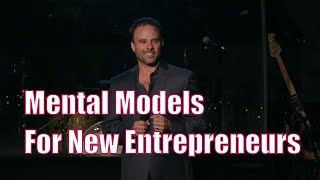
Brad Costanzo delivers a live keynote for new entrepreneurs about mental models that guide his decisions and marketing work. He opens with the backstory of launching his podcast (Bacon Wrapped Business) after being prompted on Nick Unsworth’s show, then presents several practical frameworks: Walt Disney’s Dreamer/Realist/Critic offices for structured ideation; preferring 'fuzzy' aspirational goals over long-term SMART targets while using short-term SMART goals for execution; a success formula of Physics → Knowledge → Access → Influence; and the mentor-peer-teach loop summarized as “plus = equals = minus.” He illustrates these with client stories (Jesse Itzler, Sarah Blakely, Frank Shamrock), contrasts entrepreneurship vs. being entrepreneurial, and urges play/art mindset, resilience, and building support networks.
Chapters
Our first speaker is someone I'm in a mastermind with and is a really dear friend. He just, man, I just love this guy. He's so generous to come here. He speaks often at our masterminds and he has for years never asked for anything and he just comes to share and he comes to pour into our community and that's really special. And Brad, I really appreciate you, man, as a friend. It's just awesome. But what I'm excited for you to experience is here's a guy who is so brilliant when it comes to marketing that he will see things in seconds for people and he just sees it differently. He puts himself in your customer's shoes and creates an experience that attracts people so that they want to be part of what you have to offer. They want to buy because people don't.
Want to be sold.
They want to be inspired and they want to, you know, be around the right community and to get in front of the right people. And so he's been doing this for brands like Jesse Itzler, who is a billionaire and he's married to Sarah Blakely. Anyone ever hear a Spanx? Anyone wearing Spanx? Just kidding.
Just kidding. We don't have to, we don't have to go there.
But Brad has been a consultant to so many big time companies, entrepreneurs. He's the podcaster and he's got some incredible wisdom when it comes to podcasting. It's bacon wrapped business with Brad Costanza and Costanza, which is amazing. And he's here with his lovely wife. Would you stand up real quick? Just say hello. Hello. Yeah. Thank you for being here. And are you guys ready to learn some amazing marketing tips?
Are you guys ready?
I mean, this is going to set your life on fire. I'm just going to warn you. But are you ready for this?
Okay.
All right. Stand to your feet and welcome Brad Costanza.
Hey, hey, hey, hey, hey. Is that the greeting? Hey, hey, hey. Nick says, I don't ask for anything, but I am Italian. So one of these days I'm gonna ask a favor. I can't do that. Thank you. Thank you everybody for having me here. This is super cool. I've known Nick for a very long time and in fact, that guy right there absolutely changed the trajectory of my life. Has put more money in my pocket indirectly from something he, I guess I would say sneak attacked me with. And I'll explain this. I was gonna play a video of it, but couldn't quite get it to work. But just a little bit of the history of that four And a half years ago. I was consulting at the time. I had recently sold my business. About a year prior to that, I was consulting. I was looking for kind of an outlet or to do something else. And I had this idea because everybody and their brother had a podcast. I was like, I got an idea for a podcast. But I mean, like a lot of you, I have a lot of ideas and more of them are in my maybe someday pile. And Nick had me on his show Life on Fire podcast. And we were sitting down, it was on video, and I told him off camera that, yeah, I've got this idea for a podcast and I would call it Bacon Wrapped Business with Brad Costanzo. The reason I came up with that, I was sharing another friend's podcast on Facebook and I was like, check this out. This is some bacon wrapped business advice if I've ever heard it. And I was like, it just kind of rang. I was like, that would be a cute podcast to do. It'd be fun if I decided to do one. I. And I told him, he's like, that's cool. So we're in the middle of the interview and it's not live, it's recorded, obviously. And Nick goes, so you got a little reinvention going on. So tell me about this podcast that you've got now and where people can subscribe to it. What's it called? He goes, that's the coolest name. And I go, bacon wrap business. And he's like, can you know, where do they go for that? I go, baconratbusiness.com. i did not own the URL, by the way, so I was just hoping that didn't exist. So he's like, well, tell me about what the idea is. And I'm like, so I'm just going with it. Like, screw it. I'd been on other podcasts before, and every podcast was usually like, well, this will air in two months. So when I got done with this podcast, I'm like thinking. I asked him, I was like, okay, so how much time do I have to get ready for this? I have two months to launch this podcast. He goes, 10 days. Like, what? He goes, yeah, this goes live in 10 days if you don't have a podcast and everybody's going to go to this dead URL and I hope you can get the URL. I was like, okay. So I looked, I bought it right there when we were sitting there. So the podcast has then it has never been my business. I am a consultant. I'm an entrepreneur. I've recently bought Some businesses. And my background goes about 10 years in digital marketing and entrepreneurship. But the podcast by itself has led to more opportunities, both from my guests, from my listeners, and my ability to open really influential doors. And because it gave me a platform. And I never, ever would have, because I know me, I had a million things going on. I would not have done that if you didn't light a fire under my butt and say, okay, you've just got to do it. He held me accountable, forced me to do it. And because of that, I've had such tremendous experiences in business in the past four and a half years. And those of you who do know me, nobody can really say, what exactly does Brad do? I can't even say it. My mom's always asking me, what do you do? I was like, are you an entrepreneur? I was like, no. I'm more of, like, an opportune. I find opportunities, but then I organize resources to take advantage of those. And there's also a big difference between an opportunity seeker and an opportune. An opportunity seeker is always seeking opportunities that might already exist, and they hope they stumble across them like they're panning for gold. An opportune or which. I don't know if I invented that word, but I've Googled it. I don't think I found it. So I'm staking my claim on it. An opportune looks for inefficiency in the market. They look for gaps. They look for needs. They pay attention to what's going on, to what people are buying, what people aren't, and what maybe two different types of people might need. And they try to put them together creatively and see if they can organize resources and capital and ideas around making it happen. I happen to be pretty good at that. I'm absolutely terrible at building and scaling and running a big business. That is not my. That is not my bag. Now, because I've got such a varied skill set, I thought, you know, what would best serve everybody in here? Should I talk about, like, tactical marketing strategies and little microscopic things that you can do? And you'll be like, oh, that's kind of cool, but maybe it's not going to really impact my life. Or should I talk about. Probably one of the big themes at this event, which Nick mentioned in the last thing, was about mindset, And I'm the guy. I'd be sitting at marketing or other conferences, and the minute they start talking about mindset, I'm like, give me this stuff that I can go home and use, but there's been absolutely nothing more responsible for the lifestyle that I have right now, which I'm very proud of, the choices I've made and the opportunities that have been given me and the dramatic failures that I've had. But nothing has been more responsible for that than the way I make decisions, the lens that I view life and business and relationships. And it's not all stuff that I was born with or learned from my parents. I have developed them through trial, through error, through mentors, through relationships. And today, with your permission, I'd like to share with you some of those mental models that I rely on every single day to not only succeed, but to keep myself sane in an absolutely crazy world. Permission granted. Thank you. So one of these is the concept of ideas. I really do believe that the sweetest sound to an entrepreneur's ears, at least to mine, is, I have an idea immediately. Tell me more. But if you're like a lot of entrepreneurs and a lot of people, you have too many ideas. And that's actually. It can be debilitating, right? And it's like, how do I know what to do? Now? You may have heard and raise your hand if you agree that ideas are worthless without execution. I'm not raising my hand. And I don't believe it any more than I believe that children are worthless until they become grown, productive members of society who can contribute to the economy. Children are full of potential. You can mold them. They bring joy just because of who they are. And life would be very less rich without them in the world. And just like ideas, ideas are like children. They are alive. They spread. There's good ones, there's bad ones. Just like children, right? But just like children, they need to be nurtured with structure and discipline in order to become fully realized businesses or ventures that you can take care of. And I've been trying to label myself with a lot of the work that I've been doing with clients as a strategic ideation consultant. And that is really what they bring me in to do, is to ideate on business models, marketing, growth, ideas, and just taking, like what Nick said, I think about things a little bit differently and think about how do we make this bigger, easier, more fun, more effective and do something that isn't just a linear growth. And the way you do that, there's a very specific process, and it usually revolves around asking the right and different questions. There's a lot of questions you can go into, but when it comes to the first step in ideation, what's more, ideation is not brainstorming. There is a very strict process that you have to follow. And the process that I learned years ago and I follow with every single client, myself, my business partners, is a process that was revealed that Walt Disney did this when he was building his empire during the Great Depression. And Walt, they would say that you never knew which Walt was walking in the door. You know, in a business meeting, it was at the Dreamer, the realist, or the. Or the spoiler, the critic. And in fact, Walt realized that a lot of us have these ideas and these ideas. Well, in fact, have you ever had an idea and you've gone to a family, a friend, or somebody else and say, I've got this idea. Let me tell you about it. You're all excited. You tell them, does anybody want to venture? The first thing that usually comes out of their mouth, why it won't work. Has that ever happened to anybody in here? That's great. Let me tell you why it won't work. Okay, so we do that to ourselves as well. And whenever we're thinking of new business ideas or anything else, I know with myself, I'll think, this is a great idea. Oh, my God. This is what it could do. Okay, now, how am I going to plan that? And what would I do? Do I have the resources? Now, that won't work because of this. And now it's just noisy in my head. And if you're trying to do this with a team, it's also going to get really noisy as well. So what Walt realized is we're going to have three offices, totally separate and distinct from each other. And in one office over here is the dreamer's office. And the only thing that you're allowed to do is dream, envision. What do you want to happen? What's this movie going to look like? What's a theme park going to look like? What's my new business going to look like? If it all works out like it's playing on a movie theater in front of your eyes, how amazing would this be? Now, there's a rule in this office. Two rules. Don't plan it and don't critique it. Just dream it. You're gonna get the chance to do those in the other offices. So now, when each one of you hopefully has some ideas and goals and things you want to accomplish, I'm giving you permission to just dream it first without any other, you know, planning or critiquing. Because when you're done, you're gonna walk into the other office, which is the realist, the planner, the doer, and you're gonna just storyboard out what has to happen. I like to actually reverse engineer it, like, what do I want? And then work backwards. But what has to happen in order to make this dream a reality, given all the resources we have? And there's only two rules in this office. Don't add any more vision to the dream and don't critique. It makes sense. So now we got a vision, and now we have a basic plan. And this is where a lot of entrepreneurs that I know, me included, a million times, the ready, fire, aim, approach. We go off half cocked and we chase something that is, you know, we're gonna hit some speed bumps down the road that we didn't see, and it's gonna derail a lot of success. And that's where, you know, we fear failure, but we're not willing to examine what would failure look like. And Walt realized that too. So now you take the plan and the vision, and you go into the critics office, and everybody, yourself, your team, you're gonna sit there and you're gonna think, what could go wrong? What are the holes? What am I missing? What are the resources we don't have? You know, all you're doing is you're finding the speed bumps. And you're not there to spoil the party. You're simply there to make sure that the cops don't get called on you for getting too crazy. You're there to protect. It's risk management. And the critics office is where you get to just unload and come up with all of the stuff that might not work so that you can then take it back to the planner's office or the dreamer's office and solve that problem. I mean, is this relatively simple? I'm really blowing it out. Dream, plan or critique, don't do any simultaneously. Now, where you can use this also in your own life, with your own team, is if you understand this framework, teach it to somebody else. Teach it to your husband, your wife, your business partner, your employees, so that now when you're talking to them, you go, hey, I've got an idea, and I need you to step into the dreamer's office with me. What you've just done is you've given them the permission to hold back their critiquing. You're gonna get a chance. But can you see, by the way, that if you're doing this, that your communication, your team building will greatly improve? Because now everybody's going the same way. So I want you to literally do that. Is my single biggest secret tool that I've ever used that's been responsible for successes. And when I don't do it, it almost always fail. Thank you. Now, speaking of coming up with a plan, a goal, another mental model that I backed into and I realized is that fuzzy goals are good. Has anybody ever heard of smart goals? You know, specific, measurable. I'm not a smart goal guy. In fact, the only smart goals I like are very short term, three to six month goals. I do not set goals. I don't. I'm not saying that you shouldn't. I'm saying for some people, they don't work. I've never been able to sit there and go, okay, I want to have a seven figure business. Seven figure. I want to have a business doing $2 million in revenue. I want to serve this many people and this. And I want to have a six pack and I want. I can't do it. It doesn't drive me. I can't make it drive me if it doesn't drive me. I set fuzzy goals. And several years ago I was frustrated because I couldn't set a smart goal. And I was like, I just want. Here's what I want, three things. I want to be really engaged and enjoy what I'm doing for a living, period. I want to work with amazing, inspirational people that I like being around. And I want to make really good money. Now, none of those are specific. The problem is after I achieved those, I felt like I was running a marathon. Like I passed the finish line and I forgot to look back and realize you can stop running. Because I was like, man, I just, I haven't hit my goals. And you don't have goals, you have aspirations. But it is funny because when I look back, I was like, I'll be, damn. I really like what I'm doing. I could like it. I'm sure I could like something more. I've got clients who are billionaires, world champion athletes, amazing entrepreneurs who are changing the world, charities and philanthropist organizations. And I'm making really good money. Like, I mean, damn, it worked. But it wasn't completely fulfilling because I didn't have that, you know, those numbers on there. But it was actually more fulfilling because I realized that I don't have to set those. If I set the aspiration and if I set themes to say things like that, then it's going to work out okay. I may not say I'm driving from San Diego to New York City, but I'm going from San Diego to the east coast or the Northeast because as long as that's where I want to be. It gives me the opportunity to take detours along the way. It works for me. It may not work for everybody else, but there are a lot of studies that show that the most goal oriented people, strict goals, are some of the unhappiest people, the ones who achieve them. There's this paradox of Olympic athletes, gold medalists, that when they win, the high is like 30 to 45 seconds. And then now they're like, oh, damn everything. I've just, I've got to reset my goals. Now what do I do? And they become goal junkies. I don't want that for you. I'm not saying don't have goals, but what works for me is having short term specific goals. To say, there's a product I want to launch, there's a workshop I want to create and I'm going to do it on February 1st and I'm going to do this, this, this, That's a goal to me. But I want to be really engaged, working with amazing people, making really good money that I can pay my monthly nut and rent and all this other stuff and still be happy and have a house on the beach. Like that's my aspiration. And for me it works. So one of the reasons I'm telling you is because I don't want you to go through almost 45 years old frustrated that you can't set a damn goal that makes you get up in the morning and drive you. But I think you can all set aspirations. Speaking of goals, speaking of things that we all want to accomplish, anybody want to know the easiest way to make money right now? Easiest way, okay, day job, get a day job. You get weekends off. You get to check out at 5 o'.
Clock.
You want the easy money, you get benefits. You want the easy money. And by the way, there's nothing wrong with jobs. Jobs are amazing. We all need jobs, we all need to employ people. There's nothing wrong with that. Being an entrepreneur and a lot of us like, that's what I want to be. It's hard. You're going to get punched in the nose many, many, many, many times. And, and if you're not really resilient and adaptable, it's going to hurt. Do it anyway. But there is a huge difference between being an entrepreneur, which is a lofty goal, and being entrepreneurial, which anybody can do. Entrepreneurial means you identify opportunities to add value, to help somebody out, to make a change, to make a difference, to move something in a different direction than it would have moved without you. And you can do that as an accounts receivable clerk at a big company if you simply start to ask your boss questions. Hey, boss, I was just curious about what's going on at the company. Ask about stuff that have nothing to do with your department and see if you can solve those problems. Because you can either get promoted or if you solve that problem really good, maybe you realize you've got a job as a consultant and you can start a business that way. You don't have to be an entrepreneur, but you all can be entrepreneurial. In fact, it's the only thing that I think is going to really move this world to a better place is if more people think like that, how can I solve bigger problems and challenges? The next mental model that I discovered over the past few years, and I'm kind of continuously adding to it, I was going for a walk on the beach and I had this kind of little epiphany because I was trying to break down what has been the secret of my success. And it kind of dawned on me two letters or two words that I'll get to in just a second. But first, the other two words that go right before that, which I added later, are physics and knowledge. So physics is very easy. Is what you want to do possible or impossible? Does it break the laws of physics? Because if it doesn't, congratulations, you have a shot. Now the only thing standing in your way, or one of the only things is knowledge. I recently bought a business and I didn't. I've sold a couple businesses, but buying one is a totally different story. And I've. I didn't know what I was doing. And I was like, okay, I think I negotiated and found a good deal. But I'm. I could probably drop the ball. There's a million ways I can get burned. What am I going to do? And I was like, well, I need a. I need knowledge on a couple things. So I studied, I read, and I made some phone calls and I learned, right? So this is very, by the way, this is very elementary. If it's not impossible, the only thing standing in your way is knowledge of how to do it. Because there's a million things here you guys know exactly how to do. Like from those basic to some, like your jobs, your businesses, you've got knowledge of how to do it. There's no, there's no second guessing. You just jump in and you do it. But what if you don't have that knowledge? What if the knowledge is hard to acquire? That comes down to the other parts of the formula, which I believe very strongly in. And when I look at it, it's not only the secret of my success, it's the secret of everybody's success, even nation states, which is access and influence. So access is a very interesting word. When I say access, some of you might think it's who you know, but that's not how I. I see access as a very rich word. Access means, you know, when you were growing up, did you have access to loving, supportive parents who had maybe money to put roof over your head and send you to a good school? Or did you not have access to that? Did you have access to capital to start a business? Do you have access to mentors and friends who will support you and access to a loving relationship? And if you don't have access to that, you're kind of, you know, you're kind of at a disadvantage. But also understand the difference between access and ownership, because you can access something without owning it. I don't have to have a car. I can pull out my phone and I can access somebody else's car because they're driving Uber or Lyft. I don't have to have the money because I can either learn how to go raise venture capital or angels, or I can do a crowdfunding kickstarting campaign, or I can do another way to access somebody else's money. And oftentimes, if you don't know how to do that, it's simply a function of knowledge. Right. And how do you get access to knowledge if you don't feel like reading a book? Well, that's where you access mentors. That's where you access somebody like Nick Unsworth over here, or you access somebody who's went down that road and trotted before, and they know the ins and the outs, and they're like, I got you. Here's what you do, here's what you don't do. Let me shortcut it for you. I've got amazing people access to in masterminds and businesses and colleagues that I cultivate these relationships so that I can access them. The reason I have a podcast on on itunes is not for my audience. I'm proudly the host of the most selfish podcast on all of itunes. It is designed for two things. If nobody listens, it allows me to talk to people that I really want to talk to and build relationships with. It allows me to pick their brain, which is normally a word I hate because it's me just getting. But it allows me to pick their brain and get amazing information. But I also Give them a platform to share their knowledge with the world. And that is one way I access influential minds who are just brilliant. And it has shortcut my learning curve. One day I was at a mastermind and I heard a guy talking and it was blowing my mind. What he was like telling me. I was like, I've never really heard about this stuff and I want to know more. He's sitting right over here, Mitch Axelrod. And I was like, this is amazing. How do I access what's in your brain? I'm like, I kind of want to download it. And I think I wrote him a check for like $10,000 to be able to just get on the phone with him. Like, I don't know, it was like eight times or something like that and just say, all right, tell me about this, tell me about this. Elaborate on this. It was worth it to me to understand how his brain works and how he approaches these things. And I was willing to go into my wallet and pay for it because I wanted access to his knowledge without reading a million books. And the very last one of those formula is influence. Because you can have all the knowledge and all the access in the world. If you can't influence somebody to take action, a customer to buy from you, company to partner with you, man or a woman to date you anywhere, if you can't make an influence on them, you can't make an impact. You can't make a difference. So if you have access and you can build influence, interpersonal influence and mass influence, you have so much power. I mean, think about the way kings and nation states were built. I mean, they had either access to resources or not. And if they had access to the people and they influenced them to fight for them, I mean, this is the way that Washington is run. Access and influence can be a. It's a technology for good, or it can be a technology for corruption. And I won't go down that road. But is it against the laws of physics? What knowledge do you need? What access do you can you get even if you don't own it? And what influence do you need to wield in order to get that into action, put it into action and make a difference? Speaking of that, speaking of the podcast and the access to influence that I've gotten, tell you a story about another guy who Nick mentioned. He became a client of mine named Jesse Itzler. So I read a book called Living with a Seal and it's an amazing book about this billionaire who moved a Navy SEAL in with him and his wife Sarah. Blakely for 30 days, and he just trained the hell out of him. And it was. It's a hilarious, motivational, uplifting book. Cannot recommend it highly enough. Tons of business advice too. And I immediately reached out on social media and I was like, just read your book. Love it. My audience would love it too. Would love to have you on the show. And he's like, let's do it. That was on a Facebook post. Like, I'll be damn. Power of a podcast, power of a platform to be able to give value to somebody else. I get to the ear of a billionaire for an hour, and I asked him all these great questions, questions. You can hear it on my show. But then I did something that few other people do, is I paid really, really close attention and I asked him a few questions. Like, I got this famous question, like, what's a nut you're trying to crack? And he told me and I was like, you know, I've got an idea that I think could help you with that. Let me. Let me do this for you. And I just kind of jumped in and I voluntarily did something for him. And he was like, wow, that was really cool. Like, what else can you do? And then what else can you do? And then one day he's like, by the way, how much are you charging me for this? I was like, I'm not charging you anything. This is my pleasure. He goes, yeah, you say that until it becomes really, like a lot of work. And I go, no, it's cool. I'm enjoying this. One of these days I'll ask you for money, and when I do, it'll sting because I'm going to be so valuable to you, you're not going to want to let me go. And I literally said that. And then a couple weeks later, he's like, I need to start paying you. I need you on my team. This is awesome. And then he introduced me to Sarah Blakely, founder of Spanx, and we did some really cool stuff over the past year and a half or so. And I got access to his mental models, which is a whole nother thing. Like, I could talk for an hour about that. And then through him, I got to meet my next client and now a business partner in some ventures, a guy named Frank Shamrock. If anybody is a fan of mixed martial arts, Frank is like a five time UFC champion, known as the legend in the sport, the fighter of the 90s. He's a actor, entrepreneur, filmmaker, an amazing guy. And not only do I get to do business with him, but I get to learn from this champion mindset. And one of the things I'll share with you of this mindset, and this is 100% his, but I use it, so I'm sharing it with you, is the concept of plus equals minus. And he says, you can accomplish absolutely anything in this world if you understand this formula, plus equals minus. And that is first, find your plus. Who is above you, who has done something you want to do, who has went that path, that mentor, who can you learn from? Find that person and learn. Now the next step is the equals. Try out what you learned. There's another little formula called little learn. Try teaching. Right, but learn it. Find an equal, Find a colleague, find a competitor, Find somebody on your level that is either you know you're going against them and that you can compete with them so that can help kind of light your fire, or that you can collaborate with them and cooperate, maybe do joint venture deals and have fun, but you can vent to them when stuff isn't working. Maybe you ask their advice, but you don't have to look up to them. They're your equal. They're your foxhole buddy, if you would. But then find your minus. Because when one person teaches two people, learn. There's no better way to integrate the teachings that you receive here in a book than to reach out and tell somebody else exactly how to do it. So, and you actually have this obligation as a member of this species to pass it on. Learn it, try it, teach it. Plus equals minus. And with that, you're learning from the best. You're trying it out, you're seeing what works, you're seeing what doesn't. You're teaching it and you're integrating it, and then leave it if you want, or double down on it. But that alone will be extremely powerful. By the way, equals and minus, that doesn't work as well because who are you learning from? Where are you getting your information? I mean, our entire species has passed down knowledge like this from mentor to apprentice. And if you don't have one of each of these, then you might want to double check, how am I going to really achieve my goals? Or can I achieve them quicker if I do so like a great exercise when I'm done or when you go to your room tonight is say, who is my plus? Who is my equal? Who is my minus? And if you don't have them, you better find out who they are. And the quicker you do, the quicker you'll have a success at this. Because the entrepreneurial road is really, really challenging. And we are all fired up here, and you should be. But in a couple days you're gonna be back in your regular world with some friends and family who are not as supportive and nobody else here is like, sharing the same energy. And you're gonna be back in the drudgery and the monotony. And if you don't bring your own logs and keep on adding wood to the fire and ask for help when you need it desperately, it's going to go out. It goes out in me, like I've achieved a decent degree of success and I have a hard time finding that extra motivation. And sometimes I beat myself up and I'm like, man, I just don't know. And I'm second guessing myself and I'm like, why does it have to be this hard? And I don't know if it'll work. And now I've got the benefit or curse of knowledge in that makes me go like, I know all the things that are going to go wrong now. And it scares the hell out of me. But I realized something the other day with somebody that was coaching me, taking me through some of my blockages and limiting beliefs, etc. And it reminded me about the very first business I did about 10 years ago. And I was putting something out there that was absolutely, probably, probably gonna fail. Like, there was no market validation for this. It was just something I kind of wanted to do and I wanted to try it out and see what happened. And if it didn't work, it was gonna be public and I was gonna look dumb. And. And you know what? Those thoughts never went through my mind back then. It was literally, I was just going to try this out. I'm going to treat it like art. Because if it's work, we try to find a way to avoid it. And if it's art or entertainment, we try to find a way to pursue it. And I realized that, dude, I was looking at this like art. Like, okay, this might work, it might not. People might like it, they might not. I'm going to learn a hell of a lot along the way. And if it works, cool. If not, I'll figure it out. And it reminded me, play, make it an art project. Your business is an art project. Whatever business you thinking about starting right now, you may not be doing the same thing in three years. And I want to let you know this, it will all be okay. It'll all be okay. And that doesn't mean it's going to turn out the way you envision it. In fact, I guarantee it won't. 100% of your plans will not come out the way you envision it right now. Something will happen. Some of it will be good, some of it will be bad. But you will adapt and you will change. And you will use the resources and the knowledge you have in the support network and you'll adapt and you'll try something new and you'll keep doing it again, because that's who you are. That's why you're in this room. That's why you've got resources like Nick, like Megan, like life on fire and everybody else. There is no such thing as failure. There's only feedback. And if you're not afraid to fail, you're much less likely to do so. And with that, I hope that these mental models, these ways of thinking have been useful to you. And if there's any questions, I'll be around. But I just hope that you get as much use out of these as I've been getting and hope to continue to get in the future. So thank you, Nick, for having me up here. Great job.
Brad Costanza, can we give him a big hand?
More from Brad

Seriously. If you pay mortgage or your rent this is like an IQ test Bilt https:/bradslinks.com/bilt

AI Native email marketing: Send emails from Claude/ChatGPT with NitroSendAI (Review, Not Sponsored)

How to Migrate ChatGPT Memories and Chats to Claude (Including Claude Cowork Triage)




My Investing Message To My Younger Self (And The Lessons I Learned the Hard Way)



