
Mike Filsaime On Bacon Wrapped Business With Brad Costanzo
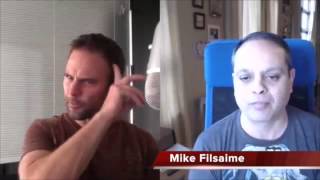
Interview episode of Bacon Wrapped Business (host Brad Costanzo) featuring Mike Filsaime. Mike recounts his start in online marketing (domain buys 2002, Butterfly Marketing 2006), his software/products (Traffic Fusion, Hyper Java, Pay.com, WebinarJam, DealGuardian, Traffic/Video/Conversion Genesis) and the advantages of SaaS and viral product design. The conversation focuses on conversion psychology (framing, commitment/consistency, two-step opt-ins, pre-framing upsell checkbox, silence in videos) and introduces a PayPal "Bill Me Later"/PayPal Credit checkout financing tactic.
Chapters
How do you make business problems disappear? Wrap them in bacon.
For business owners, marketing execs and anyone trying to grow your business, pump your.
Profits and make more while doing less.
Welcome to Bacon Wrapped Business with Brad Costanzo.
Sizzling hot business advice guaranteed to make you fat profits.
Every week our chefs will serve you.
Proven recipes for ramping up your revenue.
Now here's your host, Brad Costanzo.
Alright, welcome back to Bacon Wrapped Business. Today is a special video episode. So if you're listening to this on the podcast, I want to encourage you to go over to baconwrappedbusiness.com mikef I made this one real easy for you guys to spell. In case you're listening, you want to go to it. If you were looking on the show notes, just go ahead and click the link because today we're interviewing Mike Filsaim and we're gonna talk about some incredible strategies that Mike's up to. I'm fortunate enough to know Mike. I've followed him for years. We've become friends and a mastermind together. And if there's anybody who can deliver the bacon wrapped strategies, the sizzling hot advice, it's Mike. And Mike, I'm really excited to have you on the show today. As I said, I've, you know, I think the first time we may have met. Correct me if I'm wrong, maybe it was somebody else. But were you at Kevin Wilkie's Quattro event back in like 2008?
Oh, yeah. Way back. Yes. Yeah, that was a great event.
Yeah. And I think that butterfly marketing had just kind of come out. When did you come out with that?
Butterfly marketing came out in January of 2006. But I did a re release, I think in 2008 where we were giving away the course for a trial of our newsletter. And we put 15,000 people into a $39 a month newsletter. Like giving away the $2,000 product.
I love it. Well, to give you to back up a little bit for the folks who don't know who you are. So Mike, you've been in the online marketing business since when? About early 2000s or.
Yeah, so I bought my first domain October 2002.
Nice.
Was this great domain. I mean, you know, a lot of people call me all the time looking for it. It was called lets all workathome.com because workathome.com was taking. So let's all work at home. Let's workathome.com and they couldn't fool me. So I got letsallworkathome.com I always chuckle it. Like, you know, when you first buy those domains, you know, everybody's got, like, these, you know, funny little first domains, like hateyourboss.com and stuff. So that was October of 2002. I bought a product from Frank Kern. Actually, Frank was my idol for a long time. Friend. Now I make them do my dishes. Exactly. And is that him in the apron back there? October 2003. I mean, March of 2003, things started clicking for me. So about six months later, I'm doing about five grand a month. I was working in the car industry. I was a general manager of the second largest Hyundai dealership in the United States, Millennium Hyundai, and was also before that, the general sales manager of the 9th largest Toyota dealership in the country.
You got sales in your blood.
Yeah, Yeah. I did that for 14 years. So. Started making money in 2003. By 2004, I was doing about 18,000amonth. It was more money than I was making in the car business. Not gonna bore you with that story, but came to heads with the. You know, with the general manager of the 13 car franchise. And he told me, you've gotta make a decision. It's either that or this. And I really think he thought I was selling on ebay, maybe making about 800 bucks a month on tchotchke. So when I told him, hey, it's been a great five years, he was like, really?
Yeah.
And he said, give me the keys to your demo. Give me the keys to the safe. Give me the keys to the front door. He walked out like Gordon Gekko on the phone saying, tommy, you're the new general manager of Millennium Hyundai. And everybody chased me outside. And I'm trying to compose myself and call my wife at the time and tell her to come pick me up because I don't have a car anymore. And she's like, what do you mean we have no health insurance? And I'm like, don't worry about that right now. And everybody's like, mike, you know, John, talk to him. Don't worry about it. Everything's gonna be okay. And I'm like, excuse my language. So I'll just use the F word.
Hit it.
I was like, f this. F him. F this place. F this business. I'm crying, and I couldn't control myself. And I'm like. I said, guys, you don't get it. I didn't have the balls to do this myself. So glad that this day happened, because now I'm gonna. I'm just gonna. I'm gonna go on my own and they're like, no, talk to him in the morning. And I said, no, you don't, you don't realize. I feel like Mel Gibson in Braveheart. Like, I feel like freedom. Freedom, exactly. So the very next month I went on to do $50,000. Three months later I had an $85,000 day. And a year later I had, I did the million dollar launch with butterfly marketing. We did $1.5 million with that launch. And, and as they say, that was 2006. The rest is history. But yeah, it started out just, you know, read a sales letter one day that, you know, hey, you can make money online. It was 2002. Times were very different. I was trying to remind people this and you know, I may be wrong on the date, but I believe it's something like this. In 2004, the guys that started YouTube were working for PayPal in their part time. They started YouTube in 2005. They bought the domain name YouTube. In 2006, Google bought YouTube. So there was no MySpace. You know, Friendster hadn't come out. There was no social networking. It was impossible for me to know who you are. You couldn't even get video on without having to download like this Vidx Codex. We didn't even know how people take for granted, Brad, how difficult it was to get a picture online. You know, we didn't have these, these types of.
You had to like scan them or.
You had to scan them or you had a 35 millimeter camera, you had a scan or you had a digital camera that you were at Radio Shack trying to say, how do I get this into my computer? Because USB hadn't come out yet. Every computer were like 30,000 different serial buses. And then finally you get the picture off and you don't realize that it's, you know, back then it was a large file for a dial up. It might have been like, you know, like a 2 meg photo or something. Should be 36 kilobytes. So the photo would load on your website like this. It took two minutes for a photo load and you'd have to take it off because you didn't know what you did wrong. That's how difficult it was back then. You know, WordPress wasn't around. It was just, it was, it was difficult, but it was also fun.
I feel like we're the guys from what the Saturday night lives get in our day. We didn't have YouTube. We loved it.
Yeah, exactly. You know, back then people were doing these things called teleseminars because webinars hadn't come out yet. Where they were teaching you about the ability to take credit cards online. No joke. They were saying you no longer have to put call or fax your order in because it was difficult to take credit cards. PayPal was just starting to make it easy for people. I'm gonna shut off my wonder list here. It keeps sending me notifications.
All the stuff you have to do.
Yeah, somebody. Other people on my team keep checking off the stuff they're doing. Yeah. But, you know, it's a little backstory about me.
Yeah, that's great. And you know, I, I remember. Yeah. So I got into the business in 2000, actually the very January of 2008. I, I met you briefly at Kevin's event and I purchased some of your stuff over the years. I think the first thing I purchased, you had a software that allowed you to put your offer on the thank you pages.
Thank you pages.
What was that called?
The software was called Hyper Java.
That's right.
But the product launch with the training and everything was called Traffic Fusion.
Traffic Fusion, that's right.
That's the one where I was, you know, everybody was doing the hey, do a video in your car. And I pulled out of my parking lot and like, didn't look in like a car. Like I almost got hit by a car.
Did you get that on video?
Yeah, yeah, it was on video. Probably out there somewhere.
That's awesome.
Yeah, Traffic Fusion.
So, yeah. And you know, to just enlighten the folks who are listening, one of the things that you're kind of, you know, very much known for is not only just training on information, of the how to, the informational products, of what to do with, you know, video tutorials, et cetera. But you've always created software that makes your life easier. So from Traffic Fusion, I mean, even butterfly marketing was a kind of a software component, right?
Yes.
Or a script that, you know, allowed you to get other people to sell your products after they, you know, enlist them as an affiliate to help, you know, spread the word for, you know, quick explanation. And then throughout the years, not only have you had some of the, you know, the top information products and training out there, but now you've got, and correct me if I'm wrong, but webinar jam on how to use how to run really high end webinars, really sophisticated, but easy to use webinars. Using Google hangouts, you've got DealGuardian, entire marketplace and it takes place, a merchant account and affiliate software for people. I've seen it. It's absolutely Remarkable. You've got obviously the Genesis products, Traffic Genesis and Video Genesis. And I know you're working on a new one with I believe it's Conversion Genesis if I'm not mistaken. But I've always been.
Really. Yeah, we did, yeah, with Andy we did Video Genesis, Genesis Labs, then Traffic Genesis, now we're doing Conversion Genesis. And the softwares we put out were Webinar Jam and Deal Guardian.
Right, yeah. And I think that's great how you give people not only just the tools, but you give them the training but also the tools too.
Yeah, I developed a lot of software over the years. I actually was stronger in software than information products. And my first big info product, Butterfly marketing, was really wrapped around a software. I developed another marketplace years back in 2005 to compete with ClickBank that I sold for a pretty good amount of money back in 2013. Just recently sold it because I wanted to move to Deal Guardian.
Which marketplace was that?
Pay.com.
That'S right.
That's right, yeah. P A Y--O-T C O M dot com. So it was a nine letter domain, always confused people. But yeah, pay dot com, you know, made me millions over the years. And the tough part about selling it was getting a buyer that understood that I wasn't going to give a non compete because I was going with Deal Guardian. Sure. But I didn't want to, I didn't feel the need, I needed too many. And I basically, you know, found somebody. I said, look, it's a moneymaker. You don't have to do anything. You can just wake up every day and it'll make you money. But I did small software things like viral frame generator to powerlink generator back in the day. Then we did the Traffic Fusion product. We also had things like when Twitter came out, I tried to compete with TweetDeck with a product called Tweet Glide. And basically the more you tweeted, the more points you would get for free ads. Twitter didn't have ads. So Tweet, we created an ad platform and the more people you referred, the more they tweeted, the more credits you got. So it was kind of like one of those downline builders if you would inside of a Twitter product. We tried a lot of different things.
Right. And I've got a software that I developed. This was at this time that I developed a product in the dating advice niche. I also developed a software product for GPS devices to change the voice in your GPS called pig tones, politically incorrect GPS and most people aren't using Garmin and TomTom anymore versus, you know, just like the iPhone, which is what I use. But the software business has always had kind of been a double edged sword. It's way quicker and easier to throw up an information product and make some quick money. But the nice part about software is it, you know, if it's really good, you can get people paying you month after month after month. You get that nice continuity income.
Yeah. If you look at Webinar Jam compared to a product launch, it did phenomenal. It made multiple millions in its launch. But usually a launch goes like this and then it goes like that. Unless you're driving advertising to it, which you should. But some companies can even do so strong on word of mouth without even doing advertising. And the nice thing about things like Webinar Jam is that product does about $125,000 a month. If I went away for a year and just decided I want to go on some Antarctic exploration, I would come back and it wouldn't change as long as I had my support desk taking care of the customers. So having a company like that, that now you can say, now I can go do YouTube advertising and Facebook advertising and Google pay per click and drive traffic to it. That's where it gets good. And in this day and age, the more and more that you have a software as a service company, usually there is some type of link involved in the sharing of that product. So if I want to share something with you with Screencast or with Jing, I give you a link and then when it's done it says get a free Jing account, you know, or if I share something with you with Dropbox, as you download it, it says would you like to create a free download Dropbox account to store this in or download it directly to your computer. And you know, if you get an invitation to work my project software and we're working together and I say hey Brad, join me over here. And suddenly you get an invite. You're like, oh wow, Mike and Andy are using this. So whenever you have a software that does that, sometimes it can propagate itself. It can self perpetuate through the use of different users, add a little bit of social aspects and elements and incentives for people to do so and even better. And for Webinar Jam we have a little tracking code in the player. So it's branded just like Gotowebinar and unclickable. And it says powered by Webinar Jam. But we the opportunity when they build a webinar one time in their profile to add their affiliate link to that. And then that takes a little powered by Webinar Jam and makes it a live hot link. And if people click that, it goes to Webinar Jam. And if you were doing a webinar with 400 people and anyone clicked it, Webinar Jam and buy the product and you get paid your commission. And what's interesting is we have hundreds and hundreds of webinars every single day, from 30 people to 400. Some people that I've never heard on get five times more people than I can. We had people got last week, got 5,000 people on a webinar. Seriously, I'm like, yeah. I'm like, who is this person? Yeah. And they were in the real estate niche. It was fantastic. But that's 5,000 people. And the more and more we're getting online, the more and more the people that learn information from us, many of them have their own websites and their own businesses. It used to not be true, but definitely in personal development, in finance and in make money, we find that to be true. But even in health products, I'm finding that people that go on webinars for Shailene Johnson, many of these people are personal experts or they have their own Zumba websites and they're trying to build their own community. So the bottom line is we're getting people that go on Webinar Jam as a guest of somebody else, as a guest of Brad Costanza or a guest of Shailene Johnson or Brendon Bouchard. And then they say, oh, Brad's using this. That's interesting. If it's good enough for Brad, it's good enough for me. And so our users are helping us advertise the product just by the use. And the more users we get, the more it's a snowball effect, this flywheel effect that happens, right?
Yeah. Ryan Holiday wrote a book called Growth Hacking not too long ago, and this was kind of his whole concept about how software and app companies, etcetera, they're hacking the growth without traditional marketing. They're building in the viral aspects. And that's really. It's kind of like what butterfly marketing was all about as well. Right. Turn your. Turn your customers, in this case info product buyers into your.
Exactly.
Into your affiliates. That's. That's fantastic. So one. One day, and I met a couple times, a couple answers you gave me at two different masterminds that we were in one day I asked you, so you know what. What part of the whole marketing thing do you like the most? And I think you answered the conversion like that, you know, most, most marketers tend to gravitate towards more the conversion side. Like if you could spend all your day writing, you know, coming up with hooks and copy and offers versus coming up with traffic strategies, etc. Did I get that right? Are you. Is the conversion side of things a little bit more of your passion?
Yeah, I'm fascinated.
With why people buy.
Fascinating that human beings move in her. It's right. And that. Yeah. Like for instance, if I don't think we really go down to this granular to the fact that if I have a 29% conversion on an opt in page and you say to me, mike, this is something we've tested and it increased our conversion. You should try it. And my conversion goes from 20% to 45%. Really what we have there, Brad, more than anything, is a study in human behavior. Because it's not something that helped me close one person. It doesn't matter if I'm getting 10 visitors a day or 100 visitors a day or 10,000 visitors a day or a million visitors a day, that conversion rate would have stayed at 29% or we'll compete over here doing better at 45%. So what it means is fundamentally human beings make decisions the same way and in mass numbers.
Yeah.
Over several days, over several years that we can predict the way humans are going to work. Even cross knits. You can tell me. It worked for me in this market. It's something I did on my podcast. Try it here. So for me, the fascinating thing about the conversion is really breaking down into the human psyche. So that's why I'm fascinated with books like Predictably Irrational.
Oh, that's a great book.
Dan Arielle, his other book. Yes. Obviously influence the psychology of persuasion. Books by Joe Sugarman like Triggers when you can. When you can find out what improves conversion based on the way human beings think. Because we, we respond to stimuli. As much as people say advertising doesn't work on me, it's like, yeah, look at the shirt you're wearing. You know, it does. We conform to group norms. We want to fit in crowds. We want to do things that others do. We make different choices based on different options we have when the choices are there. And that's why there's things like price decoys. All these little things that work in the human mind to me is fascinating. And I study that more than anything. And just to give some ideas about the way that the human mind works based on the frame that you put before something when you say it for Instance, the simple way to say it is if somebody says it's raining, it's sunny today, but it's going to rain tomorrow, people will say, oh, yeah, that's too bad. We're framing that with a negative outlook. If I say the same exact thing and I say it's going to rain tomorrow, but it's sunny today, that will change your attitude to be like, yeah, so let's take advantage of today. Right? So another example of that is if we take a look at somebody eating and they work out. Now, if you see somebody. And if we. If we understand, for the most part, calories in from food intake and calories burned in exercise are pretty much the same thing. Without getting too technical, a lot of people will argue that, and they should, because calories in. In food is a lot different. But let's just say that they're the same in through the mouth as they are working out. If I say, hey, Brad, I just saw you over at. Over at fit. Great workout. I'm gonna go over to Hodad's, and I'm gonna get a double bacon cheeseburger and fries and some of that orange sauce. You can be like, dude, why would you do that? You just worked out. Yeah. You know, right? But there was a certain amount of calories I burnt off and a certain amount of calories I'm gonna. I'm gonna go put into my body. It's the same exact math. If I say to you, brad, I just ate it at Hodad's, man.
Now I'm gonna go to fit.
Now I'm gonna go to fit and burn it off. You're gonna be high five, brother. Right. the end of the day, they're the same. The same amount of math went in and calories in and calories out. Right? So if we. We can sometimes understand that that's simply a frame that's put around something that can change people's perspective. We can do it with words, we can do it with colors. We can do it with videos. They do it to us at the movie theaters, you know.
So give me an example of how you've used framing. And I'm predicting that I know what you might answer, but I may be wrong. But give me an example how you've used framing similar to this in your marketing.
It's the biggest thing that Andy and I struggle with before we start a product. Excuse me, we. For instance, for Traffic Genesis, everybody's talking traffic. So we didn't want to be just another Traffic product. And here's some of the things you see. Traffic equals money. Imagine you could spend a dollar and make two. People have all heard that before. So we needed to change their thinking by introducing a new frame. And it was what's called a pattern interrupt or an incongruent juxtaposition. And it's getting traffic is easy. Now, first you're going to say to me and everybody listening to this podcast, if they're buying traffic or knows anything about traffic, they're going to say, no, it's not. And I'd be a fool not to finish my point. But, Brad, getting traffic is so easy, it's ridiculous. I mean, getting a thousand visitors is easy. And here, here's the experiment. I'm going to give you $1,000. I'm going to take a thousand. And let's say we have 10,000 people listening on your podcast, and we get them a credit from Facebook as well. For a thousand. They give us all a thousand dollars. Real money. Guess what? Facebook is going to give you, me, and every single one of those people $1,000 worth of traffic. Right. So getting traffic is easy.
Yeah.
So you prove that 10 bucks, they're give you 10 bucks worth of traffic. If you give them 100 bucks, they're going to give you 100 bucks worth of traffic. So you prove that. So then what's the problem? The problem is not getting the traffic. It's what happens when the traffic comes to your site. So we had to create the frame that you don't have a traffic problem, you have a conversion problem. Because getting the traffic is not hard. What's tough is spending a thousand dollars and not making anything. So we now have to figure out, okay, now that I know it's a conversion problem, you've just changed my thinking that if I can get the conversion problem fixed, you're right. Traffic is easy. Facebook will give me as much traffic as I can spend. And that's where it gets beautiful. So we focus Traffic Genesis on a course that we call the after the Click system. Everything that happens after the click is what makes that dollar turn into $2. We didn't want to focus so much on how to create ad sets and all that stuff, because that's teaching people how to spend that thousand dollars, which is very easy to do. Spending $1,000 is as easy as wasting $1,000. We wanted to show people that it's all about what happens after the click. And that was the frame that we created for Traffic Genesis in our first video.
That's great. You know, one of the. I was Wrong. And I love what you said there because it is true. Because a lot of people think that, oh my God, traffic is so hard to get. Well, yeah, no, traffic is hard to get a good positive return on investment for that's a challenge, right? But traffic in general is, that's easy.
And that's the blessing is that if now, now that you know they're getting traffic's easy, then you never have to worry about getting traffic. All you've got to do is realize you got to focus on the conversion. Andy and I called it the scar. The $100 scar, right? Hundred dollar scar is I spent $100 on Facebook or Google AdWords and it didn't work for me. And those people, they never come back again. And they'll say, well, it just didn't work for my product. It didn't work for my niche. And we basically showed that you sent an offer directly to a video sales letter. You didn't give a freemium, you didn't get their email address, you didn't have the proper sequence, you didn't have a tripwire, you didn't have an upsell process, your members area didn't monetize, you didn't do retargeting all these different things. We called it the no fail traffic system that if you implement these things pretty much it's impossible to fail at the prices you can buy traffic for. So what do you think it was?
I thought it was a little tidbit that you shared with me one time about pre framing with the checkbox, the upsells on the order form.
Yeah, that's a great example. That's one of a thousand. Do you want to sell that one?
Go ahead because this is yours and I love it. I still have not put it on any of my or my clients websites yet, but that's coming. So this is some bacon wrapped chisel right here. So.
So@pay.com people can probably still witness this today. I don't know if the new owners changed it, but when, when you signed up, I gave you an offer after you signed up and man, I lost a lot of money not doing that. I wanted to keep the site pure and not make a one time offer after people were opting in. And after two and a half years I realized at one point I was getting 975 signups a day. So I made a $97 offer that converted at 10%. So that meant I was getting 90 sales. At $90. So let's call that 100 sales. At $100 it was 10,000 a day. It wasn't like one click upsell. No, it was just an upsell. It was the first upsell and we were doing. We were doing about $8,700 a day for a good long time with that, it blew my mind. What really killed me was how much money I left on the table by not wanting to make an offer. That change my perspective about always make people offers. People love to buy, they hate to be sold. Just give them an opportunity. And that's where this leads to. So the offer was converting pretty good. But I decided to start split testing everything. And I tested with video, without video. And here's a little side note. At the end of the video, I tested something that actually had an improvement on video on conversion. At the end of the, the video, I just stood there and I kept going, just silent 30 seconds. I said, hey, don't mind me. Take your time. Take all the time you need. And then I'd wait. I would just shake my head, look at my watch and. And be like, come on, you know what to do. I did that. It increased conversions. The pressure that they felt that I was watching made them take action. But that's not the real one.
No, that's great though. And it kind of reminds me, you know, if you really want to make somebody. Yeah.
Silence.
That awkward silence.
It's really what it is.
So they will, they'll fill it with something.
I think they also stayed on the page just to see, like, how long is he gonna do this? Because I took the scrub bar.
What's he gonna do?
Yeah. And I think at the end, maybe, who knows, you know, what the great, you know, think why it did better. But anyway, so you have a page where people sign up and then after they sign up, they go, they think they're going to the members area, but they get the wait, we have a special offer for you. And what I did is at the top of that, it always said save 85% on some of our most popular products. But it's interruptive marketing. People when they sign up for something, they're expecting to go into the members area and start playing around and building products or getting an affiliate link to promote, not get sold something. So@pay.com, right where the sign up button was, where there's a tick box for the terms of service, I put another tick box and it simply said, I'm interested in saving 85%. I'm also interested in saving 85% on some of your most popular products now or in the future. So it was a dummy tick box. I mean they saw the offer either way. But when they clicked on that, while they were signing up, the next page said, as you requested, save up to 85%. So now this wasn't an interruption anymore. In their, yeah, in their, they, they opted in to see this offer. They saw this page and they said, oh, this is, this is what I just elected to see. And now you have permission to market to me. In their mind, they actually, they're giving themselves permission to see the offer and buy and it had a 20% increase on conversion.
That's great. Yeah. And I did. What about the folks who did not check it? Did they, did it, did it change what it said at the top?
Yeah, we simply didn't put as per.
Your request, it just said yes. It was before. That's great. Anybody who's read Robert Cialdini's book Influence will understand that's the principle of commitment and consistency. Because you get somebody kind of going down that path saying yes, they're much more likely to say yes in the future. But that was a, you're framing up the, the upsell in a perfect way. That's where I thought you were going to go with that.
Yeah. People tend to stay consistent with, with their initial commitments, no matter how small those commitments are. And you know, that's why all these things that we're seeing with lead boxes that like LeadPages does, where people call it a two step opinion. You're no longer seeing the name and email address on, on a form. When people are asking for something, you're, you're seeing a big red button that says download free PDF. So all that does is get a commitment. And once that buyer commits, a lightbox opens up and says where should we send it? And now the person is only staying consistent with what they just committed to. And people are much more likely to just go click something that says download free report, then fill out a form. And today, gosh, man, I see, I see people that own their opt in forms which are okay to have it on your page, but I'd still recommend going to the two step opt in. They ask for first name, last name, email address and sometimes even address and phone number to give something away for free. We stopped asking for name years ago. I mean, if you look at anything Andy and I have done in the last year and a half, we have not once ever asked anybody for their name, not unless they buy. So all of our emails start with hey, you know, because we've tested name and email decreases conversions over asking for just name, just email.
Yeah, exactly. And the people who are the biggest perpetrators of that, like you said, they, you know, they'll go to a white paper or something. You see this all the time. Like, oh, here I get this white paper on xyz. Or sign up for this demo and they ask you for everything. I mean, mother's maiden name, basically. And it's always, it seems. Seems to me it's always the biggest companies, like the, you know, the Fortune 500 companies out there. I'll run across them all the time. Sometimes they'll do an AdWords ad to something. They're giving it away and they're asking for the moon. And these are huge companies. They should know better.
They're going for the sale too easy, too quickly. Even when they're not asking for the credit card, it makes you feel like, oh, this is part of a buying process. This is work. And it shouldn't be. It should just be download. In fact, I think you showed me the best. The best, basically breadcrumb trail of a commitment and consistency of anything I've ever seen. What was that? It was the one where you sign up with Google the other day. What's the name of that company?
Prime Loop.
What is it?
Prime Loop.
Yeah, Prime Loop. So, yeah, guys, after you're done listening to this podcast here, go to primeloop.com really, the only thing you can do is one call to action on the page. And the way they walk you through the signup process, Brad and I thought that was like the neatest, friendliest way to make you want to do business with a company, as you are also giving them your information.
Yeah, it's so cool. And not to divert too much, but you can sign up for free. And it's, you know, if you do any retargeting, it's a perfect, really, really cool strategy. I'm actually going to try to get the CEO on the show because I just, I love what they're doing. But even at the very end, when you're all done, they have a drawing of a hand and it says, place your hand against the screen and feel the high five. Just little stuff like that. So I love that. But a couple things I wanted to bring up. So first of all, I want to ask you if you're still using the PayPal strategy that we talked about. So I want to go into that and I'll just kind of frame this up for the way I want. I really love the rest of this conversation to go. But I want to talk about that I want to talk about anything else that you have not yet divulged to me in private that you're willing to divulge here, that's kind of. That's really working. What are your favorite techniques, strategies, tactics? Anything that's just really sizzling hot that you'd like to share, that people can do? Because you really always are on the cutting edge of stuff. You see what works, you test it for yourself. You talk to a lot of people. I want to do that. And then I also want to talk about any opportunities that you see out there that maybe aren't being exploited as much or that you see the trends moving forward. Like, man, I really think this is where the puck is going to. But let's talk about the PayPal strategy, because you and I have both had some really good experience with this, and for anybody marketing online right now, this is a strategy they could be using. We all could have been using this for years, and almost no marketers that I know have been. And I saw you guys, you and Andy doing it for the first time on your launch, I don't know, six months ago. Yeah.
And this is not a shameless plug. This is a place where they can see it demonstrated. If they go to traffic genesis.com, there'll be a big red button under the video. They can click that at any time and then see the order page, and it'll actually show this exact strategy.
They can also buy traffic genesis.com yes, they can.
I recommend that if they have a product that they're looking to sell and they want more traffic, I highly recommend it. So basically, PayPal has something called Builder Later. Now we got to understand just a couple of things about it.
And they just changed the name, didn't they, to PayPal credit?
I believe so, yeah. Now I gotta go back and change my images. Yeah. So Build Me later was a private company years ago, PayPal bought them out. And, you know, they're not very good marketers. A lot of these companies are just so big for different reasons that they don't know how to market some of their other products. In fact, I think we're proof of that that we showed if they would teach their vendors how to use it, they could do well, so much better with it. They try to do it when the people are checking out with a little line that says, would you like, bill me later? And a little bit more needs to go into that. So let's first talk about some of the caveats ahead of time. Number one, it only works For US customers, number two, people have to qualify for the credit. And number three, it doesn't work on any type of subscription or payment plan. Okay. It only works on a one time payment purchase. So if you are going to do three payments of 399, it's not going to work on that. And if the customer lives in Canada or UK or Australia, not going to work. And if they don't qualify because of their credit, it's not going to work. But they're pretty aggressive in improving people and they will approve people up to $10,000, not the price of your product. So if Your product is 997 when they get approved, it might say something like congratulations, you've been approved $3,200. You know, which might also help in your upsell process. So all we did is when we introduced the price, we told people about this. Now here's the funny thing. When people, a lot of, you know, my friends that saw this on my checkout said, hey Mike, I noticed that you had a bill me later at 997, but then you had a 997 price. What was the difference in technology between the two? And basically I said the text, both of them goes to PayPal. One had text that explained that you could go use the bill me later option. And the other one was basically just a way for somebody to ahead of time say, no, I'm not interested. When they got to PayPal, they still saw the option for bill me later, but it was a pre application process.
And you're framing them, you're letting them know. And I don't know if you just went over this or not, but for folks who don't know the bill me later the PayPal credit allows you. Like if I'm buying something for $500, I have no payments and no interest on that $500 for six months as long as I make a payment or as long as I paid in full within six months.
Going to go to traffic genesis.com and I'm actually going to read the way we wrote that.
Cool.
Excuse me.
And more importantly, the customer's not paying anything right now. They literally pay zero. But you as the merchant get paid immediately. Just like as a PayPal account.
Exactly. I'm going to explain that. Just a second. I want to make sure that music doesn't come on. So we Basically say option one, bill me later six months, no payments and zero interest, zero dollars. You pay nothing today with this $997 bill me later option, you get Complete and full access to Traffic Genesis today, plus all the VIP bonuses for the live event. Bonus, you pay nothing today. You have no payments and zero interest for six months. See terms at PayPal during checkout process. And of course the 30 day guarantees applies as well. We get paid by PayPal today and you have six months to pay it off interest free. And then it says Important note, to access the bill me later option during checkout, you may need to log into your PayPal account or create one. Here's a video that explains. So then on that page we had a little video, maybe 45 seconds that says you'll notice when you get to PayPal. Here's where you normally pay with your PayPal balance. Instead, click here where it says bill me later. Confirm your Social Security button, hit submit and within three seconds you'll have an answer. It was that simple. We also Brad put it in the sales video in the video sales letter. So we said. So here's how you can get started today. One option is and we led with the bill me later. Unfortunately, it's for us residents only. Don't yell at us at our help desk. That's PayPal's rules, not ours. Yada yada. And then we explained that. Then we went through our normal pricing and the payment plan and then recap later. But why not take the bill me later? So here's another question people have and you just touched on it. How do you get paid? It makes no difference to you as a seller. In fact, unfortunately, you will not even know. And PayPal does not share the data with you, who is a bill me later customer.
Right? They just say you just get deposits in your PayPal account.
That's it exactly. Basically what's happening in the background is instantly when the customer applies to that bill me later, they're given a line of credit, let's say $6,000. And it's sitting in there as a third layer. Layer number one, my PayPal balance that has $16 in it. Layer number two, my credit card. My credit card.
More from Brad

Seriously. If you pay mortgage or your rent this is like an IQ test Bilt https:/bradslinks.com/bilt

AI Native email marketing: Send emails from Claude/ChatGPT with NitroSendAI (Review, Not Sponsored)

How to Migrate ChatGPT Memories and Chats to Claude (Including Claude Cowork Triage)




My Investing Message To My Younger Self (And The Lessons I Learned the Hard Way)



