
Reverse Engineering Success with Kent Clothier and Brad Costanzo
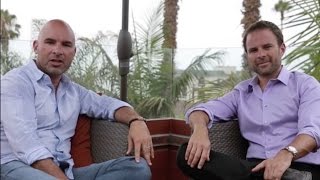
Kent Clothier went from $50M in grocery wholesale revenue at 23 to $1.8B by 30, lost it all in 22 months, then rebuilt through real estate wholesaling and flipping roughly 50 houses a month before turning it into software and education.
Questions this video answers
17
About $50 million by age 23; about $800 million by age 28; about $1.8 billion by age 30.
22 months
Real Estate Worldwide
About 50 houses per month.
Chapters
How do you make business problems disappear? Wrap them in bacon. For business owners, marketing execs, and anyone trying to grow your business, pump your profits and make more while doing less. Welcome to Bacon Wrapped Business with Brad Costanzo. Sizzling hot business advice guaranteed to make you fat profits. Every week, our chefs will serve you proven recipes for ramping up your revenue. Now, here's your host, Brad Costanzo.
Welcome to bacon Wrap business. This is Brad Costanzo, and if you are a longtime subscriber and listener, today is going to be a special treat for you. If this is the first time you have stumbled across this show and you don't know who I am, you don't know what this is about, but you like bacon and you like business and you're like, well, this kind of makes sense. Well, welcome to the show. As I mentioned, I'm Brad Costanzo and I'm a serial entrepreneur, angel investor. I am a business and marketing consultant. I run my own business is completely separate from the consulting that I do. And this is my platform to sit down with some of the most inspirational, high achieving, peak performing successful entrepreneurs and pick their brains clean on how they did it, what makes them tick, what's working now, what's not. And I think of it as my way of asking somebody if I can sit down and have a coffee and pick their brain, which they would normally hate. But because I've got a big old audience, they happily do it and they let me extract all of the goody good information from them free of charge. So I like to think that of this as you eavesdropping on me having conversations that I really, really want to have with people I really, really want to talk to. And I think you're going to get that out of today's episode as well. By the way, today's episode is about two years overdue. And that's because I started the show two years ago and at the time I was already working with today's guest, Kent Clothier. So Kent and I have been friends for, oh, I guess about three and a half years at the time of this recording. And he started off as a referral from my buddy Drew Canole to work with Kent and help him. Initially, it was just publish a book, right? And then Kent and I did such good work together. He said, listen, I'd really like to hire you and bring you on as a consultant to help me grow my marketing business and use your strategies to see if we can grow together. And I took him up on that and it was one of the best things I've ever done because not only did I get to be a part of a multimillion dollar a year company and utilize marketing campaigns that helped him, you know, grow tremendously, but I got to be a witness to an entrepreneur who is extremely inspirational and has, you know, had major successes, major failures back down to zero, which he'll talk about and then back up. And I have learned so much from him as a friend, as a mentor, as a friend tour that it's a real honor to bring him on the show to talk to you. And it's interesting though, because I know so much about Kent and anytime I am curious about something, I just pick up the phone and call him. But that being said, I tried to ask him some questions that I didn't necessarily know, but get him to shed some light on really what it takes to be an entrepreneur who moves with intention and gets things done despite all their fears, despite any disadvantages or drawbacks they may have. And because I've already done the episode, I can tell you, man, it's going to, to be a really, really good one. A little bit about Kent. Kent's the founder and CEO of a company called Real Estate Worldwide, which is one of the fastest growing companies in the country. In fact, the Clothier family is the only family who has four companies on the list of the Fortune, I'm sorry, the Inc. 5000 list of fastest growing companies, all in real estate. But in case you think that Kent was born into a real estate family with a silver spoon, it's quite the opposite. In fact, he'll tell the story about starting off in the grocery business, making a fortune, losing it all, and coming back like wildfire in the real estate business. It's been a dramatic rise, fall and rise again. He'll talk about some of the lessons he learned along the way, as well as some of the things that you can take away no matter what you're doing or what business you're in. The company. Real Estate Worldwide is the premier top educational based system for learning how to invest in real estate, as well as the number one software platform for generating leads of buyers, sellers and private lenders that's used by real estate investors all over the place. So Kent made an amazing transition from simply being a real estate investor to also being a software entrepreneur and then a coaching provider. So he's got his fingers in a lot of different pies. He's seen it all. He knows how to grow a business very big and do it the right way without, you know, jeopardizing his reputation as one of those carnival barkers out there who's preaching get rich quick. You'll never hear things like that from Kent. In fact, he's going to tell you it's going to be a, you know, it's going to be a lot of hard work and that it's not always easy, but it's definitely worth it. I could go on for days about Kent and his qualifications, but I want to jump into the interview that you.
Have asked to hear.
So let's go ahead and bring Kent on the line right now. All right, Kent, you with me, buddy?
I'm here, man. All right, dude.
This has been a long overdue podcast.
Yeah. We have talked about this forever. Forever. Yeah.
And it's kind of funny because we've worked together, we've been such good friends for, I mean, three years now. Over two, almost three years now. And there is so much that we could talk about. And it was kind of funny because whenever I wanted to pick your brain, I could just walk into the other office or pick up the phone and talk to you. It kind of makes doing a podcast where I extract the things that I don't know difficult.
Exactly.
As I mentioned in the introduction, you've had probably more than any. Well, definitely more than any other person, especially in my professional life, you've had a bigger impact on me personally and professionally than really anybody else. I was very fortunate to get to work with you and help serve you and your business, but I was also very fortunate to get to work with you and do things that a lot of people pay very, very big money to spend just a couple days with you and to see how you operate. And I got to see it firsthand. So just personally, I want to thank you very much for all of the business lessons, but also the personal lessons in friendship that you've given me over the past several years. And I definitely wouldn't be where I'm at without a lot of your guidance. So I want to appreciate you and acknowledge you for that.
Oh, dude, I appreciate that. And the feeling is mutual, brother. As you know. As you know.
Thank you. Thank you. So, for my audience, this should be pretty cool because there is. It's very rare that I've ever pulled somebody on where I've got a deep, deep understanding of their background, their knowledge, and why the things that they. That, you know, my guests can share can be so impactful. And instead of just talking about little micro tactics and sizzling hot little business ideas, whenever I think of you, I think of you as, like, the true entrepreneur who makes big things happen, who takes big risks and jumps in. You always talk about moving with intention to build a real lasting impact. But before we dive into that, let's give people kind of a quick backstory on like, kind of where you came from and the things you've kind of done. So they go, oh, crap, this is somebody I really need to be listening to.
The might give you the three minute view here, the three minute pitch here. So I started as an entrepreneur when I was 17. I came from a very entrepreneurial family. And so my dad and I started in a business of actually grocery wholesaling, of all things, but not in the traditional sense that we were doing grocery wholesaling in kind of an off market sense. What we were doing was most people don't know that groceries, you know, when you see a grocery item, that little upc, the scan code, the barcode on every item, you see, well, that's a. That little code represents a unique identifier for that product. And it is the same identifier everywhere in the world. Everywhere that product is sold, that same little 10 digit number exists. And what's interesting about that and why I even bring it up is because although the number is the same and although the product is the same, and also, you know, everything is the same, one thing that is considerably different from just one city to the next is how much the manufacturer actually sells the product for. And so, you know, a case of Kraft Mac and Cheese, for instance, in Miami, Florida, you know, Kraft General Foods may sell that product for $40 and the exact same item, no difference whatsoever, they may sell it in Denver, Colorado for $20. And anytime that happens, you are creating a very inefficient market. You're creating opportunity for guys like me. And at a very young age, like I said 17 years old, we quickly figured out that we could go into one market, buy something, put it on a truck and turn around and ship it into another market and sell it at, you know, below what they were paying from the manufacturer. And it was called diverting grocery wholesaling. And this little company we started in Memphis, Tennessee, was doing, you know, roughly by the time I was 23, was doing $50 million a year, by the time I was 28, was doing 800 million. By the time I was 30, I was running a $1.8 billion a year company. So my.
No stress, no pressure.
Yeah, yeah. And so, you know, as a very, you know, in my 20s, I had a very unique business resume. Right. I mean, I basically grew up in a situation where things move very fast. You know, I learned very quickly that you could accomplish great things and big things if you. I just didn't know any different than to go big and hard. And I saw, you know, I was on the front row, front lines, if you will, of seeing things happen in a really dynamic way. So from the time I'm 17 to the time I'm 30, you know, I've got the Midas touch. I just had this amazing journey that created a really, really big company. A lot of money, a lot of opportunity, a lot of things go right. And then about that time, as most people, you know, that would experience that kind of thing in their 20s and 30s, I should say in their 20s, basically I turned 30 and then three weeks later, I walked out of the company. I had a run in with my partners and basically just walked away from an operation where I was making just ungodly amount of money and was just pissed off and full of, you know, what, that I just said, hey, I'm gonna go do this on my own. I don't need anybody else now. And over the course of 22 months, lost everything. You know, I had a nice big nest egg that I completely pissed away. And millions, right, millions, millions of dollars burnt every bridge, every relationship, every. I mean, as if you can imagine out. I mean, without having drugs and alcohol, but if you can imagine every other way you could possibly just completely fall flat on your face. From business perspective and a personal perspective, I mean, I was there. I was morally bankrupt. I was financially bankrupt. I mean, I was just a complete mess. I lost everything. And it was devastating.
And all you knew from like an early age, because you got started so early, all you really had known to that point was success. I am a big badass baller and probably felt like you had the Midas touch. So I can imagine.
No doubt. I mean, it's one of those things, man, if you don't ever know what failure tastes like, it's really. It's a bitter taste. I mean, and I. And I basically had never failed. I had won constantly. And I was in an industry, you know, the industry here we are doing $1.8 billion, but this little niche industry was doing roughly about 5 or 6 billion dollars. So we were the player. And me being on top of biggest operation in that little niche industry, I was the man, right? Everybody in the industry knew who I was. You could call any grocery retailer or any grocery wholesaler, thousands of companies all over the country, and they knew exactly who I was. And So I had this, you know, the money, the power, the reputation. I mean, it was, it was all there. And so the fall from that was hard, but it's exactly what I needed, man. I mean, humble piece. I was the guy that needed it because I just, I was not humble in the slightest. I was completely cocky and full of shit. Just was what it was. And so, man, you know, so basically from that I got, you know, after I lost everything and tried to get back on my feet, my wife now, but my girlfriend at the time basically saved my life and stepped in and said, hey, I know what you can do. Move in with me. Because I mean, I had to sell everything, going through everything I went through and basically making bad business decision after bad business decision, trying to start another company turned around.
You discovered real estate investing soon after. And what I love about it is the fact that you took that same general model of operating, which is, okay, let's in essence, wholesale groceries, find out what people are buying and then just go fill the demand. And you started doing that with real estate investing, like, you know, where people are fixing and flipping. But you. How do you, how did you get started on the real estate side? I ask, even though I know well.
So most people have no idea when they hear real estate, they think of just retail, right? I mean, it's basically what happened. What we see in the news every day, housing markets are up, housing markets are down. Use a Realtor for this, use a realtor for that. Most people and anybody's idea of investing in real estate is typically what they see in a 30 minute show on HGTV. So most have no idea that there's a market out there called wholesaling. And that's effectively where people go off and they quickly find properties, put them under contract, and then flip those properties to other investors or people that are wanting them for construction or whatever the case may be. So I had no idea this industry existed as well. But I was sitting on my couch, you know, like I said, at my girlfriend's house at the time, watched a late night infomercial, just like I guarantee people are listening to this, have done as well, you know, watch one of those late night infomercials. Was really tough for me to badmouth them because I'm a product of it. Went to one of those events, got excited about it, saw what they were doing. And I was certainly different than most people in the room because I was connecting a lot of dots because I had just come from an industry where wholesaling was my bread and Butter. Yeah. And I was just saying, oh wait, I can do this with real estate.
Different products.
Yeah. I mean, you know, take extract grocery, insert house, house, or even better, let's.
Go insert contract for a house.
Yeah. And we explode it.
So for, for my listeners who don't really know what real estate wholesaling is, give us a 30 second version.
You go and put something under contract. You put a house under contract. So I guarantee, you know, people have always heard, how do you buy, how do you buy a house with no credit, no experience? You know, we've all seen those commercials. So it's pretty straightforward. You go and put a house under contract, and upon putting that house under contract, you go and find somebody being other investors, rehabbers, fix and flippers, people that want to rent them, whatever. Right. You go find the people that are, that are really looking for that property for investment. You just got to it first. And you assign your interest or flip your interest in the contract. So I go put something under contract for 100 grand and I can quickly go to somebody else and say, listen, I have this property under contract for 100 grand. I'll assign it to you for a fee of $20,000. So now they're on the hook for $120,000. You effectively make $20,000 on a deal that you never really own and you've never really actually closed on the property. You were just smart enough to get it under contract and flip your interest in that contract, assign your interest in the contract, and it happens every day.
Yeah. And the genius of it. And people are like, well, how does that work? How do you get somebody to do that? I mean, obviously the key is you have to find somebody in the situation where they're motivated to sell the property in the first place, because maybe it's in disrepair, maybe they're losing money, maybe they're going through a divorce. It could be a million things. And when you're able to do that and you're able to connect that with all the people out there who, all the active investors paying cash for properties. I mean, being that tollgate, that guy in the middle. The nicest part about wholesaling, and I'm putting a lot of words in your mouth just because I'm so familiar with the industry and I've done this myself, the nice part is it's probably the least risky way to get started. The quickest cash flow, the least brain damage. And you went on then after a lot of success to develop software and systems to make this even easier. So. And I Know that we personally had success using your software to generate that, you know, finds you all the, you know, motivated sellers and cash buyers. Just, you know, for the audience's sake, Kent and I put, you know, we used his system, his leads, his database. Basically, we sent out, and this is not easily duplicatable because of what we did, but 88 letters. Just 88. But it proves what you can do. We sent out 88 letters, found somebody who said, yeah, they called us up to say, we were just messing around, you and I. And they said, yeah, I'm happy to sell you this house. And we turned around without even seeing it and sold that contract. And I think we made about, what, $22,000 just on that. We were doing a little test, but it goes to prove that when you have good data, which your systems do, and we'll provide a link to, you know, if people want to check this stuff out. But if you have really good data, potentially motivated sellers, and then, you know, there are people out there who are paying profit cash for properties. I mean, there was zero brain damage in that entire thing. It was beautiful.
Yeah. I mean, basically, you know, the big epiphany was I got out there and I started flipping a lot of houses, started flipping a lot of contracts, making a lot of money, got back up on my feet, got going, built a lot of momentum, and then got married. And my wife and I were having a little girl. And I quickly realized, you know, slap on the forehead here, that, oh, my God, wait a minute. If I stop buying and selling houses, the money stops. I don't really own a business. I own a job. Yeah, no, the jobs. The jobs pay me good, but it's not. It's. It's not a business. And so then to your point, we got really, you know, we got really dialed in on creating the systems, the processes, the data, the marketing, and created the software. And again, all the things that. That make it. That made it really, really easy for us to take a business. I shouldn't say easy, but really simple for us to take a business to scale over the course of the next few years. And when we did that, we got a lot of people's attention. I mean, we went to. Now we're a business that's flipping 50 houses a month to this very day. And when you do that, a lot of people kind of raise their eyebrows, like, man, I'd love to figure out what you're doing. And that kind of. We kind of got drug into the information business, into the software business, into the education Business, we weren't really looking to do any of those things. But when you create systems and processes that make it easy for people, opportunities start to arise. And that's what happened for us. Yeah.
And it's been a fun, crazy ride. And watching you be able to create so many other success stories with really frustrated investors and people who have answered various infomercial calls and read the books and tried and failed different things. The power of having good data, good systems in a simple process that just allows people to take action and apply the result. I think that's also the difference when you said, hey, I was a product of the infomercial stuff. Infomercials, business opportunities, they get the worst name in the industry. Like, oh, it's one of those scammy infomercials, but it's not true. The difference is you took that information and you connected the dots and you moved forward with it. Would you say that that's probably the biggest problem of why more people aren't seeing success? Whether it's with real estate, whether it's with business and entrepreneurship or anything else? What do you think is holding most people back from being able to get similar results?
Well, I mean, let's be honest, right? There's just some people that have no business being in business. There's some people that don't understand how to hold themselves accountable. There's some people that don't. I mean, I would argue that the number one thing that will contribute to your success in business is what's going on between your ears, period. If you don't have the right mentality, if you're not feeding your mind the right stuff, if you're not surrounding yourself with the right people, if you're not listening to the right podcast or reading the right books or taking the right trainings, none of it matters. Fundamentally, the transaction part of anything in making money online or making money in real estate or fundamentally, those are just tactics. It's strategies, they're techniques. And none of them matter if mentally you're not prepared to do what it takes to see it through. And I think that's probably as big a thing as any. As I've been doing this now, I guess I'm now in my, oh, God, 13th year, 14th year of doing this, that I can tell you the biggest shift that I see is that there's some people that come out of business or an opportunity, and it's. They, quite literally, they expect to push a button and it's just going to start raining money. Right? I mean, they truly Believe they've got a lottery ticket in their hands. And it's just super easy. And it's easy because everybody told me it was going to be easy, and that's just not true. I mean, it's just that simple. I mean, this is hard work, and.
There'S a difference between simple and easy. It can be a simple system that's not always easy to do.
Yeah. As simple is, hey, this is a process. Go from step one to step two to step three. Just like putting up, you know, a puzzle together, it. The process works. It is simple. You can follow it. And if you have the right drive, the right determination, you're feeding yourself the right, you know, things mentally to keep you engaged and keep you in the game and not yourself. Get distracted and go chase after the next shiny thing. You just stay on point and you do follow the process, the simple process, over and over and over and over. Chances are better than not. You're going to get the result. I think what people do is they approach stuff and they believe that it's on their timeline. And business just doesn't work like that. Business is about being relentless. Business is about being passionate and just saying, hey, I'm going to go for it. I'm going to do whatever it takes. Failure is just simply not an option. As you've heard me say, burn the boats. I'm just not going backwards. When you have that approach, I think that's the key differentiator. And so you ask the question, why do some people get the results? And we're all going through the same process, we're all going through the same education. Why does some get it and some don't? Because I believe that probably 90% of the people that go into those situations don't have the foundation of what it takes to actually be successful, regardless of what they're doing. And that's why I'm so passionate about it. Right. You've seen me talk about it. That's what I spend most of my time on.
It is true. It's like most of the coaching that you do, most of the instruction you do really does revolve around that mindset stuff. And the unfortunate part is that mindset stuff, it is always the most impactful to people. But it's the thing that they don't go into it wanting to learn. They want to know the tricks and tactics as opposed to the mindset. How do you get past that fear of starting or that fear of taking the next step, and how do you make that shift into doing it when the times get hard. That's the other part that I've noticed, too. Just as an entrepreneur and talking to a lot, it is really easy to start something. It's easy to get intoxicated by a new opportunity or a new method. But when you jump into it and you start it and then you realize, yeah, okay, this actually takes work effort, there's going to be some sleepless nights and a lot of confusion and a lot of doubts. Am I doing the right thing? Is it ever going to work out?
What do you.
I mean, maybe you're cut from a different cloth because of your upbringing, has been very entrepreneurial and everything else that you're able to just kind of move through that, like a lot easier than some people. But for people who have that fear of going big and burning the boats and just saying, screw it, I'm going to do it no matter what it takes. How do you get them over that shift or how do you get them to make that shift that says, all right, I'm in, I'll do what it takes?
Well, I mean, I think, you know, I'm a big numbers guy. I think when you're. When you deal in a world of facts, right, and you've heard me say, hey, it's just math. When you get to the math, right, when you just get down to the simple hard facts of situations, it's pretty difficult to deny. And so for me, you hear me talk about time all the time. For me, it's just very simple. At the end of the day, I have a very finite number of days left on this planet. And the more I face that reality, and the more I help people face that reality, the less. I mean, it becomes very hypocritical for somebody to say you want something and not be willing to take the actions to get it right. When somebody sits there and says, yeah, I'll get to it someday, next month, next year, whatever, when you look somebody in the face and say, you understand that tomorrow, next week, next month, this year, none of that's promised and you have an opportunity to do something now, in this moment right now, you know, in the next five minutes, next 30 minutes, the actions you take can have a direct impact on your future. When you get somebody to get in reality versus, you know, having their head up in the clouds like most people, it's just easier to ignore. I think that's when a lot of magical things happen. I think a lot of people. And I think that's a gift. I think that's what entrepreneurs do to themselves. As often as they possibly can. Right. I think we successful entrepreneurs have an ability to trick themselves, to mentally make themselves turn it on and off and that they just have a way. At least all, you know, most successful entrepreneurs I hang around, it's just we have a way of making this moment matter and we understand the impact of it better than most. In other words, I'm going to do the work, I'm going to put in the time, I'm going to follow the system, I'm going to follow the process. I'm going to do it, I'm going to create the leverage, I'm going to hire the people, I'm going to grind out whatever I need to do now because I understand the impact it can have down the road. And I think the more you can deal in reality like that, where you're just, man, don't just stop screwing around. It's reckless and irresponsible to act like, and pretend that you have time. You just don't. And I've been also, you know, equally as fortunate. Like you said, my background and my upbringing was really impactful. But I've had a couple, you know, pretty, pretty serious impactful things that have happened in my life over the years that really have been not so subtle reminders of how fast things can go away. And, and I'm very grateful for that because it gives me a perspective. Like, I just, I simply refuse to believe that I've got time to waste. And I think your question directly, the more often you can put yourself into that kind of mindset, the easier it becomes to take big action.
Yeah, you're right. And I know that on a. Just a daily basis. So it's hard to sometimes just remind yourself every day or, you know, have this macabre outlook, like, I'm about to die, I need to do this stuff right? So what? But the other thing that I found myself doing as a result of, you know, being, you know, friends and colleague with you for so long is reminding myself that, yeah, first of all, deadlines are everything. Like, if I get. If I don't give myself a deadline to do something, it doesn't get done. And the only time I've ever been productive in my life is when I've had deadlines. It's weird how that works, but it's called a dead line. Maybe for a reason, it's a dead line.
More from Brad

Seriously. If you pay mortgage or your rent this is like an IQ test Bilt https:/bradslinks.com/bilt

AI Native email marketing: Send emails from Claude/ChatGPT with NitroSendAI (Review, Not Sponsored)

How to Migrate ChatGPT Memories and Chats to Claude (Including Claude Cowork Triage)




My Investing Message To My Younger Self (And The Lessons I Learned the Hard Way)



