
Rich Schefren: Saving Internet Businesses From The Dangers of Big Tech
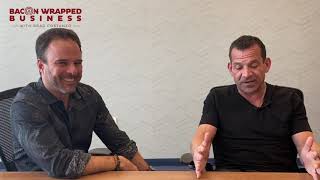
This is a recorded interview (host Brad Costanzo; guest Rich Schefren) about the growing dominance of large tech platforms and the risks they pose to independent internet businesses and online marketers. Schefren argues big tech (notably Google and Facebook) increasingly scrape and repackage third-party content, restrict competition, and are reducing the utility of third-party cookies and traditional retargeting—forcing marketers to reduce platform dependence. The conversation also covers the social/economic effects of the gig economy and announces a 24-hour livestream (Feb 19→20) where marketing leaders will share strategies to build resilient, less platform-dependent businesses.
Questions this video answers
Starts 7pm on February 19 and runs to 7pm on February 20 (24 hours).
"bacon".
Chrome: 66% of browser usage (as stated in the interview).
48 years old.
Chapters
Alright, so welcome to a very special interview and episode. My name is Brad Costanzo. I'd like you to meet Rich Sheffrin here. You know, in the past hour or so that we've been catching up, catching up and kicking it, just understanding some of the cool things that you have got going on right now and some of these insights that are just really, you know, not only remarkable, but very timely and important for I think all business owners pay attention to. So you notice things probably quicker than a lot of people do. I mean you've predicted multiple trends, you've gotten ahead of them. And I know that in marketing a very. And especially with, I think your theory is that this concept of an inciting incident or something happened like pay attention to this. That's one way to get attention. And I noticed you actually just caught one the other day. I'm on your newsletter list. I had seen it, then you talked about it, which was how Google is getting rid of third party cookies and how like it's gonna cause a big ruckus in the world of online marketing. Nobody knows exactly how or what the site is, but I know you've been paying attention to a lot of the things that especially big tech has been doing and how it's been changing. So this is really where now we're transitioning to what's.
What's now.
Yeah, what's now. Because we've talked about all your past.
Yeah, I would say that the last thing, just about the past just. Yeah. And we don't need to spend a lot of time on it is just a perspective that like I think most people think of business as like a marathon. You know, I don't think of it as a marathon and that could be because I have ADD and whatever, but I tend to think of it as a series of sprints and, and so each campaign, when I'm about to launch a campaign I need to amp it up a little bit. But the good news is that I'm a sprinter competing over short periods of time with marathon runners. And so it's easy to rise above the clutter when you can go all out and you know this is a 30 day, 60 day, 90 day slog or whatever it is. But you could be in an intensity that no one else can be at because you know it's going to, you know, you're going to reap the rewards. And so I've always tried to start campaigns with that like initial sprint of like, you know, commanding attention. So that's just on that. But as we move towards the now and the future. What I think a lot of people don't realize is how precarious the situation has become. It's kind of one of those things where maybe people aren't talking about it to one another, but less businesses have been started year after year after year for like the last 20 years in the US and I think that it's pretty worldwide and less VC money is being applied and there's less innovation, which is hard for people to get their head around. But, like, you know, I'm 48, so almost 50, and so I still have some memories of like when Ma Bell was like the only game in town and you had to rent your phone from the phone company. You couldn't buy a phone anywhere, no one sold the phone. And it wasn't until they broke up Ma Bell that you could then buy a phone and then phones were all over the place. So I'm pretty certain, like, we wouldn't have cell phones today if they didn't break up model and we probably wouldn't have Google if the government didn't break up. Microsoft's dominance at that time.
The bigger you get, the harder it is to innovate, the more risk there is.
Yeah, like, so when was the last big innovation in tech? Like, you know, I mean, the iPhone's 11 years old. Like, the iPad is eight, nine years old. Like, what new device? 5G will roll out soon and that will open up opportunities that people can't even imagine, myself included, because we couldn't imagine Uber until 4G came out. Like, so 4G made a lot of stuff that we use today. Now, I think that was probably.
Although it's not a device, the whole gig sharing economy on the back of everybody's smartphones is probably the biggest innovation that we've kind of seen.
And it's actually bad for people and good for business. So it's, you know, because it's a way of paying people less, not paying for their healthcare, like all kinds of stuff. So I would say yeah. The gig economy, while in certain ways really good, it's also lowered the bar of what companies to provide their employees in a very big way. And that's also been somewhat calculatedly done. Basically, there's no industry that's good once you put big in front of it. Right. Like, so whether it's, you know, big oil, big Tobacco, big Pharma, these are not the industries. And big tech is the second biggest lobbying group in the United States. Is it really?
I wouldn't guess that.
Yeah, they've Changed a lot of laws, laws that make it okay for them to scrape content and put it on their site. They were afraid when Napster got caught that they would have the same thing.
And you mentioned that just to go detail, we were talking about it offline with Google.
Yeah. Now, Google sends more than the whole original idea of a search engine was we're going to scrape the world's content. People will come to our site and they'll find the content they want and then they'll go there. So ours was just a stop. The search engine was stopping hole. Now, Google sees it as a walled garden and they don't want people to leave unless they're paying them. But why are people going to Google? They're going to Google because they have our content on.
What a great example. If people don't know exactly what we're talking about. I did this last night. I was making a steak last night, a flatiron steak, and I had to Google best internal temperature for medium rare on a flatiron steak. And I typed it into Google and it showed up without. I didn't have to click on the site it pulled it from.
It just showed them that answer box. And that answer box wasn't populated by Google. It was someone else's content that they scraped and put on their site and they're being sued for it. And, you know, Facebook did the same thing, right? Like everybody and their brother was advertising like us on Facebook, from, you know, McDonald's to Mercedes Benz, and then they said, you know, yeah, no more. Only 105%.
That rug you're standing on is gone.
So big tech is not our friend as entrepreneurs, and they're going into more and more spaces that will cost us more money. The typical pattern is always there where, you know, every new platform opens, welcomes us with open arms, small business and direct response advertisers. And then as other businesses come in and, you know, the bid prices go up, they have less of a need for us, and so terms of service escalate and then we get kicked out. And that's happened, you know, everywhere from Facebook to Google to, you know, even the companies prior to Google. And so what I think people need to realize is, is that while they never thought of these platforms as necessarily competition, they quickly are becoming competition. And they certainly see us as competition. It's very convenient so that they're very big and strong and we're very weak and they can basically banish us from the Internet and make us invisible. Right. And God knows how many people have lost their accounts, whether Google or Facebook, because of like a terms of service thing. And then if you're small, good luck getting anyone on the phone to help you. Right? Like that doesn't happen unless you're a big company like Agora or something like that. So, you know, about two years ago, Gora bought my company after I'd taken a bunch of years off and they wanted me to help them with the platforms. And at first I was studying a lot of AI and data because I thought maybe that would be the solution. But with what Google just did about getting rid of cookies in the next two years with the Chrome browser, which is 66% of the browser usage, that's a big deal. And that is going to change the whole data environment. And it's really like Google and Facebook. Well, Google in this particular case is kind of like pulling the ladder up.
Behind them and, and just so at least my audience understands it even more. So one of the things, in layman's terms, so if you are like, you've got a Facebook pixel on my site, I got a Facebook pixel on bacon wrap business. So when you come there, I can cookie you and then follow you around with all my ads. That's not going to work. Is that correct?
It depends. It depends. It depends. And like a lot of those kind of details are not fully shaken out yet. Now, will you be able to retarget people who have come to your page with a Facebook pixel on your page on Facebook? Possibly. There are other ways to do it, like an identity graph, but I don't know. But you certainly. But the whole industry as of right now relies on cookies. Retargeting relies on cookies. The ability to use programmatic advertising relies on cookies. The programmatic advertising is huge and it's all, it's the reason. But cookies are why you can go to Amazon and on a web browser and you're pre logged in. You know, like that goes away. So. Yeah, but Google doesn't. Any company that has the majority of people in the world signing into their platform from every device that they have doesn't really need cookies. They have like, they know every device ID. They know my TVs, device IDs, because of YouTube. Right. They know my, my, you know, my, my iPhone, my iPad, and my computer based on logins. So they have every device they don't need to cookie.
And it makes that. And in giving us this, oh, we're making it more private for you guys, what they're really doing is that they're making themselves more powerful because yeah, it's.
Like, you know, it's like buying all the machine guns in the world and then tomorrow saying for now on machine guns will be illegal to manufacture and sell. You know, it's not that they are illegal completely, they're just illegal to everyone else. Right. We got them all. Yeah. And that's kind of how it is. And so what, you know, so my advice to Agora was like, we need the best experts in every different channel and every different medium to really come up with a strategy that makes us much less dependent on any of these platforms. And they agreed. And so that's what we did. And we want. At some point then it occurred to us we might as well do this for the whole Internet marketing community. Especially since, like, I don't want to see it go away. You know, I was there towards the very beginning of it and helped it grow. And even like I've had businesses that I've sold that then other people ran into the ground and it was sad to see, like, you know, same with the market. I don't want to see this market disappear. But anyway, yeah, so they're. If we're going to help Agora, we might as well help everyone else. And I have a special attachment to this market, especially because I never thought I'd be as successful as I am. And so we're doing a 24 hour live stream on February 19th that will be epic. It will be from 7pm on February 19th. I believe that's Wednesday till Thursday, February 20th at 7pm so we're going to go 24 hours and the guest list is really like the people that you most want to learn from. So it's Russell Brunson of ClickFunnels. Yeah. Ryan Deiss and Roland Fraser of Digital marketer. There's about 30 or 40 people so far. We're broadcasting out of Mark Ford's private cigar bar and we're going to be doing a lot of fun stuff in the background too. And yeah, and it's a way to really, all of us are going to be teaching our winning strategies currently that are working now to make 2020 your best year yet and to make the decade of 2020 your best decade. Even though you're entering into a hostile environment with these big tech platforms and recognizing that and building a business that benefits off these platforms but is not totally reliant on these platforms so that you still have the freedom that you want, but also are protected is the outcome that I want for everyone who comes on the live stream. It'll be the biggest event online I think in the last decade. I really believe that. And I believe that people will walk away with so much value.
So the process to watch the livestream they'll opt in. So I'm going to set up a link. People can go to baconratbusiness.com Rich Yep, that works. Rich and there'll be a link in the show notes and wherever you're watching this that you can check it out.
And then there'll be a code and you'll want to type in bacon.
Bacon.
Right.
Easy to remember.
Easy to remember. And then you'll be taken to a page where you'll have the choice of whether to register or not for the live stream. It's free. When you register, you'll also get three presentations that I gave last summer to all the international publishers of Agora. The first presentation was how to increase conversion. 13 ways to increase Conversion Rate Without Changing a word of copy 11 Ways. The second presentation was like 11 Ways to Increase Cart Value. And the third one was VSL's webinars and other Stealth Methods of Selling. And then all they have to do is mark their calendar for the 19th and show up at 7pM.
More from Brad

Seriously. If you pay mortgage or your rent this is like an IQ test Bilt https:/bradslinks.com/bilt

AI Native email marketing: Send emails from Claude/ChatGPT with NitroSendAI (Review, Not Sponsored)

How to Migrate ChatGPT Memories and Chats to Claude (Including Claude Cowork Triage)




My Investing Message To My Younger Self (And The Lessons I Learned the Hard Way)



