
Sweeney Daniel from Trigger Cast on Bacon Wrapped Business with Brad Costanzo
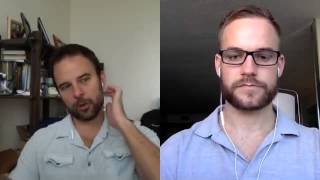
Conversational double-cast between Brad Costanzo and Sweeney Daniel about podcasting and digital marketing. They cover starting and growing a podcast (launch timing, episode cadence, gear), content promotion tactics (using email lists, light-gating content, influencer outreach, Buzzsumo), paid acquisition channels (Facebook, Twitter, YouTube ads), and branding choices (podcast naming and personality). The tone is practical and promotional with actionable examples.
Chapters
Hey, this is Brad Costanzo from Digital Triggers.
And hey, this is Sweeney Daniel from Bacon Wrapped Business.
Now if we just confused you a little bit, this is actually Brad from Bacon Wrapped Business and Sweeney from Digital Triggers. We are doing something a little different here. We are doing a. What would you call this? Sweeney?
It's kind of a double cast.
Ooh, trademark term. So Sweeney is the host of Digital Triggers, one of the top business podcasts and digital marketing podcasts on itunes. And obviously I run Bacon Wrap Business also on itunes. And we decided to do a video interview where we interview each other and both share this on each other's shows respectively. So there'll be a little bit of duplicate content out there on the itunes world. I don't know if this has ever been done, has it?
I don't think so. We are, I mean, I imagine at least somewhere. Right. But I mean, the basic principle is if you listen to your podcast, you're probably like, you, you might hear me and go, hey, I want to listen to more of his stuff. They're probably not going to go over and listen to you again, right? They already listen to all your stuff.
Exactly.
They're going to want to check out my other stuff and if they listen to my podcast and go, hey, like Brad, they're going to want to check out your other stuff.
I like it. See, we got two podcasting icons, self proclaimed kings of the podcasting world. And so for my listeners, real quick, Digital Triggers with Sweeney is one of the best podcasts out there, all things digital and online marketing. Dude, you interview some of the top people out there as well. And we've been friends for a while. That's why I thought this would be fun to jump on a co call and we'll see where this goes. We're gonna talk a lot about podcasting today and if you wanna introduce me to your. To your folks.
Yeah, definitely. So I get. So what we do is Tuesdays we have a guest interview and then on Fridays we do something called the Friday Reload, which is where I kind of recap what happened the week and cover some of the biggest updates, new stories and new things that came out. Now Brad has a very, very awesome podcast as well. And him being based over in California, he's connected to a lot of superstars. So we tend to get more entrepreneurs, whereas Brad as well gets entrepreneurs. But he also has people like high level guest speakers and book authors and these kind of names that you maybe have never heard of, but they've secretly pulled so many strings in the Background.
So let's see where this goes. As I said, it's kind of weird. Normally I'd be interviewing you or you'd be interviewing me. We'd be pulling questions out. But we're gonna have a conversation between the two of us and just let other folks eavesdrop on what we're talking about. And today I think one of the first things we're gonna talk about is podcasting in general. Cause we both got two hit podcasts. And then after that let's talk about consulting. Because we both do consulting for fee and for fun. So let me ask you first, Sweeney. So when did you launch Digital Triggers?
So Digital Triggers launched about five months ago, give or take. We had an initial launch, a little bit of a rebrand, and that's where we are now. We've recently released our. I think we're nearing about 70 episodes or so total.
Really? Yeah, I think you got about double that. I've got. I try to get one out every week, but sometimes life gets in the way and not quite able to do that. I launched in June, so. And we're in December now. So I guess I'm right at my six month mark, actually.
So. Boom, boom. Congratulations.
Thank you very much.
We both celebrate our six month anniversaries.
Exactly.
So what.
What would be a great question for listeners to know? I mean, there's the. There's the starting a podcast, there's the marketing of podcasts. Actually, let's jump into this because, you know, we like to share actionable information. The people who listen to our shows, usually there's some beginners out there trying to really get started. But the thing is, there's a lot of information for beginners out there and there's not as much information for what happens when you actually get successful and what happens when you make it and how do you grow your podcast once it gets going. But for just a really briefly cover for folks out there who are thinking about starting one, highly recommend it. It's way easier to do than you would think. You know, it is if you. We're right now on Skype. I'm using ecamm's call recorder. A lot of times you use Google Hangouts. I've got my microphone, my EQ 2020. You don't need it. We could be broadcasting. Are you using your earbud? I'm just.
I got the YETI over here. Got the full podcasting set up.
I like it.
But no, I mean, I got started with a snowball mic that was like, you know, 6050 bucks maybe.
Right.
And it's like anything too, honestly. Like, my recommendation with podcasting would be go do 10, and then you. Then you'll stop sucking. You know, like, I mean, I remember, I think one of the third guests I ever interviewed was Ryan Holiday.
Nice.
And I always read his blog. I always looked up to him. So, you know, here's my third guest, and he's one of the, you know, probably one of the biggest quote unquote guests I've interviewed, at least in my opinion. And that's just kind of how it goes.
Right. So what have you done to grow your show?
So for us, we were lucky to have a list that we could leverage when we initially first launched. Before, we had a podcast about a very hot topic, very hot subject with an expert in the industry, Ben Atkins. And we kind of like gated that content too. So we were able to grow our Facebook page and really kind of create a splash in our local community or our local tribe. And a lot of people knew about it and were talking.
So tell me about the light gating, what you did. I kind of know what you did, but I'd love to hear exactly what you did. And I know the listeners.
So this, I mean, we don't need to dive into it too much because Facebook's actually kind of recently banned.
I've heard that.
Yeah, for the most part. So the way we had it was you had to either like the page or I'm pretty sure tweet the page in order to unlike the content. And it's pretty easy. I mean, there's a few different plug ins around there. Really. The key is having something that people want to hear about with someone that they want to hear about it from. And by really capitalizing on something that was popular and that was trending, I mean, we see blogs do this kind of stuff all the time. You know, the seven things you didn't know about Adrian Peterson. Right. That's going to do very big because there's so much media attention and hype surrounding it. So I had a post too once on the. On what I learned from the Wolf of Wall street. And that actually started as that grew from a PS line in an email. I said, PS, if you want to see my notes, reply to this email that I'm excited for tomorrow. And we had almost more responses than we'd ever gotten trying to hype people up for something. And I just threw it in there to see if there was any interest. I already had some notes on my iPhone and what I remembered so I was like, let me toss out the notes if people are interested. And the response was overwhelming. I actually made it into a blog post and a podcast, and it did extremely well because people were interested. It's topical. I mean, I had a interview with Colin Terrio, and he's got a large group. He's got a large influence, so I was able to post in his group. And when I posted in his group, I gave something away for free, and I was able to kind of leverage that audience. So I think. I think that can be a big part of content creation.
What'd you give away for free?
We had a top 50 best subject lines.
Oh, cool. I like it.
PDF. So it was a bonus that we had for a product, so I decided to put it in there, and it was, you know, relevant to their copywriting group.
No, that's great.
And I think that's kind of the problem with content creation, though, is it's hard to create and push something out. In seven days, it's going to be topical and then still have, like, you know, kind of your more regular content. Yeah. It's finding a balance.
That's great. Now on the light gating real quick, because I do know that Facebook is. Crack down a little bit on that, but it was that. Were you doing that on a Facebook page? Like, they had to like it, and then on the fa, or were you doing this on your regular website?
We were doing it on the blog.
Okay. And is that true? They're. They're no longer liking that? Because I know there's a.
As far as I'm aware of. Mm. The direction that they're taking in general is that they. They don't want people to be forced to like things anymore. They want people to kind of really like things because they want to like things. That makes sense. Yep. So they only want, you know, they don't want you just incentivizing the ban of anyone. Yeah. They want people to actually like pages because they like pages. Or at least from what I've seen.
Okay. Okay. Excellent. Yeah. And that's good to know. And that's good for everybody to know. I mean, Facebook is, you know, if you're marketing online, you're not marketing on Facebook. There's. You're missing out on a lot. But Facebook's always changing things and keeping marketers jumping through hoops. They're not as strict as Google, but they'll probably be there before, you know, too terribly long.
Yeah. I mean, there's. There's a lot of different interesting ways you can do content promotion nowadays. And that's where I was talking about something that's topically relevant, because there's a very cool tool called Buzzsumo. Now on Buzzsumo, I'm gonna write that.
Down because I have not. I'm not familiar with Buzzsumo.
Go for it. It gets a little confusing because there's Sumo me, there's King Sumo, there's Right Appsumo. There's a lot of Sumo getting thrown around. Like, one is by Noah Kagan, one's not. But you can use Buzzsumo. And Brian Harris from videofruit. Credit where credit is due kind of popularizes. Say I search for the Wolf of Wall Street. I can look at different articles about the Wolf of Wall street, and I can see in order by which one has the most shares. I can go in, dive in deeper and look at the Twitter users specifically that shared that article. Now if you want to take it another step further. So, I mean, those are people you can promote to, but you can take it another step further. And there's different ways that you can guess someone's email address and send out a cold email and basically be like, hey, I saw you like this article on Forbes about the Wolf of Wall Street. I actually just saw him recently in person, and I wrote up some notes I had about it in a blog post. You know, I'd love for you to check it out. Or like, I interviewed Brad Costanza. I noticed that you liked, you know, a few of his podcasts. I think you might like this interview with him. Go here to check it out.
So you're saying these are the people that you found. You found them where? Like, if they liked the podcast.
Well, they. I'm saying they shared this article.
Oh, the ones who shared it. Right. Like on Twitter.
Exactly.
For instance. Oh, hey, you shared this. You might like this as well. You know, Derek Halpern on social triggers has a really cool strategy. It's back on his blog. I know I've shared it somewhere. I'll probably. I'll try to share this in the notes. I'm gonna put this here. Share Derek's thing where he talks about getting. Getting into the slipstream for. Of press. So, like, yeah, when somebody, like when a journalist writes about a specific topic, and if you really want to get a, you know, get a hold of them, creating content for them, doing a very, very similar thing, like, you know, adding value, I won't go into it here, and I may not be able to do it justice just off the top of my head, but I'll put some show notes on there. But it's really powerful piggybacking, doing a little extra research, doing a little extra work to find out who are the influencers, who are the people sharing stuff, and give them more things to share more topics.
Well, I mean, the biggest thing with content, you know, and this is, this is a problem that everyone has. And, you know, I know, even us as podcasters, when you're releasing a podcast a week, two podcasts a week, you don't always give each one the love and attention that it deserves. And so often, if you're not baking in the bacon into it, and the bacon being the content promotion, it's only going to do so well compared to if you reach out to some of these influencers and you have an idea of how can I spread this content? That's one of the things that I struggle with interviews is it's good content. But if you can't, if it's not really formed around one subject enough, how can you advertise it? How can you reach people? How can you find people that you can contact with it? So that's great.
Now, have you done any advertising for your podcast?
Have you done.
Do you do any Facebook ads or anything paid in order to get.
We don't. We don't do any current paid. We're looking into YouTube and Twitter a little bit more.
Right? Yeah, Twitter ads. I may have los on to talk about that because I know that our friend Lo Silva has been really diving into Twitter ads and kind of figuring that aspect out. And it's one of the things that I'm not really familiar with. I know the most basic stuff about Twitter.
So doing the Friday reload, right. I've seen kind of the evolution of Twitter ads over the past six months. Sadly, I haven't dug in and spent enough money to talk from that side. But from the news side, as a reporter, for lack of a better term, they are really freaking trying to. I mean, that's good. That's the reality. You see them always putting out these new Twitter cards and new features and buy now buttons and retargeting and custom audience or tailored audiences, the same way that kind of Facebook changed in the past to really tailor it to marketers. Twitter is really putting the effort and saying, hey, guys, come and spend your money with us and we will take care of you. And I heard it's pretty easy to get a Twitter rep and they will hold your hand for the first month and then you should be good to go.
That's Great. And you know, it's, it's funny to watch the evolution of some of these platforms. So whenever a company is kind of, it's weird to call Twitter up and coming, but they are up and coming. And advertising is on a revenue standpoint. Right. And it's. But and on ads, yeah, it's new to them. And whenever something's new, they're willing to let you have a lot of leeway in order to get, you know, in the early adopters and getting them spending money and then they crack down later on just like Google did. Facebook now, you know, used to be able to throw anything up on Facebook. Now it's harder and harder to get things approved. It's easier and easier to get kicked off.
And with Google, I mean, they were lenient as could be because right. When they need you and then it happens and it shifts and if you get in early enough though, you should kind of see the shift coming and be able to adjust to it. Right.
And you know, the key really is to, you know, push the envelope as much as you can. You know, walking the line is actually very, you know, walking the edge is a very smart thing to do as opposed to just staying so purely white hat in the early days. Now once you get to that critical mass like Facebook, I say walk the, you know, straight and narrow on that now because it's too valuable to get banned from. We've both got friends who've been banned and, and when you lose your rights to advertise or you lose your profile in general, it really stinks. But in the beginning, it's always good to push the envelope a little bit, see what you can do.
And too, I mean, if you're gonna take that approach, there's platforms that accept that money. There's different, whether it's media buying and pop unders. And we had Charles Kirkland on, he talked about some of these platforms. It's not to say that they're dirty platforms or anything like that, but they, they're a little, they're a lot, a lot more lenient with what they'll let you get away with. So if that's kind of your style, then go to some, you know, go to something that plays to that strength rather than going with one of these kind of cleaner startup kind of companies.
Right. And, and to clarify, none of what I'm talking about is, you know, do do things that are illegal or do things that are immoral. But it's, you know, sometimes on Facebook they don't want you to run ads to either certain niches or certain types of pages or whatever. And when you can do that, whether it's with Twitter, Whether it's with YouTub, YouTube is Google, although.
But YouTube is very lenient right now.
Exactly. Because they're trying to get more advertising.
I have a buddy who's done very well with YouTube ads and I'm starting to run some YouTube ads myself. And YouTube is very lenient right now. You have to play by their rules. Right. Don't get me wrong. But you know, though, they give you some wiggle room.
Yep. So tell me about some of the stuff you're about to or doing on YouTube right now. That's the topic of a future podcast that I've got coming up in January with a YouTube expert named Tommy Powers. But we're going to be diving into this.
So the basic part of it is a good buddy of mine, or, you know, becoming a good buddy of mine spent, you know, around, let's say under a thousand dollars and made about $38,000 in affiliate commissions.
But.
And you know, he did, he did capitalize on a launch. It was the ASM launch. Oh yeah, he did very well with it. But it's the cheap. The cost of clicks are so cheap. And here's the big reason why I like YouTube. Right. How many freaking people do, you know, friends of ours that are afraid to do this to shoot a video?
Oh, yeah, it's crazy.
If only 10% of people are even willing to shoot a video. How many people you think are gonna shoot a video and do advertising? Yeah, so I think that the higher.
Barrier to entry for.
Exactly. And the competitiveness I think over there is gonna always be smooth. And everyone knows YouTube is so huge, but we just kind of forget about it. Because as marketers, we skip ads and other people skip ads and we think, oh yeah, no one's seeing this, but people see ads. Yeah. I mean, that's the reality of the Internet, Facebook, news feeds, you know, you.
Only need because, I mean, a good, a good click through rate on something. It's a couple percent. Right. A good click through and an ad. That means like 98% of people, 95, 98% of people could be telling you to like ignoring you, not even seeing you, but you can, you can make a fortune off a couple percent.
And we know how crazy VSLs can convert. I just had Costa Gnosis. I can never pronounce his name from doodle video on. And what why those doodle videos work so well is because they hack our subconscious and they play to Our childlike symptoms. We're so used to watching cartoons as children. And it's entertainment. Right. I mean, how infotainment is like the biggest thing of, you know, 2014 or. Or coming around after 2010.
Yep.
A lot of. If you're doing good marketing, you're entertaining. What is, what is current done extremely well.
Oh, yeah.
You know, with that. When he had like, that fake cop thing, it was just entertaining. It was funny.
Yeah.
People want to be entertained.
We all do.
And then if they realize at the end of five minutes, oh, hey, I just got pitched on this thing, but this thing sounds kind of cool, guess what happens? Probably going to buy, or at least they're going to hear your pitch.
We all want to buy from people we know, like, trust. And how do you get people to like you? You entertain them. I mean, when I came up with people ask me, why'd you call it bacon wrap business? Although, you know, most people love the name, you know, because it's. Oh, it's bacon. But that's exactly why. That right there is it number one. You know, I'm playing, I'm piggybacking off another meme, kind of like you said with. You said, oh, who wants my notes on my. You know, when I watch the Wolf of Wall Street? So bacon is a big meme right now. Oh, everything's better with bacon. And you see it everywhere. I came up with it by accident. Just saying, man, that's some bacon wrap business advice right there. Like, yeah, that's kind of a catchy name. But more than anything is it gives me permission to have fun. It gives me permission to be entertaining. I didn't just want to call it the Brad Costanzo show because I wouldn't listen to the Brad Costanzo show. That bores me and it bores me to jump on here. But if I can, if I can have puns and play on words. And that's a bacon wrap business strategy right there if I ever heard one. You know, just little stuff.
Look at guys like Pat Flynn. Look at guys like John Lee Dumas. It's smart, passive income. It's entrepreneur on fire. I mean, using your own name is very rare. Unless it's the Tim Ferriss show.
Right.
James Altucher, Gauge yourself the brand.
Right? Exactly. Now, notice one of the things I did is I didn't just call it bacon wrap business. The name of the show is bacon wrap business with Brad Costanzo. I, I mean, luckily that my name has some alliteration in there. It kind of works. The B C bacon Brad Costanzo, etc.
But.
And I did that very much on purpose because I'm trying to help build my brand along with the name of it as well. So a little bit of both.
I do love the name too. For the record. I think it was super smart.
Thank you.
Well, I. I thought it adds flavor. Literally. Yeah. Like so often, like, you know, things are so dry. And my. One of my favorite guys for this is Contario.
Yeah.
And he's always like, polarized people make people hate you because if people hate you, then people are gonna love you. In this day and age, you don't need a bunch of. You don't need everybody to kind of sort of like you. Right, Right. Have you ever. Have you ever gotten a girl to be a girlfriend because she kind of sort of liked you? No. The same way with people buying things they're not going to buy because they kind of sort of like you. They buy because they're love you.
Yeah, it's the. Yeah, the, the extremes are good and I've. I've personally had a problem with that. I have a hard time making people hate me. I have a hard. I love taking controversial issues. I just. I don't do them a lot. I'll do them a lot in my personal life. I love getting into arguments. I love taking devil's advocate on stuff. I don't do it much in, you know, on the show, but yeah, I'll make them. I'll entertain the heck out of you, or I'll at least try.
It's funny because I had a book idea, I'll tell you off the air, and I realized that basically the heck.
More from Brad

Seriously. If you pay mortgage or your rent this is like an IQ test Bilt https:/bradslinks.com/bilt

AI Native email marketing: Send emails from Claude/ChatGPT with NitroSendAI (Review, Not Sponsored)

How to Migrate ChatGPT Memories and Chats to Claude (Including Claude Cowork Triage)




My Investing Message To My Younger Self (And The Lessons I Learned the Hard Way)



