
The Metaverse Collective with Kate Hancock
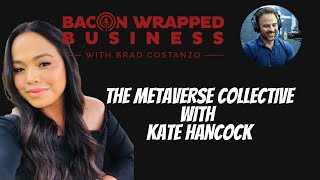
Kate Hancock built a $15M e-commerce business through Amazon arbitrage before launching the Metaverse Collective, an NFT membership launching in January 2022 at 0.08 ETH. She owns a free-and-clear resort in the Philippines with 40-50% net margins and plans to pilot it as a metaverse destination for gamers and influencers.
Chapters
Welcome back to Bacon Wrapped Business. This is Brad and today I'm excited to introduce you to a guest. I'm excited to hear a lot about what she's been up to. I've got Kate Hancock on the show today. So Kate is known as the pivot queen by those who know her. She's got a tireless work ethic. She's a serial entrepreneur, has done multiple types of businesses, including her first real, I think big success was in the e commerce space where she it started with like $20 and she grew it into multiple millions, I believe about $15 million in online sales. She'll talk a little bit about that. And then she reinvested her earnings into a hotel brand over in the Philippines, which has been named one of the top hotels in the country and started a spa. She's done a million other things, but recently one of her biggest projects to date is in the metaverse. She has created the Metaverse Collective, which ties into NFTs and Web 3.0 and a lot of this world of crypt. So many of you have heard me talk about this on the show and this is such an exciting time because it's brand new and anybody doing anything in this space is getting out there that pioneers, and they oftentimes say that pioneers are the ones who get the arrows in their back, which is probably true. But they also discover new territory and they figure things out before everybody else does. And that's one of the most exciting parts of the entire economy right now is what's happening in web3, gaming, metaverse, et cetera. And we're going to talk a lot about that. But without any further ado, Kate, welcome to the show.
Well, Brad, thank you for having me here. Honored having you here today.
It's great to have you. Yeah, the, you know when you reached out and I saw in your, in your bio that like the web3 and the metaverse, that definitely piqued my interest because this is one of those areas I know I'm trying to talk to everybody I can about it and figure it out. And it's something that you're working deeply on, is that right?
Well, it's definitely an exciting times, right? Like I feel like I think we all have that FOMO. Like man, I've heard about Bitcoin 2016, but my friend that shared to me, he made it so difficult to understand. So I did not jump on it. Right. So now like I don't want to be behind into something new and that's exactly where we are heading. So I'M very excited about it. Fomo.
FOMO is a bitch.
And it's costly too.
Yeah. And especially for like visionary entrepreneurs and you know, like, I've got that add. I'm a squirrel. Like, oh, shiny object. There are. I've never seen an industry with more shiny objects than the crypto space in general. It's just. There's something new. There's a new rabbit trail to follow every couple hours, it feels like.
Yeah, well, the whole metaverse is, I mean, it's, it's a big world. Right. You had crypto, you have blockch and you have virtual land, which I invest a few. Some of the plot because I'm very, you know, I'm going to flip it going forward. And you have NFT. NFT. NFT Gaming 7. There's so many, you know, and then there's XR VR AR, like with the ADD and being entrepreneur, like where I'm going to put my, you know, head and focus into one thing.
But that's absolutely. So backing up. We're going to dive into that. But I want to back up a little bit more of the story. So you started really in the E commerce space, right? That was your. One of the, One of the first big wins, it sounds like.
Yes, absolutely, Brad. I actually used to work for a skincare company and it was, it was a boring day in Austin, Texas and I have nothing else to do because the store is dead. So I started scanning stuff online to Amazon and so I sold two items that day. So I bought a box and a tape from Staples and hack and ship and scale it to a million after 12 months. So really I don't need a capital because what I was doing is I was doing a product arbitrage. So I only buy a product when someone buy it and then ship it. So that's how I was able to scale it so fast.
Nice. And then now, did you just stop that business? Did you sell it or what? Or you still have that business?
No, I don't have that business anymore. 2018, Amazon actually shut down my account.
I was gonna say, because I know that. Yeah, I knew that they. I was like, if you skated around that, that's great. But you know, that's what we do. We try things. We, you know, we run fast and break things. Right?
Yeah, absolutely. Well, you know, if you run a business under a big giant, I mean, anytime they can take it away from you. Right. So from that I learned that you can't really build a house on a rented land. So now I only Wanted to get involved something that I owned, a real estate. So I'm very careful after that disaster.
I don't blame you. So now the other thing that really piqued my interest, it said you took a lot of the profits and you invested it into a hotel over in the Philippines. So you're.
You.
Were you born in the Philippines? You're Filipino, correct?
Yes, yes, absolutely. I grew up. I grew up there. I move out here right after college. And so I have a lot of va. So when I. When the E commerce business shut down, it's like I have a lot of team that I need, you know, made sure they're. They're still employed. So I actually started with just one Airbnb for myself to use every time I would visit home. And so then I realized, man, I have to decline guests six months in advance. I have a waiting list. So I build more rooms and build more rooms, and then I ran out of space, so I created another location up in the mountains. Now, Brad, I haven't seen this place for two years, and they've been operating it and it was profitable, so. Wow, Fascinating story. Yeah. So one day I. I decided to invite some of my friends. You know, me and my husband, I mean, my fiance at that time, we decided to get married. I told my friends, well, I've never seen the place, so don't expect a lot. But when we visited there, it turned out to be pretty good. So it wasn't bad. It's a fascinating business model, running it from 7,000 miles away, but it can be done.
So, so tell me about how big is this place that you now, did you buy an existing, like, hotel, or did you buy land and develop it from scratch?
I. It started from land development. From scratch.
Really? Okay. Because you said you had bought. You had like an Airbnb or two or something like that, and then you. But then you kind of outgrew it. Like, okay, I need to. I'm going to build some land. I'm going to. Or buy some land. I'm going to build something. How. How many. How many rooms is it?
It's not too big. I have about 30 rooms.
That's nice. Okay. And then how long did it take you to. When you decided to do that? Like you. Is it safe to assume you had no experience in hotel management operations, anything like that, or have you worked?
You know, I actually love staying to a nice hotel, so that kind of helps a lot. Right. At the end of the day business, it's similar. I mean, it's a little Bit complex because now I'm. I'm leading into different department. But things can be done if you have the right people, they're willing to learn. Like I have a team with no clue how to run a hotel. So sending them YouTube videos like this is what you got to do. I put the SOP together. I mean, we're just learning as we go. I said, hey, as long as you kill them with kindness, give them the best experience. At the end of the day, there's no amount of SOP that you can give to your staff.
That's amazing. So how long did it take you to. From when you bought the land to actually develop the property?
You know, it was so fast. I think it took me about nine months to build a property. Well, I started really small, like just one room. And then eventually, eventually build it more. As you know, I get more traction as far as customer wanted to book and so.
So are these rooms. Are these. Are these like standalone rooms? Like. Like almost like little casitas and cabanas or something? Or is it. It's not like a one big hotel with all these rooms, right?
No, it's a boutique style. So each room has its own pool. So kind of like a Santorini concept.
Yeah, I love that. Yeah, I did a honeymoon there. Yeah.
Oh, there you go. So it's. You know, I was in IA I'm not sure where were you. Yeah, yeah. So exactly that kind of white and blue. So I started very small and eventually I ran out of space. So I decided to buy a second property out in the mountains. So that. That's more of a jungle different feel. You're in a tree house.
Did you. Did you have to raise capital or borrow or did you just use your own capital for that?
I just use my own money and I free sold a lot of rooms even before we're even done.
Yeah. So how did you. What was the overall marketing plan? Like? So you built this new place. Obviously word of mouth is going to help, but what did you. What did you do with that?
I did a lot of storytelling, Brad. And you know the crazy thing, I got lucky to have a few influencer that wanted to stay at my place.
Nice.
And after that, we did a trade and they got so popular. They're actually the top two influencers in the Philippines. So I just utilize the video. I don't have to spend any ads.
That's amazing. So one of my. One of my favorite stories actually you just reminded me of it. So. Do you know Alexandra Catoney?
I've heard of it.
She's in our circles anyway. She's a. She and her friend Leanne. And this is, I want to say this is. God, this is so long ago. It may have been like 2012 or something like that. But they worked for a company called Mindvalley and they did all types of Vishen Makhiani's company. They did all types of marketing and social media, et cetera. They had great jobs there. And they decided to quit. It was over in Kuala Lumpur, they decided to quit, move back to Canada where they're from. But before they went they said, we want to do a month long vacation in the Philippines. So we're going to go find a cool island or resort and. But we don't want to pay for it. So this is really before social media influencers became. So what they did is they created a proposal. The proposal was genius. It was like five or six pages about social media marketing for boutique hotels, et cetera. And they sent it out to like 10 different 5 star boutique hotels in the Philippines. And one of the ways they positioned it is they said, you know, this is social media strategy. Do you know yours? Here's who we are. We are highly paid, like thousand dollars an hour social media consultants, which I think they made up because they were actually employees but they knew social media and then they framed it as we are looking to, we're looking to spend one month, in essence give services. They wanted to do a trade. But we will do one month of social media services. Not only will we take pictures and do this, but we'll come up with a social media strategy. We'll post on your behalf and then we'll train your staff to do it. All we require is 30 days free stay and you know, use of the facility, use of the facilities, et cetera and breakfast included. And one of the brilliant parts of this was they said we've sent this to like 10 different resorts and we'll be, you know, you know, you have five days to RSVP and then we'll be picking the resort that we'll be working with. So they made themselves so genius and then they got a call, they got a call right away if anybody interested. I actually interviewed them on my show about this. I'll link to it in the comments. But yeah, they had at least two or three companies chomping at the bit going pick us, pick us, pick us. And they said, yeah, we got to spend a month there for free. We did about two hours of work a day and it was amazing. And then the hotels loved us because their social media presence went up. I think they launched actually a program about this called like five Star Freedom System.
Good for that. Well, I will take it. I mean, if you think about it, you get trained. I mean, doesn't cost you.
I mean, you've got unsold inventory if a room's going vacant.
Yeah, absolutely. And that's what made, you know, our place become so popular. And Brad, to the point that we did so well on Facebook because of all that photos. I have a bus, a whole bus of tourists would stop by at my place. They think it was a public place. Like, this is a private place. I have to have a guard and make sure. I don't want to disrupt my guest. Right. Their experience. But people were just wanting to go there to take photos. I created as an experience, but I was so ahead of the game before my competitors, trying to replicate what I was. I was doing.
Yeah, no, that's. That's great. Now, do you find that most of your clients are coming from like the Philippines, Asia, America? Like, is there. Is there a kind of a. Yeah.
It was actually mixed. I have a lot of surprisingly European and Asian and then maybe 20% of Filipino, but majority international market.
You guys are fairly at capacity or is there a lot. Or is there a.
We were at 90 before pandemic. We were at 90% to 100% occupancy rate.
I was going to say the pandemic had. Past couple of years have probably not been as much fun. Not for that industry, unfortunately. But, you know, one of the questions. You don't have to give me like exact numbers, but I'm curious what the margins are like on something like, I don't know, on a hotel like that. Are they. Are they decent? Are they razor thin margins or how does that typically work? I know very little about the economics of this industry.
Yeah. Well, in the Philippines, while I grew up there, I have connections and so much easier. Right. But I was playing at 40 to 50% net.
That's beautiful. I love it. Is it starting to pick up now that the pandemic is starting?
We've been shut down for almost two years.
Completely shut down.
Yes. I just had a little bit of local tourists just to upkeep the maintenance. But yeah, there's still hurts.
Yeah. Is it costing quite a bit just to keep it shut down?
It's not really because I own the real estate, so I don't have, you know, I don't have any loans.
That's good.
One thing, if I owe a lot.
Of money, but probably some utilities. Just keeping some of that on in a couple utilities.
Yeah.
Oh man. Yeah. What a couple years.
Well, I am planning to turn it into a gamer's resort.
Ooh, tell me more. And this will, this will actually tie into the next thing we're going to talk about. But tell me a little bit about that since we're on the topic of this resort and gaming. Because gaming is so such a big, such a big industry.
Well, I realized 40% of NFT collectors and gamers are from the Philippines and why not dominate?
Really?
I did not know that. That's what I'm hearing. So it's just a matter of me putting solar and make sure my wi fi is really good. And so I'm flying out there in the next two weeks. I'm going to throw an influencers gamers party. So if you think about it, you have gamers that well taken care of. They have a pool, they have a chef and what else can you not like? And they're earning money.
Right, Right.
So that's a whole concept. And the funny thing is I opened my mouth about it and now the press wanted to cover the first NFT gamers resort in the world. Wow.
Congratulations. That's super cool. Do you have any, would you ever open up, do you have any designs to open up any other resorts or stuff? Stuff like that?
I'm gonna test the market first. It's, it's a very interesting world going into that yield guild games.
Yeah.
But I'm finding there's a lot of revenue that you can do. Not just split revenue. You can do, I mean one guide kind of trying to build an app in order to have data for the gamers to make sure they're getting paid well.
Yeah.
Yeah. Wow. Very interesting. But again, this is so new. Right. I will. How that works.
I know. So, so this is a pretty good segue into this world of the Metaverse. So tell, tell me more about what you're doing there. Maybe your journey there. What your what, what's, what's your vision?
What's.
What's going on there?
Well, we launched our Metaverse Collective here in the US that was actually last week just recently.
Wow.
Our mission is to onboard 1 million entrepreneurs in the world. We're just having a conversation earlier. It's scary going into the Metaverse or Web 3.0 with a bunch of creators and artists and engineer. You need to have entrepreneurs to mix in their crowd. Right. We make sure we have some good governance and knows how to do the, the check and balances. When it comes to tokenomics or any project. So it's so important in order for us to all be successful. Right. So that is our mission for the Metaverse Collective.
So tell me, tell us at least my. I think I have an understanding of what it is, but tell my audience what is the Metaverse Collective? What's the basic pitch about that?
Yeah, so the Metaverse Collective, this is for entrepreneurs. So you buy an nft, you get access to our membership that then you get a Mastermind masterclass about Web3. We bring in different speakers, you get access to cool parties. Last year we did a French laundry dinner meetup. So we'll do some kind of curated dinner here and there. You get access to future project. And I have a business partner that they're putting together a fund to help entrepreneur who's the best project, who's part of the collective. And eventually our goal is to have our own world in the Metaverse.
Wow, that's beautiful.
You know, concert or conference, and anyone who's part of the collective can build their own office or business there. That's our goal.
Oh, that's amazing. So you just launched this really last week, right?
Last week.
How long have you been working on it?
Well, I have a partner who launched, helped launch George Lopez nft. But because we have a community in Clubhouse, we have 100,000 entrepreneurs globally and we're very. It's still super active. And so we utilize that in launch the Metaverse Collective because there's a bunch of entrepreneurs, so. But I have to say it's not easy to launch an nft.
What's been the biggest challenges with it?
The onboarding part, because of our audience a little bit older, they're not.
They're not crypto native, right?
Yes. So it's a pain in the butt to onboard everybody, how to create their own Metabas and then transferring that money. It's a whole new game to onboard everyone.
So do you know Jesse Krieger by any chance? No. So I interviewed Jesse on the show and he owns Powerfan IO and Power Fan is. It's an NFT platform. You can launch, you can launch, you can make your own NFTs. And one of the. One of the features he has for their, like White Glove service, and I think he still has it. It's been several months since I've talked to him, but obviously you can launch it on like the ETH Network or I think there was another network he was using as well, whether it was Polygon, but. But also they have a version where you can sell your NFTs for credit card, PayPal, et cetera, and then behind the scenes they back it in. So I haven't done this, but from what I understand, you buy my NFT with your credit card, then you get an email that says we've got your nft. And I think they kind of manually do this where they say here's the instructions. If you don't own, if you don't have a Metamask, like here's how to set up Metamask, here's how to do this. And once you've done this, submit your probably your ETH address to this form. And once we receive it, we will airdrop you over and then they give them the instructions afterwards, but they allow them to buy it without using crypto, as opposed to needing to understand all this other stuff before they buy it. Yeah, I thought that was really fascinating because that's a big hurdle. Because if you study NFTs and crypto, et cetera, it feels like everybody's in this. And then you realize it's still such a small world. Who even knows how to use Metamask?
Yeah, absolutely. Well, I've heard Shopify is about to launch their own platform. Oh yeah. So that's going to be a big one. And I've heard what's the origin protocol? I know they kind of accept but problems some of this app is you don't have any control. I mean, I don't know, there's just so much work at the end of the day, right? So much work. Yes.
It's one of the things that's kept me like as much as my desire to dive in headfirst is there. I guess I still got to pay my bills. Right. I know if I dive in, I'll spend all my time doing this and then neglect my business, etc. But it's so tempting. But I know that it's. And because there's not a lot of well trod paths that to follow. You know, you're figuring it out as you go. Kind of like figuring out the hotel thing.
That's true. That's true. Yeah. But like when you have a little bit of older audience and gets a little bit frustrated with technology and that's very hard. I mean even myself, as savvy as I am, I get frustrated transferring money from my, you know, bank account to my Ethereum and it takes a while and it' running. I mean how much mold? You know, a little bit older. I mean it's very hard.
Yeah. Like I recall my My father asking me about, he had heard about something that you needed to have Metamask to get on. I was like, ignore it because I am not going to be on a zoom call with you trying to teach you how to use Metamask. Because he is just completely like technologically, you know, he's, that he's the 70 something year old. Yeah, I had to teach him how to use Metamask. I screw up when I'm trying to use it. Like, it frustrates me. There's no way I'm going to teach you.
Yeah, yeah, absolutely. Well, it's harder enough. I mean, you have a lot of people that are kind of interested and there's a lot of people are kind of resistant to it because of the news they've, you know, they've heard or they get scam or someone hacked into their wallet. I mean, it just leaves people's bad experience.
Yeah. But it shows you how early we really are in the, in the place. Like anybody who starts to play with, you know, the Metaverse crypto, just anything crypto related realize is that nothing is user friendly. Everything is on user friendly with the exception of, I mean, I guess you could say coinbase or whatnot. They keep it about as simple as you can get. But whatever you get off of just buying a coin or selling a coin on a centralized exchange, you get into moving coins and doing all this, it can wreck your brain trying to figure this stuff out. So finding that bridge, especially for the older crowd, or I guess tying into the ones who are crypto savvy. I mentioned one of the projects I'm involved in. I'm not involved in it, but I bought the NFT for this crypto college course. The interesting thing he did is he definitely cultivated a very crypto native audience. And then when he launched his program within nft, most of those people already had it. But when you're going after just general entrepreneurs, you really, I guess, have to spoon feed them how it works. Yeah.
And plus, you think about it, we're all we want to know everything, right. As an entrepreneur. So. Right there. But it's gonna take some time.
Yeah, yeah. So what, what, what? Remind me once more, the big vision. So Metaverse Collective. You buy, you buy it with an nft. How much is the NFT now? Like what is the cost?
Really? Nothing. It's 0.08 eth, so it's like 250. Okay.
And then plus gas fees, obviously. Are you on the ETH network or do you do any others? Okay, cool. And Then okay, so if 250 and then one of the nice parts. Explain to anybody who doesn't really understand. So one of the benefits of NFTs, like if I, like, why don't I just pay you money for it? Right. Like everybody else does. Here's a credit card because, you know, the value of an NFT can go up. So we'll see.
Yeah, because people don't realize like, you know, maybe that NFT will land really good. Like bored at pa, you know, eight clock. I mean, bored app. Now I can't even talk anymore.
Bored Apache Club.
Yes, exactly. So my friend actually owns two.
Nice.
He bought it for $850.
No, he got in early.
Yes. March of 2021. Because of clubhouse Brad. I was pissed. Like, why you did not tell me that? But anyway, yeah, so there's a lot of things that you can do about it. You could do licensing for maybe some, you know, clothes or mugs or you can put it in a movie. I mean there's a lot of use cases for, for an nft. It's not just an art. Yeah, yeah.
So and now the speak like the. Because it's kind of like a mastermind, right? It's like a mastermind and a collective of people sharing information. Is it, is it very like web3 focused? Like I would join this to learn to really deepen my understanding of the, of the Met metaverse as opposed to just general business. Correct.
Yes, absolutely. It's kind of mixed. But the first mastermind is all about Web3, so I love it. Yeah. So it's. And we go into detail as an entrepreneur angle. It's not just a basic how to download your metamask. You can Google that or go to YouTube. But like yesterday we have an expert talking about Dao and the way how she explained it. My God, all this project, they don't really know what the heck they're doing. No, it's a little scary.
Yeah. I've been researching daos a lot and it's funny because daos are really undeveloped, just ideas and like. Is it a company? No, not really, but it can be, but it can act like one. And then there you get into a lot of, you know, you get into a lot of issues with securities issues and legal issues. And I think a lot of people are going to be made. What is it example of? If they get really successful launching a dao and then promising income off of it, et cetera. So we haven't seen, we haven't seen the SEC make examples of some people.
Yet, yeah, it's a little bit scary. I think that's probably why a lot of this project they open is dao outside of the us. They could get in trouble. I mean, technically you can say, oh, if you buy this, you're going to make X amount of money. That's. That's right there, that language. You're not.
You can't do that.
You can't do that.
I saw at least one DAO launch recently. They launched with an nft. They raised a bunch of money. And they're not a dao. Dao is in their name, but it's in name only. And they said, we're going to launch this. They created a corporate entity. I don't know if it was like an LLC or a C corp. They launched it, they raised a bunch of money with the nft and then they said, now we're going to figure out how to make this into a dao. Yes, the dao is in the name, not a dao.
I think, yeah, majority of project. They just put it out there to say, like, there's a dao, you have a voice, you can vote. But no one really understand how the hell, what's the dao protocol. It's not just economic dao. There's governance, there's ethics, there's so many. And I think majority of project out there is not even in compliance of dao. But then who's the gold standard that you can follow? Nobody. Nobody.
Yeah. And to me, a lot of these are kind of like, it kind of looks like a marriage of Kickstarter meets equity crowdfunding. But at least with equity crowdfunding, you know, you can actually give equity in a company, although you need to file with the sec, you need to jump through the hoops. It's going to cost tens of thousands of dollars and a lot of paperwork in order to launch an equity crowdfunding deal. The interesting thing about whether it's NFTs, DAOs, social tokens, you can kind of do the same thing. You can kickstart it, you can crowdfund it, you just can't. And you can offer rewards, but you can't offer ownership, cash flow, equity. I mean, you can offer governance rights, like to vote, but at least that ties into the crypto craze. And people are like, oh, it's crypto. Throw money at it. Or at least they did until a couple weeks ago.
Basically what you have is a digital handshake that hench and yeah, so.
So, you know, we're recording this on January 27th. So depending upon when somebody's listening to this, I'm just curious, like, one of the big things in the market is this month. The, the entire crypto market is just taking a massive beating. You know, it's. We're down about 50% off the highs a couple months ago and everybody's kind of licking their wounds and kind of like deers in a headlight. I know you just launched this, but are you seeing, are you seeing any resistance in general from the overall market to this? Because crypto in general is just a little bit more like, whoa, hold on, what's going on?
Well, it's fascinating. I think it's definitely a little bit, A little bit because of the news you see, this is the big dip. But at the same time, you have a lot of people that's kind of very interested. They don't want to be behind, like I said earlier. Right. So they're very curious. So they want to learn, I think, because our offer is a mastermind about Web3. So kind of a little bit easy. It's not just an art where you have to stake it, wait there for two years and flip it in next few years. Right. So bingo. The fact that they have access to a high level learning, they're very excited about it. But definitely the onboarding part is a pain in the butt.
Yeah. I imagine getting them to, like, now it. Would it be a lot easier. Would the entire Metaverse collective be a lot easier if you are only talking to crypto people, like ones who had MetaMask and had ETH.
Yeah, it would have. Yes. Yes. Sometimes people would do it for five hours. Some people, especially if they're international, like transferring that money to Ethereum. I mean, I've had a few people that waited for two days trying to figure it out. It's a pain in the butt. Yeah. But then we kind of need that, right. The steps, it's a headache. But we need that for security as well.
Need for security. Well, and people like yourself who are doing this and being the early pioneers and onboarding people, like, that's the way the entire crypto community is going to grow. Crypto completely. Because people need, everybody needs to get onboarded one way or the other. Most people on board, they buy their first Bitcoin at Coinbase or another exchange and then they dabble into Ethereum and then they buy another Altcoin. Then maybe they buy a meme coin and then they learn to send their coins to a wallet and then they learn to send their coins to a decentralized exchange and swap a coin. Right. And that's the way I know I. That's been. My trajectory is just learn a little bit at a time. But gaming, Metaverse, et cetera, is so big and it's used by so, so many millions and millions and millions of people that I think a lot of us who study the space agree that's where the real growth is going to come. And it's not correlated to the market. People are like, oh, I want to play games. I can make money playing games. I could care less about buying Ethereum and Bitcoin, but I want to play games and make money.
Yeah, absolutely. I mean, the money right now is in the gaming space. Right. They're just way ahead of technology. But I think for me personally, in a long run, it's going to be the XR AR VR. It's going to win.
You think so? Wait, xr, that's mixed reality.
Yes, that's. This is where, you know, I think. I think your current website will be obsolete in the next few years because they wanted to have a 3D immersive experience where you can shop instead of shopping at flat Amazon. Right. You can go visit a Nike store in the Metaverse and you can see the shoes and you can talk to your avatar and that. Then they'll ship the item to you.
Yeah.
That's going to be the future of E commerce, at least in a lot of businesses.
Yeah. So where you're putting on the goggles and going into the Correct.
But some of the worlds out there, you don't need an Oculus, really. Yeah. We're actually hosting a party on Saturday in the Metaverse.
Oh, really? But just using your. Just using your screen just up.
Yes, I'll send you the link. But it's beautiful, a beautiful office.
Oh, that's beautiful. Yeah. Because I. The one thing I've read about this, but I've also thought about it because. So I'm. I remember I was young. I think it was in the. I don't remember how old I was. I don't know if it was in the 80s or the 90s where I do remember the very first time VR headsets made their place. And these were typically in huge arcades or something else. And you had to put on a. It was usually attached to something. It had tons and tons of cords. It was a big, unwieldy device. And oftentimes it would hang almost like from a crane, and then you would hold it and turn and look. And it was very, very rudimentary. But I remember them promising that VR is coming. Like, the headset thing is coming. It's almost like flying cars. They're always. The flying cars are the thing of the future, and they always will be. But I worry that until we get to where VR is really like a pair of glasses and that you get to that point, I worry that people are going to want to wear the big headsets, but I think that's quickly being developed by the companies.
Yes, absolutely. One of my friends, she's currently building a lot of stuff in an enterprise level. It's fascinating what they're building right now. If you think about it instead, instead of you paying your office, you know, rent. Right. You can build your own office in the metaverse, and you can have office in different countries. You can build it the way how you want it to be. And so I think the future of work is in the metaverse. If I'm in the Philippines and I have a meeting with you, Brad, we can have a meeting in a metaverse. And cooler.
Yeah.
Because. But the technology is still not there. Maybe we're probably 10 years out, but I think in the long run, XR AR VR, definitely it's going to be ahead of.
Yeah, I think it is. Especially maybe. Maybe all of the COVID lockdown stuff is forced people to go. Okay. I'm just. You know, we all. In a lot of ways, we. For the past couple of years, you know, Zoom has been the way we've connected, especially in the first, like, six months or so of 2020. And it kind of really introduced people to stay at home, but do everything online, do everything through video conferencing and whatnot. And that's really as bad as that was. And as much as it sucked, I mean, I think it introduced people to different ideas of being in the metaverse, working from anywhere. There's something internationally right now, they call it the Zoom boom, where people are realizing, I can work anywhere in the world. Why am I here? Why am I stuck here if I'm working in this virtual space anyway, I'm. I'm gonna go somewhere else. I'm gonna. That's why there's a mass exodus from Silicon Valley. Right. People moved to Miami, and they moved everywhere else. Like, I'm not gonna pay the rent here.
I'm sitting in normally. Well, my husband's been obsessed, you know, doing workout, using his Oculus, his punching in the air every day. It's actually hilarious.
One of my best friends does that. It's like the. I forget which one is which. Boxing One it is. And he. Yeah, he got in really, really good shape during the. During the pandemic because he just has a big living room and he just. It's like I was doing like 10,000 punches a day.
That's crazy. Yeah. I guess you can meditate and really do yoga in the Oculus. It's faster.
I tried to do the punching one, but my. My living room is small or it's cluttered enough that when I hit my hand on the. Yeah. I was like, yeah, I'm going to stop this now.
Yeah. You know, the funny, the crazy thing is like, for example, our party this Sunday, we call it Party in the Metaverse, we can only hold 50 people because you actually need space to handle everyone's Aven avatar in the metaverse. So 10 by 10 is normally the regular office. So it's fascinating. But if you think about it, if you're an artist, instead of you renting a whole stadium, right, and you're still limited with the number of people who can watch you, so you can have millions and millions of people can watch you in the Metaverse, you don't have to hire security. I mean, secure data security. You need to have security because anyone can plug in and turn off while you're doing the concert. But the experience of you paying the VIP to a $300 ticket in the real world in the Metaverse, you have a better sound experience. It's the same experience as far as sound. So that's the beauty of it.
Yeah, it really is. That's fascinating. So any other big projects beside. I mean, I know this is probably the biggest project you've got working on, right. Is really pushing this forward. Are there any other kind of cool things you're working on that worth knowing?
Yeah, I think I'm, you know, having a meeting with NFT gaming studio in Asia. So that's kind of. I'm curious about that. I'm trying to get some data. Is that really profitable? I know it's profitable, right? Because every time I would tell my friend I'm planning to open his NFT games, it's like they need money. Like they're willing to give you money.
Which is to develop a game. Right?
Develop a game. So, yeah, so it's fascinating. I think you need.
Well, and these days, really, I think what you. I mean, is this not the model? This is kind of what. What I've gleaned from just watching it, you know, launch an NFT with a roadmap for a game. It's like you're Just painting the picture. This is what the game will look like if it gets developed and you're really selling the vision of it. And then if the, if the vast majority of these NFT slash gaming roadmaps aren't even going to see the light of day.
Yeah, that's what I'm hearing.
But you know, that's. But some of them will and it's just like, you know, we come from this world of like, you know, know the online space and coaching and info products, et cetera. It's like you know, you sell a thousand info products on I don't know how to, how to build a business online or something of that nature. And you know, only like 5% of people are really going to actually take do it. Only maybe 10% of the 10 or 20% of the people are even going to go through the course but a small percentage will actually do it and then they may they change their lives and they impact other people. So it's kind of the, I think it's like one of those power laws that just works and everything is whether it's like 80, 20 or 95 5, some of them will make it, some of them won't. The ones that make it are going to go on to create bigger and better things.
Absolutely.
Are there any, are there any major nuts you're trying to crack right now? So obviously I would think that that would be the challenge of how do we onboard more people into the Metaverse collective. Is there any, when I say nuts you're trying to crack, this could be people you're trying to meet, things you're trying to learn, money you're trying to raise. Just this is where myself, my audience can go. Oh, I might be able to help.
Yeah, well I am really thinking of building that NFT games so I think I will let you know if that gets into the works. You know Brad, what really got me so inspired as far as building NFT game is having it a chance to interview the founder of Illuvium. And this kid is 32 years old from Australia. An NFT game from zero to $9 billion in a year and four months. And that tells you like is that a record? Yeah, I think it's the fastest growing and I mean, I mean for you to go from zero to a billion dollar company in the short amount of time, like less than two years, it makes you feel like crap as an entrepreneur, like we are in a wrong business, right. For hustling here for the last 10 years, like what am I doing wrong? Yes, we can't get into that unicorn stage. So. Yeah, I mean, hey, I would love to invite you guys to be part of the collective. You might be creating a unicorn company very soon.
Exactly.
Very early, at the end of the day.
So where do people. There's a website. Where do people go to sign up for the Metaverse Collection Collective.
Yes. They can go to metaversecollective I would love to see you all guys there. Perfect.
So metaversecollective IO and then you're@KateHancock.com, correct?
Yes. Yes.
Perfect. I love it. So this has been just a fantastic interview. This kind of brings us to wrapping up on it. But I really appreciate your time and sharing all this. It's really fascinating what you've done and kind of that trajectory. And I love that, you know, you're kind of out there on the forefront and just, you know, trying it out, like. Right. Like, what is that old entrepreneurial saying? Like, you know, build. Build the plane on the way.
Yes. Jump.
And then build the plane on the way down.
Someone has to do it. Right, Exactly. The bullets. And then again, if you want to do it first, I mean, what are the chances? But that's what we do as an entrepreneur.
Absolutely. Well, I hope that. I hope. I hope that you guys, my audience, have really enjoyed this. I know I started to migrate away from strictly business and marketing and other things into this area because I'm taking you on the journey that I'm going on, and this is definitely one of the areas that I'm spending a lot of time investing in, both time, money, and attention. And I encourage you to as well. There's a lot to learn. Don't feel overwhelmed, because everybody in this space is overwhelmed. It's part of the fun of it, to be honest. But for everybody out there, go check out metaversecollective IO. Check out Kate Hancock.com and if you have any questions about this or what I'm working on, or if you're working on a project, especially if it has to do in this web 3 crypto space, shoot an email over to ask bradakenrapidbusiness.com and I'll take a look and see what it is. Kate, I really enjoyed having you on the show today, and I hope everybody has enjoyed your story and the projects you're working on.
Well, thank you, Brad. Such an honor. Thank you.
Absolutely. And we'll definitely stay in contact. For everybody else listening, if you like the show, if you're watching it on YouTube, subscribe, give a thumbs up, leave a rating or a comment. And if you are on itunes or any other podcast shows, go ahead and subscribe and then don't hesitate to email me at askbradakenrapbusiness.com and I will see you on the next episizzle. Talk to you soon.
More from Brad

Seriously. If you pay mortgage or your rent this is like an IQ test Bilt https:/bradslinks.com/bilt

AI Native email marketing: Send emails from Claude/ChatGPT with NitroSendAI (Review, Not Sponsored)

How to Migrate ChatGPT Memories and Chats to Claude (Including Claude Cowork Triage)




My Investing Message To My Younger Self (And The Lessons I Learned the Hard Way)



