
Walt Disney's Strategy & 3 Part Formula For Achieving Your Dreams
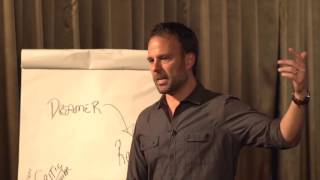
Brad Costanzo breaks down Walt Disney's three-part creative process: the dreamer, the realist, and the critic. He uses his own failures, including losing $120,000 and launching a women-focused coffee brand, to show how to give each role separate time so ideas actually work.
Chapters
So Walt understood something. We have these voices in our head, but we have these voices in our life, too. So if you go to your mom, dad, best friend or whatever, like, hey, I want to produce a short film, whenever you come to a friend with an idea, have you guys ever been met with, dude, that won't work. What about this? What about this? What about this? And they're not like, dude, no, I'm in a good mood. You're like, quit spoiling my party. This is bullshit. Like, okay, now enough of this. I'm going to go tell this guy. And then everybody shoots down your dreams. But we do that to ourselves, too. So we think immediately we got these three voices in our head, and it's the dreamer, which is, oh, man, this is what I could do. This is a great idea. But then immediately we go, yeah, but how are you going to do it? Well, ok, here's what I got to do. I just got to do this, and I got to do this. I guess I got to learn this. Oh, my God. I can't do that. Because what do these people think? Or you don't have any money, or this is a stupid idea. Screw it. I'll just think of something else. He always calls this the spoiler. So who has had these voices in their head? Each one of them, at some time, whenever you had an idea, right? It's here's, oh, my God, what can I do? How can I do it? Here's why you shouldn't do it. All of us did. So Walt realized that the only way to get anything really big, really big done is to separate them, but give them each their time on stage. So in Walt's office, he actually had three different offices, and one of the offices. Dead serious, one of the offices was the dreamer office, and it was bright and colored. And you were only allowed to dream, no limitations. What would be possible if there were no limits? What is the silliest incarnation of this idea? And everybody in the room is like, you guys are all my imagineers, my animators or whatever. What's a ride? What's crazy ride? Oh, we take one to do this, that, and the other, and it's like, oh, that's so cool. If anybody says, yeah, but we can't do that. It's like, boom, you're out. No criticizing and no planning in the dreamer room. But now you got this dream, and it's big, right? So now you're going to go to say, okay, we got the dream. Let's figure out how to do it in this Office, you can't dream anymore. Don't add any new features to this shit. What just has to happen in order to bring this to reality. And this is where storyboards came in. Walt created storyboards for animation. He's like, okay, well, I want to do this thing called Fantasia. Alright, well, here's the scenes and here's what has to happen. Let's not add shit to it. Let's just plan it out. Okay, well, we probably have to do this, that and the other. Now I come over here. That's done. They've got a dream, they've got it planned. Now this is fear. This is doubts. This is that guy. This is the party pooper. This is. This is the guy who says, that's not going to work. This is what. Dude, you don't have the money. You don't have this, that and the other. Well, Walt realized that using empathy, which was on the board. Is that that critic? He's not there to spoil the party. He's your lawyer, he's your advisor. He's your critic. He's there to make sure that this gets done, but that you don't screw it up, that you don't miss something. So if you plow through Chucky and you go, chucky, screw you. I have this big dream. And he's like, no, you don't have the money to do that. How are you gonna afford to do this shit? And he's like, yeah, you're a pain in the ass. I'm just gonna plow through you. And you do it anyway. Well, what if you really. What if you had a good point? What if, like, your family depends, like eating depends on this. And you just did it anyway and then you lost your ass? Has anybody ever lost their ass? I've been broke twice in my life because I invested in oil. Well, and I invested in stocks in somebody else trying to make me a whole bunch of money. And I didn't lose a lot of money. I mean, I lost $120,000 in cash. That's a lot of money, by the way. Especially with all you have. I don't care if you got 20 bucks. If it's all you have and you go to zero because of this dumb fucking mistake that you made, then that's a lot, you know, that's traumatic. But I didn't. I pushed past this. When I called my dad, I said, hey, dad, I got an idea to invest in because I made like $100,000 in a couple of real estate flips that I did while I Was working for another job because I was like, hey, I'm going to be entrepreneurial. I was like, dad, I found this cool prospectus on an oil and gas well here in Texas. This should be a sure thing. He goes, walk, don't run. I was like, no, no, listen, this is a great idea. He's like, son, walk, don't run. Hang up the phone. And I was like, screw you. Did it anyway. Put $100,000 in six months or a year later, it was zero. Done. It sucked. My dad had a really good. He had a really good point. He just didn't explain it well. I didn't have empathy for what he was trying to do. He was trying to protect me from myself. So every single one of you, if one of your limiting beliefs is, what will they think of you? Okay, Go in and say, all right. Thank you for asking me that. Talk to yourself. As long as you're alone, what will they think of you? Who are you to be doing this? Like, okay, what are you really trying to tell me? My little buddy, my advisor? You're trying to protect me from embarrassment? Maybe. Okay, cool. You're trying to protect me from a multitude of things, and maybe it's nothing. Maybe it's like, dude, those are unfounded beliefs. That's cool. Don't shut him up. Recognize him. Flesh it out. Once he's fleshed out, he goes, dude, you don't have the money. How are you going to get the money? That's a good point. Let's write that down. Don't solve the problem when you're talking to the critic. He's not there to solve your problem. Right. He's there to bring up the problems. Now, you take this back to the dreamer. You go, phew, let's get out of that office. Because that just let the wind out of my sails. Or you come back here. If he came up with a problem, you go, all right, maybe this realist. Maybe we take it to the engineer and he can fix it. And then the realist goes, all right, got an idea. Let's take it back him. Critic goes. Green light. You're good. Take it back to the dreamer. Now let's make the dream bigger. Now let's bring it over here. Let's keep on going. And what Walt realized, and I want you to realize, I mean this. I planned the coffee business out with this. I said, okay, I got this crazy idea for a coffee marketed towards women that's never been done. And I don't know anything about coffee and physical product e Commerce except for shit I read. What if. Oh, my God, what if, like, celebrities see this and what if it gets this, that, and the other? And what if we give a portion of the proceeds back to women's charities, which we do. And what if we do all this? Like, this would be fucking awesome. Okay, what has to happen? Got to find a coffee source, got to find a roaster, got to get a design, got to get a website, got to hire these people, shit that costs money, blah, blah, blah. Take it into the critic. And I said, ok, what's next? I have to. Dude, you don't know anything about coffee. I was like, ok, point. I mean, I love to drink it, but I wasn't like, I didn't know the industry. I didn't know the beans. I didn't know all this other stuff. You've never done physical product, e commerce before. And you don't know exactly how you're going to drive traffic to this offer. And you trying to sell somebody over the Internet something that tastes like, this is not a feature benefit thing. How are you going to do that? Good fucking point. All right, let's go back here to the realist. And I literally went to another. Either I don't remember if I went to another room in my office or I went to a Starbucks or something and just planned it out and I mapped it, created a business blueprint. Like, boom, there's my plan. Cool. Hey, let's check in with him. Let's check in with him. Sounds good. All of his little worries, most of them were gone. The last one that he was worried about, he was like, what if it doesn't work? What if you waste a bunch of money? I go, well, if I don't earn, I'll learn. He's like, all right, you've done it before. Screw it. Like Adam said. I was like, I've made a lot of money from the mistakes I've made in my life. Maybe I'll make some more.
More from Brad

Seriously. If you pay mortgage or your rent this is like an IQ test Bilt https:/bradslinks.com/bilt

AI Native email marketing: Send emails from Claude/ChatGPT with NitroSendAI (Review, Not Sponsored)

How to Migrate ChatGPT Memories and Chats to Claude (Including Claude Cowork Triage)




My Investing Message To My Younger Self (And The Lessons I Learned the Hard Way)



