175. The Opportunities Hiding in Your Business | Charlie Gindele
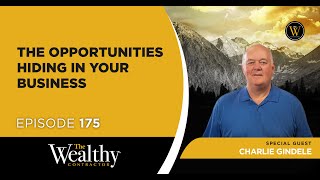
In this Wealthy Contractor Podcast episode recorded on December 14, 2022, host Brian Kaskavalciyan interviews veteran home‑improvement contractor Charlie Gindele. They discuss the looming slowdown after the COVID boom and how contractors can protect and grow their businesses. Gindele stresses the need for owners to know their numbers inside‑out—break‑even points, overhead, cost of goods sold, and monthly P&L—using accrual accounting rather than cash‑based shortcuts. He warns that many contractors lack accurate financial visibility, leading to hidden losses. The conversation then shifts to lead generation: while internet‑based channels (SEO, PPC, lead aggregators, social ads) are popular, Gindele argues they are low‑hanging fruit that can become expensive and unreliable. He champions traditional, proven methods such as targeted direct mail, newspaper inserts, TV/radio, canvassing, events, and retail‑partner pop‑ups, emphasizing that effective ads need strong headlines, offers, and calls‑to‑action. Lead custody and appointment‑setting are highlighted as critical bottlenecks; Gindele describes the “not‑yet‑buyer” concept and the importance of systematic follow‑up, re‑contact schedules, and quality‑control calls. He also covers recruiting and managing sales and marketing managers, advocating continuous recruiting, performance‑based compensation, and the distinction between delegating and abdicating. Finally, Gindele frames the business as a personal asset that will eventually be sold, stressing the need for clean balance sheets, profitability history, and disciplined operations to maximize exit value. Throughout, the tone is conversational yet instructional, with a confident, pragmatic, and occasionally cautionary sentiment.
Chapters
And if we don't follow up or follow through with those customers, I mean, there are, depending upon the size of the company, there are tens or hundreds or thousands of potential jobs and hundreds of thousands, if not millions of dollars worth of business laying in our database to be mined.
This is the Wealthy Contractor Podcast brought to you by G4 Marketing. Interviews with today's top home improvement entrepreneurs about marketing, sales, money, mindset, and lifestyle.
Now here's your host, Brian Kaskavalciyan.
All right, everybody, he's back. Charlie Gundel, one of my favorite people. Charlie, welcome.
Thanks, Brian. Good to be with you again.
Good to have you. So we are recording this towards the end of the year, uh, middle of December 14th to be exact. And, um, it's been an interesting couple years, couple, 3 years, I, I'd say. Um, the, uh, the COVID boom has definitely started to wear off. Uh, things are changing a little bit out there and I think it would be good for us to have a chat about what people could, or I should say maybe what they should be thinking about, what they should be working towards for next year as we start to see— I don't think it's falling off a cliff like '08, but I think that there's going to be a little bit of a slowdown and some people are going to have a little bit of a hard time over the next 12 to 24 months. So what do you say we start there?
Yeah, sure. I, and I agree. Uh, you know, I, since I retired the end of last December, I've been, this year I've been working with various contractors around the country, all home improvement remodeling type contractors. There's probably about 15 companies that I'm working with. So I've gotten to you know, to see an inside perspective of what's going on with their businesses. And quite frankly, a few of them are doing really well, and majority of them are, you know, doing okay, but there's warning signs on the horizon, you know, for them. Lead flow has dropped off, sales have dropped off, and big backlogs that they had are being dissipated, you know, and eaten into. And so I think, you know, I think obviously with the inflation and interest rates, I mean, the number one thing is I think consumer confidence and housing prices are starting to recede as, you know, mortgages are up in the 7% range and The people, some people that are just tentative and people are tentative, they tend to hold back and not proceed with certain things. And, uh, you know, home improvements and remodeling is one of those things that, you know, some of it's optional, some of it's mandatory. The mandatory stuff probably will get done, but a lot of this, what we do is optional and, you know, it's nice to have type of stuff. And also a lot of the demand was probably pulled forward by the COVID uh, the, you know, the surge in COVID in Leeds, you know, in the business then. And, you know, a lot of people probably accelerated their purchasing and they did it at a good time because rates were low. And so it's a cyclical thing that we've seen before. And but there's certain things that you can do to capitalize on them and there are certain things you can do that probably will hurt your success. That's what I'm seeing from the different contractors I'm working with. Yeah.
Before we jump into some of those things, I think that let's quickly— I'm holding up— those of you that are watching on video, you can see me holding up Charlie's first book called Lessons Learned: My Journey from Contractor to Businessman. This is an incredible book. 10 lessons from somebody that's been in the business for 38— was in the business for 38 years, but is still continuing on by working with other contractors. There is the companion book, Build It to Last: The Memoir. Lessons learned is available right now on— by the— actually, by the time you're listening to this, Build It to Last Both books will be available on Amazon. I have given Charlie a new nickname or moniker. I'm not sure what the right thing is, but I'm now calling Charlie the wisest man in home improvement. I don't know if you ever thought that you would get to the age of where you could be considered the wisest man, but I think you— you know, so I met Charlie, I was 26, 27. You were not quite 40, I think, when we met. And you were, back then, you were the wisest man I think I had ever met. And so in all of these, in all of these years, there's a lot of lessons that you've learned. Now, one of the interesting things is, so this is not your first time going through this. What's interesting with what's happened with the COVID boom, and you've seen this too, is You know, pre-COVID, it took a long time to build a $10 million company. How many people do you know of that started business in '18 or '19 and now all of a sudden, 3 years later, they have a $10 million business? And look, I hate to say it, but it probably wasn't all you if you're one of those. I was on the phone with a guy the other day, really nice guy. It's in the bath business. Started in, I think, '18 or '19. This year did close to $9 million. But the cracks are starting to show. There's debt on the business, which I think you and I are pretty much adamantly opposed to unless there's a very, very good reason for it. And it's, it's— he's going to have a hard time. Leads are slowing down. One of the things that we noticed is that his sales volume, I think we were looking at November, which of course it's holiday season, it's the end of the year. So the sales volume is going to be a little lower. His sales volume was, I want to say it was like $5, $5.5 million for the month. His install volume was $1 million. So his backlog is the only thing that's keeping him going because at $500 or $600, there's no way he was going to be able to, to pay his bills. And so he's working on some corrections. But what are some of the things— and that's just one example. Between you and me, we could talk about examples of stuff like this all day long. But companies that aren't in a good, strong financial position a good strong position in terms of diversity and marketing, a good strong position with sales team, they're going to have a tough time. So what is some of your best advice, um, going forward into a time like this?
Well, I've often said that, you know, when you're struggling, you need to know why you're struggling. But when you're succeeding, you also need to know why you're succeeding. And when people are having success, they don't often, you know, they're kind of in like a, sometimes almost a state of euphoria, you know, and they're, and they're not really grounded. And if you don't know why you're succeeding, it's very easy to slip into not knowing why you're failing. So to me, the number one fundamental thing is you have to know the numbers of your business. You have to. You have to know them inside out, upside down, backwards. You have to know your breakeven point. You have to understand what your overhead is. You have to understand what your cost of sales are, cost of goods sold are, and what your gross profit is. And, you know, in life, everything is a factor of time. And, you know, I don't care how much, you know, You're selling, you got to produce a certain amount, you got to have a certain gross profit to be able to be profitable every month. It's very easy to, in the COVID boom, to have added layers of overhead and fixed expenses. And believe me, I've been there. It's fun to buy stuff and add stuff and hire people and do that. But it's not fun to start jettisoning that stuff overboard. And especially when there's people involved and there's human lives involved. So The number one thing I would say is be brutally honest with yourself and really, you know, look yourself in the mirror. Do you really understand the numbers of your business? Do you really understand the cost structure? Do you understand what your overhead is? Do you know what your break-even point— break, you know, people— break-even point is the point where the gross profit from the jobs you're installing in a given month equals your overhead in that month. Or year to date too, but it's better to look at it on a monthly basis, you know, and, and in some areas of the country there's more seasonality than other because of weather. But it's just really important to know the numbers of the business and to have a pro forma budget for the coming year, you know, to forecast your revenue, to forecast your cost of goods sold and gross profit on a monthly basis. To lay out all your field and selling and marketing and general administrative overhead, you know, what that is. And, you know, then that'll give you a look into the future if you're going to be profitable or not. Now, you know, the other thing is on paper you can make yourself profitable, but, but, you know, how realistic are those revenue forecasts? Because the revenue is a byproduct of the sales and the sales are a byproduct of the lead generation. And the marketing efforts. So, you know, if you don't know that stuff and you've been making money or you got— and a lot of people also, you know, probably aren't making money. They got good cash flow, you know, because the business is growing, you got more cash coming in. But if you're not doing P&Ls every month and using the accrual method of accounting and recognizing revenue correctly, as you know, you complete the work, people I see people that are bringing in deposits and progress payments and they're booking that in the month they receive it as revenue. And that's not revenue, that's a future obligation.
Yeah, it's a liability.
So if you don't understand that, I mean, that's the thing because you could be having what you think is success, either it's great cash flow or it's, you know, you are making money, but if you don't understand why, and you don't know the breakeven point and you don't know those inflection points, and very easy to slip into losing money, and then it, it can go downhill in a hurry.
You know, one of the things, one of the things that's— it's— this is not anything new, but one of the things that really scares me when I talk to people is I'll ask them, you know, I'm— my MO is, you know, I meet people at events and they want to tell me how great they're doing. And I'm all for you. I'm your biggest cheerleader. I want you to be successful. That's why I ask you hard questions.
My—
if I don't know you, my number one question will be, after you tell me how great you're doing, is, did you make any money? And the answer to that, you know, generally will go one of two or three ways. One is, well, it'll start with, well, and then there's a whole bunch of excuses why. We sold a lot, but, you know, we're reinvesting, or, oh no, we're— it's going back into the business or whatever. But somebody else might say, yeah, we're at 12%, Brian. Okay, 12%. So you did, let's just say to make the math easy, so you did $5 million last year in revenue, 12%, $600,000. How much of it did you take home? Well, what do you mean? Well, how much money did you take home? You said you made $600,000. Where's the $600,000? And they can't tell me. Well, it's on— it's on the paper. It says that that's what it is. And I've seen that quite a few times over the last few months. As you know, people are reaching out to me about doing planning and all that for next year. That scares the crap out of me. And that goes back to what you just said, which, by the way, is the number one lesson in your book is knowing your numbers.
Yeah, I mean, and the other thing, and I talk about in the book a little bit, as the owner of the business, you need to drive your P&Ls, your financials. You need to have a, you know, I've talked to business owners, well, this is what my accountant did or my bookkeeper this or, and then I look at their financial statements and they're disorganized, they're hard to read, they're not coherent. It's like a bunch of numbers dumped on a piece of paper, but you can't read them and interpret them. And they can't read them and interpret them. And I mean, it's not my P&L, it's their P&L. I mean, I can, you know, if it's my P&L, I want to know it inside out, upside down. And I don't want to become beholden to a bookkeeper or an accountant, because it's my business. It's not their business. And it's my vested interest, you know, and my neck is in the noose too, when it comes to owning the business and the obligations and responsibilities. So I cannot emphasize that enough. And that's That's the number one thing that I see people— and then they rationalize and they kind of make excuses. Well, we're kind of doing this, you know, some of the examples you just gave, you know. And it's sad because, I mean, today's the day you never get back, you know. And tomorrow, tomorrow you'll never have today again, you know. So, so you got, you know, time is quickly passing by and, and you just got to know the numbers of your business. You got to, you know, and not, you know, you don't need to be a CPA, but you need to know the numbers of your business.
And yeah, I mean, the, the P&L is the scorecard of the— is your scorecard as the owner. That is telling you how good or how not good you're doing. And the idea is to build wealth out of the business. You built an incredibly successful business. You had a number of points throughout the business where the, the, there was profit that was taken out and invested. And then there was points in the business where people came and wrote you big checks to get pieces of your business. And ultimately at the end you sold it. So there's a number of different ways that you can get wealthy and rich from this, from the business. And it's unfortunate to see people working so hard and not, not being able to get that benefit.
You know, the other thing that ties in with that too is that at some point in time, you're going to sell your business, you know, or your estate is going to sell your business when you pass on, you know. So most of us don't think of that because we're in the day to day. But, you know, I mean, if you have an asset, you want to take care of it. Yeah. So you have a car, you don't want to beat it up. You have, you know, you have a house, you don't want to beat it up. You don't want to make— you got to maintain it. You have money in the bank, you want to invest it wisely and know what. But the same goes for your business. It's more than just a vehicle to make a living. It's an asset. It's part of your personal net worth. And at some point in time when you want to sell it or someone wants to buy it from you, what does it look like? And there's two primary documents, and one is the balance sheet. Which lists all the assets and the liabilities and the owner's equity in the business. And then the other is the profitability of the business looking back a couple of years. And they're the two things that a buyer's going to look at. So, and the buyer, you may not understand the financial statements of your business and the numbers of your business, but believe me, the buyer will. And if they dig in and find out that you don't know what's going on there, you know, you're liable to be taken advantage of or or, you know, that, or that opportunity may pass you by because they know these people are, you know, they're upside down in their numbers. They don't know the numbers. And, you know, so again, I can't emphasize how important it is to know the numbers of the business. And for people that— I mean, that sounds easy to say. In the book, I dig into that a lot further. But for somebody who says, yeah, that sounds good, but I don't have a clue where to start or how to start. You know, they should raise their hand and reach out for help. There's, there's plenty of people that can help them, you know, understand that. And the time they invest and the money they invest will be some of the best time and money they've ever spent. Yeah. Let's pause here for a quick break. Are you ready to accelerate your business success in 2023? If you answered yes, then you'll want to listen closely to this special invitation because we're calling all home improvement and home service business owners to join us at Accelerate Live 2023, happening in beautiful sunny Florida on February 7th and 8th. This is the only home improvement event guaranteed to be profitable for you on day one. To get more information, please go to www.accelerateevent.com. Discounted pricing is available right now, so if you wanna save big, go to www.accelerateevent.com and for additional savings, enter coupon code WEALTHY23 at checkout. Remember, this event is 100% guaranteed. If you don't feel it was profitable enough for you on day 1, not only will we refund you your ticket money, but we will also give you $1,000 back to cover for your time and your travel. So don't delay, go to www.accelerateevent.com and secure your ticket today. Now back to this week's episode.
So, um, you, um, let's switch gears and talk a little bit about lead generation. So it's, it's funny, um, you know, the past couple of years we haven't talked a lot about lead generation just because there were, there were so many leads coming in. It wasn't the number one problem in the business. The problem was how do we get the work installed? We're, we're selling it. Um, the, the first problem was getting the material, and the second problem was having enough labor to get all of the sales installed. That was our big issue over the last 2, 2 and a half years. Well, we're going to go back to what it was before. And some people either don't remember, number one, uh, you and me have battle scars over this. Uh, they either don't remember or, uh, they started in business at a point like in 2018 where it was just going like this and then it shot to the moon and all of a sudden they think they're great marketers. Well, that's gonna— that's yet to be seen. Um, you know, one of the things I'm going to be talking about at Accelerate is, is how we are as business owners, we're going to be tested over the next couple of years. You have been tested over and over and over again. Um, you became, uh, one of the best marketers in this business I've seen. So let's talk a little bit about marketing, like what are some of the things leads are gonna contract. It's not— I don't think it's going to be '08 again. You lived through '08. It's funny, by the way, everybody, in the book, Charlie lists out how many of them, like 30 competitors you had?
Yeah, about 30.
About 30. Last man standing. There he is, Charlie Gundel. Back then it was Dial One Windows, right? And then it became— after it became Renewal by Andersen, Um, but he lists them all out, but these are all companies that there was that boom in the, in the mid-2000s, and then it came to a crashing halt. You survived, you made your way through it, and you lived, uh, to, to, to build an incredible business after that. I don't think it's going to be that bad. However, I think a lot of the things that you had to do back then on a very you know, extreme scale, I think people are going to have to start doing like immediately. And so what are some of those things as it comes to lead generation? Leads are going to get more expensive. There's going to be less of them to go after. What is some of your advice around that?
Well, I think chapter 3 in the book, I talk about the most essential part of the business, and that's marketing. And that was a lesson I learned back in the '90s, mid to late '90s. And I really realized that for my business not only to survive, but for it to flourish, I had to really become a student of marketing and that these businesses are, you know, come down to lead generation and leads are the lifeblood or the oxygen of our businesses. And so I think I became a very astute marketer and And it was one of the levers that I pulled to scale the business. One of the things that is concerning me now, Brian, that I'm seeing, talking to companies that I'm talking to and working with the companies, is I don't think it was a conscious thing. It's— I think it's been a kind of an inadvertent thing, but a lot of them have slipped into the fact that they've put most of their marketing dollars, if not all of their marketing dollars, into what I call internet-based marketing, you know, SEO, pay-per-click, buying leads from, buying leads from lead aggregators, you know, HomeAdvisor and Angie, and there's others out there. And then also, you know, Instagram and Facebook and technology or internet-related. And there's companies out there that are making a specialty in helping contractors develop, improve their website and get more leads organically through SEO, helping them, you know, get the keywords and pay per set of pay-per-click campaigns and then helping them, you know, those lead aggregators that want to sell you leads. And then, you know, there's other people help you set up, you know, get leads through Facebook and Instagram and things like that. So what I've— and that's kind of cool. It's technology, right? And, and, and most of these companies that are out there, they just kind of— you write them a check and they do it. They do it for you, right? So it seems easy. But to me, number one, it almost becomes a survival of whoever can write the biggest check gets the most leads. And And a lot of people in the industry are doing it and they've pulled back or they've discontinued doing a lot of the traditional lead generation mechanisms that are tried and true. And to me, they're really missing the boat. And this internet type lead generation has become very easy. And so it's like low-hanging fruit. Further up in the tree is the better fruit. And I know last year, 2021, my last year, our number one lead source was direct mail. And that was solo direct mail primarily, but also a lot of shared direct mail with, you know, home, you know, Valpak and Home Improvement Magazine ads and things like that. And we did a ton of targeted solo direct mail. And I talked to companies today and they're like, they don't even know about it, or, you know, or they— and then the other thing is some people try it and they just, and they don't do it. They throw a little bit of money at it and they don't get the results that they think they should. And then they pull the plug on it. You know, so it's a very inconsistent, haphazard effort, and therefore it yields a very inconsistent, haphazard result. And also, by the way, whether it's TV or radio, which still work really well, different markets change different, but differently. Direct mail, which definitely works. There's even some, still some newspaper stuff out there and remnant newspaper stuff. And then there's, you know, most market has several home improvement type magazines and they got money mailer and Valpak and. Cost-cutter coupons and those envelope mailers and stuff like that. They all work. They still work. But spending the money alone is not the only, only solution. You still got to run good ads. The ads have to be effective. They have to have strong headlines that interrupt you. They have to have graphics or text that engages you, and they got to have calls to action. And, you know, so all of that takes some work. And it's just a lot easier to write a check to some pay-per-click company or SEO company. But I'm telling you, people are missing the boat if they're not doing it. Then the other thing is that, you know, there's some old tried and true methods like canvassing, knocking on doors in neighborhoods around homes where we've already done work on, uh, events, going out to fairs and festivals and 5K races and farmers markets. And things like that. And then even a retail presence where you work with a local hardware store or grocery store and, and you have someone out there on a little folding card table pop-up tent. You pay the merchant a few bucks a month and, and you have someone out there engaging homeowners as they come and go in their daily life. And those things all went away on March, in March of 2020. But they're all back now. They've been back now for 6 months, 8, 9 months, and, and they work. And, but they're, but they take work to do it and it takes diligence and management. So again, these internet lead sources that you just write a check or give them your credit card and they bill your credit card are a lot easier to implement. Uh, but the person who has made marketing, who's not a lazy marketer, who has made marketing an essential part of their business. They realize that, and, you know, in the— and then they're much more aggressive or proactive too. You know, the internet stuff is very passive, uh, and, you know, when people— when the economy gets tighter, if we, you know, things get a little more squirrely on— in the economy and consumer confidence, the returns on those investments are going to diminish very quickly. I think they already are. So there's a ton of things that people can do on the marketing end. But a lot of people are new in business and they don't— they've never even done that stuff in the past. Or people that have been around used to do that stuff and then morphed away from that. But that stuff still works and it's still viable. You know, but you got to do it well, too. You just can't spend the money. You got to spend it wisely.
Yeah. And you're going to be back again. I'll do a quick little pitch and plug, I guess, for Accelerate. You'll be back again and you're going to expand on, on this topic. Megan, Megan knows marketing. She's going to be talking about lead generation, call center scripting, training. I'm going to be doing a presentation again, which I haven't done for 3 or 4 years, on what makes effective marketing. Talk about, you know, Dan Kennedy's marketing triangle, market, message, media. It is shocking to me. So I've been getting a lot of, from our, especially from our mastermind group, I tell them before you spend a penny on any print ads, send them to me, let me see them before they go out. It's shocking how bad the stuff is. It's like you said, headlines either nonexistent or lazy or bad, you know? Offers, weak offers, or no offer. How the hell do you send something out with no offer? Calls to action, weak. The other thing too, here's another thing too, it's like, what is the phone number that you're using? It's my main office number. Well, how are you going to track the effectiveness of this thing? You know, and so there's so many layers to it. So I'm going to do a big presentation on it. You're going to talk about it. Megan's going to talk about it. John Anglis is also going to talk about call center success because how much of it— let me ask you about this. So even with the aggregators and the quote unquote write a check easy, let them do it for me. Yeah, they'll send you a bunch of raw leads, but if you don't have a system for converting those into appointments, That's just a— that's an expensive exercise in futility. So can you talk a little bit about that, about that, the conversion process?
Right. Well, what, what I see again, and this is mostly in the smaller contractors, but, you know, they have someone in the office that receives the inbound calls and, hey, I want to buy a roof, I want to get an estimate on a roof, I want to get an estimate on windows and You know, they take down the information and in some cases they say our sales rep will call you. Yeah. Which is a recipe for disaster because then the sales rep calls and right away tries to disqualify the customer. Why aren't they going to buy from me? So, so there's a, there's a real challenge with like lead custody and lead management. So. Oh, I like that.
Lead custody.
Yeah, right, exactly. And some people just give it up or they let the sales rep schedule it. And that's a, you know, the sales rep has no skin in the game, right? He didn't spend any money to generate that lead or she didn't spend any money. So lead custody and lead management is very important. And I don't see that being done very well in a lot of companies. The appointment setting process, setting up the right expectations, you know, how and when you schedule appointments. I'm amazed at how many companies I talk to don't run appointments on Saturdays. Yeah, Saturday has always been the home improvement day in my life. I mean, every Saturday, you know, and then, or also don't run appointments in evenings. And they say, well, our sales reps don't want to work evenings. They don't want to work Saturdays. Well, that to me is the tail wagging the dog, you know, so, but that's what I'm seeing. There's just not a lot of strategy. There's not a lot of leadership and management. Uh, and there's no measuring of phone calls, conversion to leads. There's no systems for tracking lead sourcing. There's no marketing reports that tell you, you know, how many phone calls from this source turned into how many appointments, it turned into how many presentations, it turned into how many sales. There's none of that, or it's sorely lacking in a lot of businesses. And, you know, and those businesses and all of that is part of marketing and all that is, you know, the companies that have made marketing the most essential part of their business realize that and do it well. And those that don't, don't. And it's a lost opportunity, not to mention, you know, when we do run an appointment, the accountability for the lead, the resulting of the lead afterwards. And calling up and following, doing a quality control phone call after the appointment by someone to see how the appointment went. You know, we found out that we had a sales rep who was quite often late to the appointment, but he, he always made up other excuses for why he didn't sell it. In reality, he had a habit of being late for appointments and he pissed a lot of customers off because If you have a 10 o'clock appointment and you show up at 10:01 or 10:02, yeah, that customer says you're late. They're not buying no matter what you say because they think that's indicative of the entire experience that they'll probably have with your company. So, you know, doing quality control follow-ups, in some cases doing a rehash or revisit program. And then the other thing is that, you know, and I, I've talked about this several times, but You know, and I heard this years ago, and I believe it's an accurate statement that, you know, 1/3 of the people we meet with generally buy from us, 1/3 buy from our competitors, and 1/3 don't buy at all. And I don't know if the 1/3, 1/3, 1/3 is exactly accurate. But I do know this, that, you know, most of the people we meet with, more people don't buy from us and do buy from us, especially if you're charging the right price. And that at least 50 to 60% of the people that don't buy from us don't buy from anyone at that point in time. Okay. But that doesn't mean they're never going to buy. Right. You know, that means that sometimes, you know, they've got a limited amount of dollars and they got a list of projects or things they could spend their money on. And what were their— our roof or our windows or our kitchen or our bath or whatever just doesn't win out. Sometimes we do a really good job of educating people and differentiating them and showing them, you know, the right way to do the job with the right product, and it raises their expectations because they thought it would be a lot less. So some of them just put it off or delay it. Uh, that doesn't mean they're never going to do it, just means they're not going to do it now. And if we don't follow up or follow through with those customers, I mean, there are depending upon the size of the company, there are tens or hundreds or thousands of potential jobs and hundreds of thousands, if not millions of dollars worth of business laying in our database to be mined. And we actually had, uh, statistics. I mean, we had situations where on the 27th point of contact, we finally booked an appointment and then went out and sold a job. And that 27th point of contact might have been 30 months after the lead came into the business. Yeah. And then, and they, they set an appointment and they canceled it, or we went out and pitched it and missed it. And if you just give up and just, you know, say, well, they're not a buyer, they're not, you know, so we started using a term called not yet buyer. We referred to those people as not yet buyers, that they, that meaning that they, you know, weren't a buyer now, but at some point in time they're going to need what we have. And, and if we're thinking of them and they're thinking of us, we're going to get a shot. If they don't think of us and we don't think of them, we got no shot. And in the meantime, we're spending good money to generate new leads. Yeah. So I, you know, so having recontact dates, having a— even if it's a one-person call center, but having someone who's just dedicated to not only receiving inbound calls but making outbound calls and manufacturing appointments every day.
Yeah.
And you know, the other thing I'll say too in this vein is that I talk to some people and they say, oh, you know, we're booked up 10 days out or 2 weeks out on appointments. And like, that's a good thing. Yeah. That's a bad thing.
Horrible.
I never wanted to be booked out. I wanted to have openings tomorrow.
Yeah.
Because people call today, I want to be able to book some of those. And then guess what? If I don't have— if I'm not completely filled up tomorrow, then we're going to work the database really hard to try to fill tomorrow today. You know, and if you're booked up, you know, 10 days, 2 weeks out, you need more sales capacity. You know, that's what that's telling you. Anyway, and then that— I can go on and talk about that all day long.
Yeah, let me, let me ask you something that you mentioned earlier. Managers, having, having managers in place. So one of the things that the smaller companies really have a tough time with is recruiting and hiring good managers, particularly sales managers and marketing managers. Now, I, I, in a lot of ways, I think a marketing manager is more of a unicorn than a, than a sales manager is. Um, but can you talk a little bit about that? Like, what are some of the things the smaller companies need to do in order to effectively bring on these managers that they need to take their business to the next level so they're not having to do everything?
Yeah, well, oftentimes, and in my business too, I mean, I fell into becoming the marketing manager until, you know, I realized that I kind of kicked my punt coverage, you know, and I used— I didn't have enough. I love doing it, but I didn't have enough time to do it and do all the other things I had to do. So I think one of the, you know, there's— there are— when you talk about marketing manager, We're in the direct response marketing business. We're not in the brand image building business. I mean, we can build our brand, but that should be a secondary goal. The number one goal is direct response, make the phone ring. And so there are people out there that work for, you know, probably some of your advertising vendors. There's people out there that work for the local cable TV company, or, you know, that that are, you know, have what it takes to become a good marketing manager. I think, you know, some people get scared off because of the cost of a marketing manager. You know, in my mind, a marketing manager, just like sales, is a performance-driven job. And so, you know, I've had success with, you know, paying them a decent salary, but highly leveraging an incentive or compensation program that rewarded them for generating specific or hitting specific goals, you know, cost of marketing, you know, within bringing in leads within a cost, acceptable cost of marketing, the number of leads. So that if you incentivize it right, you know, you'll attract the right person. And the same thing for sales. But let me say this. One of the other lessons that I learned is that we have to be recruiting 100% of the time. We always, you know, I mean, think about it. In our businesses, we have to be marketing for leads, the general— for customers right there. But we also have to be looking— just like we got to be doing that all the time. We got to be looking for internal candidates. We got to look, be looking for team members. And it sounds a little bit crazy to be advertising for a marketing manager or a sales manager or a production manager or sales reps or production people when maybe we don't need them. But most people wait till they have a need and then they go into the market and then they wind up many, sometimes you get lucky, but more times than not, you settle for what's available at that point in time. But when you're marketing all the time, you know, you get people submit resumes, they call in, you or someone can do a phone interview. And then if they really sound good, you invite them in for a face-to-face interview. And you never know when a superstar is going to come along. You never know when a really good person is going to be available. But to think that that really good person is going to be available exactly at the time I'm looking. You know, it's a misnomer. So if you, if, but if you're recruiting all the time, you're building up a list of potential candidates, whether it's sales, whether it's production, whether it's an admin role, management role, and then you can select and choose. And then sometimes when you get somebody who is on your team, but underperforming, and it comes a time when it's to replace them. Now you have a list of candidates. Not everybody interview is ready. Is ready to start a job when you want to hire them and you're not ready to hire somebody at the same time that, you know, they're ready. So, but just like you got to market and generate for lead generation every day, you got to market. And nowadays with the internet and all the, you know, Indeed and ZipRecruiter and LinkedIn, there's, there's all kinds of avenues for very little cost, just a little bit of time and effort and energy. You can have ads out there and write 3 or 4 ads and rotate them. But that's— and I don't care if you got 5 people in your company, 55 people in your company, or 500 people in your company. That's something you should be doing all the time. And yet people don't do that.
You know, this is a much bigger conversation. And I think maybe I'll have you back to have this, this conversation, but maybe we can just touch on it for a minute. But one of the challenges that I see with people, especially when it comes to marketing and sales managers, because they really are so critical to the role. I think production managers are a little bit easier to get, but sales and marketing are much, much tougher. And I think a lot of times people are out looking for, for lack of a better way of saying it, they're looking for a savior. They're looking for somebody that where I don't want the burden of dealing with a selling system, ride-alongs, training, hiring. So I want to find somebody that's going to do all of that. They're going to bring in a selling system. They're going to go recruit my people. They're going to train my people and then they're going to manage my people. Same thing with marketing. It's like, you know, I'm looking for this unicorn that's going to come in and magically all of a sudden create you know, 40, 40, uh, issued appointments a day, a week, a month, whatever your number is. Um, how do you get past that, you know, the, this, the savior mentality and start to set up your business in a way where you can attract people like that or even have a platform that they can start from?
Yeah, so I think if you're looking for a savior, you're looking for that unicorn, that's, that's definitely the wrong approach. I mean, as these businesses grow, they evolve. And I know for me personally, and I think this applies to most people probably on the call today, there's things you'd like to do, there's things in the business you feel you're good at, but there's other things you don't like to do or you feel you're not good at. And one of the lessons that I learned and is that rather than avoid the things I didn't like to do, or I didn't know how to do well, I had to embrace them and I had to learn how to do those. Because if I bring in someone from the outside and I just, I'm not delegating, I'm abdicating. Yeah. I'm just saying, here, it's yours. Yeah. Then I lose control. And at the end of the day, it's my business and my, like, I use this term, my neck is in the noose. I'm the guy responsible. And so I want to be able to collaboratively work with that person and have an ongoing dialogue daily, weekly, monthly, and then formulate goals and plans and review results. I don't want to just say, here, you do it and take the ball and run with it, you know? I, especially when they're, when they first come on board. And if, if, if I can't talk that talk with them, if I don't understand that part of the business, now I'm hiring, hopefully hiring them for their expertise, but they still don't, they come in, they don't know my business. They don't know the culture. They don't know me. So it's, it's my job to communicate that and teach them. And, and really it comes down to learning how to do the things you don't know how to do. Or you don't like to do. And I've often said that I would never expect anybody in my business to do something that I haven't done or couldn't do, you know. And, and then ultimately, over time, you accumulate a staff of people that can do all those things better than you probably ever could. Yeah, but you still have to understand the business, you have to understand the role, and you have to be there to lend an ear. And to be involved and engaged with them. You can't— the difference between delegating and abdicating, and too many people abdicate.
Yeah. Yeah. I think the next time you're back, which, by the way, Charlie's another person I can have here every week and we never run out of stuff to talk about. So I think when we go into the new year, Charlie's going to be at Accelerate, by the way. So if you've never seen Charlie, live and in person. He's— he is— he is one of the best presenters you will hear. His experience is— he's the wisest man in home improvement for a reason. And he's going to be at Accelerate. It's February. I'm going to do my pitch now. It's February 7th and 8th, and we have a bonus day on the 9th. We have 3 options, and Charlie's bonus day is one of them. Last year, he got a standing ovation. at the end of his bonus day, which was awesome. But the material covered was so impactful, and it's Accelerate Your Growth, and it's loosely, I think, based on your book Lessons Learned. Um, and so, or there's a lot of overlap between the lessons in here and what you presented at Accelerate Your Growth. And so if you want to see Charlie live, he's going to do On the main stage, he's going to do 2 presentations, one about marketing and one about sales. And then he has a bonus day on the 9th. And so if you're interested in Accelerate, if, if, if we say it all the time, if there's one event for you to, to attend in 2023, make it Accelerate because you're going to meet some of the best people that, that you'll ever meet in this business. Go to accelerateevent.com, accelerateevent.com. As we're recording this December 14th, I think we've got about 30 spots left. This will be going out in January, so I think they'll still— there, hopefully there'll be some spots available. But grab a spot. Your profit is absolutely 100% guaranteed. And so, and you'll get to meet Charlie live and in person. And if you want to get a copy of Charlie's book, Lessons Learned, which I think anybody in this business should have a copy of this book and study it, go to Amazon and just put in Lessons Learned. And you can either put in Charlie's last name, Guindel, G-I-N-D-E-L-E, or just put in Lessons Learned Contractor and the book will come up there. It's brand new there. It's available paperback and Kindle. And also you can get his other book, Build It to Last. This is his memoir. That book is also available at Amazon. And you will get further into the mind of Charlie Gindel, the wisest man in home improvement. Charlie, I think we have to— I think at the bottom of the book here under your name, We should add that in there. I don't know what you think about that. But we should write that in. Oh, and I wrote— I got the honor of writing the foreword for the Lessons Learned book. And I spell out my whole Charlie story in there. What was it, the horror show? That was my first encounter with Charlie. So it's all in there. But no, it's a great book again. Go to Amazon, grab a copy of it, and, uh, see us at Accelerate. Charlie, thank you so much, and I appreciate you, my friend, and I look forward to, uh, seeing you in February, and, uh, appreciate you being here, and thank you.
Well, thank you, Brian. I always appreciate the opportunity, and I, you know what I really enjoy is I've done several of these, I don't know how many, 4 or 5 podcasts now. But then later, when I run into somebody and they say, hey, we heard your podcast, or we love your podcast, or we always listen to your podcast, or listen to it over and over again. And it's very gratifying to be able to help people. And, and quite frankly, in some cases, it's given people hope. Yeah. No, I mean, I don't have an S on my chest. I don't have a red cape. I put my shoes on. One, one foot at a time. I put my pants on one leg at a time, you know, and, but I just, I'm, I've always been a hardworking person and I've always been a person motivated to get better. Yeah. And know that, you know, if it's going to be, it's up to me. And, uh, so I really get a lot of gratification and satisfaction outta helping people or hearing people that are, that, that it helped. And there's been people in my life that have helped me that I can't necessarily help them, but I think if you can pay it forward, it makes the whole world a better place, you know. And these home improvement and remodeling contracting businesses are— it's the American— it's living the American dream, you know. And you can make a lot of money. And more than the money, it's what you can do with the money, helping other people and helping your family and other people on your team and your community. And, you know, And that doesn't exist in a lot of other places and a lot of other businesses, and it certainly doesn't exist in a lot of other countries, you know. So we want to, you know, take advantage of the opportunity that is given to us. I think every one day each one of us is going to have to account for what we did with our time here on planet Earth, you know. And I think if you build a great business and you help a lot of people along the way, that, you know, you'll have a lot to account for. Yeah. And I wish everybody the best. And I look forward to seeing them in February.
Awesome. Well, thank you, Charlie. All right, everybody. So that is another episode of the Wealthy Contractor Podcast. Until next time, this is Brian Kaskavalciyan with G4 Marketing Group, and I'll see you next time. Thanks for listening to today's episode of the Wealthy Contractor Podcast. Let me ask you, did it help you look at your business in a different way? Did it spark an idea or ideas that you hadn't thought of before? Do you have a list of action items that you can take and implement into your business or your life today? I really hope so. If it did, I'd like to ask you a favor. Would you leave a 5-star review of the podcast? By doing so, you'll help other contractors find the podcast more easily so that we can help them achieve more success, wealth, and freedom. And before you go, make sure you subscribe to The Wealthy Contractor Podcast so you get access to the latest episodes as soon as they're available. We're always striving to provide you with great content, so you don't want to miss what's coming up. In fact, if you haven't already, make sure you go to thewealthycontractor.com and get your free copy of my latest book, The 7 Secrets to Becoming a Wealthy Contractor. Just pay shipping and handling and I'll take care of the cost of the book. And finally, a big thanks to G4 Marketing for sponsoring the Wealthy Contractor Podcast. For over 12 years now, G4 Marketing has been the secret back office relationship marketing team for hundreds of home improvement and home service businesses just like yours. You get the customer and our proven system turns that customer into 5-star reviews and profitable repeat and referral business. If your home improvement or home services company completes at least 10 jobs per month, they have a solution that will work for you. To find out more, sign up for your free, no obligation, 10-minute discovery call at www.g4marketing.com/strategy. That's G-F-O-R-M-A-R-K-E-T-I-N-G.com/strategy. Fouromarketing.com/strategy. Set your discovery call up today and they'll help you set your business up for long-term profits and success. So until next time, this is Brian Kaskavalciyan.










