182. Fine Tune Your Way to Success | David Silverstein
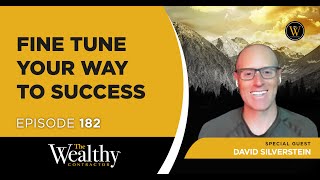
In this Wealthy Contractor Podcast episode, host Brian Kaskavalciyan interviews David Silverstein, co‑founder of American Home Contractors, about the journey from a small exterior‑remodeling firm to a private‑equity acquisition in 2022. Silverstein explains the key attributes that make a contractor business attractive to buyers—strong EBITDA (>$1 M), solid reputation, and documented systems. He details how they built robust data pipelines using a CRM (Zoho) and accounting software (QuickBooks/Timberline) to track leads, appointments, sales, production, and financials, enabling transparent reporting for due‑diligence and internal decision‑making. The conversation covers the creation of repeatable processes, manuals, and a merit‑based partnership structure that kept four owners aligned. Marketing strategy is discussed, emphasizing historical performance analysis, cost‑of‑revenue targets (≈5 %), lead‑source testing, attribution, and managing diminishing returns. Silverstein notes rising lead costs, the need for constant attribution, and the importance of vendor relationships. The firm’s strategic shift toward solar roofing and in‑house electrical work is presented as a purpose‑driven growth avenue, reflecting a mindset that values mission, community impact, and long‑term industry leadership over pure profit. Throughout, Silverstein stresses the 90 % mindset, 10 % skillset philosophy, and the role of documentation and data in scaling and exiting a contractor business.
Chapters
If you put $10,000 in, you lose $10,000 minus some opportunity cost, possibly. But what's the upside? You know, if you put $10,000 in, could we get $300,000, $500,000, $1 million worth of business? Could this open up a new door, a new lead source for years to come? So we kind of look at that as, hey, we want to constantly have some speculative lead sources at play. We want to try new things. We always dip our toe in the water. We don't jump headfirst into the pond. You know, we want to make sure that what we're getting involved in is going to work. So we want to see some initial results as we put some money into it. This is the Wealthy Contractor Podcast brought to you by G4 Marketing. Interviews with today's top home improvement entrepreneurs about marketing, sales, money, mindset, and lifestyle. Now here's your host, Brian Kaskavalciyan.
All right, everybody, welcome to another episode of the Wealthy Contractor Podcast. I have a return guest with us today, David Silverstein. David, welcome.
Thanks for having me, Brian.
You're back again. So since the last time you were on, some changes have happened over there. And so why don't you remind everybody, give, everybody, you know, a little bit of your backstory and then let us know what changed and then we'll, we'll dive in.
Sure, Brian. Yeah. Our business was acquired last June of 2022. But, you know, like you said, my name is Dave Silverstein. I'm with American Home Contractors. We're an exterior remodeling company in the D.C. metro area. And I partnered up with a couple of my business partners in 2015 when the company was pretty small. And back in 2015, our goal was to grow the business and get it sellable so that if and when private equity came into the scene, we would have the opportunity to sell if we wanted to. Yeah, you know, it just gives us optionality if you have a business that's sellable. So that was our goal in 2015, to grow the business, fine-tune the systems and processes, and make sure that if and when private equity approached us, we would have that option because you can always choose not to sell. But, right, you know, if your business is not attractive, you don't have the option of selling if nobody wants it. So yeah, that was our goal, and it worked. It worked. It worked. Yeah.
Awesome. So let's talk about what makes a business attractive to private equity or to, to really any buyer. What makes that a business attractive?
So first and foremost, the company, you know, has to do well financially. You know, there has to be a good EBITDA or bottom line. So you have to be making money in our industry. It's not like a tech company where you're basing it on top line revenues. We're basing it on net income. So you got to run a profitable business. And typically private equity is looking for businesses in our industry that are making more than $1 million a year. So that's kind of in income.
Very important. Yeah. In net income.
Yeah. After you pay yourself, after you pay all your employees, all your expenses, overhead, all that good stuff. $1 million at the end of the year.
Yeah, I think that's a really important distinction. And it's, it's a really good goal or outcome or result to shoot for regardless of whether you're going to sell or not. That's a good position to be in in your business. Okay. So financials, good financials, million dollars in EBITDA.
Yep. First and foremost, the financials have to make sense for private equity to be interested in you. And then, of course, it comes down to reputation, how well you're running your business. They want to look for companies that are market leaders. So in individual markets, our group looks for You know, making sure the financials make sense, but then how good is their reputation? You know, how much market share could they capture online? Because everything is online, everything's continuing to move online. And as long as you have a good reputation and you run a good solid business, you should be able to gain more market share in the future by developing even stronger systems and processes with the help of private equity involved in that business.
When you say online, so aside from reviews, are you— is there more to it than just reviews?
Reviews are the easiest way of seeing if a company is decent in the marketplace, right? I mean, you can ask around, you can reach out to suppliers and manufacturers and, you know, that's, that's part of the due diligence.
But when you say online, it's mainly they're looking at reputation online.
Correct. Yeah. Reputation online, Google reviews, Yelp reviews, Angie's Reviews, any review site that's out there, just kind of combing through those reviews. And, you know, it used to be, hey, do you have 5 stars? You have 4 stars? Like, what's your star rating? And then it evolved to, you know, how many reviews you have tied to that rating. And now it's about frequency. You know, how often are you getting reviews? Because, you know, COVID kind of showed us that You know, it's not just about your overall star rating because good businesses can run into hard times and end up not delivering good customer service if the circumstances change. So looking through those reviews and seeing how the business has evolved and making sure that month over month those businesses are delivering a good customer experience and you can see that in the reviews. Are you getting reviews monthly? Are they positive? And what are people saying about your business online?
Yeah. Yeah. And that's exactly what we help our clients do with G4. And we teach them about, you know, star rating quality. Quantity is important, but also, like you said, frequency is also very important. They want to see what you did yesterday, not what you did 3 months ago. They want to know how you did yesterday. So that's, that's, that's really good. What else? So what else? So we've talked about the money. We've talked about reputation. What else are they looking for?
Well, they want to make sure that you have, you know, you're running a good business and you have good systems and processes. You have a good team, good employees, good staff, you know, but it starts with the finances. And then after the finances come through, obviously checking to make sure the reputation's there, asking around as part of the due diligence, asking suppliers, manufacturers, other companies that are part of the network, hey, What do you think about these guys? Are they good? Do they do good work? Do they treat their customers fairly? And then after that, it's a matter of submitting a bunch of things related to your company, you know, your org chart, you know, your, your manuals. You know, they want to see that you're running a successful business. And it's not just, hey, he had a couple of good years. You know, you've been running— you have a track record of running a good business profitably. And when they look at the financials, it's not just 1 or 2 years. It's a few years. You know, there's a look back, like a 3-year look back. You know, is typical. So, hey, you know, how'd you do last year and the previous 2 years to indicate hopefully, you know, is this company not just a fly-by-night? Hey, they had a good storm, they made a lot of money for a couple of years and they're going to, you know, come crashing down. They look for longevity and obviously tenure of business. How long has your business been operating goes a long way as well.
So what's interesting about this, so for the listener, what's interesting about this is everything that he's talking about here, whether you want to sell your company or you don't want to sell your company, It's— these are all of the things that make a business work in this industry, in this or any other industry. But it's, it's— as you were talking, I was thinking about Michael Gerber and the E-Myth. And what Michael Gerber talks about, that one of the main points of the E-Myth is create a franchise model out of your business. And that's exactly what you were describing here. Is about, it's about systems and processes. It's about creating predictable results in the business. And that, but those predictable results are marketing, sales, production, customer experience, finance, HR, all of those things. You want to create systems and processes so that you've got a predictable outcome. And when you have predictable outcomes, then you can measure and you can track, and then you can work on improvements. So if my close rate right now is 36% and I've got a $4,000 NSLI and I've got a 12% marketing cost. I can take all of those numbers and now I could say, okay, how do I get my marketing cost from 12% to 11%? How do I get my close rate from 36% to 37%? How do I get my NSLI from $4,000 to $4,200, whatever? I'm just throwing numbers out, but these are the things that you can do. So I just, for the listener, As we're talking with, with David here, don't only think of this in terms of selling a business. Think of this in terms of what are all of the things that they did in order to create a successful company, whether they were going to sell it or they weren't going to sell it, because I think this is really powerful stuff and it goes along with everything else that we talk about here at The Wealthy Contractor. So with that, with that said, sorry, I had to throw that in there for the listeners. Because it's not only about selling a business. Talk a little bit about process. So I know a lot of companies get stuck on this idea of documenting process. Can you talk about kind of your journey? So 2015, you guys bought a small company and you now— and then you had to develop that into a bigger company. Along the way, you had to create systems and processes. What did that look like? For you guys?
So in 2015, when I partnered up at American Home Contractors, we had things documented through a CRM, but we needed to tighten things up as we built the business. You know, we needed to make sure there was good data flow so that any outsider could see what was going on, really. Obviously, first and foremost, internally, we needed to see what's going on to run a good business. But then just kind of putting that thought process in our head, all right, you know, somebody wants to buy our business, they need to be able to tell what's going on as well, and we need to be able to deliver those results, you know, through data. So, hey, here's what's going on with our leads. Here's what's going on with our appointments, our sales, our production. You know, how fast are we producing things? How fast are we collecting things? Our accounts payables and receivables, all of those things. So, you know, we just had to make sure everything was really well documented. And if and when somebody were to approach us and say, hey, we're interested in buying your business, we could deliver that report to them and basically say, hey, this is what's going on.
What is that? What does that look like? I mean, how do you even sit down and start putting together all that documentation?
Well, I mean, a lot of it comes from the systems you're using. So your CRM, you can generate reports on how many leads you're receiving, you know, through your marketing sources and how many appointments are being issued, how many sales are being generated per lead source and per rep, you know, because the private equity does want to see how your team is performing and making sure that you do have a solid team.
Yeah.
So a lot of it comes from reports in your CRM based on the marketing and sales and production, but then also on the financial side, it comes from your financial software like QuickBooks or Timberline Sage. So we use QuickBooks and we just delivered, you know, a bunch of reports and the due diligence process was pretty intense. You know, obviously they want to make sure that you're running a good business. You're not just saying you are. But yeah, a lot of the information comes from you know, the systems and processes, the systems you're using.
Yeah, but that's how you're getting a lot of the data. I mean, how do you, how do you actually build out a process? So like your production, let's say your production and your customer experience process. How did you guys begin that process? Because again, a lot of people out there, a lot of companies out there, they're so busy. That it's like, Brian, I know I got to put process together, but I'm so busy doing this and I'm so busy doing that. I just don't have time to do it. And I don't know what that looks like. I hear this so much. And so that's why I'm asking, like, how did you just start to even put the process together so that you could even start to accumulate the data?
So a lot of CRMs will kind of walk you through those processes. We're using Zoho right now, but You know, a lot of CRMs will have it pretty much built in, you know, the scheduling, the sales, the production, those workflows. But we just kind of put together, you know, a roadmap of, I guess, trial and error over the years, to be honest. You know, what works, what doesn't work, what are we saying on the phone, what is, you know, successful when we're speaking to people and getting an estimate, right? How do we set up those estimates properly? Documenting call scripts and really getting feedback from homeowners on objections they have when we're speaking to them, you know, and taking those objections and saying, hey, this is what people are saying and the reasons why we're not being able to move forward in the process. And then figuring out as a team, how do we counter those objectives? You know, those objections are, you know, pretty— if you narrow them down, there's probably 3 or 4 common objections. Yeah. When you talk to somebody on the phone. So then mapping that out, writing it down so that when you go from one scheduler, you can hire another one and then get to 2 to 3 and then kind of scale that up based on systems and processes and documenting it in a manual, kind of like franchising your business you were talking about. You know, you want to have it all written out so that if somebody comes on board, you can just hand them a manual and say, hey, this is how we do things. Yeah, obviously there's more that goes into it. You got to train them, you got to you know, teach them about the company culture, the mission, the visions, what makes you who you are. But you should be able to give them a nice, well-thought-out manual and basically say, hey, here's your job, here's where you fit into the organization. And if you do this, this will lead to success. And that's kind of how we, how we did all of our processes, from scheduling to sales to production, how we handle phone calls to service, right? When somebody calls in with a warranty question or concern, it's all documented. And you just have to start there, you know, just start writing it out and eventually you'll fine tune it to a point where you can hand it to anybody and just bring them, plug them into your organization and add to it.
Yeah.
Yeah.
And what's great is when you bring on, when you start to bring on people, um, and, and you, it's difficult to bring on people if you don't have something for them to start with, even if it's just a piece of paper that just got, you know, 7, here's the, you know, the 7 steps to your job. Here's how you do it well. And then you could record stuff, you could listen in on conversations, you could type a few things out, you can write a few things. I mean, there's so many ways to do it. But like you're saying, is if you don't have these things in place, how do you bring on that next person? How do you bring on somebody good? And that's one of the big problems. It's like almost like a chicken and egg thing. People are looking for, oh, I want to bring on these great people that are going to come in and do all of that for me. Well, chances are good you ain't going to find that person. And if even if you did, they're probably not going to want to come and work for you because they don't, they don't want to come in and develop everything. They'd rather come into a situation that's already working and looking for ways of improvement. And so, um, yeah, that's up to you, to us as owners, is we've got to at least get that that process started. You guys— so, yeah, so there's 3 of you in the business, right?
There's actually 4 of us.
Oh, there's 4 of you. Okay. What was your, your main role?
So my main role was marketing, HR, technology, kind of the front end of the business.
Yeah.
And my partner Steve, he focuses on the back end of the business. The accounting, the finance, making sure we're running things profitably and correctly. He's got the experience in the industry of over 35 years. So him and I together really, you know, focus on the front and back end. And then we have two other partners who focus on sales.
Yeah.
Making sure we're driving revenue.
How did you— that's a lot of partners. I mean, having one is bad enough. Having two is like, wow. And then, but three? Um, how did you guys get alignment and, um, stay on, stay focused and on track until the exit? Well, and now beyond, but how did you guys accomplish that without killing each other?
Uh, yeah, it can be difficult at times. Um, but as long as we stay in our lanes, you know, focusing on our individual departments. So when I came on board in 2015, we were focused in Maryland, you know, primarily Maryland. We had a license in Virginia, but not an office. So when our other business partner joined in 2016, he started a greenfield operation in Virginia. So then his focus was on Virginia. I went down there a few days a week to help get everything started again on the HR side, marketing side, hiring, you know, schedulers, hiring people to fill the staff. And he just drove revenues through sales. So he focused in on what he was good at. I focused on what I was good at, and we kind of just stay in each other's lanes. But, you know, there is overlap. You know, obviously there's a lot of chefs in the kitchen if it comes to decision making. But, you know, we kind of try to run it like a meritocracy. You know, whoever's good at what should be the one who, you know, has more, more say in that decision. Right. If it's a, if it's a marketing question, I'll have more say than my other partners, even though we all provide input. If it's a finance thing, then Steve provides, you know, more weight on his decision than others because it deals with his department that he's overseeing.
So as long as trust and respect.
Yeah. Oh yeah. And that's built over time with the relationships. But yeah, I mean, at times sometimes, you know, individuals will not see, you know, the great thing about us is we have You know, our vision and mission is clear. We're all on the same page with where we want to go. It's just how we're going to get there that, you know, can create a little friction.
Yeah, that's really good.
Let's pause here for a quick break. Do you want to grow your sales, make more money, and increase your marketing ROI this year? If you answered yes, then you'll want to listen closely to this special invitation. We're calling all home improvement business owners and marketers to join us at Lead Con 2023, happening June 6th and 7th in Atlanta, Georgia. Lead Con is the home improvement industry's only lead generation event guaranteed to show you how to outsmart, outmaneuver, and outperform your competition. Now, to get there in today's market requires sharper skills, more precise targeting and more effective marketing and lead generation strategies. When you join us for LeadCon, you're gonna discover the tools, systems, and tactics that are working right now for companies big and small to drive leads, sales, and profits. To get more information, go to www.leadconevent.com. That's L-E-A-D-C-O-N-E-V-E-N-T dot com. If you act soon, you can save big with discounted pricing. And for additional savings, you can enter coupon code Wealthy23 at checkout. Remember, this event is 100% guaranteed. If you don't feel it was profitable enough for you on day one, not only will we refund you your ticket money, but we will also give you $1,000 back to cover your time and your travel. So don't delay. Go to www.wealthy23.com. Leadconevent.com and secure your ticket today. Now back to this week's episode.
Yeah, if there's alignment with vision and mission, you're right. Yeah, the getting there, I mean, it could destroy everything, but at the same time, as long as you stay focused to that, that's great. Let's talk about, let's talk about marketing. Marketing is a big topic this year. You know, we're actually even doing an event in June that's only 2 days of only marketing, just because it's time, you know, for the last, you know, I had never seen anything like it. You know, you'd been in business before COVID I've been in business for, you know, longer than I care to think about. I had never seen anything like that 2.5-year period of just an overflow of leads and people buying and unreal, but it's starting to normalize a little bit. And the first place that gets hit is marketing. So what are some of the things that, you know, when you go build a marketing plan and you think about marketing for the year, what are some of the things that go into your thinking? How do you develop that? That plan?
Sure. So what we think about in terms of marketing is what has worked in the past. It can't exactly predict future results, but it's a good jumping off point. Like, hey, you know, did Google perform well for us last year? Did this magazine perform well for us last year? If it did, then odds are we're going to probably keep it as part of our budget. And then, you know, we're trying to shoot for a cost of revenue of 5% or under, right? We want to be low.
Yeah.
Really? Yeah. Oh yeah.
Yeah.
But that's a consideration. Referrals, repeat business, all that stuff that drives that number down. So even though we have marketing sources that are 10, 12, 13, 15% cost of revenue, if we do it properly with good referral programs and working our database with repeat business, we should be able to drive that number way down over the course of the year. So, you know, and we kind of look at the overall sources as, you know, just bets that we're placing in the beginning of the year. We're betting that these lead sources are going to perform. And every year we have our tried and true horses.
But hold on a second. You're betting based on data and information from the past. I think that's really important when you say betting. I don't want people to think that you're, you're Vegas-ing this thing and rolling dice.
I mean, not gambling.
No, you're not gambling. Okay, good. Yep.
Nope, nope. But we still are betting because we don't know if and when a lead source will experience diminishing returns, which we've had that. We've ridden the waves of a lot of different lead sources in the past, and eventually, you know, you can't spend indefinitely for that lead source to perform better and better and better and better. You know, you have diminishing returns set in and it may plateau. Like, if you're spending $10,000 a month with Valpak, it's not like you can spend $20,000 and recognize double the results. You may only get 50% more of the results if you double that spend. So we're trying figure out where that sweet spot is. And over the course of time, some lead sources we notice year over year start to degrade a little bit. So we got to figure out, all right, are we going to continue running this lead source this year? If so, are we going to stick with the budget we had last year? Prices may, may raise. So hey, you know, maybe this lead source is gonna charge us more to run the same amount of ads as we did last year. We got to make that decision, you know, especially if it's been, you know, degrading over, over the years. And then when we look at our overall marketing budget and the lead sources that we choose every single year, we figure out, hey, you know, what are some speculative areas that we may want to entertain? You know, not, not bet the farm type of scenarios, but like, hey, let's put a little money into this. Yeah, small percentage and it's asymmetrical risk, right? So you put some money into it. The worst that happens is nothing. You get zero. It's not like you're going to necessarily lose money and money's going to fall out of your, you know, out of your company. If you put $10,000 in, you lose $10,000 minus some opportunity cost, possibly. But what's the upside? You know, if you put $10,000 in, could we get $300,000, $500,000, $1 million worth of business? Could this open up a new door, a new lead source for years to come? So we kind of look at that as, hey, we want to constantly have some speculative lead sources at play. We want to try new things. We always dip our toe in the water. We don't jump headfirst into the pond. You know, we want to make sure that what we're getting involved in is going to work. So we want to see some initial results as we put some money into it. And it's tough. We try to negotiate rev share agreements. We try to negotiate, you know, the best pricing. And we tell all of our partners, hey, you know, we have a healthy marketing budget. And there's no reason if this doesn't work that we won't be spending a lot of money with you in years to come. But we need to see some initial results and then we work out what that number is going to be. Sometimes people will say, hey, you need to spend at least $10,000 a month for 3 months for us to see anything. All right. Well, you know, that's a decent amount of money, but is it worth it compared to our overall budget if we think that this, this lead source has good potential in the future?
So I think there's, there's one underlying, critically important thing in all of what you just said. And I would say to the listener, I do this a lot lately, is go back a minute or two and listen to what, what Dave said again, because all of what he said is based on the, the fact that he knows where every single phone call is coming from, every form that's filled in. They know how each lead source is performing. Now, the reason I'm bringing that up, Dave, is that, and you've probably seen this too, but there are a lot of people out there where you ask them, tell me, I'm spending $10,000 a month, Brian. Okay, tell me how, what's performing. I'm doing this on Google. I'm doing that in this. I'm doing that. Tell me what's performing. Well, you know, I, I can't really tell, tell you. What do you mean you can't tell me? You're spending $10,000 a month. You're getting X number of leads. You say you're getting X number of leads, but you don't have any data on this. And it's, it's shocking to me. It's shocking to me. And it's, it's simple. It's a simple solution. It's every single lead, every single phone call that comes in, must have attribution to it. Even if it's a wrong flipping number, I want to know about it. And so, um, I— everything that you said just now is all predicated on the fact that you have a system set up to know where these leads are coming from and what is profitable and what is not. It's kind of like buying a stock and then just like never ever looking at it again, and you're broker comes along and says, oh, let's buy more stock. And you just, without asking any question about, well, how did it do? Am I making money? Am I losing money? It's like, okay, well, fine, if that's what you say, let's just buy more of it. How many shares do I have? Well, I don't know how many shares you have. You just have this. I mean, it's like, it's like that. And it's, it's, and too many people, too many good, hardworking people are going to go out of business because of this, because of this, because leads are getting harder to get. I would imagine I was going to ask you about that next. I mean, are you seeing leads tougher to get going up, you know, cost per lead going up? Have you experienced that yet this year?
Yes. Yes. And it's, it's, it's dependent on the market and what you're doing, right? If you're doing roofing and you're in an area that has a lot of storm activity, you know, there might be a lot of people in the market, the demand might be high and supply might not be that high. So, you know, it might be easy to get to those people that are in the market in need of your services. But in other parts of the country where the storm activity hasn't been very active, yeah, the cost per lead might be rising. In our market, the cost per lead is certainly rising. There's been less storm activity since 2018. And just in general, you know, more and more people are coming online that are doing these types of services, home improvement services. So you have to pay attention to how things are performing. You have to look at the data through your CRM and realize, hey, I'm spending this amount on this lead source. What am I getting in return? What's my return on investment? What's my cost of revenue? How much am I selling? How much am I spending on this lead source to determine your cost? And is that worth it to you? Is it, you know, 10, 15, 20% worth it to you? It depends on your gross profit margin of where you can be. With your overhead expenses. So yeah, I mean, we have to pay attention to these things now. It's not even an option. You know, we have to look through every lead source and scrutinize them very heavily. And if something's not performing, we want to have a good relationship with that vendor so that we reach out and say, hey, things aren't going too well. Is there something we can do to change this? If there is, sometimes the vendor will say, yeah, I'll run some free ads for you. Let's get things back on track.
Yeah.
And if you're transparent and honest with your marketing partners, your vendors, then there should be no reason that you wouldn't want to help each other out. Hey, you know, we're going through a little, little lull here. You know, the lead cost per lead is way up. It's, it's way out of our range. And if you help us run some ads, we might be able to drive this down so we can continue using you long term. Otherwise, we have to take that money we're spending with you and transfer it to a different lead source where we see a better return on investment.
Yeah, yeah, love it. Great stuff. So let me, as we wrap up here, I want to ask you a little bit about, um, about mindset. And if you don't mind, um, get a little bit into your head about how, how did you kind of, you and your partners kind of deal with, you know, it's one thing to, you know, slowly kind of build a business and, and make more and more money, Obviously, you guys were doing very well in that, in that respect. How did you just— and I'm not sure, I don't remember. What did you do? Let me start here. What did you do before you got into this business?
I went to high school. So, you know, after high school, I got into the industry. I started tearing off roofs for a summer job. And that was how I got into the roofing industry. And I started a business in 2008, and then I sold that, that interest in that business in 2014, moved over to American Home Contractors and partnered with Steve and his partners. Yeah.
Did the 2014 sale make you rich?
No, it didn't make me rich. It made me more comfortable. Okay. You know, after selling my interest in that business, but, you know, It was a lot different than our June acquisition. That was a good exit.
Well, you still have to— yeah, you still have to work and do something.
Of course.
I'm always fascinated by the mindset because to me, all of this is like 90+ mindset and 10% skill set. And I'm always fascinated by that side of it because I see it every day. I see it with my clients. I see it with everybody I talk to. I see it with every successful entrepreneur I've ever met. Whether they can— they may describe, I've got this cool business and I've got all these great people and blah, blah, blah. But it's like, you know, and we make a whole bunch of money, but it's— there's so much more to what's going on in our heads. So did you ever have any internal battles with yourself over this idea of growing and we got to make more money so that we can have this exit? Or did you kind of ease into it? I mean, how did you deal with the demons that were probably yelling at you at some point?
Yeah. So it is all about mindset. I agree. It's 90% mindset because, you know, you have to be purpose-driven. You know, you have to be doing something that you believe in. It's not all about the money. The money should come, you know, from doing what you believe in. It should be there by providing value. So yeah, our vision was to grow the business successfully, profitably, and just run a good business whether it's sold or not. You know, we wanted to earn a good living, wanted to take good care of our customers and our employees and just make sure that we were doing good by the community, you know, rid the world of unscrupulous contractors. You know, you know, we want to do that. We want to be a good contractor. Yes. Yes. So You know, having a good mindset and just being purpose-driven aside from the money. If you're focused on the money 100%, it's going to be difficult to want to go to work every single day, you know? And right now that we sold, you know, we have to be even more purpose-driven because a lot of us made a lot of money on that sale. So we have to want to go to work every single day knowing that a lot of our basic necessities are taken care of for a while, you know? So it's more than— it's more than that. It's like, what are we doing here? Why do we exist? And You know, that's another reason why we, you know, we started doing solar roofing. You know, solar has been a big part of our business and our growth over the last couple of years. And there's a deep mission and vision behind solar. Transitioning to sustainable energy is important to us, and it really has brought deeper meaning and purpose to our business. You know, a few years ago it was sub-10%. Now we're approaching 30%, 40% of our overall business. And I wouldn't be surprised if in the next year or two more than half of our business is tied to solar roofing and energy products like Powerwall batteries and EV chargers, smart electric panels, that kind of stuff. We actually brought electric in-house last year, so now we have master electricians on staff and we see where the industry is going with roofing and solar merging together. And, you know, we recognize the importance of owning that electrical component. Because that's really the biggest, the biggest challenge in solar roofing is the electric. You know, the roofing part is teachable. You can teach roof— good roofing crews how to do slate and tile and solar roofing applications, but you have to own that electrical. So again, relating back to mindset, we had to think outside of the box and say, what is our deeper purpose here? What are we trying to accomplish? And we always want to be you know, one of the leaders in the industry. And we always want to see where the, the puck is heading, not where it's at currently, but where is it heading? Where do we have to be, you know, 1, 3, 5 years from now to be successful and ahead of the competition? And solar and roofing merging together, we realized we had to be there and we have to start building that out. And I, you know, I like to say that we're one of the leading companies in that space, you know, Tesla certified. Solar roofing contractors, Powerwall, you know, it's the future. So we're proud to be there. Cool.
It's exciting.
Yeah.
Well, look, man, I appreciate you coming back. Congratulations again on your exit. That's, that's amazing. And I'm sure that you guys will continue to build a great company there in the D.C. area. And I wish you nothing but continued success. Thanks for being here.
Yeah, thanks for having me, Brian.
All right, everybody. Well, until next time, this is Brian Kaskavalciyan with G4 Marketing Group, and this is The Wealthy Contractor Podcast. Thanks for listening to today's episode of The Wealthy Contractor Podcast. Let me ask you, did it help you look at your business in a different way? Did it spark an idea or ideas that you hadn't thought of before? Do you have a list of action items that you can take and implement into your business or your life today? I really hope so. If it did, I'd like to ask you a favor. Would you leave a 5-star review of the podcast? By doing so, you'll help other contractors find the podcast more easily so that we can help them achieve more success, wealth, and freedom. And before you go, make sure you subscribe to the Wealthy Contractor Podcast so you get access to the latest episodes as soon as they're available. We're always striving to provide you with great content, so you don't want to miss what's coming up. In fact, if you haven't already, make sure you go to thewealthycontractor.com and get your free copy of my latest book, The 7 Secrets to Becoming a Wealthy Contractor. Just pay shipping and handling, and I'll take care of the cost of the book. And finally, a big thanks to G4 Marketing for sponsoring The Wealthy Contractor Podcast. For over 12 years now, G4 Marketing has been the secret back office relationship marketing team for hundreds of home improvement and home service businesses just like yours. You get the customer and our proven system turns that customer into 5-star reviews and profitable repeat and referral business. If your home improvement or home services company completes at least 10 jobs per month, they have a solution that will work for you. To find out more, sign up for your free, no-obligation, 10-minute discovery call at www.gfourmarketing.com/strategy. That's gfourmarketing.com/strategy. Set your discovery call up today and they'll help you set your business up for long-term profits and success. So until next time, this is Brian Kaskavalciyan.










