Brian LaManna x Trent Dressel | 4x Presidents Club talks Cold Calling, Discovery, & Sales Success
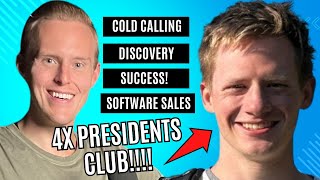
This is a recorded interview between Trent Dressel and Brian LaManna (senior sales rep at Gong) covering practical sales tactics and career-building topics. Brian explains his OPS email prospecting framework (Observation → Problem → Short CTA + PS personalization), shares routines for prospecting as an AE ("plays of the day"), advice for recovering from sales slumps, how to handle competitors and multi-thread deals, a high-stakes end-of-quarter win, and his approach to building and modestly monetizing a LinkedIn personal brand and free resources.
Chapters
As I was speaking with your buddy JC and he said that everyone calls you List Price Lamana. How do you get a nickname like.
That all about price integrity? I definitely take pride in just being able to sell GONG near our approved pricing and Gong as a company definitely takes that stance as well. We sell to different sales and revenue leaders and I think part of creating raving fans is to make sure that across those different revenue and sales leaders that they don't pay wildly different amounts in terms of their contracts. Because we all know VPs of sales speak with each other. So we definitely aim for consistency as an org and it's about anchoring back to value at the end of the day, making sure that you know the problem you're solving for is big enough in their world. And you know our ROI speaks for itself in terms of different case studies and third party research. So definitely have the confidence behind delivering.
Like a true CRO would say, imagine being so good at your job that you get the nickname List Price because you always quote high, which is really important for your deal size. For everyone that does not know Brian, go check him out on LinkedIn. Brian Lamanna he's one of the, I don't want to say the few, but he really knows what he's talking about. He's a senior sales rep at Gong and all of his posts go crazy. Big following. I've been following him for a while so I want to get directly into the meat of it because today is going to be packed with value and you got a lot of traction talking about your Ops framework sourcing 73 meetings via email in 2022 as a result of this framework. So take us through the observation problem. P.S. simple call to action. How do you use it, what does it look like and how can folks start putting it in action?
Yeah, is it okay if I frame up the problem first?
Absolutely. Let's start with the problem. Let's start dragging through the glass.
Cool. I think email prospecting, like every rep wants to do, personalization and everyone wants to create those like personalized, relevant messages. But candidly it's just very, very difficult too in a time efficient manner. So in my experience, and I experienced this prior at my last company as well, before I created a framework, I was always debating, hey, do I spend 10 to 25 minutes on that perfect email, putting together that research, crafting a narrative, sending it off, or do I spend that 25 minutes and get 10 emails out that have a pretty good template behind it but aren't that personalized? So what I wanted to help create was like how do we create a framework that takes a lot of the thought and the mindfulness out of how do I just start that email and how do I position it with this OPS framework? So I always lead with an observation. So for example, it might be high. Trent saw that you worked at Qualtrics for four plus years and recently you know, our solopreneur or something like that. That's just a little bit of research. I'll frame up some type of problem in terms of saying, hey, you know, most former AES turned solopreneurs share that. You know, XYZ is a big challenge. Here's the benefit that GONG brings to the table for someone like yourself. A really simple cta. Something along the lines of ever heard of us before? Worth a conversation, open to seeing a quick case study. And then I always throw a PS at the end. I pretend that PS stands for personalization. So I think this is where you can put in some like not fluff but like something personalized off of like what you found of them. Just as a human like hey, saw you're from New Albany, Ohio. Actually have family there. Love visiting. Just something short and sweet that really makes the email scream like hey, this was only written to Trent Dressel and if anyone else opened up this email it would not make sense for them. So it's a pretty concise, pretty just like action packed note, observation, problem, short CTA and a little bit of personalization at the end that it was specifically written to you and only you.
Man, you dropped more on me and my background than I think most know about me. So you clearly do your research. Speaking of emails, with your perspective being in a closing role in a former sales development rep, can you talk about how your email strategy changes as you progress through the sales cycle? So you just described prospecting how to set a meeting with this very personalized email that would almost seem like an alien if someone else read it. After you set that meeting, what does it look like from from pre initial meeting to then post negotiation, getting that Gong signed contract, docusign, whatever you use when you close the deal.
Yeah, great question. I think I'll bucket into kind of two different two different categories. Like during the cycle one will just be like in terms of like demo or meeting follow ups. I always keep it really concise. You would say something like hey Trent, really appreciate the time today. Recap, next steps and I always have a couple bullets under each and I bold the recap. I bold the next steps. I want it to be super readable. I want all of that recap and next steps to really be about them and not about gong and every feature and every offering we have. But more along the lines if you told me XYZ was the challenge, here's what you've tried so far, here's what it's worth and then just a short line at the end like hey, anything off base here. So brevity is really the key. Even someone active cycle, they're going to only take a look at those emails, you know for a couple seconds, maybe 30 seconds tops. I wanted to be really readable in terms of throughout the cycle when it's not like a meeting follow up. I actually structure my emails pretty similar to that like ops type framework. I'm a big believer in sending value touches is what I refer to them as or like kind of selling between the meetings. So it might sound something like this of like hey Trent, really enjoyed our conversation again on Monday. Just had a chance to review it. Something you shared with me was XYZ was a big challenge. Here's a case study from Blank on how we've directly solved for this at Acme Co. Can't wait to speak next Tuesday. And I think the goal with those types of emails again is concise, brief, relevant to your last conversation and adding value. But it's just to like win mind share for a moment right? There might be a week between our meetings and if I can make you think about Brian LaManna in a favorable light and think about my product and my company for just a minute, just a minute in your super busy day, that's a win. They're not necessarily going to click on that case study or you know, read every single word. And that's not necessarily the point. It's just to get them to think about you a little bit between meetings as well.
Well, I'm sure everyone thinks favorably of Brian LaManna with all the free resources you have at your sales miniseries, which I think is a huge value add to the community and appreciate you going in depth on some of these topics you like to talk about. Clearly they work. Because you found yourself at Presidents Club this year, would you advise folks that find themselves at an exotic beach location to also go blazer pants? How did that work out?
That was a poor choice. I assume you probably saw a photo I posted on LinkedIn. We were told that the apparel for the last night was dressed to impress, so I I had to bring my blazer, I had to bring my khakis, but I did not check the weather Ahead of time and it was about 88 degrees. Folks that were there in Fiji will tell you firsthand that I was only in that outfit for about 20 or 30 minutes. I actually quickly went back to the hotel room, switched into a Hawaiian shirt and switched into some more casual pants as well. So it's important to stay cool. Yeah, it was a blast of a trip and it was just great being in real life with all your colleagues that are distributed all over the world.
Yeah man, it's a cool feeling that that was my experience when I went to put to meet my first president's club in Mexico. And you just, you see all these names in your CRM or your internal slack teams and you see their face and you don't really have a sense of okay, how tall are they? Like what is your presence in real life? Like, oh, you brought a plus one. Like now the dynamics much different. How did it feel for you? I know speaking with jc, you and him were basically very competitive just from a revenue standpoint across all the reps at the company. How did it feel to have such a successful year and end up making it to club? Because I know a lot of folks who are probably listening to this aspire to be better at their jobs, to make more money, to have cool experiences like that. How did it feel when all the hard work actually paid off and for it to come full circle and you to get to celebrate with your friends, colleagues, peers, etc. Etc.
Yeah, it was a really great feeling. It, you know, a lot of work and obviously time and effort, blood, sweat and tears, AKA emails, calls, prep, all that fun stuff go into it and it's just fun to get to like celebrate with the people that you have like a friendly and healthy competition with all year. Jc, as you referred to, had an unbelievable year. One actually North American rep of the year in our segment we probably had close to 70 reps and about 7 or 8 of them auto qualified to club. And it's really fun to just be working together like Q3, Q4, seeing each other on the leaderboards and you know you're trying to beat the person next to you, but you're also rooting for them at the same time because you're going to be there celebrating together and you know, at the end of the day, who's looking back other than us two right now thinking who got first, who got second last year, you're just proud of the different brokers you're able to put up and obviously the earnings isn't a bad side effect as well, but it's an amazing feeling at the same time that President's Club is usually a couple months into the year. So President's Club was in May of 2023, of course already about four months into the year. So while you're out there, you're starting to think of next year already it's in Costa Rica. And I'm thinking, how do I get back? How do I earn that next trip? It's like sales 101. You have a phenomenal month. Next day, guess what, you're back at zero. It's on you to put up numbers again. And consistency is really the hardest part.
What have you done for me recently? And that's the beauty of sales. It's binary. Either you hit the target or you miss the target and it's all on you. And speaking of good months, which are always fun to put up making money, but things don't always go well in sales and that's why it's so high paying is because it's challenging. And you Talked about in Q4 of last year it being off to just a challenging start and your authenticity of sharing, hey ghosted on some deals lower, lowering the forecast and things just not necessarily going in your direction. It's not always sunshine and rainbows. Can you talk about how you deal with the sales slump and get out of it?
Yeah. And that's a great call. I actually, over the course of last year, I had two different points where I felt like I was kind of in that like rut and just not seeing the results that maybe I was used to or expect from myself. I'll back up a little bit. The first was actually in February. Our fiscal year starts February 1st. And like a lot of other sellers, I came in, I wrote down my goals for the year, wrote down my goals for the quarter. My goal is to make Presidents Club at Gong. I'd recently joined the previous August and that February and we're a pretty monthly business. That February I closed $0 in revenue. So talk about a horrible start to the year. I came in with a massive goal. I'm like, I'm going to be the best. I'm going to continue the momentum that I did when I started a couple months ago. And it's, it's super tough. And had a similar thing happen as well in October. I think whenever I start to get in that type of rut, one, I try to get back to the most basic fundamentals in sales of am I following up the same day, am I doing in depth pre call prep Where I know everything about their business, everything about the different folks at the account I would want to speak to. Am I going above and beyond in my research at really every phase? Am I setting next meetings within four business days? Just things like that that like, are gonna drive success over the long term if you can stick to them. Outside of that, it's really just about like starting to like stack up the little wins again. I think revenue often lags in sales. Where I could have an insane week this week on, you know, June 11th through June 16th, but I'm not necessarily going to see the results for five or six weeks. So I don't want to be like disappointed and frustrated the entire time until I see the payoff at the very end. I think it's really important to enjoy that journey and enjoy kind of that come up. So what I like to do is just write down at the end of the day like a couple things that went well. Maybe someone responded to my, you know, my demo recap email. Maybe I locked down the next meeting within a couple business days, got a self source and anything small like that is a big win. Even if it's just like heard a no, right? Finally was able to turn that account closed, lost, and move on to the next. Just try to start like stacking up those little wins again to bring the momentum back in your favor. Because the last thing you want to do as a seller is lose confidence when you're on those live presentations or you're in those discovery calls. You want to keep that swagger going.
The prospect can feel it. And when you have a full pipeline and you're almost thinking, hey, if you don't want to buy, I have someone that will like, stop wasting my time. Let's get down to it. It's such a different vibe than showing up knowing, hey, if I can't close the deal this quarter, I need you.
I need you.
It's all done. And they can sense that desperation, that quota breath and you talking about getting back to the fundamentals. I always like to think that prospecting is always the way out. That's the solution. Because pipeline solves most problems. If you have, let's say forex pipeline on your number, you're probably going to be fine. If you lose some deals, you know you'll be able to make up for it. Can you talk about how you think about prospecting now as an account executive? Because my experience as I continued to promote and get a larger quota, my relationship changed a bit because I wasn't quite as spray and Pray I was a lot more selective on. Well, if I'm not working with the right accounts, my average deal size simply will not be big enough to hit my quota. While also being mindful that if I just decide to turn on the pipeline generation activity, the efforts I put in today may not pay off until three, four weeks from now. So talk about it from your vantage point as a more senior closer, how you think about pipeline generation.
I think about it very similarly to you. I'll repeat what you said. The pipeline does solve all problems. If you have a weak pipeline, you start to feel the heat and you will feel the, the, you know, pressure testing everything you're doing and you'll start to see some cracks in the system. And when you have that 4x5x coverage, which simply means, hey, if my quote is 100k, maybe I'm working, you know, 400 or 500k in pipeline, like things are going to turn out pretty well off my historical win rates. So that's definitely a big piece for it. In terms of how I try to keep that prospecting muscle and that mindset. I try to almost remove myself from the situation a little bit and like audit my schedule and how I'm going about my week to week. I know as a seller I have 40 hours a week and that's pretty much what every other seller has as well. Sure, you can work a little bit more, a little bit less, but for all intensive purposes, we all have 40 hours a week. Yet some people see a lot better results than others. And I know if I can spend as much of those 40 hours as possible on two different things, I'm going to be ultra successful. And those two things are, number one, advancing pipeline and number two, creating pipeline. And my goal is zeroing out on a day to day and a week to week basis. If I can spend nearly 80% of my time in those two categories, I'm going to be ultra successful as a seller. The way I go about that feeling that even further is just really efficiency within my day. The first thing I do every single day, I call it my like plays of the day. But I go through every single one of my active opportunities and I simply ask myself, hey, this opportunity with Trent Dressel, is there anything I can do Thursday, June 15th to advance this deal? Could I send a case study? Could I multi thread somebody else at the account? Could I confirm the meeting for next Monday? If yes, I mark it down as an action item for the day. If no, I move on to the next and I basically build this to do list first thing for the day when I'm really fresh. I just woke up, right, had some water, worked out whatever else and I'm thinking really creatively about how I can advance all my deals. The second thing I then do is I execute all of those plays of the day in a row, right? So I'm not context switching. I'm able to crank out five to seven emails or maybe value touches that I want to get out for those deals and I do them in 30 or 40 minutes really efficiently. If I do those two things, it might be 9am And I have the rest of the day flat three to actually focus on one, executing any meetings on my calendar and number two, prospecting, right? And putting my time into creating new pipeline. So from there I actually look at my calendar for just day of and any white space I have, I time block it for prospecting activities and I get ultra specific. So if I have 12 to 1 free I might say make 15 dials. If I have 3 to 330 free, I might say get 2 new accounts in sequence. The rest of it's just actually holding yourself accountable, following through and trying your very best to actually execute what you planned out when you're able to think through it really efficiently first thing in the morning. So really end of the day the goal is just spending as much time, as much time as possible within those two categories.
That's so good. The plays of the day. I hope you guys are taking notes because that's one actionable thing you can start doing today instead of showing up scrolling through LinkedIn for 20 minutes or looking at your email with this to do list assigned by other people. Identify what are those highest leverage activities that you can do to really stack up some wins and then you really set yourself up for a successful day. Brian, you talked about everyone has the same amount of time. I mean 40 hours a week, that's generally how you think about it. But everyone has disproportionate results. Some people are performing way better than other people. Meanwhile, some people are drastically underperforming. I want to think outside the box here a little bit because you're someone who seems to focus on health. You talk a lot about your learnings from Andrew Huberman and some of those tips, which I find pretty interesting. I know you focus on your relationships as well based on what you shared about President's Club. What does your outside the office look like? Just from an optimization standpoint, whether it be how you prioritize, sleep, hydration, working out so that you can bring Your full self, your best self, to the office to perform at your highest levels. Because I think that that's something people don't really think about, that really impacts your performance. And I know high performers like you are thinking about those things.
Yeah, it's such a great question. I don't think I've gotten asked about that before, but I'm just like I am from a sales sense and having like different systems and processes. I'm the same way, probably not a surprise. And the non working hours as well. I'm super dedicated in general, just like working out in some level of fitness. I think it's important for everyone really to find whatever type of exercise activity is easy and fun for them to do. Whether that's weightlifting, whether that's running, whether it's playing beach volleyball or pickleball or joining some form of league. But I do exercise typically all seven days of the week. I try to do something. Even if someday I'm not feeling like it, I still try to put in 20, 30 minutes, you know, even if it's not a full workout. I think it's better to do something than nothing. From a sleep perspective, I definitely need my sleep. I'm not the type of person that functions well on four hours, five hours or even six hours per night. So I typically go to bed around 9 o' clock and I usually get up around 5, 5:30. For me like getting off to a fast start in the morning really helps me be successful, successful. I think there's just a lot of distractions out there now, not just during the sales work day, but just on my cell phone during the day with you know, Twitter notifications and TikTok and text messages and everything else. And for me, I know from 5:30 to 7:30 I'm able to get an immense, immense amount done. Whether I do choose to work out first thing in the morning or I choose to just get after it working. And I choose to work out midday or later day kind of depending on my schedule. So I do mix it up a lot like when I choose to do that exercise kind of depending on my schedule. And I think that's part of the beauty. As an ae, you have a lot of autonomy to maybe do a midday workout if you're grinding early or grinding late.
Right.
You can kind of be flexible with those hours for how you work best with your energy levels. But really big key because I think if you're not there from a mental and a physical standpoint, it's hard to give your all on a work sense.
As well for someone that's so focused on performance and you care about the results. And that's how I was as well. I personally really began to associate myself with hey, I am Trent. I am an account executive at XYZ Company. I make YouTube videos, I have a following, I'm important, I'm special. And there's naturally some ego involved with people that are really going after it. How do you think about self identity and just associating your sense of self worth and, and perhaps disconnecting from that at times because with sales it's humbling every day because it's not going to just be given to you. So how do you sort of separate things and keep yourself just even keeled? Because I think that's a trade a lot of high performing reps have in common is just being able to disconnect, never be in too much of a hurry, but also be super confident, competitive, but also humbled enough to say, hey, I can learn and I can turn it off.
It definitely is a challenge. I think the, the identity piece that you brought up is, is really interesting for any folks out there. If you've read Atomic Habits with James Clear, he kind of talks through the different levels of motivation. The most surface level is goals. But I think the challenge with goals is that winners and losers often have the same goals. Right? All 32 NFL teams, what is their goal when they started the football season? To win the super bowl, right?
They want to win that Super Bowl. And the Bears. I don't know if the Bears are going to get there anytime soon. Sorry to interrupt, but I know you're a Chicago guy.
Keep going.
Sorry.
Hopefully they get there soon. I need Justin Fields to pull through with with his new weapons. But same thing with sellers, right? Is like everyone's goal for the most part is to make presidents club, yet not everyone's going to make it. So the second layer behind goals are some of the systems for what's going to help you actually achieve that goal. In terms of my plays of the day that I referred to earlier, or how many activities you're going to make on a weekly basis or how many cold calls, emails, demos you're going to try to schedule for yourself, things like that. And then the third layer, which I found the most powerful is that identity piece where it's like you have an identity that you want to live up to as a seller. And I think everyone's is going to be a little bit differently. I actually have mine written on my wall here. But for Q2, I want to be a self sourced machine that's scrappy, a hustler, and that if I don't hit my goal, it's not going to be due to lack of effort. When you want to form an identity like that, you put so much pressure, hopefully in a good way on yourself to actually fulfill that and live up to it. That even when I'm not feeling it or you know, maybe the day could have ended a little bit early, I'm thinking about that identity I want for myself and that I want others to think about me as well when they hear my. That it gives me some of the discipline to go through and execute and make sure I'm making the most use out of my 40 hours a week. The only last thing I'll throw in there is that like we're all human. Like every day you're not going to feel amazing. Like every day is not going to be great and sunshine and rainbows and things like that. So a small trick I've just found for myself is if I'm having a really great day, I'll actually continue working a little bit. Cause I'm feeling good, I'm feeling energized. I might put in that extra 30 minutes, that extra hour. But conversely, if I've just had a really tough shitty day, I've had a couple demos go the wrong way, everyone's hung up on me when I've cold called them and I'm just not feeling it. Like I'm not afraid to cut my day short at 4 o', clock, go work out, watch my favorite TV show, do whatever that helps me recharge and just get up a little bit early that next day and get after it. Prospects customers know when you're having a great day for whatever reason it compounds and you're feeling even more confidence and swagger. And when you're having a tough day, just sometimes feel like the rain can't stop as well. So just a small tip I've learned as well.
How important is that for you at least to write down, whether it be your targets or the rep, the type of rep you want to embody, Hey, I will not lose due to lack of effort. How important is that for you to write things things down?
Super important. I think it just gives a level like one, right before I write it down, it's, it's forcing me to reflect and just think about like what is actually going to motivate me, what I actually do want to be known as from an identity standpoint. And then two, just a small sticky Note and putting it up on my wall like it just gives a level of accountability for like you know, I put effort into that, I put thought into that from my last quarter and what I was thinking about moving forward. So just helps me drive forward when those days are there where maybe I'm not feeling it for whatever reason.
Life is competitive. For every deal you want, your competitor is also gunning for it. And you shared that you have a pretty competitive win rate against competitors. And I know everyone listening to this also deals with this in sales, especially in tech. With the market changing so rapidly. I know gong's got this new AI product that you guys have done a spectacular job with marketing that and that's something we're going to talk about later with just the media, the marketing, personal branding stuff. But what is your approach to dealing with competitors and how do you out position your solution to win more of these deals?
Yeah, great question and I freaking love competitors and I'll take a step back. I, I did not always have that stance. I think when I was first in AE hearing that the deal was competitive or that they're looking for other solutions, it invoked panic, right? Because people naturally just human bias have loss aversion and they don't want to lose, especially to a competitor that your company talks through. You know why you're better as a company and what you do better. You just want to live up to being able to beat your competition. Right. So I think newer sellers often shy away from it in terms of like not wanting it and not necessarily seeking out risk within your deals. What I learned, and partially thanks to Gong as well, is we're able to track our data pretty easily on hey, when a competitor gets mentioned, what does your win rate actually look like? And something I've learned is that win rates typically skyrocket across not just gong, but other companies as well. When a competitor gets brought up in conversation and it begs the question of well, how could every company's win rate actually increase when competitors get discussed? But the reason for that is most companies biggest competitors actually status quo. It's that organization deciding to do nothing or deciding not to change their current process versus actually upgrading to your solution and using a software or technology to drive some form of productivity and efficiency gain. So knowing that mindset, to me a competitor is a buying signal. It means the evaluation is serious. It means they are more likely than not committed to actually making a change. And now it's me or my competitor, right? And if you believe in your product and how you can differentiate it that should light you up that this is gonna, you know, result in some form of outcome, hopefully a closed one or you're not gonna win them all. But just really continuing to position everything in terms of their biggest challenges, their biggest needs. I never get in the weeds whatsoever on, oh, we can do this feature. They can't do that. I stay completely away from that for a reason. I just try to learn Trent Dressel's number one priority. What's that, what that's actually worth and how GONG directly solves for that. And I just continue to speak highly about all the other competitors. I'll say, hey, XYZ company, they're a really, really good tool. I've heard nothing but great things about them. And I think that, you know, they could be a good fit depending on a couple different factors. Do you mind if I ask a couple questions today? So just continuing to speak about them in a positive light and just continuing to solution sell versus kind of getting caught up in the, in the mudslinging has been successful for me.
With experience, I started to learn that this contact I'm speaking with, let's say a director of sales, they have their own unique priorities, their team, but ultimately they report into this sales, this revenue department, and then that department ultimately is responsible for a key company objective. And it's those top key company objectives that ultimately the most value is created. Because if you, if you can provide a solution that is preventing them from achieving those objectives or they're experiencing problems with those, that's how you really start to create these transformational deals. Why do you think reps struggle with really probing into those red flags? You had mentioned previously that when you do pick up on okay competitor rather than just avoid, maybe some reps will just avoid it and act like they didn't hear that and they're just going to keep doing their sales cycle. But when you start to hear these, these concerning blurbs like, hey, we went through a whole RFP last year, didn't end up making a decision, hey, yeah, my boss just left, so maybe it's gonna be harder to get budget. What do you think it is about hearing those red flags that's so hard to pursue?
Yeah, that's a great question. I think some, some reps, instead of probing. I think a lot of reps are taught different like objection handles or feature differences. You know, they say they have no budget. You counter with this. If they say they use this competitor, say we're better with X, Y and Z versus really seeking to more like understand and digging layers and layers deeper. I'll just give an example in my world where a lot of prospects will come to a first call at for you know, looking at gong and they'll say hey Brian, we're looking to improve our coaching, right? But coaching isn't really the root problem of why they're on that conversation today, right? Nobody just coaches to coach. There's some sort of outcome or impact that they're hoping for it to actually solve and hoping for it to drive forward in their organization. You can just ask this as a seller but if you just ask the question why coaching? And then asked why to the next answer and why to the next answer, you're basically peeling back the onion layers and layers until you start to get to some of those like more strategic company wide priorities like you mentioned. Just give the example with the coaching one as an example. But they might say hey, we're trying to improve our coaching. I would dig in and they'd say oh well we're really looking to increase our win rate from 30 to 35%. Say why is that the case? Well, we're really trying to increase our win rates from that to that because we haven't been able to generate new pipeline recently and our competitors actually been taking a lot of market share share. I'd say something along the lines of well, why is that important? It's like well we're a series B company, we're trying to raise our next round of funding and we need to have a certain amount of market share to X, Y and Z. And now you're slowly able to get deeper and deeper into the real reason for why they're on that conversation and some of the root cause and those like more strategic company wide priorities. And once you know those, there might be a lot of different ways your solution can actually help. Help versus just like the surface level one with like them wanting to improve their coaching per se. So I think with reps it's, it's making sure you're able to probe and go layers and layers and layers deeper and really keeping that conversation about them and what they're focused on instead of just saying oh awesome, you're looking at coaching. Here's how we solve it, right? Wait a second. Continue to go deeper and then when you do that demo, when you do go deeper, dive into other conversations, you'll be able to have a really, really impact, impactful presentation.
I'm sure that that's as important today as ever. When everyone's saying hey, we have the latest and greatest AI, it's so fast. It's got such a big database, it's going to help your business. Meanwhile, it's not connected to the solution, the actual outcome to your point, the business results. And to bring this to life, I know you had a really interesting recent deal at the end of a quarter and you don't have to share it all for confidentiality purposes, but I know you pulled in a deal 9:48pm On a Friday, last day of the quarter, quarter or so. And I know how that can be because I had a docusign come through at 8:30 the final day of a quarter. I was laying in bed like this, in agony. It's never going to come. And then it comes. I upload it, shut the computer, say I'm done. So can, can you talk about that recent deal and just walk us through that, that win story? Because I think that will be useful to a lot of reps out there.
Yeah, it was actually the biggest deal by, by quite a bit that I've ever closed in my career too. So naturally as a seller when you start to realize you have an opportunity like that, you put a ton of immense pressure on yourself throughout the entire cycle. But the deal ended up closing at 9:48pm on the last day of the quarter, which I believe was a Friday because I actually had plans to go to a friend's birthday party that I was unable to attend because I was too busy dealing with different last second things across legal security and negotiations. But taught me a lot of good lessons. One just continuing to keep that like executive involvement from start to finish. I did a good job of like getting the power per se or like getting the economic buyer involved up front who is the VP of revenue. But once I kind of like checked the box in my head of like perfect, I got the exact involvement. We got delegated to, you know, different folks that were managers and directors. But this is a pretty big organization where like the C suite was going to end up actually making the end decision with it all and kind of losing contact with that individual is much, much harder to kind of re loop them in, to have them re advocate for you at the very end. Other lessons is just like in deals like that that are much larger and much more strategic, like there's going to be some point in the deal where you feel like you're going to lose it or it's not going to happen. And it's really, really, really important to not just have one champion but to hopefully have like an army of champions. I had different sales managers. I Had different sales reps, I had different sales directors, enablement operations. When they hit that no or that blocker kind of in that cycle with budget and with different numbers, I had like eight people ready to fight sending slack messages. They're an in person team as well. Literally walking over to the CFO's office and being like hey, we need Gong. Like we absolutely have to have it. So just really, really key thing to have as many strong champions as possible when you, you know, face that adversity late cycle in your deal when all the little things add up.
The final key sales lesson is make sure to multi thread it really is why deals are won and lost and how you're able to get unstuck, especially in times of uncertainty. Let's shift the conversation a bit Brian, to personal branding because this is something that at least I find really interesting and I know a lot of people like to talk about and it's easy to talk about after you have the following. But I mean just a year ago you were close to no following. A year later grown your LinkedIn over 25,000 followers. A lot of your posts do really well, a lot of visibility. Why did you decide to start creating content, become so popular, public with your thoughts?
Great question. And it's about a year ago actually it was around June 20, I think last year where I started trying to consistently post. Like many other people I posted maybe once a month, you know, once a quarter with the blog post from the company or the our reviews on the site, more surface level. But I started seeing folks like yourself, like Sarah Brazier from Gong as well that were posting just more or less like their thoughts, their advice, their tips. And I always love following other people through four years of sales at that point I, I, I never really put myself out there publicly like that, but I was really just focused on like being the absolute best top performing rap year to year. But I, I started thinking like, hey, I've learned some really great lessons like positive, negative, what works, what doesn't work, that I think others would resonate with my story and that I think that they would be valuable as well. So candidly it just started with like pure curiosity. I started posting just like once a week, slowly ramped it up to twice a week, three times a week, four times a week. By late Q4 I started five times a week. And you know, I got a lot of people in the beginning, you know, friends, family, being like what the heck are you doing, Brian? Is your company making you post? Like what's your goal here? And I was like, I don't really know what my goal is. I'm having fun doing it. I was sharing content myself. I was becoming a better copywriter in the process, which I never even thought of as a skill that I would completely up level that would help in my sales career as well. And I was engaging with other people's posts and learning an immense amount from other folks that I started engaging with and having virtual coffee chats and things like that. It's taken off a lot over the past year. I think I hit around 10,000 followers to start this year and as you mentioned, you know, cross 25,000. And while on one hand it's just a vanity metric in terms of followers, at the same time it is something I'm proud of just because if I'm gonna put the time and the effort into writing like really thoughtful posts of different lessons of different, like very tactical advice across like cold calling, email prospecting, objection, handling discovery. I want to make sure it can reach as many people as possible to actually have the impact that I'm hoping for it to have. So had an absolute blast doing it. I have no idea still where I'm going with it all, but just having fun meeting different people like you today would never have been possible without it.
How has your career trajectory changed as a result of starting to put yourself out there?
It's a great question as well.
Well, I.
A lot of Gong's a big company that I'm at, right? It's close to 1400 employees. Candidly before I started posting like folks knew me in my segment in mid market or commercial sales that I worked with, but different folks in customer success and product and marketing probably had not heard of me, had not heard my name. Especially in a fully distributed company like that. I think it's opened up a lot of doors for me in terms of different connections. I've had the chance to partner with marketing on, you know, recent announcements like Gong Engage, getting to do different live sales shows with JB sales and sales assembly as well, most recently presenting to a group of AES as well. So it's really, it's added a little bit of like spotlight to everything I've done, but it's also opened up just a ton of like opportunities, opportunities that I never would have known existed had I not.
And what's been interesting with your journey that I've noticed, and it's a different approach to many, is you really focused on leading with value. Let me build this audience and then let me start offering free resources through your Sales miniseries which is linked basically on your LinkedIn with the newsletter, all of that. And it's impressive how were just like hey, I built this free course, I've spent all these hours on it. Like it's what I know, like go, go check it out. And of course there's all these strategies with let me collect emails, let me get an email list and whatnot. But I'm curious just your journey with deciding to start pursuing commercializing your personal brand because this is a topic that's really interesting to me. I made YouTube videos for a few years, didn't really try and sell anything. That was my calling card. Hey, I, I don't really want to sell anything. I'm just talking about my journey documentation. And then I got advice from someone with a smaller following than me and he's like, hey, if you start charging people for more specialized information allows them to go a little bit deeper with you, get more intimate access, they'll take the information a little bit more serious if there's more on the line. So can you talk about your journey going through from I've decided to start creating content. I'm seeing some traction with the following. Okay, now I want to try and monetize in a mindful way that really leads with value, but that also allows me to diversify my income.
Yeah, it's something I put a lot of thought and a lot of careful consideration into. And it's exactly what you shared was like I post on LinkedIn and I do what I do with free newsletter, free courses, free playbooks, etc. Because I genuinely love just interacting with others, sharing my lessons of what has worked well for me, what hasn't and getting to help other folks too. That like might be breaking into tech for the first time, might be transitioning roles, might be in a slump and like need a new process, a new framework that like gives them a spark and brings them some life back into their day to day in terms of sales. So I think it's really important to keep that why in front of you because that can kind of help guide some of your decisions from there. So in terms of like my strategy, it really, you know, June of last year through about Christmas, I only had those LinkedIn posts I would just post daily on LinkedIn by the end of the year, continually try to share different thoughts, different ideas. And over winter break I started evaluating. It's like I could probably go deeper on some of these subjects which LinkedIn just doesn't really allow me. I'm not going to put like a full 25 page playbook over LinkedIn characters that's just not going to work or resonate very well with the audience that are, you know, quickly scrolling through their feeds. So I thought of like three different mediums. One LinkedIn being more like short for form content. My newsletter being more like medium form where I could go deeper on like one subject on a weekly basis and then using the gumroad to host different free resources. Like a cold calling playbook that I have email prospecting, what to do if you're in a slump just in terms of like things that have been successful for me that I could host more like longer form and also have videos embedded in it that are way more in depth. Might be 10 to 30 pages of different content. So that was really my strategy in terms of like writing about subjects I was really passionate about and like three different versions of short form, medium form and long form. In early part of like Q1, I did decide to put a couple of like paid resources as well, where I put in, you know, immense time and effort into like an even more advanced, you know, email prospecting playbook that would have my actual templates and best performing subject lines and different triggers and things like that that I found successful just as a way to, to earn some for the different like time and effort you're putting into it all. But I think fortunately enough for me, I've had a really great job at Gong and previously before. I don't need to like maximize how much I'm monetizing. I've kept all like the paid resources pretty low for that reason and it's nice to get a little bit back in terms of like side income for the work and time you put in. But at the same time like I'm playing the long game here. Like I'm having a really fun time doing it. It's, it's doesn't feel like a chore or a task for me when I write those posts or I put out my newsletter and you know, give, give, give and you know, maybe someday if I'm a VP of sales in 10 years and I need to recruit a position for a star agent ae, I'll have my network to thank and I'll be able to put something out like that to the masses and drive, you know, hyper qualified applicants or you know, maybe something I'm not even thinking about today as well.
It's, it's really cool hearing from other people in the game like yourself. I'm super interested in it and there's really not that many people around me in real life that are trying to do stuff like this. It's just very few people that are, that are that obsessed with it like yourself that are out there and it's cool cool to come together and talk about that. Something something I thought was really funny. When I was speaking with jc, he's like, yeah. Brian's like, yeah, if I don't make it off this island, whatever, at least I'll be posted on LinkedIn through the middle of June whatnot with these scheduled posts. Is is this a master secret in your your LinkedIn Creator Playbook or or what does that process look like with thinking a post and and scheduling them, posting them and spending time on it?
I think JC spilling all my secrets. I think my direct quote to him was I said this is a little bit dark, but if I died today, you would continue to see my LinkedIn post for the next couple of weeks. I'm very systems oriented as everything in this episode has shown up until this point. I'm very hyper focused Monday through Friday, 8am to 5pm on Friday, 8am Monday to 5pm on Friday on maximizing my time gong related prospecting, closing deals, et cetera. And something that I learned was when I had to write a post first thing in the morning when I had 20 other things I needed to do, I would always deprioritize it because I'm always going to put deals and executing and prospecting first. So I actually changed how I go about it to every Sunday I sit down, grab some Starbucks, some coffee, whatever that might be, and I actually write my five to six posts for the week all in one sitting. When I don't have to context switch between a bunch of different tasks and I can just think freely and write my posts all in a row, I do then schedule them via a tool called Buffer, which is like a free scheduling app. And then during the week it's funny because I sometimes forget which I scheduled rich posts and you know, sometimes my posts are, you know, on, on a wide variety of subjects. So it's, you know, funny. Sometimes I'll check LinkedIn and be like, oh yeah, I just posted that 15 minutes ago type of thing. But it allows me to make sure that I'm only spending, you know, maybe 20, 30 minutes a day on LinkedIn more engaging with other people and responding to people that comment on my post versus having to like think creatively when I have like this buildup of tasks and things that I'm trying to look forward to and trying to execute on.
It'S easy to get lost in the content because it's, it's just so simple just to toss something out there and it's fun to get this just immediate positive feedback with the likes and then you get back to reality of okay, I gotta call people that are, that are potentially gonna be rude to me, face rejection, whatnot. So it's a lot of fun. And what I really like like about what GONG is doing is there's just so many big influencer type people that are at GONG that came from gong. So it's, it's just really cool to see and, and I, I really love companies that encourage that type of behavior because I think it's really positive. I know about the new AI launch we're talking about it, this GONG Engage AI thing, which I'm sure is going to be really cool because of, of that strategy and not every company adopts it and I think companies that do adopt it, it just gives, gives them a little edge which, which over time really matters. What I want to end with Brian, is, is who do you look up to on LinkedIn wise to, to like, hey, this person's like doing it at a high level, they're doing it really cool. What are a few names of people you follow that anyone listening right now should go check out and follow?
It's a really great question. I think I've said that a couple times. That means you're, you're doing a great job as well, Trent. But I mean there's a lot of people that are putting out like amazing, amazing content on LinkedIn. I think at the end of the day, if you follow me and are connected with me, I try to, whenever I see a great post, like regardless who the creator is, if they have a million followers or two followers, like I want to promote great content via liking it and commenting so that other people see it as well in terms of people that have like consistently been putting out really great stuff. Kristin Connor over at User Gems Just every single day, value added enterprise AE type of multi threading questions and discovery, things like that. Nate Nezrala, Keith Waitman, Kyle Assi, yourself, Trent JC is great as well. I could probably come up with a full list of people, but there's some people doing awesome things out there and excited to support like anyone and everyone that's, that's helping add stuff to the community because at the end of the day, you know, I think 99% of people or something like that that have a LinkedIn don't end up posting. You can get some wild reach and wild engagement and build up your personal brand pretty quickly if that's something you aspire to. It's just really putting the thoughtful time into writing good content and just having consistency with it.
For those of you that want to support Brian, make sure to go to his LinkedIn. Connect with him on LinkedIn. Check out his newsletter and his resources. A lot of free resources on there. I will be featured in one of the upcoming newsletters if it hasn't been sent out already. So I'm subscribed to the thread. You should be subscribed as well. And Brian, thanks so much for being here today.
Thanks so much for having me.
More from Brian


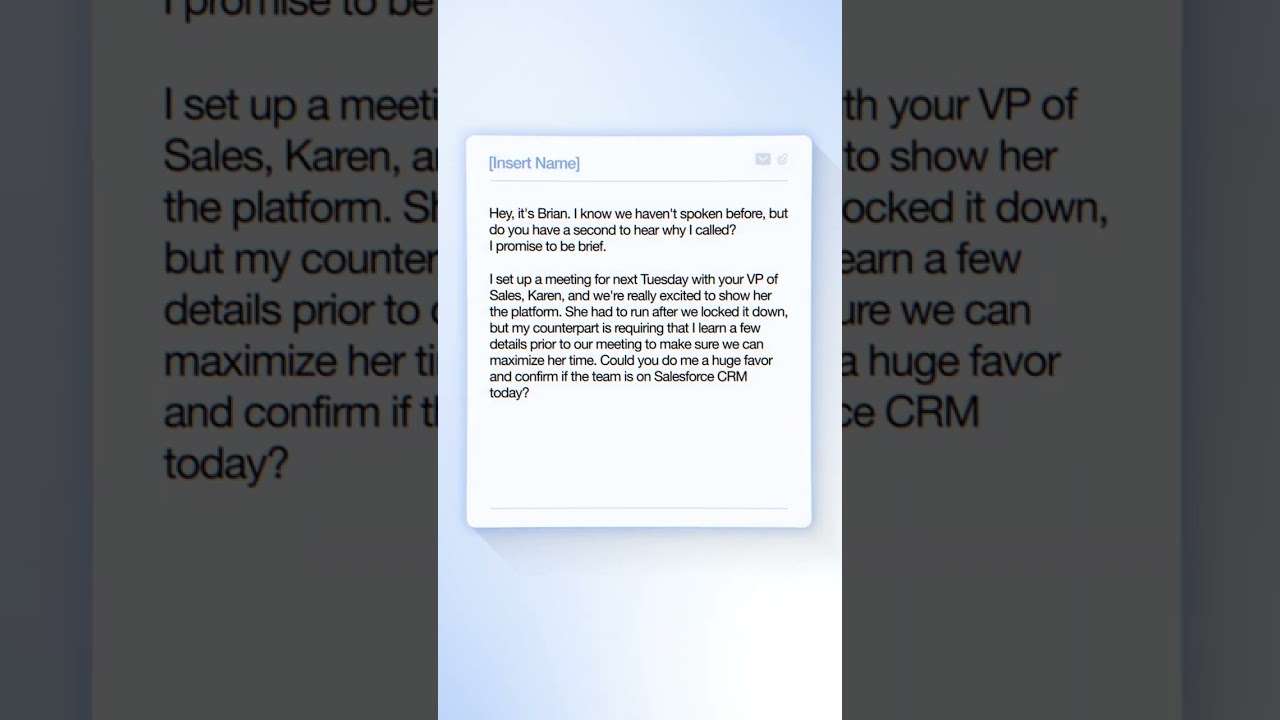
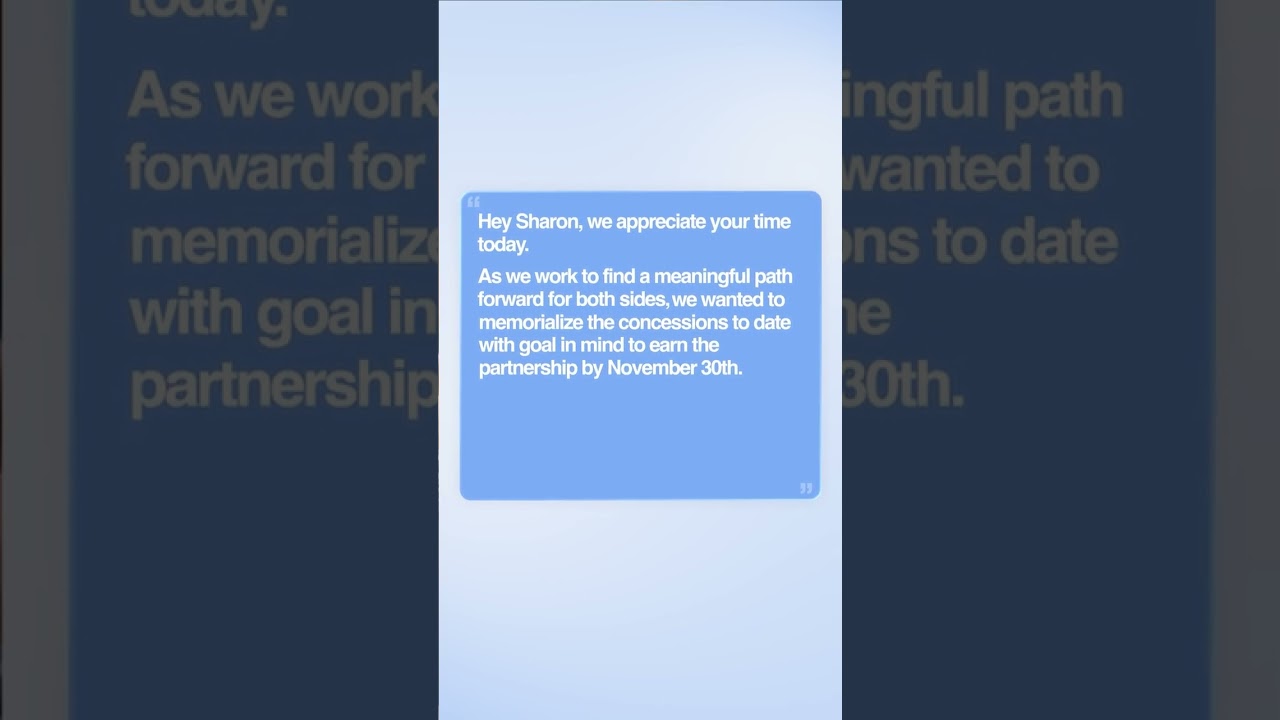

"We're happy with our current vendor" #saas #sales #techsales #objectionhandling