Learning Out Loud with Brian LaManna
Brian LaManna went from sales major at Indiana University to top 1% AE at Gong by age 27, hitting President's Club five times. He credits multi-channel prospecting and discovery skills, shares wins and losses on LinkedIn, and built Closed One, a newsletter and resource platform that hit 7,800 downloads in its first test.
Questions this video answers
February 23, 2024
Five times
2018
He forecasted almost $100,000 to close and ended up closing $0 (first time zeroed).
About 7,800 downloads in 2023
Chapters
Social media in general is a glorified trophy case of you're only going to post when you make club or you have the record breaking month. I love celebrating those wins as much as everyone else and do enjoy sharing those as well. It's only fair if I share the lows and the top months as well.
Welcome to Rep Matters, a podcast for sales professionals who are eager to build their business acumen and become top performers. In each episode, your hosts Zoya Zagelbacher and Caroline Jones explore the real life experiences, obstacles and triumphs of salespeople. With an emphasis on authenticity and storytelling, listeners gain valuable insights into the strategies, mindsets and skills that drive success in sales. Let's get started.
Hi everyone, I'm Zoya. And I'm Caroline and you're listening to Rep Matters. This episode of Rep Matters is brought to you by Marketers In Demand. Marketers In Demand has in depth videos, podcasts and articles from some of B2B's top in demand marketers. Today we are joined by Brian Lamanna. You probably know him from LinkedIn. He's joining us from Gong and he has a very impressive track record. At Gong, he's gone to President's Club five times by the age of 27. Just a little personal fact there. And at Gong, he has finished in the top 1% of Gong AES since the last two years. Outside of work, Brian lives in Chicago, loves all things sports. I hear he likes football, ufc, basketball, college deal. I don't know, we'll have to, we'll have to dig in if it's NBA or college and go into restaurants. So welcome today.
Brian, thanks so much for having me. I'm excited for it.
We're really excited to dive into your career all the way back to when you ended up in sales. How did you originally get started in this career?
Yeah, that's a great question. I. I went to school at Indiana University and when I applied original, I liked the idea of being in the business school, but I really had no idea within that umbrella of business exactly what I wanted to do or be. I actually set out with a marketing degree. There was a friend sophomore year that was a part of my fraternity that joined what was called the sales workshop at the time and really encouraged me to come on a Tuesday night one week and basically sit in on a session, hear from one of the sales professors about this, you know, basically club. And I ended up joining it and a year later I actually switched my major to sales. So I'm one of the very rare folks that Actually graduated with a degree in sales. What I will say is that even though I was a sales major, it's not necessarily like they're teaching tech sales and how to use a CRM and how to cold call. It was more relational, more foundational, related topics, more like outside sales, as most people would describe it. So I actually just got really fortunate. I went to a career fair senior year and I ran into a guy named Sunny that was at a booth and he told me all about the company he was working for, which was Bright Edge. And I always thought software and technology and AI and all that stuff sounded really neat. And I ended up applying for the job. And I started as an SDR at 21 years old, right out of school.
The rest is history. Do you keep in touch with Sunny?
I do, I do. He's. He's a close friend of mine.
He.
He became my SDR manager at Brightedge and then he went on to, to take a few different roles. Most recently he went to a company called Guru, which a lot of folks in SaaS might be familiar with. And funny enough, they ended up buying Gong. And I helped the Gong AE get connected with Sunny. So it came really full circle, getting to almost help sell to him in a way, about five years. Five years later.
That's awesome.
You got to grow up, I guess, a little bit at Bright Edge. Can you tell us about your growth in the sales career path while you were at that company?
Yeah, I started as an SDR in 2018, and at the time it was pretty, pretty activity driven in terms of, you know, making a hundred calls a day, a lot of email activities, things of that nature. Built a lot of grit, faced a lot of rejection. I actually lived at home with my dad that first year out of college when I was working for Bright Edge as an sdr and my dad liked to play a game every time I came home because he could just tell from my face and my attitude and mood whether I booked one opportunity that day, two opportunities, or zero based off of my mood. And I think it's really natural when you first start out in sales. Like, there's definitely the highs and lows, but it takes a little bit of time to get acclimated. And for those who are ultra competitive, like myself, I didn't want to, you know, show up to work and book zero meetings on, on the day that, you know, that is my job and that's what I'm paid there to do. So it was a lot of growing up in terms of just kind of handling the Highs and lows, trying to stay even keeled and continue to get better each and every day.
I love that your dad sounds awesome, but were there any particular lessons or ways that he helped you learn resilience during those years?
I, I think he was a nice like sounding board in a way, like everyone's. I shouldn't say everyone's, but I, I'm very fortunate that my parents, I definitely cared about, you know, what I was doing post college and work and wanted to hear about my day, whether it was a bad day or a good day versus, you know, when you're getting together with friends, you very infrequently want to talk about work or something like that. So I think in a lot of ways he's helped me kind of like vent whether I was having the best week of my life or the worst week of my life. And then he was able to just give a little bit of like more third party advice from someone that had, you know, been through the highs and lows in a different career as well. And just little tips on, you know, how to manage it all the good times, the stress and everything included. Part of it just picked up little tidbits, you know. His advice to me was always like, if you're having a bad day, like don't, don't afraid to just cut out a little bit early. If the team and organization is cool with it, do whatever helps you kind of reset and kind of gets your energy back. And for me that's, you know, watching a favorite TV show or going out, working out and exercising. Just doing something to get your mind off of sales. I think a lot of folks in sales know that there is literally always something you can be doing, prospecting, new accounts or thinking through deal strategy. It's just really important to make sure you're able to unplug as well because if you're always on, you will burn out quite quickly.
Yeah, really good point. So that's kind of cool because I feel like probably to a lot of people on LinkedIn, you've maybe taken on that role for them. Now you've got, I heard you hit this year, 50,000 followers. I think I saw you post. That's a lot of people looking to you to, to understand, you know, what makes your sales process so great. Also a lot of like the mindset pieces. But let's start at prospecting just because I think that's a fun one to go with the foundation. If you had an extra hour in your day, what skill would you practice as it relates to Prospecting.
It's a really great question. I think when it comes to prospecting I try to take a really like multi channel approach in terms of how I go about in terms of like a lot of my outreach. So I try to not just rely on like one channel like oh, I'm only good at cold calling or I'm only good at cold email or only good at LinkedIn. And the reason for that, I remember our, our CRO at Gong that started about six or seven months ago. Shane Evans, he visited the Chicago office and, and one of the questions that we all asked him was what's the type of outreach from an SDR or an AE that catches your attention and actually gets you to reply. And his answer really just stuck with me because I, I thought it was unique and kind of putting myself in someone like his shoes that's very busy, very overloaded person. And what he shared was he never picks up the phone from any number he doesn't recognize. So I was like okay, good luck there. He shared he has about like 12,000 emails in his inbox unread and he doesn't think he's ever responded to a prospecting email over the last year. So I was like okay, that's, that's good to know. But for him, something he always responds to is when somebody sends him a gift in the mail. If you receive something is he feels like there's some level of reciprocity where like somebody put the time and the effort in. And I share that story just because I think every prospect that we deal with is a little bit different. Like some people will answer random numbers, some people are actually checking their email and are inbox zero type people that are going to give every single one a hard look. So I think it's important to take like a really full approach from you know, hitting folks on multiple different channels in terms of where I would spend that time. I think something that I would like to do now that our fiscal ended yesterday and we're in the new year. I always like to analyze what like top performers are doing that are leading the ranks in terms of like net new pipeline generation and just start to study like how they got those opportunities and exactly what they did. I definitely have my own approaches for like cold calling and cold email and LinkedIn but just learning little nuggets or little tactics that maybe I haven't thought about yet and going directly to the source of those who are excellent performers, I'm almost always able to pick up a couple different things. Would love to spend Some time kind of studying them.
Yeah. Smart.
You guys have the. Probably the best software in the game to be able to study top performers. But I think everyone wants to study whatever you're up to, Brian, which now they can do with closed one, which we'll talk about later. Yeah, thanks for answering that. I'm so curious because you said there's always something salespeople can be doing, so it's interesting to think about how you'd fill that extra hour. And prospecting is one of those things that is always necessary. But what about for you? What's the skill that you have to kind of keep learning? What's something that maybe has taken a while to sink in or that you're still learning new ways to implement?
For me, probably discovery one, because I think it's the most important skill in sales, whether you're an AE customer success manager. Str. I'm always learning different ways to like, frame questions, come with more of, like a point of view, do more research ahead of the call in the first place and just picking up on little questions. How somebody words something that has a really, really big impact. I'm constantly trying to analyze, like, my own questions and how I'm asking them in demos and in negotiation and early stage and trying to find little tweaks to make based off what I've seen be successful.
Yeah. What works? Some things don't change, but in other ways, the cold outreach best practices, even, I think probably some warm, warmer outreach best practices do evolve. You know, people, we were all doing like, Voss mind tricks a couple years ago, and now everyone's used to hearing that on the phone, so it doesn't work so well. The beauty of it is that it's always changing and everyone can always learn some new trick. They're open to it.
Yeah. Can I. This just like a personal take on it, I think like the. The tricks or like there's like the tricks and then there's like, I don't know, foundational, like Sandler stuff, for example, has kind of just been like, recycled, you know, but like, it. It'll evolve. It'll be like the same. Same thing, but it'll kind of have like a different spin on it. You know, Like, I feel like even Chris Voss was very, like a lot of things were. Were similar to what you learn in Stanley. Right. But it came from this angle of like, here's why you do it. Um, here's like, I don't know, like a very, like, tactical way to do it. I feel like. I feel like a Lot of the advice is always like, very similar. Just it evolves for like the style of the times.
Yeah, fascinating. Brian, can we go back before we move on to your career path? Because I know there was a time where you could have pursued management, but you stuck it out in an individual contributor path. What was going through your mind as you were making that decision?
Yes. So as I mentioned, I started at Bright Edge as an SDR and was fortunate to get promoted to AE in a little less than a year. Um, I was an AE there then for a little over two years and was fortunate enough to win President's Club twice. And the model at Bright Edge was pretty much like, hey, among your team, whoever the top performing AES are, look to promote them into management so then they can coach their skills right to the rest of the team and these greener reps potentially. And that, that was the path a lot of other reps went.
So.
So I think seeing, you know, people I looked up to at the time when I was an SDRA kind of go that path, I think it made me feel like, oh, well, that's the path I'll go if I'm successful as well. But I think it's really important to just know and understand, like in sales, while there might be like a ladder path to, you know, from SDR to Chief Revenue Officer, very infrequently or almost never candidly, is it that direct linear path, nor is that always the best path as well. So a big consideration point for me. They approached me with becoming a manager and I was initially very excited. I was, you know, just honored that my name was in the mix for that. And I began like a three month training program where I would basically help a rep who's an AE sit on some of their calls, give them coaching, give them feedback, and at the end of the three months, I would get promoted if all was well and I got basically the thumbs up from everyone involved. About two months in, I realized, like, hey, I'm 23 or 24 years old. Like, I've only been selling for two years. While I was fortunate to find a lot of success in my two years of selling, I felt like I had a lot more to learn from the AE perspective. And the AE line that only ever sold at one company, only ever sold in one or two segments. So from my mindset, I was like a 7 or 8 out of 10. And before I went to coach someone else on my 7 or 8 out of 10 skills, I really craved to get to that, like 10 out of 10 if it's possible or just continue to learn and like gain new and different perspectives. So when I was two months in and starting to kind of contemplate a lot of those things, actually my current manager, Sadie McGromly, direct message me on LinkedIn basically being like, hey, saw we were connected to these different people at Bright Ed saw you were ultra successful. Like any chance you'd be open to taking an interview? Like, we have an opening in the commercial Org. And I actually ended up taking the position after, you know, different rounds of interviews and getting it. But it was basically a step how a lot of people would define. And I went from basically being an enterprise seller at brightedgen and instead of going into management, I took a role that was small business selling at Gong. And it was one of the best decisions I ever made. Taking that small step forward to ultimately take a lot of steps, or sorry, taking a small step backward to ultimately take a lot of steps forward. Because the amount I learned and just grew as a person, as a seller at Gong the last two and a half years has been. Has been amazing.
Yeah, I think a lot of people see the market that you're selling into as a mirror for their own growth and their own ability and it's such a false impression of what could actually be possible. Do you have any advice, having gone through that, for someone who's maybe selling into SMB or mid market and is evaluating moving into enterprise?
Yes, I think first off, just a bit of a mindset shift in terms of at least the way I was. Like when I was an sdr, I was dying to get to a senior SDR position. When I was a senior sdr, I was dying to get to being a small business ae. And when I was a small business ae, I was dying to get to mid market. I think it's important to note, like, there'll always be a quote, unquote, next role or a promotion or however you want to define it. So while having goals is really great, don't forget to just enjoy the present and live in the current role and position as well. Because the truth of it is, like some folks are better at selling an enterprise versus small business. And you can make a really good living in any of those positions or even making a completely different pivot to enablement or to operations or to customer success. So just don't be afraid to like, say, hey, this position here that I'm in, in mid market, I'm finding a ton of success. I absolutely love it. And this is, you know, beyond what I could ever imagine that I, you know, have been able to earn or what I would have thought I would have been able to earn, you know, three, four years ago. And maybe that spot is perfect you, for you to continue to ride out versus just continually looking for that next position. In terms of evaluating that next position, I think just like trying to, you know, I work at Gong, obviously, but trying to listen to calls, trying to get like an actual pulse as like what it is like to sell into that market before just going into an interview or setting out, setting out goals or just speaking to other sellers that are in those shoes and hearing like what makes them successful, what their day to day, week to week look like. Because at least what I found, like if you're not really enjoying your day to day or week to week as a seller, like, you're pretty unlikely to find success because it does take a lot of hard work.
Yeah, absolutely. Yeah. It sounds like you really prioritized learning more than anything throughout your career and it's, it's. You've learned a ton and it's taken you to this point so far. So I, I think that's a really good point. It definitely connects with me. I'm one of those people, right, who took a curve off the, the sales path to enablement still in the sales world, right, but, but enabling sellers rather than selling. So that definitely connects with me. And I remember thinking very similarly, like what's, what's, what will people think, number one. So congratulations to you for, for overcoming that. Right. In terms of optics. And I remember like really doubling down on, on my decision and it sounds like you did as well. Um, I want to talk about the content that you produce. So we touched on, right, really big LinkedIn following, huge value add to the network that follows you. I'm really curious of all of the content that you've produced over the years. If you could name like the, the top in like the top 10 best performing content, what was it and why do you think people were so responsive to it?
I'd say people are. And this isn't a negative thing. People are selfish, right? They want to, they follow someone and are taking the time to scroll their LinkedIn feed and pause and read through it for two or three minutes. They want to be able to like easily digest something and apply it hopefully right away. A lot of my best like performing content in terms of like impressions or likes or reshares is the type of content that includes like a template or a list of the best discovery questions, task by stage. It's very actionable. It's almost copy and paste or like easy and quick to install. And that, that's a lot of the feedback I get over direct messages as well is that I do try to remove a lot of the fluff in terms of just my post and my content. Keep most of it around sales in general. So I always try to make sure that like every post can have some sort of like actionable takeaways kind of my a guiding light for what to create.
Yeah, love it.
Yeah, you have such a good point. People want to be able to take something, use it right away or else we probably should get off LinkedIn and stop scrolling instead of getting back on the phone. But Brian, you're what I also love about your posts, and it's the opposite of fluff, is how openly you talk about losses and disappointment. Is that tough for you to talk about so publicly?
It's sometimes tough to write those posts. But no, it, it, it's not. And, and the reason it's not is because I just don't think it's genuine to be the type of person that is only posting and sharing all the wins on social media. I think a lot of social media in general is, you know, a glorified trophy case of you're only going to post when you make club or when you, you have the record breaking month. So I think it's really important if you are gonna celebrate those wins. And you know, I love celebrating those wins as much as everyone else and I do enjoy sharing those as well. It's only fair if I share the, the lows and the tough months as well. And I think the framing I've kind of positioned in my head is that my LinkedIn feed and the content I create is almost like a public journal in a way for my thoughts and my lessons and my takeaways. Whether they're super positive or super negative. It's only fair to share both sides. So for example, while I had a record breaking December closing nine deals and I really loved writing that post and some of my takeaways, I also shared in November that I zeroed for the first time in my career. I forecasted almost a hundred thousand dollars to close. I closed absolutely $0, which I've never done before. It sucked. It was humiliating. It wasn't fun to write. But I also took it as a time to reflect a little bit on like, hey, why did that actually occur? What could I have potentially done the months before to get in front of that? What can I take moving forward into December and into next year to ensure that hopefully that doesn't happen again. So just trying to be honest and trying to be real and I think that's what people appreciate. It's humans following other humans on LinkedIn and maybe 5% bots. But people want to hear the real stories.
They do. And that is the truth of a top performing rep. Even the best among us lose and it's all part of the journey. What are some ways or one way to start that having a presence on LinkedIn and using this as your career journal, if you will, made you a better seller.
In a lot of ways that people wouldn't expect? I think a lot of people assume incorrectly that I post on LinkedIn and I do what I do as a way to like generate leads or inbound interest for myself that I can turn into deals or opportunities for better or worse. Our revenue operations at Gong is unbelievable. They have almost every, every single account in Salesforce that has 10 or more employees. So in those cases where somebody does direct message me or reach out, what ends up happening is I have to search their name in LinkedIn, figure out who the account owner is and pass it on because we're not going to you know, steal accounts from somebody else that rightfully owns that. So it's not for any of tho those reasons. However, I think one way it has really helped me is just formulating like my thoughts and getting really getting strong at writing and like articulation. Writing is so critical in sales and it's something candidly I never thought about when I started or even like three years ago. But everything from like email prospecting and formulating like really concise value driven messaging to how you follow up in deal cycles, being able to pull it out, make it really clear the value they saw, reminding them next steps to even like writing proposals and business cases. There's a lot of writing involved in sales and it's like a really under taught and under enabled per se like skill. So just being forced to like write every single day where you know, maybe I have this idea for a post, you know, anyone out there listening does not write on LinkedIn. I challenge you try to think of an idea for a post and then formulate it into like a really value driven LinkedIn post that has a good hook, makes people stop, makes people think, have a takeaway. It's challenging and it definitely takes time and just like a lot of practice involved. So you know, building that in as a weekly practice I think has really helped me and translate that into sales as well.
Yeah, I love selfishly that you said that, because writing has been on my mind. Zoya and I have talked about it on the show before, and I was just listening to Jen Alan Knuth talk about how writing is the process for her about or the. The process by which she figures out what she doesn't know. And what a fantastic skill to practice as a salesperson, I think, or any kind of professional. Yeah, I did not expect that answer, Brian. Thank you for that.
I. I love that answer too, because I feel like we're getting into this world where there's AI and people love it or people love to hate it, but either way, I feel like in the last year I've heard so much of like, AI is going to like, ruin it for writers. Like, people don't need to know how to write anymore because AI is going to write everything. And I actually think it's the complete opposite. And I think that people's writing skills are at risk of atrophying if that is how they approach it. So I think that's a super important point as well. And Caroline, I know you love it cuz you were like such a writer. Caroline and I went to high school together, which you probably don't know, Brian, but I remember Caroline's a bookworm.
Ah, well, were we in AP English together, I wonder. Probably.
No, I just know that about you.
No. Okay. Um, it's. It's so important. I think it's underrated too, Brian. It's one of those things that salespeople don't think about. But it's also a way that we can become better communicators overall.
Yeah, there's a. I follow Jen, who's amazing, and then Nate Nasral as well, has this like, unbelievable, like one pager template for a business case. And Caroline, exactly your point. I do that like mid cycle and I start to build that out on my own as a way to identify what gaps I have in that. In that deal. Like articulating my point of view on like, why they would want to buy Gong. And it makes it really clear when you have to write out that, like, narrative that's really concise and articulates it all, like what your point of view is and what aspects are missing. And then I'll leverage that to fill in the blanks. Right. Work with your champion mid cycle, who hopefully is already fan and bought in, and you can just have a human moment with them as well. Like, hey, I've actually went ahead and put in some work to start to formulate a Business case. And I realized I hadn't yet asked, like, if you don't make this investment in Gong, like what is your plan for this year to help X, Y and Z? Just like little things like that. And I think people really appreciate and respect it, especially when you've showed them that you've put in the work and done that behind the scenes. But that process for writing for me is really, really huge. And LinkedIn and just being forced or not forced, but enjoying getting to post daily has really helped me and in a lot of ways that I did not expect. Whatever.
Yeah.
If it's hard for us, imagine how hard it is for our prospects. And they're not even the ones getting paid commission if this deal closes. Hopefully they're feeling some kind of pain if the deal doesn't close. Right people, but they, they find that hard too. They're. We're expecting them to write out a business case. Forget it. Also great reframe, Brian. I'm forced to write versus I get to write every day on LinkedIn. I love it.
Okay, so Brian, you and I both work at gong. I already have my own thoughts on what it's like selling to salespeople. But I want to hear from you. What's your favorite thing about selling to sales teams? And what's most surprising to you when you're talking to one of us but on the other side. So.
Every reason for why I came to Gong played out in my head perfectly, which I am proud of in terms of like being able to learn and grow. And it wasn't necessarily like why my, my, my theory why didn't line up. I think I thought like Gong, world class team, great sellers, all of that of course is true. But the aspect that's helped me learn the most and what I love about selling the revenue leaders the most is iron sharpens iron when you have to sell. You know, imagine your chief revenue officer or your vice president of sales and trying to hold like a 3 or 6 or 12 month deal cycle that might involve 20, 30, 40 meetings with them. They're really challenging people to sell to because their bar for sales is just an excellence is very, very high. And if you are a great seller and you're doing all the little things right with your preparation and follow up and positioning and framing, it'll really, really benefit you. But if you do miss the mark with them, they'll tell you you missed the mark. And I think I appreciate the directness, the candidness used to sell to marketers that maybe weren't Quite as direct to say the least. So I really appreciate the directness and I do know as well that like you know, again, imagining selling to your chief revenue officer, he or she is not going to take 3, 612 months to spend with you if they're not very serious about the evaluation. So I think a lot of my time does feel very well spent because they're, they're not playing games. Their time is extremely valuable like any other Persona or profession, of course, but I think their bar for excellence in taking meetings is just at the tippy tippy top. The second part of that, for what.
Do I not like, surprise? What's surprising about it? Like when you're talking to a salesperson, maybe you wouldn't have expected it before your experience at Gong.
What I wouldn't expect is that a lot of like lower level, say an org has a Chief Revenue Officer, a VP of Sales, a Director of Sales, a manager sales for whatever reason, like a lot of directors of sales and manager of sales. Like they, they'll almost tell you that like I'm the decision maker here, like I'm the one calling the shots and like they should know because they sell as well. Like they're not the decision maker, they're not the signer. But there's a lot of like blockers involved in sales. I think probably because it's just an ego thing of like thinking that they have the power and they have the control. But irony sometimes is just like too much for me to contain myself when I see that they have three levels above them and you know, don't have a budget or the authority to sign for something that they're saying that nobody else has to be included or you know, they trust my decision fully. Just little things like that I find pretty ironic. There's, there's nothing you can't work for.
It's a good one.
How do you, in a case like that, how do you like triangulate the truth and figure out how you're going to get the deal done?
It starts with the pre call prep piece because every organization is different and truly like sometimes a director of sales or even a manager of sales, like they, they could be the decision maker if they report directly to the CEO and there aren't those levels between. So I think it's really important to just like something I do before every first call is I look through LinkedIn. I'll write down all of the names and titles of the roles that I would expect to be involved in this deal cycle at some point if it continues past that first call and it takes a bit of time. But I'm going to write down those, you know, five to 15 names because I want to start to get a sense for like their organization, like what their titles actually mean. Because sometimes even a director of sales could mean you're an individual contributor or it could mean you lead a team of like 50 different reps. So it's just important to have some of that context from there. I feel like I know a lot of the truth already just from doing the research. And then I think a lot of it's like the framing for them where I'll say, oh, that's like, that's awesome. Like that you're the decision maker here. Like, are you able to sign this? Like, I know you're very excited for it. So just kind of reversing them and getting them to kind of piece together that like, there would be critical other steps that would have to happen if they move forward versus you just straight up telling them like, no, Caroline, you're not the decision maker. I saw X, Y, Z is there. So just asking them kind of questions to guide them to that conclusion, to not, you know, unnecessarily cause friction.
We are, we're by no means that time, but we're, we're starting to get to that point. So I definitely want to get to what I know our listeners are probably really excited to hear about. Closed one.
Woohoo.
What's that all about? Yeah, I was super excited to launch that I did just about three or four weeks ago to give some quick pretext in 2023. I realized like, hey, the LinkedIn posts are amazing. But there's also something, you know, when you're on like an O, like a rented audience like that, you're at the fate of LinkedIn, their algorithm, how they style their posts. And I thought I had a lot of good ideas in my head that I could do like longer form posts and like even more actionable content. But on LinkedIn, I feel like it has to stay a, you know, a certain amount of length and a certain amount of words versus like an entire playbook of templates or examples or screenshots or things like that. So I launched in 2023 both like a newsletter and then these different resources. But I didn't have the expertise behind like building a website. So I just used like a free marketplace to kind of like test out like, hey, is there demand for this before I put the time to learn how to create a website and development and all that stuff, like it was almost like a proof of concept in my head to see if it was worth, like, further exploring. And 2023 was amazing. I think I got around like 7,800 different people downloaded, whether it was free or different, like paid resources from that marketplace. So I knew in 2024 I was like, you know, this concept can definitely work. There's a ton of demand for sellers that are hungry to, you know, they're either breaking into tech or they're up leveling within their game. And I wanted to build more of like a brand around it. I always love the term closed one just because, like, sellers know what that means. But like, if you asked, you know, my dad what closed one meant, he'd be like, no. Like, what the heck does that mean? This is something that like sellers know. You know, when you close a deal, that's the stage you flip it to. That's what you move it to. So I built out that website and I launched my first product two weeks ago around Systematizing Outbound and having more of a daily, weekly, monthly operating rhythm to how I prospect everything from cold email to cold calling to Objection handling to LinkedIn to voicemail, subject lines and really everything in between.
So exciting. What are some of the early results that you're seeing and feedback that you're getting from users and sales leaders?
It's been. It's been unbelievable. I didn't fully know what to expect, set a goal of getting a hundred different sellers to download or purchase the Systematizing Outbound Playbook. And I far exceeded my expectations. As of yesterday, I think I was at around like 550 different sellers that took advantage of it. So way past my expectations. And the. I think what made it just super gratifying too is the amount of folks that have taking the time to email me or LinkedIn message me. About 95% of them were just like over the top. Like, this is amazing. Here are my favorite parts. And then some sellers even went like above and beyond was like, hey, I'm really interested in this topic. I loved all 51 pages. But like, if you added another page around X, Y and Z, like, and that's a. That's the beauty of like a digital product. Like, I can continue to make updates and enhancements and things like that. So I really appreciate the other people too. That just gave me like further good ideas to, to make it even better.
That's awesome. So, Brian, we like to. Last year we had two closing questions that we would ask everyone. This year we're trying a new One. So I think you will be the first person to air answering this question. Um, Caroline, I'll let you, you have the honor.
Thank you. So, Brian, five years from now we see your name in headlines for following your passion and doing something big. What's the headline?
Brian works for one company but has two jobs.
Tell us more.
I, I see a lot of other creators out there I think have aspirations to move away from their full time job in SaaS or software and kind of start their own thing. I love what I do. I'm definitely very fortunate that I love selling. So I think I'll always be in like SaaS or software sales. But as I grow and really expand. Closed one. I almost see myself as having like two full time jobs. Just one I'm working for myself and then the other I'm working for that company. So that was kind of just a whim, but yeah, that's, that would be my goal. Kind of having like two, two full time jobs in essence.
Love it, love it.
I love it with the whim too. Like we don't prep, we don't prep folks for it because it's like, I don't know. Yeah. Come up with it on the spot or, or maybe like put a lot of thought into it. Um, it sounds like you said on a whim, but it sounds like you've put some thought into this one.
Not, not the headline, but I, I put some thought into like where I want to be, you know, two, five, 10 years.
Brian, some constructive feedback it is going to be. Brian works at one company but has two jobs. Llama emoji, right?
Yes. The llama emoji will have to be have been.
Well, we appreciate you coming on today, Brian. We've learned so much. It's been a blast. Thanks for all you do with the LinkedIn community and best of luck this quarter at Gong and with close one.
Thank you so much for having me.
Thanks, Brian.
Thanks for listening to this episode of Rep Matters, the podcast for sales professionals who become top performers. If you enjoyed this episode, make sure to follow Rep Matters wherever you listen to your favorite podcasts or access all episodes at marketers in demand.
Com.
Repmatters. See you next time.
More from Brian

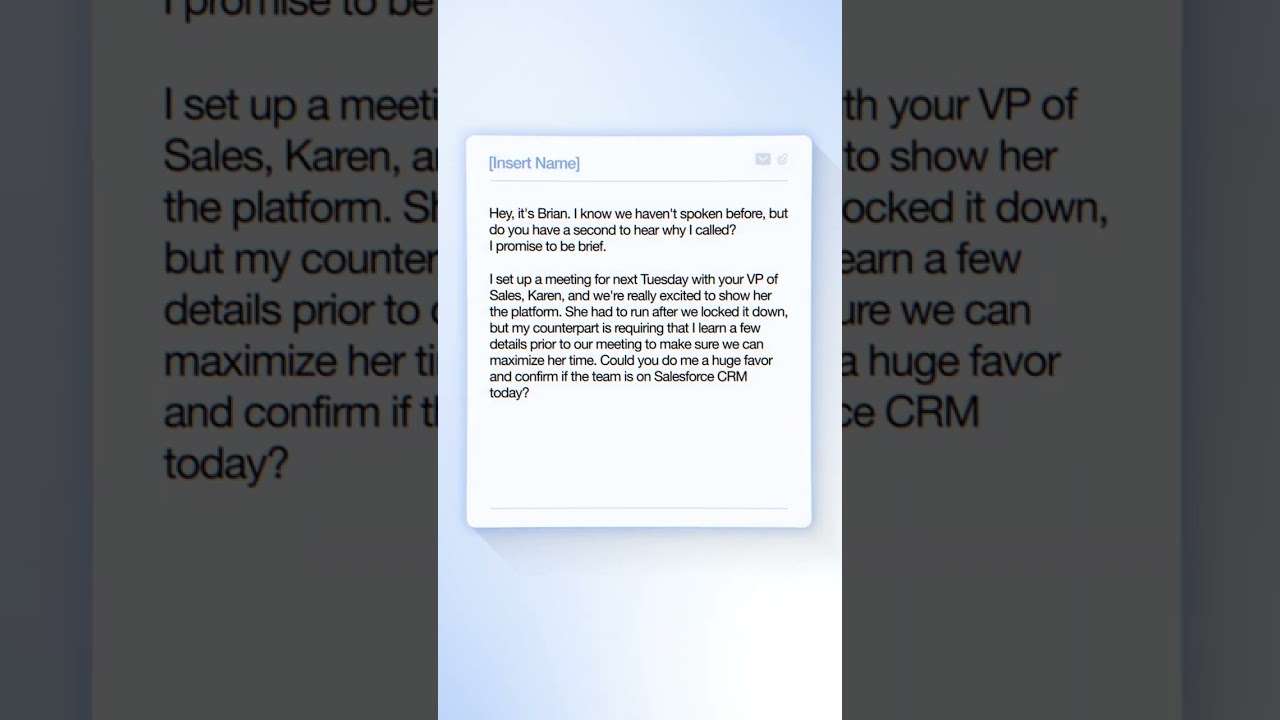
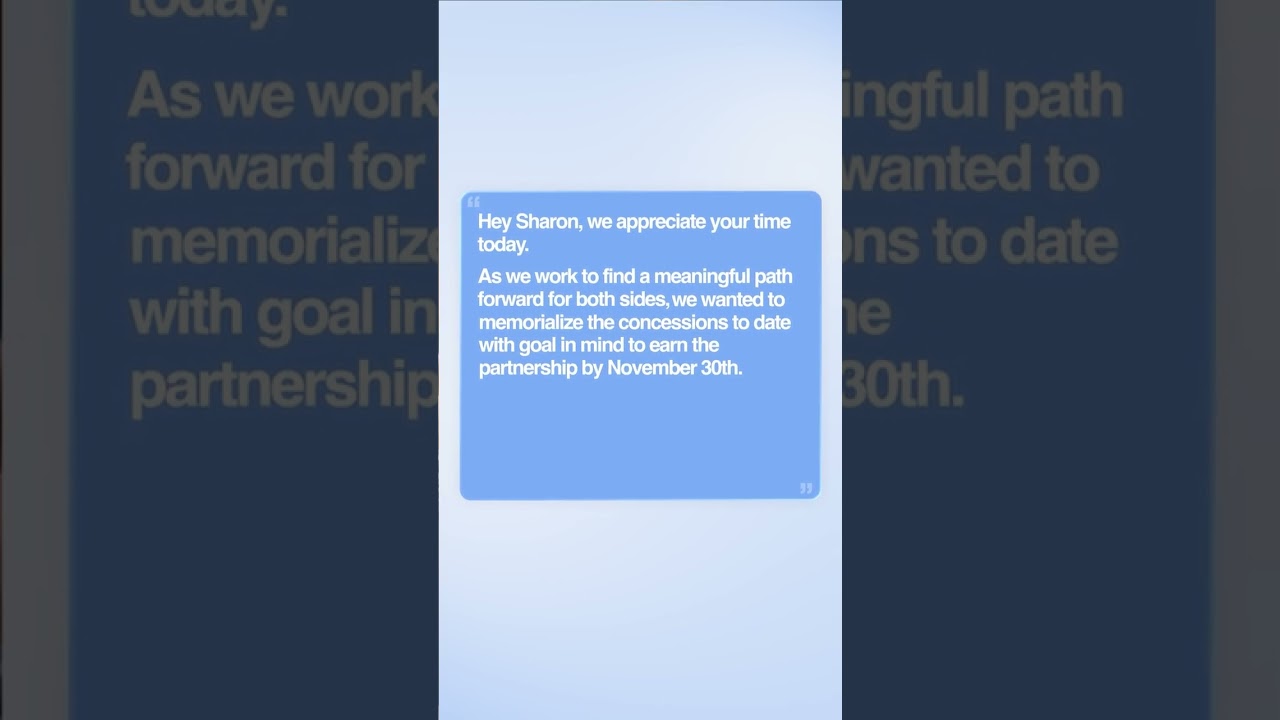

"We're happy with our current vendor" #saas #sales #techsales #objectionhandling
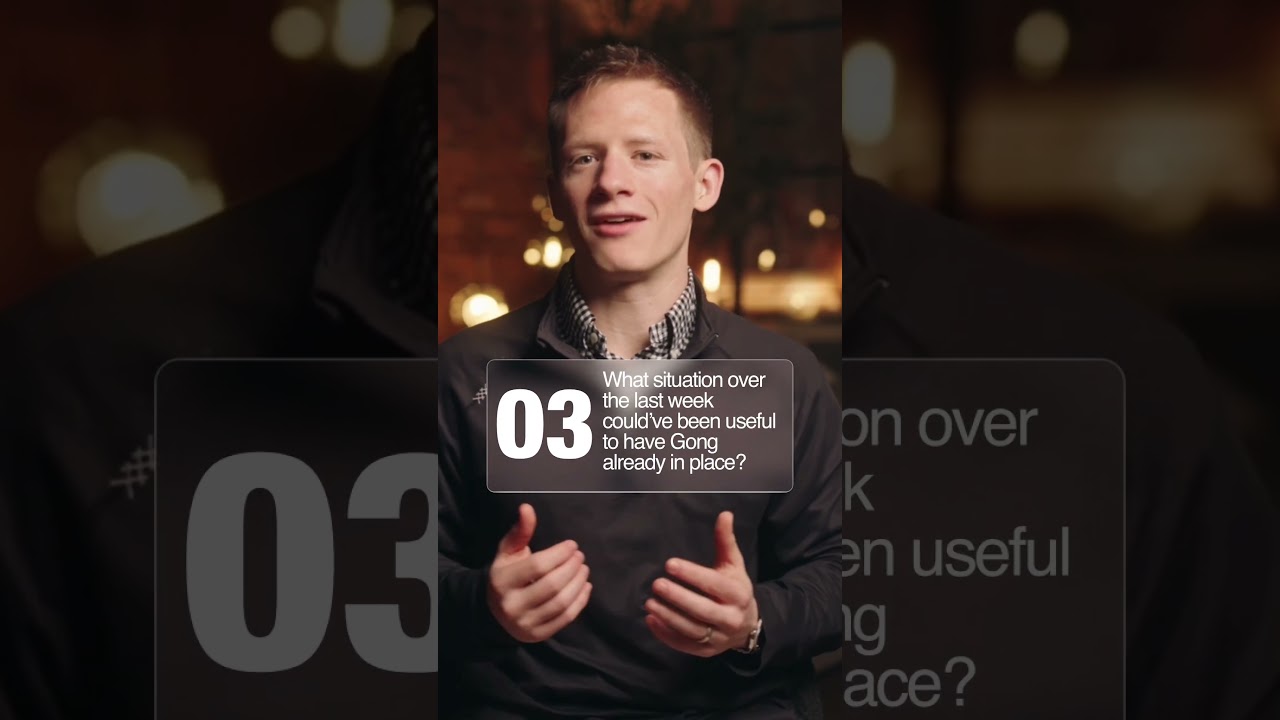
Deal Cycles Happen Between Meetings... What Questions to Ask #saas #sales #techsales #prospecting