Lessons from a World-Class Seller - Brian LaManna
Brian LaManna, an account executive at Gong, talks about treating your sales book like a business and owning your results. He emphasizes daily pipeline creation, personalized outreach, and automating admin work so sales and RevOps can actually collaborate instead of fight.
Chapters
You're listening to RevOps FM with Justin Norris. Welcome to RevOps FM everyone. So I've never been a seller officially, but I did lead a pre sales consulting team for a while and I got to ride along on lots of sales cycles. I even got some variable comp for a bit and that was fun. And I worked with a bunch of different sellers. Some were good, some not so much. And there were one or two that were really just next level. They had consistently better results, they brought in bigger deals, they closed accounts no one else could and they just seemed to get it in a different way. They were switched on. You didn't need to tell them what to do. Whatever challenge you threw at them, they found a way. It seemed to me like they were just built a little bit differently than other people on the team. And so I've always been curious about what makes those great sellers great, what makes them who they are. And to help answer that question, I am joined today by a true superstar of the sales world, Brian lamanna. A strategic AE at Gong and founder at close one. Brian is a five times President's club winner and has nearly doubled or even tripled his quota every year at Gong. He's also one of the top sales voices on LinkedIn. You may be familiar with him sharing tons of frameworks, tips and best practices. So, Brian, you're going to reveal all the secrets of sales for us today and I am super excited to have you on the show.
How long do we have? I'm super excited. I appreciate you having me.
Justin, maybe just a first question and in some ways it seems obvious, but I find the obvious questions reveal a lot of interesting truths. How do you think about your role as a seller in the revenue process? Marketing, sales, customer success? What is your job in this pipeline?
Yeah, I think first and foremost I think of my job like internally as I'm the CEO of my own book of business. That's the mentality I want to have. So if I'm given a certain account list, say it's 300 potential new logos, maybe some customers, even though I'm quote unquote, just an account executive, individual contributor, not a director, VP or C suite, I really take the ownership that, hey, I'm the CEO of all those accounts in terms of how I run my business. So that's kind of the internal framing, in terms of the external framing, I think of my role as a seller and other sellers roles as well is really just you are there to give a customer an exceptional experience as they go through their evaluation. There's two scenarios. One, they either have an active project or initiative around this and they're probably looking at you as well as some other competitors and it's your role to give them an exceptional experience. Point out why customers would choose you, why you might be a unique solution to help solve their business. Or maybe it was created via Outbound. They've never considered or even heard of a solution like yours before and it's even a further step back to really help them uncover maybe some challenges in their business that they've never thought about in a certain way. Help educate them on the market and help educate them on your solution to see if it could be a potential so depends on internally versus externally. But I'll say internally you're the CEO and externally you're really just an educator and your job is to give a world class customer experience.
I want to give a shout out to the sponsor of today's episode, Knack. You know I love marketing automation software but but let's be honest, the email and landing page builders are usually terrible. You can't make it nice without a developer and marketers are going to find a way to break things or go off brand. You do not have time for that. So Knack is totally different. You set the guidelines and then give your users a building experience that's slick, modern and beautiful. When they're done, everything goes to your map at the push of a button. And don't worry, it supports global teams approval workflows, it's got your integrations. So head on over to RevOps FM NAC, that's K N A K and get a special offer just for my listeners. It's a really interesting way to position it. And when you say selling to the average person, they think of somebody convincing persuading, like you're really trying to sell me on this. My observation is that often actually doesn't work well, at least in the world of B2B sales.
I definitely don't think of my role as convincing. I think sometimes there's areas of learning about their business and offering maybe a point of view that they've never considered before or how a different customer is thinking about it that you've spoken to recently. But I'm not really going into the purpose of hey, how do I convince them to buy this product? It's really true that I'm trying to understand about their challenges, their business, their unique setup, how they're trying to solve for some of those issues today and then educate them around our solution and give them all the Best information to make a decision if it's worth further exploring.
I find a lot of people are inherently defensive of a sales process. I know I often am as like a buyer, you know, because you, you come into it and there's almost this dance that you do between buyers and sellers. Do you have any ways that you sort of diffuse that as you start a new relationship with a buyer?
Yes. I think a lot of it comes back to not trying to fit the buyer into your rigid sales process of, hey, this is step one, this is step two, this is step three, which really makes it all about like the seller and your company. I try to go into every conversation thinking of potential next steps that aren't just a value to me as the seller, but are a value to them in their journey of where they're at within their process and what I've learned. So I think the way I try to always think about is just a small example. But if I had a meeting with you today, Justin, and we walk through a demo, instead of saying, hey, our next step in the process is to get your vice president looped into the conversation. That's important part of our process to get exact buy in. That's all about you, right? As the seller, you want to make sure you're framing things more for them and just the little verbiage really matters. Hey, Justin, we're super excited to get your buy in. I'm glad you're really excited about the tool. I know you mentioned earlier, someone like your VP would be a really pivotal stakeholder in making this decision in addition to yours. How could we earn her perspective? What are your thoughts on that in terms of a way to. To further this eval? So just little framing like that and making it more about them and the buyer at the end of the day versus like your sales methodology or your sales stages and your CRM and what.
You just said makes total sense to me. And yet you know, and we'll get a little this when we talk about the ops side of things. But there are framework are playbooks that people expect you to follow. I've noticed this about good sellers that I've worked with or even like really good BDRs. If there's a step that isn't quite right or like a subject line of an email that isn't quite right, they'll go around it, they'll fix it, they'll deviate a bit from the playbook. Do you sort of ask for forgiveness rather than permission about those things? If it's a step that's in your playbook, but it doesn't make sense for the buyer or how do you navigate those conflicting pressures?
It is tricky. It's a good word for it, I think with most things like kind of an 8020 rule on, like, hey, the framework's good in most situations, maybe 80% or 90%, but there's always those exceptions. So I think a lot of the frameworks and processes are still really good to have. I think especially as you continue on with your own sales career and you start to develop kind of a gut feel of like where things should head or what would make sense in terms of the logical next best step. I think you slowly start to trust that gut feeling more and more. And that gut feeling, what I've learned is that it's typically pretty buyer centric. At the end of the day, you have that gut feeling that maybe that isn't the next best step for them because of something they shared. And I'm really not afraid to veer away from our process. At the end of the day, I feel like that's the next best step to advance that evaluation for them.
Guess if you have a close one opportunity, then everything is forgiven. A lot of process deviations can be forgiven if you close the deal. You talked about intuition. That's maybe like a good segue into how somebody becomes great at sales. Or really the question I wrote down here. Is a good seller born or made meaning? Yes. Obviously everyone requires training, but do you feel that some people have that special knack, you know, the way someone's great at like baseball or hockey or any other discipline in life? Or is this something that anybody with the right sort of effort and training could acquire that level of proficiency in.
Sales Definitely have a strong perspective on this. That a strong seller is made, not born. I think you might have natural tendencies that you were raised with more business acumen or more curiosity. But I think when a lot of people think of someone that was born for sales, to me, I almost think of like a used car salesman type of person who's like a huge talker and really convincing and over the top. And at least in my experience with like B2B software sales and like more strategic mid market enterprise strat type deals, it's really not about how much you talk and how much you convince. It's about how much you're willing to learn, how much you're willing to prep, how much you're willing to listen, how much you're willing to learn from others around you that have done that role and have landed Successful wins and being able to study them and emulate what's working and what's not. I think like any other role like in sales, like when you first start as a sales development rep or you first start as an account executive, like if there's a hundred sales development reps and you just start like you're the worst when you start. That's just how it is. Like you don't come in there and immediately crush it from week one or at least 80, 20 rule. Right. 99% of people likely don't. You have to be okay with bailing, you have to be okay with continuing to go after it and get a little bit better every single day and just keep learning around those are from around you, you're not going to be good at it right away. And there's a reason why most revenue orgs as a result give most sellers a ramp period so that they can adjust over three months, four months, five months, and they don't have the pressure of quota from the second day start.
You mentioned about being okay with failing and it's interesting. One of my first jobs was at a company. They sold a hiring software. But baked into that software was a psychometric assessment that was essentially there to make people do a little test when they applied for a job. And then they looked at the qualities that they had and compared them to the profile of a great performer in that role. And so we had these like great performer, almost like archetypal psychological profiles of people. And for sales, one of the key personality traits that predicted success was recovery from setbacks with the that ability to fail. Do you think there are these sort of key attributes in your experience that people need to have? Intrinsically some people are not okay with being rejected, you know, having phone slammed on them, that sort of thing. Like maybe that's an obvious one. Are there things like that or others?
Yeah, I think sales definitely isn't made for everyone. I think if you're out there listening and you're not in sales, considering maybe a career in it, like the certain attributes that I think can make a successful seller is someone that's resilient, someone that's curious, someone that's a learner, someone that's willing to lean in and just try to get better each and every day, the highs are really high in sales. When you have a really great week or a really great month, you can earn a lot. The lows can be really low. I think most sellers at some point within their first few years are like why the heck am I doing What I'm doing, this is really hard. This is challenging. Am I made for this? And you get a lot of imposter syndrome quickly. So that's all natural as well. So it does come back to the resiliency. And I think there is a competitive nature to it that typically gets pretty well from ex athletes, whether it's even high school or middle school, just being able to compete with others on your team. But at the same time, you're one team. You're all kind of marching towards the same goal of success. So it's a challenging question, but I think a lot of those traits there are just what's going to make a seller when they do come into an org?
And you mentioned about thinking of yourself as the CEO of your own book of business, and not everybody takes that mindset. Is that something that's kind of been inherent for you? Is that something you learned, like from a mentor, from observation? Where did that come from?
Yeah, I think I learned in my first role just seeing some of the other folks that were really successful that were six months ahead of where I was at or a year ahead of me in my career. One of the books they recommended we read was called Extreme Ownership. So I probably had that ingrained in me pretty early on. But really the emphasis on that piece is just take Extreme Ownership. Sorry to use the title, but of everything that you're doing, if you have a bad day, own up to it. If you have a great day, know that it's due to the success and the hard work that you've put in. And if you just have that extreme ownership mentality in sales, I think it's really important because there's so many different competing priorities at any point, as an account executive, as an example, you might sometimes get inbound opportunities where they come to you and request a demo, or you have a really good sales development rep that's sending you meetings. And sometimes it's pretty easy to take your foot off the pedal and be like, oh, I'm just going to wait for that next good inbound opportunity, or my SDR needs to send me more good ones. That's never the mentality that I've seen the most successful sellers have. They really think about everything in terms of their targets and their goals, and they create a path that's not dependent on hitting the inbound lottery or relying on someone else to also be successful. And if you really have that mentality through everything you do and through active opportunities, through creating new ones, you'll really set yourself up for a Lot more success.
This is kind of really like a problem solving mentality, but applied to your, like, how am I going to get to quota? I need to have multiple paths, I need to focus on multiple things, that sort of thing. It's going to sound like I'm stereotyping or painting with a very broad brush. And it's not what I mean to do. I'm just sort of generalizing some broad experience because I. I worked with a lot of different sellers, like also as a partner to some pretty big enterprise software companies. And I found that there were good or at least very successful sellers that were, I don't know how else to say this, like, mildly sociopathic in the sense that they were good at asking you for what they needed. And once they had what they needed, it's like you were gone. Like they could kind of turn it on, but then you were discarded as someone who was there to help them. But the really great sellers were not like that. They were highly likable and they're very good at making you feel valued. Cultivating a real relationship. How important is that ability to forge a connection with people?
I guess to some degree I can, and I've seen it as well, can understand the extent of, hey, I sold the deal, I'm done with it, it's in someone else's hands type of mentality. And they do break that up, right? There is a reason it gets assigned to somebody on the customer team who owns that relationship and specializes in that. But I think if you have that really genuine, like, curiosity through the entire cycle and you're trying to take that approach of solving real business problems that have a material impact on their bottom and their top line. Like, I've never done the day I sell a deal, like, I'm the type of a that's messaging them on text a week later saying, how was implementation? How was the first call? Hey, do you want me to join the next call a month later asking, like, how they're starting to map back to some of the outcomes that we talk through the sales process. And I think that's really important. I can give one example as well. When I first joined gong, one of the first new business deals I worked was with a company called teachtown. I really clicked with a lot of the different business leaders that I was working with. They had a lot of different, maybe not challenges, but like opportunities that they were driving towards in terms of some of their growth that they forecast in their business. And there were a lot of really unique ways that GONG could help when I did eventually sign them up as a customer and they chose to partner with us. Continued working with them for the next six months. I actually spoke at their internal sales kickoff a year later and flew out to Washington D.C. strictly for fun. Not being paid. Just had a chance to talk through some of the different outcomes, some of the different insights that we were able to work through and achieve. And then dating into this year, I've actually spoken to them a couple times this week already about some different things and you just started to forge and build some of those relationships. And it's been really helpful for me in other ways too. I've seen other customers that are connected to folks at that company and they were able to give things like references and testimonials to all the success that they've had. So it does benefit you as well in the long term. That's not why you do it or why you should do it, but good to have that approach and not just think something as linear as you either won the deal or you lost the deal and you're done.
What you've just described may be one of the answers to this question, but you know, when I look at your LinkedIn profile, posted some amazing numbers like I don't know, 276% of quota, really just hitting it out of the park. And you seem to have had that pattern of success over a period of time and presumably not everybody on your team are reaching those numbers or generally speaking there's not that distribution. What are your secrets? Basically, if a new rep come to you is like Brian, I just want to learn to be just like you. Give me your mindsets, give me your routines, your strategies. What advice would you give them?
I'll preface with there's no one silver bullet. There's nothing that's going to replace the hard work that you need to put into your deals, your pipeline, your prospecting. I very rarely met a top seller that is not working at least 40 hours a week. And in essence the extra time you put in, you are getting rewarded for it and paid for it just in the form of commissions and recognition and other pieces as well. But at the same time, like I'm not a seller, I'm not putting in 50 plus hours a week. I'm really efficient in terms of everything I do. I think for me the overarching theme is actually time management. I'm really meticulous with how I spend my 8 to 5 per se on a day to day basis. Justin, when you asked me about different podcast times, I told you hey, I'm down to do it, but it's gotta be outside of hours. I'm really meticulous within hours. That first thing I always try to prioritize is advancing pipeline in any way. And the second piece is creating pipeline. And if what's on my calendar doesn't align to one of those two things, I'm pretty allergic to all and any meetings that don't need to be meetings. Otherwise I do think it's important to have one on ones and skill development and things like that. But I want to make sure as much of my time as possible is spent in those two buckets creating pipeline and advancing pipeline. Because that's really what's going to help you not just hit your number but over exceed it. There's a lot of things within those two buckets that I do that might be a little bit more unique or a little bit more advanced that I picked up on or developed over time. I do believe overall what I refer to as like differentiated selling, it's just little silver bullets or little nuggets that are going to set you apart as a seller versus your competition and your competition sellers that you're in essence up against in different deals. And I do believe there's a series of practices from everything from how you prepare to how you follow up to creating things like mutual success plans and how you build business cases that at the end of the day will just give your buyer an exceptional unbelievable experience. And at the end of the day you can be the differentiator in your deals to have more turn close one. So I'm definitely a big believer in that. But it really starts with if I was talking to a brand new seller, it starts with time management, using it really effectively and maximizing your own production within those first two buckets.
Such a common, like almost universal answer when I ask this question to high performing people, it's like the number one thing. Let's dive a little bit deeper. You sit down, you went into the office today, you were mentioning, sit down at the desk, open the laptop. Advancing pipeline. Presumably you're looking at a list of opportunities that are already at various stages. Look at the first one. What's the mindset? What do I need to do? Do I need to reach out? How do you think about that?
Yeah, I do the same thing every day. And the reason why I have a framework built around, I've done the same thing every day for the last five years, religiously not missed one day weekdays. Of course the reason why I have this framework is because I Want to make sure that I'm prioritizing those two buckets that I just shared of advancing Pipeline and creating Pipeline, because those are the two biggest pieces that will get me to my numbers, my targets, president's club, my earnings goals, et cetera. So the first thing that I do when I open up my laptop, it's not check Slack, it's not check my email, it's not go on LinkedIn. The first thing I do is I go to Gong, I pull up my deal board and I go through my opportunities one by one. If you don't have Gong, you can use Salesforce or HubSpot, your opportunity list, whatever that looks like. I go through one by one and if I have an account, you know, Justin Norris and an active opportunity, I simply ask myself, hey, I've got this deal with Justin. My next meeting is Friday. Is there anything I can do today, Wednesday, March 13, to advance this deal in any way, shape or form? Could I shoot him a note from our last conversation? Could I add him on LinkedIn to get him to think about me and my company for a second? I'm trying to add value and sell between meetings in any way to get him to think about Gong and Brian Lamana for a minute or two in a favorable way. So I go through my active opportunities, build out that to do list of any value touches that I want to get out to that day to continue driving the deal forward. After I build that to do list, I carve out typically around 45 minutes and I mow that list down. Might be send six emails, it might be prep for two meetings that day, it might be update CRM for X, Y and Z and I get all of those tasks done for that advancing pipeline. And Ideally then it's 8:45 in the morning and then I have the rest of the day with just my meetings and then white space in my calendar, any white space I have left in my calendar, I treat that as prospecting time. So if I have 10am to 11am open, I then block that off same day. And I say hey, I have an hour free. What should I do from that second bucket prospecting to get after it? And I try to get really specific. So instead of just saying prospecting, I say make 17 dials or get three new accounts in sequence or multi thread X, Y and Z. I found it's easier to follow through and just track that discipline when you're setting more specific targets for yourself rather than broadcast. And then the last step is just the discipline of hey, whatever you set out to do that day execute on it. When something else pops up at 10:30am and you get that slack message, too bad. Unless it's absolutely urgent. I said I was going to make those 17 calls and I'm going to go ahead and execute it. So really trying to eliminate like context switching within my days, do things in chunk. I'm not on slack all day. I typically just check it once or twice and I'm trying to really just deeply and effectively make every minute of the day count.
In those touches where you're trying to add value and you can be honest about this. I'm just curious, what's the relationship with your marketing team? Do you find that those assets that marketing creates are valuable for you? Can you leverage those things? Is there a mutual support there?
Yes. Our marketing team is amazing and the assets they create are tremendous. What I'll say is for listeners out there that might not have the marketing team of a gong, I don't think you need that to be successful or sell between the meetings. The most common way I'm going to sell between the meetings and add value is Justin. I would re listen if our last call was Monday. I'm going to pull up our call. I'm going to find some sound bite, some question you asked and maybe you said, oh, what does your Salesforce integration look like? Or do you have any testimonials on your product? I'm gonna find some nugget that you shared and tie that back to some resource that I can send you. And the note I'm gonna send you is really short. It's just like, hey, Justin, just relistened to our call from Monday and heard you ask about our integration with Salesforce. Here's a two minute video. Can't wait to speak Friday. It's short, it's concise, it's adding value. You're not giving them homework. You're not, you know, badgering them with questions. You're just simply trying to add value and advance the deal based on something they already told you that they were curious about 80 to 90% of the time. That's gonna be one of my touches. Just leveraging the previous conversation we had.
You're very good at, you know, eating your own dog food. In terms of using your own tool to help you succeed, how much of a boost do you feel that gives you? How much harder would it be if you weren't selling a tool like Gong that you can have this virtuous circle where it's really being used in the process itself?
Yeah, I genuinely, I vehemently will not work for a company that doesn't have GONG because it helps me that much as a seller. That being said, if I was a seller at another org, I don't think you need GONG to do anything. I just shared like you can pull up an opportunity list in Salesforce, review them one by one. You can record your call on Zoom or Google Meet. It's a transcription's not helping me that much to find a nugget like that. So I don't think it's absolutely critical in those pieces. I think where probably my kool aid drinking comes in is it just makes it really easy. In my day when I review my deals through one system, I prospect through one system, I get coached through one system. I'm really just using two solutions. I use Salesforce and I use Gong and it just cuts down like my tech scroll and my fatigue going between a million different systems and having to learn like new tools constantly.
So I want to turn to some terrain that may be sensitive and I'm really curious. I participated as I mentioned earlier, as a not quite a seller, but at least a co pilot to a seller. And then I also interact with salespeople a lot as an ops person, as a revenue operations professional. And that relationship can be difficult. Not necessarily referring to my own team, just out in the marketplace. I think ops people view salespeople as these difficult to control cats that you need to herd. You're trying to get them to follow a process, you're trying to get them to update the CRM, to update their pipeline can be frustrating. And salespeople, I'm, I'm guessing probably there was one video actually from corporate bro where he had a sales ops Persona and it was like you didn't update, you know, the value of your opportunity to the 10th decimal place. Like these kind of pedantic process obsessed people that are just focused on the wrong things and you're just trying to close business. So anyways, that's the impression I pulled from that video. So I'm just curious to unpack this relationship a little bit. How do sellers view sales ops and then maybe more productively? How can sales labs actually work with sales more effectively from a seller's point of view?
It's a really great question and a great topic. So what I'll share is not specific to go on. We love our revenue operations team. They don't really make us fill out pretty much anything in Salesforce because we rely so much on the conversational data to drive our forecasts and drive our deals. That's probably a big piece of why I like working at gong tiers. I'm not filling out much of anything in crl. I think it is a delicate balance, right? Because if you just look at like stats that Forrester put down, 77% of sellers time in 2023 was spent on non revenue generating activities. That's 77%. So only 23% was spent doing what sellers do best, which is selling or prospecting or being in customer meetings or things like that. That's super, super alarming. So I think on one hand it is the role of revenue operations to remove some of those obstacles and barriers from sellers from having to do admin related tasks that candidly add absolutely zero value to anything that they're doing. And their primary job at the end of the day is to drive revenue. On the other hand of it, it's the job of sales to understand there's certain foundational pieces needed to run, plan and forecast an effective business to continue to drive it forward. And if you're not creating an opportunity in the first place, or it's in the complete wrong stage, or it's a million dollar opportunity, but you're purposely putting it at 50k because you don't want the visibility into it, like you're part of the problem too and you need to have that extreme ownership of doing at least the bare minimum that they're asking. I think a lot of it just comes down to like understanding of each other and each other's roles and each other's goals. Sales. At the end of the day, what we're comped on isn't how well we fill out a CRM. That's not how we're promoted either, that's not how we're paid. So it is a little bit challenging sometimes. And I think it's important to have that lens. And what revenue operations is there to do is to make really efficient processes, to bring better data, better reporting, to make sure that the business is humming on all cylinders and it's not possible without that mutual partnership. So maybe not a perfect answer there, but there's definitely a lot of overlap as you think about that Venn diagram and, and some mutual goals that will both benefit each other as well.
What your answer made me think about a little bit is obviously everyone who's doing their job properly has the same objective in the sense that they're there to increase revenue, they're there to improve the performance of the business. The way they go about that is obviously quite different. And sellers are very focused on doing it in a particular local context of like their book of business, the deals that they're working on. RevOps ideally is taking a bit of a broader view and we need opportunities to be updated because we need predictability in the forecast and we need to be able to make decisions and we need to be able to manage pipeline. We need X, Y, Z to be updated because, you know, sometimes there's feedback loops to other teams like marketing, which is ultimately going to bring in the pipeline. It's a longer term view. It's planting seeds and in the spring that are gonna be harvested later in the year. And I guess what I'm wondering is if I need to get a seller to do something that isn't necessarily gonna benefit them today in that way, but that is important for the business. Like it's. I'm not just doing something pedantic. That's silly. What's the best way from your point of view, to communicate that and get sellers on board? Cause I think a lot of RevOps professionals struggle with that. We have our strategies, but it's probably a constant frustration, at least from our side of the fence of Doc. How can I just get the seller to follow a simple process?
I think the framing of it. Like earlier in the episode we talked about framing in terms of like next steps and you're not just telling the buyer, hey, we need next steps because it's important to us and it's critical and you just have to do a type of thing. What's your calendar look like? I think the same thing. RevOps framing for sales and why it will ultimately benefit them more at the end of the day and just pulling through an example of like maybe how we've used that data that you all were able to support to make a decision as an example, you know, hey, Sellers, because the team was so good about filling the marketing source out for how they heard about us, we learned that we're getting way more from organic search in terms of our inbound. We actually hired an additional SEO manager because we learned our attribution is so heavy from organic search. That's how people are finding us, how people are finding our product and our market. We brought in that SEO manager and over the past year now we've doubled our inbound from organic, which has brought all of you even more demo requests to your book of accounts. I think just giving like a tide through and a follow through from them, updating a field to a business decision that was made and then closing the loop back to them and how it's going to help them hit their revenue and their numbers. I'll be the first to admit I think a lot of sellers are selfish, me included, and they're thinking about their own priorities, goals and sometimes they're under a lot of stress to hit those and they're thinking about those first and foremost.
Anything in particular like focusing on the good as well that your RoPS team does today or that you've experienced that you really like, that's really helpful, you know, that other teams could emulate.
They remove a lot of barriers for us. They like to share and highlight when they've been able to automate different things. As an example with Gollum, we're able to pick up if a competitor is mentioned in a conversation. So instead of having to flag each time now in Salesforce that they brought up our competitor Acme, we're able to automatically trigger a field via an automation and take another step off seller. So I think they like to highlight some of those wins in terms of what they can bring. They highlight a lot of like transparency too around like how territories are cut, how counts are divvied up to make it really fair between different sellers where they'll join all hand or join go to market meetings and peel back the curtain for like how they gave Brian his territory versus Justin's and all the work and all the hard effort that goes behind it. I think that builds up a lot of respect just with seeing that kind of transparency forward and gives it an open forum as well that if anyone does have questions about it or concerns like they have an open space to ask that doesn't just involve setting up a meeting with them or sending them a slack message.
I will say one of the first things that got me into ops and like really made me enjoy it was working closely with a sales team and just getting requests about how to improve the efficiency of their user experience in the CRM and oh, could we make this like this? Could we make this a different color? Could you help me more productive and being able to deliver those features and then just feeling like the love flow back when you help make their lives easier. That's a really virtuous circle as well of like increasing productivity, increasing trust. So I think that's like a happy path to take and then maybe you get them to update a few things for you as well as like payback for that. Talking a little bit about sales org structure, you mentioned prospecting. I know there's a lot of teams where the AE is still prospecting it's not prospecting. I saw an interesting take the other day that like, you know, if you're an AU's prospecting, you're wasting your time, should be closing. So there's kind of a debate on this. What's your point of view and sort of justification for why that's important for you to do?
I think it's critical to some degree. I think there is a, a balance, right. I don't think you would want really tremendous, your closer type person to spend 35 hours of their week prospecting because inbound isn't there supporting or you know, you have no SDR support or things like that. It does really just depend on the type of organization and they're like go to market structure in terms of what will be the best fit for them. Having more SDRs, having more full cycle sellers. I take pride in it. I think when I was an sdr I was dying to get to an account executive because I was like I just want to close deals, I don't want to prospect anymore. I was making a hundred plus dials a day at that point and email blasting everyone on my list and shit like that worked back then as well to some degree. So I was ready to be over and just be on the closing side. And I think I learned pretty quickly after that like going back to what I shared earlier, if you just sit back and wait for opportunities only to come to you, like your path to success at that point is pretty much fully dependent on, on marketing and maybe sales development. And I want to make sure that I have a path to my own financial goals, my own career progression, my own recognition at my company that isn't fully reliant on different people that I just don't have control of. So I think it comes back to extreme ownership. At the end of the day. If they're going to put accounts in my name, I'm going to work them to the fullest extent. There's always more you can be doing in terms of like selling and as an ae, I could work a hundred hours this week and still have more accounts I could be hitting and prospects I could be touching and things like that. So at a certain point there are like diminishing returns for, for what is worth it and how much work you do want to put in. But I try to make prospecting a daily habit. My overall philosophy on it's like do a little every day so you never have to do a lot and you're never way behind. I try to at least touch two to three accounts every single day. No matter if it's just 15 minutes of work, it pays off in the long run.
They're kind of like eating your vegetables if you don't like vegetables, like doing that thing that you know is good for you and you do it in appropriate doses on a daily basis. Do you feel as long as you're an ic, no matter what level of the hierarchy you're at, you'll still do it? Or do you think there's a time and place where seller like someone really should just be closing and focused in that way and not worried about that anymore?
I will always prospect and I'm on the record now saying it as well, so you can play this clip back. But I take pride in being a full cycle seller and I put pressure on myself to live up to that identity as someone that can not just close pipeline, but create pipeline. And it's another lever that I have if I'm behind on my month or on my quarter because I'm always prospecting and I'm sharp in that degree. If I need to put an extra couple hours in that week because I'm really low on pipeline, I can pull that lever because I know I have it. I know not rusty or haven't done this in months, but I loved your point, Justin. You know, it's like eating your vegetables. I think that's the hardest part I've learned is I've started working larger deals and moved more up market as a seller is like revenue lags. Hard work. The hard work I put in this morning into prospecting this new account, I won't see a dime of result from that maybe ever, but at least for two or three months. And you've gotta be okay with that. You have to invest in playing that long game because suddenly I'll be turning around a June or July putting in my forecast and I'll probably be forecasting some deal that put in the work on a Tuesday or Wednesday morning when I easily could have said screw it.
So do you still work with SDRs in your current role or at Gong? It's just, you know, the full cycle AES and everyone does that job.
It's changed over my two and a half years here. Currently we do have SDR support where an SDR is helping like three different account executives. So you definitely can't rely on them to make sure you have your pipeline coverage in and of itself. I also have just seen because I know my accounts exceptionally well and what would make a good fit for gong and giving them an Even better buying experience instead of talking to another app and then it being a handoff to, you know, another app and some context being lost like from first reach out through the entirety of a cycle. I've noticed my win rates are much higher and it's extra motivating when I know my self source close rate was like 34% last year in 2023 and in non self sources it's a little bit below 25%. If I know one of every three opportunities I generate is going to turn into close on revenue, like I guess I would ask a seller at my org or anywhere else like who wouldn't want a prospect.
Makes sense to me. So we've gone into the outbound topic. There's a lot of debate out there, I think this year in particular a lot of people talking about how the predictable revenue model doesn't work anymore. It doesn't work the same. I've lived that to a degree. I mean I've been significantly involved not as a seller but as an ops person helping stand up and outbound motion and going through those trials and tribulations. And even just over the last few years I've seen how that market's gotten tougher. What's your point of view on outbound? Are there people saying it's dying, just not good at it, or have the conditions actually really changed?
People that are saying it, at least the people that I see say it, are mostly on LinkedIn. They're mostly writing that as their hook that cold calling his dad or email is dad or XYZ his dad. I think it makes for a really great catchy headline. But that's just not the experience I've seen. Or I sell to revenue leaders every day at Gong and their revenue organization is talking to us about outbound and being more efficient and generating pipeline all the way through close. And that's not what we're hearing either. I think the tactics and the approach has absolutely changed. I mean if you just rewind 5 years, 5 years ago I was calling people at their desk their direct lines because people were 100% in the office. We were blasting people's emails. Reply rates were around 6% back in 2019. It felt low to me back in the day. That's really freaking high. Looking back this past year for 6%. Yeah, two years and I die for 6% now. So I think the approach has had to change with AI and robocallers and email blasting tools and stuff like that. Candidly don't think it benefits anyone, but it had to change into being more human in your approach, into using more introductions, warm intros and partner selling and really creative methods like gifting or different types of emails that like clearly make it seem like you did your homework and there was a human wrote it and it wasn't just some generic template that, you know, ChatGPT filled in for you. So I think in a lot of ways, like it's just made really good sellers that were good at prospecting, like have an even bigger advantage to some degree and it's made really bad prospecting people just scale what they were doing, which was already garbage and it's not working.
Let's just take an example then of what good can look like. And I agree for the record with everything that you just said, let's say you take me, we're already a Gong customer at my company, but let's say we weren't and you're like, all right, Justin, he's an ops, maybe he is going to be a buyer of Gong and he needs call recording software for his reps. What's the thought process look like? How do you start crafting an email that's going to feel relevant and not feel like something I'm just going to delete?
Yeah, that's a great question. So like I shared earlier, I am pretty big on frameworks. I think it's in particular helpful for email because there's certain aspects that make for a strong email in terms of the foundation of it. But it's really easy as a seller if I'm writing an email to Justin Norris to just suddenly get a bit of writer's block and if I want to personalize it, suddenly it's 20, 25 minutes in and I'm spending way too much time and candle you might not ever open it or even see it. So there's, there's gotta be a balance, right, between adding that relevance and the time that you're going to put into it. So the first thing I do when I send an email is I always look for a relevant business related observation. So in your case I would go to 360 learning. I would go to your website, I would go to your homepage, your blog, I would type in360learning into Google News as well. And I'm trying to understand some like new initiative that the team's focused on. A new product, a new industry, something new. And that's a really big focus that I can latch onto and ultimately tie how our solution can help back to that initiative and your role in particular. So that's that first piece. I'm trying to find an observation. The second is I'm going to leverage your title and share a problem that Persona typically faces back to that initiative might say, hey, Director of the Marketing operations, tell us that XYZ becomes even more challenging as you launch into new products. I then frame up the different benefits in terms of the solutions. I'm not going to say hey Gong worked by doing feature X, feature Y and feature Z. I'm going to frame it again in terms of you and say, hey, marketing leaders will leverage a solution like Gong to unlock the voice of the customer in that new industry. I end up with a really simple CTA like ever heard of us before? Open to checking us out, just something simple and like more casual. And then I put a PS in there that makes it stream. That email was only written to that individual. So in your case I might say, hey P.S. congrats. I saw you just had your two year anniversary with 360 learning back in 2022. Congrats on all the success or P.S. i saw on the side. You actually launched a podcast called RevOps FM back in September of 2023. I'll have to give an episode a listen, so I'm making something really obvious so that Justin, when you open up that email, oftentimes buyers will scan the very top and the very bottom. I want you to know that it wasn't chatgpt and that it was Brian, and that you should take your time.
Now to actually read through it what you demonstrated there. And you wrote about this in a LinkedIn post that I read the other day, the difference between being personalized and being highly relevant. And you cited an example that was really personalized where you know the person's high school that they went to and the football team, whatever. It was really specific stuff, but it was no reason for them to care versus things that are personalized but also highly relevant to that context. That's such an important distinction because you can be really creepy and detailed about someone, but it doesn't give them any reason to actually be interested in what you have to say.
I love that you read that and called it out too, because again, if I'm writing this email to you, I could probably put together a really cool email from what you put out on LinkedIn and your podcast make it all about Rev Ops FM and I can listen to an episode and put all of that in an email. But Justin, if you're a super busy guy and we have this software on like making up a marketing Automation, who cares? That's great that they did all their research and you might smile at it or laugh or say, hey, that was a great email. But if we're not legitimately helping some problem or some initiative you're working on, like why would you invest 30 minutes of your time for an hour other than to be nice? You would say no, or at least I would. And I'm an account executive. I'm not a director like yourself. So I think at the end of the day, that's why that relevance piece is really important. That observation that I reference, it's always business related. It's not specific to, you know, your hometown or your college or your podcast. It's something specific to your role and likely something you're working on from some really quick research, looking360, learning your website, Google News, things like that.
I loved that post that you made. Cause I thought it, it captured a really important distinction that not a lot of people get. And a lot of people fall into that trap of personalizing about things that don't actually matter to business problems versus aiming at being highly relevant. So great read to anyone and I will include a link to that post in the show. Notes worth reading. Maybe the last question we have time for. Bonus question. You don't hear this phrase very much anymore. It almost sounds very dated. But I don't know how many years ago, but there was a lot of talk about like social selling and sellers being on social media and on LinkedIn and using that to sell. And generally speaking, in practice, it's often been really cringey, like just people not really coming into a party and handing out all their business cards or just behaving in a way that doesn't really vibe with that environment or just DMing people on LinkedIn like that's social selling. And you, I think, have embodied a very different approach. You've been very successful on LinkedIn. You have tens of thousands of followers, I don't know the exact number, have used it to build up, you know, a really valuable side business for yourself at close one where you're selling resources to other sellers. How did you get the knack of this and kind of figure out the right way to do this is trial and error. Was it just again, something that you felt right away? How did that work for you?
I wish I could tell you that I just created this master plan and have just executed it to a T since I started posting. It was a little less than two years ago. It was June of 2022, but same thing as Selling like I just, it started because I was curious. I saw some other sellers at Gong and other companies that would occasionally post on LinkedIn so I think it was June of 2022 I decided to make a post about some of my highs and some of my lows from that week I started really small. My goal was to put myself out there a little bit more. I started once a week, then twice a week in terms of post and three times a week and they were starting to gain a little bit of traction. When I say a little bit of traction, get 40 likes and some people would comment on it. This is so cool. Where is this going, you know, et cetera. I think since then it's, you know, I've continued to build on iterate. I launched a newsletter, launched a side business because of it but it's really helped in terms of my role While I've gong not because I'm quote unquote social selling like just DMing people and expecting them to follow me on LinkedIn or know my content I actually don't use it at all for that at all. I don't prospect at all from LinkedIn candidly because I think DMs on LinkedIn are just an absolute mess to try to handle and manage and I, I get a lot of junk sent to me having founder and CEO in one of my titles where I get lead gen services about 30 times a day from all over the world so it makes it a little bit challenging to even use but it does help me in a really unique way in which I'll add a lot of my prospects on LinkedIn and they're going to just naturally start to see my name, my company more. And it goes back to the point we talked about 20 minutes in is I'm looking for ways to continue to advance the deal. If I have a meeting Monday and the next meeting Friday, I don't want Justin to go four days without thinking about going once because you're super busy and you have a million other projects like they even see me on LinkedIn once or they see my company then they might click on the page. That's a win for me. It's very hard to attribute directly back to any form of success but like anything to continue to get my name out there and have people think about it hopefully in a favorable light from the different like highs, lows, what's working for me, what's not that I try to be just really honest about on LinkedIn is kind of my public facing sales journal in a way to me. It's a huge win. And it's not why I did what I did, it's not why I created it from the onset, but it definitely has been a huge asset.
Love all this Brian. Thank you so much for sharing your insights with us and everyone out there. You want to learn more about how Brian does what he does, you can head over to closed1xyz. Got some resources hey everyone, I want to invite you over to the Revelation FM Substack community. Thanks for having sign up to get rough transcripts, show notes, longer form articles, and other bonus content. Just head over to RevOps FM. Subscribe to get free access. I'd also love to know what you thought of the episode and to hear suggestions for topics you want to learn about. Feel free to leave a comment on substack or send me an email at justinrevoff fm. Thanks for listening. I'd love to know what you thought of the episode and to hear suggestions for topics you want to learn about. Feel free to leave a comment on substack or send me an email at Justin.
More from Brian

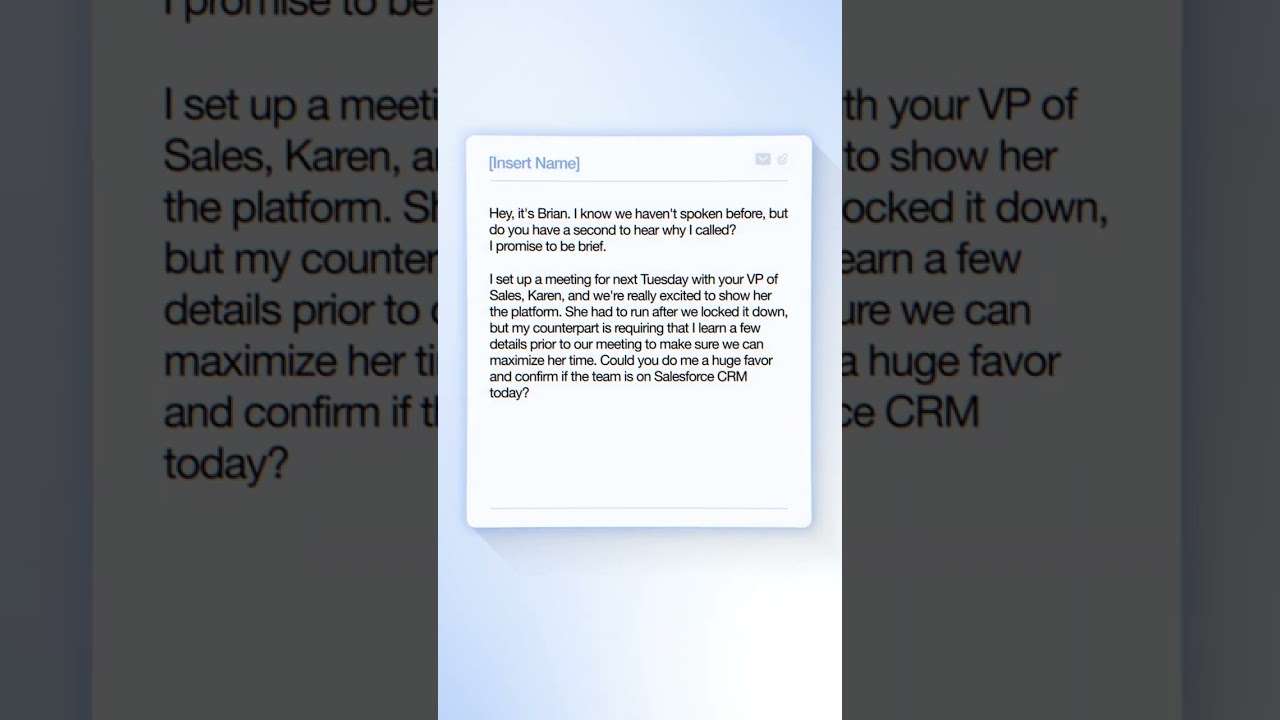
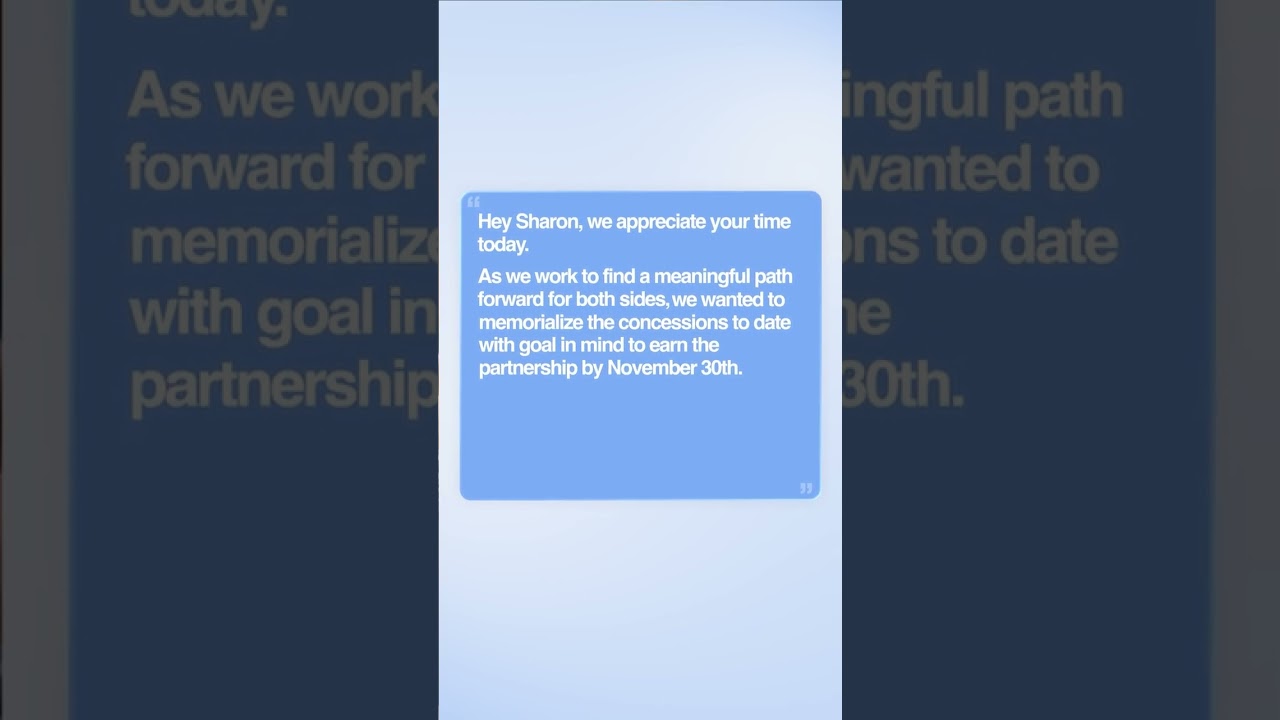

"We're happy with our current vendor" #saas #sales #techsales #objectionhandling
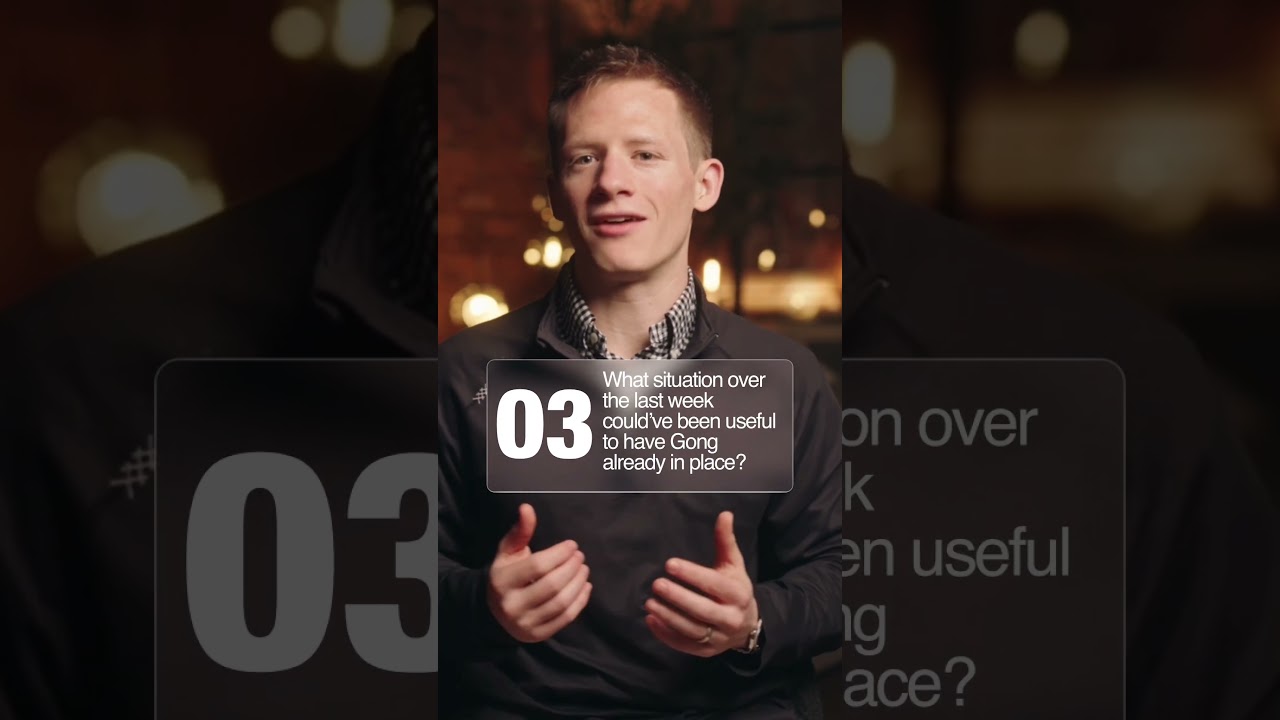
Deal Cycles Happen Between Meetings... What Questions to Ask #saas #sales #techsales #prospecting