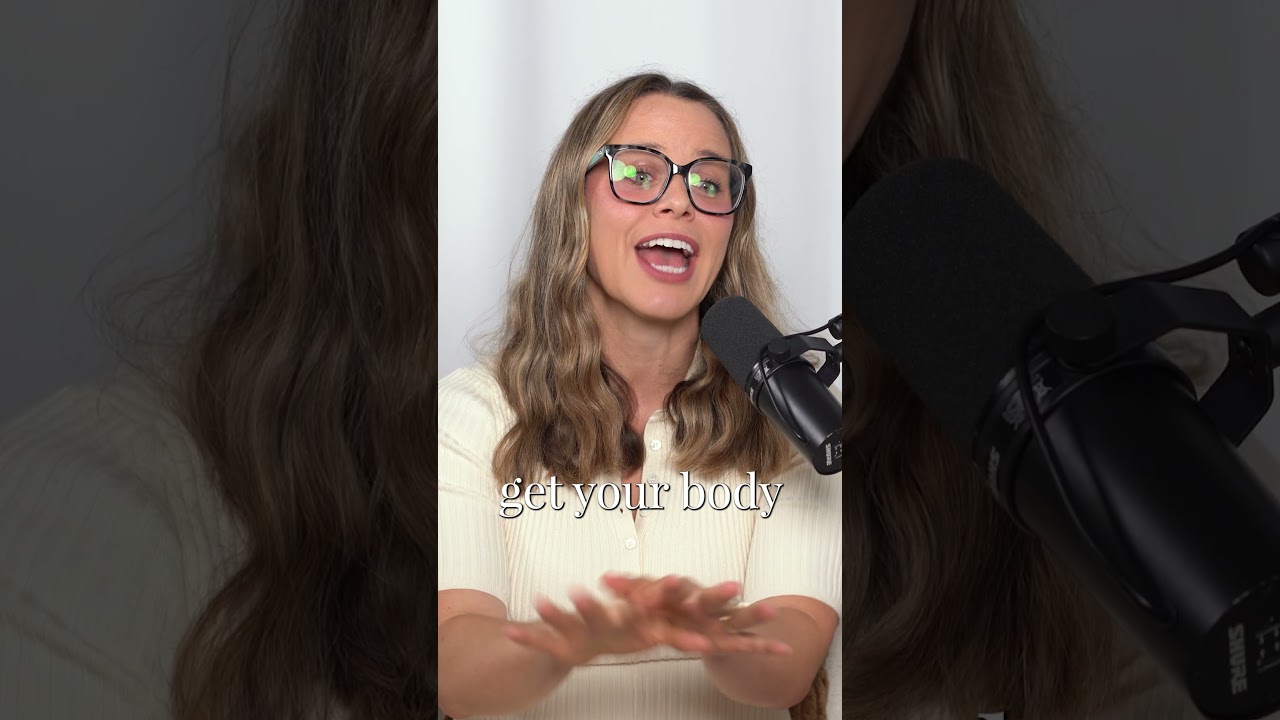
She Used to Crash Every Afternoon — Here's What Fixed It | The Wardrobe Consultant

Hallie Abrams spent a decade crashing every afternoon until functional medicine found her thyroid antibodies at 750 instead of the normal 50. A blood sugar reset, targeted probiotics, and sleep tracking gave her energy back. She also built a styling business around five wardrobe staples and an AI assistant called Ask Halle.
Chapters
I was exhausted. I couldn't sleep enough. I was bloated, like my stomach in the morning would be different than my stomach in the evening. I would get random rashes all over my legs. The doctor would biopsy it and then I'd have allergy testing, but that didn't come up on testing. So I kept going to doctors and I was just running in circles. Nothing was coming up on traditional blood labs. That's when she nicely said, I've done sort of all I can do for you. I think it's time you find a functional doctor that can really like help you through this whole journey. And that's when I started looking.
Hallie Abrams is the founder of The Wardrobe Consultant and one of the most trusted voices in style for women over 40. She started as a personal stylist working with hundreds of women and turned that into an incredible blog as a fashion blogger, The Wardrobe Consultant, where she reaches hundreds of thousands of women every day.
I was like, yeah, what do I have to lose? This blood sugar reset sounds like it makes a lot of sense. And I have to tell you, I lost 5 pounds. I lost so much inflammation. I don't think I even realized I was puffy. When things are gradual, I don't think you realize it. something's off, but you can't pinpoint what it is. My back doesn't hurt as much 'cause I used to try and work out, but then when I'd work out, it was a vicious cycle because then like I'd throw my back out or my hip or like sciatica or that stuff isn't happening. And I actually enjoy working out now, which I never did. My long-term goal was I don't just wanna live long, I want to live well.
Hallie Abrams is the founder of The Wardrobe Consultant and one of the most trusted voices in style for women over 40. She started as a personal stylist working with hundreds of women, and turns that into an incredible blog as a fashion blogger, The Wardrobe Consultant, where she reaches hundreds of thousands of women every day. Today, Halle's gonna walk us through her functional medicine journey over the past year, the blood sugar reset, and changes that she's made from that. And she's gonna leave you with her personal styling tips to help you elevate your closet. Halle, in this past year, you have completely transformed your health, which I'm so inspired by. But tell us exactly where you were, When you started your entire journey, like, what were you experiencing?
So a year ago, but I'm gonna go back even like 10 years, when I look back, I was exhausted. Like, I couldn't sleep enough. I'd get up in the morning and, you know, there's those 9 minutes of snooze. I could snooze and fall deep sleep in those 9 minutes. I, at 3:00 PM, would crash. Like, I'd be yawning, yawning. Sometimes I had to pull, I remembered my daughter, was a dancer, and I would drive her to dance, and I was like, oh my gosh, I'm gonna get in a car crash. I pulled over in the Heinen's parking lot and would fall sound asleep. Like, it was scary. That, I was bloated, like my stomach in the morning would be different than my stomach in the evening, even though I would eat the exact same things, and I was taking things out of my diet and not feeling like great about that. I would get random rashes all over my legs, sort of like having poison ivy, and the doctor would biopsy it and say like, oh, you're allergic to something, and then I'd have, Allergy testing, and they'd say, "No, you're not really. Maybe a little bit allergic to vitamin E, but like you're okay." But I knew certain things would like make me feel like I had food poisoning. Like if I ate an avocado, not good. The whole evening's over, you know. But that didn't come up on testing. So I kept going to doctors, and I was just running in circles. Like nothing was coming up on traditional blood labs. I had some high cholesterol. I knew that I was like perimenopausal to menopause. I went on HRT, but like none of it was making a difference. I think the doctor said, oh no, like you're, you should go on a statin. You have a little bit of a high, like elevated cholesterol. I'm like, that's it? That's all you got for me? Come on.
'Cause like, I feel like death and I have all these other things that are happening at the same time.
Yes. But I didn't realize I felt like, like I knew it, but I didn't know it, if that makes sense. I just kept pushing and pushing. And then, yeah, about a year ago I was like, when I supposedly had my, had fully transitioned into menopause, And was on HRT, I was like, something's got to give. Like, this is not— it's not sustainable. And that's when I started searching. And I actually started with a nutritionist dietitian, not you. I didn't, I didn't know you were doing that at this point in my life. So maybe it was like 2 years ago. And that did really help in the journey because they gave me markers in my labs to ask my regular general practitioner for. And some of those markers, specifically my— and I'll pronounce it wrong because I'm not a scientist. I'm an artist. I'm not a scientist. I love that about you. It was an antiglobulin antibody, a thyroid antibody number. Does that make sense? Am I totally botching the name?
Yeah, your thyroid antibody. TPO or what's the other one? TGA.
I think it was the T— like one, it's supposed to be around 50, and mine was like 750.
Oh, I forgot. You told me that either in our messages. Yeah, that's crazy.
Yes.
So you had crazy Hashimoto's.
But they were saying it wasn't really Hashimoto's. So then my GP had me go and get a scan. I had no, like, nodes, nodules on my thyroid. And then I went to an endocrinologist and she was like, yeah, like, there's nothing we can do because your other numbers are fine. I'm like, but this number, I mean, again, I'm not a doctor and I'm not a scientist. If it's supposed to be 50 and it's like 750, doesn't that mean my body is attacking my own thyroid? And she's like, yeah. I'm like, okay, so what are we gonna do about it? And she's like, there's not really anything to do about it until, like, it does. And I'm like, but if somebody was smoking and they, like, had a thing of lung cancer or heart disease, you'd tell them to stop smoking, right?
Right.
And she's like, yeah. I'm like, so what am I doing that's making this number high so we can correct it? Yeah, I don't know.
Wow, that is crazy.
And it like, I was so infuriated. And I think they were like, it was far away, wherever I could get in. I was like, I live on the east side, so it was on the west side. So it was like a good 40-minute drive to get there. And I remember driving home going, like, totally cursing under my breath. Like, this is not right.
Yes.
And we live in Cleveland, which has the best healthcare. Like, forget the country, maybe the world, right? And I wasn't getting anywhere. I was so frustrated.
It's so frustrating. And it's crazy how common, like, versions of your story are.
Yes.
Where you're, like, going from doctor to doctor and then no one is giving you the information.
Or they would give me a medicine to, like, correct a symptom, but not want to get to what the root cause was.
Yes.
So that was very eye-opening. And one of the things that the nutritionist I worked with at that point had talked about was cutting out gluten because she said there's a— maybe it mimics thyroid. Again, not a scientist, just an artist. And so I was like, okay, but I did not wanna do that. That was— I now am. That's a big change, but I didn't wanna. I like my pasta, I like my bread, I like my cookies.
Yeah, gluten-free is hard for a lot of people to get on board with until they really realize they need to.
Yeah, yeah.
So you went gluten-free, and then walk us through what happened next. Or you didn't go gluten-free.
Well, I said, I don't wanna go gluten-free unless I'm really sure that was not a mistake number. So I did another blood test, and it was not a mistake number. It really was 750. So then I went gluten-free for 6 weeks. That was like my compromise. I really went kicking and screaming in this process, in case you can't tell. And tested again, and it went up to 800.
Wow!
And I'm like, well, forget that. That's ridiculous. Da da da da da da. Right? So then that's when she nicely said, "I've done sort of all I can do for you. I think it's time you find a functional doctor that can really like help you through this whole journey." Okay, great. And that's when I started looking.
And that's when you found Velocity Health?
Yes, but it took about six months of like looking. Maybe even more, because at least from what I found, either people were very— the functional programs I found either were very gym bro, like where I didn't feel like they were focused on women, they were focused on like high protein and creatine and that, or they were only hormone related and focused, not necessarily looking at everything. And I, at that point, thought my hormones were under control. So I didn't think that was necessarily, like, the basis of it. But when I got to Velocity, I felt like they had a dedicated doctor that was Stanford-trained, that focused on women's health. So she understood lifestyle changes, and supplements, and the proper testing, along with not being scared to give me, like, HRT, or if I needed to be on a statin. She was like, no, we've taken it as far as we can. It's time to go on a statin.
Yeah, 'cause it is necessary for some people.
Yes, yes.
Okay, great. So you went through that whole process, and then you felt like you were not getting a lot of answers. Your main issues were having the fatigue and energy crashes, like complete exhaustion, the bloating, the thyroid antibodies, high cholesterol. Did you also have high blood sugar?
I had like sort of not, fully high, but, like, kind of could be borderline.
Okay.
And I also had a family history of autoimmune and dementia. So, that was sort of, like, my last piece of the puzzle.
Got it. So, then you go through this whole process, and then at what time did you then, you start the blood sugar reset, around a similar timeframe, or was that after?
I think it was, I had started with Velociti, and in their first round of testing with blood testing, and we did a gut test, a GI map, they kept talking about increasing my fiber intake. And I was like, I don't like fiber. Like, I'm eating berries. I thought I was having enough fiber, right? I would have, like, granola in the morning, and I would have berries, and I would have, I don't know, crackers that had said on it it had fiber. But they were like, no, we need you to take psyllium husk. And I was like, ew, no.
Gross.
Like, like Metamucil? Ew. And like, no. And then they're like, well, mix it in orange juice. And I was like, orange juice? I don't wanna start my day with orange juice. Like, it just, again, wasn't computing. They were trying to like pacify me by putting it in orange juice. So like, just put it in water. I was like, no. So I think I saw on Instagram that you were doing this and I was like, wait, first of all, I know her. And I'm so excited that it's, it's like my Bridget.
Should we say how I look?
We should, we should.
Go ahead.
So my kids now are 26, 25, and 22. And Brigid was their camp counselor and babysitter.
It's true.
Like when the 22-year-old was 3. So you were in like high school, college, graduate school?
Yeah, I was a senior in high school when Maggie was 3 years old. And yeah, then throughout college I worked at the camp and then started babysitting for you in the summers when I was in college. Yeah.
Yeah.
And I was gluten-free at the time, 'cause I was like in my whole functional medicine journey at that time. And I would love going to your house, 'cause you always had like so many fresh berries, and you had the like marshmallow dip. I don't know if you remember, from Miles Market. No, but good. So it was, I would be like, oh my gosh, this is gluten-free.
That's so funny. I don't, but I did have a lot of fruit.
Yeah, 'cause you also have the best kids. It was all very good.
It was a very, yeah, I'm so, like, it was a great relationship. But yes, I was like, oh my God, this is my Brigid.
So many years later.
So many years later. And I was like, yeah, what do I have to lose? This blood sugar reset sounds like it makes a lot of sense. And I have to tell you, the smoothies have been life-changing for me. Life-changing. I get my fiber. Besides that, there's cauliflower in it, which, shh, don't tell the kids. I don't even tell my kids there's cauliflower in it. I'm like, oh my God, do you want some of my smoothie? Joey knows though. He doesn't like it. He's like, I taste something. It's like, you don't taste anything. It's delicious. And I put my psyllium husk in there and I put my protein powder. So it's like, I feel like it's like my super drink to start the day.
I love it.
And it keeps me full.
It is. It keeps you really satiated. So how was that? Like, did you, were you doing smoothies before? Was this your first time doing smoothies?
First time doing smoothies. I think I had thought that smoothies weren't as good for you for some reason. I don't know why I thought it. That it was like, oh, it's taking all the skin and the fiber or whatever and making it a juice. And I'm sure there are a lot of smoothies that are not good for you. I used to start my day with Greek yogurt, Elizabeth granola, and berries, but I would have a lot of it because I was hungry, and I'd have a lot of the yogurt because I was trying to have enough protein, and I wasn't full. And when I switched from that to the Um, blood sugar reset smoothies, I lost 5 pounds. Wow.
Yeah, that's crazy because it felt so satiated and you didn't need to snack or have those other things later in the day.
Correct.
It's crazy how much how you start your day, if you're doing them in the morning, impacts so many of your cravings and desire to eat things later on in the day and how much control you have over it by just getting on top of your breakfast.
Totally. And if I don't have it for breakfast and I bring it with me which was a suggestion you made in The Blood Sugar Reset, like, bring it and have it for a snack or a lunch. 'Cause if I'm working with a client, I can't necessarily, like, excuse me, I need to stop. I'm gonna go, like, heat up a piece of chicken. It just doesn't work.
Yes.
And having, like, an RX bar wasn't—
Cutting it.
Like, working for me.
Yeah.
So, sometimes I'll swap and have, like, something different in the morning, and I'll have that as my lunch, and I just bring it in a big Stanley, and— It's great. I can drink it and stay full and satiated throughout my client sessions.
And then do you notice a difference when you do that with your afternoon energy? Because that's how I started doing smoothies for lunch, was because my afternoon energy was so low, and switching to smoothies for lunch is like a game changer for my energy.
I don't know that I've done it as much. Like, again, I'm not consistent. So like, I switch it off. It's either like, you know, I'll have eggs for breakfast or I'll do, you know, so. I don't know. Now I'm gonna have to keep that, I'm gonna have to like pay attention to that. But in general, my afternoons, I'm not crashing. Like the girls that my team are like, you're not yawning at 3:30, like, this is amazing.
Yeah, it's the middle of the afternoon and we're here doing a podcast.
Totally, and I'm not yawning.
Yes, you're like, brain is fire.
Yeah.
So what other changes do you think outside of the smoothies that the blood sugar reset helped you with?
I think it gave me, tasty recipes that I could serve, whether it's for Greg or my kids when they're home, that weren't boring, but also healthy. So there's one, I don't remember what it's called. I feel like it almost tasted like a Big Mac.
Oh yeah, the burger salad.
Yeah, that's like on repeat for us because it's easy. It's not just like ground beef and a baked potato or something boring. Like, it had taste to it and it was healthy. But it still had taste, so it wasn't boring. And I also really like, from the Blood Sugar Reset, we have certain eating restrictions. Like I said, avocado, I still can't eat, and that's in a lot of your things. We also keep kosher in our home, so I wouldn't mix milk and meat together.
Mm-hmm.
So it gave me the opportunity to swap out things when I needed to, like, super, like, it was very easy. I didn't have to, like, go through and sort of calculate, like, oh, how do I do this? Or what do I use as a swap or whatever? It just, like, You take it in, take it out, and it, it does it for you. So I love that. Yeah, it was huge.
So then what are the most noticeable changes that you've had in this last year? I mean, physically you like look so amazing.
Oh my, I lost so much inflammation.
It does seem like you are like just not puffy at all.
At all. I don't think I even realized I was puffy. And now I look back at my—
I don't wanna say that you were puffy.
No, I was puffy. I didn't realize, you know, it's like it just keeps, when things are gradual, I don't think you realize it. Like, you know something's off, but you can't pinpoint what it is. And yes, I looked, I've lost a ton of inflammation. My back doesn't hurt as much 'cause I used to try and work out, but then when I'd work out, it was a vicious cycle because then like I'd throw my back out or my hip or like sciatica or that stuff isn't happening.
You can work out without that happening? Correct.
Wow.
Yeah. That's amazing.
Push myself working out, which is great. And I actually enjoy working out now, which I never did. Like, that was like, I hated it. I would rather go to the dentist than work out.
So what was the mindset shift?
I think I wasn't— didn't get hurt, and finding things that I enjoyed doing. So playing pickleball, where it's like more community-oriented, figuring out ways to lift that I knew were safe, and then doing it either with a trainer or my husband. Like, I know that I need the motivation of someone else So figuring out those things, but it's really like the pickleball that's the most fun.
I love that.
Yeah. Oh, and honestly, I should be sponsored by Oura Ring. Do you have one? Do you wear one? I never, I don't think I'm like a gamer. Like, I don't play video games. There is something that's so gamifying about this. Like, I will wake up and be like, ooh, how'd I sleep last night? And that also helped me. I really focused on my sleep. So I thought I was a good sleeper because I was sleeping a lot of hours, but I wasn't necessarily getting quality sleep. So really focusing on going to bed earlier, which is something Velocity really focused on for me, or like encouraged me to do. So going to sleep earlier, bedroom is only for, you know, sleeping and sex.
Yes.
And making sure that I was getting quality sleep prior to midnight. So like really trying to be in bed by 10 as opposed to before where I'd go to bed at 11:30 or 12 or, you know, COVID, I would go to sleep sleep at 1 and sleep till 9, and I was like, oh, it's the same amount of time. It's not the same.
Yeah, it's not the same. Being able to be programmed with your circadian rhythm is so important for hormones, thyroid, all of it.
Yep. And going outside, making sure I'm getting natural sunlight, especially in the morning. Yeah, so there've been a lot of changes. They're little along the way, but they're all adding up.
And then when you think about traditional diet culture and how they will, a lot of people, maybe even you've done this in the past where you go on a diet and then you think that you have to overhaul everything and that there's so much pressure to do so. It seems like your approach has been the opposite, where it's been like incremental changes that you've continued to work on over time so that you're changing your entire lifestyle.
That is totally correct. I will say I'm not a person that, unlike many of my generation who did a lot of dieting along the way, I don't know if you even know this about me. So growing up, my dad, when I was, 12 and under was obese, like morbidly obese. So he was always on a rollercoaster of like a fad diet and then come off of it and gain the weight and a fad diet and get it, always, like our whole life. He did the cottage cheese and grapefruit diet. He did the fasting shake diet from the guy that was at the Cleveland Clinic back then. And when I was 12, he went to Pritikin and really like overhauled and learned How to eat healthfully for him.
What's Pritikin?
It's like a health center in Florida that does like whole foods. And so that worked for him. And then his latest fascination, I would say, for the past 20 years has been paleo. So he was a paleo pusher from probably around the time I was like 35 to 40. So I tried that. I never— so when I was growing up, My mom never wanted us to have food noise because it was such a problem for him. So we were very protected from it. I ate whatever I wanted. I didn't worry about it. It was just not an issue for me. And then even like after having kids, I would gain a lot of weight when I was pregnant, like 70-ish pounds when I was pregnant, lose it afterwards, thankfully. Like it just wasn't my issue. When I was 40, my dad convinced me to go on paleo. And it very, very much messed up my relationship with food. For the first time, I was like, oh wait, I can't have this? Wait, I can't have it? And then that's all I would think about. That's what I wanted because I couldn't have it. So I got super skinny, but I didn't love what it did with me and food. So I sort of wanted to fix that. And in doing that, nothing is off the table. And I think that's why I was fighting Going gluten-free.
Yeah, because it seems like it's down that same slope until you realize like, oh, I really need this for health reasons.
Yes. Yes.
Wow, that's so interesting. I didn't know that. And I think that it ties so well into like how society will be like, oh my gosh, you look so amazing when people lose weight without having any idea of how they've done it and like what the toll on their emotional relationship with food and all these things that so many women can relate to that have been on the diets and off the diets where it's like, No, but maybe that wasn't the best thing because of all of the damage that that did in the background that then probably took a lot of time to overcome.
Yes, and that was right when I was in my, like, perimenopause stage also. So things just were a little even more haywire. So, yeah. Oh, wow.
And I'd say too, I mean, obviously this isn't your experience, but sometimes we even work with people that have been working with functional medicine doctors who are more, like, very rigid. Like, you can't have these foods, you can't have any gluten ever, any dairy, any eggs, any, like, these, Never have any inflammatory foods, never have sugar, never have these things, that then like come into our programs where they're like, oh, this is so helpful to have like the structure with the flexibility that Christina even talks about, and being able to say like, okay, this is how to form a healthy relationship with food, and then understand structurally how I can support myself with the smoothies and other things that help me feel satiated without this feeling of like, this is a food list that you can't eat, and then this is the food list that you can eat, like how paleo is really structured.
Right. Right, and it tastes good because I happen to actually really like food and like how it tastes. And and that I think was a big struggle for me because paleo again was like very very plain. There wasn't a lot to it. My dad still will eat like pounds of meat, but you know won't have dessert, won't have a fruit, won't have spinach, won't have like I was like why? You're not like but again it works for him and his health and wellness and. His heart disease is reversed and like all those things. So good for him. But yeah, it's made a huge, huge difference with my relationship. I feel like it's like scaffolding and a roadmap. So it's not like a dictate, it's more like choose your own adventure. Yeah. Do you remember those books?
Yeah, I love that.
Yeah. Yeah.
I love that. So when you talk about the, the things that you've really worked on in this past year, You kind of talked about those improvements. How's your thyroid? Like, what ended up happening with your thyroid?
So initially, it went down, and I was like, and maybe it was like 60, but then in a recent, 'cause with Velocity, they do quarterly testing to make sure that like the changes you're making are working, and it went up again. So I'm not sure what that's about, to be honest, nor are they, and we're gonna like work to get towards that. Like, that and my iron was low. So I don't know.
Oh yeah, and being menopausal, that isn't— I mean, it can happen obviously, but it's definitely something that you need to look further into.
Yeah.
To better understand your absorption. Yeah.
So, and they originally put me on an iron supplement. Have you ever been on an iron supplement?
Yes.
It tastes like you swallowed a rusty nail and are burping it up all day. It is horrible. Like, literally, I'm like, ooh. Or like, I'll be in a meeting and all of a sudden I'm like, Oh my gosh, that's hard. So I don't, I gotta figure out a different plan 'cause I'm not sure it's working.
Yeah, okay. You can tell me the kind that you have.
Veda something that was, it's like you get it at CVS. It has C and iron.
Yeah, it's all about the type of iron.
All right, we might have to adjust it.
Yeah, yeah, yeah.
Okay.
There's a patented form called Feruchel that should do much better for you.
Okay, thank you.
And it creates fewer GI symptoms and all the things that, 'cause constipation's also pretty common when people are on iron.
Thankfully, that was not my issue because I I have so much fiber from my smoothies. Of course.
And the psyllium and all of that that you're covering your bases with.
Exactly.
So the thyroid is still a work in progress, but you're still feeling a lot better.
Thyroid's feeling, I feel significantly better, like significantly. And I would say the other big change that happened in this year with Velocity is because they did some genetic testing also, they felt like I had a histamine intolerance and a DAO deficiency.
DAO, right? Yeah.
For a while I was calling it DOA, and I'm like, no, that's dead on arrival. That's wrong. And so in my mind, I need to say dead on— no, it's not dead on arrival, it's DAO.
Yeah.
So I did a 30-day, like, very, very strict cleanse where I did have a list of, like, these are the things you cannot eat and these are the things you can eat, and then introducing them back in. And I think that's where, like, Everything was primed and ready, but when I did that, that's when I really lost a lot of inflammation.
So that cleanse was a low histamine diet?
Yeah.
And the low histamine, so a lot of people, actually a lot of women have issues with histamines. We're seeing it more and more, especially as they're going through perimenopause and menopause because of the changes hormonally that can increase your immune cells' sensitivity to so many things that histamine can create more of a problem for. Shifts in the microbiome that can also increase histamine. overload, or like where your histamine bucket is just overflowing from the number of— from the quantity of foods that you're consuming. Not that that's where everyone needs to start, but it certainly is something that when we're like working more one-on-one with clients and looking at their labs and those kinds of things, that we'll recommend in order to help them overcome certain symptoms like you were experiencing.
Yeah, yeah. So that one really made a big difference, and it gave me knowledge in terms of Again, it's not that I can't have something, but if I need to make a choice, like chocolate, if I'm gonna do a protein powder, I'm not gonna choose a chocolate protein powder because it's a histamine, it adds to my histamine bucket.
Yes.
So, I'm just making a choice not to. It doesn't mean I will never have a piece of chocolate. It just means I'm gonna make different choices throughout the day in terms of things that have a higher histamine, Ratio, or whatever that right word is, for me.
I love it. So then, is there anything else from a root cause standpoint that you've been working on that has helped you as well?
Right, so in that first round of testing, in the GI testing, they found out that I had leaky gut. So a big part of that beginning, like, first quarter to second quarter, was adding more fiber and adding in more, positive probiotic things in my system. Like, one of them, I feel like you and I talked about, it's super stinky. Butyrate or something like that, right? It smells, doesn't it? Like something between, like, feet and baby tush, right? Like, it's horrible.
Oh my God, you should actually have your own, like, sitcom of talking about different functional medicine supplements, 'cause I feel like it would be very relatable to a lot of people, where I'm like, no, this is fine, this tastes fine.
No, it's horrible. And at first, and then I would like smell it, I'm like, what is that? But it was coming from the jaw, like the— but it made a difference, and it like did what it needed to do. So I started on Seed, I started on that, and then Akkermansia.
Mm-hmm.
And those 3 seem to have helped a lot of that leaky gut. I think I'm due for another GI map test soon, and then we'll really, really know, but, That was, I think, a big part of it.
Amazing. So, you essentially did a stool test that you can collect from home and then look more at how many beneficial bacteria you have, how many pathogenic bacteria you have, or overgrowth. It looks at Candida, it looks at beta-glucuronidase, which helps you understand your ability to break down and clear estrogen, and a number of other markers so that then you can understand, okay, this is how we rebuild from this state of leaky gut to be able to optimize the gut microbiome, which is really the epicenter of our health, impacting our hormones, thyroid, our blood sugar, and so many things. So when you talk about the probiotics combines with prebiotics, which butyrate is a prebiotic, and then the Akkermansia, which is another probiotic that's specifically targeted at helping with improving metabolic health, blood sugar, a lot of cravings actually for people as well. You have like a whole rebuild kind of plan that was created based on your individual needs to help to heal the gut so that then you're able to improve a lot of these symptoms.
You said that so more, like, in such a beautiful way that I was not able to articulate, but yes, that's what they do.
This is my job. This is what we do. I'll do it for you with clothes, okay? I love it. I love it. I mean, I think that it speaks so much to being able to, 'cause we have a lot of people that come into the Blood Sugar Reset who are working with functional medicine doctors and getting testing, or they're working with us and getting personalized testing when we run stool testing, and then being able to layer on the nutrition aspect and the smoothies and the fiber, I mean, it really can work so well when you're able to pull it all together. And like you said, doing it over time instead of feeling like it all has to be done overnight, so that you're just incrementally chipping away at the things that you know your body needs in order to feel more optimal, so that you're able to do the things that you love the most in your life.
Absolutely. And that really was my long-term goal, was I don't just wanna live long, I want to live well. I wanna be able to get down on the floor with grandkids and lift them up. I wanna be able to, Travel. I wanna be able to schlep. I mean, look at you with little kids. I remember what it's like having like strollers and pack and plays and all those different things. You need to be strong. You can't be worried that you're gonna like hurt yourself all the time. And as I get older, I wanna be able to do all those things.
And you just had your son's wedding last week.
I did.
Which was so beautiful.
It was so— I'm still like in that little magical cloud a little bit.
Yeah. Yeah, yeah. It was, it looked like such a magical cloud. So I hope that you're able to stay there for as long as— Thank you. Possible, maybe until grandkids come.
Yes, exactly.
Okay, give us all of your styling tips. So the top 5 styling items that you, you as a personal stylist, in addition to having such a large social media following, you work one-on-one with women helping to style their clothes. So tell us like the 5 staples that you recommend that they maybe splurge on or like always have as basics in their closet in order to kind of always pull back to.
Got it. So obviously when I work one-on-one with people, it's very personalized. So what I'm saying now is more general, but you need to put it through sort of the checks and balances that work for you in your life. But I think having a pair of jeans that you feel great in, not what somebody's telling you is on trend or is only on sale 'cause it's the cheapest thing on a cost-per-wear basis, A great pair of denim will pay you dividends. 'Cause if you're— if it's falling apart after a few washes or it's falling down because there's too much stretch in it, like, I like it when there's like 1 to 2% stretch in it. More than that, they tend, you know, when like you're wearing jeans and then the knee gets bunchy and then you're pulling 'em up all the time.
Mm-hmm.
So a great pair of denim, ideally in a medium to dark wash.
And with that, when you say that when you buy less expensive jeans, does that increase the likelihood that there's more of a stretch because that's the type of material or?
No, I think that's across the board. You really need to look at the tag inside. But I think if you spend money on something that's quality, when you look at it on a cost-per-wear basis.
I love cost-per-wear concept.
Yeah. Like I will tell you, I did a whole like masterclass, which is probably on my website somewhere, about a balance. Like, you know how there used to be the healthy balance pyramid for food?
Mm-hmm.
And it was like this, and like the meat and potatoes were at the bottom, and then like the grains were in the middle, and then the sugary sweets are on the top. I think of that with someone's wardrobe as well. So the bottom, like 50% of your wardrobe, 50% of your wardrobe budget, and what is in your closet, should be basics. They should be the things that are the workhorses, like a great pair of jeans or a little black dress or a shoe you can wear like comfortably all day that you feel great in, but you can wear with multiple of your pants. Those are the kinds of things that are on the bottom. No one's gonna be like, Bridget's wearing the same shoes again, or Bridget's wearing the same pair of black pants again today. No one's remembering that, but it allows you to then switch things up where it's gonna have more of a positive impact. Does that make sense?
I love that.
The middle part of it are things that are memorable, but only memorable and unique in one way. So meaning it could be like your shirt today is beautiful. The color is white, so it's more basic, but because it has the lace, it's memorable. So it's, if it was that and it was red, it would be more of a statement.
Got it.
Does that make sense?
Yep.
And then the next layer are pieces that are more statement. So it almost has 2 elements. And then the top are those little trends, the things where you're like, I don't know, am I gonna do that? Am I not gonna do it? It could be a flash in the pan. It's the sugary sweets. Like sometimes you wanna have a little of that in your wardrobe, but that's the least amount of your budget and the least amount of your actual like real estate in your closet.
Okay. I have so many questions.
And I didn't even answer your question about the 5 basic things.
We just got to a couple.
Sorry.
So like where does jewelry fit into that? Is that on the bottom 50% workhorse that you're like spending more and then recycling, or is that like at the top?
So that's a great question. I think if it's jewelry that you're wearing all the time, it's the bottom fit. So like our Oura rings are part of our bottom 50%, right? It's a basic. You're not taking that off. Like these I never take off, but like some of these I do. So then those are, am I wearing it more? Is it more of a statement? And there are some things I would get where I'm like, I'm only gonna wear this a couple times. Like it is a statement, That's a sugary sweet.
Okay, got it. So like a more bold necklace or something like that that you're not going to wear as often as like every day.
Right.
Okay, so then those 5 staples.
Okay, great pair of jeans, a pair, I think some sort of like one-and-done dress depending on your life. So for some people, a one-and-done dress might be like a dress you're going to wear out to a backyard barbecue and, you know, a country club. And another, a one-and-done dress might be a corporate dress. Right. It depends. I believe that people's wardrobes need to work for their body, their budget, their taste, and their lifestyle. So if you're missing one of those 4 elements, it could feel like it's not aligned because you could have a lot of great clothes. But if it's not lining up with your personal lifestyle, it's not worth it. Just because it works for the influencer on Instagram doesn't mean it works for you.
Yes.
So Jeans, a dress, a one-and-done dress, a great pair of shoes you can wear comfortably, not sneakers. I mean, sneakers, yes, are great, but people have sneakers. I don't usually need to convince someone to get sneakers. I need to convince somebody to get usually a flat or a pump or a kitten heel that will sort of go with everything. What are we at, 3? Mm-hmm.
4.
I think a t-shirt, a quality t-shirt that can be a base for everything. So again, you can throw a cardigan over it, you can throw a blazer over it, you can throw a windbreaker, like you're— but you feel good in it.
Like a white t-shirt?
A white t-shirt.
Okay.
That is like not too see-through and either tucks in or sits right at the hip bone so you don't have to tuck it in. And what should be my 5th? I'm gonna say a piece of jewelry that like you love and feels like you.
Okay, I love that. And then what about blazers? I'm like trying to figure out blazers. Would that fit into—
It would. I like blazers a lot. I like to call them toppers at this point because a blazer might work for me, but it might not work for you in your life. So it might be a cardigan that's like your third piece that you're throwing on, or it might be a button-up shirt that you're wearing open, but it's something that adds a little more interest. So I happen to like blazers. They work for me really well. I think you can dress them up for going out. You can wear them during the day. But if you're like running around with kids and cooking all day, a blazer might not be the most useful piece for you. I know.
I'm thinking of it more for like podcast interviews and stuff where I don't have a lot of like one-piece sets or like a blazer to throw on top of an outfit to just make like an outfit like this just look a little bit more elevated if I'm walking in to do a podcast episode. on someone else's show.
Yes, a blazer, that would be great.
Okay. I love it. I love that I'm getting the personal styling advice during this. Okay, and then for women that are trying to like pull together the jewelry with the clothes, how do you recommend that they do that?
Meaning like, how do they do that for themselves personally?
Do they start with the clothes and then they layer on the basic nice pieces of jewelry? Do you start outfits from jewelry? Like, how does the— I feel like I've started getting a little bit better about thinking about the outfit, but then the jewelry piece is the missing element for me that's a little bit harder to figure out, like, exactly what I'm layering in.
Got it. Okay, fair enough. So I think that I like to recommend starting with something that you love. So no matter what the outfit is, right, starting with something like, okay, I'm doing a podcast interview today. I know they're going to see me from my waist up. Right? I love this shirt. I think it's gonna look really good on camera. So that was like when I got dressed today, I was like, okay, wait, they told me it's a white background, so I wanna wear something that works well on white. Also, I didn't know when it was gonna run, so I was like, it's hot out, but this is like all season, but it sort of has some autumn sort of colors to it.
Right?
That was my first thing. And then I built it from there. So like when you're decorating a home, very often, right, you'll start with like, okay, I like this rug. And then you build on the colors of the rug. It's sort of the same idea. So one piece that you really wanna wear, if you're like, I wanna wear this statement necklace today, okay, I'm wearing the statement necklace, what can I build around it? Or I'm gonna be traveling, I need to make sure my pants have like an easy waistband 'cause I'm gonna be sitting all day. Okay, I'm gonna start with that. And so whatever that one piece is, start and build from there. The jewelry often is like the cherry on top, though. So if you're like, okay, I'm all dressed, like, now what jewelry am I gonna add? Then you can, and play. That is the best, the best tip I can give. I bet you play in the kitchen a lot, and that's where some of your best recipes have come from.
For sure.
Right? Because you're like, wow, what would happen if I added this with this? And you tried it and you're like, this is delicious. Right?
Yeah.
Some best outfits come when you play. We all played dress-up when we were little girls, and it was fun. There was not— there was no, like, there was nothing to lose. You just were having fun. Sometimes it was a crazy outfit and sometimes it was a princess outfit. And so, but it was just fun. You can have fun in your closet now by playing. And if you play, try things on, take pictures. We all have our phones all the time. Make a habit of taking a picture of yourself as you're walking out the door every day. Keep an album within your phone of your outfits of the day, and even better, comment on it after the day is done and rate it and see how you felt. Like, oh, on a scale of 1 to 5, I felt 5. I felt great. I was comfortable. I got compliments. I felt like I could conquer anything. Or I'm giving it a 3. I liked how it looked, but then like I kept fussing with my shirt all day. Remember, wear this shirt with a higher-waisted pant or whatever. You'll have it all and then you'll be like, wait, what did I wear that shirt with again? You can go through and like it will make it so much easier.
That is such a good tip when you're working with women and you're helping them. Like, why do you love fashion so much? What is it about helping women that you're like, this is the best thing and this is why I think every woman should try to think more about like how they're presenting themselves and what they're wearing?
I love what I do because I've seen the positive difference it makes in women's lives, like the confidence, even from the beginning of a session to the end of a session where like someone will be like trying stuff on and their body language is like, I don't know. Or in women, for some reason, I know I'm using very large buckets here, women, Things with clothing, like it has a negative connotation with them. No man I've ever met walks into a dressing room, those I've worked with or not, any men in the room can say if I'm right or not, like where they say, I'm not worthy because like these pants don't feel— look good on me. Oh, I have no worth because I can't fit into this size. I have to fit in this size. Off the rack, this didn't fit me. There's no shame involved. There's no worth assigned to it. For some reason, women do. And especially if like a size doesn't fit or something doesn't work, there's like, they feel like they have not succeeded in a way that they should succeed. But when they put something on, and really clothing is the ultimate optical illusion. It's a tool we have at our disposal. At our disposal to use for good or for evil. I like to use it for good, right? It's the ultimate optical illusion. So nobody, even like Jennifer Aniston, doesn't look good all the time. She has a stylist there. She spends a lot of time and a lot of money on looking good, but she has someone there that's saying, oh yeah, don't do this. Like, she might be longer waisted, she might be shorter waisted, she might be fuller in the hips. We don't know because— Because what she's wearing is creating balance and proportion where it doesn't naturally exist. And we're allowed to use clothing and should, I believe, should use clothing to do that as well. We create balance and proportion where it doesn't naturally exist. And that's what I like to do with women is help them see that and then figure out how it works back into their lifestyle and their budget and that kind of stuff.
So when it comes to addressing—
Can I try your smoothie, by the way?
Yes. That's the pumpkin apple smoothie for the Fall Blood Sugar Reset. You might need to stir it a little because it's settled at the bottom.
Oh, it feels like fall.
It feels—
or tastes like fall. It does not taste like a rusty nail.
That's what we're going for.
I'm glad.
You like it?
It's so good.
Amazing.
Yum.
The fall recipes we're very excited for. So when it comes to helping women create that for their body types, like, what are the top tips that you give?
So again, I am not— when I work with people one-on-one, we talk about what their body type is. But I always say we might break the rules because not everyone fits only into one category, right? There's not just certain boxes that everyone's going to fit into. But if you were reading InStyle or Cosmopolitan magazine and you weren't hiring someone one-on-one, you'd want to know that you have certain body type and then there are certain like rules that you can follow. So generally speaking, the ultimate body shape is an hourglass, right? Where there's balance in proportion on the top and the bottom. That's sort of the ideal. Most women don't fall into that.
Mm-hmm.
Okay. So the goal again is using clothing to create that balance in proportion where it doesn't exist. So the quick tip I would give is if you picture yourself as an hourglass, Like sand through the hourglass, so are the days of our lives, that kind of hourglass. Think about where you have more sand and where you have less sand. Where you have less sand is where we want to create visually more sand. Are you tracking? Okay, so—
So say a woman's waist is smaller, you want more sand, or is the opposite?
No. Okay, sorry, I didn't— then I'm gonna re-explain it. Thank you. So for a woman that, let's say that they're more of a triangle shape where they carry more weight in their hips and their bottom and they're more petite on the top. So there's less sand on the top, there's more sand on the bottom, right? Very often someone would say, ooh, this is my small part, because we're all sort of chasing the small.
Mm-hmm.
Excuse me. Which I think is a whole other thing. We could do a whole other podcast on it, but because they're smaller on the top, they want to show that off. So they'll wear something tighter on the top and something bigger on the bottom. But what that really does is it exaggerates what's disproportionate. They're looking smaller on the top and they're looking larger on the bottom because of how they're using clothing. Now, if they use clothing, it doesn't— it's not that it has to be not tight, but very often with someone like that, they're narrower in the shoulders and they're wider in the hips. So I would put them in a boatneck or something that's striped or put a chunky necklace there. So it's filling up the sand at the top and making it feel more even to what's on the bottom. Does that kind of make sense? Got it. Yeah.
Wow, that's so helpful. And then what about the opposite?
So the opposite, right? So someone that's like more of an inverted triangle.
Yeah.
You're wanting— I probably would not put stripes on the top because you're creating visual width. On the top, and if you're very busty and broader shouldered and narrow on the bottom, again, you're creating width, visual width on the top that you don't want. So I'd probably put them in a colorful pant or a print pant so the eye is creating something that's like more on the bottom and put them in a V-neck on the top or something that's like creating a longer line so that it's feeling more proportionate.
Yeah.
Top and bottom.
I'm with you. And then what about for women? We get a lot of questions about like belly fat and women that are experiencing more belly fat through perimenopause, menopause. What do you recommend for that?
That often, and this is totally something that's counterintuitive, women that are gaining weight in their belly don't wanna tuck in 'cause they think they're hiding it. But very often the thing that is hiding it they think is hiding it is drawing attention to it.
Hmm.
So very often women will pick something that has like a wide waistband because they're like, oh, I'm hiding it with the wide waistband. But very often that's the part that's hugging the middle. So still trying to tuck something in but blouse it, or if you don't wanna tuck in, having something hit right at your hip bone. Again, that's because in 2026, The proportions have changed, right? We're not doing skinny jeans with a tunic as much anymore. Pants are wider, so you wanna create more of a visual waist. That's what you wanna try and do. I did a whole Hide Your Menopause Belly masterclass, which I can send to you if you wanna put it in the show notes.
Amazing.
And, um, it goes through all the different ways that you can do that.
And you just launched Halle AI, right?
We like to call it Ask Halle, but yes.
Yeah, Ask Halle. Sorry, we call ours Brigid AI, so I just thought it was AI.
It is AI and I'm not hiding it. So I guess I could have asked Callie.
So tell us about that.
So the idea, and I wanna hear about yours too, but the idea is that it gives you the opportunity to have me in your back pocket. So for many, many years, I've had people that can hire me one-on-one, and that's at one end of the spectrum, or people that get, you know, the free advice on Instagram and my weekly blog, which is great advice, don't get me wrong, but it's not personalized. Remember we were just talking about like that personalized part? And I've been like wanting to have something to bridge the two. And I have mixed emotions about AI. I totally do. But this is— since I've been doing this for 20 years, I've been writing for 20 years. I have podcasts and videos and TV appearances and all that. So we've loaded it with— I wrote down somewhere the amount of hours in words So it's not just going to ChatGPT and saying like, what should I wear with this? It would be somebody uploading a picture and saying, I was thinking about wearing this to a baptism at the country club next week. The weather's supposed to be such and such. What do you think about it? And it would be me and my voice giving the information, giving the answer back.
I love it.
Or I have, you know, a menopause belly. What should I do to hide it? It's me. It's an annual membership. It's right now, it's $179. And in addition to that, and so again, you can do it at 6:00 AM, you can do it when you're at the Ann Taylor Loft dressing room. Like, what do you think? How does this look on me? What should I do? It's me getting back to you. But we also allow for specific links and someone, either me or someone from my team, will get back to you if you say like, I'm gonna be on a podcast next week. I'm looking for a blazer and pants outfit. I'm this size. This is about how much I wanna spend, and I'd like it to be in the color green, and we'll send you options.
I love it. Wow, what a great value.
Yeah, so it's only, I think, till we hit 100 people, and then, and as it keeps growing, the price is gonna go up because it's gonna keep learning more and more. I watch also the questions that people are asking, and it helps me then refine it. With answers.
I love it. That's so great.
Thank you.
So you, you put out so much information and you've built an incredible business over the years. I'd love for you to give advice for other women who are thinking about starting a business. I just love like hearing from women who are doing non-traditional things that it's like, oh, look at your cute Instagram and your cute blog. And you're like, there's a lot of work that's gone into this and a lot of success. So can you share like advice that you would give to other women who are thinking about starting a business or wanting to do something that they're passionate about.
Yes, I would love to. But I want, do people say that to you too? Like, oh, it's so cute what you, especially guys, like when we go out with other couples at dinner.
Yes.
Like they'll start with that and then we start talking about it and they're like, oh my gosh, wait, this is real.
Yes.
And I don't know about Johnny, but Greg is like my biggest like PR person.
That's how Johnny is.
Yeah.
Anytime he is on the golf course, he comes back with like 5 new clients.
Yeah.
Because he like talks it up so much.
Yes.
And he believes so much in, What I do, like Greg believes in what you do, which is amazing. Yes, it is. Yeah.
So the best advice is find a great partner that will support you.
100% agree. And split the parenting and all the things that are required with the flexibility. Yes.
Yes.
Yes.
Because you're in it together and you're growing it together.
My favorite thing when I go out of town for trips and people are like, who are— what, who's watching your kids? And I'm like, their dad. Just like when he goes out of town, their mom.
Right, exactly. He's not babysitting.
Yes.
Right. Oh, he's babysitting for you tonight? I'm like, no, they're his kids too.
Yes.
Yeah. Although, well, you have your daughter was first. When Greg had 2 boys and then he had a girl, he had a little bit of a panic changing diapers because he was like, what do I do with this? Like, part— I think at Maggie's bat mitzvah, he sort of told that story. That was part— he was like, I was totally confident. I had these boys. I knew what to do. And he goes, and all of a sudden, And there was a girl, he goes, and I just, I didn't feel right sort of like wiping strongly. And I came back and she had terrible diaper rash. 'Cause I was like, what did you do? He's like, well, I didn't know like how, what to do. And if you wanna cut that out, I'm okay. But—
I love it. So your top advice, find a supportive partner.
Find a supportive partner.
Any other advice?
Yes, go for it. Like, really go for it. Because if you have an idea, if there's something that lights you up, and what lights each of us up is different, go for it. Because the thing that is easy for you is hard for me, and the thing that's easy for me is hard for you.
So true.
And if we were all the same, it would be a super boring dinner party. But it's easy for you, it doesn't mean that what you do has to be a struggle for you. It has to fill a need for someone else. And if it's easy for you, Bonus points because like it comes naturally and then you can hone it and make it even better. But I do, I think that some of it is just taking the chance. What's the downside?
Yeah, and not being afraid of what other people think.
Not being afraid of what other people think, not being afraid of failure because failure isn't failure, it's learning and it's information that can serve you to recalibrate for the future and find Find something that you love that serves other people, because it is the service, I think, of other people that fills my emotional cup.
Mm-hmm.
Seeing the change that women have, seeing the confidence, having someone text me and say, I felt so great in that outfit we came up with, or I killed the interview because I felt so confident, or someone, I got like 3 compliments today walking down the street. That's money in my emotional bank account.
Yes. I love that. You're so amazing.
So are you, girlfriend. I'm so proud. I'm like a proud mama. I'm so proud of you.
Oh, thank you.
And you've helped me feel really good, which is hugely important. So thank you.
Thank you. Thank you so much for being part of the Being Brigid Show.
Thanks for having me.
And thank you so much for tuning in. I'll see you next time.