EP11 Playing the Game of Life w/ NLP Trainer David Key (Freedom or Bust Podcast)
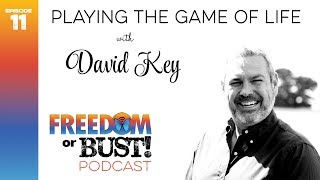
In this episode of the Freedom or Bust podcast, hosts Joelle and Natalie Rivera interview NLP trainer and life coach David Key. The conversation traces David’s journey from early entrepreneurial experiments and a tech sales career to discovering hypnosis, NLP, and eventually becoming a coach. He reflects on the challenges of pioneering coaching two decades ago, shares a new, simple three‑principle framework he believes can dramatically increase a coach’s impact and even help resolve global conflict, and uses historical metaphors (lime for scurvy, germ theory) to illustrate how transformative ideas are often ignored for centuries. David discusses his personal legacy—wanting his daughters to remember his authentic service and using the starfish‑on‑the‑beach story to emphasize making a difference one person at a time. He recounts mentorship from Dr. George Pransky, who warned against ego‑driven goals like “help a million people,” urging him to focus on presence and authenticity. The hosts highlight themes of uncertainty, curiosity, and authenticity as keys to personal growth and entrepreneurship. The episode closes with gratitude, a call for listeners to join David’s community, and promotional mentions of the podcast’s 21‑day happiness challenge and side‑hustle course.
Chapters
Welcome to the Freedom or Bust podcast with Joelle and Natalie Rivera. You are here because you will accept nothing less than the freedom to determine your destiny, do what you love, and fulfill your life's purpose. We believe that self-employment is the ultimate form of empowerment. And our mission is to bring you guests whose powerful entrepreneurship stories and real-world advice will give you the inspiration and tools to create a business and life that you love. In this episode, Joelle and Natalie interview life coaching pioneer David Key. David transitioned from a career in sales after being inspired by a series of events that showed him the power of the mind. His hunger to learn how the mind worked and how changing our thoughts and beliefs could change our lives led him to become a master trainer in hypnosis and the first Association of NLP accredited trainer in the world. He created a successful life coaching business before life coaching was a thing, and he has taken what he's learned over 30 years and trained over 55,000 people from 40 countries through his award-winning, dynamic, and innovative online and in-person coaching programs. Joelle and Natalie are particularly excited to be helping David share his inspirational story with their listeners because David's training program had a profound effect on their lives. During a period of long-term illness while Joelle was bedridden, they enrolled in David's Neuro Linguistic Programming online training course, and what they learned about the power of their own minds helped them turn what some would say is a curse into a blessing. Today, the three of them are collaborating to continue to spread David's powerful NLP and coaching strategies through a certification program through Transformation Academy. David's powerful storytelling and sense of humor make his story truly inspirational and fun, and his authenticity, passion for contribution, and willingness to embrace uncertainty make him a world-class teacher to us all.
Okay, so we are excited to be welcoming David. Thank you for being here.
Thank you, David. Uh, you're obviously a pioneer in the field. I think that Every listener, if you're out there, you're gonna get so much out of this interview. And as many of you heard initially in the introduction, you know, we met David in a vulnerable place in our lives. You know, at the time we had the 5 businesses, they were crumbling down because I was sick and bedridden, and we were looking at different tools, just continue to grow, continue to add things, really looking at where we wanted to be. And David had a course and we took it, provided a lot of solid tools that we needed, that I utilized not only as I was getting sick, but as I was getting better. I remember doing some of that NLP work and standing outside of my house and, and really utilizing those tools to get myself not only stronger mentally, but also work through it physically to get to where I am today. So thank you, David. We're truly honored to have you here, and thank you for what you've done to change so many lives.
Oh man, I didn't know that. Until we spoke a few months ago, and, uh, it really touched me. It really did. To know that you're just sitting here at your computer creating a course hoping to impact people's lives, and then I don't know how many years ago it was, but, uh, to find that, you know, you've made an impact and you weren't even there is really sort of music to my ears. So thanks for sharing that. I was really sad.
Thank you, and I think it's amazing because obviously you dedicated your life to transforming lives and there's a lot of seeds that you've planted and I'm pretty sure there's so many lives around the world that you've impacted and it's hard to see sometimes what that impact looks like. Like you say, you're in the background, you're a creator, you're creating those things, you're being guided to really impact those lives, and I just want to thank you on behalf of all those people. So I'm really excited to jump on your journey and really learn more about what got you to where you're at and what some of the lessons you can help give some of our students and some of our listeners.
And so just as a side note here for people who aren't familiar with David or us, is that we both kind of are in this world of online education. But what's interesting about David is he's been in it longer than most, and he started before it was even completely or really at all online. So we're gonna get into that story of how the whole field has changed as you've been in it. So it's been probably a really unique perspective for you to see the personal development industry, NLP, hypnosis, spirituality, all of these things, the whole industry has changed. But so, with that said, we want to know kind of how it all started. So you can go as far back as you want, but as far as your entrepreneurial journey, like what was that first introduction to being self-employed, finding your own path?
Sure. Well, I'm really excited about this conversation that's going to unfold. I really am. And, and it's an honor to be here. And I hope that— I guess if I go back to the beginning and start the journey off with you, and then we'll see where that goes. But hopefully there'll be some things that come up that maybe will be helpful to the people watching or listening to this episode. So it started— my parents split up when I was 4 years old. I was born in 1967, so I'm 52. And my mother was extremely poor. My father, he sort of left and wasn't paying any money. So she didn't have a job, was struggling financially. I remember having rations of bread, seriously. Like we'd have a loaf of bread and she said, we can only have 2 slices today. And so she was very insecure around money. And one day I saw my friends had a pair of roller skates and I wanted some roller skates. And I said, "Mom, can I have some roller skates?" She says, "You know, we haven't got any money." I said, "But I want some." She said, "Well, if you want some, you're going to have to go and earn it. You're going to have to go and get the money." Because I didn't get pocket money. She couldn't pay me for doing chores. So I said, "Well, what do I do?" She says, "I don't know. Work it out." I was 8. I was 8 years old. It was the '70s. It was the early '70s. So I was like, okay, so I'll tell you what, I'll go and wash cars. So I got a bucket out of the cupboard and a sponge, and I just, as an 8-year-old boy with really long hair, shoulder-length hair, you know, it was like knocking on the doors, fluttering my eyelashes, saying, do you want your car washed? And I remember the lady, because we lived in a block of flats, So I knew this lady and she said to me, she said, well, how much do you charge? I said, well, I don't know, what's it worth? And she gave me a couple of pounds, like $2 or $3. Back in the day, that was a lot of money. And then I just thought, oh, this is easy. So I just knock on another door. And I used, on the weekend, I used to do that. There was one guy that I never forget, it was 1990, 1975, and I knocked on his door, and he was a Canadian, lovely guy. I was still— I was 8, and he had a Ford Granada car. You might not know what that make is, but it was a big— for me, it was a big car to wash, and he paid me £5. Now, £5 back in 1975 was about $8. That was a lot of money. I was able to buy my roller skates and buy all my friends gifts and good, you know, and, and it was just so easy to me. So I would guess that that was my first start of being an entrepreneur.
Um, yeah, that first seed was planted.
Yeah, it was. So I didn't have any insecurities about asking people, do they want a service? So I used to caddy I used to carry golf clubs for golfers at the very wealthy golf club, you know, private golf club. So I always had what I wanted and what I needed to be a kid, you know.
Well, I think it's beautiful because it really shows out of necessity, you know, at such a young age to realize that you can create. And I think that's such a valuable experience for anyone when they get to that point, regardless of their age. You know, there's a lot of listeners out there that are thinking about becoming entrepreneurs. For them to be able to say, do something to create income. Because I remember even for me, it was selling candy at school. You know, I was also, you know, family that was struggling. And so, I started selling candy at school and doing some of the things like what you were doing. And it was like the first time that I got my, made my own money and realized that it's possible.
It's great feeling.
Listeners going out there, it's like taking that first step and understand that it is possible.
Yeah. And actually, it's funny because it was making me think of, I also had, like, I think I was about 11, but what I did is I had always seen, we used to go to yard yard sales when I was a kid. And so I kind of got the concept that you could put your stuff out on your lawn or at the corner or wherever and sell stuff. And so one day I just decided that I packed up all my Barbies because I didn't use them anymore. And I went down to the corner of our road. And I just sat there with my stuff and some lady came and bought it all. And I think it was about $8. And like, to me at that age, I was just like, blown away that—
wow.
I sold something, and it is funny how those things do— maybe obviously makes an impact because most people aren't entrepreneurs. So it has to be that something about those experiences we had where we felt like we wanted something, we had to find a way to get there. We didn't just take it's not possible as an answer. Like, that's so innocent. But really, it has to make a difference because that's a common theme that we've found with a lot of people we've interviewed and other entrepreneurs we've met, that they had that sort of experience.
You know, I think it's really quite simple if we look closely, that we didn't have any thinking going on in our minds about selling the Barbie, saying, hey, do you want your car washed? We didn't have any thinking about it. In other words, oh, what if they say no?
Right?
Or maybe no one will buy my stuff and no one will talk to me again. We didn't think that, did we? We just were kids.
Yep.
Yeah, we had that innocence in that, that it was just going to happen, that understanding that, well, I'll just ask and it's just going to happen.
No fear of failure, no feeling like you have to do it right or that you're going to be judged. As adults, if we get those thoughts out of the way, we can still have that, that same drive that we had when we were a child. But so I'm curious, you know, obviously you had that seed planted early, but after that, Did you kind of always keep that? Did you always have a side thing? Did you become an entrepreneur right away or did you go into a traditional career?
Yeah, I went into a traditional career. I mean, if I go back, I went to 9 schools. I was asked to leave 5 of them. Okay. I was pretty off the rails. I was passed from pillar to post. I lived with my dad and then I lived with my mom and then I lived with my dad. He was married 3 times and he was a bit of an alcoholic. Well, he was a big bit more than a bit of an alcoholic, God rest his soul. Um, and my mom was very insecure and in, in and out of depression. So, um, I left home when I was 16 with no academic qualifications, and I had— but I had a dream. I had a dream that I wanted to be an entrepreneur. And at that age, Richard Branson in the UK was like— he was doing quite well, right? So I, I just watched the guy and I was like, I want to I want to be a millionaire because he used to go to the stock market, stock exchange like Wall Street over here in the UK, and he'd wear a jumper. Everybody was in suits and ties and he was a bit of a rebel. So I was very much a rebel as a kid growing up, wanted to earn money, but I had no idea what career I was going to do. So I went to a careers advice at the local council and did a test and they said, have you considered going into selling? Into sales. You could pretty much do that without any academic qualifications at the time, back in the sort of early '80s. So I ended up getting into insurance, didn't like that. I tried a number of different things after having a stint working at McDonald's. I wasn't exactly living the dream then, but it was work and it was giving me money. So I ran that, I did DJing, on the weekends to earn money. So I was— I worked in pubs and eventually worked in clubs. So I did all these things, but none of them were a career. So I eventually had an opportunity. I tried some work as telesales, and I had an opportunity for an interview with a software company, computer software. And, um, I ended up working in the IT industry from the ages of about— I think I was I just turned 20 years old and I ended up after a career, the first 6 years being one of the top salespeople in that company. There were 45 sales guys and I was like number 1 for 5 years in a row. People say, how do you do it? I was like, I don't know. Just go out and speak to people and find out what's important to them. Listen to them. Feel their pain, and then offer the solution if you can, you know. And they were making it complicated, some of my peers, I felt. But anyway, so I ended up working for the MD of Apple Computers in the UK. That was back in late '80s, late '80s, 1991, I think I was eventually working for him. And yeah, he was a great mentor.
Well, I find it interesting your journey because, I'll share in a minute, but our journeys kind of intersect a lot and how they kind of unfolded because I moved around a lot. So, I went to a lot of different schools growing up as well. What did— did you get anything from that experience of having to go to different schools and things like that that helped you in sales and different things that you did?
Oh, 100%. There's no doubt about it. You see, I went to a private school when I was about— when I was 10 years old, very exclusive school, a private school. And you would go on to Eton or Harrow. It's like where Winston Churchill went. Okay, that was like where you would go after the what we call pre-prep school. Anyway, my father, he moved to Australia, stopped paying school fees, I had to come out of that school. And I was extremely well-spoken. And I went to it from that school to like a school where, um, you need to know how to handle yourself, put it that way. And I was the posh kid that came in, and I was picked on because I was doing really well in my grades because the school education system was a little bit behind from where I'd come from. Long story short, I learned really quickly that if you wanted to have friends, you had to sort of be a little bit more flexible, adaptable. And I learned to build friends really quickly because I'd be in the school and then I'd left that lot of friends and then I had to make a new group of friends, right? So for me, that absolutely had an impact. What about you?
Well, and that's exactly what I was getting at because for me, I had a very similar experience. And what's interesting for me is that I ended up in my early 20s, my brother had passed away, I got in a car accident, and all these things, but I started working as I was started going back to school in sales. I used to work in AT&T calling people and I ended up the top salesperson in the company. And people used to ask me how I did it and I was like, well, I'm just having conversations, you know, connecting to people. And from moving so much and from going to so many different schools, one of the things that I learned is that I had to be adaptable. I had to learn how to connect with people quickly because I might be at the school for 6 months or not even sometimes, and that I had to try to fit in. So I knew how to kind of not play the game, but just get to know people at a deeper level and connect with them at a deeper level, just to kind of survive.
I think it's playing the game as well, though, right?
It is a game.
Yeah, it is a game.
Life is a game.
Yeah, I mean, because you wanted to have friends. If one of our core needs as a human being is to be loved, and, and we're not in an— our life experience circumstances are such that we're not having a chance to get those deep connections. We have to develop that because it's a human need, right? So for me, that was my way of going into sales was if someone bought from me. It was inaccurate, but it was my reality. And when I say inaccurate, it's not the truth of where love comes from. Love doesn't come from your customers, but I think that I thought for a long time, oh, if they invest invest in my software or my product or service, then they, you know, at some level they like me more than the competition.
Yeah, it's approval. It's like the ultimate approval where someone has to put their commitment or their money on the line to be working with you. So I can totally get that. I can also really see the foreshadowing of, you know, finding your way into the personal development and NLP and hypnosis because just like us, it was probably at some degree from a curiosity of understanding yourself and your own mind and how it works. And so if you wouldn't mind sharing, like, how did you go from, you know, random jobs to sales in like a tech industry and then into personal development and NLP? Like, how did that happen?
Yeah. Okay. I can tell you the story. I just, I'm smiling because I don't really think about it very often. So I'm going, yeah, how did I? Wow. I mean, I'm a seeker. Most of the people listening to this podcast at some level are seekers, right? And, um, I— when I was in sales, the company put us on a course with a guy called Zig Ziglar, and his course was called Sell Your Way to the Top. Now, he was an inspirational speaker. We also went on a course with a guy called Alan Pease, who wrote the book Body Language. He was an Australian. So this was in the, um, late '80s. Early '90s. I was very interested in— well, the exact story is I didn't read much. Okay. And I was actually going to see a software potential client to show them our computer software. And I'm sitting at an airport and there was a book that just jumped out. It was blue. And I saw it out of peripheral vision and I walked to the shop while I'm waiting for the plane. And it was a book by a guy called Ben Sweetland called Grow Rich While You Sleep. I thought I was in my 20s. Yeah, I was like, that would be cool, wouldn't it? So, so, and so I started reading the book and it drew me in. And he, and he starts off with a story and it really gets me. And, and then he reveals that the book isn't about making money while you sleep. It was about the power of your unconscious mind. I was like, wow, this is fascinating. Then about a couple of weeks later, a friend of mine said, do you want to go to a show in Blackpool in the north of England on a stag weekend? And he was really shy. And I said, yeah, sure. His name was Russell. And we went to the show as a hypnotist, stage hypnotist. And Russell ended up getting called up on stage. Now, he wouldn't even go up to a girl and ask if he could buy her a drink and have a conversation. He was so shy, never had a girlfriend. Timid as, as a mouse. And he went on stage and he ended up getting the microphone and doing a stage show under hypnosis. I was blown away. I was confused. And I wanted to know more. So immediately after that, I hired a private hypnotist who worked in Harley Street in London. Harley Street is like, sort of one of the most exclusive, exclusive areas you'd go for private medical resources. And hip— there was a hypnotherapist there, and I hired him, and he trained me personally, one-on-one. That was just the start of my journey. So that was what, crumbs, about 30 years ago.
That's pretty awesome. But I love that it was like— because I remember I saw a hip— a hypnotist, like a stage show, when I was in high school, and it was the same reaction, like, like, holy crap, our mind is like way more in-depth and crazy than I thought. Like, it just made you think like, wow, how can it possibly be that way? How come nobody told me that we could, you know what I mean?
I know, yeah. I was exactly the same.
When I love the fact that for people listening, it's, you know, you saw this book and you said, I'm going to look at it. I'm going to explore it. It's calling to me.
Yeah.
You know, I had this experience with hypnosis, it's calling to me, I'm gonna follow it. So it's almost like what you're saying, you're, you're a seeker, you're a natural seeker, um, and there's a lot of people out there that have these signs come up in their lives and it's almost like they get so comfortable they're afraid to kind of step outside of their box of certainty. Yeah, I think it's beautiful also to learn like that letting go and just trying that new thing can unravel into something so much greater. Because look at where you've come from there.
That's right. Yeah, um, I totally agree with you. You know, I, I think I was blessed with, um, it was also my downfall later on. Let me explain. Because I wasn't in my intellect all the time, because I was going from one school to the next, never took any exams because I was never there at the time when they did the exam. So I missed out. Thankfully, when I look at the stress of the kids now, I'm like, in some respects I was smart enough, you know, to work things out. But I wasn't always up in my intellect. I was very much in my heart, heart on my sleeve, follow the feeling and trust, um, and see, see the work that I was doing as a game as opposed to real life. It's like a game of Monopoly, a game of snakes and ladders actually is the metaphor that I use with my students when I'm training coaches or, or working with my apprentices, is that the game of coaching or personal development or any type of work that we do is like a game of snakes and ladders. Everybody knows snakes and ladders, right? But I think sometimes we have these expectations that we're going to get to 100 with 3 rolls of the dice. And we get to 99, we go, hey, we're gonna crash it here. We throw a 1 and then we're all the way back down to number 2. And then we give up because we get defeated by the game, but we haven't seen it's a game. We see it as, oh, this is real life, is a reflection of who I am. And it isn't any of that. So I've been very fortunate that I've seen that later on when I look back to join the dots up of this journey. I got to this conversation with you because of an intelligence that's far greater than me.
And you are willing to listen to it.
Yeah.
Yeah. So I'm blessed with that ability to not get too insecure when I have an icky feeling in my stomach and misinterpret those butterflies as fear or a wisdom and intelligence that's trying to nudge me to wake me up to take some action. Instead, so many coaches, don't they— I see it, and it's not their fault, you know, there's no finger-pointing here— but so many coaches get this unpleasant feeling like, oh, I need to go and make this call, or I need to implement the dream and do the program and complete it. But they don't because they come up with this, oh, he's been doing it for 30 years. Well, there was a point when I wasn't doing it. And I just kept throwing the die. And I'm still in the game of Snakes and Ladders. And yeah, I have moments where I've come tumbling down, you know, just keep smiling.
But that's exactly the point really of even doing this interview and our podcast in general and what we do with trying to inspire coaches and entrepreneurs is we want to bring people like you in to show them that at one point you had no idea you were going to be in this field. You were doing something completely different, you didn't have ideal circumstances at the beginning of your life, you just followed your inspiration, you figured it out as you went along, and that you were open to learning, and then most importantly, you were open to taking those steps. And I think you're absolutely right. They look at it and they say, oh, someone with 30 years experience, how can I compete with that? Which actually, right before we started this conversation, we were talking about that, that we don't really see competition. But it's because that exact— it's like if you look at it and you compare yourself to everybody else, you're never going to feel worthy. You're never going to feel like, I'm good enough, because someone else is always going to be better. So just don't look at them. It doesn't, it doesn't matter.
Well, you know what, one of the things that I share in my book Joyride is a quote from an American, um, Eleanor Roosevelt. You've probably heard her name, right? Yes. Some people say it might be Theodore, but I believe it was Eleanor Roosevelt that had, uh, or The quote was, comparison is the thief of joy. And so many of us do that, right? We look where we are. If I was to compare myself with a Tony Robbins or Richard Branson, I'm going to feel different than if I don't even think about it and just play the game of coaching in my own little world and helping my clients as best as I can, making an impact and not thinking about how other people are doing or how I'm doing.
I really also resonate, and I'm gonna rewind it a little bit. When you start talking about the game, because for me, at a young age, I started looking at life as a game. And I remember one time I got in trouble. I forgot what I was doing. I was, I used to like to get in trouble when I was young. I think I had taken the car. I had told my grandfather at the time that if I washed the car, can I take it out for a ride? And he says, sure. You know, I think I was 13 or 14 years old at the time, and he didn't think I was actually gonna do it. So, they left left me alone with the car. So, I took the car for a joyride. So, and then, I remember I got in trouble for it. And I remember telling the family, it's like, I played the game wrong. That was my response. I said, life is a game and I played the game wrong. And I'm learning how to play the game better, you know. But everything I've done, I've looked at that life is a game. And when you make a mistake and you fail, what are you learning from that game? To then improve to get to the next ladder as you're talking about.
That's right.
And you have to be clear what you want to create so that you learn how to play the game to create that thing that you want to create.
You know, you remind me of a life lesson I had on this journey from my own mother. And I have to be honest, I didn't listen to a lot of what my mother used to tell me. But one thing that I discovered when I was doing my master practitioner in NLP, so it's a long time ago, a few decades ago, We were modeling different strategies. So for those of you who don't know, NLP is a meta-discipline and it allows you to model thinking strategies. So the structure of decision-making or the structure of doing a good presentation, like what we call the charisma strategy or things like that. And she's a bridge player, the card game bridge, and she plays for England. And so she's one of the best in the country, in the UK at least anyway, a grandmaster as they call her. And I was bringing her down and I wanted to interview her to find out how— what her thinking and belief systems are for— to allow her to get to be one of the number one players in the country and to play for her country. I wanted to know what her beliefs were. And I remember asking her a question in front of all my peers. And I said to her, I said, look, Mom, you've always wanted to win at everything you've done, right? And she looked at me as if I just got off a different planet and sort of said, where did you get that from? I said, well, when I was a boy, when I was 5, I went to play Monopoly. You'd always win. You'd never let me win at anything, any game of cards we'd play, snap, You'd never let me win. I'd always be upset. And she went, oh, I didn't beat you because I wanted to win. I didn't let you win because I wanted you to concentrate. I was like, oh. So can you see how you can take an idea of something when you're a kid and you can take it with you your whole life and it's not true? And I said to her, I said, so what is your philosophy to get to where you got to, to play for your country? It's pretty awesome. And she said, oh, I don't compare myself with anyone else or what anyone else is doing. I just ask myself, you know, how can I play the game a little bit better than I did the last time? She said, can you imagine how far you'd go down the road of success if you just did that for the next 30 years? It's always that constant and never-ending improvement, yeah, we hear about in the world of personal development.
Well, and if you're listening out there, I think that's such a big nugget to take in. That is not— it is that constant improvement in your life, that small little thing. Sometimes we think that we have to have this big thing has to happen for us to get to where we want to get to, but it's the small little things that we do even on a daily basis that'll help us get to where we want to get to.
And it's like progress, not perfection.
Yep.
Yeah. Oh yeah, that perfection thing will stop a lot of coaches, a lot of people, helpers, changemakers out in the world who have something to give the world, to impact another human being because they've taken a course or they've committed to at least learning how to become a good coach. But yet they don't get out in the world, um, because they want it to be perfect and My, I guess, a little thin slice of understanding about that perfection is coming from the software industry. Okay. So working for Peter Cobb, he used to be the MD of Apple Computers, broke away, set up his own business in the, in the early '90s. And I was sales director. Okay. So I'm a 20-year-old working for a wise guy who ran a very large part of the Apple organization in the UK. And, um, we were developing some software and I was getting a little bit frustrated because the software team, development team, hadn't released this product yet and I had clients waiting to spend their dollars, right? So I'm just like, Peter, we've got to sort this out. And I remember him coming out, he said, look guys, you've got to put a stake in the ground and you've got to release what you've got now because version 2 can come along in a few weeks' time and version 3. And that's the same with us as coaches. Coach where you're at. As long as you stay within your grounding and what you know, don't worry about what you don't know. Just stay with what you know, and then you're staying in your authentic self, as opposed to, well, I think I better say this, but you haven't really understood why you've got to say something then. And that stake in the ground of not trying to be perfect will help you to be a better coach than most.
Well, I think it's so valuable, and I want to thank you for sharing that because I think there's a lot of coaches that are there. Yeah, you know, so I think there's a lot of people out there that whether you're a coach, whether you're in business, that needed to hear that.
Yeah, you, or you have a business idea, and that's actually what I was thinking of, is that it's also looking at your journey is a really great example of the same thing applies to your, your journey in your career or your business where it's like You didn't have, just like us, like we didn't have this like vision of exactly what we were going to be doing like 20 or 30 years in the future. Like we don't even really know what we're going to be doing in 5 or 10 years because we've learned from experience that it just keeps incrementally changing. You just keep going after that next thing. You learn the next skill, you follow the next impulse to something you're interested in, and slowly it evolves into something. And that, so it brings us back to the story of how did you get where you are now? So You're working for this software company, you're exploring hypnosis. So what were those next stepping stones that took you out of a regular career into being an entrepreneur and using this stuff with clients or training people?
I got, I got to the point where I was presenting a million-dollar solution to a company IT director, um, back in, so 20 years ago, a little bit, actually, probably longer than that. And, um, He took me out to lunch. He was a lovely guy. I can't remember his name, but that doesn't matter because he just took me out and said, Dave, I really like you. I'm going to invest in your solution this afternoon. We'll send off a purchase order, probably by fax. For those of you who don't know what a fax is, Google it. So anyway, and he said, but before I send off the purchase order, it's a lot of money. I've only been in the job 3 months. My reputation is on the line. Am I making the right decision? Now, there were a lot of problems with the software that this— this was a new company that I was working for. And there was a load of problems, a load of challenges. A couple of the clients were taking legal action. And what he said struck me right here. And there was a voice in this head going, well, think about all the commission. Don't tell him about the problems with the software. It probably won't affect him. And then the other voice in the other ear was going, you can't do that to him. And it was in that moment that I went, no, you're not. And his glasses nearly fell off his nose. He looks at me, there was an incredulous look as if to sort of say, I can't believe you just said that to me. I'm not making the right decision. And yet you've been talking to me for 3 months. Why have you waited this long to say anything? I said, I don't know. But I'm out of the company, I'm going to leave. And the reason I'm telling you now is because you're a really lovely guy. This software, I think you need to be aware, there's going to be a lot of challenges. Now, he obviously didn't buy, and I quit the job. And it was at that point that I decided I wanted to get into coaching. And I'd read Tony Robbins, I'd done some training with him in the mid-'90s, firewalking and studying his work in other coaching schools. And I decided, right, I'm going to do it. I'm going to break free. I'm going to set up my own practice. And I went on a lot of programs, NLP, hypnosis. I got invited to train out in the States, become a master trainer with Dr. Tad James and many other pioneers in the field. Um, and yet I still struggled when I first got going. Um, I had to go back and get a job after my first year, my first attempt at creating this successful coaching business, and I ran out of money. And I want other coaches out in the world to hear that. To know that I stayed in the game. It's just I went from 98 on snakes and ladders all the way back to zero, and I was really disheartened. And it was, you know, there were moments where I'm like, maybe this isn't for me, maybe I'll always be a software in the working for somebody else. And I went and got a job, and it lasted 6 weeks. And the, uh, this— the VP called me in And he said, you don't really fit in with the team. And I knew I didn't because my mind was on coaching. I wanted to be doing that. And he said, we're going to give you until the end of the week. You've got a week's wages, which wasn't enough to pay the mortgage. I didn't have children at the time, thankfully. Um, so I had to make it work, a second attempt. And it just worked out. I kept rolling the die. Like you said, Natalie, just taking one step at a time, the next step, and then the next step.
Well, and I love how real that is because we've all been there. I mean, like, there's many times that we went back and forth between, you know, at least one of us trying to have a job to try to supplement as we were growing. I mean, we went through our whole experience of basically having our entire business come crashing down around us and having to rebuild in a completely new industry. So it's like these things happen, and I think a lot of times it's like you said earlier, is that a lot of times when, when something doesn't work, people like, it's like they see it as a sign that they should stop instead of a sign that there's something that they can learn and do differently. And so my question would be, when you had that first year and then it didn't, it wasn't ultimately financially coming through for you as much as you needed, like, what was the biggest lesson? Like, what do you feel like Okay, I figured out I was doing something wrong. What did you do differently the second time that someone else might be able to do to maybe prevent that first level of failure? But even if they do, like, how do you come back from that?
Well, I spent a little while licking my wounds, worried about what other people thought. There were a couple of people in my family who were saying, ah, you'll never make a living from coaching. Who wants a coach? They didn't understand. And there was something inside of me saying, I've got to keep going. So after I licked my wounds, brushed myself down. Um, I went out and found an NLP trainer, um, that came highly recommended, and I had some private coaching, and I realized I need my own coach. That's another thing. Um, the other, the other things that I realized quite early on is that I was hanging around with people— we were talking about this earlier— I was hanging around with people that weren't making it as coaches. And learning from people that had strategies that weren't working. So I was implementing strategies to try and attract clients. I did this for years and really struggled because I think I hadn't seen, which I see clearly now, is that I want to hang around with people that are getting results, that know how to get results, that seem pretty chilled out about it and aren't frantically throwing the dice to get up the ladder. So I went from being stressed out coaching, coaching all the— that's all I had on my mind all the time. It affected my relationships. My personal intimate relationship with my wife was affected because I was so self-absorbed in trying to make it work that I hadn't seen, oh, I just need to hang out. Who's making it work at the moment? So I started to just surround myself with successful individuals. That had the right philosophy, the right energy. They weren't frantic and they weren't trying to build up your adrenaline to get yourself in a certain hype state so that you can keep going. Although there are times when you need to, obviously physically you need to have what it takes to be able to stay in the game sometimes, especially when you're training for 21 days. So, um, That was my biggest lesson. I don't know if that struck home. It's just hanging around with people that have been there. They've done it. They've got the results. It's— there's the social proof to demonstrate that. And then I went on that journey with those individuals and learned from them.
And I really love it because it's so powerful. And I think that's one of the things that if I could go back and learn quicker in my life.
Yeah.
Uh, is to surround myself with some key people because it's not only about the strategies that you learn. I think it's also about the mindset.
That's exactly what I was thinking is that you were, it's like you were picking up the mindset of these people. So you might have been looking at it at a practical level, like what are they doing? But being around them, hearing their conversations and the way that, like you said, they're not frantic. They're, they're feeling really confident. It's like, well, Why are they feeling so confident? So it makes you start to look for those answers, and it's powerful.
Yeah, very.
Actually, I'm curious to know, when was that first time that you thought to yourself, I made it?
I haven't had that thought yet. I think only probably in the last few years. I think when I received, in 2015, it was a really proud moment for me when I went to this dinner that had been arranged by an organization in the UK for coaching, professional coaches, trainers, and consultants, and got an Outstanding Achievement Award. And I was like really confused by that because I just thought what I was doing was what everybody else was doing. Because remember I was saying earlier on, I don't really look at the competition or what everybody else is doing. So when I got that award, I was, I was a bit gobsmacked by that. Then when my book Joyride became an Amazon category number one bestseller in a few categories, I was really proud of that. But I think it's the stories from people like yourself, the stories from my clients going out and working with the homeless community, because the coaching model that I teach my students and we have in place was modeled from reading the, the likes of Tim Ferriss's 4-Hour Workweek. All right, so I probably only work a couple of days a week, and the rest of the time I can give to good causes. And for me, that's when I realized, oh crumbs, I'm earning a real good income here, and I'm actually not really having to be on that treadmill that I was on for years as a coach, like a hamster on the wheel. So I think I realized that perhaps I'd made it when I saw that, oh, I'm only doing 4 hours a week, and yet we still do 7 figures this year, so dollar-wise. So that's quite a nice feeling, and that was only in the last couple of years.
Well, and what's awesome about that, again, is because of the longevity of your story. It's like there's so many people, it's like they're trying to get there in like 2 years. It's like, like you said, like, I want to get to the top of the ladder in 3 roles. Like, that— it's not that that can't happen, But that part of it is like, actually one of the stories we always talk about is the Chinese bamboo, and that most people think of bamboo and it's this huge, massive plant, but they don't realize that when you first plant it, it doesn't grow, because it's growing really slowly because it's working on the rooting system. If it just shot up 80 feet, it would topple over. And I think that your story is the perfect example of that. Just trusted that it was going to unfold. You did the action to take the next step. You continued to invest in yourself and learn and grow in the constant never-ending improvement. Learned the lessons from the failures and obviously studied people to learn like what strategy, like what lifestyle do I want? Like The 4-Hour Workweek, that was really influential for us too, is that recognition that we wanted to be able to have a business that fit around our lifestyle we wanted, not try to force our lifestyle to fit around some big massive business that keeps us working 80 hours a week. So it's like that, but people, I hope that they can hear that you didn't get there overnight, that the overnight success thing is not true, that you did the work, but it didn't have to be like super hard, horrible work. You did what you love, you know?
Always. I've always enjoyed what I've been doing, but there have been moments when I've woken up in the morning going, I really don't want to do this today. But I have to because I had clients and I was teaching in the room. So I went from learning the trade of coaching to becoming a teacher and a trainer to having a big following online. And we know about— that's how we met. Um, but I wouldn't have given any of that up, all those struggles. I think that, that was necessary part of the rooting system taking hold, right? So yeah.
And actually, it brings me back to— I think it's an important question is, how do you deal with failure and uncertainty throughout your journey? Because I think this is one of the areas where most entrepreneurs and coaches struggle with.
Right. Well, I'm really fortunate because part of that journey took me— let me go back to about 6 years ago. I had an experience that shook my world in my personal relationship to the point where the two, my wife and I, were going like this. And everything that I've been studying up until that point had been really helpful and got me through, but I stumbled across something that was so profound that it shook my world. My wife had a transformation right in front of me watching this this lovely guy from Seattle on a video. I don't even know if it was on YouTube. I don't think it was on YouTube. And she watched this guy and he said, you know, during his presentation, he told a story about how human beings experience fear, how they experience their reality. So you could say disappointment, failure, fear, all of those things that we say are negative, those negative emotions. He was explaining where those feelings came from, and she heard what he said and changed. And I played the video back about 20 times. I'm like, what is he on about, this guy? So, so bear with me on this one if you're listening now, because this changed my world, and it changes my clients' worlds, and it changes my students' world when they catch on. And it was this, is that All negative experiences are coming from thought in the moment. The stories that we're telling ourselves are creating our experience, and it has nothing to do with the past or what happened a minute ago. So your failures and your setbacks are just memories. Even if you failed today, what you're experiencing now, if you're feeling a failure or you're feeling you can't go on or you're uncertain about the future, the unknown, that's just coming from your thinking today in this second. And it's not a representation of reality. It's just thought in the moment. So we tend to, as human beings, scare ourselves. Now, back in the day, I could have used hypnosis or done an NLP anchoring, collapse anchor technique, swish it out, get it to reframe using language. But now what I see is that the magic happens in the unknown, the magic is in uncertainty. That if you can embrace that and go, what are you saying, Dave, that I shouldn't be thinking ahead 500 steps? And I'll be going, absolutely, don't think ahead 500 steps. Because when you get in your car and driving, you can only see the 150 meters ahead with the lights at night. And you spend all your time wondering what's around the corner, you're going to take your eyes off the road right in front of you. So most human beings, most coaches who are struggling, and that's, you know, that's just part of the journey we go on. I think if they could embrace the fact that all insecure feelings about the unknown future are just stories you're making up in your head, and if you could drop the story and have nothing on your mind, you'd be like a kid in a playground on a swing. Yeah, it's like, are you motivated right now on the swings of the kids? If you ask them that question, they go, what are you talking What are you talking about? Because motivation's innate. What stops us feeling motivated is the story we're telling ourselves. We drop the story, our innate feelings of power, passion, drive, determination, they're there. You don't have to manufacture them. You're born with those. It's why kids fall over and get up and keep walking until they can walk or keep trying to walk. You know, the babies. They don't need motivation. They have it.
Well, and I love it. Because I think again, it's a message that a lot of people need to hear out there.
Well, it's like that curiosity. It's like living in a state of curiosity rather than trying to figure things out or avoid potential problems. And it's like, how is this going to unfold? And that's obviously, I mean, like, that's a topic, like, it's so simple. What I love about it. But it's like, you could, you know, you could, we could go way down the rabbit hole.
I could talk about this till next year.
Yeah, I know.
Yeah.
Well, it's like looking at, it's like, it's like, we all, we both come from the world where we're teaching people how to change our thoughts about our past and change our thoughts about our anticipation of our future, and that the now is the only place that actually exists. And that people can't necessarily get that intellectually until they have a moment, like you were saying, like for your, for your wife, when she just like, She heard the words, and it just clicked in that right moment. So it's like, if you're hearing this and you're going, okay, I can kind of see that makes sense, but it's not feeling real for me, just know that, just keep listening to things like this. Keep, you know, like, check out what David's doing, take courses, watch videos until, because sometimes it just, it's like, takes that right person at the right moment to make it click, that it's not Yes, you can use tools like NLP, coaching, psychology to change your mental structure.
Yeah.
But sometimes it's just about getting the damn thing out of the way.
When I see this, understanding it, not at an intellectual level, a deeper emotional, spiritual level.
Yeah. This is beyond, this is beyond the word.
Yep.
This is beyond linguistics and language because language is form. Thought is already a solid— it's almost like it's, it's what comes before thought. That's the nothingness. That's a, a spiritual intelligence that's available to every human being. Now, without freaking people out, I think we, we've all had insight. We've all had those moments where we just get something. And everybody here, if they're listening to this, if they stayed in the conversation, kept looking in the direction of where their experience is coming from and that where, where does thought come from. Okay, they start to see that you can't get this intellectually, rightly so, but they can't ride a bike intellectually either because you see, you could give someone the instructions, but if you can't teach them how to balance, they have to find their balance.
Right.
It's a feeling, isn't it? So someone who's struggling listening to this as a coach perhaps and thinking, I don't know what to do next, don't do anything would be my suggestion, even though we say the worst vice is advice, right? So it's like, so it's don't do anything and allow your mind to settle like the proverbial snow globe. And when the snow settles in a snow globe, you can see through it. And when a human mind settles, We get clarity and then we get insight. We get new thought of what we're going to do next.
When it reminds me of Einstein, you know, Einstein used to say that his best ideas didn't come in thought, it came in silence. Yeah, that he used to sit in silence and just kind of connect and like he would have these great ideas come up and he would allow them to be there. And I think sometimes in our current society what happens is that We try to say, well, I'm not going to do anything because I need to recenter myself. But instead we spend that time maybe on Facebook or on social media or Googling things or whatever it is, but we don't give our time to have that silence for that snow globe to kind of settle down for us to truly hear that deeper voice.
Yeah. And I think it's, you know, I don't think it's anyone's fault at all. It's, I think a lot of the problems are due to the school system as well. It's like we pride ourselves on our intellect, but that's not where the magic happens.
Right.
The intellect is overrated.
Absolutely. Actually, I keep— I'm a metaphor person by nature. So for me, the metaphor that has helped me understand this most that might help is kind of the first thing to think of is that you might be listening to the sounds of what we're saying right now, but pay attention just for a moment. To the emptiness or the silence that allows the sounds to be. And you can also think of this physically. So if you're in a room somewhere, you can see all of the physical objects, but pay attention to the empty space that makes it possible for there to be a physical object. And it's the same thing with our mind. We might hear these thoughts in our head. Some people experience their thoughts more auditorily. They might see visions. They might feel things in their bodies, but pay more attention to just the energy or the space or the silence within yourself that allows those things to be there. And by, by doing that, you allow the snow globe to settle.
That's right. I think success in my clients is due to the fact that I'm a catalyst as a coach for facilitating a subtraction of thought. So taking thought away from them. And metaphors is a wonderful way of doing that. Because we love that as kids, don't we? We love stories. Yep. Sends us off into a nice place most of the time.
Yeah. And actually it reminds me, I just want to share real quick because I don't know if you know this story, but, um, one of the things that ended up happening is I was teaching psychology full-time and, uh, we ended up cutting it out. Uh, I can choose tenure, which means I can't get fired, or we can choose our path of trying to make an impact the way that we saw that we wanted to make an impact. So I turned that down and then we went to spend some time, like 3 weeks or more.
I think it was like more like 6 weeks.
Yeah, 6 weeks at the beach, basically trying to get in that space of what we wanted to do next and just listening to silence.
Like a sabbatical.
Like a sabbatical. We came back to the United States. We were in the islands at the time and we were staying at extended stay motel and not knowing what we're going to do, knowing that we were going to run out of money shortly.
So we like the joke, we were unemployed and homeless.
Yep. And, uh, we went to a laughter yoga, like, training thing class. And when we were there, we just— it felt right, so we showed up. And we looked at each other. Somebody said, wouldn't it be great to have a spiritual personal development magazine throughout the region that connected this community together? And we both looked at each other and was like, yep, that's it. And we had no idea. We didn't have anything to do with the industry, but 6 weeks later we had over 7,000 magazines. Distributed throughout the community. Financially, it just, it kind of unfolded. We contacted over 600 businesses in the first month, and we were just present in the moment, just being in flow. Just, we call it being hijacked. And I think that when you're open, you create that quietness, you allow yourself to be hijacked by flow to truly create something magical.
It's like that inspiration though, it's like we, but we took We took the steps. We took the space. We allowed the snow globe to clear. We got clear. We knew what to do, which was the inspiration. And then, we took the steps and the actions that were what needed to be happening in order to create the thing that we were then inspired from that clarity. So, some people, they never get clear. So, they never get something that they want. But then, when they get the inspiration, then they let fear get in the way, or whatever it is, or they just don't take the steps. So, it takes all of those. You get clear, you get the inspiration, and then you follow the path. And I think that it's, it's a simple thing that so many people, they overcomplicate it. Like it has to be this big, hairy deal.
Well, you know, that'd be one of the lessons that I took away from this journey and this call over the last 30 years is that I overcomplicated my business. Even going online with Groupon and other things. I don't know if we've got time to talk about that, but, um, well, we'd love for you to share a little bit about that journey.
Well, actually, I wanted to ask, I know we planted the seed earlier in the conversation that you've been in this for a long time. Obviously you started started getting training, doing training, probably in person. But I know that even the program that we collaborated on recently to help further expand the reach for what you've created in your lifetime also started as what we would say is like the first iteration of an online course, which is basically using CDs or tapes and DVDs. So it would be really interesting for people to hear your experience of watching an industry change as the technology changed from like in-person to the DVD-based, CD, even audio tape. It was that long ago. And then into where you are now where you can reach people all over the world. Like what has that been like?
Wow. I mean, see, okay, so I'm doing what I— when I first started, I'm trained as a coach, NLP, hypnosis, and now I can work with clients. Well, I haven't got any, I need some clients. So I went out and I had, I think, 12 different strategies, networking, advertising, trying to find clients. And eventually I started to fill up my practice. But it was hard. And it was a constant grind. And someone said to me at a meeting once, somebody I was sitting next to at a networking meeting over breakfast said, you're going to burn out. And there's only a ceiling on how much you can earn, you need to leverage your time. And I was like, how do I do that? He said, well, why don't you record record what you do, you teach, or you use to help your clients and share with people, and then you just record it once and then sell it over and over and over. So what you've just launched was what I created a number of years ago. So what happened was I collaborated with a few other NLP trainers and I created, uh, an NLP home study program. You see, back in the day, you did in-room training And before you came to the classroom, we sent out some CDs and tapes. I had a tape in my car, tape deck in my car, up until 2 years ago. And that's the truth. Terrible. So I had all these CDs made and someone would sign up for a 7-day course. We would send out the CDs and that was part of the deal. And then someone said to me, excuse me, one of my students, oh, why don't you sell, sell your courses on Groupon or something like that? I was like, I've never heard of them. Who are these Groupon people? So he said, look, I'll arrange— I know someone there, I'll arrange for a call. I got a phone call from Groupon. They explained that they're one of the— back in 7, 8 years, 8 years ago, this is one with one of the fastest growing companies in the world. And we'd like to sell your CDs. So this is the first iteration. So my box of CDs, it was 16 CDs and 2 DVDs which we filmed of the NLP Practitioner Program, and we sold 195 copies of that for about $60. And they took half of the money, so we made about $30, and then after tax we made about $20. But I had all these people, 195 potential clients. I thought, this is good. I'd like to do it again. So I phoned Groupon and said, do you want to do another offer for my CDs? They went, no, we'd rather have an online course. Have you got it? Have you got your stuff as an online program, an online course? And basically, I didn't, but I said yes. You see, sometimes you just got to go with the feeling in your belly. And I said, when do you want it by? They went, well, we'd like to have a look at it. How long, how long do you think you could, before you could send us all the stuff? I said, oh, it's going to be at least a couple of weeks because I'm really busy at the moment. So I phoned a friend, and she had about a year earlier had gifted me— she was a client, became a friend— and she gifted me her software called JigsawBox, which was an online platform for online courses. And she gave me this platform as a gift and said, you really want to go online. So I was getting the message from different people. I was just slow to catch on. And I phoned Nicola up and I said, what, can you help me out with this? She said, yeah, they get a VA in America, they'll build the course, you'll have it up and running in a week. And I was like, really? So I paid somebody to take my CDs and DVDs, put it on a course, we put the manual on there, some questions, it was there. In a week and Groupon sold 400 of them in about a week. I was like, this is cool. So I was in a new game that had sort of found me really more than I went looking for it.
When I love the fact that you said yes, because I think as an entrepreneur or as a coach or whatever industry you're in, is that you have to— because we've done that several times where we're working with an agency and they said, so, uh, can you turn in the proposal tomorrow, you know, for a program that didn't exist yet? And we're like, okay. And you stay up all night and you create it, but it's trusting that you'll figure it out.
There was a— and trusting for me was trusting there's an intelligence that will get me to work out how to figure it out. And that was, oh, make a call here, do this. And yeah, here we are still, 9, 8 years later, with tens of thousands of students have done the— 44,000 people have done the NLP Practitioner.
That's quite a number for that one course. Well, that's like just a Just a short reiteration of exactly what you said, a similar process to us. We started out working with people one-on-one. We realized, hey, we could do this in a group setting, like a workshop or training. This is great. And then notice we had a lot of people who are trying to travel from further away, and that makes it really hard for people to come. And we're like, maybe we should do this virtually. And luckily, you know, things like teleseminars, before there's even webinars, started to come on, started to use that. And then we started to use virtual things like webinars, and it evolved, and we started to realize, well, geez, with our coaching, it's like we're basically going through the same thing with each person, so why don't we do this in a group? So leveraging the time, and that's one of the biggest things that we teach, is how to leverage your time, whether it's through a group program, a workshop, group coaching, through creating online courses like what we've been, and it's just everything you're saying is exactly the path that so many people, It's step by step, it unfolds one piece at a time. You evolve as the technology evolves. You try to reach more people with less of your time. And that, especially because so many of the people listening are probably in a similar field, that it's just, I hope you can see in David that, that he didn't have to have it all figured out. He took the steps as it came, and that you can model, you know, what he's done over his lifetime, or our strategies, and put yourself around the people that, like what David was saying, put yourself around the right people. And so with that said, we want to kind of know, like, what are you working on right now? What's that thing that you're excited about? What programs do you have? Like, what's the next iteration of David's world?
Well, it's sort of like we've moved up with the times, you know, I've updated my car, I no longer have a tape deck now, we're using technology. Opportunity to get out into the world. So we've gone— I've gone from doing a lot of in-room trainings. I quit that. I say I quit in-room, I quit the old school training that I was doing in September 2017, because Facebook is available and we can do Facebook Lives and stream with our clients. So I've gone from being able to serve an in-room type style training community that maybe only 5% of my community could get to me, to now saying wherever you are in the world. I think at the last check, I had 42 countries for a new program that we have created, and moving away from the models and techniques to a more conversational style spiritual coaching program, which I've called The Ultimate Coach. I'm so excited with that because I'm about to scale it. So people listening to this, it's like our journey together, as you explained, we started the one-to-one. There's only so much, uh, hours in a day that you could coach someone, and therefore you're limiting your revenue.
And therefore—
and also the amount of time that you have available to do the things that you love. I love playing golf, I love being with my family, and when I was coaching all the time, I didn't have that. So moving to the online platform, moving into a and a teaching mode online, I can now scale. So what I'm really excited about, we're about to scale, um, we've got about 350 coaches in a new program called the Ultimate Coach Program, just purely spiritual coaching, teaching 3 fundamental principles to my students so that they can incorporate this philosophy into their coaching. And it makes it a lot easier for coaches who don't have to remember models, techniques. Well, which model am I going to use now? And more of a pointing type conversation. I'm so excited to scale that. We launched it in the States about 10 days ago and we're just testing at the moment, but I think we could see this grow to 1,000 online coaches that I'm working with in this community probably by the end of this year and then maybe 10,000 next year. So we can scale comfortably.
Well, that's truly exciting. And for people that are listening that want to know more about the program, one of the things that we'll do at the end of this show is that if you have a website or something they can go to, but we can also include the link in the show notes. So if you look in the show notes, you'll be able to access that and all the information.
And also, if you don't mind, just tell people the best way to reach you, whether it's a website or how you would want them to connect.
No, I really appreciate that. Look, it's really simple. If people listening to this want to see this type of coaching that I do now, the spiritual coaching, just a conversation with another human being that's transformational, just not working with one area of the client's life, but their whole life, then they just go to my website, davidkeye.com. That's K-E-Y as in door key. So davidkeye.com. And then there's a little box saying, do you want to get some free training? And it's a 32-minute coaching conversation. Just put your name and an email address so we know where to send it. And then if you watch that and you find that that's empowering and you'd like to know more, then below it is a link to a free 90-minute webinar where I teach the 4 steps that I go through when I'm coaching clients and to what I call to a life of freedom.
And truly, we appreciate that you also took the time and created this program because I think that a lot of times people think, well, it's just the program, but it's not just the program. You know the impact that you can make with the knowledge that you have. And as a coach, as an entrepreneur, I think it's, it's part of your requirement if you know that you have something that can change lives to actually put the work in, create it, put it out there so that you can make the difference that you're supposed to make. And what I love is that you've constantly done what you had to do to put information, provide tools and insights to really transform lives. So, I love that you've created this program and anyone out there that can hear this and really resonates with it, I encourage you at least go in there, take that free initial step, listen to that webinar, and really see if it's something for you and see the value that you can get out of it. And if it's not something for you, at least you learn some of these techniques and tools that are gonna help you in that process. Because for me, information is something— it's just like sometimes you listen to one thing and that one thing It's just what you needed to get you to that next step in your life.
So, and I just also want to honor you, David, for being a pioneer in the coaching field, for being the one doing all the trial and error. Like, I can only imagine how hard it was to sell the idea of coaching 20 years ago when people literally had no idea what it is. Because now it's, it's still challenging. Like, we work with our clients on this all the time. So we just appreciate everything you've put into it. And I think that it's also interesting for everybody listening to understand that by looking at you, you dove deep into everything that you've done. You've applied it at a really high level. So to be looking at what you're doing now is an opportunity because you already know, like, this is someone with experience, this is someone I can trust. So if this is where he's at, if this is the thought pattern that is inspiring him now, then that really means something. So I hope people take you up on that offer and kind of hook in to follow your world now, because I know for us, like, we're really curious to see where you go next, because we're always exploring something new. We're always learning, and you're the same way. So it's like, it's just recognizing that, that you're a wonderful person to follow if you're wanting to learn and expand in this world of your own personal growth, or as a coach, or as an entrepreneur in general.
Well, I'm honored that you've shared that, and I feel like it's a Dave Key self-appreciation society we've formed. There's something I want to just end on with the listeners. Is I want them to feel this if they can. What I'm working on now, what I'm working with, I've been looking in this direction for 5 years now. 6, this is my 6th year. And when I share this with my coaches who've been on a journey, and they might have been in the coaching game for 10 years, 5 years, 2 years, 5 days, or just thinking about becoming coaches, coaches now. All the things that I've done over the last 3 decades have brought me to this moment where I've seen something that is so simple that not only is it something that will enable coaches to have significantly more impact on their clients' lives, but it will transform their lives. It's such a simple understanding that when I stumbled across it, my little old intellect was really confused. That it can't be this easy to help change someone's life with a simple conversation, pointing out something that is available and known by every single human being on the planet, but they fell asleep and forgot about it. Now, I know this might sound like I'm talking in riddles and metaphors, but this understanding that I'm sharing has the potential to stop all wars. Within 18 months of the world waking up to its truth. All human beings who are suffering in the moment right now, if they could understand these 3 simple little principles that I'm sharing with my community, their lives would change. They'd get better. And I think the world is innocently pointing people in the wrong direction, thinking they're being helpful. The only way I can give something for the people listening's intellect right now is that it took 500 years for the British Navy to issue limes, the fruit, the lime, to sailors to stop them getting scurvy. They knew for 500 years that you could stop scurvy by eating these limes. In the world. We knew that, but it took 500 years, and in that time, 2 million people died. And that's a metaphor to say what I'm sharing now is so ahead of the curve, it's like 500 years before the British Navy caught on about scurvy, or it's about 50 years ahead of its time in terms of how long it took us to wake up to germs when we discovered germ theory, you know, in London there was a smell back in the day, hundreds of years ago, and it was caused by the sewage in the Thames. But they didn't know about sewage or germs, so there was a theory and it was called miasma theory. And it was like the smell in London, if you smell it, will kill you. So people used to have to carry flowers around with them, a posy of flowers. That's what the doctor prescribed. Then someone came along and went, no, no, no, It's drinking the, the water out of the Thames. It's got sewage in it. You don't do that. Germs. And doctors ridiculed Lister, who discovered germs, for 50 years. And in that time, millions of people have died. So this is a new understanding in psychology, as far as I'm concerned, that has the power to change the world one person at a time. And it starts with you. And when we understand our own true nature and our own psychology, then we can help other people. When we're happy, we can help other people be happy. And on that note, I just wanted to share that. That's what I'm doing at the moment.
Well, thank you. It's really, really exciting. And thank you for honoring that inner guidance to share that journey with other people.
Yeah, it's so profound. And so we will leave on a final question. It's actually a two-part question. Okay. The first part is, what difference do you want to make in your own business and life, like ultimately, what is your goal, if you have one at this point? And then the second part is, what's the biggest difference that you want to make in the lives of the people that you serve, or what legacy do you see yourself leaving?
Okay. You know, I thought about legacy, and I heard a lot of other coaches talk about it and write a letter to yourself in the future, or what would be people saying about you at your funeral, And I like to go into denial on that one. But in terms of legacy, I just want my two beautiful daughters to grow up knowing that their dad did the best that he could to help other people in a way that was congruent, authentic, and had lots of exciting experiences and memories. That would be my legacy to my daughters so that they could take this understanding and pass it on to their other friends as they grow up. Hopefully I'll become an old man and they'll— and I'll see them grow up. But we don't know what's around the corner, right? That's the unknown piece. So I'd love them to carry on and share in their own way what— in whatever they decide to do. And then the legacy to the world, this is a tricky one, you know, because I remember sitting down with my mentor His name is Dr. George Pransky. He's a beautiful man. He's— I think he's going to be 80 this year, and I've been hanging out with him for about 6 years now. And I used to have on my website, okay, and it said that I wanted to help a million people by 2019, okay? And he took me aside and he said, what on earth have you got that on your website for? And he could see it was a bit of my ego was in there, right? And he was chiding me. And I said, what's up, George? He said, it's not good for your spiritual well-being to carry something like that on your shoulders. The intelligence of life will take care of all of that. You just need to show up and be you. So I removed it, and then I refer back to a metaphor that is— that I've been sharing for years. I can't remember I heard it. I referred to it in my book. And it's about a story about the storm coming in in Florida one day and all these orange starfish were washed up on the shore. And a young boy was walking along and throwing them back into the water. And an old man saw him doing it and said, what are you doing? Have you seen how many starfish? There must be tens of thousands of them here. How on earth do you think it could be making a difference? And he picked one of the starfish up, the little boy, and he just threw it back into the water and it plopped in the water. He said, well, I've just made a difference to that one. So for me, there's no stress just living that philosophy one at a time. And then people like you come along and say you've made a difference in my life. That, that makes my day. I'd love the whole world I'd love the whole world to see what I'm pointing at. But if I could leave a legacy, it's to stop the world of psychology taking human beings back into an illusory past that doesn't exist with the hope that that might heal them from their challenges in the now. No more taking people back into trauma. Doesn't— it's not required to heal. That would be a good legacy to live. I love that.
Transcend it instead. Yeah, go beyond it. Well, that's really powerful. So as everyone can see or hear, depending on which way you're engaging with us, David's the real deal. So I hope of all things that we've said that you, you take away the importance of uncertainty, curiosity, and also authenticity. Just be you, do you, follow the inspiration and live authentically, take the steps, and it will continue to unfold. The stepping stones will continue to appear as you go forward.
And just a reminder, I think, for those of you listening is that you do have a higher purpose. You have to embrace it, be open to the journey, be grateful for the journey, just like David has done. And by doing that, you know, you don't know where the journey is going to lead, but you do know that if you do embrace that, you will make impacts in people's lives throughout that journey. And like David says, you know, whether it's just that one starfish that you threw back or whether it's a million starfishes that you save, you are making a difference just with your presence, just with your ability to truly be open to exploring life and learning and just giving back. So with that said, David, again, we're truly honored to have you with us. We thank you for your time and your service and everything that you do to make a difference in the world. On behalf of the world, thank you for being you.
You guys are lovely. I love you. Thank you so much. That was so cool.
Take care.
You're welcome.
Thank you, fellow freedom junkies, for listening. If you haven't already, be sure to subscribe. And if you want to help us grow, please rate and share this podcast. You can also become a member of Freedom Nation. Visit freedomorbustpodcast.com and sign up to receive access to exclusive content and take the 21-day happiness challenge. As you know, we believe that entrepreneurship is the ultimate form of empowerment, which is why we created the The Side Hustle Business Startup Course for anyone looking to create their own income and take back their power. We offer an exclusive discount for our podcast listeners. Find out more at freedomorbustpodcast.com.
More from Bruce
How Do You Practice the Presence of God to Stay Alive and Free From the Devil.
How to Create Safety as A Coach and Leader - Alive and Free Podcast - Episode 98