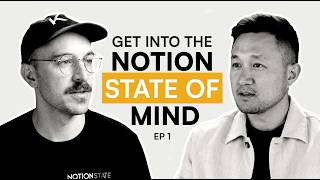
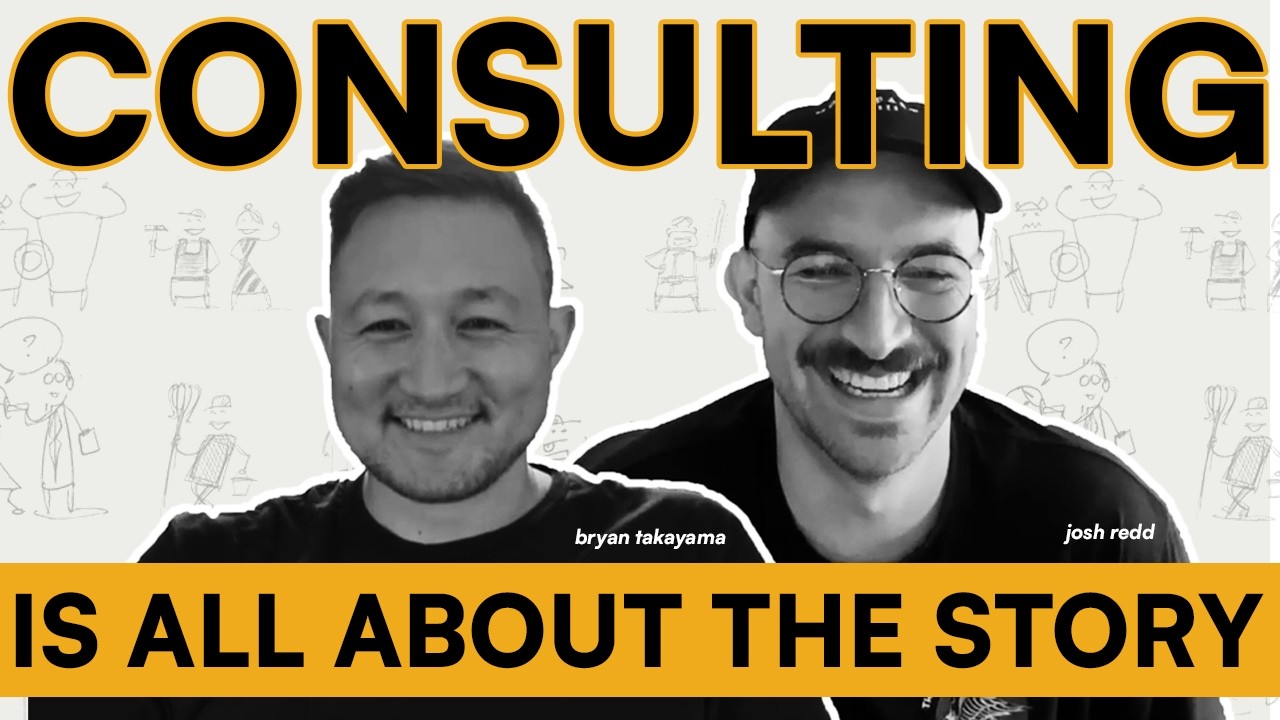
In the inaugural episode of the Notion State of Mind podcast, co‑founders Josh Redd and Bryan Takayama introduce themselves, share their personal journeys into Notion, and explain how those experiences shaped Notion State’s consulting practice. Josh recounts a creative, non‑technical path from touring drummer to Notion enthusiast, while Bryan describes a traditional business trajectory through Deloitte, logistics, and a personal health crisis that led to a remote, van‑life lifestyle and a pivot to Notion consulting. Together they define Notion State as an "embedded operational partner" that designs and implements processes in Notion, emphasizing a pain‑point‑first discovery phase, change‑management, and long‑term stewardship. They discuss Notion’s core strengths—modular databases, the "Lego" metaphor, and the ability to mold software around processes—contrasting it with opinionated legacy tools. The conversation moves to scaling Notion for enterprises, the emergence of AI as an integrated layer, and the importance of centralized knowledge systems. Metrics such as an average 10‑month client tenure illustrate the need for ongoing strategy. Throughout, the hosts blend personal anecdotes with a clear, conversational explanation of their methodology and the evolving product landscape.
Chapters
And that's the beauty of Notion is like it's a tool for making tools, right? So it's, it's not opinionated. Hey, I'm Josh Redd and this is the Notion State of Mind podcast where we bring you our perspective as co-founders of Notion State, the world's premier Notion consulting firm.
Hey everyone, Bryan Takayama here. And today in episode 1, we're going to dive into what is Notion State, who is Josh, who am I, and talk a little bit more about the value we deliver to customers.
Let's get into it.
So Notion State is a consultancy that serves as embedded operational partners for clients of generally any size at the moment that are interested in using Notion to manage their knowledge and organize their operations. And what I mean by an embedded operational partner is we work with clients to understand their processes and their intended outcomes. And then we layer Notion on top of it to serve as the function for how their operations can flow. So Notion is the tool of choice, but the actual sweet sauce Notion State brings is dissecting and designing processes, um, and building those in, in Notion.
To give a little bit of a more personal intro, my name's Josh Redd. And I'm a co-founder along with Bryan at Notion State. All right, so the origin story from each of our perspectives. I'll start since I'm already talking. I am, let's see, how old am I? I'm 34 years old. I've got a wife and 2 kids and live in Kansas City, if you couldn't tell by the hat, if you're just listening. And the way I got into this is a little bit more unorthodox. I got into this more from a creative side. So I was a drummer, actually a touring drummer, toured across 30+ countries, uh, over, over my 20s and was a barista in between that. I did construction in between that. And, uh, along the way when I finally did get married, I had to kind of settle down and figure some things out. So, um, Notion at the perfect time for me kind of surfaced maybe right before COVID And I've always been a software nerd. I've always loved computers. Not, not a coder or an engineer in, in any sense, but when I discovered Notion, it, it just was this thing where I could think not just in words on a page, but I could think in the software itself. The software modeled the way I thought. It was like my brain put onto a screen. And that I just, I didn't have any, I didn't have any, you know, goals or aspirations to make a business out of it. I just really liked it and really started playing around with it. I got into a Facebook group back in the day where people were just asking questions, you know, getting better at it. You know, it started turning into people asking for help. I'd hop on a quick call, I'd get a little coffee donation. Then along the way realized, okay, like consulting is this, this thing that exists in the world. I'd always heard of consultants, but again, I was, I was a drummer. So I was like, all right, I can, I can do consulting. You know, started just charging like a little bit for a project here and there, getting bigger. And before you knew it, I was a certified Notion consultant and was, was helping people and, you know, kind of running a little side business doing Notion. So before we get all the way to where we, uh, where we started joining forces, I'll stop and, and give it over to Bryan to kind of tell his, his side of that story.
Now, before I dive into a little bit on me, I want to ask a couple questions that I've never, uh, never asked before. Tell us a bit more about the drumming experience.
There's some definitely crazy cool shows. Okay, uh, here's, here's a few top of mind thoughts. I, so I got started in like middle school. I did the whole band thing in school, and then, you know, it turned into marching band, and I played snare drum through marching band, and I didn't pick up a drum set until like sophomore year. What happened was I pet band. And, um, maybe this gives you a little insight into my, my, my personality. I did pet band and I was playing cowbell, and then the upperclassmen kind of forced me to play the drum set on a song, kind of, I think, expecting me to like mess up. And of course I did. I totally, I totally messed it up and got a drum set that year. My mom got me one for Christmas. I started playing, and of course I loved it. But also I had this background thing in my mind. I was like, I'm going to show these people What's up? Next year. So next year, pep band comes around and I ask them, I'm like, hey, I wanna play a song. And they're like, no, you're terrible. I'm like, no, I'm gonna play this song. So they finally let me do it. And when I play this song, the, the look on their faces was, was just worth so much of the effort. Not that that's what drives me, but it just, it just was so worth it. So anyway, that's so good.
Oh, I absolutely love the story about how you got into drums cuz you wanted to prove people, uh, So I feel like that does, that does actually explain personality a bit and a lot of the drive behind, uh, um, showing up day after day at Notion State. So, um, really, really cool. I think one of the things that are the reason I wanted to dive into that more is because one of the things that stands out so much is like you come with such a creative and unique background and I come with a very traditional business background and I think it, it, it resonates with people a lot to be able to see your mind matching with my mind to, to be able to serve those clients and, and, and meet with them.
So.
That's cool.
Yeah, we've always talked about that kind of being the secret sauce and especially when we first got started and we were trying to kind of find our lane, that was, that was kind of our, you know, if we were to stereotype it, you know, I was like the creative product person, you were the professional business person. And over, over time that's definitely morphed, but I think we called it like you were the vanilla ice cream. I was the, I was the inclusions in the blizzard. But you can't have a blizzard without either one of those.
So. Yeah, absolutely. I guess I'll start with, uh, husband to an absolutely amazing wife, Kayla.
She, we've been together for almost 10 years now, and a lot of the, our relationship is what shaped my current story and, and how ultimately got into things like NotionState in the startup world.
So I'm originally from rural Ohio and I went to school at Ohio State University.
I graduated with degrees in logistics and ops management and finance. Um, so when I went to university, by the time I started school, I had already done 2 years of college, uh, from while I was in high school. And as opposed to graduating university early, I just did as many degrees as I could to get the job that I wanted.
And the job that I really wanted was at Deloitte Consulting.
And that really jumpstarted me into learning how businesses function and operate. So as a management consultant at Deloitte, I worked on mergers and acquisitions for separating multibillion-dollar organizations or actually merging these together. So a lot of like massive programs where you're designing step by step how to do things. And then I also worked in healthcare and supply chain while there, and I learned a bit more about how to design processes and, and understand how does information and work actually flow from start to finish and how each step in there is an opportunity for a cost or opportunity for value creation. And then as I left the like external consultant-facing world, and I went internal to Deloitte to focus more on business development, this is actually around the time when I I met Kayla and, uh, and ultimately why I shifted internally.
Shortly after we—
her and I met, um, she went into rejection, um, and needed to get a second double lung transplant. And that changed what I needed to do from a professional standpoint. The first 4 years at Deloitte, I was traveling Monday through Thursday and working Sunday through Sunday. And once she got sick, we had to be at the hospital for 2 weeks out of every month and had doctor's appointments every other day in the in-betweens. So, so I went internally at Deloitte and I actually started the remote world back in 2017.
So, uh, one of the early, early people in that zone. And while I was internal at Deloitte, I had the opportunity to build a couple businesses for Deloitte with Deloitte and, um, really learn like how that creation process worked. Became a product manager for one of those businesses to build some software. And then after Kayla finally got healthy 2 years later, decided I don't want to spend 90 hours a week working for someone else.
Um, I want I wanted to be with Kayla. I wanted to take advantage of the new lungs that she had received and the health that she had and wanted to make the most out of life.
So we actually started to do van life and we were traveling by van to, uh, to see everything in North America. And along the way, I started my own consultancy during that journey.
And I, one of my clients used Notion and I was like, wow, maybe I should do Notion consulting as opposed to doing just operations and business consulting. And ultimately that's Josh, where I met you because I needed help and being better at Notion consulting.
Hey Josh, I'm actually really curious, like, what is it about Notion that clicked so well for you? Like, what was it about, like, why, why in Notion does your brain work the way that it does?
Yeah, Notion's pretty, um, I mean, maybe we're preaching to the choir, but, uh, it's, it's modular. It's Legos. I mean, you know, like the, the cliché story is like, oh, I grew up playing with Legos. So it's like the software version of Legos, you know, man, when, when when I understood databases, I think that's when it really kind of clicked. You can compartmentalize things by a type and you can kind of structure them and make sense of them and kind of put them in a place. You know, it's almost like a digital, a digital office or digital workbench. Like I got one behind me. It's like a drawer for everything, a place for everything. I think there's a French cooking term, mise en place, right? It's like a place for everything. And of course that can turn into a junk drawer, right? But if you, if you curate it well, it's a, it's a place for your thoughts, you know? So I've got a place for all my physical things, but where do I put my thoughts? And we thought that software would, would solve this problem for us. And actually software has just made the problem a million times worse. And people spend too much time in software looking for things because just 'cause you buy a Workbench doesn't mean it actually self-organizes everything for you. Anyways. So I think with databases that really made a lot of sense because you can compartmentalize things, but they're not siloed or disconnected when you actually relate them together correctly. And there's rules. It's not, it's not this like fuzzy connection. It's like, no, this connects in this way. You define it. And I think the more you build it and think about it, the more you kind of understand how it works. Right. So of course there's, there's ditches along the way. There's pitfalls. There's, there's places where you can, you know, go wrong, or there's also some like creativity involved, right? It's like there's structure, but there's, there's a little bit of like creativity and there's a lot of places where you can say it depends, right? And that's the beauty of Notion is it's a tool for making tools. So it's, it's not opinionated. And maybe, maybe, maybe I came full circle to what I actually think is, is interesting about it is like every software has been opinionated and it tells you how to, how to do process. So you kind of have to fit your process into the way the software tells you how to do it. I think that's been kind of the, the, the experience of software. Now we can fit software around our process and that introduces this whole new horizon, but also whole new set of challenges.
One of my favorite Joshisms is the beauty of Notion is it gives you the ability to mold the software to your process as opposed to forming your process around the software. And I, it's, it's so true.
For, for me, I think like I'm going to answer this in two parts. One, for me personally, what clicked, and one in why I think it clicks so well for businesses and why it's growing so quickly. What really clicked for me in Notion and where I, uh, I started to fall in love with the software and think that it could be like the next real big thing for businesses was every application that we interact with, you could pick any one, we interact with just the front end. And this front end is just fields that connect to a database somewhere. Uh, but we never ever see that database. In Notion, we can create that front end experience. So we can create that, the front end, but we're doing that by building and deploying the databases. So if I want to build a trip planner where I'm adding in information around where I'm going, the dates that I'm going, the type of trip it's going to be, who I'm going with, I have the ability to do that in a nice UI or in a form or something along those lines, but then it's visualized in the database. And then if I need that to connect to a country or to an activity that I'm doing there, I can just create another database and establish that relation. And once I was able to conceptualize that concept of mixing the front end and the back end in that way, I just realized that I could build anything in Notion. Doesn't matter if it's something to track Kayla's health or her medication, or to track our travel planning, or to build a knowledge management system for a company.
Anything became possible once that, that became apparent to me.
Why it clicks for businesses is one, that exact same reason, but two is every business has the same sorts of things in their internal workings. They have the knowledge that they need to manage, they have the operations they need to execute. And in many different systems, they do that today where they'll have the, the brainstorming document in a Google Doc or a Word doc, then that brainstorm doc will inform a project that will become one line in one Excel document or Google Spreadsheet. And then all of the tasks that are associated with that one project line item will be another spreadsheet. And you just end up having countless systems that you're using. And when we look at Notion, we see the opportunity to collapse that all into one. We can have one database for the projects, one database for the tasks. Those relate together and you can see all tasks across all projects in one place. And that's not something you could do in any software really before where you're also mapping to knowledge and information like the briefs. And I think that's the light that a lot of companies see.
That's the spark that clicks for them.
Yeah, I think before this, we were talking in this way before AI ever was on the scene, but like context was, was such a, I think a key concept. It's like you have so much information. Yes, scattered, siloed across multiple tools. That's a problem. But then you also just have tons of information. It could be, you know, duplicative, it could be outdated, it could be maybe unpublished or, or still a work in progress. And the key part about Notion was that it would surface, as, as long as you build it right, it would surface information in the correct context, right when you need it, you know, where you need it and only what you need. Right? So that can have a million permutations across different roles, different departments, different, different workflows. You can look at the same information. In as many ways as you need to, to help you work better, right? You know, we always kind of try to dance around what is it that we actually do. It's like at the end of the day, we're just trying to help people work better. And that's, that's a really valuable thing. And we're doing it through, you know, the tools that they use. But going deeper, you know, if we really follow that logic of we're building software around the process, that presupposes that we need to really understand the process in a deep way to actually do that effectively so that we're not just building building scaffolding around something that's going to fall apart anyways, right?
Yeah, I think what, what a lot of people might do is they, they start with like, this is a Notion template that you can use to do everything that you say you need to do. And it's like trying to build a solution and deploy that solution before you understand the actual problem. And what we do is we start with conversations, and it's very much about understanding like, what are the core pain points that you're experiencing? And a lot of times once we start to talk about the core pain points, they start to And to solve this, I need this ticketing system. And we don't just say, oh yeah, you need this ticketing system. We actually say, tell us, what is, what is the pain point that's driving you to think you need a ticketing system? And the goal of this is to actually uncover like what is the root cause of the pain that they're experiencing that's driving them to even have a conversation with us. And once we're able to understand those root causes across not just the individual we're speaking with, but the individual and their team in their department. And then across the whole organization, we can start to invent a solution that honestly always follows a pretty similar framework, but a solution that addresses their challenges and their problems and their desires. And it has a lot of reason behind it. We can point the value directly to the pain that we identified in it. And I think it's, it's really understanding those pain points that helps us empathize with their issues and deliver a solution that makes them feel better.
Bryan, you talked about how our, our, our solution can often be pretty similar across clients, and there's a sense that like, you know, at the end of the day, a lot of businesses will kind of share some of those same fundamental solutions or, or problems. And, and when you really boil it down, so can you, can you pull a couple of those apart? Like what does that look like for, uh, a certain client or a certain, um, workflow that we've done where it really is like connecting the solution to pain points, right, that they've had. And it's about like actually giving them the confidence that we actually understand what they're doing so that they are willing to kind of engage and come closer to this being the real solution. So what does that look like?
Yeah, absolutely. So generally speaking, no matter the size of a company you are or the type of work that you do, the general requirements that you have are going to follow a similar theme. You're going to want one place for knowledge to be stored. This is going to be at the company level, like artifacts from the company for everyone in the company to know a bit more about their role, right? You need a centralized repository for that information. And some of the things that we work on with customers to really dial that in is like, what is the actual information classification system that you, that you need to be able to start to organize this? Is it going to be by function, like people or IT or finance, or is this going to be by type of document or SOP versus policy versus playbook, or is this going to be by user journey? Like I'm a new hire or I'm a manager. And these are the sorts of things that become nuanced from company to company, but they all kind of center around the concept of centralized knowledge management from the company for everyone in the company. I'm going to touch on change management. The first is those three different dimensions I just named across defining the functions, defining the types, and defining the journeys. Those sound simple in concept until you try to do that and organize it across 100 different people in your organization.
So actually aligning on these things cross-functionally is a very challenging activity, and the stakeholder management component is something that is pretty critical in this process.
The second is no one's job is to manage Notion at a company today, right? People get Notion and they think they're going to have a system that they can just pick up and deploy, but they end up just repeating all their issues in it. And one person just gets the— who was probably the super user that said, I love Notion. It ends up becoming 90% of their full-time role. When they're actually supposed to be the head of user research or the, the COO or some of these roles where Notion implementation and development is not actually their role.
And it becomes a very, very challenging component when you're trying to do these, these pieces.
But then the third is it's not just about building and deploying the solution that is like really challenging. It's actually delivering value through the users through this solution. And that comes with helping people adopt to it, training them on it. Iterating with them continuously over a period of months to make sure that it actually matches their needs, not just the requirements that the, the person we were speaking with thought everyone needed. And, and ultimately, like getting it to a place where we can start to expand from this baseline solution that we lead to something that's more custom for the organization and the different parts of it. And that only comes through a very intentional change management approach that is training, is communications, and ultimately listening and hearing the voice of the user.
This is why, you know, we have, we have clients that stick around much longer than I think they ever expected, but, but gladly and willingly because I think everybody comes to the table seeing the light at the end of the tunnel. They see what Notion can be and that's what's exciting about it is like, oh, if I can see the future where, you know, uh, everything is in front of me the way I need it, but it's hard to get there. And even if you got there, if you don't stay on it, it's, it's gonna, it's gonna fall behind, right? Because your business is always changing, people are changing, processes are changing, et cetera. So. Yeah, that's where it's really important to have some, a long-term strategy for this.
Crazy stat on this one is our average client tenure right now is, is 10 months. So it's the idea that Notion requires long-term management, but also it requires a strategic approach and outlook on how to do it, especially as the environment is changing so much now.
And on that note, a lot of what we're talking about is a zero to one piece, right? It's, I went from decentralized craziness and chaotic operations to a centralized foundation in Notion, but the one onward is leveraging AI and, and, well, and, and then building in, into this system.
But Josh, I'd love your, your thoughts on how, how different is Notion today and how different is what people are asking us for today than it was just a year ago?
Notion a few years ago was very consumer-oriented, uh, and in fact, the strategy I think was, was, was written on the wall. It was like, you know, let's go to the consumer first. That consumer will then take it into the workspace and then land there and show everybody how amazing it is and it expands, right? And it's kind of this grassroots organic thing. Now it's very clearly like, no, I think as the future has, has matured and evolved and it's, it's continuing to go that way for larger companies. Notion's obviously heading that way. At the same time, nobody was really, and this is, this is what we banked on early days was Nobody really knew how Notion at scale worked, right? It's like, again, I think everybody could see that it was like this light at the end of the tunnel. Nobody was really solving Notion at scale. And we just were like, okay, we don't know the answer, but like, let's figure it out because the, the harder it is to get there, you know, for our sakes and for our business, you know, the, the bigger the, I guess in today's term, the, the moat would be, right? So that's how we've gotten here. Notion as a product, I think, I think in its soul, I don't know if software design has a soul, but the soul of Notion, I think has actually stayed the same. And that has to do with tools for making tools. It's this Lego concept. We've kind of had a scary veer off in a couple moments in the past, but I think Notion leadership, you know, kind of recognized that and was like, no, let's go back to what actually made Notion really compelling. And that's, That's not injecting our opinion on how this stuff gets built, but let's do the harder work of going one more layer down. Let's build the fundamentals, the primitives for people to be able to do this and more. And because of that, you have emergent use cases. You have emergent, uh, value that came out of Notion that Notion never could have engineered by themselves to begin with. So I think that has stayed the same. We have seen obviously a change, or I guess a, a direction up upmarket towards more, you know, enterprise companies. And so that's, that's where we're, you know, finding our, our sweet spot is again, making Notion work at scale. But of course AI is working its way in and I think there's been a lot of even public praise for the way Notion has handled starting as a non-AI company and transitioning towards a very AI-native software. It's not just a bolt-on, but they really are kind of restructuring from the foundation, from the soul. What does it mean to use these things at a primitive level to, again, at the end of the day, help people work better? And I think it's, it's going really well. I think they're doing, they're doing fantastic. Obviously I've got my, uh, you know, my, my opinions and, you know, I love to see features. I'm a power user. I, I'm a builder, I'm a creative. So, um, I, I like to see the new little features pop up and they're still, they're still shipping really well on those, those fronts too.
So, no, it's great. And, and directly aligned.
I, I do think one of the coolest things about Notion is AI feels integrated in the product and not just like a chatbot that's built on top of it, like it is in so many others. And it's because they built with such a primitive and foundation-first model and how that matches so well with what we deliver is we create centralized and organized systems for people to build knowledge on. And then layering Notion AI on top of that is immediately effective.
What we see in a lot of customers before we, if we are entering it from like a renovation standpoint is They don't have a centralized approach to how they're organizing inside of Notion.
So it's like they just have a million different Google Docs or Google Drive folders, and AI just inherently isn't able to organize across that or be effective. And that's like one of the neatest things about that from 0 to 1 to 1 to now is if you get that 0 to 1 right, the AI augmentation on top of it is incredible. Not just with search and interrogation, but also layering on the, the, the, um, the custom agents and the sort of functionality comes there.
Yeah. One last thought from my end is I've, I've seen where Notion really struck gold when they kind of figured out this, this initial approach on centralization, uh, and, and they're, they've been a unicorn, right? And they, they blew up and people just love Notion and it almost set themselves up for like a double lottery win because in the world of AI, context is king. And people have already been centralizing their context for, for years. And now all of a sudden they're in just the perfect spot to, to take that to the next level. So, yeah, I guess kudos to them. I see it comes from a, a culture of just really caring about the, the software and, and the taste that goes into it. So yeah, it's, I think they're doing really well and they're in a good spot. All right. That's a wrap on episode 1. Hope you guys enjoyed. Of course, if you want to stick along for the ride, Gently touch the subscribe button. We don't want to cause any damage here. But over the next few weeks, months, years, who knows, we're going to be talking about a bunch of different things and we're going to try some different formats, everything from consulting to new Notion features to, you know, how we build, AI. We'll talk to some customers. We'll bring on some of our team members, a lot going on. So we're excited to get into it. And of course, if you have any ideas, leave them in the comments. Until next time, we'll see you.
More from Bryan



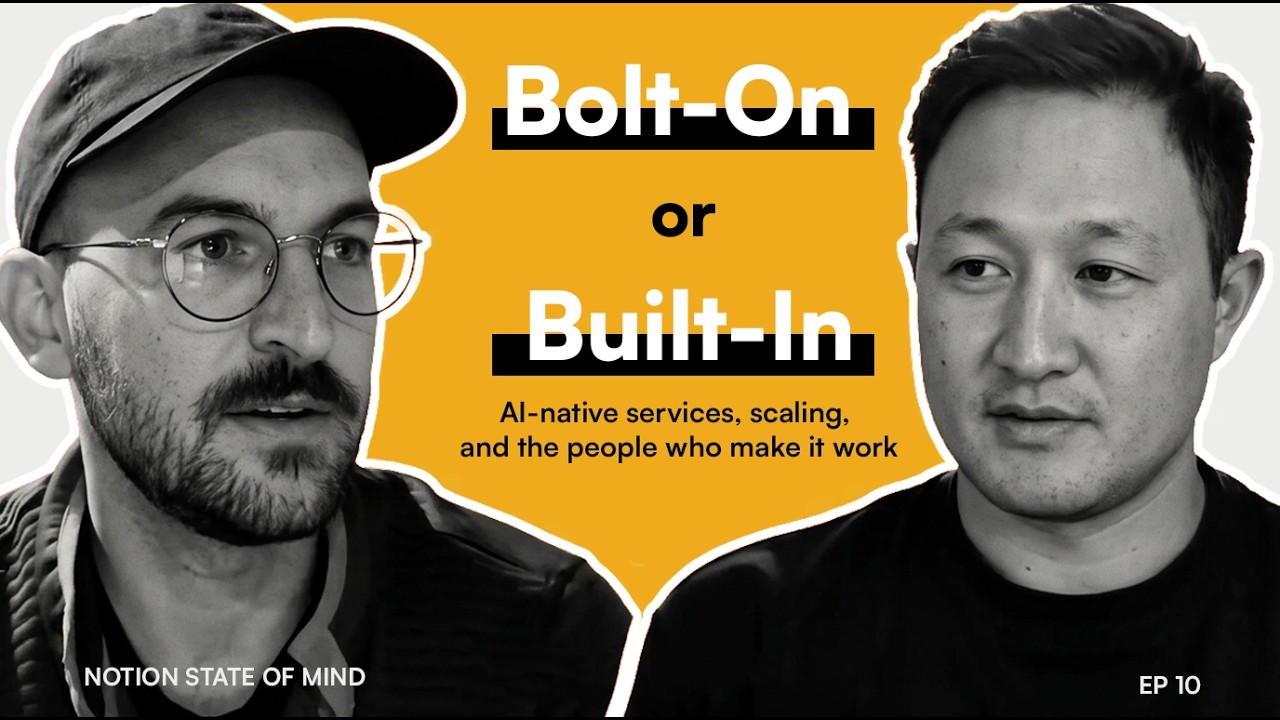
Bolt-On or Built-In // AI-native services, scaling, and the people who make it work