Entering StartUpLand - A Conversation with Jeff Bussgang
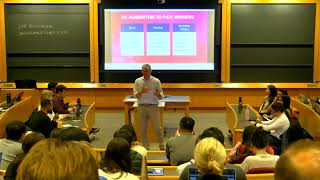
Jeff Bussgang leads a session (video) advising MBA students on entering "StartUpLand" as joiners — early non-founder hires — covering how to assess personal fit for startup work, how to pick the right company (domain, city, stage, pick a winner), and how to position yourself to get hired (networking, warm intros, "bring gifts"). The talk includes concrete case studies (e.g., Toast) and tactical guidance on roles (chief of staff, biz ops, growth), equity negotiation, and evaluating founders/teams.
Chapters
All right, Macro recession with a lot of passion about startups. Although that recession seems to be totally turned around if people have been paying attention to the top tech stocks and the AI waves. So your timing is perfect. You avoided the biggest market crash in recent memory and you're now here and emerging at a perfect time to join startup land. So I'm Jeff Busgang. That's my email and I'm thrilled to be here in front of you all and to lead the session on entering startup land. This is a session that's going to be really focused on joiners. So it's a term I coined a number of years ago when I wrote this book founders. There's only one, maybe two, rarely three joiners in a startup. There's tens, even hundreds that make the business a success. I was a joiner. My first job out of hbs, I joined a pre seed sort of seed stage series, a stage startup, 31st startup. It's a phenomenal opportunity to enter into startup land. And so that's what I'm going to anchor this conversation on, which is how you can get in and strategies and tactics for selecting the right company to join. So that's the session. If you're confused about if you're hearing the wrong session, I'm not offended if you leave. But that's what I'm going to talk about. I have a few slides and I'm going to do this in like 15, 20 minutes. I tend to talk fast and then I'm just going to make it open for Q and A. And as long as you all have the energy, I'm happy to stick around and have a conversation. I know it's the end of a very long day after a very long and for the ecs, tumultuous add drop and for the RC is a pretty intensive first couple days. So that's the game plan. So let's jump in. So just briefly on me. So I started my career, as I said, as a joiner and then I was a co founder. So I've had this experience of both being a joiner and a founder of venture backed startups. And then about 22 years ago I started a venture capital firm called Flybridge. That's kind of my main vocation. We do seed series A investing mainly in software and AI out of our two offices in New York and Boston. And I teach here at school. For the last 13 years I've been teaching a few courses LTV, which is a course that launching tech ventures is for founders and also joiners who want to focus on pre product market fit startups. And then I taught that in the fall, a couple LTV students here in the room. And then in the spring now I teach two courses. One Venture Capital Journey, which is for aspiring venture capitalists, and then scaling minority businesses. So that's a little bit about my teaching activities. But this perspective I have was really anchored and rooted in the fact that when I Left HBS In 1995, when I was here at the school, I was a computer science undergrad. I always knew I wanted to do a tech startup. And I had this fork in the road decision between going back to bcg, which had sort of sponsored me. I was there for two years pre mba, like maybe some of you at various consulting and banking firms, what have you. But I really wanted HBS to help transform me into being an entrepreneur. And so that's what I was really focused on. I ignored the recruiting process that all my classmates went through and I just focused on finding a startup. And I found this amazing startup, a VC firm connected me to them and I had this opportunity to join them as a six for $65,000 a year as a product manager. And I grabbed that opportunity and walked away from the lucrative BCG offer. And I'll tell you that story because I want to give you hope. For those of you who are thinking about walking away from your lucrative consulting or banking offers, pursuing these kind of gritty startups early in the career can have a phenomenal turbo boost to your career. That's what I've seen happen. Now. I've had 2000 students over my 13 years of teaching here. I've seen this pattern over and over again hundreds of times. If you join a startup, you will accelerate your growth far, far faster than those of your classmates who right now are sitting pretty on their consulting offers and who are really confident and they're going to parties and they're paying for the drinks because they got these cushy bonuses and you're like, oh my God, they're way ahead of me. And in three or four years they're going to be begging to network with you to find opportunities in the amazing startups that you're all going to be executives at. So that's my prediction for your future. So founders versus joiners. I gave you that. This book, this talk, this sort of thesis is all about how to be a joiner. And the basic playbook that I'm going to go through has three elements. And then I'm going to give you a case study and these slides will be available thanks to the Rocks center team, if you want to see them. But I'm going to tell you how to assess your fit. Pick the right company. Because the most important thing you can do as a joiner is pick a winner. We were talking about this earlier this last summer, right? Like you joined a startup, it kind of sucked. Wasn't the best thing. Yes, can confirm. And you will spin your wheels in a startup that's not a winner. So you really want to try to select the best startup possible and then like how to position yourself well so that you get in and they select you. So first, assessing your fit. So there are a couple things about assessing your fit. First, you've got to be really comfortable with uncertainty and you have to decide where on the risk profile you want to be. And I'll talk about that in a minute. Because the spectrum of startups is really wide. You can have high uncertainty early early stage, you can have modest uncertainty in a mid stage, or really low uncertainty in a later stage. And where you are in that risk profile and how comfortable you are with managing uncertainty will help dictate that you have to be comfortable as someone who pushes the limits, Someone who's willing to. Like, when they see a line at the grocery store or the bank or whatever, they're always thinking about, how do I make this more efficient? How do I get around the line? Because that's the entrepreneurial mindset and you have to think like an owner. My story on this is my dad, who was an entrepreneur, used to talk about when he would see something on the floor, like a paper clip or whatever, in his office, he would always test to see who of his employees would go pick up the paperclip. Because it's had this mindset of not, oh, someone else would do that, I'm going to leave that to someone else. But rather that's what an owner does. I have a friend who's an HBS grad, worked at IBM, then hbs, then bcg. He was interviewing for startup jobs and the CEO said, look, you're super well qualified, you have all the skills, but I don't think you're going to roll up your sleeves and do the dirty work. So I'm not going to hire you. And my friend said, I guarantee you I will clean the toilets if you hire me. Like, literally, I will clean the toilets in the bathroom company. And he became head of sales and marketing and the company went public and made a lot of money. And so cleaning those toilets actually went out to work out. So this sort of attitude of like, willing to think like an owner and do anything is really critical. Okay, picking the right company. My framework for this is four things that you have to do. One, pick a domain. And I'll go into each of these details. But if you walk into an interview or walk into a conversation with a VC or with a startup friend or a CEO buddy and you say, hey, I'm interested in any startup, just introduce me to the best startups in your portfolio, you're going to get a blank stare. There's this psychological notion, the tyranny of choice. You give somebody too many choices, they don't know how to choose. You have to pick a domain to help people in your network know what they should be looking for for you. And then also you have to pick a domain so that you develop the expertise such that when you go into a conversation, you exhibit competence. So I'll go into more detail, but that's the essence of pick a domain. Second is pick a city. Startups are incredibly, incredibly space based. Every ecosystem has its own culture and its own network. Whether you're in Dubai or in Tel Aviv or in New York or in Austin, you really want to be centered on a city and go deep and network in that city. Third, pick a stage I mentioned about risk tolerance. And then fourth, most most important, pick a winner. Okay, so here's how I recommend you do this. So first, pick a domain. I refer to this as the Wall Street Journal test. You could call it the TechCrunch test. This, whatever you find yourself reading on your own time, whatever you find yourself geeking out on, that's probably a domain you're going to be more interested in. So some of you may be obsessed with climate, with health tech, with AI, whatever. The thing is, try to lock in on that one domain. And whenever you talk to anybody, you tell them, I'm looking for startups in this domain. I'm really obsessed with the hydrogen economy. Great. I know two companies in the hydrogen economy that I can connect you with as opposed to, you know, again, I'm interested in climate. If it's too general and generic, people have a hard time pointing you in the right direction. Once you pick a domain, then you pick a city. In the US There are three main cities where the startup ecosystem is the most robust. San Francisco, Boston, New York, LA is pretty good. Austin's pretty good. A lot of the other cities I would call third tier. And the, the drop off is quite sharp. When you look at the venture capital dollars, you can see the AUM here, the assets under management. USVC is like 70, 80% in three states and the bulk of it in those three cities that I just mentioned. So, you know, you've got to decide like what city do you want to anchor yourself in and where do you want to network. Even for the summer jobs, I really encourage you to focus your energy on a particular city. One of the other reasons for this is that the jobs you take, those teams will then leave and start new companies and ideally pull you in and pull you in over and over again. There's this repeat dynamic. You all have heard about the PayPal mafia in Boston, there's the HubSpot mafia in New York, there's the MongoDB or Datadog mafia or doubleclick mafia. So there's these clusters of talent that sort of flow step by step. And you want to get embedded into those clusters ideally so that you get pulled into those opportunities with the best founders. And then third element is pick a stage. And again, this is a personal decision based on risk tolerance. I refer to three types of stages in a company's life cycle. There's the Jungle stage, which is pre product market fit. It's not clear where to go. You're trying to hack around in your direction. Those startups tend to feel very chaotic, very intense, very like spinning, but you know, that's what you want. It's a higher risk, higher reward dynamic. What was the stage that your startup was at?
It was later.
It was like Series D. Series D, Series D. Okay, so it was more like dirt road, highway. Dirt road is where the direction is clear. It's a little bit more post product market fit. And now you're scaling sales and marketing, trying to be more efficient. It's a bumpy, windy path, but you have a reasonably clear path where you're going. And then highway is well past product market fit, post sales and marketing scaling usually. Whereas jungle might be 1 to 20 employees and dirt road might be 20 to 200, the highway might be 200 to 2000. Pre IPO recently post IPO. And there it's all about efficiency, unit economics and trying to build scale. So just decide where you want to be in that spectrum. The highway companies could be public companies. Like if you said to me, hey, I'm really passionate about New York, I think New York's going to be a great tech ecosystem. As we were talking about before, I'm super into, sorry, this is New York. I'm super into fintech because I love fintech and I'm a fintech geek. And I want to be at a highway company, then you immediately help me and help others like me narrow in on, okay, you should go work for payoneer, or you should go work for maybe chain analysis if you're really interested in blockchain, the blockchain version of fintech. So there's an ability through this rubric to help people in your network, help alumni, help your classmates, help you find the winners. And this is now, as I said, the most important thing to take away, which is how do you pick a winner? And my recommendation here is to think like an investor. Because if you're doing a summer job, you only get to pick one, rarely two. If you're doing, if you're ECS and you're picking a firm to join right out of HBs, you only get to pick one. So whereas I as a VC, I have a portfolio, when I make an investment, I can make two investments a year. I can have a portfolio of 20 or 30 companies over the life of a fund. You all only get one at a time. So you have to think like an investor and be high conviction that that company is going to be a winner. And one of my tests for that is, would you invest personally some amount of money? Pick a number that seems like a very large number for you. Maybe it's $10,000, maybe it's $25,000 personally in that company if they were to hire you, or even if they weren't to hire you because you have such high conviction, that's a great company. And the reason I say that is because you are effectively investing that first job or that first summer job in that company. And that's a super high bar for you. So you should have that mentality that that's a high bar. And the three things that VCs look at when they think about investing in startups, team market, business model. And you all know this. Those of you who have been in startups, and if you took ltv, you heard me hammer this over and over and over again, you know the attributes of the team, the attributes of the market, and the attributes of the business model which I capture here, that really mark for an excellent outcome, you're still not always going to have the high probability of picking a winner. It's a very hard thing to do. VCs fail far more than we succeed, even as good as we are, as good a network as we have, and as analytical as we try to be. But you should at least apply that analytical framework to feel high confidence that you're selecting a startup that is likely to have a chance to be a winner. And if it doesn't work out, if the team is excellent, they'll go start something else again. Or if it doesn't work out and you build expertise in the market, you'll go find another team or another startup, having had that expertise, and find something great the next time. I'm going to pause here. Any questions so far? Tracking? Yes, please.
Would you tell us more about assessing the team?
Right. So I have four attributes here of the team that I like to use, and that's a rubric that I think of when I evaluate founders. The first is the Pied Piper effect. So the best, and this is not like the HBO Silicon Valley reference, this is the children's story reference. So the best founders are magnetic and they're able to convince people to follow them, even if rationally they shouldn't. Because rationally no one should invest in a seed stage founder. No one should join a seed stage founder. No customers should be the first customers. But somehow talented founders are able to get people to follow them, no matter what. People used to talk about Steve Jobs having a reality distortion field. For those of you who read the Walter Isaacson bio of Elon Musk, he has a huge reality distortion field around him like that capability, not to the extreme and obviously not to a point of crossing a line, but the ability to just really be magnetic and compelling. That's an important attribute. The second is exceptional. People in my BCJ class heard me talk about this this week. The best founders, it's not like good enough to be good. It's not even good enough to be great. They have to be exceptional. They have to spike in some attribute. And if you look at the history of the best founders over the last 30 years, they have a few just wildly exceptional attributes that are hard to replicate anywhere in the world. And so I always look for what are the exceptional attributes of this founder. Third is authenticity. It's a little bit of a founder market fit reference and a little bit of a can you trust them reference. Do they have an earned secret and a right to have an insight into this market? And then the fourth is clock rate, which has two dimensions to it. And this is a term that Bill Gates likes to use a lot with respect to one dimension, which is just pure intellectual horsepower. And then the second dimension, which I like to look for as well, is decision making ability. Because the best founders have to execute very rapidly and time and time again I'll see very capable founders in the right market, but they make decisions from too slowly. This is a problem first time founders often have. They sort of don't have the confidence to make hard decisions rapidly. Hard pivots, hard hiring decisions, and they spin. So those are the things I look forward with. Founders. Thank you. Sure. Okay, so the second thing I'd say is the other thing to look for is the rocket ship list that I publish every year. I publish it in the spring. So the March 2023 version is the one that's out, and I'm working on the March 2024 version. But the rocket ship list is a cohort of the top growth stage companies by geography, by sector, and I use a bunch of attributes to pull that list. But if you're interested in the later stage, like if you're okay with a dirt road or highway company, that might be a nice list to draw from. But you got to do your own homework. Like you should ask the. Once you pick a city, you know, ask the VCs in that city, ask the founders in that city, ask the startup lawyers in that city, who's the hot company in the domain you're interested in at the stage you're interested in? Okay, so now positioning yourself. Well, you are Harvard Business School students. The network is the most important way to get in the door. Just do not reach out cold. How many of you have reached out cold to a startup out of curiosity in this room? Okay, a lot of you, cold. Did you have good success in reaching out cold to the startup? Yeah, I did, actually. You did. Okay, so totally I'm wrong. What was the story? I reached out to an HBS alum. Ah, that's not cold. But go ahead, tell the story. That was before school started. But did you identify yourself as an HBS admin? I did. Okay, See, that's the magic key. So what was the story? What did you do? You reached out to. You saw somebody who is a founder and an HBS alum? Yeah. And then I reached out to him on LinkedIn. Then we had a conversation. Nice. So that to me is a warm approach. An even more compelling approach would be if you had found somebody who knew that person, like somebody a year or two ahead of you maybe, or a faculty member to unlock that door. You had a story you want to tell?
Yeah, but it was, I guess it was cold. But we were both in the same industry, so we had some mutuals, but none that I would be comfortable reaching.
Out for a warm intro.
But because we, I guess you may have looked at my LinkedIn and said, oh, this person's also in the same space. So they're willing to.
And in your outreach, did you provide some content that gave you some credibility in the industry?
Yes, I talked about where I worked previously and that I was a HBS student, which I don't know if it helped or hurt my credibility because he was an engineer, but we had a conversation.
Yeah. So. And this is one of the points about domain, like, the more domain knowledge you can exhibit, the more interesting you can be to startups. But I'm a huge believer in finding a way to a warm introduction and leveraging the HBS network, which is so incredible in the world of startups and NBC that you should be able to find some form path to get to, even if it's like a software, like even an outreach to a founder. Just make a shared connection of a college or a business school or a mutual friend or an industry. So the thing about startups that's so hard is unlike the big firms that come on campus and they make it really easy for you to interact with them, you gotta hustle a little bit for the startups. And to me, that's a feature, not a bug. Because if you hustle, you show them that you're hustling, they'll see that and they'll think more highly of you. The other thing I say is come bearing gifts. So what do I mean by that? So time and time again, I'll see students reach out to a startup and they'll say, hey, I'm a generalist, I'm really good at strategy and so you should hire me. And that's a terrible sales pitch. So every time you're reaching out to a startup, you're making a sales pitch. So your sales pitch was, I'm an engineer, I've got industry knowledge, I know something about your industry, maybe I can help you. Right. You're coming bearing gifts. And I really, really strongly recommend that when you reach out to a startup, you think to yourself, what's the gift I can give this founder? How can I be helpful to them in the context of their agenda? Because startup founders are super stretched, super stressed. They're running out of money in the next 12 months, always. And so anything you can do as a gift to them, to get them compelled to view you as a priority, to take the time to have that conversation, to follow up, and then maybe to hire you is really the key. So I'll tell you the case study that brings this to life. So this is a photo of ulysses salas. Ulyssa was class of 2017 at HBS. She was a Middlebury College undergrad, a German major, which is a fantastic major for a tech startup, sarcastic. And then went to JP Morgan, which is a fantastic background for a tech startup, also sarcastic. And then was here at hbs. And so Ulysses said to me, hey, I'm really interested in getting into a tech startup. And I thought, this is going to be bad because your background is terrible and no founder is going to want to talk to you. So we started kind of getting into it and I said, well, what do you, you know, what city do you want to live in? She said, well, I want to live in Boston. I like it here. The winners are fabulous. She's from the Dominican. She hated the winners. But anyway. But she said, look, I like Boston, seems great. I said, well, what's your domain that you're interested in? She said, SaaS, particularly vertical SaaS, fintech. What stage do you want? She said, you know, like dirt road. Like I want to post product market fit company because I'm kind of more of a sales and marketing go to market person versus a product tech person. I think that can be more valuable therefore for a company, that stage. And so she did a bunch of networking and a bunch of research and she came up with this little, at the time, 50 person vertical SaaS startup called Toast. And this is now seven years ago. And Toast was very early and she found a way to get to somebody at Toast was one of the three co founders. And they said, all right, I'll give you 30 minutes. And right away he's like super bored. And what Julissa decided to do before the meeting is she went to the Back Bay and as folks here know, Toast is a point of sale software package for restaurants and retail. And she went up and down Boylston street and Newbury street and interviewed 30 small businesses regarding their point of sale use. Just a day or two just walked up and down. What are you using? What do you use, Toast? Tell me about it. What are the pros? What are the cons? What do you use? A competitive product. What are the pros? What are the cons? So she has her 30 minute call with the co founder and she starts the call and he's like looking at her background. Middlebury College, J.P. morgan, Harvard Business School. This is going nowhere. And she says, well, forget about my background. I just want to let you know that I've just spent the last few weeks doing research on point of sale systems in restaurants that are squarely in your ideal customer profile. Would you like to hear my Results. Yeah, actually that would be really interesting. And so she starts presenting the results and the half hour meeting turns into an hour. He says, after the meeting, could you come back and brief my co founders and talk about what you learned? She goes back and delivers like 30 PowerPoint slides to them. And before you know it, she gets hired as a chief of staff and then moves into go to market role and now is the VP of International Toast is now a $10 billion market cap company. She is a very rich woman and is, you know, seven years out of HBS and absolutely killing. So I tell you that story because any background, if you do your homework, if you come bearing gifts, if you get focused on the market, like you can break into these companies and if you pick a winner, which Julissa was lucky to do, but really smart to do and shrewd to do, and, you know, use the framework to be very effective, you could have an amazing entry point and career path in this world. And believe me, all the consultants in her class are super jealous of her and they're all desperately networking with her to ask her, how do I get in to a company like this? I'll tell you one more case study because a couple of you have asked me about roles and I haven't covered that in detail. So Ulyssa was in a chief of staff role. There are other roles that can be very compelling as entry points because many of you may not have specific technical backgrounds. So you wonder, you know, how do I get in? And the product management job, which tends to be a bit more technical, is often a hard entry path. So chief of staff is one and then another is biz ops. So biz ops, which Tamara entered into at Pinterest, and this is again a story so like eight years ago, Tamara tells me she's obsessed with Pinterest. This is way early in the Pinterest journey, but they were kind of a dirt road company and she networked her way into Pinterest, told them about different functions and features that they should change. She wrote a critique of their user interface. Long story short, they brought her in in a biz ops role, which is this analytical role that sits under the CFO to help monitor the KPIs of the business. It's a great role for a former consultant or banker, which she was. She was a Bank of America and she entered in and then after a few years of progressing the lateral, she went into product management and became the lead product manager for their E commerce platform and has had an amazing, amazing run of interest, which as folks know, also went public, also has done very well and tomorrow has done very, very well. So just another sort of vision of these entry points. Chief of staff, biz ops, biz dev, product management, if you're technical enough, growth, which we were talking about earlier at the intersection of marketing and product management, just a growth function. That's a good job for MBAs as well. So when you're thinking about entry points, think about these functional roles. So that's it. What's your playbook is all about assessing the fit, picking the right company, and positioning yourself well. So let me stop there. It took 25 minutes. And open it up to questions. What if people want to ask? Yeah. So with the examples you gave with bringing gifts and I guess going into the company, you gave kind of service and technology companies, which can be more easily accessible, like walking down the street, meeting the customers. What do you recommend with more like deep tech companies which don't have a couple thousand or millions of dollars to buy a product or really talk to their customers, which could be businesses. Yeah. What would you do? Right now what I'm currently doing is just trying to learn as much as I can about that industry and technology to try to formulate opinions of like, is this worthwhile? Right. So you read the academic papers and the technical papers. Maybe you attend the conferences. You watch the nerdy YouTube videos. Many nerdy YouTube videos. Right. You reach out to people in adjacent spaces and see if they'll spend a little time with you. You do an IP in the space or kind of a mini research project. You're an rc, so you looked at me blankly when I said ip. Yeah. Yeah. You do a mini research project on the side and you build expertise. Okay. So that's kind of the gift you bring as well. That's the gift you bring. And you throw 10 academic papers into ChatGPT and you get a bunch of summaries and then you do a bunch of comparisons. And then when you have an interview, you say, hey, I've done this deep research on 10 papers that are in your field. Would you like to hear my summary of them? Okay. Yeah.
So we took a sip for tough tech ventures, and the Grid is actually a super useful place to start talking to PhD students. There's a class in our second year that will enable us to take a class with like MIT PhDs. And there's so many people in the tough tech world that can't. Yeah. In Boston that cannot convert their research into a business. And so there's so many more people that you would imagine that need us, but there's like this barrier to entry in our heads that we don't provide them service, but it's mutual, so you should enter the conversation. Also.
It's a great point. The Grid is underneath the School of Engineering and Applied Sciences, which is just across the street here for those of you courageous enough to venture across the street. And it's a collection of the Harvard engineering academics who want to start companies or doing interesting research and are desperately looking for MBAs. I'm on a investment committee for the accelerator at the Grid and every time we hear one of these pitches, it is a deeply technical, interesting, intellectually powerful pitch and they have no commercial sense of what to do with it. And they desperately need people who look like you. Yeah. Hello.
Hi.
So you talked about case studies of like success stories. Can you maybe talk about the flip side of maybe any like those who didn't pick winners and maybe how they recovered from that or like how they chose after.
Yeah. So I have a student who graduated in 2020, let's see, she graduated in 2022 and she delayed her BCG return offer. As you all know, consulting firms don't want you right now. So they're delaying offers and they're even paying some of you to delay your offers. So she delays her offer and she goes and joins in a biz dev sales role at a 20 person startup and she does great, but she is convinced it's not a winner after a year of grinding at it. So she now has a choice. So I go back to BCG or do I go recruit for another sales job? And I said to her, you are so well positioned right now to go do biz dev and sales because the world desperately needs people who can be strategic Harvard MBA types and who can sell particularly these dirt road companies where that first salesperson, when they're early in the sales learning curve journey, they need someone who's a little more creative and strategic and thoughtful, not just a coin operated salesperson. So I just for fun reached out to two of my portfolio company CEOs who I know are looking for someone like her. She has only one year of experience to be clear and they immediately want to talk to her. That's just one sample. So my message to you all is this is a portfolio of experiences that you will collect over 20 or 30 years. And even if you don't successfully pick a winner in the first six cycle, you're going to learn so much that you're going to uplevel your game and Be super valuable and maybe the third time or the fourth time, but it's a collection. You'll find a winner, I'm convinced. Yeah. I would love to know more about your thoughts on some of the things we should think about with regards to compensation for the summer. I know that Harvard has some options for like if you go to a startup and they can't compensate you, Harvard will supplement your income. Right. But at the same time, I'm sure none of us want to be taken advantage of by, you know, you know, potentially. Yeah. So yeah. What are your thoughts? Yeah. So I would say for summer jobs, don't let comp get in the way of a good experience. And Harvard's incredibly generous in that regard. And I don't know if you want to speak to the specifics on that front. Yeah, we have the Roxmore Fellow program which is for founders and joiners. So for founders it's 650 a week for 12 weeks over the summer. And then for joiners too, we give you the same level of funding and then also match up to 650 for your employer at the early stage startups. So if they give you 650, we'll give you additional on top of that. So look, you can't convince a company to give you four or five hundred dollars a week. Like that's so cheap. And then you can double it. You know, I think you should be able to make it work.
I think over the summer that's what last time. Especially since there were many startups who didn't have the funding or it was a very tight position. Most of us took that. There were very few who got compensated much more than 650 from the company. Most of us took that and then got the 650. And even they are tight. Right. They don't want to spend extra.
Yeah.
If they don't.
But it worked out well for a lot of your classmates. Right. People had amazing experiences. Yeah. I mean that's what you did. Right. When you worked at the company, it.
Happened to be one of your portfolio companies.
But I think it's a really great, like it's such a great gift that Harvard does that. Yeah. What are your thoughts on startups that you think could be winners but are very overvalued? So let's say a foundational model company alluded billions but not much revenue. Yeah. Yeah. For those of you, I highly recommend, by the way, Aileen Lee just published a couple days ago a 10 year retrospective kind of refresh on unicorn heard. And there's a general view in our industry that many of the companies are super overvalued and even if it is a potential winner, if it raised money at a certain valuation, the next round is going to be a down round. So what I would say is look at the quality of the company and the quality of the people. Sometimes in overvalued companies, when there's a down round coming or has already come, the best people leave, but in other companies everybody stays and the options just get reset and everybody's happy. That depends on the situation. So just have your eye out for are options getting repriced or not? Are the best people staying or not, particularly the technical people because they're the first to run, salespeople get laid off, they're not really a good sign of success because they'll get, you know, they're more mercenary. But if the core product people start leaving and joining the next cool startup, that's a really negative signal. Yeah.
If you're looking to go to more of a tier 2 city, how would you recommend making sure that they're that I guess that you're going into like one, a big enough industry and two, like that there are enough winners in that industry where you're going. And I guess also would you recommend like being a little bit broader on that dimension?
Yeah. What's the tier two city you're thinking of?
Los Angeles, Louisiana?
Like, LA to me is tier two plus that's a pretty big ecosystem and it's really nice out in January. But I think you can build a great portfolio of experiences in a city at the scale of la. No question. You had said to me Chicago, I would be less convinced. The other thing I would say is that obviously remote work is an option. I'm not a fan of remote work for you all. In the early days in startups it is so important to be around the corridor, so to speak. And it's one thing if co founders who knew each other from previous companies work remotely, it's another thing if you come in cold and have no relationship. But one way you could get around that, let's say you're in LA, but starts in San Francisco, is you can say, I'm going to be in San Francisco four days a week for the first three months just to really bond with the team and then they'll kind of ramp it down from there and be more remote. I could imagine making that work. But to be 100% remote in an early stage startup, I do not recommend. And for the summer it's terrible because you're super isolated and on an island often. Yeah. On the point of the team, how do you determine who's exceptional? I asked because I feel like LinkedIn and kind of people marketing themselves sometimes can feel hard to separate. Like. Yeah. So is it like, technical? Are you an RC or an EC?
RC.
Okay, so how many people are in your section? 90. Okay, so I'm gonna ask you to close your eyes. Who are the three exceptional people in that section? It'd be embarrassing if they're in this room, but picture those three exceptional people and if they came to you and said, I'm starting a company, you would back them blindly. You got those three. Look for them like, you know the attributes. Right? They're super compelling, they're brilliant, they're aggressive, they're obsessed with the topic. You'll know. And if you want to know about the technical talent quality, ask some of your friends who you really admire and respect, who are deeply technical about the quality of the GitHub repos of those companies, of the individuals in the company. Right. Like, it's amazing how much information you can get publicly in this environment. Yeah.
You mentioned to not talk in, like, generalities, but beyond doing, like, initial research, like, if someone does ask you, like, what your skills are, like, what are some good examples you can give? If you do come from a generalist.
Background, like consulting, what functional role do you think you want to play?
I think I would want to be more like, help like a company grow or even, maybe even earlier help them find like a product market fit.
Okay, so the growth role is a great function. There are, there's one book that's fantastic on the growth role, which is written by Sean Ellis. It's called Growth Hacker. He was the kind of godfather of growth. There's another writer who was a beautiful writer on growth hacking named Brian Balfour. And then I wrote a HBR article called Every Company, Every Startup needs a Growth hacker or Growth manager. I can't remember the title, even though it's my article. And so you read all of those things and then when you walk in, you can say, I can do growth for you. And they say, well, like, what does that mean? What would you do? And then you say, well, based on your company and based on my knowledge of the growth function, here's what I would do. And if you read those things, you'll have an answer. So I would just say if you really want to, like, get a role and impressive startup in these areas, do your homework, hum, bearing gifts and you can. You all are really Skilled at becoming experts in a very efficient amount of time. You can consume a lot of information very efficiently. You can use ChatGPT to summarize those books. I think actually ChatGPT does a pretty good job of summarizing books, my experience. So, yeah, I think you can pretty quickly develop an expertise and at least fake it through an interview. I know the session was mainly for joiners, but we get pushed a lot also to be founders here at hbs. Do you. When do you think someone should be a founder rather than joiner or a joiner rather than founder? Like, do you have a perspective on that? Yeah, I mean, I cover this a lot in the class. So 28 sessions later, the short answer is if you, if no one can talk you out of your idea and you're totally obsessed with it, because being a founder is really, really irrational, then you should go start that company. But baseline, my view is joiner is a great entry point for all of you. And then the 20 or 30 of you who are obsessed with this one idea and can't get it out of your head, you should go pursue that. But there's probably no more than 30 to get backed every year out of HBS. Like, that's my math is every graduating class, roughly 30 of you can raise a million dollars or more and start, like, really get something off the.
As a joiner, I think one of the questions that a lot of people ruminate on, especially that come from a tech background, is the kind of the upside that you give up by being a joiner because the co founders have like half the company. You join as the first employer, the 10th employee, and you get a percent that's going to get diluted over the next five or six years to like 0.2%. Ten years later when you exit, you look back and you're like, well, I could have actually made a lot more if I just took a tech job, right? How do you think about that? Risk reward?
Yeah, the way, the way I think about this is your first job, if you're lucky and you hit it, you could make $200,000 to a few million dollars because you're going to have 10 or 50 basis points. Let's say the second job, though, you could get to 1 or 2% and you could make many, many millions of dollars if it even does okay. And then the third job, it's your company. And by the time you're in that cycle where it's your company, you're going to be able to look back and say, well, look, I Learned all of these incredible skills on someone else's nickel and I didn't take all that much risk. And now I've got the domain expertise, now I've got the network and now I can raise money like that and I can own 80% of the company. So that sort of, you know, for me it's like playing chess, not checkers. It's setting yourself up to be able to be a backable founder. One or two moves from the move you're about to make now with that mindset of becoming a joiner, to eventually become a founder and do it with treasure chest of skills. Does that, do you think that should influence any of the dimensions by which we're picking the startups that we join? Yeah, totally. So we were talking about at the tech conference, Oded Iran, right, is going to come speak on a panel. Oded is class of 2016 and he was really obsessed with healthcare and health systems. And so he joined Iora Health right out of school. He ran growth for Iora. So he ran Growth Function. Yeah, growth function, which he knew nothing about, but he made it up. Iora, for those who don't know, became a hot company, did really well, exited very successfully. And three or four years in he identified an idea because he was at the forefront of the industry that became a startup idea that he left Iora with two other Iora people. So my point about networks and mafias going off and starting things, he was able to raise money easily, has built an exciting company. He's post series B and because he entered into the arena that he was really interested in, he developed insights and a network that gave him an advantage in coming up with the next idea. I think he's speaking commercial February 4th at conference. Got to be amazing, guys. Yeah.
Do you have any recommendations on negotiating for equity out of the startups option pool?
Yeah, totally. So not as a summer person, obviously, full time.
So.
There'S a longer answer to that. Deepak Malhotra has a nice video on negotiations. He's a nom professor here. And the thing that's tricky about startups and option pools is that they have bands and as a board, we approve the bands. And once the bands are approved, it's very hard to get outside the bands. So what you have to do is test whether you're getting the most in the context of the band you're in. So let's say you're hired as a product manager and there are five product managers. There's a certain band of equity that those product managers might have and you just want to push to whatever the limit is of the upper band. And one of the questions I like to encourage you all to ask the founders is to say if. Let me give you a hypothetical. If everything were transparent, if I knew all the option grants to everybody at my level or the level above me, would I be happy? And if they flinch, you know, you can push for more. And if they say totally, you would be totally happy. I'm telling you, this is a really good offer. Then you know, that's the band you're in and you're doing okay. The other thing I say is pushing to the limit. And then you can say, in a year or two, I'm going to be able to convince you that my value add is way higher than this option grant. But we're just getting to know each other. Would you be open to reviewing my option package in the next year or two? And that's a simple yes for them to say, but at least you put the marker down that you're going to want a tangible review in a couple years. I do. Two more questions because I wanted VC.
And startups are intrinsically interlinked. How do you kind of think about, for the summer pursuing VC in the domain that you're interested in getting that experience versus operating experience at a startup?
I think if you want to be an investor, a vc, you should go work for a vc. Yes, if you want to be an operator, a joiner, go work for a joiner. But I wouldn't work for one to learn about the other or work in one to get a path to the other. A lot of students come to me and say, hey, I want to be an investor. Everybody tells me investors should have operating experience. So I'm going to go get an operating job for two years and then go get an investor job. It never works that way. And the best investors want to hire people who are obsessed with investing and the best operators want to hire people who are obsessed with operating. So you should really just pursue the thing that you're most passionate about and let things fall where they may. I saw one over here. Yeah. So you talk about different criteria like founder, team, city, function. So if not all those criteria are met, how would you prioritize them when you're doing searching? That's a really hard one. I personally think that team is the most important. We had this debate in our BCJ class yesterday. There's this classic debate that venture capitalists have about team versus market. And as an investor, market tends to be more important. But for Joiners, I think team tends to be more important. The reason investors think market is more important is that great teams, when they face the crappy market, the market wins and the team isn't able to overcome it. Typically, and there are many examples of an amazing market having multiple winners. Even some mediocre teams can become winners in amazing markets. But for you as joiners, I think it's better to optimize on team because that team ideally is a team you build a posse with and then as I said, part of that mafia for future cycles. And oh by the way, my story about oded Iran from Iora, who do you think his angel investor was? The CEO and founder of Iora who made tens of millions of dollars from his exit and he became an angel investor and ODED got him to write his first check and every VC said, oh my God, this unicorn founder wrote you a check. You just worked with him for the last three years. You must be amazing. We'd love to invest. I'll take one more question. I'll do a quick plug for Rocksmer Fellows. Oh cool. Let me do one more question. Then we'll do Roxumer Fellows and I'll show one final slide. Last question. Oh yeah, so you mentioned how to reach out to founders, like giving them a gift. How would you say is a good way to reach out to VCs to tangentially then get in touch with founders of their port codes. Yeah. Be as precise as possible about what you're looking for because VCs have ADD. It's an occupational hazard. And they're super. They get thousands of emails a day. So they're trying to be really, you know, super quick in response. So if you can be really precise. So if somebody's not precise with me, sometimes I'll say look at my portfolio and tell me the two or three companies that most interest you. What subject lines of the email get you to click and open. The warm intro is the best. Second best would be find an affinity connection, ideally hbs. And third would be if you mention one of my portfolio companies because I'm hyper obsessed with my portfolio companies. So if you said I won't say company xyz XYZ company like you know, I'm in love with that company, I can help. Okay, I'm going to pay attention to that email. All right, let me let Ben do commercial. But I also want to show you there was something that CPD wanted me to show you, which was the fact that there are a couple programs coming up. So as Ben does his quick commercial on the Rock center and Rock Summer Fellows. Just know that we've got a couple events coming up that CPD wants you to know about. Yeah, perfect. And this all ties together too. For those who don't know. My name is Ben McClary. I'm the community manager at the Rock center for Entrepreneurship. I just want to first off round applause for Jeff. Thank you so much for coming. For the RCS in room. It sounds like we had a couple ecs too that already went through this, but we do a Rock Summer Fellows program over the summer where we give you funding to either be a founder, work on your own venture, or join an early stage venture. Our application actually opens a week from today and it's a roll in basis every two weeks until about mid May. So we'd love any senior year to think about doing that for the summer and applying. I think this is a good first session showing how to try to network into one of those jobs. Yeah, if anybody wants to get ahold of me or ask me a quick question, that's my email. Great to see you all. Good luck with the job search and yeah, hopefully I'll see some of you in my class next year. Thank. What's that.
More from Jeff

The Rise of the 10x AI Founder: Strategy, Scale & Startups - with Jeff Bussgang

The Experimentation Machine: How AI is Creating 10x Founders | Jeffrey Bussgang & Alvaro Rodríguez

Finding Product-Market Fit in the Age of AI, with Venture Capitalist Jeff Bussgang

Finding Product-Market Fit in the Age of AI with HBS Online Professor Jeff Bussgang

Jeff Bussgang on the Rise of AI & Raising Venture Capital | The Parlor Room: Season 1, Ep. 4