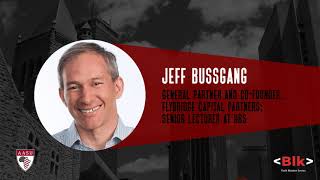
Finding Product-Market Fit in the Age of AI with HBS Online Professor Jeff Bussgang
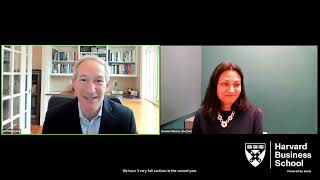
Recorded conversation (April 2024) between Samin (HBS Online) and Professor Jeff Bussgang covering Jeff’s entrepreneurial background, lessons from the Internet era, his HBS course 'Launching Tech Ventures', and his forthcoming book "The Experimentation Machine". The discussion emphasizes using AI as a co‑pilot to accelerate customer discovery, prototyping, and experimentation toward product–market fit, plus practical issues for investors, educators, and startups. The session closes with audience Q&A about industry impact, education use cases, ethics, and recommended resources.
Chapters
All right, let me get started. So hello everyone, my name is me Mosen and I'm the senior managing tracker with PHP Online. It's my pleasure here this afternoon to be spending a bit of time talking with Professor Jeff. Jeff is a senior Lecturer of Business Administration at Harvard Business School. He's also the creator of the HBS online course Lodging Through Teachers in addition to teaching hbs. Jeff today, John really is co founder and Jenna Mopner at FL Capital Partners FlyRidge, an early stage venture capital firm and offices in Boston and New York with over a billion dollars under manage and across 60 funds, nine network funds. Today I have the pledge of speaking with a few things including product, market, fit and AI. And spend some time talking about Jeff's upcoming book, the Experimentation Machine Finding what it. So I'll start with a few questions for Jeff. Some will be prepared, some which have been sent by our audience ahead of time and then towards the end we'll leave about 10, 15 minutes, answer your questions today. So if you have questions, please feel free to put them into the chat. And we try to get through as many as we can. So why don't we start? Jeff, would love to hear, kind of early days, so to speak, the start of your entrepreneurship journey. Since we have a lot of joining us today who are early in their exploratory phase, would love to hear about, you know what, your interest in entrepreneurship at the beginning.
Sure. And just to test, am I the only one? It looks like. Samin, your audio might be a little choppy and I wondered if my audio was good.
You sound great to me, so hopefully mine came through okay.
Okay, great.
I'll just make sure.
Yeah. So my entrepreneurial journey began. Well, first I will say I grew up with a father as a who was an entrepreneur. And so I got the kitchen table mba, so to speak, before I got my real mba. And I was a bit of a computer nerd, maybe more than a bit, and was very enthusiastic when the PC came out in the Apple II, Apple II+ I taught myself how to program. I was a computer science major in college in the late 1980s. I studied AI, believe it or not, in the late 1980s and early 1990s, before AI was even decades from being a thing. And so I just had a vision in my life that I would be a computer software entrepreneur and went to business school with that vision in mind. And so right after graduation in 1995, I had the good fortune of being on the cusp in the early days of the Internet wave. And we'll talk, I'm sure about the AI wave, but being a part of that first wave as an entrepreneur and that extraordinary dislocation and opportunity and innovation and energy was just an amazing experience. So that, that really catapulted me into the land of startup land, so to speak.
Great. So as you sort of, and hopefully my audio is okay. Can you hear me okay now, Jeff?
Yeah.
Right. So from those, from those early, you know, years, whether it was IU promise or open market, you know, you've transitioned from being an entrepreneur to now funding other entrepreneurs, you know, at Flybridge. What were some of those key lessons that you retained through the years as you kind of think back over your journey and you know, what stuck struck stuck with you as you kind of made that transition and how do you think about that path?
Yeah, it really informed a lot of my investing work because, and a lot of my writing because in truth, I made so many mistakes as an entrepreneur both in the Internet point zero days when everything was so frothy and crazy and maybe more sizzle than steak. In the early, early Internet 1.0 days, our company went public at a billion dollar valuation. This was now before unicorns were known as a thing with only less than $2 million of trailing revenue in the mid-1990s. So I sort of, I grew up in this era of froth and excitement and energy. And as a result one of my mantras was, you know, move fast and don't worry about the money. Like save time, not money. Let's, we're an Internet time, we've got to move quickly. And I had no conception of iteration and lean startups and test and learn, we're just go, go, go. And we had the benefit of raising a lot of capital in a very rich and frothy capital market. And so I grew up building fat startups. And so as later in life, as you know, the market crashed in 1999 and 2000. Suddenly I had this realization of the value and importance of lean startups. Before that was, you know, that book was written by Eric Rees in 2011. And so I, I really entered the venture business in the early 2000s when I, I co founded Flybridge with this mentality of capital efficiency. Lean startups test and learn, don't do what I did, which was raise too much money and you know, scale prematurely.
So speaking of those lessons, you know, how did you think about them? You have a very popular second year MBA course at, you know, at the Harvard Business School calling called Launching Tech Ventures, which, you know, you've Sort of taken online as well with us as an asynchronous course. So how did you think about sort of encapsulating some of those lessons when you were, when you were, you know, envisioning your course?
Yeah, I first, I give full credit to Tom Eisenman. When I joined HBS as faculty and 2011, Tom grabbed me and said, hey, let's build this course called Launching Tech Ventures and let's do something that the school had never done, which was really focus on pre product market fit startups that zero to one magical moment. The school, as folks know, is brilliant at large company management leadership. Historically, when I was a student, we had two entrepreneurship faculty, Bill Salman and Howard Stevens. Bill Sloman was a great mentor of mine and I learned a tremendous amount from him, but he was really with Howard alone on an island. And when Tom came and many other faculty leaders came in the early 2000s and mid 2000s, there was this beginning of momentum around the science of early stage startups. And so the point of the course, which we launched in 2011 and I took over subsequent to that first year was, was let's look at that zero to one magical moment and see if we can boil down the search for product market fit in a more scientific and rigorous fashion. And that's where we came up with the curriculum and this notion of running experiments and startups as experimentation machines. And the course, as you say, became very popular. It's now one of the most popular courses in the school. We have three very full sections in the second year elective curriculum and with the help of you and your colleagues, you know, make it now available online through HBS online. But boy, it's, it's, I feel like those lessons and I'm always renewing the course and thinking about new lessons. It's sort of timeless frameworks and lessons but, but timely tools. The tools keep changing. The industries, sectors, what's hot. But the lessons are quite timeless.
So speaking of those timely tools, you can transition a little bit to talking about AI. I've heard you say in a variety of meetings and different environments that the rise of AI is sort of a watershed moment. And you talked about this a little bit like you were there in the kind of early days of the Internet, if you will, and the growth of that. So as you think about what makes you think that this is a watershed moment or an inflection point and particularly for innovation and entrepreneurship, you know, can you share with us a little bit about sort of how you think about this and how you're equipping your students to think about it as well.
We're really on the very cusp of a multi decade revolution, I believe. And I saw it firsthand in 1994, 1995, 1996, when the browser and the Internet became widely available. And I wrote an article in Harvard business review in 1996 about the business and the, you know, the Internet becoming a business environment. And that took decades. That was a decades long moment of innovation. I'm seeing all the same patterns, but amplified in AI. And I think the, the biggest difference is that there have been all these building blocks that have been built over the last 20 years that didn't exist in 1995, 1996. In 1995, 1996, PCs had been relatively distributed, relatively networked, but consumers weren't trained on digital devices and digital usage. You know, people who remember everybody was afraid to put their credit card on the Internet. Business transactions were not happening, they were not viewed to be secure. So a lot of fundamental cultural and foundational elements did not exist. Fast forward to 2024. The world is globally connected. Broadband, we all have supercomputers in our pockets, GPS chips and rich applications. We're all very comfortable with them. There's a net native generation and a mobile native generation. And most importantly, perhaps businesses have completely digitized and transactions and partnerships and the flow of contracts and relationships globally are now all online. And so the idea of an AI accelerant to all of that activity is an idea that's been laying in wait. And now finally we can see the catalyst for that to happen. And I see it not only across my investment portfolio in the context of Flybridge, where our AI companies are getting pulled in to big companies and enterprises and spending is happening and things are accelerating. But when I talk to CEOs of Fortune 100 companies, all they want to talk about is their AI projects and their AI initiatives and, and swap stories with each other about what they're doing to make hiring more efficient and talent management and software development and product development and sales and marketing and content generation creativity. It's just every aspect you're seeing AI infused workflows and activities. So it's, it's a really quite exciting moment I think, in business in general and entrepreneurship in particular.
Yeah, because it's interesting you say that because it's really the entire value chain of organizations. Right. It's the internal processes, it's the customer facing types, it's the product itself. So I think that's really kind of, it's all encompassing in A way the Internet was as you mentioned too. Right. It touched upon kind of every aspect of many, many organizations.
Yeah, it's a funny thing. So I've been investing in cloud computing and big data and enterprise software and vertical SaaS for many, many years. CEOs of big companies didn't care about any of that stuff. Never talked about vertical SaaS and enterprise IT and dev tools and DevOps. But they're all talking about AI and they're all having a boardroom strategic conversation about how AI is affecting, as you said, every aspect of their business. So that's the entrepreneurial opportunity. And then of course there's the opportunity for new types of services and digital native capabilities. I mean, if you think about OpenAI, which is one of the fastest growing services to go from zero to a billion dollars in revenue to go to, you know, hundreds of millions of users, if you think about that, is a AI native consumer application in many ways replacing Search or Wikipedia or some other tools. And so you know, what other as an entrepreneur, not just thinking about B2B and enterprise opportunities, but what other brand new, never imagined applications are out there that are AI native that we see deployed very rapidly in the marketplace. That's exciting as well.
Yeah, that's definitely, you know, while there's a lot of improvement to be made on the base, there's a lot of green field too in terms of, you know, that, that people could look to innovate within. So as you think about this sort of rapidly changing space, how did you address that in, in kind of developing your book, the Experimentation Machine? You know, what do you think AI enables entrepreneurs to do? Maybe differently or better than they were able to do before.
Yeah, I should say. I, you know this. I've written two books and the, the first book I wrote, Mastering the VC Game, was focused on founders and fundraising. My second book, Entering Startup Land, was focused on joiners looking for jobs and finding their way into startups. And I, I never really focused on this core question of finding product market fit because I felt like there had been a reasonable amount written about it. And even though probably the best book on that topic, the lean startup in 2011, was 12 years old, a lot of those lessons were still pretty relevant. And I have expanded on them in the course of my course and the case studies and the frameworks that I've rolled out in the course. But in the last year, what I've realized, and this is what inspired me as a catalyst to write the book, what I've realized is that the whole entrepreneurial journey, and particularly the finding product market fit journey from ideation and customer discovery and prototyping and testing and iteration with your MVP and getting feedback and running all these experiments, never mind distribution and scaling, sales and marketing, every aspect for an entrepreneur can be accelerated with AI. AI can effectively serve as a co founder or co pilot. And if founders can think about having an AI co pilot through their zero to one entrepreneurial journey, that struck me as a really powerful concept. And so the experimentation machine finding product market fit in the age of AI is really centered on that notion, which is making sure everybody understands the timeless tools of finding product market fit through experiments and customer value proposition and go to market and profit formula and business model and the organization required to run those experiments. But also doing it in the age of AI where every step of the way you're using AI as a catalyst to be more efficient and more effective.
So as you think about maybe as you're, as you're writing this book, what's a great example of a company that you've run across or a startup that has put AI to use in the way that you're talking about?
Yeah, I mean, look, the simplest thing I can say is everybody who has been playing around with some of these no code software development tools knows that the hot new programming language right now is English. And so for founders who want to build prototypes and test ideas, they're able to use these code generation tools to build these prototypes so much more rapidly. And then if you think about, well, okay, prototype development, but let's take a step before that. Let's do customer discovery and idea validation. You know, we have companies in our portfolio that are creating user Personas through the AI tools that are synthetic or AI based user Personas and then having queries with those user Personas to help them think through their value proposition. Their, the scripts by which they might go out and outreach to customers and test and interview customers, to prospective customers to test these ideas and then take all that feedback and synthesize that feedback and iterate from there. And when you think about every step of the way and beginning to develop automation and agent workflows through that process, you know, you can get a really accelerant. So we have portfolio companies, we have some cases on companies who are using these tools to do exactly that. You know, we, we emphasize a lot in our work in the classroom about really understanding the user deeply, the customer Persona. What's the, you know, the value proposition? What's the pain that that customer is facing? How do you find the Must have value proposition versus the nice to have value proposition. Well, if you can identify the Persona through AI tools more efficiently, interview them, not only real people, but also synthetic people more efficiently and expose your whole team to that, from the low engineer to the product manager, to your sales co founder, you know, you can really accelerate your iteration cycle.
So as you think about, you know, when you get approached by budding entrepreneurs or you get those pitches, how do you think about sort of what gets you to a yes today versus pre AI? Is that part of your decision making process? Are you looking for the entrepreneur who's done some of this testing already through AI? Is that sort of what is the feedback that you give?
Yeah. So let me say more generally how we as venture capitalists make investment decisions. And then let me tell you the the new world of AI in the age of AI, how venture capitalists are making. So the standard process for early stage, seed stage, which is what we do at flybridge, is centered around team, the quality of the team. Do they have an earned secret? Do we think they have grit? Do we think they have a vision for the future that we believe in market, total available market and market dynamics and tailwind and secular trends that might lift a quality opportunity and secular and sector and then fundamental, you know, product and business model underneath service. Is it something novel, innovative? Is there a competitive moat? Does it, does it have network effects, perhaps recurring revenue characteristics, high gross margin characteristics? So that's the very quick summary of what most early stage venture capitalists think about team tam, total available market TAM and product slash business model. So in the age of AI, you know, what most venture capitalists are thinking about is, okay, competitive moat. The way that the platforms are moving so quickly, both Microsoft, Amazon, Google, OpenAI with their Microsoft godfather, is there a real competitive moat here? Or could either one of the big tech platform companies scoop in and wipe out your market? Which I have a case on that I just wrote a few months ago, which I won't describe the company because I don't want to be able to work towards them, but they had a pretty thoughtful strategy about what they were going to do. And then OpenAI comes out with a new feature and it totally wiped out their market. So is there that risk and, or is there a risk that an AI native team could rapidly disrupt them? We're in a moment in time where a lot of franchises are more vulnerable than ever to disruption from AI native and offerings. So what many venture capitalists are now asking themselves are those two fundamental questions is, are the big tech Companies going to blow you out of the water with their next release or their release a year from now or two years from now. And secondly, would an AI native team out execute you or do you have the skill set to be to build an AI native company that's going to iterate, you know, really rapidly. And I'll give you one like small example. There's a company called Mid Journey. It's a very popular service for image generation. It is reported that that company, which is one of the most successful companies in terms of revenue scale users, has a dozen employees. Can you. So you know, people talked about WhatsApp when it was acquired by Facebook having you know, dozens of employees and being so incredibly valuable and powerful. You know, the fact that it could be even fewer employees now because they're so efficient and they're using all the AI native tools to generate code, do customer discovery test and learn automatically iterate on their product. Like that's what gets us really excited.
So that's like the super lean startup.
And the super AI co pilot or co founder and the super catalyst, you know, leveraging AI to be a super catalyst for your venture.
Yeah, it's amazing. You know what, what really that old adage of a couple of people in a, in a garage can do right today, which is even more true than it was back in the HP days.
It's a couple people, a garage and a, and a, and a like a football field worth of GPUs that they have access to.
Exactly. So before we go to the pre selected sort of audience centered questions, what was the best piece of advice you've.
Ever been given from what perspective?
As a, as an entrepreneur? Let's go with that.
Yeah. I'll cite two great pieces of advice. One was I as an entrepreneur I was very quick to try to answer questions, solve problems and jump into things. And there is a moment where the entrepreneur has to be hands on the wheel. But a mentor of mine at the time said to me, you know Jeff, wouldn't it be better if the team solved that problem? And if the team doesn't do it, maybe you have the wrong team. So maybe you should bring in the team that would solve that problem and not require your presence and your activity and your energy. So I, I really, I'm always thinking now when I'm working with founders is, are they hands on the wrong set of tasks and the wrong activities? Should they really be focused on building the team to do those things and scaling appropriately? You, you know, in the early days, of course, the founder has to be in charge of recruiting and culture and fundraising. And in truth, that never changes. Recruiting, culture and fundraising is always the founder's responsibility. But but at the next level, customer discovery, product management, product delivery and development, selling, marketing, some of the execution elements, operational customer success. Like yeah, the founder needs to be involved in the early days, but man, they really need to build a team to do those things for them and ideally be better than they are. On a comparative basis, I refer to the comparative law of economics and there's a startup version I like to refer to as the startup comparative law, the startup law of comparative advantage, which is that as a founder you may be like better a little bit than the best coder, better a little bit than the best salesperson. But comparatively speaking, only you fundraise, only you can sit in board meetings, only you can build culture and recruit top leaders and executives. Let the, let the others who you are comparatively better than, let them do you know their thing really well in their, in their lanes.
That's great advice for I would say not just entrepreneurs, but anyone working in an organization to really think about what they're good at and what value that they bring to the organization.
Second, the second quick piece of advice was I somebody just in a very pithy way said you can hire people onto your cap table but you can never fire them. And the framing on that is be really thoughtful about who you bring on as investors because you are going to live with them for if the thing goes well, 10, 12, 15 years. And so being really thoughtful about not just raising money because you can raise money from certain people and certain institutions, but being very judicious about bringing them on as partners for the long haul.
And that's hard, I think for entrepreneurs who are, you know, in the early stages you're looking to raise money. So I'm sure that's a lesson that is tough to remember in, in those times, but definitely makes sense because you're building a company not just for a year, but for to last. Right, for a long time. So thank you. Those were great pieces of advice. A few questions that we had received from our audience ahead of time. So as a venture capitalist, which industry is AI making the most impact on currently and what do you think is next? And you talked a lot about sort of every industry, but just wondering if you have any specific industry that you've got your eye on right now.
I'll make two observations. One is that knowledge based industries tend to be the first to be disrupted by technology when you past cycles. So financial services Being a good example of a very knowledge or information based industry, I think the consulting industry is a bit of a sleeper that will be dramatically disrupted. It's a pure knowledge industry. Legal, accounting, other large knowledge industries. But then the second observation I would make is Jeffrey Moore wrote this beautiful book, Crossing the Chasm about how in technology life cycle adoption curves you will always have innovators and early adopters and then a chasm before you get to the majority, early majority, late majority and laggards. And one of the things I think is so fascinating about this moment is that the laggards have become early adopters. Look at traditional laggard industries, construction or oil and gas or utilities or even the government. These are historically industries that have been a bit slower, a bit more cautious. There is such a wave of both fear and excitement over being disrupted or the potential to be a disruptor that even those industries are becoming early adopters. In many ways. We're very close to an insurance company. Normally you think of the insurance industry as a relatively slow adopter of technology. This particular insurance company has dozens of AI applications that they have implemented currently within their sales, marketing, claims, it, financial services, arms. So it's exciting to see in this moment even, even late majority and laggard traditional companies jumping in and, and initiating pilots and being early adopters.
Yeah. And I think that's a real testament to, as you said earlier, this technology is really available to anyone to use. Right. So it's, it's just, I mean, let's.
Talk about Harvard Business School and Harvard University. Harvard University is one of the largest bureaucracies in the world. We love it, that's the fact. And Harvard Business School is traditionally a very thoughtful and deliberate and careful executor of new initiatives. And boy, have we seen HBS adopt AI extremely rapidly. And as you know, I deployed a custom GPT, a custom chatbot in my course launching tech ventures in the school. The school was, has embraced it, has been very excited about it. It's sort of a faculty co pilot trained on my content and the course content and ancillary materials. And very rapidly the IT organization, the digital transformation organization, the HBS online organization, have rolled out these chatbots and my, the online version of my course will be rolling out in a few weeks with, with a version of that. And other courses, including the design thinking course, have already done that. So it's cool to see even a university, even one of the more conservative and larger universities, be so nimble in executing on these capabilities.
Yeah, so that's a great segue into one of the questions. You know, you mentioned education. It's probably one of the oldest industries right out there. So, you know, as you, as you deployed this bot in your class and you think about rolling it out to your online class, what do you think are sort of some of those key lessons that you learned through this process? And what would you want, once again, thinking about sort of that lens of entrepreneurship, you know, you know, what would you want people to take away in terms of that interplay between education and AI?
Yeah. Well, first I would say one of the timeless lessons and frameworks in startups is meeting the user where they are and delivering value to them at the point where they are, that's in the flow of their normal workflow. And you see this with businesses and consumers. Anytime you have extra clicks, extra applications, extra work that a user needs to do, it's less likely that you're going to find success. And so one of the things that I did with my custom chatbot is I embedded it into the course slack. And as you know, our students live in that slack. They were doing other things in the slack, including delivering assignments and signing up for guests and receiving administrative information. So meeting them where they are and where they live. Similarly, the course bot for the online course is being embedded in the online course application so that it's as context and is in the flow so that the user doesn't have to exit HBS online to get to the course bot. So I think this sort of timeless framework of meet the user where they are, deliver value that's in the flow and in line with their workflow is really quite critical. And then the second thing is, I think that proprietary content and proprietary data is proving to be a critical competitive advantage across all industries in an educational setting. That might be the proprietary cases or books or exercises that that instructor or that university has, just like we have our cases and HBS publishing and HBS online and the work that we do. Because if the alternative is to go out to the OpenAI ChatGPT or Bard Gemini with Google or Microsoft Bing, which is powered by OpenAI, if you, if it's easy to just go out to those public sources, why would I bother paying for or seeing value in a private source? And I think universities and academics and instructors in general have an even higher bar to deliver value for what we charge as a university, what our online courses charge, because the quality of the free stuff just keeps getting better and better. So we got a race to stay ahead of that.
And also thinking a little bit about some of the pitfalls while using AI, which is another question. Some of that information out in the open space hasn't necessarily been vetted. Right. So I think that is another kind of challenge. And you know, I don't know how you think about that, particularly as you tell entrepreneurs like, you can do a lot with AI, but you know, what are those checks and balances? So I'm curious how you kind of think about that.
In this application we're super focused on human in the loop and content testing and accuracy. Relevant anti hallucination. There's a technique called retrieval augmentation generation, or rag, which is becoming a popular mechanism to retrieve only the relevant content and using that as a ring fence, which is what we did in the, in the bot that we created for my course and that is being created for the HBS online courses. So there's a, there's a whole set of technical mechanisms that you can use to ensure accuracy, but the user experience, you have to balance accuracy with comprehensiveness because if you have too narrow a data set and users get frustrated, and this is true for B2C or B2B users, you know, they're going to attrit and they're going to go, you know, run away to OpenAI, to perplexity, to Google, Bard, whatever. So you've really got to deliver comprehensive information, but also ring fence and make sure you've got accuracy, relevance and anti hallucination capabilities.
So we have about 10 minutes left, so I'm going to switch to questions that were submitted by our audience. So the first one we've got from Om Chinmaya Shakti in Zoom Chat. So AI offers powerful tools to analyze data and identify patterns, but achieving product market fit ultimately hinges on understanding human needs and desires. So you talked a little bit about this, Jeff. How can you leverage AI to gain deeper customer insights that go beyond demographics and purchase history and translate those insights into a product that resonates on an emotional level? So kind of a deep question there.
But love your thoughts and as you say, a very deep question. And I do believe that the quality of the models are moving into creativity and emotional power and can serve as inspirations. Today, the best art is still being created by humans. Movies, books, works of art, paintings, sculptures, etc. And I think a provocative question is, will that continue as the quality of the AI models continues to improve and as they, you know, reflect on the existing artistic advancements and ingest those advancements to try to create incremental derivatives of that? And what I've just Said some of the words and language I just used incremental derivatives creativity, you know, I think non linear creativity, I think will often arguably be for a long time only human domain incremental creativity. I do wonder if AI can help us with that. And so I'll give you an example. One of the things that we did in my course is we assign to the students to use chat GPT to ideate on a new product idea in a domain where they had a sense that they were excited about, and then to use ChatGPT to describe the experiments that they would run to test that idea. So again, startup is an experimentation machine. You go through the design thinking process to ideate on some new ideas and then you use the tool to try to run the design, the experiments. And what my students found and I asked them to reflect on their findings. So across 250 students doing this, you know, the pattern was the creativity behind the ideas was not there. Each of the ideas were relatively incremental or derivative ideas. But the precision of designing the experiments to test the ideas was excellent. And so the best combination, I think is human creativity for that spark of inspiration for the nonlinear thinking. But using the AI to help go through the rigorous discipline of testing the idea, doing customer discovery, you know, figuring out the right shape of the product, the feature prioritization, the pricing, and really leveraging again the AI as a, as a catalyst, a human inspired catalyst for that process.
And in the language that you've used all along, it's been about copilot, it's about partnering, it's about using the tools in the right way versus letting that drive the journey. Right. Which I think is. Sometimes people will. It's easy to fall into that trap. Right?
Yes. As the commercial, which I think is a very dumb commercial, but it still has a cute punchline to it. As the commercial says, how do you know I'm not a robot? How do you know you're not a robot, you're not an AI? I think there is a sense of the spontaneity and the creativity and the, and the, and the spark that you just, you just can't replicate.
Another question from our audience from Lena in the Zoom Q and A, what are the biggest challenges that you're seeing at the moment with leveraging AI to kind of refine some of these business ideas, to generate ideas and refine them?
Well, I'll say first, my point about incrementality versus breakthrough is an important thing. I would also say that teams are uneven in their skill set in use of the tool and within companies. So there's, there's this, was this notion in the 1990s of reverse mentors where senior executives would turn to the junior people in the 1990s and say you're sophisticated about the Internet. I have no idea how to use the Internet. Would you mentor me to teach me how to be net native and how to use the Internet and use these tools and understand the implications? And I think we're in a moment similarly where younger professionals, the junior engineers, the young professionals coming out of the MBA program right now and, and certainly many of the marketers and sales people are extremely sophisticated using these tools and the senior leaders are clueless and not as comfortable. And so there's this opportunity for reverse mentoring, I think to elevate everyone's game that senior people should really think about. You know, go adopt a 24 year old or 26 year old professional who's an AI native user, you know, in terms of their professional tools and techniques and workflows and have them coach you on what are the latest tools and how do they use them.
That's a great way to learn because it's also kind of, rather than kind of going and reading about it, it's great to kind of bring that to life and through someone's experiences. Another question from Haneen. In the chat with the rise of AI usage and consultancy and you talked a little bit about management consulting, would businesses be more reluctant to hire consultants that may bring them not only enabled AI content, but some pitches that are fully generated by tools like ChatGPT. You know, so I guess there's also this follow on question around ethics and where's the gray line of AI usage in business and taking out the human factor in the equation. And as a former consultant myself, I thought a lot about the consulting industry and the disruption, you know, that has happened and is to come related to these tools. You know, it's fundamentally different than the way I did consulting in the late 1990s. Right.
It really is. And I don't know if people are going to like this answer, but if you take a step back and you think about who have been the early adopters in the last couple years? It's been the big tech companies, Google, Amazon, Facebook, Microsoft. And you look at the headcount of those companies versus revenue. Revenue has grown dramatically. Headcount has been flat to down in all of the big tech companies. They are ringing efficiency and they're early in doing this, but ringing efficiency through these AI tools. Consulting firms are very early in that Cycle. We have a case on BCG's use of AI in our curriculum in a new course that one of my colleagues teaches on Gen AI, and there was recently a paper by some of my colleagues doing research on BCG's use of Gen AI as a tool set to make consultants more efficient. This is rippling through McKinsey, BCG, Bain and all the consulting firms. And you, you can bet that they're going to see a similar thing to what the tech companies are seeing, which is efficiency gains outstripping headcount. Because of that, this dynamic and these, these tool sets becoming more powerful. I think that's good overall for the economy in the long run. You know, which side of that equation would you rather be on? The, you know, lower productivity country and industry or the higher productivity country and industry? I, but I also recognize that there are downstream implications. There's a have and have nots. There's the, you know, we used to talk about the technology divide and the broadband divide. You know, back before Al Gore invented the Internet and the Internet superhighway was implemented throughout the country. We're going to see, I think, a similar risk in our country of the AI divide. And, and if you're on the wrong side of that divide, it is going to be difficult.
Yeah, I mean, I think it's, it's hard not to think about that given where we are as a country and some of the inequalities that exist. But, you know, thinking about the potential with a tool, as you said, you know, the native language of this tool is English. Right. Or language, rather than a set of sort of, you know, capabilities that were only available to if you've done years of math and, you know, science and kind of coding and things like that. So I think there's opportunities at least to be able to leverage this tool. And I'm heartened by the fact that you said, you know, it's some of these older industries or old world industries that are leveraging these tools, which you may not have seen necessarily in the past.
Yeah. And, and I would also observe, and I'm not a macro economist by any stretch, and I'm not a policy person by any stretch, but I would observe we have 3, 4% unemployment in this country right now. So we are, we are in a position in the country where, you know, the Bryant, by and large, we're in a very healthy job environment at the macro level. And if we can grow without too much disruption, you know, if our best industries and our best companies can grow and achieve further competitive advantage globally. I think that's going to be, you know, a positive thing for wealth creation for, for everyone. You know, the pie should be just getting bigger. There's the, there's a current thread in a lot of economic circles of how is it that the US Economy is outperforming every other country in the world over the last few years? How is it that we're growing faster than China when everybody thought China was going to overtake us perhaps by now, how are we growing so much faster than Europe? You know, it's not, it's not lost on anyone that we are the fastest technology adopters in the world, that our industries are the fastest technology adopters in the world. And I again, I'm not a prognosticator on economics, but it would not surprise me as a, as a micro person on the ground with IT companies and tech and venture capital and startups if that continued thanks to the rapid adoption of AI in US industries.
It's definitely another sort of revolution, right. As you think about sort of the industrial revolution, the Internet revolution, what have you, so that it enables sort of that growth. Coming back to that question around watershed moment. So with the last question, we're over time, but there were a lot of questions coming back to what books you recommend, Jeff. So maybe we can have that be our ending question there and you know, anything that you are reading or maybe I'll expand that any podcasts, anything that you're kind of consuming now that to kind of keep you on top of these trends other than of course, the conversations and the work that you do.
Yeah, I have actually found very few books on AI to be very good because it's moving so quickly and once something gets published in a physical form, it tends to be out of date. Which is why I'm hoping the Experimentation machine is, you know, timeless lessons with timely tools that, you know, the product market fit journey is a time as a timeless journey. But I would say that the Economist has been very good in its coverage of of AI and so almost anything written by the Economist on the topic of AI has been excellent. I would observe that there are again, I'm going to stay at a very business level. There are a few podcasts that Ezra Klein has done, including one just this week on how to use AI effectively that I think have been very good. Ethan Mollick at Wharton writes a For those interested in education and using AI in the classroom, writes a very good newsletter, a substack newsletter. And then finally there are some really nerdy niche AI related newsletters and substacks and and I can recommend a few for those who want to get a little more wonky. I am writing in a newsletter for my book Experimentation Machine where I'm doing case studies on companies that have found the product market fit journey and trying to infuse a bit of AI into those stories. So for founders interested in the zero to one journey, the Experimentation Machine newsletter might be of interest as well.
Yeah, we would love that. And we can send those links out to our audience afterwards if you share those with us. But Jeff, thank you very much for spending the time. I know every time I speak with you I feel like I learn so much more, so I'm sure our audience feels the same way. So I know how busy you are. So we really appreciate you spending the time and sharing your knowledge on these topics. And we look forward to your book when it's out later in the year and we'll be sure to share that with our audience too when it comes out.
Thank you so much. Great to see everybody. Great to see you. Samin. Thank you for so much.
More from Jeff
The Rise of the 10x AI Founder: Strategy, Scale & Startups - with Jeff Bussgang
The Experimentation Machine: How AI is Creating 10x Founders | Jeffrey Bussgang & Alvaro Rodríguez

Finding Product-Market Fit in the Age of AI, with Venture Capitalist Jeff Bussgang
Jeff Bussgang on the Rise of AI & Raising Venture Capital | The Parlor Room: Season 1, Ep. 4