Jeff Bussgang, General Partner at Flybridge - The VentureFizz Podcast
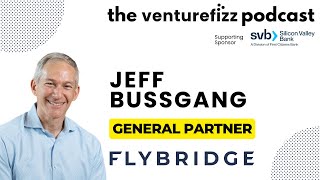
Interview (VentureFizz podcast, episode 373) with Jeff Bussgang (Flybridge GP) about his career as an entrepreneur, investor and Harvard Business School faculty member. He recounts founding/joining early internet companies (Open Market), co-founding Upromise (loyalty-driven 529-focused savings), Flybridge's seed-stage AI focus, his teaching/mentoring, Hack.Diversity work, and his thesis in his new book The Experimentation Machine: Finding Product-Market Fit in the Age of AI. The conversation mixes company histories (products, business models, exits), lessons for founders (experimentation, go-to-market, "hair-on-fire" value props), and reflections on the Boston AI ecosystem.
Questions this video answers
Episode 373.
The Experimentation Machine: Finding Product-Market Fit in the Age of AI.
March 17, 2025.
About $1 billion valuation at IPO in 1996.
About $1.8 million trailing revenue.
Chapters
Greetings. I'm Keith Klein, the host of the Adventure Fizz podcast where I interview the most fascinating people in the tech scene. This is episode 373 and today's guest is Jeff Busgang, general partner at Flybridge. Jeff has accomplished so much throughout his career. I'm sure lots of people probably know him best as a venture capitalist and professor at Harvard Business School. But you might not know all the details about his startup career prior to Flybridge or which I was really excited to dig into because he played such a key role at two incredibly successful companies in the Boston tech scene. The first being Open Market, which pretty much invented E commerce with its shopping cart technology that was licensed by companies like Amazon when they were just getting started. The company went public at a billion dollar valuation back in 1996, which was a very very big deal back then. The second company is uproimise, where he was a co founder along with Michael Brauner who is also the founder of Digitas and really helped establish the world of direct and loyalty marketing. And David Fialco, who you might also recognize as one of the founders of General Catalyst upromise helped consumers including myself. I was a customer save for their kids college education through a loyalty rewards program. The company scaled and was very successful, then later acquired by Sallie Mae. In addition to being an entrepreneur, investor and professor, Jeff is also an author of three books and his latest book is called the Experimentation Finding Product Market Fit in the Age of AI. In addition to these stories, we also talk about Jeff's dad, a scientist and entrepreneur who developed the Bus Gang Theorem. Jeff's educational background in AI Flybridge's history of making investments in AI, hack, diversity and so much more. And now a brief word from our podcast sponsor, Silicon Valley Bank. I'm excited to share that this podcast is brought to you by one of the strongest longtime supporters of the local startup ecosystem, that being Silicon Valley Bank. A division of First Citizens Bank, SBB serves innovative tech, healthcare and life sciences companies including 60% of CNBC's Disruptor 50 list, 72% of Forbes Cloud 100 list and 48% of Forbes AI 50 list. Companies with more than 1500 bankers and relationship advisors and 42 billion in loans. Through Q2 2024, SVP Delivered delivers the right people, service and resources to support your entire financial journey. Learn more@svb.com all right, without further ado, here's my interview with Jeff. Jeff, thanks so much for joining us.
Yeah, it's great to be here Jeff.
So I think my email to you is like, how have we not done a podcast yet? Because I was just like, so much to talk about with you as far as the history of the Boston tech ecosystem with the companies you've been involved in, which are legendary, what you've done as an investor and the whole team at Flybridge, and then other things like Harvard hack diversity. So we've got a plethora of things to talk about, including a new book. So you have written now three books. This is your third, am I right?
It is, yeah. Yeah, I'm excited to talk about it. It's very much in the zeitgeist, which we can get into.
Yes, well, let's dive into it. And I love the aesthetic background. The Fireside Chat, it's totally on.
It's February. It's cold. I figured it's cold. It's the vibe.
It's totally great vibe. I love it. Let's talk about your new book, the Experimentation Machine.
Yeah. So the book is the experimentation finding product market fit in the age of AI. And it's focused on founders and entrepreneurs, but also joiners and how they can leverage the modern AI tools to be what I refer to as 10x founders. So just like that mythical 10x developer that's using all the modern development tools to be 10 times more efficient than the standard developer, I. The thesis of the book is that founders today can use these modern AI tools, especially in combination with timeless techniques, which maybe we'll talk about to become 10x founders. And in so doing, they can run their experiments to find product market fit that much more efficiently and effectively.
And how did you like or when did you start writing the book and how did you come up with the concept?
So, you know, I teach at Harvard Business School, and I also invest as a seed stage VC at Flybridge, and most of my investment activities are in AI. In fact, Flybridge is now exclusively an AI First VC fund. So I was seeing both my work in the classroom and my work with my portfolio companies converge on this idea where I was seeing these incredibly brilliant, efficient founders who were AI, native AI forward on the cutting edge, or as one of my HBS colleagues refers to, on the jagged edge of leveraging these tools. And it just continued to excite me and interest me. And the cases I was writing were centered around this. And so I thought it was just a moment in time where we really needed to bring to the fore these methods and techniques for leveraging AI tools to be more effective as founders.
Yeah, I mean, obviously the timing and the process of writing a book is Something that I'm just fascinated with. And you having done it multiple times, how do you juggle your time to write?
Well, first I'll say that the way a book, at least in the three that I've done, has developed, has been organic. I'll have an idea, and it will be a blog post or a case study or a chapter and something. And I'll try it out in the classroom. I'll try it out with some of my founders. I'll try it out in the boardroom, and I'll sort of get feedback, develop some material, and then it will build organically. And then at some point, I just feel like it's something inside of me that I need to get out. And so my first book, Mastering the VC Game, was about as a former entrepreneur turned vc, trying to open up the curtain to allow founders to understand how investors think and how they can master the game of fundraising. My second book, Entering Startup Land, was, came out of the fact that I was talking to all my students about how they could be better positioned to become joiners at startups, like I did right out of business school when I was an early employee at Open Market. How do you go from employee number five to 500, and how do you find that insertion point? And then this last book, as I said, coming out of my portfolio work and my work with my student founders. So these things kind of develop organically, and I piece them together, have sort of building blocks, and then decide, you know what? I'm going to try to do this in 200 pages, not 20 pages.
And I feel like you were like an OG blogger in the tech community too, as far as. And you're still blogging, which I've seen a lot of people, they were blogging back when, but then they kind of have gone away from it.
Yeah, I've been blogging for, I think, about 20 years. I was the first in Boston and one of the first in the country, I guess, in the VC community. So, yeah, I guess, you know, for better or for worse, I still have a couple things to say, and I'm still. I'm still saying it.
All right, let's talk about your background story. So where'd you grow up or were you, like, as a child?
I grew up in Lexington, Mass. I'm a local kid, super into sports, Boston sports, playing sports, and also computers. I grew up in the moment when the Apple II came out and then the Apple II plus and then the Apple IIe. And so I grabbed those things, taught myself how to program when I was a kid and then went off to college and was a computer science major at Harvard and thought, you know, maybe this programming thing or this intersection of technology and business might turn into something. And that was in the late 1980s. I came to Harvard in 1987, and I decided that I would major in computer science and in particular, AI. So in the late 80s and early 90s, I focused on artificial intelligence. I took graduate courses in computer vision and natural language processing. I wrote my thesis, my undergrad thesis on natural language processing and neural networks. So it's kind of just a nerdy passion I've had for a long time.
So when I prepare for this podcast, I always find these pieces of information that I never realized, and that was one of them. I'm like, wait, Jeff went to Harvard and studied this? So it's not like you're trying to ramp up your learning curve for AI. And we're going to talk about flybridge and how you guys have been doing it for a long time. But I was like, wait, Jeff went to school for this?
Yeah. By the way, I'm still, like, my learning curve is still incredibly steep. I feel like there's so much going on and I'm sure we'll talk about that. It's so hard to keep up. But, yeah, I've been kind of obsessed with a lot of these concepts for many, many decades, really, my whole life.
And the other piece I learned is your dad is a brilliant technologist, too.
Yeah, my dad, who passed away about a year and a half ago at 98, was a scientist and entrepreneur and mathematician, electrical engineer. He went to MIT and developed a mathematical theorem called the busking theorem, which is all about signal processing and was a very important theorem in the world of radar and signals. And then he got his PhD at Harvard, and then he started a company. And so in the 1960s, he was a tech entrepreneur before there was venture capital. And so he didn't raise any venture capital. He bootstrapped his company. And so I had that kitchen table entrepreneurship, mba role model. My dad is totally my hero and role model in so many things in life. And, yeah, I kind of grew up. Grew up with all this stuff in the water.
Yeah, no, it was awesome to learn about him. Amazing story. That's. We could do a whole podcast on him. Let's. Let's talk about your career. So how did you get your career started? And what led you back to B school at hbs?
So I studied computer science at Harvard, and then I went to work at bcg. I figured I should learn something about business. And so I learned a little bit of strategy, a lot of PowerPoint. And then after two years of that, I went on to get my MBA. I came back to Harvard and moved back to Boston. My then girlfriend became my fiance, now my wife of 31 years. And we moved to Newton and actually, sorry, we moved onto the HBS campus. And then after I graduated we moved to Newton where we've built our life. And I was at HBS just focused on this intersection of entrepreneurship and technology in the mid-90s. And then the Internet occurred. I saw Mitch Kapoor gave a talk on campus and I've since become friends with Mitch and I've told him that he really inspired me. He gave a talk on campus about Mosaic and the browser. And I had already been playing around with the Internet a little bit and was really amazed by the browser technology and HTTP and servers and SSL and security and got so excited that I networked my way into a venture backed Internet startup in 1994, 1995, back when there were very few of them. A company called Open Market which I joined right out of HBS in 95.
Okay, this is, I'm going to geek out on Open Market because I started recruiting in the tech industry in 98. So open market was gangbusters then. So I want to hear the foundational story and is it a fair thing to say? And maybe someone would have invented this eventually, but Boston, I'm putting Open Market into the Boston tech ecosystem. Created E commerce in terms of the buy button.
So Open Market was founded by an MIT professor and an HBS graduate. David Gifford was the professor. Shakar Ghosh was the he HBS grad who was a business leader in the community and an entrepreneur, also worked at bcg, which is how I got connected to him through that network. And they invented secure Internet commerce. They invented secure transactions on the Internet which David patented in 1992 or 1993. And shopping cart technology, in fact, that fundamental technology was so critical that Amazon later paid the company $40 million to license that technology back in the, in the late 1990s when Amazon was just getting started. And that was a lot of money for Amazon to pay. So yeah, we went public in 1996 at a billion dollar valuation. Back when that was a lot of money, back when unicorns didn't really exist. The company was all of 2 plus years old at the time. Our trailing revenue was $1.8 million. So you know when people talk about the Internet getting frothy in 98, 99. I experienced it in 96 and 95 as well. And that network you've heard me talk about, the open market mafia, it's kind of a legendary network. Now in Boston, Chicago, she's the faculty member with me at hbs two offices down from my HBS office and still a close friend. Gary Eichorn, who was the CEO and the amazing executive who joined pre IPO, took us public and led the company to 2 1/2 billion peak valuation, is still a good friend and in the Boston area doing amazing things. So it's an incredible network of early OG Internet leaders. In Boston.
I was a shareholder at one point and I remember, I think I got out and made money. So it was good. So you joined though in the early days when it was like 30 people, Series A from my research, if that's accurate. And you were like 26 years old or something.
Yeah, I was 26 at the time, 25 at the time when I joined. And yeah, and I suddenly found myself as one of the first product managers in the company and a company of a bunch of engineers building a lot of products that had no product market fit and no understanding of business models yet. And we had to find product market fit and find a business model.
And so how did you figure that out? How did you. Because this was still such a groundbreaking time of what we just is natural now.
Shekhar and I were just laughing a couple days ago that the moment we're in today in the AI boom is so analogous to the moment we were in in 1995 and 96 with the Internet boom, where we knew there was this extraordinary potential, but the actual products to realize that potential and the actual business models to be built were completely unknown and had to be invented. And so it was just a lot of experimentation, which, you know, back to my book the Experimentation Machine, we were just experimenting over and over again, listening to customers, trying to understand what the real business needs were and matching those business needs to the art of the possible on the technology and also forecasting what the technology curve would look like. You see the echoes of this in the cloud, you see echoes of this in the AI wave. But if you have a hypothesis about the future, which we did, about the Internet becoming a business environment, which in 1995 was a non obvious hypothesis. If you have a hypothesis about the future and then a hypothesis about these technology curves, then you can begin to envision capabilities and products that might be useful 2, 3, 4 years from now and begin to build those. And that's really what we did and that's what led to the company's success.
And the other claim that we can say is also is a predecessor for companies like Shopify, Demandware, which is owned by Salesforce. Now, like, you created that online shop and mall e commerce experience.
Yeah. In fact, this is the little known fact. Gail Goodman, who is one of the Open market executives and a part of the magical open market mafia, was recruited to be a board member at Shopify in the very, very early days because she had been a part of the Shopify of the 1990s, which is what Open market essentially was. And so Gail was a very central figure behind the scenes. And the Shopify story that's led to the $100 billion plus valuation. So it does have direct links to Open market. And I could tell you the same about Demandware, which was the multi billion dollar public company that Salesforce acquired. So, yeah, there's a lot of echoes of Open market's work in our current e commerce infrastructure.
I didn't know that about Gail. That's amazing. That's such a cool story. Okay. The other cool story that I picked up was, so this was also the early beginnings of content management. Like you had his. So you met with Paul Sagan, who at the time was at Time Warner as your customer, and he went off to Akamai and great things. There was a request to move some code and you're like, this is going to take us four weeks to move this HTML text. So. So this is the early innings of content.
Yeah, these systems were so rigid and it took us a While to build APIs and flexible capabilities that were configurable. And of course, the vision of business leaders and business managers, being able to use no code, low code techniques to configure systems was very, very early. And that's the moment we're in in the AI era more than ever. So Paul Sagan, who was the longtime, later, longtime CEO of Akamai and built the most important content distribution network in the world, he was our, one of our first customers when he was an executive at Time Warner. And just like you said, we were powering five of the top 10 Internet sites, including Time Warner, AOL, Wall Street Journal and many others. Playboy, for that matter. And we would get in these fights with Paul and he was absolutely right. He'd say, look, I just want to change this, change this and I want you to do it in an hour. And I would say, wow, we got to write the code and then we got to test the code and then we got to release the code and our release schedules have the following cadence and it just was really rigid and awful. So that was painful. Later, Paul joined our board of directors as another sidebar, and to this day has been an incredibly important figure in the Boston history of the Boston tech ecosystem and the Internet economy.
Absolutely. Okay, so Open Market eventually went on and inquired companies like Future Tense, which I remember because this was in the days when like Vignette. Right. And Broad Vision. Is that the. Am I remembering correctly?
Those are all the OG content management companies that we then. Yes, we acquired a local company and for something like $125 million if I remember correctly, and brought that team on board and then launched our own content management system so that we could marry content with commerce, which of course is the essence of what the Internet looks like today.
Okay, and fast forward. Like Open Market was eventually acquired by Divine, who acquired fatwire, that was all acquired by Oracle, that became Oracle Web Center. Now this may or may not be accurate, I don't know. But I had BC Krishna on the web on the podcast and he says he can still sometimes see the. Whatever the URL structure, or maybe he's looking at the code or something, but he can still see open market tech somehow intertwined with some web pages. Still. It still exists.
Yeah. For those who don't know, BC was the founder of Future Tense, the company we acquired. And then he came on board as an executive at Open Market. And yeah, he's right. I see this all the time. Some of our OG Open market folks, particularly overseas, tell me that they still see our software in use. And it just goes to show the long shelf life of software.
That's amazing. Okay, next chapter, upromise, which another. I mean, I use upromise. It was perfect timing for me because I started having kids and right away started saving for college. So how did the idea for upromise come to fruition?
The founder of Upromise was Michael Brauner, who had been previously a genius entrepreneur in the world of direct marketing. He had founded a company called Brauner Schlossberg, then Brawner. Com and then it became Digitas and went public and was a huge success, later acquired by Publicis. And Michael almost invented, single handedly the direct marketing and loyalty industry. He led the creation of programs like American Express, Membership Rewards and other major loyalty programs. Michael found me through a venture capitalist, a gentleman named David Fialco. David was also an entrepreneur, a friend of Michael's, and was just starting his venture fund, General Catalyst, and decided that Michael's idea should be his first investment. And so he and his partners invested in UproMise as the first ever investment that General Catalyst made. And then David met me through mutual friends and introduced me to Michael. And Michael said, hey, I'm looking for a president, a co founder, a business builder. Will you team up with me? I have this idea, but I don't know anything about the Internet. You know, about the Internet. And together we'll try to build this, you know, powerhouse Internet loyalty marketing company, which became upromise.
That's going to be a trivia question that I'm going to use someday. Name the first investment from General Catalyst.
General Catalyst has become an extraordinary firm, as folks know now, one of the top firms in the world, both in assets under management and visibility and presence. And it all started with a $1 million investment in open market and connecting Michael Brauner and me together and then, you know, helping and helping write the first business model. David and his team, Joel Cutler and other members of the early General Catalyst team literally wrote the first business model.
For upromise, which was, like you said, it was groundbreaking. You had to have a lot of different parties involved from financial institutions, retailers, and if people aren't familiar with upromos, and let me know if I'm not presenting this accurately, but it was 529 plans became a thing. Congress passed legislation that allowed you to save money before taxes and you could send up, sign up for this loyalty program. A percentage of your spend was going towards this Great, you promised 529 account, and it was just happening magically. As a consumer.
Yeah, that's exactly right. So the other leg of the stool that was so important for us was we had to build expertise in financial services. So Michael knew loyalty, I knew Internet commerce, but we didn't know financial services and asset management. And so we recruited an amazing executive named Jim Fadoul, who had been previously at Fidelity and at Merrill lynch and had contributed to the creation of the 529 products at those two firms. When Congress passed that law that allowed college savings to be tax free, much like 401k plans. And so Jim was a central part of that equation and helped us understand the industry, build relationships with Vanguard and Fidelity, who ended up becoming our partners. And we ended up winning the state mandates under Jim's leadership in Iowa, New Hampshire, New York and Nevada and other states, which allowed us to aggregate eventually about $35 billion of assets under management, so that we had this loyalty program front end, and about 15 million households we acquired through the loyalty program. And then this back end of this asset management business and you were out.
Pitching this idea right. To other VCs. General Katos was obviously involved. But I mean it was a who's who of investors that ended up writing checks to this company.
Yeah, the Series A was led by ga, General Atlantic and Greylock and Kleiner Perkins and CRV and General Catalyst. And then the series B we raised with Hellman and Friedman and brought on board Senator Bill Bradley as an outside director. He had just come off the presidential campaign where he had lost to Al Gore and was looking for an entry point into the world of technology and entrepreneurship and education. And yeah, we were, we were really. It was an exciting company with some amazing people actually. Another like name check. The General Atlantic partner who led the deal was Bill Ford. Bill Ford became CEO of General Atlantic. Bill Ford is the lead investor in TikTok. So when you read today about the TikTok deal that's about to happen where the US government forces TikTok to sell, keep an eye on Bill Ford because Bill is the essential lead investor in TikTok.
Wow. Okay. Very, very cool. How did they build that brand though? Like the consumer brand, the trust that seems to be really difficult. So how did that.
Our innovation there was twofold. One, we were building the brand through partners. And so we signed up grocery stores, ended up having about 15,000 grocery stores across 100 plus chains in the network where consumers could spend and save their college savings dollars. And retailers a credit card. We did a co branded credit card with Citibank. And so one distribution channel was through the partners that we had and they would promote upromise in the grocery stores and the retail stores and what have you. And then second, we were pioneers in the online commerce space. This was at a time when E Commerce was relatively new and we created effectively a shopping mall with E commerce retailers that would allow you to spend and save through your E Commerce purchases. And we had about 500 online retailers, all the big brands and leverage this new capability called affiliate marketing, which had just been invented at the time, which I was very familiar with from my open market days because we were the software that powered a lot of those sort of new, new, new generation malls.
So now that. So that's Cartera Commerce that then went off to do that online shopping mall experience for the credit card companies.
That's right. We after we sold your promise was acquired by Sallie Mae for $300 million back in 2005, I think it was, and or 2004. And the CTO of UPROM is Dave Andrew, after a little bit of time had had left and started Karterra which became a software platform to build multiple malls. And they did it for all the major credit card companies and all the major airlines. Ebates eventually acquired that company which is the division of Rakuten. So today when you see TV ads for eBay to Rakuten Shopping that's powered by Karterra Commerce.
There's so much history in the Positex scene about loyalty shopping and all these affiliate programs like it's, it's. I could go off right now, but I won't. You got to listen to other episodes of the Venture Fist podcast to get that knowledge. Okay. So we talked about, you know, mafias or just great alumni. Right? So you know, George Bell was part of you promise, right. So he was jump tap and excited home CEO Sheila and Ron Marcelo who built Care.com into a publicly traded company. And there's lots of others, but just another one.
Along with Don 11 and Dave Grupinski who are also co founders of Care.com, donna now is the CEO of the Babson Entrepreneurship program and Center. But yeah, there's on and on some amazing, amazing UPROM alumni. It was an incredible, incredible group of leaders.
Okay, so you have two great wins. What led you down the path of becoming a VC?
Well, both companies were backed by VCs. As I mentioned, Greylock was a common thread between both Open market and uprom is Greylock was the firm that introduced me to Open market in Chicago originally. And one of the young Greylock partners at the time, Young was a gentleman named Chip Hazard who was a year ahead of me at Harvard Business School, who I had, I'd known and was friendly with. And then because I was at Greylock backed companies and he was at Greylock, we became colleagues and friends. Further, Chip left Greylock and with another individual who left another firm that had also been an investor in Open Market, a gentleman named Michael Greeley. They decided to spin out and form a new venture fund and invited me to join them as a co founder in that venture fund and that that's what led to the creation of Flybridge back now 22 years ago.
22 years. Wow, that is amazing. Which I, I don't know, I feel like it was yesterday. Like I, I bet you maybe not. I might have a Greylock Chip Hazard business card somewhere. Like I have business cards from way back when still. Just because I think it's fun. Weird things I do. Geeky. But anyways, so Flybirds has had an amazing history. Like, I mean it's just best to go on your website to see all the great portfolio companies. But I guess kind of talking about the firm today and you talking about Ainative now. Yes, that's in vogue of course. But Flybridge was AI native years and years and years and years ago. I mean going back to your days at Harvard. But like Data Zoo I think about. Right. Like, I mean, is there more machine learning and data intensive than what they were doing?
Yeah, we have three OG AI companies that people may know about now in today's world. Datazoo is one of them. As you said, that was all about AI and machine learning applied to advertising. And that was an investment that we led maybe 17 years ago. There was a company, it was kind of technology out of mit. There was a company called Brontis, which was also a company out of MIT that spun out. That was a 3D imaging company in the dental category. So a computer vision company led by Eric Paley and Micah Rosenblum, who later went on to create Founder Collective with David Frankel. And we're all very close because I was the lead investor and on the board of that company. That was my second ever investment which I made about 20 years ago. Yeah, wow, that's 2005. And then. And a third company called Zest AI which we led the seed round maybe 17 years ago in that company. 16 years ago, that company actually was just a part of a very large financing by Insight and is now continuing to grow as a very successful one of the largest applied AI companies. They provide credit underwriting for banks and credit unions, machine learning and AI platforms and technology for banks and credit unions. And just as a fun fact back to my dad, when I told my dad that I was making that investment, this is again now 15 years ago. So at the time, he's about 85 years old, he pulled out for me a paper that he wrote in the 1970s as a project for a local Boston bank. I think it was Bank Boston at the time, talking about using algorithms to improve underwriting and what we would now refer to as machine learning based or big data oriented algorithms. He had actually developed that idea and sold a consulting project to Bank Boston in the 1970s. So some of these ideas have been around for decades and decades and only now can we actually implement them as usable software.
Well, and that's what I've been learning, right. Like these concepts, the algorithms that these scientists were working on these years and years and years ago. So it's just technology's finally caught up to make these highly applicable to what the needs are for businesses and consumers.
Yeah. And jumping kind of to the present. If you think about the applied AI world we're living in today. ChatGPT was an experiment as a way to manifest these incredible algorithms and these incredible capabilities that OpenAI decided to just as almost on a whim, make available as a chatbot, leveraging their own platform to eat their own dog food and use as a demonstration technology. And so only through good interfaces are we seeing the power of these incredible capabilities that have been decades and decades in the making. And that's what I think is so exciting about this moment. I think we're entering into a golden age of software and a golden age of interfaces between humans and technology and automation or human AI interface, where these capabilities are now able to be integrated into our lives and our workflow and our way of living in such a seamless fashion.
I hope you are enjoying this interview. Just a brief word from our sponsor. As a longtime champion in the local star ecosystem, Silicon Valley bank supports innovative companies with the solutions and financing they need through every stage of growth. With more than 1500 bankers and relationship advisors and 42 billion in loans through Q2 2024, SVB delivers the right people, service and resources to support your entire financial journey. Learn more@svb.com so what are you targeting for investments these days?
So flybridge, as I said, all AI focused, seed stage operating out of our two offices in New York City and Boston. And I know most of your viewers are Boston viewers, but I will just say that the New York ecosystem, which is a huge focus for us, has been an amazing ecosystem. We one of the largest. It used to be the rap on New York was you couldn't build a large software company. It was only fintech and ad tech and maybe some B2C. And then chip led this investment in MongoDB, which is now one of the largest software companies in New York. It's a 2 billion revenue company, 20 plus billion market cap leading database software company in the heart of New York City operating out of Times Square. And so this idea that New York can now create tens of billions of dollars worth of value in tech companies with thousands and thousands of employees is a relatively new concept that, that we're really excited to be a part of. So anyway we're really focused on the application layer. So there's this incredible investment that's been made in infrastructure. We saw this in the Internet 1.0 days, we saw this in the cloud era and now we're Seeing it today. Deepseek is a example of this. All the investment from Nvidia and GPU investment, all the foundational model investments, that's creating this enabling layer, and it's reducing costs dramatically and commoditizing the enablement layer. And so we're going to see a golden age. We are already seeing a golden age of applications sitting on top of those enablement technologies. And we're just thrilled to be a part of a lot of them.
And what stage of investing are you mainly focused on?
Seed stage. So flybridge is exclusively seed stage, AI. Native AI focused.
And so you had a blog post. I didn't write down the years, so you'll have to clue me in here. But you were promoting this to students and the title of your post was, hey, graduates, forget plastics. It's all about machine learning. And this was years ago.
Yeah, that post was about 13 years ago, in 2012, if I remember correctly. And it was after I'd made a bunch of these machine learning and AI investments, and I was just seeing this trend of big data continuing to grow in an exponential fashion. And this capability set, as I said, having a hypothesis about the future, this capability set, as you would fast forward five years, ten years from now. So I, I made that statement. It was a little bit cheeky coming off of the old movie the Graduate with Dustin Hoffman, where Dustin Hoffman's a high school senior graduating, and the old friend of his father takes him aside and says, you know what the future is, kid? Plastics. And that's a movie from the 1970s, and it's sort of this classic, you know, dad moment or uncle moment. And so I was trying to try to channel that and say to the kids in the 2010s and 2015s, like, the future is machine learning and AI. So go, go learn that field. Go jump into that world.
Yeah. So what gets you to the point of actually investing into a company?
So our criteria has changed. Honestly, it used to be in our first wave of AI investments that we would look for people who were really deep, really PhDs in machine learning and AI. If you look at those early investments at Brontes Zest and at Datazoo, they were full of deep, deep technologists, people who were really comfortable deep in the algorithms. That has changed dramatically because now the platforms are so capable and getting more capable and more capable every day, literally every day that we now are looking more for individuals who have domain knowledge, what we call an earned secret, and who know how to apply the platforms for the domain and finally have Perhaps a nuanced insight into the go to market. There's a great saying by Justin Kang, the founder of Twitch, that first time founders are obsessed with product, second time founders are obsessed with distribution. We're in a moment where there's so much clutter in the market around AI technologies and AI applications that we need to see founders who have a nuanced insight not only in the problem, but the value prop and the kind of earned secret in the domain, but also having a nuanced insight into the insertion point and the go to market.
And go to market. I like it seems like there's more discussion about it, but there really wasn't for a long time. And it just seems like without a well executed go to market, your company's not going to go anywhere. So like, like how do you advise founders on that?
Yeah, I talk about this a lot in my book in the Experimentation Machine because I have a a chapter for each of the stages of the product market fit journey. And the first stage being ideation and customer value prop experiments and the second stage being go to market experiments. And then there are other stages after that, obviously like business model and profit formula and operational, but the go to market. You know, one of the things I tell founders is you need to go direct early. You have to have an attitude of no one is going to get in between me and my customer because in those early days if you have a gatekeeper between you and your customer, then you have a point of friction which reduces your ability to learn and to iterate and experiment. So you really need to focus on direct contact. So you're in a position to maximize your learning on the value proposition and on the requirements as opposed to trying to maximize, let's say metrics like vanity metrics of distribution or revenue or downloads. You've really got to focus on maximizing learning and developing that earned secret with regard to what is the key hair on fire value proposition that this customer has and how do I get to them with that hair on fire value prop and articulate it.
All right. I don't know. Like this was literally a memory in my head. So if this is inaccurate, we'll just cut it out. I don't know. But so weren't you pitched by Curt Schilling for 38 Studios and you're, you know, lifelong Red Sox fan. So I was like, I just remember have this memory.
It's true. I grew up in Boston, lifelong Red Sox fan. I was a season ticket holder for a long time and Curt Schilling through various Ways reached out to me and said, hey, I'm raising money for this gaming startup. I'd love for, you know, to meet you. And I said, well, this is going to sound crazy, but I'm going to spring training. Which I was with a buddy of mine and my son and his son in the next few weeks. And Kurt at the time was still pitching for the Red Sox. And I said, like, rather than do a phone call, if you want, I'll meet you down in Florida. And so fast forward, I'm having dinner with Kurt Schilling, my buddy, and our two sons are in the corners with then DVD players that we had, you know, after they got the autographs and got to shake his hand, they were kind of off in the corner watching their DVDs, and he's just pitching, pitching, pitching his gaming startup, 38 Studios. I ended up writing a case about the company. I didn't invest. I didn't think it would be a great investment, but I thought it would be a great case. And so with Kurt's permission, I wrote an HBS case on 38 Studios in collaboration with a colleague. And then I taught the case and Kurt came to class and he did that a couple times, which was great fun. What I later learned is that HBS students don't know who Kurt Schilling is and was. And so as much of a homeboy fan I was, you know, even in the moment of the World Series, the bloody sock. Bloody sock, you know, which is of course now ancient history for many. Nobody in the classroom knows who Kurt Schilling was at the time. Back then, maybe 20% or 30% of the, of the students would know who he was.
Oh, man. Oh, man. I mean, gaming wasn't your lane anyways, right? Like, it wasn't like something that you would normally invest in to begin with. So.
No. And the idea was crazy. The financing was broken. There was a huge issue with, you know, Kurt as an entrepreneur. But I, but I very much enjoyed our interactions, our, you know, you can say what you want about him politically, but he was certainly a great pitcher, meant a lot to the Boston community at the time, and I thought he deserved a hearing.
Yeah, definitely. All right, well, we've talked about, know, Harvard and you know, so, so what, what is your role at Harvard? Because I like, I, I, I love your LinkedIn posts. Like, I see like the first day of a new semester. You're like, first day of school, you're excited, you're walking on campus. I love them.
Yeah, I get excited. It's like, you know, you walk into. It's like Hanukkah or Brothers Christmas Morning, where you walk in and you have like, all these gifts in the classroom. For me, the gifts are the students that I get to unpack over the course of the semester and learn about them and about their visions and dreams and ideas. But yeah, I teach at Harvard Business School. I'm on the entrepreneurship faculty. I've been doing that for 15 years. I've had 2,500 students over that period of time, and they've gone off and done amazing things. In fact, just last night, I was on a zoom with one of my former students, who I think is the most successful joiner in the history of Harvard Business School. He's a gentleman named Zach Kirkhorn. And Zach was a student of mine. 12 years ago, class of 2013, Zach went on to join Tesla. Right. First he joined pre ipo, came to HBS for two years, was in the finance organization, went back after the IPO, and over the course of 10 and a half years, became the chief financial officer of the company, reporting directly to Elon as the leading officer, really running the company day to day, and did that for a long period of time. He just recently stepped down, and during his tenure, the company went from a few hundred million in valuation to over a trillion dollars in valuation. So I maintain Zach as the most successful joiner in the history of Harvard Business School as a. As an incredible journey that he had in one of the most valuable companies in human history. Anyway, so you never know who's going to be in your classroom. You never know where those students are going to go, what they're going to end up doing.
I'm sure we could do a whole separate podcast on the students that came through your classes. What's the number one piece of advice that just seems timeless for these students to learn about?
So I guess one piece of advice I give them is really to decide how much risk they're willing to take in their early days, and I encourage them to take more risk. You know, I talk about startups fitting into these three paradigms of the dirt road, sorry, the jungle, the dirt road, and the highway, which is a metaphor that I developed with a friend at Open Market. And in those early days in the jungle, you're very confused. Product market fit's not clear, the path is not clear. You're just hacking around. And some people love being in the jungle. Some people just love that environment. Whether they have the idea and they want to start something, or like, what happened to me if they want to join with somebody who had an idea and be at the very early days as a co founder, that's a pretty magical moment for some. That was the environment I loved. It's where I've built my career as both an entrepreneur and an investor. But it's not for everybody. And, and so the dirt road is where things are a little more clear. The path is, you know, a little bumpy, a little windy, a little messy, but you have a sense of where you're going. And then, of course, the highway is all about optimization and speed and efficiency. And you just have to decide where you are, what your risk tolerance is, what your skill set and makeup represent. And then you need to decide what domain you're passionate about. Because if you're going to build a startup and take a lot of risks, you're going to be in a domain that may. That company may not work, but it may work again and again. You know, afterwards, Zach was very funny when, when I did this fireside chat with him last night with 10 of my students, and one of the students said, why'd you pick Tesla and how'd you pick Tesla? And of course, they thought he would give some beautiful, analytical, strategic answer. And he said, I love cars, and I drove the Tesla Roadster. And I thought, this is the future of cars, and I just love, love, love cars. And that's how he got in the door. That's why Yuan hired him. And then, of course, he's so brilliant and so capable that he rose very quickly, you know, to be chief financial officer. But the, the essence of it was he had passion for the domain. And he said, I figured if the company failed. And by the way, the company almost failed many, many times over his ten and a half years and ran out of money many, many times, even after the IPO and was junk bond rated debt and all that. He said, even if we failed, at least I would have gotten to pursue my passion, learn a lot, and I'd be capable of getting another job, I'm sure. In the field of sustainability, EVs and cars.
That's awesome. All right, so through these students, you probably hear lots and lots of ideas. And there's another metaphor, right? Painkillers versus vitamins. So how do you advise students around that metaphor?
Yeah, since the opioid crisis has become more in the fore, I don't use that metaphor personally. I stay away from that one. But I do say hair on fire. Value proposition must have. Value proposition versus nice to have. And in fact, I use the language hair on fire because it's so evocative. And I channel a great quote from Michael Seibel, who's the president of Y Combinator, where he said, the value prop needs to be so good that not only is it hair on fire, but if you handed the customer a brick, they would smash their head with the brick to put the fire out because they're that desperate. And the point being, your first product is going to be buggy and incomplete and not integrate beautifully and require a bunch of compromises, but it's got to be such a desperate need that the customer is going to take an imperfect product and inflict some pain on themselves to solve the problem. So that's really what I try to emphasize. One of the other phrases I use in the classroom is, nobody cares about your shitty little startup. That was something I learned early on when we launched upromise. We had this great fanfare, great pr and then nothing. A month later, nobody was coming to the website. And so I sort of had this realization which the head of PR at the time that we were working with said to me, he said, jeff, nobody cares about your shitty little startup. You've got to go out and convince people that you have a must have value prop and you've got to get in front of them to get their attention.
All right? You're involved in lots of other things, one of which is hack diversity, which is a very meaningful initiative that I believe you co founded with Jody Rose. Is that the two of you?
I did, yeah, exactly. And I serve as board chair to this day. And so hack diversity helps bring underrepresented engineers into the innovation sector. We have a workforce training and set of wraparound services that takes young folks from community colleges and four year technical institutions like Bunker Hill Community College or Wentworth Institute of Technology, and helps them both with intellectual and academic and educational resources, but also a lot of social capital as well to help them find jobs at the Hubspots and the Wayfarers and the Rapid Sevens. And it's been an incredibly successful program over eight years. We've had eight cohorts, about 700 alumni. We're now in Boston and New York. We have about 30 companies, the top 30 companies in the Boston tech ecosystem and the New York tech ecosystem as our partners. And we are explicitly a DEI program in a moment where there are a lot of headwinds, but we're really a program about excellence. And what we're helping people realize is that credentials don't correlate all the time with excellence. That opportunity is not Evenly distributed, and that there are excellent candidates in the engineering and technology world that companies have a very hard time accessing because they're in places that they can't find, necessarily. Or maybe they need a little bit of support, some wraparound services to help lift them up and build that connectivity. So that's what we do at Hack Diversity.
Yeah, it's been an incredible program and just a key piece of, I think, the Boston tech ecosystem. And as you said, you know, New York is. Also has a program.
Yeah. And it's run. I should just. I should just mention, it's run now by an incredible leader named Michelle de la Isla. Michelle is our CEO. Jody was the founding CEO, co founder with me, and since has moved to New York and is doing other things, but remains on the board. But Michelle is now our operating leader. She's an incredible leader in the Boston community. A very, very powerful and strong advocate for young professionals. Was herself this person when she was younger, as a single mom in her teens, coming to the US From Puerto Rico and trying to make her way into the world. Later became, amazingly, mayor of a city in Kansas. She was mayor of Topeka, Kansas, and then ran for Congress and then came to the Kennedy School and came to Boston. And that's how we had the opportunity to get to know her while she was an executive at Draper Richards, the venture philanthropy firm.
Wow. I didn't know that was her background. That's amazing. Wow. Speaking of the Boston tech ecosystem, what's. What's. What's the vibe these days? What's. What's happening? Is it alive?
Well, first I should say I'm not a biotech investor, so I can't speak about the health, IT and biotech world. That's not my world. It's sort of my, you know, cousins are in the VC community. That world seems to be doing really well. NIH funding being cut is a whole nother issue. But Boston seems to be ground zero for that world, and that remains a pretty strong entrenched position, which is great on the tech side. And in particular in the world of AI, frankly, we've fallen behind, and it's pretty discouraging. And I was very candid about that in a recent Boston Business Journal article where I feel like we just have kind of missed it. If you look at the top 100 AI applications that are being out there listed by almost any publication, whether it's CB Insights or some of the venture funds, there's not a single Boston firm on them, or maybe one or two at most. If you look at firms that have created a billion dollars of value, so called unicorns. There's not a single AI company in Boston that's achieved that or firms that have crossed over, let's say 50 million or 100 million of revenue. Again, not a single Boston firm in the AI sector that's achieved that, that I'm aware of. So it's a really, it's a huge issue that I think we, we need to address and be very candid about.
How did that happen with all the great institutions and legacy of building data right, Like EMC and all these other companies that you think you were P.O. boston was poised to just be okay, this is our moment to really shine.
Yeah, I wish I knew Keith. It's a great question. I have a few hypotheses but I don't really know. So one hypothesis is we've never been great at retaining talent. The world's smartest people come to us and then they go off and there's obviously the Facebook and Dropbox examples with Mark Zuckerberg and Drew Houston from Harvard and MIT respectively. In my world I can give you dozens and dozens of other examples. Little known one of the senior leaders, technical leaders at OpenAI, who was previously one of the architects of the LLM GPT strategy was an engineering graduate of Olin College in Wellesley, just as one example. So there's a ton of examples of co founders of these incredible companies that are in New York or in the Valley that came to Boston to go to Harvard or MIT and then move to New York or move to the Valley. When I talk to my HBS class, my students in their pecking order, New York or San Francisco or number one, two, two one tied, whatever. And then there's this huge drop off and maybe there's London, maybe there's Dubai, maybe there's Miami, although Miami is less popular now than it used to be. Lots of other things, Boston is quite low on the list. It's not top two, top three. And so that's a real concern I think in terms of talent migration because so much of this set of capabilities is coming from young talent. And then the second hypothesis I have is that the inventions in this era, in particular the attention and all you need paper and the LLM and GPT inventions largely came out of Google, DeepMind and the Labs on the West Coast, a little bit in Toronto. And so the MIT and Harvard AI scientists have not been the leading thought creators and ideators for a lot of these next generation technologies. And so that's been a big Miss.
As well we could do a whole podcast on this topic because I've got so many thoughts running through my head of things but I'm always the optimist and I think there seems to be amount of activity that's alive again from maybe the seed pre seed kind of like where you're investing of especially repeat founders that are building again that are uniquely qualified to do something in an AI native product. So I'm hopeful that there's going to be a resurgence and I just feel like Boston got quiet and dead like and maybe it was because of COVID and people didn't get together again for a while and so we've been doing events. I just think it needs to. It just reminds me of like was it like the 2008, 2009 whenever Techstars first came to Boston and it kind of like got more just interesting things happening for people to get together.
Yeah. If you look at. It doesn't take much. If you look at the history of Cloud and SaaS, when the HubSpot founders Dharmesh and Brian created HubSpot, this is at a moment when things were low and very pessimistic. And that company, the HubSpot mafia is an incredible ecosystem in Boston that's created some amazing companies. Klaviyo came indirectly from that as another example, which is an incredible company that we don't talk enough about. So I think there's huge potential and I'm also optimistic about the future. But I also want to be candid about where we're at today.
It's good to look yourself in the mirror and just state some possible facts. So all right, three apps you can't live without. Can't be slack. Email or your calendar.
Waze, which is an incredible success story. Israeli startup acquired by Google. It is how I get to and from everywhere I go. I would say ChatGPT is right up there as well. I use that thing 20, 30 times a day. And then I'm going to go with Strava, which I think is a really fun app to track my athletic activities and also track with my kids. So I have three kids and a son in law and they're all quite active and we all share what we're doing whether it's ski runs or bike rides or jogs, weightlifting, whatever. And so that's, that's a super fun app for us and for our family.
Very cool. All right, how about a book podcast recommendation? Obviously can't be your own.
Yeah. So I. This is going to sound a little bit sort of off cycle. But I'm a huge fan of two podcasts that most people probably don't listen to. One is John Corrales's Celtics podcast. I'm a huge Celtics fan and I think John Corralis, which is, I think it's something Celtics, like hooked on Celtics or and something Celtics, I don't remember the name, is a great podcast. John Corrales just breaks down every game, talks about the Celtics in a way that I find really interesting. He's analytical, which is fun, speaks my language. And then I'm a big fan of Ezra Klein's podcast. I think Ezra Klein is one of the smartest thinkers about policy and government and at this intersection of business and technology and AI and what's happening. He had a beautiful interview with Jake Auchincloss, our congressman, recently that I thought was quite interesting and compelling about the next vision for the future and how we think about changing some of these huge cost issues around housing and healthcare by attacking supply and production rather than demand. So anyway, those are two that I'll just throw out there.
Great. Yeah. So outside of all this time that you spend, you know, investing and teaching and like, what else do you like to do outside of work?
Yeah, I'm very active in my synagogue with my friends. I'm active athletically. I love to ski, lift weights, run, bike. I do the PMC every year. I do it with my daughter and this year my son in law. And I'm blessed with a lot of family and friends in the Boston area from having grown up here, gone to school here, A lot of my family is here, my wife's family is here. So we just spend a lot of time with family and friends.
Well, Jeff, thanks so much for taking the time to walk us through this great trip down memory lane. I could have gone deeper into certain things, but try to keep things around a 60 minute episode. But obviously all the great work that you and your partners are up to at Flybridge is obviously super meaningful and obviously everything you do for the ecosystem.
Thank you, Keith. It's super fun to be here. I love the Boston hometown advantage that you're a cheerleader for, like me. So thanks for having me.
More from Jeff
The Rise of the 10x AI Founder: Strategy, Scale & Startups - with Jeff Bussgang
The Experimentation Machine: How AI is Creating 10x Founders | Jeffrey Bussgang & Alvaro Rodríguez

Finding Product-Market Fit in the Age of AI, with Venture Capitalist Jeff Bussgang
Finding Product-Market Fit in the Age of AI with HBS Online Professor Jeff Bussgang
Jeff Bussgang on the Rise of AI & Raising Venture Capital | The Parlor Room: Season 1, Ep. 4