The Experimentation Machine: How AI is Creating 10x Founders | Jeffrey Bussgang & Alvaro Rodríguez
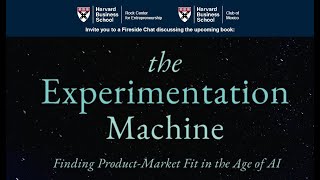
Jeff Bussgang discusses how AI lets founders run experiments faster and cheaper, moving toward AI-native teams with fewer humans and more agents. He walks through concrete examples: personalized demos, AI sales briefings, and using NotebookLM to transcribe customer calls, plus how multilingual models work globally.
Chapters
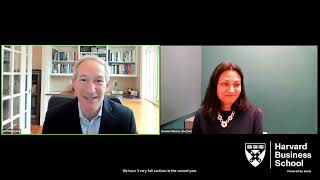
Good afternoon. Thanks for joining us for this fireside chat with Jeff Bosgang. Jeff really doesn't need an introduction in the entrepreneurship and venture capital ecosystem, but let me give you some of the highlights of his background. Jeff and I have known each other for more than 30 years. We are HBS classmates. We also are study group classmates. That's where I learned how many standard deviations a human being can have between the intelligence of another human being. We have been busy peers for quite a few years. Over 20 years ago, Jeff co founded Flybridge and he continues to lead Flybridge, which is one of the premier early stage VC funds in the US with over a billion dollars in assets under management. Also, he has written two books. The three books that he has written are behind him. Mastering the VC A game, which he wrote in 2010 and entering startup Land, which the first one got more praise, but I actually prefer the Entering Startup Land. I think that that's a great book and we're also HBS colleagues. Jeff has been the faculty of Harvard Business school for over 10 years where he designed and leads the second year HBS MBA course called Launching Tech Ventures. Everybody at HBS calls it LTV, which 1/3 of the students at the MBA class takes that course. It's tremendously popular. One of the most popular HBS courses. Congratulations Jeff on that. Now, at the book launch which happened last Thursday, which Jeff offered and hosted for HBS students and faculty, Mitch Wise, who interviewed Jeff for the launch, said, this book is not only about how to become a 10x founder and this book is about how to become a 10x leader. I think it very much represents what this book is about and we're going to get quite a bit on the how. Now I would like to add to this quote from Mitch by saying that this book is an invitation, is an invitation to become a 10x leader with the help of AI. Now, Jeff's book is also a manual that every startup founder should have at their side. And I say this regardless of AI, the book is a manual of how to launch and scale your venture. And of course, in this book Jeff also suggests how AI can do it faster, leaner and better. Now the book is a gem in many ways, but one of the reasons why it's a gem just to give you an example. In Appendix A, he takes you step and step, step by step, with tips and examples of how you should interact with AI. So it really brings it down to the very practical level. In Appendix D he lists the apps that he suggests and tools to recommend to start using AI. Really very practical book to get you started in this journey of AI. Now by reading this book, you will not become an expert in AI. That is not the intention of the book. But it is a motivation and a guide so you can start your own journey to become a 10x leader. And let me give you a nudge of why you should read this book and start this journey soon. And soon is in months, not years. If you are not well versed into AI copilots, AI agents, it will be exactly the same as if today you know how to use Microsoft Excel. That's basically how I think it should be viewed now. The good news is that all these tools are not rocket science. Jeff states in his book A PhD is no longer needed to build an AI forward company. The technical playing field is being leveled by this technology. After reading this book, I think a lot of that anxiety will come down because you'll see that any of us can actually do this. And I think that's one of the great things about this book. Now we're going to, right now I'm going to pass it over to Jeff to to give us a little bit of some of the basics and some of the fundamentals. And after we're going to have a conversation and in the last 10 minutes we're going to leave it for a Q and A which if you have questions, please submit them in the Q and A feature for soon. So with this again, thank you very much for joining and I'll pass it over to Jeff.
Thank you so much. Alvaro. You know you said we've been friends for over 30 years, which is very true. I'm not sure if that happened when we were 5 years old or 25 years old at Harvard Business School. I think it's kind of hard to fathom. But Alvaro has been with me for over three decades and we've lived these parallel lives as investors, entrepreneurs and faculty colleagues here at Harvard Business School. And it's been just a joy to be on that journey with you. And I was so grateful you were there last week. You got to meet my mom and of course you know my wife and my mom, who's 92 years old, I revealed to the audience is a power user of ChatGPT. My mom was telling a few of my students that she used it to help her write a job description for the choral director at her senior care home for the chorus that that they've created. So to your point, Alvaro, don't be scared of AI. If my 92 year old mom can be a power user. You all can be power users and of these incredible tools as well. So I'll maybe show a couple slides and tell a little bit the story of the book, amplifying what Alvaro said, and then I'll open it up for conversation and questions. And the, the book as, as Alvaro described, it's really what I hope is a playbook or a framework for how you can become a 10x leader. And we all know this mythical 10x software developer that's out there that's 10 times more productive than the average software developer. And we all try to hire those incredible 10x software developers into our portfolio companies and work with them in our, in our, in our lives. I believe we're entering an era where, as I say at the beginning of the book, AI is not going to replace founders anytime soon, but founders who use AI are going to replace founders who don't. And the founders who learn to use AI effectively are going to be effectively 10x founders. They're going to be 10 times more productive than the average and typical founder. And that's not just relegated to founders. It's the same for salespeople, for analysts, for consultants, for marketers, probably for us, even as parents. So I'm really excited to reveal and bring forward not only these timely tools. And it is a bit awkward to write a book about AI when things change so rapidly and the tools are so dynamic and improving so quickly. And I'll show you a little bit of data on that. So these incredibly timely tools with timeless techniques of finding product, market fit and creating enduring value in a profitable, sustainable business. So that's really the goal and the hope of what the material provides. And as Alvaro described, I've been an entrepreneur in the Web 1.0 era. I've been an investor in the cloud era and the mobile era, more recently in the crypto web 3 era and the blockchain. I firmly believe that this moment in time is far more impactful, far more disruptive than any of these other technology waves, that this wave is the largest and most disruptive for all 8 billion people on this planet, and that it's going to happen very, very quickly. And one chart that gives me that confidence or provides me with that data is this chart, which looks a bit complicated, but is very simple in its framework. It's an example of the journey that some of these models are on, and as they've evolved in the last year or two, the X axis is cost. So how expensive are these AI models and the tokens and the Underlying capabilities. And the Y AIs is capabilities. How skilled are these models? And what you see is similar to Moore's Law, but on steroids. These models are getting dramatically better in terms of their capabilities, which is on a log scale. And dramatically cheaper in terms of their cost, also on a log scale. And if you sort of look at the top of this chart, you see this dotted line. What is the capability represented by a PhD, a human PhD in the field, a biologist, a chemist, a physicist, a computer scientist. And these models which now are providing this chain of thought analysis and these incredible capabilities for deep research and inference and Insight are reaching PhD level capabilities. So what does that mean? It means that these capabilities are coming and are going to have a massive impact on our economy. There's a recent PwC study that forecasted a $16 trillion impact on our economy, 7 trillion of which would be through productivity gains, 9 trillion of which would come from additional consumption because of these improved capabilities. And if you just want to put that number in perspective, this is roughly the size of the GDP of China. So in terms of the scale that we're talking about, it's just mind blowing. And when you think about historically, when new technologies have come about, whether it was the advent of the smartphone or cloud or EV electronic vehicles, you would see this natural technology life cycle adoption curve where the innovators, a few percentage points would be the first adopters, early adopters, early majority. And over time it would finally cascade to the late majority and it would take many, many years for this cycle. I did my first Internet commerce transaction in 1994 when Alvaro and I were still at Harvard Business School of Students because the Internet had just been released and I was one of the first people to do one of these secure transactions. I foolishly put in my credit card into a website in 1994 and I bought a mug at a, at a local, at a little e commerce store that had been created. And it took decades for that e commerce capability to become universally available through Amazon and Shopify and other platforms. Well, what's different about AI is that the adoption curve is absolutely vertical. The speed of adoption is extraordinary. And one of the reasons for that is that the devices that are delivering these capabilities are already in your pocket. There are 8 trillion smartphones in the world that are getting more and more AI capable. There are that over 2 billion laptops and iPads in the world that are getting more and more AI capable. There are a billion and a half automobiles in the world that are able to be updated over the air with their software capabilities for autonomous driving and other AI capabilities. Thus all of these capabilities that you saw in that chart earlier on this log scale that are dramatically improving, they're all coming to your home and they're coming to your home in your pocket and your office. Now there's a new release of Alexa. Some of you may have Amazon smart devices in your home. I don't know about you. I found it very frustrating to talk to Alexa lately because I've been trained on the capabilities of ChatGPT and they're so much better. And Alexa seems very dumb to me right now, whereas when it first came out three or four years ago, it, it was this incredible smart home device. Well, Alexa is coming out in the next few days and the LLM large language model capabilities are going to be embedded and immediately available to you. So this ability for this installed base to receive these capabilities is dramatically changing the adoption curve. And when you look at the big companies that are themselves the purveyors of the AI tools, Google and Amazon being two obvious examples, and you look at how they're using the tools themselves, how the most sophisticated companies in the world are eating their own dog food and pointing internally, you see some astounding statistics. The CEO of Google just announced in their third quarter earnings a few months ago that one out of every four lines of code that Google is writing is being constructed by AI. And that's a few months ago. If you look today, I bet it's 30%, 35% and in the next couple quarters it's be above half Amazon. Andy Jassy, who's coming to HBS next week and briefing us in more detail on these matters, reported in a public blog post that he did that the Amazon platform, which they've infused with AI to help them with their SKU analysis and updates across all their millions and millions of product lines, has saved them 4,500 developer years and parentheses, he says yes, that number is crazy, but real. And if you look at Klarna, a more sophisticated Fintech that's leveraging AI tools, working very closely with OpenAI, they're very public about the fact that they harmonized their data store and eliminated all of their SaaS platforms and are using Genai capabilities to improve their sales and marketing and improve efficiency now, 100% year over year employee growth and all this is happening and what I'll describe as the co pilot phase of the AI adoption curve. The co pilot, the AI co pilots are those tools that allow you to do your tasks as humans more efficiently. And amplify your direction. And that's the current state of the art. That's 2025. But as we enter into the back half of this year and 2026 and beyond, we're seeing more and more agentic AI capabilities be launched. And this is a new area that's just coming online. It's very early in company adoption and human adoption, but AI agents actually do the tasks for you. They take and make decisions. So they don't just provide better information, synthesize documents, or provide you with interesting insights based on volumes and volumes of textbooks. They'll actually take actions and make decisions for you in the context of a set of parameters and goals. So my example here would be, if you want to go on a vacation, you might use ChatGPT to inform you of the most attractive Caribbean island with the best food and the easiest flight times and the best climate. But if you used an agentic AI platform, it would book the reservations for you, it would make the restaurant reservations, pay for the tickets, purchase the, you know, the particular seats that you like best, that your family likes best, purchase the hotels that you like best, book the massages for you and all the other amenities and do the whole thing end to end. So that's the agentic world, and it does that over a range of modalities. You can imagine what this means because previously investors like myself at Flybridge and Alvaro at Ignea, we would invest in software companies that we thought would be very disruptive. And the software industry is a multi hundred billion dollar industry. But if you think about what the agentic AI capabilities allow, it allows these startups, and perhaps some of you to, to not only go after the software budgets, but to go after the entire budget, the staffing budget and the human resource budgets. And so here in this example, one of my colleagues did this analysis of software spend and payroll automation across hundreds of vertical industries. And she described that, yes, the software opportunity is $260 billion, but if the people were automated and the AI agents did the work, then it could be a multi trillion dollar, four trillion dollar opportunity ahead. And this is what we're seeing in startups today, everyone. This is happening on the front lines and it's happening for our portfolio companies. It's happening across other parts of the ecosystem and startup land. And it's certainly happening here at Harvard Business School, where the standard startup paradigm of raise a two or three or $4 million seed round, hire 10, 12, 14 people and go chase the first product release and go chase the first million of ARR of annual recurring revenue. Instead, entrepreneurs are hiring two or three people. One head of engineering and a handful of agents to do the code writing. One head of sales and a handful of agents to help with sales development, sales engineering, one head of marketing and a handful of AI agents to help with copyright, design, execution of campaigns, measuring those campaigns and then affecting the implementation of those campaigns and changing the product. Sam Altman has this quote which I think is a really provocative one where he says, look, in my group of founder friends we have a betting pool. When will the first solo entrepreneur, one person, billion dollar company be created? And I don't know if that's going to be 2025, but there will be hundred person billion dollar companies created this year, probably 10 person, 20 person billion dollar company created next year in 2026. And this solo entrepreneur, that could be a 2027, maybe 2028 event, we're not far from that. One of the partners from Andreessen has this quote which we hear about all the time. In my partnership as well, I've lost count of the number of startups that have gone from 0 to 10 million in annual in the last 12 months thanks to AI. Not by burning cash, not by hiring more people, but by bringing on more agents, by automating processes and workflows and being smarter at execution. Which led to this New York Times article just a few days ago on how AI is changing how startup land build startups. You may be seeing this in your region, you may be seeing this in your companies, but it is for the companies on the cutting edge. It is incredible to see what they're achieving. And yet with this, what I tell people is take a page from experimental design, don't just sort of willy nilly run experiments, but be very strategic and intentional and have a scientific approach. What experiments do you want to run? What hypotheses do you want to test? Those hypotheses should have a huge impact on your business model and then collect the data, evaluate and learn. We can run more experiments with AI more efficiently and effectively than ever before. But what experiments do you want to run and what's the strategy behind those experiments? That's inherently human And I have a case study here, Alvaro. I'll skip over it just because I know there's a lot of questions and people here don't, don't want to be PowerPoint or slide to death. But in our portfolio there's examples of examples of companies that are using AI across their go to market functions, across their customer service functions and certainly like Google in their software development function to build more applications faster and better these future capabilities, they are coming and they are coming fast. And if we see what could be around the corner, and this is From a former OpenAI technologist who wrote this incredible white paper about what may lie ahead, we may see the bending of the knowledge curve as the AI capabilities themselves are able to do research recursively on how to improve themselves in the AI models. And so we're now at that point where if that PhD capability is in the hands of the AI tools and those tools are pointed at computer science and the field of machine learning and AI itself as a field, you will see a recursive loop where the AI is improving its own capabilities and bending that curve and generating automated research and insights. You know, it's like having the smartest human on the planet in your pocket if you can talk to it. And it knows all the laws of physics, all the laws of chemistry, all the laws of biology, every single Nobel Prize winning paper written in every subject and you have that on your shoulder in your pocket. As an advisor, you know there's no telling what can be achieved. So the questions I'd leave you with there are as follows. In the audience, if you think about and evaluate your own scale of 1 to 10 capability and AI native level of proficiency, you know, where do you stand? Secondly, use the AI tools to help tutor you on AI. Create a custom tutor bot that you can, that you can have as your personalized tutor, that can speak to you or provide back and forth text that can brief you on new developments. When you hear about some Chinese open source company called Deep Research doing some deep seek, doing some new crazy, crazy thing when anthropic raises an incredible amount of money at an incredible valuation has happened and was announced earlier today. What does it mean? What are the implications? Ask the AI for that. And then finally, just how do you use the tools and embrace the tools to become a more effective leader in your organization and in your life? So that's the essence of the book. Alvaro. I'll stop there. I got a lot more to say, but I know we want to talk and have some Q and A.
Great, thank you for that intro, Jeff, and let's get into some of the details of things that you mentioned and I'd like to take a step back for a second. For anybody that goes through, through hbs, it's natural to understand what an experimentation machine is. And the book is called the Experimentation Machine. But the audience that we have in this fireside chat is Quite broad. So for anybody that hasn't really come across this concept, how could you explain to them? And you mentioned a little bit, but again, what is an experimentation machine?
Yeah, it's a great question. And you and I teach this here at Harvard Business School. In the last few years we've really been hammering this home. Some of these ideas are rooted in 19th century, 18th century scientific discovery phase where scientists realized that there was a whole world of knowledge out there that could be discovered through experiments. And defining an experiment, a scientific experiment having a hypothesis or, you know, a belief about what might be the case, a question that you want to answer, setting up and designing an experiment to answer that question, to test that hypothesis and then reading the results and learning from those results and iterating from there. And one of the things that Eric Rees, who wrote the Lean Startup and Steve Blank, who wrote Four Steps to the Epiphany, what they did was they brought that notion of the experimentation mindset to the entrepreneurial community. And over the last 10 or 12 years, everybody in the entrepreneurial community globally really embraces that orientation where you want to build a minimum viable product or an MVP to test your hypothesis about what the customers might like or not like. We can theorize it, but don't spend two or three years building it. Put it out there in two or three weeks or months and then see how the customers react and then iterate from there. And it's a different mindset because in the early days of a company, or in the early days as an intrapreneur, you want to maximize learning, not maximize metrics. You're not trying to knock the ball out of the park. You're trying to set up a situation where you're really trying to maximize learning. And so the essence of the book is taking that experimentation mindset and, and putting it on steroids. Recognizing that AI allows you to run, design and execute more experiments than ever before. And now the key, when you have this more almost infinite experimentation capacity, now the key is using strategic reasoning and thinking to sequence those experiments and decide what experiments you should run that will reveal the most interesting outcomes that will lead to the most enduring, valuable company that you can build. So that's sort of a, a complete summary of the experimentation mindset and how I think about it in the context of AI and why I titled the book that way.
Now this again is an invitation. I love the fact that you bring in a scientific approach towards learning which at the end of the day, what we want to create a startup or not a startup is a learning machine where you have hypothesis and you run experiments to learn from those experiments and eventually prove your hypothesis or not. I think that mindset, it's a very interesting mindset to have not only for startups. Again, we have a broad audience here, but if you can bring that perspective even to a traditional company, I think it can give you a tremendous edge. I love and. Yep, go ahead.
I'll give you just an example of that. There's a company that everybody on this line knows, booking.com 100 billion plus market cap leader in travel. They own kayak and all sorts of other interesting assets in the world of, of travel. And they pride themselves on running thousands of experiments every day when they try different value propositions, language, imagery, colors, different features of different hotels or different airlines, or different experiences that they're highlighting. And they run these continuously, again, thousands and thousands per day in order to drive greater optimization of their results. And it's proven to be wildly successful. And we backed an entrepreneurial team that came out of booking.com about two or three years ago and we watched them operate and their speed of execution was nothing like we'd ever seen. And as we talked to them and realized this approach, it's not just a, you know, nice words on a page, it's a mindset and a religion because you can sit in a room and debate, should we go left or should we go right? And the experimentation mindset is, I don't know and I don't really care. Let's design an experiment, let's test and let's look at the data and it'll tell us go left or go right. Let's stop debating, let's just run the experiment, read the data, make a decision and move on. And that's what I think is the beauty of this mindset.
Yeah. And I'll underline exactly what you said, which is an experimentation mindset is that default thinking of, again, let's do an experiment. About this and the book, you have a quote, which I think it's interesting that says anyone approaching building and running a startup as they would a normal business is doomed to fail. And I would add what I think is behind that quote is anyone that is approaching on building a running startup without an experimentation mindset, and I would make it even further. I think for the large corporation of today and tomorrow, you, you have to have an experimentation mindset because it's not about who's right, it's about how do you run the experiments and the data will tell us what is right now of course, let's get into AI, which is you've told us what all this is about, but tell us how this experimentation machine, how this experimentation mindset can actually be benefit from introducing AI into these processes.
Sure. So what I see our best founders doing, and we now as a firm only invest in AI companies. And that's been the case for a number of years. And I would say at Harvard, 90% of the entrepreneurs are AI native today. And this is the first class this year. This moment is the first class I've seen of AI native entrepreneurs. And what they are doing is using the tools to work through every step of the ideation process, the customer discovery process, the go to market process, and the discovery of a profitable business model. And you and I know that our colleague Tom Eisenman created this diamond square framework which goes through each of the components of the business model. And our students and our founders are applying the AI tools to every single component, every step of the way. They're even doing it before they get started. We talk a lot about the zero to one process. We have many, many students and founders who are going from the negative one to zero process and applying the AI tools. They're using it for research, for customer discovery. They're transcribing their customer interviews and recording them and throwing them into a notebook, lm, which is a tool that Google offers for free that allows you to put a corpus of knowledge and then train chatbots against that knowledge. They're creating Personas of their customer using AI so that their team can have 7 by 24 conversations with their customers and ask questions about their requirements and their needs and test different value propositions and different features against each other. They're certainly building and we'll talk more. I know about building with the AI tools like Google and others are, and they're even executing amazing go to market strategies to enhance the capacity of their sales team. So this process of leveraging the modern tools and having these experiments across all elements of the business model is happening today.
Yep. Like you, I've become a huge fan of the Diamond Square created by Tom and I love how you put it in the book, which at the end of the day, another way to represent the diamond square is what every startup needs is build a product, acquire customers, satisfy customers, and make money. So in this framework, where can you give us some examples and maybe for example, in go to Market, in examples that you've seen, you talked about what some students are doing, but tell us companies are actually using AI to be much more effective in the go to market, which in this is the acquire customer part. Sure.
So I'll tell you what some of our portfolio companies are doing. So many of our companies, sales organizations, before they reach out to a prospect, they would do research on that prospect. Well, if you're reaching out to a public company, there's quarterly earnings calls, there's press releases across a slew of products, there's competitive analysis, there's trade show information, there's sponsored content, there's a whole bunch of content that's out there about these companies. And there are tools now that allow you to draw from that content to enrich your data set for prospecting, help determine and qualify and score your prospects, and then brief your sales team before they walk into a sales call. Then there's a set of tools that allow you to generate demos and build personalized demos for each individual prospect. And so some of our portfolio companies, and this company, Topline Pro is one of them that I mentioned earlier, has created thousands of personalized demos with an AI avatar representing a sales representative who speaks directly to the customer, shows them a product with their content and allows the prospect to get a sense of what the quality of the work is going to look like. And then all of these marketing campaigns and customer success and everything else, there's a ton of AI tools now available to help automate those as well. So we're seeing even for mature companies these tools being used. I have a portfolio company that had 1500 employees and in 2023 and has 1100 employees today, but has grown revenue 50%. And what they've effectively done is carved out a lot of their customer service team by leveraging AI automation, improved the efficiency of their sales team with this AI automation and certainly improve the efficiency of their software development team and improve their feature velocity with, with all of these incredible AI software development and code generation tools. So it's not only our little startups that are early stage companies doing this. As I showed you in the chart, the two page, the two person, three person, five person startup doing more with less. It's also the scale companies, as you noted, that have even more at stake if they can implement these tools effectively.
Yeah. So most of the audience here in this fireside chat are from emerging markets. So I'm sure many of these are as many of them are saying, okay, this all sounds great if you're a U.S. company or if you're a U.S. startup. Right. And, and you're talking about go to market and talking about understanding your customer better. And in your book for example, you, you describe how you can understand your customer better and, and ask yourself questions like what does a day to day in the customer's life look like? What tasks do they perform and what tools do they use? Where do they experience the most friction and frustration? And those are some questions that you ask, which is a typical question that you will ask one of these LLMs. Can you ask these questions? If you ask these questions, if you are an emerging markets company, are you going to get relevant information? Do they actually also work if you are not operating in the us?
Absolutely. It's not only a question and it's a great question, Alvaro, because I know this is the case from our conversations and my colleagues in the international scene. It's not only that the models are trained on specific countries and use cases and content, they're also multilingual and they're also multifaceted because if there's a data set that you feel it's missing, then you can add your data set to the model to improve the knowledge base. And I gave this example of Notebook LM and I also could give an example of custom GPT that OpenAI allow and artifacts from Claude and the Anthropic team. In the case of NotebookLM, if you have some specific customer data that only you know and it's about your customers and the nuance and the earned secrets that you've built out over years and years and years, you can feed that into the model, keep it very secure and proprietary and then derive insights from the model and that can all be in Spanish language and you can derive and have conversations in Spanish or Portuguese or English or Japanese or whatever language you want. So it's really, it's an incredible global tool and that's why I find it so incredibly exciting. You know, if you just, if those in the audience, just for fun, just play with the chat GPT voice functionality, ask it a bunch of questions in whatever language you want, ask it to read a bunch of documents in whatever language you want and you'll be amazed at its capabilities.
And I think this is again an invitation which is we all just need to start experimenting and interacting with these LLMs on a day to day basis and become AI native because it eventually becomes second nature when just as a thought companion as you ask, if you get that habit I think is one of the important things. Now let's touch on something else which is you've mentioned quite a bit about productivity. The example of the company that you mentioned that went from 1500 employees to 1100 and there are multiple examples. And also in the presentation that you gave, you talked a lot about productivity, which is a huge benefit from using these tools. But let's talk about speed. In the book you use the term moving faster with AI. So tell us why and how do you also obtain not only productivity, but speed?
It's a great question because this is not just an efficiency play, it's a capabilities expansion play. As I noted, there are two axes to the chart and it's also a moment to accelerate your execution. I remember in the early days of the Internet, we used to talk about Internet time and we used to joke that it was like dog years, that every year in the Internet, in the 1996, 97, 98 timeframe, it felt like seven years in, in, in regular years. Today every month in the AI world feels like seven years. The speed of execution that we're seeing the best companies provide is an indication of the speed that all companies can execute on using these tools. Now humans have to adjust their operating model in order to work with the speed, because usually the points of friction are humans. You know, we're all sort of take our time to adjust new ways of doing things. We're all very habitual, we all know the habits. That's why Excel. You mentioned Excel earlier in the conversation. Excel has reached its 30 year anniversary. It's an incredibly popular product. We're all used to Excel, we're all used to using things in certain ways, we're all used to certain tools. And so we've got to adapt and we have to build organizations that adapt and execute faster. And I think one of the most important ways to do that, as you noted earlier, is around willingness to experiment and then willingness to make quick decisions to scale those experiments if they succeed. It's not just about running the experiment off to the side to test a hypothesis. It's shifting the organization over to the new way of doing things if that hypothesis proves out. And that's a change management challenge for leaders. But that's the challenge, I think, ahead of us in the coming months and years.
Now, a lot of people, when we have a conversation about AI, the human side comes to play, right? And as one of your students, you quoted him in your book, says, why even have human foundry, right? So what's the human side on all this? I mean, are we going to get rid of people? Because these agents are becoming so smart and they're going to make decisions for us? So what's the human element here?
I think the human element is really going to be Centered around strategy, insights into markets, leadership is going to matter more and more. Taste and discernment curation will matter more and more. And some of the rote tasks can be automated away. You know there's that, that famous sort of analysis of we don't need any more bank clerks anymore or tellers. With the advent of ATMs we are on the verge most likely of getting rid of some taxi driver functionality. With the age of Waymo and self driving cars, we've reduced our the amount of people that work in the agriculture industry as a result of automation on farms. So we're going to see these big shifts as a result of automation. But I also think new opportunities are going to be created. I don't think humans are going to go away or need to go away. I don't think work's going to go away or jobs are going to go away. I think we're all just going to be more efficient. There's a famous economist, John Maynard Keynes, when he was observing what was happening in the industrial revolution in Britain, he said, look, this is so incredible and we're going to all be so productive. My grandchildren are going to work 20 hours a week. Well, I don't know about you Alvaro, I don't work 20 hours a week. Nobody I know works 20 hours a week. We're all working really hard. Despite all these automation tools that we've benefited from over the last few decades, despite the Internet and the cloud and mobile, I think AI is going to prove to be the same. I think we're all just going to be doing more things and being more efficient and advent more capabilities and we as humans are just going to be better and more effective at leveraging these incredible new tools.
Sorry, I had to turn on the light. So you say in your book we're still in the early innings of the gentic revolution. So if this is evolving so fast, why should I get into it now and not just wait once this is a little bit more mature? Why not wait? Why getting it right now?
Yeah, because your competitors are getting into it now and they're learning how to use these tools. And as I said at the beginning, it's a little, I'm self conscious in writing an AI book. Given how fast it's all moving. In five years the tools that I describe in the book may or may not still be around, but the mindset of leveraging and using the tools and building that muscle will absolutely still be around. So my advice is build the muscle now, don't wait. It's like when a trainer and you have a conversation and you say, hey, I'm going to run a marathon in a year. Why do I have to spend all that time in the gym getting ready? I'll just train right before the marathon. That's not how it works. You have to build up that muscle, build up that capability, build up that stamina time and time again and be prepared when the, when the race begins. To run that race. Agreed.
Never. Never too early. Now, there are a lot of skeptics about AI for many reasons, not only people thinking, why should I get that now? Which I think your, your answer is, is, is, is perfect. What do you say to the skeptics about AI?
There? There's usually two types of skeptical points that folks will make. One is it's overhyped and it's a lot of buzz and a lot of froth. But where's the real substance? And I can tell you the substance is in your phone, on your laptop and in your car. The AI capabilities are here and they're being used now. And if you look at the magnificent seven, the seven most valuable companies in the world, like Google and Amazon and Facebook, these are the smartest, most sophisticated companies in the world. They're growing revenue 20, 30% year over year, keeping headcount flat, getting more efficient, growing in valuation, leveraging their network effects because of AI. That's what they're doing. So point one, it's a bunch of buzz, a bunch of hype. Look at the underlying metrics, look at the productivity. It's real. Point two is there's a worry that people have that it's going to result in greater inequality, a greater gap between the haves and the have nots. And that's a class statement, and that's also a geographical statement. Emerging markets versus the US's and the other developed markets. And is the US the only country, maybe China as well, that has these capabilities and they're going to exploit these capabilities. And I think those are all very fair risks. I will also say that all the research shows that these capabilities are having a massive impact on the bottom of the pyramid and having a massive impact on a broad swath of people. And one research study I'll point to, which you know well from our colleague, Professor Rem Koenig from Harvard Business School, where he looked at Kenyan entrepreneurs using gen AI in their solo entrepreneur, small business context. And they were able to dramatically improve their profitability and dramatically improve their performance, even as, let's say, relatively unsophisticated users of this technology out in a developing country. So the research is pretty clear. This technology has an enormous impact on emerging markets and on entrepreneurs that may be leapfrogging some technology waves and getting right to this one.
Great. So it's time for us to get. We promised that we would get into Q and A in the last 10 minutes. So there are a few questions. One related to opportunities to invest in this sector. There's a little bit of the tone of the question is, have I missed the boat? Is it too late to get into this? So where are some of those opportunities from your perspective?
So obviously I have a skewed lens as a venture capitalist. Flybridge we invest in early stage AI companies. I can tell you we've never been more enthusiastic. We think the current cohort of companies we're investing in are as promising as ever before. If you look back on history 12, 13 years ago, Aileen Lee, a former Kleiner Perkins and venture capitalist, coined this term, the Unicorn Club and profiled the 20 or 30 or so companies that were in the club. Today, the one billion dollar unicorn club is numbered in the thousands and Thousands. And the $10 billion company is the new benchmark, the Decacorn and the $100 billion company, the Centicorn. And we now even have a handful of trillion dollar companies which was unimaginable 10 or 20 years ago. And so the provocative question I would ask is, do you think there are going to be fewer $100 billion companies, fewer $10 billion companies created in the next 10 years compared to the last 10 years? And do you think that the AI revolution is all played out? I don't think so. I think we're in the second inning or third inning of this game, to use a baseball analogy, out of nine innings, or maybe a better football analogy for you. Like we're five or ten minutes into the, into the 90 minute term on the pitch. But we got a long, long way to go on this and I think a huge amount of value is going to be created and as I noted, not only disrupting the IT industry, but eating into the multi trillion dollar staffing industry behind it.
And there's a, there are a couple of questions related to large companies. So one, related to what are the challenges by large companies when, when they tried to introduce AI. And then there's another question related to if you were appointed head of AI at a Fortune 500, where would you start to start to bring value?
Let me do the latter and then I'll talk about obstacles. So if I were the head of AI of a Fortune 500. I would mandate that all of these tools would be available to everyone. So the top capabilities from the top companies. I would release the constraints that many companies are putting on their employees, which was don't. Which is to not experiment, to not, you know, risk proprietary data getting out. I would, I want more experiments, I want more initiatives. And then I would create a reward system for the most innovative AI applications running pilots, and then a pipeline process to take those pilots into production once they hit certain thresholds or metrics. One of the things I see, we call it pilot hell for our portfolio companies is they get a pilot and they hit the metrics and they go back to their champions and say, hey, this thing works. Now what? And the champions say, oh, we hadn't thought about that. We don't know what to do. We got to spin up new processes and create new committees and figure out how to take this thing enterprise wide. I would pre wire the enterprise wide playbook, put it on the shelf. If the pilot hits the threshold, pull down the playbook and get this thing deployed enterprise wide. So not only bigger exper. Bigger and more experiments, but faster enterprise wide deployment. And then what are the obstacles? I mentioned one pilot hell and this gap between pilots and deployment and then the other is training. You know, we, we need all of our. If you have a 50,000 person company that you're running, you need all 50,000 to be AI native. Well, how do you train 50,000 people to be AI native? What I've seen some of our best big company CEOs do is model that behavior themselves is to really show it and live it and talk about it all the time. Mark Benioff at Salesforce does this beautifully. He runs a software company, obviously, but he's an incredible role model in that regard. So I think really making sure that your entire organization knows that this is a priority. And it's not a toy, it's not a sort of a fad. It's something that we need as a fundamental competitive advantage.
Now there's a question. Neither you or I are experts on private equity, but there's a question from what I would imagine is a private equity investor and he's asking or she who? How should they. If you're a private equity investor, how should you be thinking about this?
It's a great question. One of our LPs runs a private equity firm and he put together and hired an AI expert within the firm to help work through their portfolio. Many of these firms have portfolio support teams and he hired an AI leader on that portfolio support team to sit next to the talent leader and the marketing leader and the financing leader. And that team is looking at internal tools much like I described. You know, we as venture capitalists are using. And I know Alvaro is thinking about these tools internally and then also working with the portfolio companies. But the real, the really interesting unlock that I'm seeing, and we've, we've invested in this even from a venture standpoint at flybridge is is there a world where you might, instead of trying to sell software to make services firms more efficient, might you build a services firm that's an AI native services firm? And you're seeing this in legal, which we recently are involved with, where we invested in a law firm that's an AI native law firm and using these AI tools to be more efficient and effective in drawing up contracts and doing contract reviews. You see it in accounting, you see it in other areas in finance and financial services and consulting, where there are individuals who make $200,000 a year, $300,000 a year, who are doing things that are very repeatably automated, automatable and applying judgment that can be replicated with the AI tools. So I think that's going to be a really interesting area for both we vcs, but also for the private equity world.
Yeah. One, one last question, which I thought it was interesting, is at the elementary and high school level, how are we preparing the new generations for this new world? Again, neither you or I are experts on this, but your thoughts on this are interesting.
You know, last year at hbs our students were told be careful, be cautious, don't violate any rules. This year they're being told, embrace, extend, experiment. So there's been a massive cultural shift here and I'm seeing that cultural shift in many other schools. It's going to take a bit longer and I'll just give you one example. Today, founder friend of mine was telling me about his 14 year old son who has been using these tools to help him in his studies. He loaded into notebooklm all of his study guides and textbooks and lesson plans and developed and asked it to develop sample tests to help him prepare for his midterm exam. He then took the sample test and it identified for him the areas that he didn't do as well in or was lacking in his knowledge and then asked it to tutor him and create podcasts that would provide an audio, an audio tutor for those areas where he was missing in some of these, had these knowledge gaps and it sped up his understanding of this field. And has advanced his his studying incredibly rapidly. That's I think the future of what we're going to see in elementary school, middle schools and high schools. Personalized tutors, tools that allow for more effective knowledge transfer and coaching. Khan Academy has been brilliant in in this area as a leader and if people haven't seen some of the videos that saw Khan has created, I highly recommend them. But I think we're going to see a world of everyone on the planet is going to have a private tutor and those private tutors are going to know your history, know your background, be helping you in your learning journey and really enabling this opportunity of lifelong learning for all of us.
This is, I think a great way to end this Fireside Chat Jeff this is a perfect example of an AI native person, somebody that is bringing those tools into their home, into parenthood. There's nothing more important in life, nothing more important than your family, your kids and actually leveraging those tools for your children to have a better education and having that de facto that habit of saying how can I use this tool so that the education of my kids can be better? I think it's a great example. Outside of thinking about the company's startups, maybe one thing to think about it is start at your home. Jeff, thank you so much. I also want to thank the HBS Club for Mexico for co hosting this. Also the Rock center for Entrepreneurship co hosting this. This has been great. I've learned a lot. I hope it's been the same for everybody that has joined us. Thank you so much and look forward to seeing you soon.
Thanks Alvaro. Great to see everybody.
Thank you.
More from Jeff
The Rise of the 10x AI Founder: Strategy, Scale & Startups - with Jeff Bussgang

Finding Product-Market Fit in the Age of AI, with Venture Capitalist Jeff Bussgang
Finding Product-Market Fit in the Age of AI with HBS Online Professor Jeff Bussgang
Jeff Bussgang on the Rise of AI & Raising Venture Capital | The Parlor Room: Season 1, Ep. 4