Finding Product-Market Fit in the Age of AI, with Venture Capitalist Jeff Bussgang
Transcript of a Minimum Viable Podcast episode (host Elliot Poppel) interviewing investor Jeff Bussgang about leveraging AI to accelerate finding product–market fit. Key points: play with LLMs (start with ChatGPT), treat AI as a co‑pilot for customer discovery (synthesize interview notes, generate personas, recommend features), build custom GPTs or chatbots trained on company data (synthetic customer advisory councils), automate delegated tasks (RFPs, outbound personalization, investor updates) while humans keep "just-me" decisions, use no-code first then pipeline to engineering, avoid analysis paralysis — experiment quickly, and investors favor founders who are nimble and adopt AI to increase capital efficiency. Also discusses fundraising dynamics, competitive moat in the AI era, and the author’s forthcoming book "The Experimentation Machine: Finding Product Market Fit in the Age of AI."
Chapters
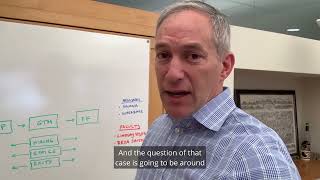
I worry sometimes that I look at AI sometimes as one of those distractions and like, so how do I start? Like where do you recommend that I start?
I would just play with the idea of talking to it like you would a business therapist. Tell it your problems, tell it what you're struggling with and then give it a bunch of information and see if it can help you out. And just start small with a particular thing. So for example, customer discovery, Everybody's always gathering customer discovery insights and information. You, you might have interviews and interview notes. You know, ask it to synthesize your interview notes and derive insights from those interview notes. And then ask it to recommend three features that might be attractive, features that address the issues that come up in the interview notes. And then, you know, kind of you start having this back and forth dialogue. So treating it like almost like human, as I said, like a co pilot, like a co founder. And start having conversations with it.
Hi and welcome to Minimum Viable Podcast, where we go beyond the surface to explore the depths of product creation. Think of this as a masterclass in innovation combining deep insights, perspectives, hands on analysis, where we'll cover topics like the psychology of user behavior and the aesthetics of design and the timeless principles of storytelling. I'm your host, Elliot Poppel and the founder of General Collaboration. General Collaboration is a cross app inbox for all of your comments from all the tools that you use at work. So that way you'll always be focused on what needs your attention most. Without further ado, let's dive into today's episode. Well, hey Jeff, thanks so much for joining on the podcast today. I'm so excited to chat with you. We've known each other for years now. You invested in my last startup. But I want to dig into more of your background. I know that you were the founder of upromise. I remember Upromise from, I think they were handing out coupons in Happy Meals back when I was a little kid. So I want to hear about that. I want to hear about the 20 some odd years that you've started and been one of the founding partners at Flybridge and all the awesome investments that you've made. I want to hear about the 12 years that you've taught, like the entrepreneurship class at HBS and that's actually how we got to know each other. I did not go to hbs. I'm not smart enough for that. But I was smart enough to find my co founder at my last startup. Kevin Holub was a student of yours and for better or worse, I convinced him to back out of the awesome job he had landed after HBS and come and join me as a co founder of Robin Health instead. And you wound up backing Robin Health and obviously that company didn't work out so great. We wound up shutting that down. But now we're back in business together. I'm working with one of your partners, Jesse Middleton, General Collaboration. But thanks again. Thanks for being here. I'm so excited to chat with you today.
Yeah, it's great to be here. Elliot, I'm excited that you started this podcast. It's a super cool vehicle to get communicate with product managers and others interested in the craft.
Thanks. That's the hope. And then actually one thing that we didn't talk about yet, you're also an author. You've written two books and now you're going on your third now, right?
Yeah. I didn't sort of think that I would be an author. I busy investing, busy teaching. But I get these ideas in my head and I have a hard time getting them out of my head. And so writing is a way of getting. It's sort of a cathartic way of getting them out of my head. So I wrote a first book for founders who were fundraising because fundraising is such a complicated, as you very well know, art and science. And so I wrote this book, Mastering the VC Game, to help founders figure out how to master fundraising. And then I wrote a second book for joiners to help them think through how to join the best startups. And that's called Entering Startup Land. Kind of where to find your way as you embark on your career to try to enter into startups. This third book I'm writing is called the Experimentation Machine Finding Product Market Fit in the Age of AI. And I've just been obsessed lately, as many have. But I've been particularly obsessed with leveraging AI for founders to find product market fit as I see all these cool new tools emerging in the landscape.
And that's exactly what I want to talk to you about today. I just like probably everybody else and we're kind of making it up as we go along here at gc, we're using AI in some cool ways to help us build gc. We're using AI in some cool ways that our users are seeing that are user facing. But I'm mostly just interested in learning from you. What's your take? What should I be doing at gc? And then for you, listening. Maybe you'll learn something along the way too. But how did you start, how did you start writing this book and coming up with the initial ideas to share.
So you described my class a little bit. So I teach this class at HBS called Launching Tech Ventures, which is all about finding product market fit from 0 to 1 for pre product market fit startups. And I live that in my investing life and working with founders and trying to help them find product markets. That and then in parallel at Flybridge, we've been investing in AI, I in particular, and we as a firm for over a decade. And I was sort of seeing these two worlds converge, that is investing in all these cool AI tools to help improve efficiency and effectiveness and workflows and interpretation of data and tasks and at the same time coaching founders on finding product market fit and starting to use some of these AI tools to help accelerate their journey. So that's kind of how the idea came to pass. I started incorporating AI into my class more and more and then just sort of, as I said, I got obsessed with this idea of founders embracing these tools to be more effective in their product market fit journey.
One thing that I wrestle with personally is you obviously got enough conviction about AI to write the book on it. And I know that Flyver's just gone really all in on AI investing too. But for example, you didn't write product market fit in the age of blockchain or anything like that. What gave you enough conviction and what should give me enough conviction that AI is worth waking up and paying attention to in a very serious way?
That's such a great question. So if you take a step back, the words artificial intelligence, the word intelligence, is the area that I would really lock in on. So we as founders and executives, we're always trying to leverage data to make better decisions and to take better actions and intelligence, insight, wisdom. We're looking for those nuggets to help us make the right decisions as a founder, as you know, as a product manager, you're making hundreds of decisions each day. Feature prioritization, hiring, go to market approaches, you know, just a ton of different little decisions. And so can you leverage these technologies to accelerate your decision making and in some cases make decisions for you? That's really the thing that I'm most focused on is, and you hear this language all the time in the AI writing now, finding co pilots and collaborators. My line on this, Elliot, is that I don't think that AI is going to replace founders, but I think founders who use AI are going to replace founders who don't use AI. Similarly, I don't think AI is going to replace product managers, but product managers who learn how to effectively use AI are going to replace product managers who are not learning how to effectively use AI. It's just this superpower to accelerate your work and accelerate your decisions and make better decisions.
And is this, is this like a one size fits all or at least at this early stage, Is there a playbook that I should be running? Are there things that I should be doing? Or is it unique to every founder? Or is this as simple as I don't know, I used to use a pager and now I use a mobile phone and I've got to get with the times.
The way I think about this is you're applying in your journey timeless principles, timeless frameworks, but using timely tools. So the tools may change over time. But customer discovery is customer discovery. Finding pain and insights and value propositions, testing those value propositions, running a series of A B tests. It's a set of techniques that we all know and have developed as the science of building startups for the last couple decades, but now doing it more effectively with these new tools. So I think what I would say is whatever area you imagine is your most important thing right now, how do you ask yourself if you had a co pilot or a chief of staff or a co founder, who was the AI, could they help accelerate your work in that most important thing?
Where do I start? Like, it's what I'm afraid that I could become is one of those founders or one of those product managers. It's easy to feel like you're being productive when you're playing around with tools and you're like, oh look, we got this awesome new notion set up and it does X, Y and Z and the other thing and it's linked to our linear and it's, I think for me coming from as a third time founder, one of the biggest takeaways is like, don't. I've got a note taped up on my desk at work that says like don't fill up on bread. And it's this reminder of like, don't wait for the main course. Don't. Don't focus on the useless things, the distracting things. And I worry sometimes that I look at AI, sometimes as one of those distractions. And so how do I start? Where do you recommend that I start?
Yeah, it's a great question. So look, the obvious thing is play around with ChatGPT or Claude or Bard or pick your favorite. Um, I play around a lot with ChatGPT.
Let me interrupt you. Which do I start with? Like, that's, that's part of the Problem. It's like, okay, well I've got like, I've got my buddy saying I need to like start paying for perplexity. And I've got all these. So what, how do you start, like, is this, am I carving out a day? Am I carving out an hour?
Yeah, I, I would just start with ChatGPT, like personally, that would be my recommendation. And, and I would just play with the idea of talking to it. Like you would a business therapist, Tell it your problems, tell it what you're struggling with, and then give it a bunch of information and see if it can help you out. And just start small with a particular thing. So for example, customer discovery. Everybody's always gathering customer discovery insights and information. You might have interviews and interview notes. You know, ask it to synthesize your interview notes and derive insights from those interview notes. And then ask it to recommend three features that might be attractive, features that address the issues that come up in the interview notes. And then, you know, kind of you start having this back and forth dialogue, so treating it like almost like human, as I said, like a co pilot, like a co founder, and start having conversations with it. I've been playing around a lot with the idea of evaluating investment theses as an investor. My team and I were always coming up with various investment theses. And in my class, for example, I assigned my students come up with an investment thesis that you think is exciting and they wrote up these investment theses. Well, I trained the model on the best investment theses that were out there and then I applied it to the investment theses submitted by the students and I asked it, give me three things that you think are really terrific about this investment thesis and give me three things that need improvement about this investment thesis. And it gave me very cogent feedback on those documents. One of the first assignments I give my students in my class is to come up with an idea using ChatGPT in a sector that you find interest in. So if you think fraud and Medicare Advantage is an interesting area, ask ChatGPT to come up with startup ideas in the area of fraud and Medicare Advantage. And then you can ask it to play the role of a user Persona. You know, tell me what a claims processor and Medicare Advantage, you know, worries about, what's their workday, what's their workflow, what tools do they use, what are their priorities, how are they compensated and rewarded? And you can begin this inquiry process and suddenly now you have a user Persona that's a mock user Persona that you can ask questions of. It's like having your a customer sitting next to you, one of your target users, and you can ask it questions about features and about needs and about concerns and about obstacles and to give you insights and intelligence, back to the word intelligence on how to be more effective in meeting their needs.
Wow, that's super interesting.
So take for example, you know, your, your company, your product. Like, let's just run through the example. So who is your icp? Describe for me your ideal customer profile.
So for general collaboration, we're focused on product people and it starts with either product managers or designers or developers at companies with probably five to 50 people that work at that company.
So if I were you, I would immediately create a custom GPT using OpenAI's GPT functionality and ask it to act like a product manager of an organization with 50 employees that uses a certain set of tools and has a certain set of objectives and then just begin dialogue with it again as if you had, you know, a full time 7 by 24 voice of the customer sitting next to you. It could be incredibly insightful for you and for members of your team to bounce ideas off of your customers. It's like creating a synthetic customer advisory council.
That's wild. That's a really interesting use case. We're a very user research heavy company. I'm probably talking to four or five users a day and the idea of having we have not. I've shied away from feeding all that data that we've collected into AI. And I think you just highlighted what a missed opportunity that is. If I were to feed all that in and say, okay, this is, make this into a singular person that I can talk to is pretty freaking cool. That's awesome. What else are you recommending that people do? Or what else are you seeing that people are doing at that early stages of finding product market fit? How are they leveraging AI?
So one of my favorites is user Personas and mock user Personas. Another is synthesizing user feedback and deriving insights and recommending features. Another is the process of qualifying, you know, target customers. So you, you train the AI on your icp, you describe to it who your ideal customer profile is and then you can say to it, look, ask me five questions every time I tell you about a target customer. Every time one of my sales reps tells you about a target customer, ask it five questions to help ascertain a scoring of whether it's a top qualified lead, a medium qualified lead, or a low qualified lead. And you can then have it develop the five questions that help with the qualification process so that your sales reps are spending their time and energy on the exact right users. It's incredibly effective at content generation. Obviously email templates, blog posts, a lot of things that feed into SEO. And so that's really powerful. In fact, one of my portfolio companies is using it to generate personalized videos for target customers. So let's say one of your, your sales folks or you yourself want to reach out to 10 or 20 target customers. You can use some of these generation tools to create personalized videos where that you would look at their website, their social media page, personalize content for them, an email or a video, and then actually generate that video. And you could generate a video of Elliot reaching out in 15 seconds or 20 seconds to a particular prospect and say, hey, you know, great to meet you. I'm Elliot from General Collaborative, you know, collaboration. I saw your company is really focused on xyz. You know, I think my product can really help you. You know, let me, let me do it. I'd love to have an interview to chat with you about it, you know, so you can really expand your, your reach and expand your generation of content and outbound sales activity.
One of the things that I'm thinking about as you tell me this is, is my team properly staffed up to address this? So like right now we have relatively limited engineering bandwidth. Are you seeing teams change the way they hire at the early stages so that they are having dedicated engineers or who, who puts this stuff together? Can I do it as a like relatively non technical person?
Yeah, so it's a great question. So ideally you would begin, you asked me, you know where to begin. You'd begin with the no code tools. And again, ChatGPT has fantastic no code tools in this regard. And so your non technical team could begin to play around with these things and implement some of these things. And then as you get more advanced, you know, ideally somebody on your engineering team, or perhaps somebody who's maybe a, you know, technical, non technical, non programmer, but who's very comfortable with technical elements, would build custom chatbots or customized workflows that allow you to begin to do these sort of pipelines. So I think one of the things that's really important is that your engineering team experiment with some of these tools to play around with the APIs and build some pipelines. So for example, one of our portfolio companies is an enterprise software company and they do a lot of RFP response in their bids for clients. And so they, one of their engineers said, you know what, I should just be automating this for my sales team. So using OpenAI's API, he was able to create an automatic RFP response generator. So trained it on all of the responses that they had previously given clients prospects in, in responses for proposals for their, for their offering. And then when you feed it a new request for proposal, it generates automatically the answers, and it gives you 80, you know, gets you 80%, 90% of the way there. And then you walk through and edit it. I think one, one of the frameworks I found interesting, and I just wrote a blog post on this. So I was reading Ethan Mollick's new book. Ethan's a professor at Wharton who's been writing a lot about AI and its use in business and the classroom. And he wrote a new book called CO Intelligence. And I come back to that word intelligence and CO Intelligence. And one of the things he talks about is a framework for tasks where you think, as a leader, what are the types of tasks I want the AI to do? And there are some tasks which are just me tasks. Only I can do. These things know, for example, deciding to make a hiring decision. That's. That's a just me task. I'm the only one who can do that. I would never delegate that to AI, but there may be some tasks which I would delegate and maybe I would oversee it, like the creation of an RFP response, but I could delegate an 80%, 90% solution, and then I could come in and do the final 10%. So that's a delegated task. And then the final thing is there's automated tasks, and there are some things that you may automate that you may decide, you know what, I'm gonna, you know, I'm gonna create, you know, outbound emails automatically in a very personalized fashion. So in your, in your daily work, just keep thinking to yourself, gosh, if I had a really wise, intelligent AI next to me, what would I delegate to them? What would I automate? And what would. What would be the just me things that only I could do?
On the flip side, where are you seeing companies waste time? Are there any, I don't know if you have any examples of this, but, like, what are people doing that's a waste of time, that they're going too deep, or they're, I don't know, playing with the wrong things when it comes to AI.
So I think where I've seen companies waste time is when they begin to do analysis paralysis. They try to optimize everything perfectly. You know, pick the right LLM to use or, geez, Maybe I should be doing the open source llama and then I'm going to do a lot of programming on top of that and you know, wasting time analyzing this choice or that choice as opposed to just diving in and experimenting. It's a little bit like what we tell founders when it comes to, you know, starting their companies is like get put an MVP out there and see what sticks and see how users react. And similarly for internal prototypes and tests that you want to use AI for to make you more efficient, to make your company more efficient, just start playing around with the tools. Don't allow paralysis by analysis to cause you to freeze. Just jump in and try something.
What else are you recommending? What else should I be doing that's maybe more unique or off the beaten path? What are the most interesting things you've seen founders do that might be worth copying?
So I think that another area that I think is really interesting is around customer service. And you know, this may not be as applicable for you, but a lot of companies begin to staff up and build up a customer success function and a customer service function. And I think that's an area ripe for automation and ripe for AI as co pilots. And we have a portfolio company that focuses on that called melody arc for D2C brands. But even, even just creating customized a custom chatbot with your content for an FAQ custom chatbot or putting tools in the hands of your customer service reps to automatically generate email and respond to emails that come in, I think that, you know, those can be really powerful ways of being more efficient. I think the mental framework I like to think of is can you create a department of one? So can one salesperson with a bunch of AI co pilots effectively have the impact of a department? Could one customer service rep with a bunch of AI co pilots have the impact of a department? With one product manager? Can you have the impact of the department? Because you can automate so many of the tasks that are the delegated tasks that, that you can think of that you as a founder, you know, can really just focus on or you as a product manager can focus on just me tasks. I'll give you, I'll give you another example, Elliot. Many founders of course get a lot of analytical information from their, from their website or from their financial system, from Stripe or for Mixpanel. And that's all information that you're looking for, insights. And you want to summarize that information and create maybe a dashboard or board reports, you know, for your investors. You can generate all of that automatically. You know, there are tools now, not only ChatGPT, but there are specialized tools that they create board decks automatically. They create financial summaries and investor updates automatically just based on the actual raw information that's coming out of Mixpanel or coming out of Stripe.
It does feel overwhelming a bit the number of tools that are out there and especially as it's an early stage startup with limited Runway with limited cache to burn.
Is.
Are a lot of these like on free plans and you can just jump in and try them or are there ones that you're just like, don't hire this person, hire this AI instead. Are there any like blue chip apps that like, you look at your portfolio and like, if this guy's not using X, then they're wasting time and resources?
Yeah, look, I think the pro version of some of the tools like ChatGPT Pro is sort of a must have. And I'm not an investor in OpenAI and I'm not trying to, you know, promote the product, but I just think having the pro version and being able to get access to that is really powerful. You and I have talked about product managers being your target customer. One of the big things product managers do is write requirements documents. There's a tool out there called Chat PRD which allows product managers to have the ability to have a dialogue with the tool and then it automatically generates a PRD and again gets you 80% of the way there. I believe that's a free tool. Maybe there's a premium version of that. Many of these tools are free and then, you know, for trial and then you have premium versions. Custom GPT is a good one for creating customized chatbots for FAQs and information on your website where you can train it on your particular content. Hey, Gen is a nice tool for video generation. I mentioned earlier about personalized videos for lead gen early in the sales funnel. Hey, gen's a nice tool for that. So yeah, so some of these tools are just really, you know, super easy. 5 bucks, 10 bucks, 20 bucks a month just to get started and to use.
How do you feel about hearing the chat prd1? So I haven't played around with that personally, but obviously that was a huge part of my role back when I was at Facebook. One of the questions we get at general collaboration a lot is about how we want to apply AI features and can we create a copilot that's going to write comments for people to share and can we create an AI copilot that's going to read comments and one of the Things that I haven't formed an opinion on yet.
And I don't know if I'll call.
It ethics or what, but there's this future that we can foresee where my bot's talking to your bot, or even when we get back to that investor context, I've got my AI that creates my pitch deck, and it looks at all the theses and everything that you've ever written on your website. So it's like hitting every buzzword that you have, and then your AI reads it and says, like, oh, he said, yada, yada, yada. That was in my blog post. And now, like, is it. Does that scare you? That kind of scares the hell out of me. And I'm not sure how to navigate that.
It's so interesting, Elliot. That doesn't scare me at all. That excites me because I think it's just going to cut through so much of the. Of the noise and allow all of us to be so much more efficient. You know, imagine as a founder, that you could analyze every investment that every VC firm has made, stage size, sector, and then it would spit out the 10 firms and the 10 partners who are the best match for you. That would be amazing. Right? That'd be an amazing tool and save you a lot of hassle and filtering and qualifying. And so, yeah, I think it's so funny. Interesting. It's so interesting talking to you about this because you're a tech founder, you're building a new software product. You're trying to get people to experiment with your product and bring it in and overcome fear of the unknown and fear of a new product. You know, I think all founders who do that should in turn be embracing these new tools and overcome that fear.
Yeah, I hear you. I know that I need to overcome that fear. I need to be playing around with this stuff more. And we are using AI in some pretty interesting ways, I think, especially when it comes to how we're building the product. But it's more of like a humanity question, I think, especially when it comes to what we're building at GC and we're talking about how people collaborate, how people communicate about work, that it's like the ultimate. Too long didn't read. If I'm creating all this content, I'm creating these PRDs that no one ever writes, and that does scare me a little of what is the right way to. And maybe things evolve. Maybe we're not writing PRDs anymore. Maybe we realize that if my PRD bot is making this prd and your PRD reader bot is consuming in a different way, then we skip that step and there's something that we just go straight from A to B faster.
Well, I think it's a pretty fun idea if you think about the pipeline of process you and I are just going back and forth on. So I feed a set of priorities into the PRD generator. The PRD generator generates the prd, and then the engineering team feeds that PRD into their generator and it generates a prototype. It generates actual code and the actual features that are reflected in that prd. And again, a lot of this is going to be getting 70% of the way there, 80% of the way there, 90% of the way there. And then the human has to come in and edit and review and refine. When we look at the actual output of the AIs right now in music and video and in prose, you know, they're good. In some cases, they're passing the Turing test. In the case of prose, meaning that you can't tell if it's a AI or human. But most generally, it's pretty obvious that this is sort of templated and automated, but at least it gets you started. It gets you 70, 80%, 90% of the way there. And, oh, by the way, and this is, I think, a really key point, Elliot, we're all playing around with the tools as of this moment, April 2024, but if you set up these capabilities and these processes internally, as the tools get better, which they're all getting enormously better, when ChatGPT 5 is released in the coming months, you will have already laid the groundwork to take advantage of those tools and plug those in. So I think it's incredibly critical that founders and product managers and other startup executives get started now on experimenting with these tools, even if the end results are imperfect, because as the underlying platforms improve, that muscle, developing that muscle is going to be, you know, really critical and valuable.
So shifting gears a little bit would love to talk about now flip gears into. Into your investing side of the world rather than. Let me try that again. Hold on. So shifting gears a little. We've been talking about founders, PMs, how they can use AI. I want to talk to you as the investor. You've obviously backed general collaboration, but we're going to need to go and raise our seed round sometime in the future. The world has changed since I was initially pitching gc. We didn't have to be an AI company then. Now kind of seems like every company is an AI company. I've already been thinking about how I incorporate that into my pitch. How, how is your approach to investing changed? Call it in the last, I don't know, 12, 18 months because of AI.
So we do believe that the best companies are going to be companies that are leveraging AI to be more effective and efficient. And so even if you're not a company that's providing an AI offering, we're going to be looking to see are you leveraging the AI tools to be more effective? You know, if you could imagine two companies and that we see back to back in a partners meeting on a, on a given Monday and one of them talks about their business processes, their customer discovery processes and their product development processes in a way that sounds very 2010. And another talks about all these incredible mechanisms that they're using to be more efficient in their product development, in their go to market, in the quality of their business model. And you can see the results that they're moving so much faster with fewer people. Obviously we're going to be more excited about investing in that second company, irrespective of the sector, irrespective of the, you know, of the, of the founder's background and pedigree. So the burden is going to definitely be on founders to not only make sure they're in the hot spaces, you know, I like to think sometimes of founders like heat seeking missiles, you got to find where the heat is, whether it's customer pain heat or market momentum heat, whatever it is, but also the founders that are being savvy about leveraging the mo, the tools, the most modern and valuable tools to help them in their startup journey.
That's interesting. I think that's kind of reassuring to hear. I feel like there's a belief among founders that everyone needs to become an AI company. But what I'm hearing from you is that it's actually you need to be a savvy adopter of AI. You need to be a capital efficient business and you need to, to be maximizing Runway by using these tools to build your business. You don't necessarily need to be an AI product. Is that, am I hearing that right?
Yeah, I think that's right, Elliot. I think that the whole world, there will be non AI products in the world, but there will not be companies that avoid using AI to deliver their products. There will be, there will be. The best companies will be the ones that are really effective in leveraging AI. Just like 20 years ago you would have said that you could predict that the best companies are the ones who will be most effective in leveraging The Internet for distribution, for communication, for internal efficiency. It's the exact same in this AI wave.
It kind of sounds like this is like classic textbook innovators dilemma type stuff. Is that. Is that right?
Yeah. So you're citing the late Clay Christensen, who was a faculty colleague of mine at Harvard Business School, who wrote this fantastic book and had this great concept about the innovator's dilemma. That's a dilemma where that's a framework that's focused on competition from below, that maybe through some technology shift like AI or the Internet or cloud, or maybe through some other mechanism like a manufacturing innovation, they are able to deliver a product from below at a lower cost than competition. And people ignore them because it's maybe lower quality. But over time, they, you know, they leverage these innovations to move up the quality chain and provide a better, more valuable service. So there's. There's definitely disruption from below. There's disruption from above, there's disruption from the sides. I think one of the things that's cool about this moment, just thinking as an economic system, is that the big companies get it. Microsoft is not asleep at the wheel in the way they were arguably during the Internet era and the mobile era. Google is not asleep at the wheel. Amazon is certainly not asleep at the wheel. So, you know, all these companies are investing a tremendous amount of money to provide these tools. And I like to think of this as for founders, it's like, you know, we used to talk about the peace dividend in the, in the time of, you know, the end of the Cold War. Like, we're, we're about to benefit from the AI dividend, which is that all founders are benefiting from these infrastructure and tools and massive investments and capabilities. And the best founders are going to be the ones that know how to leverage and spend that dividend.
Does that impact. One of the classic questions that I've gotten time and time again when fundraising is like, well, what if Google does this? Or what if Microsoft or Apple or whoever does this? Now, if I'm hearing you right, and I'm feeling this too, we're actually seeing Microsoft and Google and all these companies are actually doing that thing where before I would have brushed that off and been like, no, there's no way. There's no way Facebook is ever going to do X. Is that, is that changing the way you're investing? Like, do you, do you believe that these companies can outcompete a startup in ways that they might not have been able to 10 years ago?
It, it is changing the way we're investing, we are always asking ourselves about competitive moat and competitive advantage and sustainable competitive advantage. And I think that the, the, the bar for that has gotten higher because you have to ask yourself, what's proprietary? Is the data set proprietary? Are the workflows proprietary? Are the relationships proprietary? Because if, if big tech is so sophisticated in this new technology wave, you know, what, what's going to be the next release? The next release and what are the capabilities that that's going to provide? And that's why we tend, you know, flybridge tends to be a little bit more excited about the application layer and what I'll refer to as the data stack and the tooling around the data stack. As we were very successful on the cloud era with our investment in MongoDB and as we've been successful in some AI companies that we've invested in that are very much at the application layer, that are very specific to a vertical like Zest AI, which is the leader in using AI for underwriting for banks and credit unions. So having really targeted, focused application areas and customers tends to be what we find exciting as investors.
How about when it comes to these large companies competing with startups? Now another thing that a little bit on my mind, we've got a pretty long timeline before this matters too much to general collaboration. But, but the landscape for acquisition seems to have changed. Where before I might have been able to say, yeah, of course we're going to get bought by one of these Google, Apple, Meta, whatever, someday. Where now it seems like that Instagram deal probably could not get done. In today's political economic climate, has that changed your approach to investing? Are you looking at companies that can stand on their own? Do you still see acquisition as a viable outcome for many startups, or is that coming kind of off the table a little these days?
It's a, it's a very nuanced question. So first you have to step back and say, well, how do investors think about their investments? We tend to be believers in the power law, which is that our results will be defined by our massive winners, not by losers or companies that are, you know, do okay. And so you want to have a few massive winners in a portfolio. And so every investment we make, we ask ourselves, could this be an outlier? Could this be a massive winner? And to be a massive winner, typically you have to be a public company. So we really push ourselves to think if everything went well. If you imagine that things work out the way this founder hopes they will, could this be a public company that's sort of the basis. And then, yes, if things don't work out well, maybe the company gets acquired or maybe it gets acquired along the way. You're pointing to a very delicate situation politically, which is that the current administration is pretty, I would say, careful about antitrust. And there's a lot of friction right now in large acquisitions. And you know, for us it's. Those tend to be such rare events that you would see such a large acquisition trigger an antitrust concern that we tend not to be too focused on it. We tend to be really more focused on can this be an independent, standalone, public company. And at that point we would, you know, once the company completes its public offering, and at that point it's probably valued in the 2 to $10 billion range, then early investors distribute the shares and whatever happens next is sort of in the hands of the public markets.
Okay, see, so what you're saying is like, you really only ever cared about home runs at grand slams and the, you know, the singles, doubles, triples were nice, but they were never part of the model to begin with. And that, yes, it might be harder to get acquired, but that wasn't something you were planning for anyways because you wanted those outsized outcomes.
Yeah, it's not something we're planning for. And also, I don't know if it's harder like on, on the one hand there's this headwind, as you pointed out about antitrust, but on the other hand, there's a tailwind which is these acquirers. There are more of them and they're way bigger and more, you know, have larger market caps and can spend more money more easily. You know, today for Google, a billion dollar acquisition is not as big a deal as it was 10 years ago today for meta, slash Facebook. Your comment about Instagram, you know, that acquisition at a billion dollars 10, 12 years ago just wouldn't be as big a deal for them today with their market cap now approaching $1 trillion. Whereas at that time I think their, their market cap was around 100 billion or 50 billion. So. So, you know, we can see M and A activity in our portfolio at even more rich levels. And founders arguably are operating in a bigger economy and a bigger value creation ecosystem today than they were before.
Okay, so we talked a little bit about the political economic climate, we talked a bit about AI. What else are you looking for from the investing side in this particular moment?
One of the things that's really clear about this moment is that it's incredibly dynamic and we're looking for founders who have the ability to operate in a dynamic environment. And we sort of refer to that in shorthand as their clock rate. And clock rate has sort of two meanings to it. One is just the raw horsepower and intelligence of an individual. And that's my earlier comment about AI and the intelligence part of AI helping founders improve their performance. But secondly, it's the ability to act quickly. And when you have a more dynamic environment, the founders that are acting quickly and shifting their organizations on a dime, and, you know, when a new release comes out, they're jumping on it. My earlier comment about experimenting today with these platforms and tools, because as they get better and better, you want to be able to take advantage of them immediately. You know, those are. Those are the attributes that we're looking for. So I think we're putting an even higher value on founders who are nimble and can operate with a very high clock speed.
Anything else that you're looking for in particular these days?
Well, one of the questions we often get is how technical do founders need to be in this environment? You mentioned it yourself. You're not a technical founder, you're a product founder. And on the one hand, these new tools are allowing business founders and product founders to build prototypes and mockups and actual early MVPs without an engineer. On the other hand, if you believe that these are a new set of tools that are going to improve the odds of success, you want people who really know how to use the tools. And so we are looking for founders that, if they're not technical, they don't need to be PhDs in machine learning, but they need to be facile in leveraging the tools. As I said before, founders who use AI effectively are going to replace founders who don't use AI effectively. So we're really looking for founders who know how to use the tools and are, to my earlier point, very rapid and nimble in running those experiments and leveraging the latest tool set that comes out.
Jeff, this has been such a insightful and actionable conversation. I feel like I need to rush off this call and go and download a bunch of stuff to play around with. You've given me some really, really specific ways that I can start applying AI. Where before I felt like I was just swimming at it. There were so many. There were so many things to do that I didn't know where to start. So I cannot thank you enough for coming on the podcast and just for catching up today. This was great. Thank you so much.
My pleasure. Elliot, great to see you. I'm excited to see where you take it.
Thanks a lot and have a great rest of your day. Bye.
Thanks. Take care.
More from Jeff
The Rise of the 10x AI Founder: Strategy, Scale & Startups - with Jeff Bussgang
The Experimentation Machine: How AI is Creating 10x Founders | Jeffrey Bussgang & Alvaro Rodríguez


Finding Product-Market Fit in the Age of AI with HBS Online Professor Jeff Bussgang

Jeff Bussgang on the Rise of AI & Raising Venture Capital | The Parlor Room: Season 1, Ep. 4