How to Write a "Scroll-Stopping" Headline
Pedro Loureiro teaches the 5-second rule for headlines: hook viewers instantly with three to six words, then support with a sub-headline explaining the process and proof like reviews or stats. Simplicity reduces cognitive load and improves conversions at scale.
Chapters
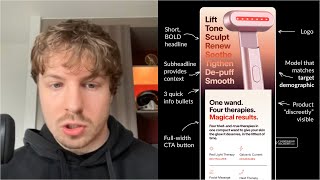
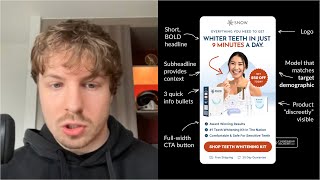
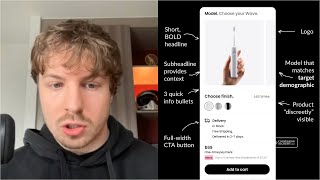
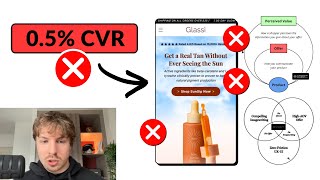
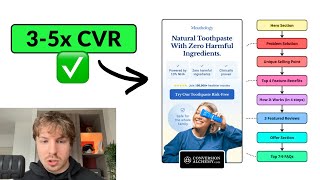
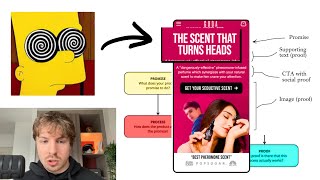
So let's walk through how you can craft a headline that grabs attention. So the first thing let's talk about is the 5-second rule. So most brands, they overthink headlines. But your headline really only has one job, and that is not to be clever or sound smart, but it's just to hook them in and engage them. You know, and this is what I mean by the 5-second rule, because just like how you will see a good ad on Meta, or on Instagram, or on TikTok, its job is to hook you in with the first few seconds. That's the most vital part of the ad. And I used to do ads before in my— when I was— before I used to run my own agency. And that would— the hook was really the only thing that the marketing companies and the people cared about. And so when we were doing variations of the different ads, we were looking at, okay, how can we get people's attention, engage them within those first few seconds? And so If you think about it, people are scrolling on Meta, they're scrolling on the web, and they're coming across an ad. When they click on the ad, they're, they're going to land on your landing page. And what the mindset that most brands are in is that, okay, once I've got them to click on the ad, the hard work is over. Well, really, that's where the work starts is when you get them on the page, because a lot of people, they expect that, oh, people have watched the entire ad before they come on to the landing page. And in most cases, people only watch a few seconds of the ad. Maybe it's 5 seconds, maybe it's 10 seconds, maybe it's 20 seconds. Very rare to actually find a large amount of your customers or your shoppers who watch the majority of your ad. And so when they land on that landing page, you have to really educate them from the very start again. And you have to hook them in as well at the same time because they're not sold yet. And so that's what I mean about the first 5 seconds of why it's so crucial. And that's really what the job of your landing page is to do. Is to hook them in. So what I'm trying to reiterate here is just keep things simple. The more complicated you make your text and your copywriting, the harder it is to keep people engaged. And this is because your customers, they're not reading, like, which is what most people think they're doing when they're coming onto a page, but they're actually scanning. And heatmap data shows this. And even there's some really, really good publications out there that have studied this and really got the data on how people interact with websites. And their eyes kind of dart around the whole page like this. It's very random, very chaotic. And you will notice this yourself if you really are aware. Obviously, don't be too aware the next time you're going on a page or else you're kind of, you'll act artificially, but just kind of tune into how you're interacting and how you're reading a page the next time you go onto it. And you will see you're not a robot. You do not methodically go down line by line, reading every single bit of text and scrolling to each section. You will dart, you will scroll down and you scroll back up and then you'll look at an image and then you'll scroll up and look at a headline and then you'll scroll all the way down again. And maybe you'll exit that page and then you'll come back to that page in a little bit. That's kind of this chaotic nature is how people interact with pages. And it's becoming more and more chaotic because people have shorter and shorter attention spans. So you need to write in a way for people that are scanning. And honestly, this is the biggest shift. If you can take anything away from this from this training, just understand that people are not reading your copy, they're scanning it. And once they scan and they see a piece of information that intrigues them or interests them, then they're going to read a bit of it. And so this is how people consume your content. And knowing this, you're going to be a lot better at structuring the information than people who don't know this information. You know, you've got to remember what context or what environment are they in when they're consuming your content. Where are they going to be when they're opening up your landing page or opening up your website? Where are they going to be? And in most cases, they're not going to be sitting in a relaxed, calm, distraction-free environment. They're going to have notifications on their phone. They've just come from an ad. You've probably interrupted what they were consuming, you know, so there you have to— you're fighting this uphill battle to keep them engaged. And this is the big point that I want to mention is because a lot of people say, oh, My copywriting is really good. I'm not sure why it's not engaging people. But oftentimes it's because they're, they're putting in too much text. They're expecting the reader or the shopper to do a huge amount of work to consume and understand their product. And so knowing this, the big principle that I'm trying to explain here is you want to make it as easy for them as possible to consume your content. Because if your headline makes them think too hard, you're going to lose them. And so here's some examples of headlines that hit hard. So this is one that we did for Anthros, and it's literally just 3 words: Fix your sit. That's it. Nothing special going on here. There's nothing fancy. It's just fix your sit. And it kind of works because it builds a little intrigue. It wouldn't work if we didn't have the image in here. So obviously this headline on its own wouldn't really make any sense if we didn't have an image of a chair. So This topic of linking your headline to an image, I'm going to talk about a bit later in this course, and it'll be called image writing. But it's really, really important because when you're able to get a really good image in here, you're able to say less with your copywriting. And that's how you can make it easier for people to consume your content is by leveraging images. If you try to write walls of text, you're going to lose people's attention. But by bringing in images, you're able to write less, but still keep them highly engaged. So we'll talk about that in a later module. Here's another example: Listen to plants in real time. So again, only a few words. It's supported by a subheading over here that kind of gives it more context and gives it proof to what this is promising. And then we have a nice image as well that kind of visually communicates this. And then final example: The scent that turns heads. And then we have a dangerously effective pheromone-infused perfume, synergizes with your natural scent to make him crave your attention. So it's short, to the point, nothing fancy going on. It's very clear. And then we have an image as well that ties this all together. So hopefully, you're seeing the pattern here. They're all short, punchy, and clear. And they complement the image, like I said, and yeah, we will talk about that in a later module. So clarity converts, confusion kills. And I recommend that you print this off or write this down and keep it somewhere that you're going to see it because this is really it. This is really the principle behind what we're talking about today. Keeping things clear, avoiding confusion, and by doing that, you're going to be able to convert a lot better. So the simpler and more punchy your message is, the faster it sticks in their brain. When your headline is simple, it's easy to read, it's easy to repeat, and it's easy to believe. If they can't repeat it, they won't remember it. And this is another point because if we go back to These examples back here, they're all pretty easy to remember. If someone's going to describe what Goja does, they'll say, oh, it's the scent that turns heads. If someone's going to describe what Plantwave does, they'll say, oh yeah, that's the tool that lets you listen to plants in real time. If someone talks about Anthros, oh yeah, that's the chair that helps you fix your sit. So you can see how the copywriting is tying into what the brand is about, and it's easy and it's memorable. So if they can repeat it, they won't remember it. And if they won't remember it, they won't buy. So now let's go on to how to actually write headlines that grab attention. So this is a very powerful framework that you can actually start using today to write better headlines. And there's 3 parts to this: the promise, the process, the proof. Now, the promise is all to do with the headline itself. So it's going to be the headline itself. But the process, you're normally going to be talking about the process with your subheadline. This doesn't need to be a paragraph of text, it could be a few bullet points as well. And the proof is really just backing up your process and your promise, giving it some credibility. Because if I'm going to say, oh, this is the scent that turns heads, like I mentioned for Godot, what's the proof in that? Where's the believability? Anyone can make a claim like that. And so you want to give it a bit of proof. And in Godot, you can see, we go back to that example. We've got 100,000+ sold, and then we've got this quote down here, best pheromone scent. From these news articles. So you can see that gives it credibility. So let's talk about the promise. So your headline itself should be the bold promise. So what is your product promising to give them? Is it pain relief? Is it more confidence? Is it better sleep? You can see in our example for Solowave, we said the 17 times award-winning skincare device that brings back your 20s glow in 14 days. So, and I mentioned here, yeah, this is obviously a little bit longer than the examples that we previously talked about. And so what I recommend to you is keep them short. For this, we're just calling out all of the— there's a lot to say about Silhouette's device, but there's other variations as well where we kept the headline really, really short. So you don't need to have a really long headline. And in most cases, a short headline works a lot better. So I always recommend to keep them as short as possible without killing the message. Then your process, so your subheadline should explain the process. How does your product actually achieve the promise? So what your headline is saying that the customer will experience or get once they buy or use your product. For Solowave, we're saying smooth fine lines, brightens or relieves your complexion by combining red light therapy, microcurrents, therapeutic warmth, and massaging technology. So you can see here we're, we're mentioning the benefits straight away. And then we're, we're explaining the process, like how it's actually achieving the benefits. So we're saying red light therapy, microcurrents, etc., etc. So if we just said the benefits, it wouldn't really be as strong. We're mentioning the mechanism or the process as well. And that's going to make your copywriting a lot more strong because it makes it more believable. People can actually see the technology or see how they're actually going to get the benefits, which is what they want. So again, this doesn't need to be a huge paragraph of text, It can also just be a few bullet points, and the Anthros example that I showed you before had bullet points instead of a paragraph. So then the proof. So to make your copywriting stronger, you need to give proof to your bold claims. Otherwise, who will believe it? And proof can come in a variety of forms. It could be as simple as high-quality photography or product ratings and reviews like we did for Goda. So how to actually start writing? I recommend just texting it first. So if you're someone who's struggling with writing copy or struggling to come up with inspiration, you can either ask ChatGPT to give you some prompters. So you can even text ChatGPT and say, you know, okay, I'm writing this copywriting for a headline. It's a scent that helps you get more attention and get ChatGPT's feedback from that. But even just texting it and writing it out like you're explaining to a friend will help you get into the right mindset of what you actually need to communicate, of what's important that you need to communicate. And then you can trim the fat and make it punchy. So we're going from the scent that helps you get more attention or something long-winded like that to then the scent that turns heads. And obviously in most cases, it's not as instant as that. It takes a little bit of time. Writing these headlines and making them short is a skill, but that skill will come with you in time. And with AI tools like ChatGPT and other tools out there, this process is a lot faster than it used to be. So as long as you understand what I'm teaching here, the mindset behind it and why this mindset works, you're going to be able to write much better copywriting. So why this all matters again. So simple headlines reduce cognitive load, and that means less effort to understand. And every unnecessary word adds friction, and friction kills conversions. And you will see this when you're driving hundreds of thousands of traffic to your store each month. And I also work with brands who are, who have millions of visitors every single month. And so the slightest bit of friction will have a big impact on their results. And you can imagine it, imagine millions of visitors coming to your single page or website every single month, you can imagine how much of an impact the copywriting and making it frictionless can have. So do take note of this, it does matter. And you probably won't see these results if you only have 50 people coming onto your landing page every single month. But getting into this mindset now, before you start scaling, if you're at the very, very beginning, This is going to save you a lot of money in ad spend. Because imagine you're going to just be able to convert a lot more from the very, very start. So 4 key takeaways. So remember, your headline is the hook. So what I mean by that, make sure that you're keeping in mind the 5-second rule, engage them within the first 5 seconds. And then of course, keeping in mind that you're writing for scanners, people do not read your copywriting, they scan and then they read. So make it repeatable and memorable. So check if your headline after writing it, Is it repeatable? Is it memorable? Get someone else to read it and see if they can actually repeat it without looking at it. And use the 3P framework. So that framework that I showed you, the promise, the process, the proof. And by combining all of that, you'll definitely be able to start writing a lot better headlines that will convert at a much higher rate.