How to Write Copywriting That ACTUALLY Converts (Complete Tutorial + Examples)
Pedro Loureiro walks through a framework for writing copy that converts, starting with Instagram bios as headline models and mining customer reviews for objection-busting language. He emphasizes a one-line USP, tailoring to your audience's emotions, and keeping everything short with strong calls-to-action.
Chapters
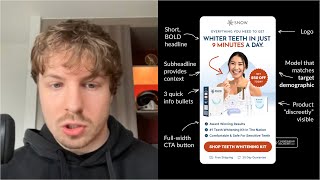
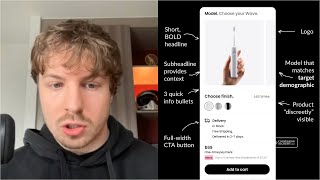
So I'm gonna be going through today how you can actually write copywriting that converts. And these are gonna be some very, very practical tips and tricks that you can use yourself. And these are ones that I'm actually using myself for my own agency and helping clients get results. So the first actual method to actually, you know, getting a little quick win on your copywriting can actually be looking at your Instagram bio. I see a lot of brands that come on a call with me and they, you know, on their website, when I look at their website, they're very, you know, they don't have a clear headline that, you know, they got like weak copywriting on their headline throughout their website. And yet when I look at their Instagram page, their Instagram bio is like dialed in. They got that really, really nice concise headline there explaining what their brand does. They got some benefits as well in their bio. And basically they write better copy in their Instagram bio than they have in their website. And these are some really, really good examples here like Snow. Snow, they have decent copy on their website, but look at their Instagram bio. Like if they put some of this stuff on their website, it would do really, really well. Like if you think about it, like they basically summarize their brand really, really in a really, really condensed way. And this is what always fascinates me is because Instagram force you to have a limited amount of space to write, it often encourages people to write better copy. And a lot of the times brands don't even know that their Instagram bio copy is really, really good. And this is it. So we look at Snow, Look how well they summarize it. Clinically proven, better for your oral care. And then they basically have some social proof down here. If I was to expand this, millions of smiles. So there you go. If we look at this one, Skin and Me, personalized skincare made just for you. Real skin, unedited, unfiltered. Like beautiful copy. And then Anthros, this is one of my other clients. So Snow and Anthros I've worked with. Anthros, the world's most comfortable chair, says science. Like beautiful. Like it's so short and so sweet. And even if you're, let's say you don't have an Instagram bio, start looking at other brands or competitors in your niche and look at what they write on their Instagram. Take inspiration from it. It's a hack or tactic that I've always looked at because when a brand books in a call with me, first thing that I often do before the call is I look at their Instagram. I look at the bio, look, kind of get a sense of what their brand is about. So second thing is customer reviews. Now this is very, very, very, very, very, very powerful. I'm gonna say very again. It's very powerful because yes, there's a lot of work with this. You have to actually sit down and read your customers' reviews, but I'm gonna give you a framework to make it a lot easier for you. So it's not like you're just reading an endless amount of reviews. The way that you should read your customer reviews is read them in a way where you're highlighting, where you're picking out reviews that highlight different objections that new customers will have when they're shopping shopping with you for the first time. So for example, let's say I'm a customer and I'm coming onto your store. What are some concerns? What are some of the top concerns I will have as a customer before I'm able to purchase? So for example, I might be asking myself, well, how effective is your product? How easy is it to use? How affordable really is it? And what I mean by that is like, let's say your product, you're doing a skincare product and let's say you do 30 you know, 30, it's gonna last me for 30 days and let's say it's $50. Well, affordability, the way that some of your customers will say is like, I've used, I've been going to like spa treatments and they cost me a couple of hundred dollars every single month, but with this serum or this skincare product that's only $50, I'm able to, you know, it's much more affordable. So you see how when you can see what other customers are writing when it comes to price, you can start to handle people's price objections a lot better. So, you know, that anyway, that's a topic for another day, I think, the price, because that's a big one. A lot of brands think that, you know, they're overpriced and they think that they have a price problem. But whenever you think that you have a price problem, it just means you have a messaging and copywriting problem. It just means that you're not explaining the value of your product in the best way that it can be. So other concerns they maybe have is like, how is your product better than alternatives on the market? And then another great one that I like is like when you pick out customers that basically say, I was a skeptic at first, I didn't think it was gonna work, but I bought the product and I tried it out and it's been amazing. And you can get some beautiful headlines, beautiful copy from it. And these are some examples down here for a client that I was working with recently. And I'm showing this one because there has been some beautiful headlines that have come out of this. We just read the reviews and look at some of the, these are some of the headlines that came out of it. This one was my favorite, dangerously effective. Like someone actually wrote this in a review and we're now using it in, we're gonna be using it in the hero section on their homepage. A dangerously effective pheromone-infused perfume which synergizes with your natural scent to make him crave your attention. And this language like make him crave your attention, this is all coming from the reviews as well. So we were looking at how people are writing, how people are actually using this product. And it's, you know, a lot of people think copywriting is really difficult and it takes ages and research is like taking days and weeks. If people are saying that, it means that they're overcomplicating it. Like you just need to apply the 80/20 rule to copywriting, you know, and the 80/20 rule is just reading your customer reviews. You can literally get the vast majority of your winning headlines and your copy just by reading what customers are actually saying about your product and using some of their language that they're actually using. Like for example, "The scent is so addictive." Another beautiful headline you can use, "Makes you feel like you're a million bucks." Another headline, "Smells so delicious." So like tying in the word delicious instead of just saying, "Smells so great," like you might say on a page. You know, he said, so, you know, this is basically a product that's helping women, you know, with confidence and making them smell better so that they can feel more attractive and confident. So number 3, so this is just looking at your winning ads. Pick out your top 3 winning ads. If you don't have top 3, pick out, let's say, your main number 1 winning ads. You should have top 3 winning ads, I mean, at the minimum, but dissect their headline and body text. Look at what you've actually written there that's engaging with people and making these ads perform the best compared to the rest. And if you've got a video ad, a really, really cool little strategy to do just extract the audio transcript from it, analyze the words that are being spoken to in that video and see if you can actually draw some headlines or body text from there that you can use in your website landing page. So this is another very, very powerful one, by the way. You can see, yes, there's a little bit of effort involved in all of these things, but what I'm trying to do here is break down the big topic of copywriting that I think a lot of people get intimidated by thinking that they need to spend 5 years or 10 years learning it in university or, you know, learning it from books and everything. Like, I never learned copywriting myself. I don't consider myself a world-class copywriter, and yet I've worked with 7, 8, and 9-figure brands writing copy for them, you know, as part of the landing pages that I built. How do I get the opportunity to do that? Because I've broken it down. I look at the first principles. I'm a big believer in trying to simplify things, look at actually what makes good copy. And really what makes good copy, if you want to summarize this whole video that I'm trying to say, is the art of copywriting is just communicating effectively and clearly. That's all it is. You're just trying to basically communicate in a way that's clear, quick, easy, and to paint the picture of why your product is the best solution to get them to where they want to go. That's it. So number 4, main product USP. You can see here I've put in some examples of unique selling points that I've written for these clients that I've worked with. And you can see here some quick tips to take away from it is it needs to be your product's main unique selling point needs to be communicated in one line. It really does have to be one line. If it's a paragraph, if you have to communicate what your, the main selling point of what your product does in like a paragraph, it's not being efficient. So one of the principles of copywriting is it needs to be efficient. So it needs to be one line. It needs to be something where, for example, like, you know, the old analogy of you're elevating your pitch. You need to be able to say what your product does in an elevator in one line to someone. If someone is like, okay, what is your product? So what does it do? Why would I buy CarePod? Well, I could say to someone, well, it's the world's cleanest humidifier. Boom. Instantly hooks them into the brand. Like your headline, your main unique selling point, it doesn't need to explain everything about your product and what it does and all the benefits of it. It really just needs to capture the main selling point of what your product is. And hook them in so that their interest is to learn more. Some is like, the world's cleanest humidifier. Hmm, I'm interested to learn more. How is it the world's cleanest humidifier? How is it better than the one that I have right now or the one that I was thinking of buying from Amazon? So you can see what I mean, see the effect of it. For example, Snow, everything you need to get whiter teeth in just 9 minutes a day. Whiter teeth in just 9 minutes a day. Like this is a great example of a good unique selling point because you're painting the main desire for these people who are shopping, which is, I want to get whiter teeth, but they also want to get whiter teeth in as quick a time as possible. And that's why we've got the 9 minutes a day in there. So for Right Wing Naturals, what I wrote here is superior American soap, handcrafted for men. And, you know, really it's simple, you know, it's straight to the point. You know, we're calling out exactly what the product is, saying that it's superior, and handcrafted for men, you know, and using the words that this brand, you know, that this audience is gonna resonate with. And then for Plant Wave, you know, for their product, which is a really, really cool product, again, simple copywriting, listen to plants in real time. That's it. That's their headline. Boom. So simple. So yeah, hopefully this gives you some ideas for your own brand. And again, the main principle you need to be able to describe it in one single line. If it's taking more than two lines, you need to redo it. So the fifth point here is demographics. Now this is not really gonna basically generate you headlines or anything like that. I mean, it can in some cases, but it's really just to help you be more tailored with the copywriting that you're crafting. Because if you can, in the copywriting that you're writing, start to call out and make your copywriting more tailored to your audience, they're going to feel like they're more understood. They're going to feel like, oh, this brand gets me. And if you can create that feeling with your customers, what do you think is going to happen? Well, more people are going to trust you. More people are then going to go on and want to try out your product and convert. So, and this is the principle from it, people want to feel like they are being spoken to and understood. And understood is the key point. Like, if you can write in a way that makes people feel as if they're understood by you, I mean, that's true with anything in life. I even say with dating, if you want to like date a girl or a boy, whatever, like a great way to get good at dating is listen, listen to what they're actually saying, and then of course just be able to understand and just say, hey, oh yeah, I know you went through that, that's really cool, I understand where you're coming from. Create that feeling with them. So really what you want to be doing here is you want to be looking at your sales data, you know, and I mean, you're gonna have, of course, let's say you're gonna have a product that of course may be men and women who buy it, but you wanna just look for the majority pattern. Is it majority men? Is it a majority women? Is it, you know, 20-year-olds that make up the majority of your sales? Is it 40-year-olds? Is it 70-year-olds? You know, be able to spot the patterns here. And of course, if you can figure out what their interests and hobbies are and what their main occupations are, that's obviously just gonna give your copywriting a little bit more of an edge. Now, this is also a very, very cool one, which is feelings. And I mean, I say this in my videos a fair amount, which is everything, at least in my worldview, when it comes to humans, is driven by emotion. And it's, I guess, a controversial claim because there's a lot of people out there that like to feel as if they're rational. But again, you see what the word I'm using, they like to feel that they're rational. So again, it's an emotion. And I mean, I'm very, very interested in psychology and I've studied this for a fair bit. One of my passions is understanding the human mind. I don't think we'll ever be able to fully understand the human mind because it's so complicated. But as much as we may want to admit that or don't want to admit that, that just seems to be the way that we are. I've never met anyone who's like a robot where they don't have any feelings at all. Everything seems to be driven by emotions, even rational decisions are underneath it, driven by some deep emotions. And really, if you look at any rational decision that you make in life, it may seem like a rational decision on the surface level, but if you really dig in deep into it, you will actually see, well, actually it's tied into an emotion. Like for example, let's say you want to buy the new Apple phone. I spoke to someone on the call the other day and he says, oh yeah, I'm going to think about getting the new iPhone. And he gave me like a long list of rational reasons why he was going to buy it. He says, oh, because it has more storage, storage and it's got a higher camera and everything like that. And when he got it, he actually didn't end up using it for those reasons at all. And then I remember saying to him, well, you know, the reason why you actually bought it was just because you wanted it, just because you wanted to feel cool. You wanted to have that new thing. It was a feeling. It was an emotion. There's nothing wrong with that, by the way. It's just something to become aware of because once you can understand that the people who are shopping from you are driven by emotion, it will take your copywriting to a whole new level. You know, when you can start to understand the feelings that people have, where they're experiencing the problem that they are right now, or the feeling that they will experience once they achieve your product and experience the results, you can start to thread that through your copywriting. And of course, that will just make— that will make your copywriting more persuasive, basically. And so these are, these are the tips. You need to understand your customer's end desire. What do they want to achieve? You need to understand the current problem, like what challenges do they face right now? Or what are they experiencing right now in life? And then the feelings after they get the results from your product. How will they feel after using your product and experiencing the amazing results? If you start to answer these questions, you should be able to get some really, really cool ideas for how you can write better copy. So point number 7, I wanna go over some tips. So write as direct to them as possible. So for example, it goes back over to this point. People want to feel like they're being spoken to and understood. Call out where they're at, what they're experiencing, and where they can be with your product. And use storytelling. So again, this comes into the skill of copywriting. If you can write in a way that's gonna be engaging, you're just gonna be able to convert more people. The more engaging that you can keep your content, it means the longer people will read. The longer people will read, the more likely they're gonna be able to convert, trust you, and buy your product. So another tip here is just try and keep it simple. You don't need to write essays with this thing. And often when you write copy that's short and sweet, it will have a much more powerful effect on people. And the key point here is just to ensure that whatever page you're building or whatever ad you're writing a script for should always have a strong call to action. You should always be giving people, you know, instructions on what is the next step in the funnel that they should be taking action on. People want to feel guided. They don't want to have to feel as if they're confused or they're guessing where they should go next. And especially if they're totally sold on your product, you want to get them to the next step, which is buying your product as quickly as possible. And here's an important point, and I basically want to summarize this for you, is don't take this framework too rigidly. Don't think that you need to become a great writer to be great at copywriting. A better word for copywriting that I'm using more and more is messaging, because messaging wraps images and videos as well as copywriting into it. Images and videos are a super, super powerful sales tool. And in many cases, they're more powerful than text on its own. And so one thing that I'd like to suggest to you is try to use a combination of text, videos, and images. You don't need to write massive pages of text. Try to see if you can capture what you're writing in a paragraph in an image, or capturing what you're writing in a whole page in a video. If you can do that, you're gonna again tie into the main principles of what makes copywriting really convert by making it efficient. And I should write that down. You know what I'll do? I'll write it down here at the top, the main principles of copywriting. And really it's just selling, to be honest with you. So we'll say it, we'll call it selling. And the main principles is: 1, make it as efficient as possible. The quicker you can convey your message, the more you will convert. And then make it as effective as possible. The stronger you can capture people's emotions and make them feel a certain way, the more you will convert. So really, this one is speed, and this one, I guess you could call it potency, or maybe a better word is strength. So speed and strength. So you want to have something that's fast to consume and strong. And a very, very cool question to ask yourself whenever you're recording an ad or whenever you're building a page, just ask yourself this. This is what I always ask myself is, how can I sell this product in the shortest amount of time with the least amount of text, videos, and images? And you may think to yourself, well, that's a weird question to ask yourself, but it again, it's like first principles thinking. It's gonna make you flip the whole frameworks that you've learned from countless other people on its head and help you focus on the main things that will help you generate sales. And if you can convey what you were gonna convey with a massive page in one section, then that's obviously gonna perform a lot better. Or if you can convey what you were gonna convey in a 5-minute ad, but you can convey that in 1 minute, that's obviously gonna go hurt more people. So this is just a new mode of thinking that I guess want to kind of communicate here. And yeah, hopefully you got some value from this. So let me know if you have any questions, you can comment them below and I've of course read every comment that you guys have. Cool.