This Is How 9 Figure Brands Scale FAST On Shopify
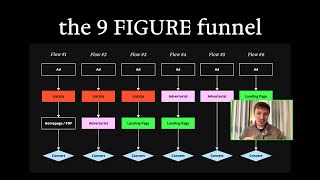
A Shopify scaling method uses six funnel combinations routing traffic through listicles and advertorials before the product page, creating up to 81 unique paths. Testing ad creative and backend pages simultaneously with an 80/20 focus on high-impact elements increases the chance of finding a winning flow and improving ROAS.
Chapters
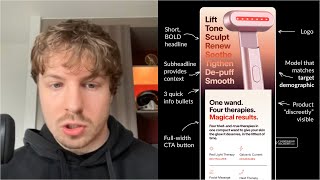
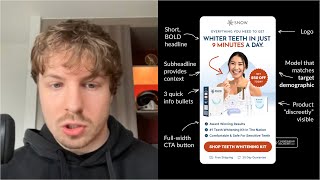
So here's a cool way that you can structure your Shopify funnel to help you scale more efficiently. Now, most Shopify stores that I come across, they have a very simple funnel. They're just either, you know, running ads on Facebook or Instagram, and what they're doing is they're just directing that traffic straight to their homepage or their product page. And basically all they're testing is they're just testing different variations of their ads. So they're just testing like different headlines in their ads or testing different hooks, different holds, like the different content in the ads. And that's all good if you're starting out and you're trying to, you know, get a good decent ROAS, I guess, if you've got like, you know, if you're just starting out new in Shopify. But if you really, really want to scale, you need to also test your backend. And what I mean by that is you need to test the pages of where you're sending that traffic to and make sure they're optimized. And really you should be doing both at the same time. And I know that when I say that to people, A lot of people, I think, you know, can see that that's, there's a lot of work in that, but this is the process. Like if you really want to, of course, maximize your ad spend and make it as efficient as possible, this is the sort of things you need to be doing. And the 80/20 rule applies. Like it's funny when people say they don't have time to do these things. I often see that they're, that they're spending time, you know, trying to optimize their like blog page, which is getting like 100 views a month, you know, which is crazy. So crazy things like this. Um, And basically what I've done today is try to make it as simple as possible on how you can create what I call a 9-figure Shopify funnel. Because if you, if you really apply this and you really continuously improve this funnel over time, you will have the potential to scale to what, you know, I work with some brands that are at the 9-figure level, and this is a similar structure to what they're doing. They're not just doing one ad and one, you know, and sending traffic direct to their homepage. They're testing out new offer pages. They're testing out, you know, sending traffic to different flows, which is kind of what I've outlined here. And of course that's going to give them a way better chance to see if they can find a winning flow. And the really cool thing about when you do this is when you have a really, really good flow and a really, really good backend, it will actually improve the performance of your ads as well because everything's interconnected in the system. Once you have a really good, like, let's say, let's say, you know, we test out these different flows and let's say after a month or so of testing, flow 3 is the one that's really, really performing the best. and it's outperforming anything else that we've got. Well, now, because this is performing really, really well, the listicle is performing well on landing page, let's say, it's actually going to improve your ROAS at the backend compared to if you were to just send them to your homepage and product page. Like you, like let's say this example, this store was doing before. So that's why this is really, really powerful. And you know, what I've tried to do is it may seem like there's a lot of work in this, but you could just, you can just strip everything down and focus on the key aspects. Like even if, you go from, you just start off with testing out new, two new flows. Like let's say it's a listicle and advertorial, you know, pretty simple stuff, but this will already give you, how many different variations will this give you? Well, you can do three different variations for your ads, three different variations for your listicle, and then of course, three different variations for your advertorial. So that's already given you several new variations to test out different ad flows. And this is where the power of this flow comes in. As you can see, I've done the math down here. You, you know, if you fully built this whole new flow, you'd have around 81 new variations where you can test ads too, which is insane compared to 3 different variations if you follow this flow. So imagine 81 variations and you only need one of these flows to win versus 3 variations. Um, and most people just spend their time just even focusing on the ad. So, um, yeah, there's a lot of power in this. So let me kind of break it down. These are the 6 flows, like 6 different combinations that I recommend. You know, flow 1, sending ads to just a listicle, which is the listicle is basically a page. It's just trying to warm your, your cold traffic up a little bit, you know, kind of introducing them to your brand, introducing them to your products and how that solves their problem. And then of course, once you kind of warm them up and I'll show you a framework that I've got on the next slide here for this page, but once you've warmed them up on this page, then you just send them to your website. And of course then they're, they're a little bit more primed to buy. Now of course this flow doesn't always work. Like that's why your, the whole philosophy that I'm trying to communicate on this video is testing, getting into the, what we're doing here on this video is like we're building a system that allows us to test faster and a bit more strategically. You know, like for example, just because of the product or niche you're in, you may find that a different flow might work for you. Like for example, maybe your product is a little bit more techie or it's a little bit more like people, your customers need more education for them to purchase. And for that, maybe like a flow, a more heavy educational flow might work well for them. Like, and there's even another flow, like flow 7 that I could have put in here, which is even more ridiculous, which is like the add to the list, go to the advertorial, to the landing page. Like sometimes that works. That's obviously like a huge long flow, for someone to go into. But you can see there's different combinations and what I've just tried to lay out is the 6 basic ones to test out. So what I want to go through first is how can you actually build a good listicle and what is the framework for that? So let's go onto that slide. So this is the advertorial. So this is the listicle. So basically if I move my, my head thing over here, so I tried to simplify this to keep it a straightforward as possible. But basically what I like to do on listicles is just call them like X reasons why page, like 5 reasons why our, I don't know, like our chair is the best chair that you can have for your office. For example, that's terrible copywriting, but you get the idea. Like you're calling out 5 reasons why your product is, is great and why it's better than anything else in the market. That's what this whole page is doing. And you can just do that in a very simple way. Here are section. You're calling out the headline, grabbing their attention, explaining what they can actually expect to find from reading this page, the ideal solution to their problem. And then you're going into different reasons. You can create a new reason for each— for, sorry, you create a new section for each of the different reasons of why your product is gonna solve their problem. So, hey, it's our product is faster at delivering your results. Like this is how, or it's tastier, or it has tons of raving customers that all say this, or it's more effective at delivering results, or it's safer. And more comfortable, etc., etc. Then of course underneath you can go into like a small little guarantee section. Like this is also called a risk reversal section that kind of before you go into like the call to action section, before you're telling them to take the next step, you're saying, hey, by the way, we have like, you know, a 90-day money-back guarantee on this product or, you know, we have a 30-day return window, you know, something that kind of makes people think because obviously they're going to be like, okay, this product is interesting at this point. But what's the catch? What if I don't want to invest this money upfront? Am I going to be safe? And that's what this section can alleviate the risk of. So call to action. So send them to next page in the funnel. Then of course, underneath that, you can go into more depth. Some listicles, I just cap at this. Sometimes I just make them like this and that's enough to make them work. But sometimes adding in a few extra sections like how it works and strategic FAQs can be great as well to give them that extra bit of information. So That's why I say if there's one thing that will come out of this video, just test and tweak it. I think some people take these frameworks and they apply them really rigidly and they say, okay, I must have all of these elements in place. Just use this as a guidepost. And once you have the main essentials down, for example, once you're taking the principles of what this page is trying to do, which is instead of putting them into a really, really long page that's going to go through all the different intricate reasons, we're just, it's going to be a short page. That's what a listicle is great at doing, a short, page that's easy to digest, that kind of backs up the information that they taught, that you talked about on the ad where they're coming from, but just expands on it in a little bit more detail, gets them a little bit more hooked into your product. And then of course you send them onto the next page, which is either your website, your landing page, or your advertorial. So that's kind of what this does. If I go on to the, if I go back to here, so that's kind of what the listicle does. And then your advertorial, The framework for that is, if I go back to my slide and it's now not working. Cool. So the advertorial is obviously a little bit more heavy in the text. So this is kind of almost the complete opposite of the listicle. This is a very, in often cases, it can be a really, really long advertorial. Like it can be, think essay long for an advertorial. Not in all cases, but usually they're information rich and they're done in a way you can see them often when they're written as like a news article like an, that's why they're called like advertorials, sort of like editorial style. But of course it's an advert, so you're selling your product. But so it's almost like a blog page. That's kind of how I kind of see them. And it's not meant to be, it's meant to, you know, when they work well is when they're written as objectively as you possibly can. So it's not like our product is doing this and it's great at this. It's great when it's almost written from a third-party perspective. Now obviously you don't want to mislead people. You don't want to, you know, make out as if you're trying to, you know, vouch for a product in a really, you know, sleazy way. But you want to just try to be objective, state the facts of what your product does. And of course, if you can have a news publication write this advertorial or put it on their website for you, or you can get a copywriter to write it, or you can yourself write it and try to be objective writing about your own product. Then great. At the end of the day, you just want to provide people as much relevant information as you can. And the art of making this page work is when you create it in a way that's compelling, that makes people want to read on. So this is when copywriting is really, really important when it comes to an advertorial, because of course the big majority of the page is just going to be text. And so you've got to, when you think about it, you've got to keep people's attention throughout the whole page. But basically these are the 3 main components that I call them: the hook, which is like the first stage of your advertorial, which is addressing the problem that people have and painting the desire. Then you go into the sell. It's about halfway, sometimes even 75% of the way down the page. Then you go into the sell. So then you go into introducing the product as a solution, explain why it's the best solution and explain why it's worth the price. So, um, and then you go into the final section on the page or near the end of the page where, where, you know, you're trying to compel them to take the next action and to take the next action now. So that's kind of it in a nutshell. And of course the other page is a landing page, but you can check out one of my other videos if you want a breakdown of that framework. It should be the last, one of the last videos that I've just published.