Fixing a Growth Operator’s $1M Content Problem in 39 Mins
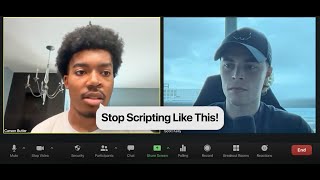
Instagram coach Carson Butler shows agency owner Scott Kelly how to turn client results into content that converts. They break down the VTV hook framework and STD content structure, then redesign a real Reel that made $198k in a week using these principles. The call covers YouTube funnel strategy, thumbnail tactics, and why negative framing gets more shares.
Chapters
an actual hook that performs on Instagram, then a call to action, because this is like the entire video frame telling them stop doing something or start doing something.
This is Scott Kelly, a near 7-figure agency owner that helps online coaches and agency owners scale their business through running their Facebook ads and staffing them with high-ticket closers. And today we broke down one of his biggest bottlenecks in his business: turning his consistent client results into content that drives leads and more clients for his business. Now, what know about content. My name is Carson Butler, better known as @carsonraps_content on Instagram. I've grown my own Instagram from just 900 followers to over 100,000 followers in just over 6 months, teaching people how to grow on Instagram through my style of content called infotainment. And in this one-on-one private consultation, I gave Scott a full content game plan, telling him exactly how he can fix his bottlenecks through these 3 things. Number 1, I broke down my simple VTV hook strategy that can help stop the scroll of his audience so he can get more views. Number 2, I handed him my proprietary STD content structure. I promise you it's not a disease, but it's meant to bring more ease to his content process so he can copy and paste it to make any video go viral like I have for myself. And number 3, I gave him a complete content game plan on how to funnel his Instagram viewers to his YouTube channel so he not only gets more views but ultimately more leads, more book calls, more close calls, and ultimately more clients. So stay tuned, and like I say in my Instagram videos, Keep shining and enjoy the show.
Nice. So what I want— the platform I want to start off at, uh, before we get into it, what would you say is the platform where you get attention and then the platform that most of your attention goes and gets nurtured? Is Instagram like the first touch point?
Yeah, for a lot of people, I mean, I guess so. I mean, dude, we've really just doubled down on like done, done for you, and it's been been really efficient. So there's nothing crazy product-wise. I just went harder on Done For You and have gotten some bigger clients as of recent. Now we're just starting to ramp up. So, but yeah, I mean, it definitely helps.
I wouldn't say we really get a lot of people through content though.
I'd say it's a lot more word of mouth than anything, but like that stuff helps.
Yeah, I know, for sure. Again, working on that. We are working on that. That's good. So both, actually, so both platforms then for Instagram and YouTube, not many people see the content versus mainly like just referrals?
I mean, actually, yeah, I've had a couple of consulting deals come through them, but nothing like done for you.
I got you.
I maybe made like $20 grand off YouTube. Yeah. And probably, I mean, Instagram, I don't know. I don't know how to track that, but yeah.
Yeah, okay. I mean, in that case, I think, um, I know you said a lot of word of mouth. Um, the, the reason why I asked is just because for any platform I'm thinking about, like, if it's one platform that you get attention on first, the whole, the whole concept is like, all right, like thinking about just the funnel from— if it's, if it's Instagram first Right, I know you have a little more followers on Instagram than YouTube subscribers. Oh yeah, if that's first and people see that and then they funnel into YouTube.
Yeah, if anything.
Yeah, yeah, that's the process. Then, you know, we can kind of start off with Instagram and then go into YouTube later.
Easy. Yeah, cool.
Nice, nice, nice. Cool, let's go ahead and get into it. I'm going to share your Instagram account Scott Kelly Biz. So tell me, Scott, what videos would you say are ones that you say to yourself, okay, like, this type of content is what I want to start putting out consistently. I want to, I want to get that content reviewed. Like, is there any specific videos in particular?
Yeah, I just, the, the stuff that I've been trying to go the hardest on, uh, if anything, is just posting results. Um, Simply results. So like, if you could see one, like, you see two of the pinned videos are literally me showing like client results, um, and then the rest of it just tactical stuff that actually is done on a day-to-day basis has been pretty much all of what I've been doing. So I guess you'd say educational demonstration.
Okay, I like it. All right, let's go with the pinned in since those are obviously the ones that, um, are likely the ones with a lot of value in them.
Yeah, I look at this one first. I know this one has the highest view count. Start from the beginning, from the end.
Boom, boom.
That right there is $198,000, which is what we were able to help one of our clients make in the span of a week. Although it doesn't happen every week, at least not yet, it was still a pretty big success. A majority of that came from a webinar. We had one of our best days that was almost $60,000 where one of our closers almost collected $40 grand Shout out to Amir if you're watching this, by the way. And the rest of that came from our call funnel, and a vast majority of this as well came from paid. Now, all in for the webinar, we dropped about $20,000 and we got $107,000 out specifically from paid. A lot of it came from organic as well, but still pretty damn good. Now, the best part about all of this is because we did pretty well on this webinar, the client wants to potentially 3 to 5x the budget, which means potentially throwing $100 grand into the next webinar. Which is pretty cool because we work on a rev share. So that means, you know, potentially 3 to 5x the earnings for us and for them as well. With that being said, hopefully these results get you to think a little bit bigger, take some bigger swings, and ultimately go out and make some more money.
Okay.
So I guess like hard flex storytelling.
Yeah, yeah, no, definitely. So what I would say, I like the hook a lot and I'll actually put this in frame. Let me go ahead and go in frame real quick. Some of that is like some client folders. I'm gonna put this in frame because I like the start. I know the idea of it was obviously like leveraging results. I just feel like the execution could have been a little bit better and I'll break down how.
Got it.
Go ahead and go, yeah, just go consultations, downloads.
See, I haven't really been scripting. It's just kind of idea, film, which I don't know if this is the best route, but yeah.
I mean, um, so you filmed— I'm assuming you filmed it on TikTok and then posted to IG?
No, I filmed on Snapchat. Even worse.
Oh, Snapchat. Oh, okay. Well, I mean, same concept though, because you like— you stop, you start. Yeah, so it's the same like recording process. Okay, yeah, I'll use it in frame. I can go deep. All right, so like I said, the reason why I like the hook, that visual, right?
That right there is $198,000.
I like it.
So it's not $190,000, I'm a little dyslexic, but yeah, no worries.
Yeah, so I, I mean, that would be first thing. Um, if there's a way, I wish I could like leave some comments here. Let me see, exit full screen. Let me see, is there any way I can add some comments? You see captions.
Editor, just cut this out.
Thank you in advance.
Okay, for some reason, I don't know why, but I'm not able to It's all good.
I have no caption file. Yeah, no worries. I usually— I like leaving the, the comments at specific timestamps, but no worries. So I'll just kind of talk over each point. So when it comes to this hook, right, there's— when it comes to like an actual hook that performs on Instagram, this is— you, you'll see this a lot, honestly, on any platform. It's pretty it pretty— it transcends all platforms for the most part. But the 3 concepts we use when it comes to any type of hook is— we call this the VTV strategy, right? VTV strategy is top of the morning. All right, this is an example, this is an example, um, but I want to use something that's educational. So this is like, cool. So there's 3 concepts of this. There's the visual hook, the text hook, and the verbal hook. So for example, like if I'm drawing on the screen, this is the, the text hook.
We have the visual.
You see, this is actually meant to represent a call to action because this is like the entire video frame. This is the call to action portion.
So we're basically saying, hey, don't film one call to action, always film two when you make a video because you could run it as an ad or organic depending on if it blows up or not. You know, or if it converts well.
Yeah.
So then that's the text, that's the visual, and then the what I'm saying is the actual verbal hook, right? So for you, you obviously had the verbal hook right here.
That right there is $198,000.
I like it a lot. One thing we could have done even better is like this right here. Obviously you got captions. If you'll see, you'll see a lot of people when videos go viral, they'll number one put captions in the middle just because the eyes naturally rest here. And then two, focal point, right? Yeah, yeah, focal point. But then also, um, the emphasis of text. So we put, like, as you see, this isn't just like— it's not just a normal captions for at least the hook because we wanted to get attention. That's the whole point of the hook, get attention, and then we reward, right? So for this, we make it pretty bold. Like, we have the colors, don't record, red. Representing a negative connotation for the word or for the phrase. Don't record only one CTA. We usually keep it 3 to 5 words, right? If you look for my text hooks, 4 words, 3 words, 3 words, 4, 4, 4, 4, or this 5, you get the point. So yeah, it's usually like a 3 to 5 word summary of what the concept of the video is. The concept of this video is don't record only one CTA. Right, negative. So for this one, a text hook could be how we made $198,000. That's like a 4-word text hook, right? That's ultimately—
it's like just straight up capturing the specific narrative of the video right there, in a way.
Yeah, yeah, yeah, because it's— yeah, because people— it's easy to understand at the, at the start. You'll see this even if it's not just you know, people that are in the niche I'm in with heavily edited videos. Um, yeah, this one guy, uh, he does this really well.
Like, you can literally do this in the Instagram app. It doesn't have to be crazy edited. How to avoid the tax system forever. The, the red, the text hook, and that's at the start, right?
Buy low, sell high. This video hit 6.5 million comments. Absolutely fucking print it. Um, almost 1,000 comments. He did this in another video. Um, the realest message I've heard all year. Just a text word summary, right? This one just hit 500. Our weddings cost me financial freedom. The emojis, the red colors, like all of this is meant to just get attention, right? You even see this in this video, right? A quick summary, homeowner, like all of it is just at the start. It's just meant to get attention towards what's the concept of the video, right?
Yeah.
So we do this, um, and then we transition into the caption.
There is $198,000, which is what we were able to help one of our clients make in the span of a week.
Very strong.
Although it doesn't happen every week, at least not yet, it was still a pretty big success.
Um, I don't have a narrative, so I just kind of started rambling there.
Yeah, yeah, yeah, yeah.
So I was just saying like I mean, some people are, some people are like full scripters.
Um, I mean, for YouTube, I'm, I kind of went a little, like, I go off script at times. I just did my first YouTube video this week, so I'm not saying the whole thing has to be scripted. I think for the hooks of short form, like, especially when it's this, yeah, yeah, the hooks, and then also like what you say right after before you may get into the value, right? Like that That needs to be like very intentional. You know exactly what's being said, right?
Yeah.
Um, so the framework I use when it comes to videos, right? There's, there's two ways you can go about it, right? Like you have positively framed videos and you have negatively framed videos. So I usually make negatively framed videos, right? And that's like very common because if you just look at my Instagram, you'll see damn near everything controversial in a way. Or, uh, controversial usually is the word motivated by— you said what? Maybe that's not the word, but yeah, yeah, controversy is usually worded in like entertainment, but I would say like belief-breaking It's kind of, it's like the same point. Um, belief breaking is more what it is in education. So like I'm breaking a common belief. Like people think they should just run one CTA. Like that's common. You don't even think of doing more than one. You just like, oh yeah, I'm doing a call to action. So I say, hey, don't just do one. You always do two, one for ads and one for organic. Video didn't blow up, but it's like, it's higher level concept, right?
Yeah.
And I'm like, hey, don't write scripts unless you say it out loud first. That's like this video, right? Um, some of these videos are on YouTube.
What you mean by belief breaking?
Yeah, yeah. So the whole goal for a negatively framed hook is like, I call this, right, I, people know this shit when I say it on the webinar. Um, basically I have like 3 steps when it comes to like the actual framing of a negative video. Not to say that you only frame it this way, but this is like how I frame mine. Um, the framework I use for negatively frame, or you could say belief breaking videos. I like to say, I like to break it down in 3 simple layers.
STD, right? Yeah, the STD method.
And what this stands for is stop, Teach and demonstrate. Now, for you, like, this is going to be slightly altered, but it's going to fall onto basically the same— it's going to fall into the same boat, and you'll see why. So with belief-breaking videos, like, obviously you're saying stop doing, you know, stop doing common action or maybe common belief, teach why this action is bad, demonstrate what to do instead. Now with positively framed videos, we do the same thing, but we invert it. So we'll say, hey, you know, you start off with social proof. So this might be, hey, like we did obviously 190, I think you said it was like $98,000. And it only took a week. Now you give reasoning on why this is bad. The version of this— this is like STD, but instead of stop, teach, demonstrate, this is like start, teach, demonstrate. And the reason why is because you're basically like telling people, hey, you should start looking at start looking at this video because I did this. You teach why instead of this is bad, you teach why this is easy, teach why it's good.
So it's like for a positively framed video, if we were to look at this, that right there is $198,000, which is what we were able to help one of our clients make in the span of a week.
Now, a way to even— the way to teach why it's actually easy. And the best part is we didn't run any paid ads. We didn't send any cold DMs. We didn't have to do any type of 'content every single day, and here's how we did it.' Now I'm like piquing the— I'm piquing the viewers' interest, right? Yeah, maybe that's the process. I'm just— I'm spitting like what could have happened.
But so like almost what they would assume was the way you did it, being able to like throw it in a different frame of way.
Yeah, that's why I said it's two sides. Like it's negatively or positively. Like it's like you're breaking their belief on what you had to do, right? They're like, oh, he probably spent a ton of money on ads. The best part is we only spent this much on ads, which gave us an 8x ROAS, right?
Yeah.
And we didn't have to post content every day, we didn't go viral, and we didn't send 1,000 cold DMs from 1,000 Instagram accounts.
Made money out of thin air.
Yeah, yeah. So now you're teaching why it's easy, breaking their beliefs on why they'll think it's hard, right? Because they think it's hard. This, you're breaking, you're stopping, you stop doing the common action. They think this action is good, you're teaching them why it's bad. So it's same thing, but just inverting how you teach them. Yeah.
So would you recommend split testing the two? Or like, what would you, you dive deepest into?
I mean, yeah, you can, you can split test the two. Like we've, I mean, I have it in my, on my webinar slides.
Would you say for result, like this is my thought process for results, I'd probably go more positive. For just educational? Okay.
Um, you could— no, no, you could actually do the same thing. So like, for example, like I have slides right here that, um, let me see. Like, I looked at my— if you look at my best, best videos, I'm gonna go ahead and boom, boom, boom, boom. You look at my best ones, the best ones actually are negatively framed.
Um, this has worked for me, it's worked for other people.
The reason why is because Harvard actually did a study. They said that negativity actually spreads more than positivity for news headlines, which news headlines, they're literally in the media business, right? A lot of news is negatively framed or based— yeah, because people naturally want to avoid pain more than gain pleasure. Right? It's like the concept— someone steals $100 from you, you're a lot more mad than they give you $100, you know what I'm saying? You get $100, yeah, 7 out of 10 happy. They steal $100 that you had, you're like 15 out of 10 mad, you know?
Yeah, yeah, that makes sense. That makes sense.
Yeah, so the whole concept of like negatively framing it is like you could still do the results, the results don't go away. It's more just how you package it. That's really it. So if I were to negatively frame this, again, you could split test it because both can work. Like, both can do well. Like, I did this. Yeah, obviously, like, some of mine don't do as well, but some people's do well, right? So everybody's different. I think for me, maybe it's just the energy it comes out when I say don't do something. You just look at the thumbnails, um, But how you, how you would package it differently, it might be, hey, like if let's say it's a common mistake people make when they're doing. So you said you made them $190,000 in a week. Was this from a webinar?
Yeah.
Okay. So a common mistake people might make when making webinars, like, like stop making this common mistake when you run webinars. I generated almost $200,000 in a week for one of my clients from our webinar. And we didn't do this, we didn't do this, and we damn sure didn't do this. Here's exactly what we did step by step so you never have to worry about making this kind of mistake ever again.
Makes sense.
Yeah, I just packaged it.
Same results. Yeah, yeah, yeah.
It's just, it's a more simple formula than I imagined, but yeah, interesting.
Yeah, bro, it's really like when you understand the shit, this shit is like you can print every time. That's why, like, my videos, like, yeah, it's just a topic that changes. It's like red timer, um, settings, profile pictures, uh, how to find the right time to post. Like, all the topics change, but the packaging is damn near the same every time, right? Like, hooks— you shouldn't post on Instagram again. I've used that hook multiple times.
Yeah, it keeps working.
So yeah, that's how— that's basically how you— that's how you can balance maintaining what works, right? Obviously this has worked, but you just change out the topic you talk about. You just change out the value for the most part. Yeah, so the value is rooted in what you teach them, right? Like, you're not just telling them stop doing something or start doing something. You explain why this is bad. So that will change depending on the topic. And then the demonstration. So that would be the only thing that this video was also missing, right? At the end, hopefully the results get you to think a little bit bigger. We gotta like aligning with the viewers' desires. They don't want to think bigger, they want to make bigger money. So demonstrating how the money is made is like, oh shit, I can actually do this. Make some money. If I make some money, I'm damn sure probably gonna pay him because he made me money off free content. Imagine what his paid service has to offer, consulting, whatever you funnel people to, right?
Yeah.
Or it could funnel to the YouTube if you say, hey, I can't break down all these strategies in this one video, but if you come to Word 200, I'll show you a full breakdown and a training of how we made $200,000 in one week almost for this one client from a webinar. Yeah, you go to like a 10-minute, 15-minute video, you put a CTA in there of like, hey, now you could watch this, you have two options. I did this shit in the webinar. You have one of two options. You could, you could, uh, apply today's lessons from this YouTube video on your own, which could bring you results, but you'll likely fail since you haven't, uh, since you're, since you're not walking with someone that's done it before, or option 2, we can go beyond just this one YouTube video. You can skip the years that I've wasted, millions of dollars in ad spend for my clients, and you can have the same framework of how to make this because I'll be working with you one-on-one. And then you just link them, link them, link them bio, or tell them DM you on IG and have a setter go ahead and handle their business or whatever.
Yeah, right.
I have some good YouTube stuff to funnel to. Um, I'm trying to put out a video a week, so yeah, could easily make stuff around them.
Yeah, yeah, yeah. Because that's, um, I actually talked to like a content coach. She spoke in my community yesterday. She said, I mean, the easiest thing you can do to start off with YouTube, if you just need ideas, just make YouTube about what you would talk about on Instagram, right? I've run out of posts, so it helps me. Um, but for you, literally just client case studies. Like, if that's what the content rooted in, literally, like, if it's a testimonial, if it's a case study, if it's a, if it's a result that you got, like, make a video. Different client, different business, different niche, and just print. Yeah, yeah. So obviously I know we talked about the, um, the IG to YouTube funnel. I think for this Again, like, results make the video easy. That's why, like, I mean, the majority of my criticism with videos is that the creator themselves shouldn't actually be creating this content because they don't have results to leverage, or it's not good. Yeah, I mean, the results are there. It's really just like, again, it's really just packaging. Like, that's, that's so easy, um, because that's the only thing that, you know, that's just like the social media strategy side, like You know, so that's, that's simple. Um, how a funnel to YouTube, like let's say you do a quick demonstration. Personally, I like to do demonstrations in 3 steps, 3 ways, 3 reasons. So again, we have STD. That's like my, my, my acronym. I use it a lot. Right.
Right.
Steps, easy to understand, easy to grasp. Acronyms are also easy for people to understand. So depending on how you package, you can package it that way. Um, now let's say you follow them on YouTube, because obviously I know we talked about covering your— well, on there, um, for me, like, I— let me see, I don't know why.
Um, you can see it down there.
Yeah. Um, let me see. So, P, uh, I was on that same gamma.
No, it looks like it's on that page or on that sidebar. I see Scott Kelly right above Poppy AI, looks like.
Uh, yeah, yeah. Okay, I'll put it up again. Um, YouTube. Now, one thing, uh, one thing about YouTube, like, obviously I haven't started posting on there, but I've, you know, me learning from other content coaches, I'm, I'm aware that the same concepts kind of translate. I talked to Nikki yesterday, so I'm going to just go off of like what she teaches because she's got her channel to around 40, like 141K. And for 41K for— where's her channel? For some reason it's not popping up. I think it's this.
@SEO.
Yeah. Okay. This is better. Yeah. So she has 41K subscribers for YouTube. People talk about which is 1,000. You can make a lot. So I know if she's growing into 41,000 and it's niched down, it's not like, bro, MrBeast. Like, she knows her shit. What she told the community yesterday is basically there's 3 topics— or not 3 topics, but there's 3 pillars of what ultimately makes a YouTube video valuable, which would be the title, number 2 would be the topic, and number 3 would be the thumbnail. So how clear are all three of those things for, for you?
If you were funneling the people from this video from IG to YouTube, I mean, for titles, she said that her best titles have some type of numbers in the title, right?
Like, that's pretty— YouTube. Yeah, yeah. So She had one video that really did well, was like about, uh, Alex Hormozy. She recreated Alex Hormozy's, um, AI, right? And then the thumbnail—
I think I saw that video actually.
Yeah, yeah, yeah, yeah, yeah. Scripting— she scripted the hook. It was really good. So we got two numbers, we got number, we got number. And then another thing she said that makes a good title is borrowing credibility. So you see a lot of growth operators doing this, like, hey, here's how this creator could make a million dollars a month. Yeah, did this, this, this, this. I won't say names, but you know.
Yeah, I know what you mean.
Yeah, they borrow credibility a lot. Like, here's how she's doing it and here's how you can do the same. That's how they do it. So yeah, for this, uh, this, this title follows that, like, pretty to the T. Um, now for you, if you're not leveraging, like, again, you're not leveraging like a popular, let's say, creator, it will be How We Made $198,000 in One Week. Like, we got one number, two numbers, so one week, four, or it could be, you could even say seven days. You could split test the titles because she says you can split test titles, um, on YouTube. For a client, um, for our client, for a client, however you want to word it. Um, now when it comes to— it comes to the thumbnail, again, like this same concept translates. Visual hook, you have this right here in the start. Hold up, this one right here, this is for short form. For long form, you can really just screenshot this, a designer can make them look pretty and have this same number shown in the, in the first, in the first, uh, in the first thumbnail.
Gotcha.
So, um, that's pretty easy for that with, with the visual. With the topic, you obviously already have the topic, like how we did it. The whole concept would be Like with, with long form, uh, Alex Hormozi talks about this. So with short form, I obviously talked about you have stop, teach, demonstrate, or you might have start, teach why this is good, teach why, demonstrate, start, teach, demonstrate. You just basically do that multiple times in long form. It's like multiple loops instead of it just being one bite-sized loop for Instagram. You just have a few, like you rehook them.
You just cycle it.
Yeah, you demonstrate more, you teach more, right? So for this, you just go more in depth, right? Like, obviously for Instagram, you can only break it down into step 1, step 2, step 3. If you want to use the same step 2, step 3, that's cool. But for step 1, you could actually just elaborate a little bit more. Step 2, again, elaborate a little bit more. Step 3, elaborate a little bit more, right?
Yeah.
Now Nikki's strategy for YouTube when it comes to number one, retention, but number two, conversion, she says for retention purposes you never want to end the video off with a link in bio CTA for YouTube.
Really? All my videos end with a CTA.
Yeah, yeah, but, but she actually made a good point. So you already I thought she was like tripping. The reason what she said on like why you don't want to ever end with the CTA is because at the end of a video, that's the perfect time for them to watch a new video right here. So you just follow them. Yeah, you say, hey, watch this video, watch this video, watch this video, right? You leave your CTAs in the middle. You get what I mean? Yeah, right. So similar to— yeah, so similar to how some people on short form, you might make a video and in the middle you leave a CTA. I can't— I don't know exactly if I have like an example of this myself, but yeah, you might say, hey, like, comment this and this in the middle. YouTube, a lot of people do this, right? Because number one, there's more, there's going to be more people watching. But then YouTube, the whole goal is like, basically, um, there's a, there's a stat that's tracked on YouTube that they track. They track a, it's called session time, where let's say, yeah, yeah, session of someone sitting on their computer, like how long are they spending on YouTube, right? It's one of the only platforms that actually allow you to like link next videos, like right here. So they're big. MrBeast, I'm pretty sure he does this like religiously with the— which is linking, linking, linking.
Yeah.
Uh, now for you, I see hard in the middle and the end.
So yeah, I guess end could be good to remove.
Yeah.
Uh, the—
well, the end would be the CTA would not necessarily be like a link. That's why I said like never have a link. It would more so be new video, new video, new video, right? Yeah, yeah, because that's ultimately like what YouTube wants— people to stay on the platform. Um, so that would be one thing. And yeah, again, CTA is more so obviously in the middle. A lot of them are going to be more responsive to even opting into CTA, especially in the middle, because you've taught them for a lot longer.
Right, yeah, makes sense. I love GammaDoc, man, it's awesome.
Yeah, but, um, yeah, man, I mean, that would be like, at least if I were to visualize the IG again, just is mainly just tweaking more so the packaging of—
yeah, and then just funneling it, keeping the same packaging within YouTube.
Like the results, teach how this was done, right? And then, uh, demonstration. I think you should be good to go.
Easy. Yeah, coming out a new YouTube video this week. I might have to re—
I don't like it super well, so I'm gonna have to re—
I'm gonna remake it anyway. So just remove the NCTA, probably put on a video and move forward on short form. Yeah, I feel like I have a pretty good idea for sure.
So Yeah, yeah, yeah. I mean, for idea, I think for idea to perform like he's, again, like, again, with the results one, I mean, common mistakes, like, that's one thing I actually put on the slides. Like, for me, if you, it's hard to come up with content ideas, like, what are the biggest mistakes? Beginner blank blank blank blank make when blank blank blank blank blank. So this just depends on number one, your audience, and then number two, what do they do? So if it's my audience, say, uh, what are the biggest mistakes beginner creators— or not creators, not really so creators, but what is the— what are the biggest mistakes business owner make? Business owners make as beginners when creating content. Because yeah, make better content, either done with you or done for you, right? So for you business owners, even deeper than that, it might be online coaches, online agency owners. So that would be the type of businesses when, um, when running paid ads, when media buying, when Hiring closers, when running sales teams, right?
Yeah.
And then GDC just gives you like more ideas than you can name. And then you use those ideas, you make videos, naturally people in the comments will ask you more questions, you make videos answering the questions.
So interesting.
It's pretty easy after that.
Okay, sick.
Yeah. Yeah, man, let me know.
Did you feel like everything makes sense? Um, I know you said you got to run in 5. I, I had a, I had a plan.
No, you're good. Um, yeah, no, everything makes sense. I mean, YouTube, I feel like, is pretty actionable.
My videos are very, I guess, based off that.
And I don't know if that was the interpretation, but more so of like, okay, probably should make more in-market videos of like more in-market problems rather than just kind of shooting from the hip. You know what I mean?
What people are asking for, again, comments. That's again, yeah, foundation of content. You answer people's questions, people, people watch your videos, they help you, right? Um, and then the ideas is more, you know, okay, you can start off with results, um, and then it just, it's just gonna get easy because it's easier what your clients make and you just see that naturally, right?
Or, yeah, yeah, perfect, man. I appreciate it. Yeah, and short form as well. Like, I know there's a lot more things that I could link it to, and it seems like there's a lot better structure that I could add in the beginning, which it's time to start doing.
So yeah, yeah, man. Yeah.
All right, hopefully you guys enjoyed Scott's breakdown. If you want to have your own one-on-one call with me and learn exactly how you can grow your personal brand with other committed business owners just like you, Click on the second link in the description and learn more about our Shine Through Social Academy. But if you're already doing $20,000 to $50,000 a month at least, and you want me to help you personally with your scripts, with recording your content, and building out and managing your editing team so you can grow your personal brand that builds your business, we're taking up to 3 new clients this month for our premium done-for-you service, which is the same service that helped my client Manchetta hit a million views in just 30 days and get over 300,000 views on her best video, Work With Me. And the same service that helped my client Yvonne get almost 100,000 views on his first video, Work With Me, and go from $10,000 a month to over $30,000 a month last month from running our content as paid ads. So if you want results like that, click the first link in the description with a content audit call with me or my team. We'll do 3 things. We'll analyze your current content process, we'll build you a custom content game plan, and and show you exactly what's possible when we install our Done For You Systems into your business. But if you're still on the fence, just listen to this short testimonial on how Scott felt about the one-on-one call. And like I say in my Instagram videos, keep shining.
I'll talk to y'all soon.
So long overdue video for Carson, um, who I worked with on my content for specifically ideation on Instagram and YouTube, which has been bringing me, even though I have a very niche market, quite a few good calls with some very good prospects and assigned me some very big clients as of recent, uh, which has been super exciting, and found me some, um, a strategy to get better editors as well, which have been great because with my clients combined, we're pumping anywhere from 200 to 300 new ad creatives every single month. Uh, so again, want to give a big shout out to Carson. Anyone who's looking into potentially working with him, highly recommend it.
And, uh, yeah, peace.