The NEW Viral Content Strategy for Entrepreneurs in 2026

A framework called Laugh-to-Lesson pairs a viral clip with a quick educational breakdown to build authority and attract higher-paying clients. The method uses humor to lower resistance and improve retention, then walks through the exact steps: pick a clip, react, explain it simply, extract a numbered lesson, and add a soft call-to-action.
Chapters
Yo, what's up YouTube? In this YouTube video, you're going to learn a new secret viral content strategy that I've discovered that coaches, consultants, and service providers just like you can use in 2026. It isn't meme videos, it isn't videos where you're just dancing to trending audios, and they definitely aren't AI videos where you use things like Sora or HeyGen and people just laugh at you because they know that it's fake. Because on social media, you can be a clown or you can get clients, but you can't have both. Because the difference between these two business owners on social media is one thing: Authority. Authority is the difference between coaches that charge $500 for 5 months of coaching or business owners that charge $5,000 for 1 month of service. And I can say this because I've done this myself, not because I made people laugh, because I made them learn. So in this YouTube video, I'm going to break down the new viral content strategy that I've seen that you can use in 2026. It's a style of content that I call LTL reaction content, which is where you turn laughs to lessons and attention into authority. And I'm not just going to break down what this style of content actually is, I'm going to break down how to structure it, how how to film it, and how to use it to attract higher-paying clients through social media. So grab a pen and pad because you're gonna need to take notes. And like I say in all my short form videos, keep shining and enjoy the show.
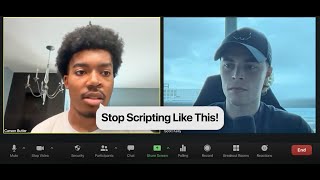
Yo, what's up YouTube? So in this video I'm going to go over the Laugh to Lesson content strategy like I talked about in the intro. Now let's just go over what LTL actually stands for and actually means. LTL, a content strategy that I personally coined, stands for Laugh to Lesson, where The laugh is where you essentially hook a viewer in. You get their attention using a funny, viral, or ridiculous clip that's in your industry. It has to be in your space. So if you're a sales coach, it could be a sales meme. If it's— if you're a fitness coach, it could be a fitness meme, etc. The 2 obviously means 2, where you transition from the funny clip to an educational section where you educate the viewer, where you essentially teach the correct principle clearly and simply that you want to go over in that said video. The reason why I like this content strategy is because it basically blends the principles of entertainment to hook the viewer with the principles of education, which is to make the viewer trust you and ultimately get them to believe that you're somebody that they should invest into when it comes to further expertise. So when it comes to why the strategy works, people don't come online all the time to learn outright if they don't see any type of entertainment up front, especially within Instagram videos. I've seen that you have to have something that's entertaining, something that's engaging at the hook. To basically get their attention. And when you get their attention, you can reward their attention with some type of education or information that they did not want, that they did not know at first. And that's why the LTL method that I've personally coined, it works, right? You borrow attention from the viewer before you ask them for the effort of listening to you, learning more information, trying to break down and simplify complex ideas. Which, when you actually have humor at the start, it also lowers the viewer's resistance because they can see that you have some type of personality. A lot of, a lot of times you see educators on social media, they don't have any type of personality. They go straight into value, value, value, value, versus the person that reacts to something that's humorous. It ultimately makes them trust you as a coach a lot more. And not only that, but when you have some type of entertainment, the learning could actually stick better in their, their brain, which is what I like to call the consumption rate at which of the information that you're giving in this video. Because you have two types of educators. You have one educator that gives strictly education, you have another educator that incorporates some type of entertainment at the start of their video, within their video, throughout their video, then learning will stick better because you remember that— you remember that lesson because you ultimately had an emotion attached to it, the emotion of humor, the emotion of laughing, right? So this is essentially taking you from teaching harder to teaching smarter. You don't want to have just a course in, in, inside of your, your video, right? People pay for courses, and when they pay for courses, they've already transacted something. So it's an easy action to take to pay attention. But if they haven't paid to watch that video, then it's hard to get them to want education right off the gate, especially on Instagram. So when they're getting flooded with videos like Ashton Hall waking up at 4:45 in the morning, he has a six-pack, that's entertaining, he's dumping his face in water. When they're scrolling in there and you see that your average viewer is consumed with all this entertainment content, one of the best ways you can get the viewer to watch your video is to entertain them by reacting to a clip that's viral, that's engaging, that's controversial, that is going to create conflict or communication or conversation, and then have a conversation about that and give your thoughts and educate the viewer within those thoughts. So how does it actually work tactically, right? The first thing you wanna do is show a viral funny clip This could be a clip where somebody says something that's wrong in your industry. They say something controversial. For instance, Hormozy in this example where Andres was reacting to him, he said something controversial. Jeremy was reacting to a person named Brian Mark at the start of this video, and Brian essentially said something that was— it's a way to essentially handle an objection, but this way of handling objection Jeremy didn't disagree with, and essentially he he cut Brian's part off and then went to explain why this is wrong, why you shouldn't do this, and what you should do instead. Now, this creator, Marco the Creative, he reacted to Jennie Hoyos, and she's essentially doing a video that's entertaining, and Marco then pivots off of that. You can see just by his hand motions, he's going to say, "Never ever do this, and here's why." So when it comes to showing a viral clip, showing something that's wrong, you wanna react honestly, and you don't just have to disagree. I know Jeremy in this example, Marco in this example, they're both disagreeing with the way that the person did the video at the bottom. But you could also react honestly because if somebody says something controversial and you say, and the person at the bottom says, hey, this is why I never take sales calls after this time, and you agree with it, this could give confirmation to a belief that is uncommon in your industry, which if a lot of people don't believe a common belief, you agreeing with that actually still it actually still will get attention as well. You want to explain what's happening as well. You want to say— you want to be able to tactically break it down as if it's explaining it to a 5-year-old. Because one thing that my mentor told me, if you can't explain to a 5-year-old, then you don't have that well of an understanding of the concept that you're educating people about. And you want to extract what I call a transferable lesson. Now, when it comes to a transferable lesson, what does it mean to transfer something? To transfer energy means to take energy that is once in you and to put it in somebody else. Most times on social media, the reason why you as a business owner, you might be making educational content, but the reason why you might not be able to educate people at the highest level and get a lot of views in your videos is because your lessons aren't transferable. People don't feel like they could transfer that into their own life and actually take action on. It's too many steps at one time. It's like giving somebody an amazing meal, an amazing 5-course dinner, but they can't put it in their stomach and it's impossible. They throw it up every time they try to eat it, right? If somebody can't digest the information and process the information, they're not going to be able to take action on the information. And without action comes no transactions. So this is what I would say: make sure that the lesson you have is actionable. The way that you can have actionable lessons is making them tangible, measurable, right? Somebody told me the best way to deliver— the best way to allow for action is to attach it to numbers. For example, I can use I'm gonna say, hey, walk 10,000 steps. I'm gonna say walk for 10 minutes for 10 days straight. I'm gonna say, hey, you should lift 10 pounds of weights for, you know, 10 days straight at 10 AM every day, right? Those numbers is gonna make the process a lot more actionable and can make your lesson more transferable. And every LTL video essentially follows this loop, right? You can see Andres Contreras, he followed this loop as I showed you before. You have somebody else that's following this loop, Jeremy Miner, and then also Marco the Creative. Now, The bait is actually the original— the bait— the reason why this bait in the original clip actually works is because not only is it entertaining, but a lot of times when you are getting viral clips, whether it be from Alex Hormozi, whether it be from Brian Mark, whether it be from Jenny Hoyos, you're essentially borrowing authority. And this is another reason why this video style works so well, because not only entertaining, but it's also a level of— it's a level of relatability that the viewer will have. Viewers will stay because they essentially recognize the person that's in the clip, and they'll listen to you because you will explain what others won't, right? They'll explain an idea that was not once known before, and you turn something that's familiar input— most people aren't— most creators on Instagram, they don't actually get a lot of attention on their videos because the same information, versus if you give new insight and unique insight and insight that can actually be transferred into their life. That's how you're gonna be able to get a lot of reach on that video, and not just reach but quality reach, the reach that actually gets people wanting to buy your product, especially if you sell information. Now, one thing that I see a lot of people do when they mess this up is they essentially overreact, but they don't explain why this style— why the person in the video is wrong or why the person in the video is right, and they don't actually give actionable steps. Or you essentially overexplain. Explain. And you know, there might have been a joke in the video, but you might go straight into the explanation. You don't transition from the laugh, the part that people are laughing in and laughing about, into the learning section. You want to make sure you're not just reacting to the clip, you're actually explaining. So you react, then explain, and you're not just explaining without reacting. Obviously, talk to the clip, talk through the clip, and not just talk about the clip. Talking through it is basically explaining what the person means. Hold on, I'm getting a message on my computer. All right, it's back working. But what I was saying was a lot of people do one or the other. Either they overreact or overexplain, or they, they just talk about the clip instead of talking through the clip in terms of educating the viewer. And essentially, this, this method, the LTL strategy that I've coined, it will fail if the reacting or the explanation isn't balanced right? So you want to make sure that you explain the joke, you don't kill the joke, you talk through the clip, not about the clip. Excuse me for the noise in the background. And make sure you're reacting and explaining and giving about an equal amount of both. Now, how do we turn this into an actual scripting framework? I know it's easy for me to say these things and say these arbitrary terms in terms of, hey, do this, don't do this, do this, don't do this. But when it comes to the actual script framework to make it tactical for you guys, guys. You want to make sure that the clip is on the bottom half of your screen. Just make sure you're silently watching. So the first part of your script, the hook, is actually borrowed from the other viewer. So you don't have to technically have a hook of the video. The intro is someone else's intro. But your hook, in terms of the verbal hook, will be after the clip ends, or after there's been a controversial moment, or a laughing moment, or a viral moment, a funny moment, an incorrect moment that you can react to. And you want to react and make a short remark. Again, you want to have a lot of passion. You want to passionately agree or passionately disagree and say, she made a, she made a really good point here, this part is actually right, or this part is completely wrong, she made a wrong, she made an incorrect point and here's why. And you wanna, you wanna acknowledge, you wanna react to what they said, like obviously verbally explain it so that the viewer knows exactly what this means, because you might have to simplify an idea for the viewer that doesn't understand. But once you've done that, always add your missing insight, right? So, you know, this is obviously where, you know, a lot of content coaches that you see online, they'll tell you, hey, say this, say this, say this, say this. But as a— if you're a consultant, if you're somebody that has authority, you know your space, you know your niche very well, this is where you add your own insight. This is not something that you're copying. You're not copying somebody else's watch this video. You're not going to borrow information that you might get from ChatGPT. This is where if you feel like it's right, say why it's right deep down inside, and when— why you feel like it's right based on your own experiences. This— these videos work best when you're able to attach a story to your reaction, because if you react with emotion, most times stories have emotions attached to them, right? The reason why we remember stories because they have emotion attached to them. Emotions create memories, and memories create things that you remember. So you want to make sure that you attach stories to the information that you give. And again, make sure that the viewer can have an actionable takeaway. So like I said, use numbers, use figures, use things that would allow people to transfer that, that advice into their own life. And I recommend you use studies as well. Studies show, this shows, things of that nature. That's gonna give the viewer a lot more assurance that what you're saying is correct. And a soft CTA is what I've personally seen work for these videos pretty well in terms of a follow, say comment for more breakdowns. Um, if you do say comment, what I've seen is if if you're promoting a certain— if you give explanation and you give explanation in a way that is attached to a strategy that you need to use. So if I say, I call this the LTO strategy, if I was reacting to a video and I said, hey, don't do this, don't make memes like this, right? You're a coach, you're just gonna do this, use the LTO. If you want to know a full— if you want to get a full breakdown of how this LTO method works, I just dropped a YouTube video on it. Just comment the word LTO and I'll send it directly over to you. Similar to how I did on the video that you came from, if you came from my Instagram to watch this YouTube video. And if you want to see some examples, um, here are some as well. I— description— my copywriter can put it in the description for you just so you can see these examples that we've listed on this Miro board, like here, um, like here, and not right here for the entertainment, but everything where you could essentially see examples of this LTO strategy. And as a takeaway, you want to obviously give You want to reveal one clear mistake, you want to attach it to one clear principle, and give one better alternative. If you need 5 points, the video is probably too long. You likely want to do a YouTube video similar to this where you can give 3 to 5 points. The main goal is to keep it concise. A lot of times people that come from entertainment style videos, they want information in a succinct and short way, right? Because the attention span of these viewers are a lot lower when it comes to them getting information if they have seen entertainment at the start of the video. So you wanna make sure for this style of video in particular that the lesson that you give is very succinct, very brief, and you only say for the most part one thing. You don't say too many points and you don't talk for too long. And as long as you do that, you'll be good to go in terms of the call to action. These videos aren't necessarily going to perform better when it comes to views, reach, engagement, likes, comments, saves. If you have a CTA, obviously unless you say comment this word or like this video, but when you say a CTA, I recommend again soft authority. You could say, hey, follow, like, whatever the case might be. I don't recommend you hard sell on these videos, especially because, you know, if you're coming from entertainment, the first frame, first part of the video, because entertainment, they may not be fully ready to be hard sold to, hey, book a call, hey, watch, you know, watch my by VSL, anything of that nature. If you want to teach first, you know, obviously you've earned their attention, you want to reward their attention by teaching, and then you can redirect them into another video. You can say, comment for this free resource, and then the resource then funnels them into a book call or VSL. You definitely want to use soft CTAs or soft call to actions for this style of video. And I recommend for this style of video as well, not over-editing when you record it. Simple lighting, just have it, you know, very clear. So as you see right here, the viewers were— or the creators were filming in a very, you know, basic environment. Their setups are very nice, but this video isn't really over-edited because you have the creator at the bottom, yourself at the top. So just captions work pretty well. The information is going to be the most valuable. So as some last points, you want to speak— I recommend you speaking like you're speaking to a friend and just making sure you pause on key points and react naturally. You don't want to make— you want want this to be forced because obviously with reaction videos, you know, videos that have a lot of entertainment, these viewers are going to be— I like to call them emotional, emotionally intelligent viewers. They have high EQ just because they're, they're watching a video that extracts emotion, right? So these types of videos, you want to make sure that they are— they feel organic as possible. You can script/structure out what you want to say, but I recommend this is very authentic. Just focus on, again, the split screen, having yourself in the first 50% of the video, the top half, the other creator in the bottom half. White border is going to help as well. And just make sure that your reactions are synced to the clip to where what you're reacting to is, is exactly what the creator is doing, which you can obviously do. You can have your phone, you can watch the video on your phone, and then your editor can essentially put the part of the video that you're reacting into when you're looking at your phone, they can put that on screen at the bottom, which I recommend if you have an editing team or if you're the editor yourself. So that's essentially how the LTL method works. Like I said, I feel like, in my humble opinion, this is one of the best content strategies for coaches and consultants that are struggling to get more views and visibility on your videos, and you just want people to be able to see your expertise in an authentic way, especially if you may not be the person that is super prone to just scripting videos, and you might not be the person that likes having things word for word, but you like giving authentic and organic reactions to things that you see online. You hate it or you love it, you just want to speak on it. This is a strategy built just for you. But obviously there's going to be some people that may not know exactly how to create this video. You may need a little more guidance when it comes to recording. You may not even have an editor, so you'd rather have an editor take care of it for you. And you might actually want part of this video scripted just for the simplicity of knowing what to say. And that's somebody that— if you're somebody on the other side of the screen, that's you. I have a perfect solution for you. Me and my team have just relaunched our done-for-you service within the last month to two months, and we've been getting some great results for clients. They've been getting a lot more trust. They've been having a lot more omnipresence because we post for the client on multiple platforms, not just Instagram, but also TikTok, YouTube Shorts, LinkedIn Threads, et cetera. And these clients have been also getting deals. One of my clients just off of, I mean, off of 5,000 to 10,000 view videos, he's been getting a lot of DMs in his inbox and he actually just signed a client that came in just from having 5,000 to 10,000 views on his video. So if you're somebody that's looking for a team where all you have to do is record, we come with the ideas, scripts, edits, and we do the posting as well. If you're on a premium package, you can click on the first link in the description to watch a quick video on how everything will work and I'll be happy to take care of you from there. And as always, keep shining.