Building Confidence and Growth with Karissa Dean: The Power of Curiosity and Self-Awareness
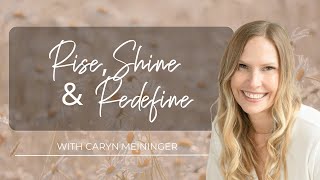
In this episode of the Rise, Shine and Redefine podcast, host Caryn Meininger interviews ICF‑certified life and business coach Carissa Dean. Carissa shares her personal journey from a dance teacher in an entrepreneurial family to a certified coach and multi‑business owner, describing the pivotal moment in 2019 that led her to seek coaching and later become a coach herself. The conversation explores how she and her husband navigate multiple businesses together, emphasizing clear role definition, accountability, and the importance of separating marriage from business. Carissa recounts challenges in her property‑management venture, including hiring the wrong contractors and dealing with a hostile Airbnb guest, and how she uses nervous‑system regulation and emotional awareness to stay grounded. The core of the dialogue centers on defining confidence as the ability to be authentically oneself under pressure, viewing confidence as a muscle that requires practice, curiosity, and regulation of the inner critic. Carissa introduces her ARC framework—Awareness, Reflection, Creation—as a step‑by‑step method for moving out of shame and guilt loops, fostering self‑compassion, and building confidence. Both hosts discuss practical habits such as celebrating micro‑wins, naming the inner critic, and cultivating curiosity as a daily practice. The episode concludes with Carissa’s actionable takeaway: cultivate curiosity to uncover alternative pathways and expand personal growth.
Chapters
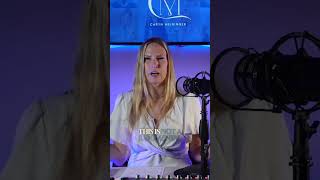
Hi, welcome back to the Rise, Shine and Redefine podcast. I'm your host, Karen Meininger and I am here today to talk all things confidence with Carissa Dean. I am so excited to have her on the show. She is a ICF certified life and business coach and has so much wisdom and magical nuggets to share today and I cannot wait to dive in. Hi Carissa, welcome to the show. How are you today?
Good. Thank you so much for having me, Karen. I really appreciate it. It's really fabulous to be connected across the world and be with you today.
Yeah, it feels like that you're calling in from Oregon and I'm in Florida, so it's so cool that technology can connect us from so far away and meet such beautiful like minded people and just share our wisdom from with our listeners and hopefully changing the world. One, one entrepreneur, one wife, one partner, one child at a time. However you identify, we are here to just help and serve and show up in a way that feels really good and aligned for you.
Yeah, I love it.
Why don't you tell us a little bit about how you got into coaching and, and anything that kind of really got you on that path.
Yeah, appreciate it. So I was born into an entrepreneurial family and married an entrepreneur. And when I got married, I was teaching dance for Portland public schools. And you know, it really was just kind of like, this is what I was good at, this is what I went to school for and. But it wasn't really what I was meant to do. Right. And so there was always this discord within my. Even my physical, well, being, looking back, my physical and mental and emotional body. And so in 2019, it kind of all came to a head where my daughter went into kindergarten and that purpose of whom who I was, what I was doing, what was I creating, things really started to not feel good. The discord really started to come out and I was really angry in life and I didn't really like myself. And I was looking at my husband and blaming him for a lot of my own discomfort in life. And I finally just went to him and I was like, I'm going to hire a life coach. And he was like, what is that? What does that mean? What is coaching? Yeah, what is this thing you speak of? You know, and at that point I had gone to talk therapy. You know, I had worked through, you know, at that point I wanted multiple children, but we were. I hadn't been on birth control for five years. Like it wasn't in the cards and I didn't want to chase the ivf, you know, formula. And so there was just so many things. I'd gone to talk therapy, and it didn't really work for me because as a manifesting generator, I'm really about the movement and the action, and I like to be busy with a lot of different things. And so, yeah, I went to him and I was like, I'm going to write this check and I'm going to do a group coaching program. And it changed my life. That first call really helped me see where I was. My own issue. It held up this mirror for me that allowed me to see, oh, my God, I'm the fucking problem. And. And I just. I spiraled from there in the most beautiful way. I. It's probably, you know, even though I danced my whole life, got a degree in dance dance semi professionally, it is the only thing that I wake up passionate to do. And it's the one thing that has really kept me grounded and motivated. I've. I just went on a deep dive and the obsession of it became so real. So in 2020, I went through a training program, worked for a company on the east coast for three years before breaking out on my own. Got my ICF certification, got my yoga teacher certification, and just, you know, every certification that a life and business coach would want to get beyond that. So that's kind of how I got into it. And yeah, my husband and I have about 10 different businesses between the two of us that we've kind of cultivated in the last 15 years or so of being together.
Oh, wow. Okay. How is. How is that working with your husband on businesses? I know you said you married into entrepreneurship. Entrepreneurship's your jam.
Yeah.
Because for me, no way is my husband working with me. Like, it's just not happening. So I'm. And it's not that I'm against it, it's just. It doesn't make sense for me.
Totally.
So. So the ones that you. I'm assuming your coaching business is yours?
That's mine. Yes.
Right. That's your baby.
Don't touch it.
Beautiful.
I get.
That's my baby too. Totally. Yeah. And you feel that in your soul.
Yeah.
What other businesses do you have or what's your favorite business that you have been?
So the favorite business is we purchase and operate. So we purchase and I operate the properties. So it's a property management business. And so we have. I think we have six different properties right now. Where really we found the partnership in the collaboration of how are we remodeling this home? Doesn't need remodeling. And then I really take the creative direction of how we gonna market it. You know, are we doing short term or long term renters? And then I'm the day to day operations. And then he's kind of available for some of the bigger, bigger pieces. Part of my journey into entrepreneurship was when teaching no longer felt good. After I had my daughter, I started dabbling in, you know, working with my husband and kind of helping him with marketing and helping him with the bookkeeping and the back end of the business. And what we did learn in that path was his baby needs to stay his baby. When I started to kind of bring in things, he was like, but this is my thing. This is how we've done it. And so I think working with your partner is possible, but it does take a very delicate balance. And I would say that finding your roles and understanding how to communicate and then it's the separation of, like, you can't bring your marriage into the business, and you can't bring your business into the marriage. And so you do have to isolate out those things and make sure you're still making time for each other. So there was definitely periods where we would be on a date night and we are only talking about one business, and I'm like, holy fuck, can we talk? Can we talk about something else? Can we talk about our dreams? Can we talk about, you know, anything else? Because otherwise it would consume us and it would consume the conversation. And, you know, then you're looking at your sex life dying and all these things, right? And so I think, you know, partnerships are hard no matter what you do. And. And it really does take the right kind of pair for it to work. So when I say we work together, we have very defined roles. And he's really good about letting me be in my zone of genius, and I'm really good about defaulting to his zone of genius. You know, an example would be, we have a property, we're remodeling. I was like, let me take over this piece of the remodel. I'm really excited about it. I want to like, rehab the bathroom and bring it back to life. And I dropped the ball, like, 100%. I dropped the ball. I completely hired the wrong people. I'm definitely too trusting when it comes to contractors. I think people are always going to do what they say. And unfortunately, that's just not always the case, especially in some of those trades. And so I didn't babysit them the way that you should when you're a project manager. And it's cost us a lot of extra money and heartache because I didn't listen to his advice. And so I think when you can take ownership of where you fuck up, where you drop the ball and be like, yeah, I really, really blew that one up. And then also it takes the counterpart. He didn't get mad at me, you know. Was he frustrated? Yes. Was he, like, not super thrilled that it was going to cost twice as much? Absolutely. But he didn't yell at me, he didn't come at me, he didn't blame me. It was this collaboration of, you tried something, you failed, and now we know you're not the babysitter type. You're not going to sit there and keep your eyes on the plumber every minute to make sure that he doesn't drill a hole where he shouldn't drill a hole.
Yeah. It's all about accountability. I totally relate. I have two properties, I've remodeled four homes. I've hired the wrong people, cost me lots and lots and lots of money, and what happens, right? It's so beautiful that there wasn't the blame and the judgment because it's like when. When we feel shame, it's like for whatever it. We feel shame and guilt, right? And it's like if you're. If you're saying I am bad, right, that there's this shame piece and then there's a guilt piece of, well, my behavior created this guilt, right? So I know, especially with renovations, hiring the wrong people, you tend to feel this guilt of, oh, my God, I cost us so much money. But everything's a lesson, right? Everything's a learning. And if it's like, okay, yeah, I fucked up. I'm going to take accountability for my fuck up. I should have researched them better. I'm the same as you. I'm very trusting. I hire people and I'm like, they're going to be the best.
And.
And then, and then they're disappointing.
Yeah.
And then it. And then it's like, oh, wait, now I have to navigate my up in my nervous system. I need to learn how to regulate my nervous system in this up. I just had an awful experience with a guest at one of my Airbnbs. I got yelled at, I got attacked. And it was. I did everything right. And, and it was like I had to remind myself, like, okay, there's something going on in, in their life that is projecting onto me and it has nothing to do with me. And I think a lot of times we feel like if we're being attacked by somebody or something. There's this sense of there's something wrong with us when really everything, like you said before, life's a mirror.
Yeah.
It's like if they're coming at you, it's like, okay, wait, let's show them the mirror. And then it softens. And the same thing, your husband not being in judgment or blame and, and you being able to take accountability. I'm sure you were able to find solutions a lot quicker to move through it, to get to the next step. And I think it's the same in entrepreneurship. It's the same in marriage. It's the same in parenting. It's. It's like, okay, let's take accountability. Let's have the awareness of, okay, how can I change this to be a better version or it be different so that same mistake doesn't happen. Right. I don't. I think there's no coincidences. Everything's a synchronicity. You are supposed to be where you are and. And it's okay to be exactly where you are in this moment.
Definitely.
And I think we lose sight of. And we lose sight of it.
Yeah.
Okay. So I really want to dive into confidence.
Yeah.
In your opinion or in your biased opinion? What. What is confidence? What does that mean?
I think that confidence is your ability to be your authentic self in situations that require you to hold yourself to a different standard. And what do I. What I mean by that is the version of me, before I got into personal development, would not have taken accountability for the fuck up in the bathroom remodel. I would have blamed everyone else around me. I would have blamed my husband. And confidence is the ability to. To own where your shortcomings are, identify them, say, this maybe isn't in my wheelhouse, and that's okay. And not having that shame or guilt associated with those. With those points. And I think for me, confidence looks like a muscle. It's. It's no different than going into a yoga class for your first time. It's a practice. It's something that you have to really understand. And if you don't know who you are, if you're not feeling good in your body. Right. You talk about nervous regulating your nervous system. If your nervous system isn't regulated, you're not confident. And so I think confidence is that ability to know yourself so intimately that you know when you're unregulated and being reactive to the world around you, when you're blaming, when you're holding on to shame or guilt, and when you're not in Alignment and taking the action that's meant for you. I mean, you're in a very similar line of business. You probably run your business very differently than how I run mine. And that's the uniqueness of. Once we start to identify who we are, we build our confidence through trial and error and realizing I can have a unique pathway, and that serves me. And you, Karen, can have a unique pathway, and that serves you. And it's the freedom and permission that I give you to be who you are and you give me to be who I am that allows me to make those decisions. But it's confidence, a muscle that we have to flex, and it definitely comes through trial and error. And. And I think that you can't be a truly confident human unless you know who you are and you're tapped into that aligned inner being.
Yeah. And I think a lot of people don't know who they are. They don't. And that's where inner work. That's where it's work. It's work to be you. Unfortunately, it's because we're.
We're.
By external factors. Right. We're trying to be something we think somebody else or society wants us to be instead of. And we're programmed. Right. Like from childhood. It's like all these programmings and unconscious programmings and patterns that keep repeating themselves over and over again that it's like, wait, who am I? And like, when you take off all the external things, the house, the job, the career, the marriage, the momhood, whatever it is, it's like, wait, who am I? What is my essence? Instead of the ego and the inner critic kind of getting in your head and talking you out of who you are, because we think society wants us to be that way.
Yeah.
And then it's also with confidence, it's like meeting edges. It's like doing the thing you're afraid to do.
Yeah, absolutely.
The more you go and do the thing you're afraid to do. I was terrified to start a podcast. You know, I'm a year in and now even this getting on our calls, like, oh, I'm nervous. But it's like you keep doing it and you get in flow, and then it's like, oh, wait, it's not that hard. If you keep doing it and you keep practicing, like you said, a muscle and you go to the gym, you have to have resistance. You're going to have resistance in being who you are. It's like, okay, how do I create resistance that I can bust through so that I can now be more confident it's like in dating too, right? Have you dated a guy? I mean, I know we're both married, but let's just for fun, you're dating a guy and you're like, oh, you can tell somebody is confident or you can tell if you're confident in that circumstance. Why, what about it creates the confidence. It's experience.
Yeah, well, and I think confidence too is the familiarity of being uncomfortable. Because the reality is is your edge is in your discomfort and most people are unwilling to be uncomfortable. And that's, that's the thing that you're saying, do the thing anyways, that's you being in your discomfort and saying, I'm going to keep stepping forward. And I think a lot of people get overwhelmed by life in business, in personal development, in do I hire a coach or do I stay the same? Do I go to the gym or do I stay the same? Because we think that it has to be this big giant leap when it's not. In reality, the sustainable change comes when you take baby steps. And so that's why I say it's these bite sized pieces. You know, I'm mid group program called Confidence to Create. And the women who are in there are doing such magical work because they're practicing these small stackable habits and it's reinforcing new neuro pathways that are allowing them to see themselves differently and they're gaining new information from the world around them, around, oh, it's safe to be who I am. Oh, look, I was really uncomfortable. I did it anyways and wow, it's okay. I survived. And so confidence is really a practice skill. And I think a lot of the women we see, even the men we see, there can be this egotistical confidence which is masked by the need to look and be a certain way. And then there's the real confidence where you are who you are, whether you've got up, done your hair and makeup, put on a killer outfit or not. And I think those are kind of the subtle areas where can you look at yourself the same no matter how you're dressed? That's confidence. And it's different than just looking at really polished person in a boardroom, right? Because that person could have zero confidence but be really good at acting. Right. And so when I'm talking about confidence and I think when you are too, it's really about that aligned, authentic version where whether you're naked in the boardroom or you have the most beautiful pantsuit from Saks, you are wearing the same inner being. And that inner being Is really what. What your audience is seeing?
Yeah. It becomes this essence versus ego. And it's like, okay, wait, once I know my essence, oh, there. There is confidence within there, and it is continuously meeting the edges. Also, I love what you said about your group programming, because our group program. Sorry, is. Is celebrating the small wins too, because there's a gap in the gain, right? It's like if. If you're trying to be somebody that you're not yet, right? It's like, you want to be the it girl, let's just say, right? It's like, oh, my God, that I have so far to go. I have so far to go to get there. And then. Then it becomes. You become resistant, and you don't want to do it. You have no momentum. But like you said before, it's those small wins. They don't have to be these big leaps and bounds of, like, breakthroughs, little micro breakthroughs is what's going to help you lead to the confidence. It's okay, wait, I had a small win. I said, even just creating, trusting, committing something to yourself, right? It's like, okay, I'm going to commit to write in my journal five minutes a week. Let's keep it super simple. And you did that. It's a win. It's like, write that wind down. I did something to celebrate myself. I did something that I committed to, and I'm gonna celebrate that. And your reticulated activated system is going to start showing you more ways that you can start trusting yourself, and you create that safety in your nervous system, right? It's like, yeah, discomfort sucks.
It.
Nobody likes it. And then what happens is we try to avoid it. We try to avoid the discomfort. And so instead of, like, it only takes 90 seconds for an emotion to move through us, but we loop it. It's like, oh, we have this feeling. Now let's create the story of why I have this feeling. And now that feeling's back. And we're just like, in this hamster wheel of the loop of the emotion and the feeling, and we can't let it go. Instead of just sitting with the discomfort. It's the same with confidence. Just sit with the discomfort. And then. And then celebrate. Celebrate yourself for showing up. And, yeah, it does come down to safety. We think we're gonna die. Like, I'm gonna go on stage.
I.
My body, when I was getting attacked by a guest, thought it was gonna die. Like, I was like, why can't I regulate myself? And I'm human. I done a lot of inner work and I still get dysregulated. It is okay. It's just how can we quickly recover when it happens? And as you get more uncomfortable, as you become more comfortable, is that comfortable becoming uncomfortable?
Wait, yes. Yeah. No, you got it. Comfortable being uncomfortable. You got it, you got it.
It doesn't last as long.
No.
Like, you're not dysregulated as long you're human. We're emotional human creatures. We're going to get dysregulated. We're going to feel unsafe at times, and it's like leaning in to the discomfort.
Yeah.
In my biased opinion, is how you do create more confidence in that way.
Yeah, definitely. And I tell my people all the time, all my clients, I have this one client and I love her so much and she's super woo out there. And I'm like, yes, be there. But understand, we live in a 3D world and you're in a human body, which means that there are systems that you have to play and you can either be played by them or you can learn them and play them to be in your favor. And so I love what you say there. You know, the reality is you're gonna have moments where it's not gonna feel good, you're gonna break down, it's gonna get fucked up, it's gonna get shitty, it's gonna be chaotic. That's because we're having a very real human experience. And. And we're multi dimensional, multifaceted, and there's so much complexity to it. And that's where we. That's where I think confidence can be so powerful and beautiful, is because you pull away from the shame and the guilt. You create that separation through the awareness and the understanding. And you can move yourself. You know, the more you practice this, the more you get the negative feedback from guests, the easier it is for you to find your flow, to move through it. Because you're going to understand that experience from a different lens because you chose a different pathway. And so you just keep practicing that. And over time, it's just, you know, it's water on the duck's back and you don't. You don't even know it's there half of the time.
For sure. Yeah. I mean, I. I also love, I think what happens with confidence. Our inner critic comes up a lot, right?
Absolutely.
And it's like, it gets so loud. And so a hack I like to do is name, name the critic. Her. My inner critic's name is Cruella. And I'm like, okay. So it's like when you can separate. You are not your critic. And when you learn to separate, okay, my critic is just a piece of that's trying to serve me and keep me safe in some sort of way. And when you recognize, oh, Cruella, you're just there because you're trying to keep me safe. But I got it. You can go in the passenger seat now. You don't need to be in the driver's seat. And it's like once you create that awareness, it's like, oh, I can do something with it. But a lot of times you're not even aware. It's so programmed into look at my fat on my belly or look at my ugly toe or. Or my hair is not good enough, or I speak funny or I have a lisp or whatever it may be. All these things that make us feel that we're not good enough. It all comes back to confidence is a sense of worthiness.
Yeah.
And it's okay, how. And how do we start feeling worthy is having self compassion? It's like, how do we create compassion for ourselves in the shame and the guilt? Because a lot of times it's like, hamster wheel it. Yeah, we hamster wheel it. And so it becomes a little bit on a. On a loop that we can't get off of. And, you know, I was wondering, what are your suggestions or tips of. Okay, now I recognize I'm looping. I'm dysregulated. I'm feeling bad about myself. I'm feeling unworthy. What. What is a tip or something that you would do to kind of get yourself off the wheel?
Yeah. So I have a methodology that I've come up with, and I teach it to all my clients. It's something you can utilize for literally any situation in your life or in your business. And it's called the ARC approach. So basically, you start with the awareness. I'm aware that I am feeling X, Y, and Z. I'm aware that I'm in my loop. I'm aware that Cruella is here. And from that awareness, you move to the R, which is reflection. How did that work out for me? How did that make me feel? Did it get better? Did it get worse? Did I go further into it, or did I make a change and do something different? And then you get to the C, which is the creation of what happened. So you kind of take that time to notice, to reflect, and then to kind of really take. Take the moment of what do I want to happen next? So then you go back to the A and you become accountable to your awareness. I'm aware that Cruella is here. Okay? Last time Cruella was here, I did this. I really didn't like that outcome. What's another pathway? What's another choice? And then you open yourself up to receive something different, you know, and you're creating more of what you want in life. So the ARC approach is. Is how I move myself through. Through. I think a lot of people are afraid of reflecting because they think they're going to get stuck there in the shame, in the guilt. And I think that if we can find a way to look back on our choices and understand there's different pathways. Okay, I see the one pathway that I chose. What's a What? What.
What.
What is something that I could have done different. And then the next time it shows up, you choose something different, and you see how that works out for you. That, I believe, is a simple formula to really change your life and feel differently because you are becoming accountable to your actions and your choices. And that awareness allows you a pathway to choose differently. And when you take that time to reflect, I think that's when you build confidence too, because you're looking at it and you're saying, oh, I did something a little bit different here. I felt a little bit better. Wow. Let me reinforce that positive behavior by choosing the same thing or something similar or. Or let me, you know, 360 it and do something completely different. I mean, but I think the awareness, the understanding of who, what, where, when, how, and why, and then understanding there's a choice that you can choose a different pathway and create something different for yourself.
I love it. I love it. Awareness, reflection, creation. And just something even more to add into. There is like, okay, I have the awareness. How can I accept myself? Right? Acceptance is such a big piece of becoming more confident. It's like, oh, I can accept that part of me. And most of the time, it's innocent. It's really innocent. It's something from your childhood that is a small t trauma that isn't nourished. And it's like, wait, how can I go back and nourish that part of myself? I have this awareness. Cruella is loud. I'm gonna choose again, right? I'm gonna choose a new. A new way and reflect on how. How did it become different? It's such a good way of tracking. I love it. I think tracking is so important. It's also really hard because it's like. It's like, again, putting the mirror back on us. Oh, wait, okay, I'm tracking what just happened and I don't like the, I don't like it. It's going down instead of up. And then we start criticizing ourselves. That's what happened to me with this Airbnb situation. All this work. This guest left her watch at my property and was blaming me for it. And, and it, it. And then because my nervous system wasn't regulated in that situation, then I was starting to feel all the negative thoughts about me not being good enough. I've just done all this work. I've just done this whole year long program on like all the inner. And I'm being dysregulated by some bitch I don't even know. Excuse me, but she was a bitch. And it's like, okay, wait, would have I even done anything differently in that moment? I think a lot of times we're really hard on ourselves too. It's like, oh, I should have said that. I could have. You shoulda, coulda, woulda. But the reality is, I don't know if you're familiar with Byron Katie work, but she says if you argue with reality, you will lose 100% of the time because the reality is you didn't do it. And it's like beating yourself up over something you should have done differently isn't going to change it now if that happens again, you know, oh, I have the awareness this happened. How did I learn? How can I reflect? And then how can I create this arc method in order to expand myself and be the 2.0 version of me that's going to take me to the next level, be more confident and show up fully in my authentic self. That's beautiful.
I love it. Well, and I think it's important to highlight too, if you can't reflect, if you're looking back through shame or guilt. So you do absolutely have to have that lens of it is what it is. I can't argue that's. I mean that is confidence is looking back and being like, I didn't fucking handle that well or I fucked up. Like, that is the acceptance right of, of the moment that was the moment. I really didn't like the way I handled that or I really didn't enjoy that experience. I don't like being yelled at. Why don't I like being yelled at? Right. It's like that awareness piece is so critical and they kind of like you bounce between the awareness and the reflection because you can go, oh, this, this person yelled at me. And it made me feel this. Why did it make me feel this? Oh, there's an inner child in me. That doesn't good. That doesn't good enough. And so then you go back to that awareness of, I have more work to do here. And so to create more of what I want, I have to heal that inner child. And if you can't do that without the shame and the guilt, you're not fucking ready for it. Because you have to be willing to say, that was a moment in time. And because I'm drawing awareness to that moment, and I want that moment to be different next time. There has to be the detachment to. I can't change it. And I'm not going to feel bad about it. I'm just going to be aware of what happened, how I showed up in that moment, and what I would want to do differently, because I want a different experience.
And just to add, it's also really interesting based on past experiences, our brain distorts the reality of it, too.
Oh, yeah.
Really? Right. It's just your lens. It's like, this is my lens. This is a story that I'm creating about something that happened. You look at a car accident, five different people witness it. You're gonna get five different stories on what happened. Yeah, it's like, what story are you telling yourself about what happened? And that's where the shame and the guilt comes back in. It's like, yeah, you have to be able to look, this is the reality. Take the emotion, even take the story out of it. It's just this. This happened. Like, yeah, there's a car accident that happened. That's the reality. How it happened is the lens is the lens. If we only have pink glasses on all the time, we think everything is pink.
Yeah, right.
It's like. It's like, wait a minute. Okay, let's take some filters off and be able to. To, like, just see it from different perspectives, I think. Yeah, I think that's probably one of your superpowers. It's one of my superpowers is. Okay, wait a minute. This is one perspective. This is one lens. Let's come up with multiple lenses. I know I do that with my friends. Like, if they're fighting with their or disagreeing with their partners, it's like, wait a minute. Let's see it from a different lens, and let's reflect that back to you. Like, you're mad at them and judging them for doing whatever they're doing. It's like, wait a minute. Let's turn it back on you. Which is really hard for people.
Really hard. It's really confronting judgment.
Judgment is really triggering yeah, it's really triggering when you turn it back on yourself.
Yeah.
And it's challenging. It's hard not to judge. Right.
It's like, oh, yeah.
But if we're judging, it's because there's something about us. And. And it's. It might not be like the exact same thing, but it. There's some. There's some wound there that needs to be healed, and we just haven't been able to do it.
Yeah.
So it's like life is going to keep showing you these triggers and these judgments until you heal it.
Yeah. It get louder and louder and louder until it's really, really hard to ignore. And I think, you know, like you said, that's your superpower. That's my superpower. I think that's the superpower of coaching. I think that's the magic of coaching is you have this human who's looking at your circumstance, hearing you, validating you. You know, if they're doing a good job. Right. They're able to take you and say, I'm sorry that happened to you. Are you ready to look at it from a different perspective? Because I'm a big believer. Life is happening for me, and I could sit here and wallow. I mean, there's a million reasons why I should not be married. There's a million reasons why I should be bankrupt and living on the side of the street. And I could get stuck in those narratives, or I can find the. The lesson in it. The why is this happening for me? And I can hold onto that opportunity of growth. And I think that is. That is the work of every human, if they choose to look at what isn't going well for them.
Yeah. Everything's a lesson like, how did this happen for me? How is this helping me grow? How is this becoming. Helping me become better? It is. It's such a good mindset hack, you know, God bless Tony Robbins. Right. And it just. It is. It's such a beautiful way to think of when life feels like shit. It's like, okay, wait, this is happening for me because I'm going to be growing. I'm going to learn, and I'm going to grow, and I'm going to be better because of it. So beautiful.
It's yummy. I mean, it's really hard. It's really hard and chaotic and messy, but it's actually. It's some of the best work you can ever do. And I think we're the generation that's healing it for the next generation, breaking.
The generational cycles of all of Those traumas that our parents went through that we can now bring into parenting, we can bring into our relationships, we can bring into coaching. We can help raise the vibration of the planet. And I am obsessed with coaching. I love it. I know you love it. And I am so, so grateful that we got to connect today. This is such a beautiful conversation. How can people find you if they wanted to work with you?
Yeah, so I have a website, which is my name, carissadean.com. it has links to my podcast, it has my email, and I also have a blog on there. So there's lots of, you know, resources for people who are just getting started or curious about personal development or coaching. And I'm on social media, most active, probably on Instagram. And that tagline is Coach Carissa Dean with the underscore between each word.
Beautiful. And I will put that in the show notes so people can find you very easily. Also, let's just leave with one takeaway. What's something that entrepreneurs, women, really, anybody that can start implementing right now or within the next 24 hours to be a step closer to changing their life or becoming more confident.
Get curious. Just grow your muscle of curiosity and stay curious. I think curiosity is not what killed the cat. I think it's what gave the cat the opportunity to live a very adventurous, fulfilling life. So gave it nine lives. Yeah. I mean, I think get curious because the more curious you are about how could this be different? How could I have shown up better? Where. Where is there an opportunity I'm missing? Where am I not paying attention to this? You know, it's like the more you look at things with the open lens of curiosity, just pure curiosity, your whole world will start to change because you'll see that there's multiple pathways for each thing that you've been thinking very linear about.
Beautiful. I love it. Get curious, guys. You got this. Time to crush 2025 and New Year, New Year, New Year, new you, and really just time for expansion.
Yeah, definitely. It's very exciting.
Thank you so much. This was such a beautiful conversation. I really appreciate you being here today.
Thank you for having me. I loved it.
Awesome. Okay, bye.